REVIEW · ATHENS
8 Hours Private Tour to Athens Landmarks with a Pickup
Book on Viator →Bookable on Viator
Athens can feel endless. This tour gives you the best of it in one tight plan. I like the private pickup that keeps things simple, plus the way your guide can shape the day around your pace and time constraints (Ilias is known for making it work). You’ll also appreciate the comfort basics: an air-conditioned ride with WiFi and water, so you’re not scrambling before you even reach your first site.
The second big win is how the day balances big monuments with real texture. The Acropolis Museum is a standout stop, and the plan also threads in neighborhoods like Plaka and Monastiraki, plus viewpoint time and the Tomb of the Unknown Soldier area at Syntagma. The main drawback to weigh: tickets for several top stops cost extra, and with an 8-hour schedule you won’t linger forever at every place—so it helps to know what you want most upfront.
In This Review
- Key Points I’d Plan Around
- Private Door-to-Door Pickup That Helps You Beat Athens Chaos
- Acropolis With the Parthenon First: What You’ll Actually See
- Acropolis Museum Right After: Parthenon Gallery + Glass Floor
- Olympieion Temple of Zeus: Quick Stop, Big Scale
- Panathenaic Stadium (Kallimarmaro): Marble With a Marathon Connection
- Plaka, Monastiraki, and Syntagma: Real Neighborhood Athens
- Lycabettus Hill View Time: The Classic High-Angle Perspective
- Lake Vouliagmeni: Thermal Water Break Close to the Riviera
- Cape Sounion’s Temple of Poseidon: A Cliffside Finish You’ll Remember
- Palaia Fokaia at the 4 Brothers Tavern: Optional Seaside Food Moment
- Ancient Agora: Socrates’ Neighborhood in 30 Minutes
- Price and Tickets: Does This 8-Hour Private Day Feel Worth It?
- Should You Book This Private Athens Landmarks Tour?
- FAQ
- How long is the private tour?
- How many people is the private group for?
- Do I get pickup in Athens?
- Is the tour guided in English?
- What’s included in the price?
- Are admission tickets included?
- Which attractions have free admission time listed?
- Do I need tickets in advance?
- Can I cancel for a full refund?
- When should I book?
Key Points I’d Plan Around
- Private door-to-door pickup means less stress than catching a bus with luggage or a tight cruise timetable.
- Acropolis Museum is scheduled right after the Acropolis, which helps everything click (especially the Parthenon Gallery alignment).
- Cape Sounion at Cape Poseidon adds a serious “wow” factor with a cliffside sea view and clear classical storytelling.
- Flexible pacing with Ilias can let you adjust the order—use that if you’re trying to fit in fewer/more steps.
- Neighborhood stops (Plaka, Monastiraki, Syntagma) keep the day from feeling like only ruins and ticket lines.
Private Door-to-Door Pickup That Helps You Beat Athens Chaos

This is a private tour for your group only (up to 4), and pickup is handled to match where you’re staying—or where you’re arriving. If you’re in a hotel, you meet in the lobby. In an apartment, you meet at the building entrance. For the airport and port, you’re met at the arrivals hall or the gate with a name sign.
That matters in Athens, because a “quick landmark day” lives or dies by time. Having the driver guide you in an air-conditioned vehicle, with WiFi on board and water included, makes it easier to keep a steady pace. You can also ask for pickup time, which is helpful if you’re trying to time the Acropolis entry window.
Acropolis With the Parthenon First: What You’ll Actually See
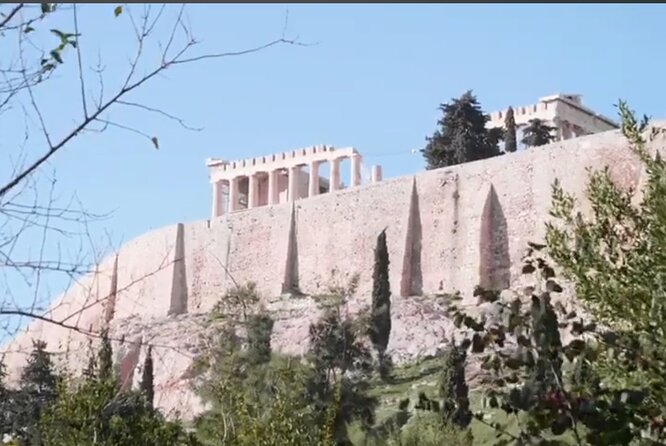
The Acropolis is the headline for a reason. You’ll walk through the long story of the hill—from earlier Mycenaean-era use to the Golden Age building boom under Pericles, and the later layers (Roman temple, Byzantine church, Frankish palace, Ottoman mosque). The Parthenon is the star, but the site is powerful even when you’re not obsessing over every architectural detail.
You’ll have about 1 hour here, and admission is not included. That time is enough to get oriented, see the Parthenon from key angles, and decide whether you want to push for extra viewpoints at the site. One practical note: the tour includes a professional driver guide who can provide history insights, but a licensed archaeologist guide with deeper on-site interpretation costs extra.
Acropolis Museum Right After: Parthenon Gallery + Glass Floor

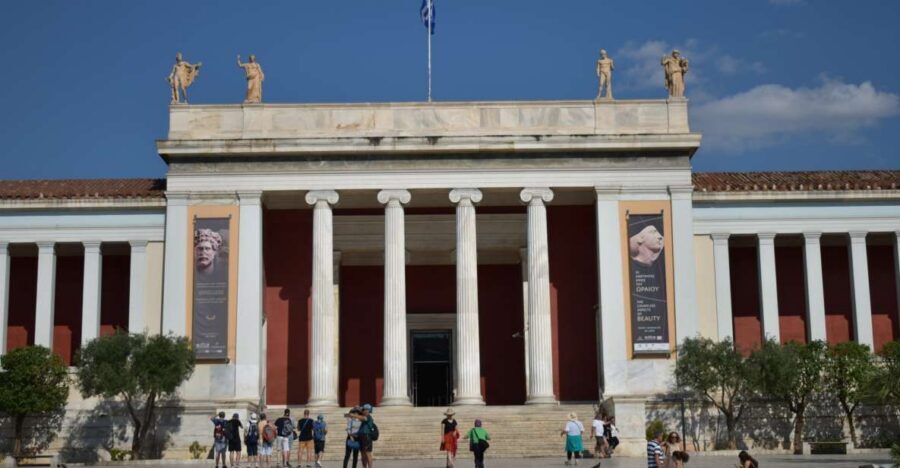
I love pairing the Acropolis with the Acropolis Museum because your brain needs somewhere to “put the pieces.” The museum (opened in 2009) is modern and designed by Bernard Tschumi, and it’s built at the foot of the Acropolis. It houses over 4,000 artifacts from the Greek Bronze Age through Roman and Byzantine periods.
Plan for about 1 hour in the museum. Highlights include the Caryatids from the Erechtheion area, parts of the Parthenon frieze, and original statues linked to the Temple of Athena Nike. The Parthenon Gallery on the top floor is especially useful because it’s aligned with what you’re seeing above, which makes the sculptures feel less like random fragments.
There’s also a glass floor showing an ancient neighborhood beneath the museum. And the museum is known for taking a stance on the reunification issue of the Parthenon marbles—so if that topic matters to you, this is a good place to read the context without hunting for it later. Museum admission isn’t included, so budget separately.
Olympieion Temple of Zeus: Quick Stop, Big Scale
Next you head to the Temple of Olympian Zeus (the Olympieion), which is basically a study in ambition and time. Construction began in the 6th century BCE, was delayed for centuries, and then Emperor Hadrian completed it in 132 CE.
You’ll get only about 10 minutes here, and admission is not included (the listed ticket fee is €20 per person). Only 15 columns remain standing today, but even ruined, the place communicates scale fast. If you’re doing this as a first-timer day, it’s a good “Roman Athens flavor” break right before you shift into stadium and neighborhood time.
Panathenaic Stadium (Kallimarmaro): Marble With a Marathon Connection
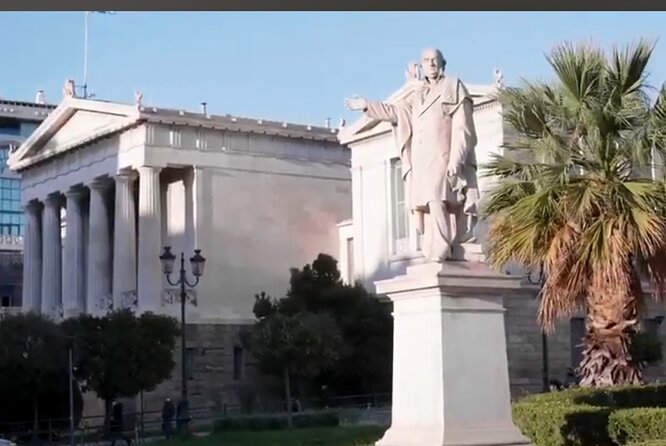
Athens has a habit of mixing ancient and modern in the same breath. The Panathenaic Stadium—Kallimarmaro—was built for the Panathenaic Games and later rebuilt in marble in the 2nd century CE by Hadrian and Herodes Atticus. It’s famous as the only stadium made entirely of white Pentelic marble, and it hosted key moments in the first modern Olympic Games in 1896.
You’ll spend around 10 minutes at the stadium area. The itinerary marks it as free time, but the ticket list also mentions a €12 per person fee for the first Olympic stadium. To avoid surprises, treat this as one of the stops where you may be asked for an entry ticket depending on which part you access.
Still, even a short look is worth it because the stadium is connected to today’s Athens Marathon finish, so you’re not just seeing “old sport.” You’re seeing a direct line from antiquity to modern competition.
Plaka, Monastiraki, and Syntagma: Real Neighborhood Athens

After monuments, the day smartly shifts into streets and public squares. Plaka sits at the foot of the Acropolis and is the oldest neighborhood in Athens, continuously inhabited since antiquity. It’s built on older residential quarters and kept evolving through Roman and Byzantine periods, then into Ottoman-era life where Greek, Turkish, and Albanian communities shaped the area. Many of the current houses date to the 18th and 19th centuries, and preservation rules keep the character intact.
Monastiraki Square adds a different texture. The area’s name is tied to a small Byzantine church and an older monastic presence. Under Ottoman rule, it became a commercial hub, and the Tzistarakis Mosque (1759) is still standing. The square also sits atop ancient remains, including parts of Hadrian’s Library and the Roman Agora, visible nearby. The itinerary time here is short, but it’s long enough to step into alley life, grab a snack, and feel how locals move through the city.
Then you land at Syntagma Square, the heart of modern Athens, named after the Greek Constitution. You’ll be near the Hellenic Parliament building (the former Old Royal Palace) and the Tomb of the Unknown Soldier, guarded by the ceremonial Evzones. This stop is free and usually quick, but it’s a high-impact “Athens today” moment.
Lycabettus Hill View Time: The Classic High-Angle Perspective

If you want a fast way to understand Athens’ shape, Lycabettus Hill does it. This is the highest hilltop in the city and the itinerary includes about 1 hour for panoramic views.
Admission is not included, and the ticket list flags a €12 per person fee for Lycabettus hill. You’ll want comfortable shoes and a bit of patience with stairs or walking segments, because this is a viewpoint stop—not a flat stroll.
This is a great place to take your photos and then decide how you want to spend your remaining time. It also helps you interpret later sea views from Cape Sounion, because Athens’ terrain becomes easier to read.
Lake Vouliagmeni: Thermal Water Break Close to the Riviera
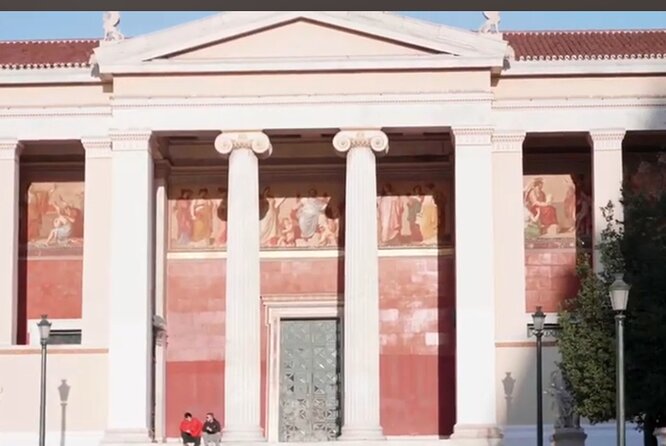
For a breather, you’ll stop at Lake Vouliagmeni on the Athenian Riviera. It’s a natural thermal lake formed when a limestone cave collapsed, mixing seawater with underground thermal springs. The temperature stays around 22–29°C year-round, which is why it’s tied to wellness and healing stories.
You’re only allotted about 10 minutes, and the stop is marked free time. Still, it’s a nice reset before the longer sea-cliff classic at Cape Sounion. The lake is also protected and known for an underwater tunnel labyrinth, with some tunnels still unexplored. Even a short visit gives you a sense of why this place is more than just a scenic pull-off.
Cape Sounion’s Temple of Poseidon: A Cliffside Finish You’ll Remember
Cape Sounion is the big finale most people dream about: the Temple of Poseidon sitting dramatically on a cliff above the Aegean Sea. The temple dates to the mid-5th century BCE, built from white marble from nearby Agrileza. Originally it had 34 Doric columns; today 16 remain, which still looks stunning from the right angles.
You’ll spend about 30 minutes here, and admission is not included. The ticket list says €20 per person. The setting matters as much as the stones: this was a religious site and also a naval lookout, meant for both spiritual protection and practical watchfulness.
There’s also the legend of King Aegeus, who, according to story, jumped to his death from the cliff—giving the Aegean Sea its name. If you only had time for one “myth with a view” moment, this is the one in your day plan.
Palaia Fokaia at the 4 Brothers Tavern: Optional Seaside Food Moment
Right near the shore, you’ll have 1 hour in Palaia Fokaia, with a stop at 4 Brothers Tavern. This is a traditional Greek seaside spot tied to local fishing culture, shaped by refugees from Asia Minor in the 1920s–30s. The restaurant is known for both seafood (often described as freshly caught) and meat dishes.
The tour doesn’t state that a meal is included, so think of this as time to eat if you want, and to slow down after the long drive and temple time. If you’re hungry, it’s one of the better moments to grab a seafood lunch without trying to find somewhere last-minute.
Ancient Agora: Socrates’ Neighborhood in 30 Minutes
To close the “public life” story of Athens, the itinerary includes the Ancient Agora for about 30 minutes. This was the heart of classical Athens—political, commercial, social, and religious. It hosted assemblies, markets, festivals, and trials, and it’s the kind of place where philosophers like Socrates and Plato would have walked and debated.
Key structures include the Stoa of Attalos (rebuilt in modern times as a museum) and the well-preserved Temple of Hephaestus overlooking the site. After later use and decline, it was buried under developments until excavation began in the 20th century, which is why the area feels both historical and surprisingly “readable” for a short visit.
Admission isn’t included here. The ticket list flags €12 per person for Ancient Agora. This is a good stop if you want a democracy-and-debates kind of Athens moment, not only temples and museums.
Price and Tickets: Does This 8-Hour Private Day Feel Worth It?
The base price is $600.76 per group (up to 4) for about 8 hours. That works out to roughly $150 per person if you split it four ways, and the real value is less about “paying for a guide” and more about buying time and convenience. You’re paying for a private driver-guide, air-conditioned transport, and the efficiency of having a plan that moves between sites without you managing logistics.
Now for the part that changes the final cost: tickets are extra. From what’s listed:
- Acropolis admission: €30 per person
- Temple of Zeus (Olympieion): €20 per person
- Temple of Poseidon (Sounion): €20 per person
- Lycabettus hill, first Olympic stadium, and Ancient Agora: €12 per person per sight
- Acropolis Museum admission is also marked not included (its exact fee isn’t listed)
There’s also an important guideline on interpretation: the included guide is a professional driver guide who can share history, but a licensed professional archaeologist escort costs extra if you want deeper inside explanations.
So, when is the value strongest? It’s best when you’re a small group (2–4 people), you have limited time (like a cruise day), and you want to hit multiple top priorities without doing a “scatterbrained DIY” day.
Should You Book This Private Athens Landmarks Tour?
I think this tour is a good fit if you want a guided best-of day with pickup, comfort, and smart sequencing. The Acropolis Museum pairing and the addition of Cape Sounion give you both the “classical core” and the dramatic sea-side payoff. If your group likes seeing a lot without planning the route minute by minute, you’ll probably feel satisfied here.
I’d pass or at least adjust expectations if you’re the type who wants hours in one place. An 8-hour day means short stops at some major sites, and tickets add up quickly. Also, if you strongly prefer a specialist archaeologist escort for every major ruin, that’s extra, since the included guide is not automatically a licensed archaeologist.
FAQ
How long is the private tour?
The tour is approximately 8 hours.
How many people is the private group for?
It’s a private tour for your group only, up to 4 people.
Do I get pickup in Athens?
Yes. If you’re staying in a hotel, you’ll be picked up from the lobby. For apartments, you’ll be picked up at the entrance. For airport or port pickup, you’ll be met with a sign at the specified area.
Is the tour guided in English?
Yes, the tour is offered in English.
What’s included in the price?
Included are private transportation, a professional driver guide, an air-conditioned vehicle, WiFi on board, and water.
Are admission tickets included?
No. Tickets for several sites are not included, including the Acropolis, Temple of Poseidon, and Temple of Zeus. Other sites may also require entry fees.
Which attractions have free admission time listed?
Some stops are marked with free admission time, including Panathenaic Stadium (time listed as free) and Lake Vouliagmeni. Neighborhood stops like Plaka, Monastiraki Square, and Syntagma Square are also listed as free time.
Do I need tickets in advance?
You’ll receive a mobile ticket.
Can I cancel for a full refund?
Yes. You can cancel up to 24 hours in advance for a full refund.
When should I book?
On average, this is booked about 5 days in advance.
If you tell me your travel dates and whether you’re doing this from a cruise day or a regular hotel stay, I can suggest which sites to prioritize if you want more time in museums or more time on viewpoints.