REVIEW · EPIDAURUS
From Athens: Full-Day Tour of Peloponnese
Book on GetYourGuide →Operated by Cretanholidays · Bookable on GetYourGuide
A long day, but the stops feel worth it. This full-day tour takes you through the Peloponnese with big-picture travel value: you’ll see the Corinth Canal and the ancient sites of Argolis in one go. I especially like the dramatic crossing at the canal (Aegean Sea to Ionian Sea in one narrow spot) and the fact that Epidauros is not just a ruin—it’s a 4th-century BCE theater still used today, famous for its astonishing acoustics. The main drawback is simple: it’s an 11-hour circuit with plenty of time on the move, so you’ll want comfortable shoes and a good attitude toward a packed schedule.
If you’re trying to get more than one “headline” site without renting a car, this tour has a lot going for it. The price is $124 per person, and you get transportation plus a live guide; lunch is included only if you select it. It’s also rated 4.3 based on 4 reviews, so the sample is small, but the overall signal is solid.
In This Review
- Key highlights worth getting excited about
- A long, classic day trip from Athens to the Peloponnese
- Corinth Canal and the Aegean-to-Ionian viewpoint moment
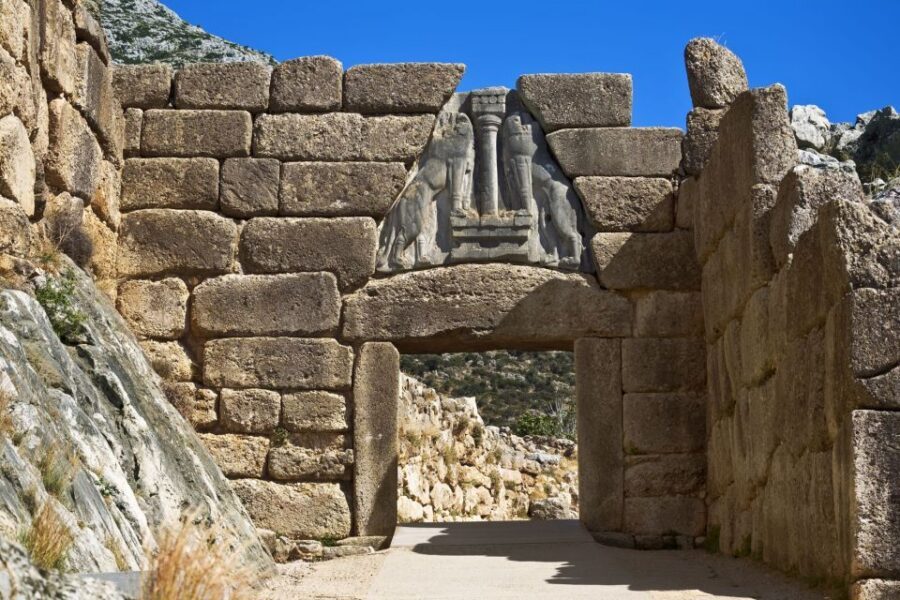
- The Mycenae stop: Lion Gate, Cyclopean Walls, and Royal Tombs
- Lunch on this route: how to make it work
- Epidauros theater: why the acoustics are a big deal
- Driving the national road back to Athens without the stress
- What you actually get with the guide (and why languages matter)
- Price and value: Is $124 per person a fair deal?
- Who this Peloponnese tour suits best
- Should you book this full-day Peloponnese tour?
- FAQ
- How long is the Full-Day Tour of Peloponnese from Athens?
- Where does the tour depart from?
- What are the main places this tour visits?
- Is lunch included?
- What is included in the price besides lunch?
- What languages is the tour guide available in?
- How much does the tour cost?
- Is this tour wheelchair accessible?
- What should I bring?
- Can I cancel for a refund?
Key highlights worth getting excited about
- Corinth Canal drama: A quick break for big views where seas meet across the narrow isthmus
- Saronic Gulf coastal drive: A road-trip feel along the shoreline as you leave Athens behind
- Mycenae’s most famous landmarks: Lion Gate, Cyclopean Walls, and Royal Tombs
- Homer’s world, on the ground: A major center of Greek civilization tied to classical storytelling
- Epidauros theater, still in use: 4th-century BCE acoustics that make the site feel alive
A long, classic day trip from Athens to the Peloponnese
This is a full-day Athens-to-Peloponnese outing aimed at people who want the big names in ancient Greece without dealing with trains, buses, or car parking. You’re picked up in Athens and then you spend the day moving through Argolis, hitting a tight set of culturally important stops.
The best part of a day like this is the momentum. You start with a modern engineering marvel—the Corinth Canal—then you pivot straight into the ancient world at Mycenae and finish at Epidauros. That mix keeps the day from feeling like one long museum visit.
One thing I’d plan for: you’re not doing slow, meandering sightseeing. This is a guided route with set stops and time management. If you love lingering for hours at one place, you may feel the squeeze. If you like your ancient sites with a side of efficient logistics, you’ll probably find the pacing satisfying.
The tour includes transportation and a live guide (French or English), so you’re not left guessing what you’re looking at. You’re also not paying separately for each site along the way, which matters because the total “real cost” of a self-planned route can climb fast.
You can also read our reviews of more tours and experiences in Epidaurus.
Corinth Canal and the Aegean-to-Ionian viewpoint moment
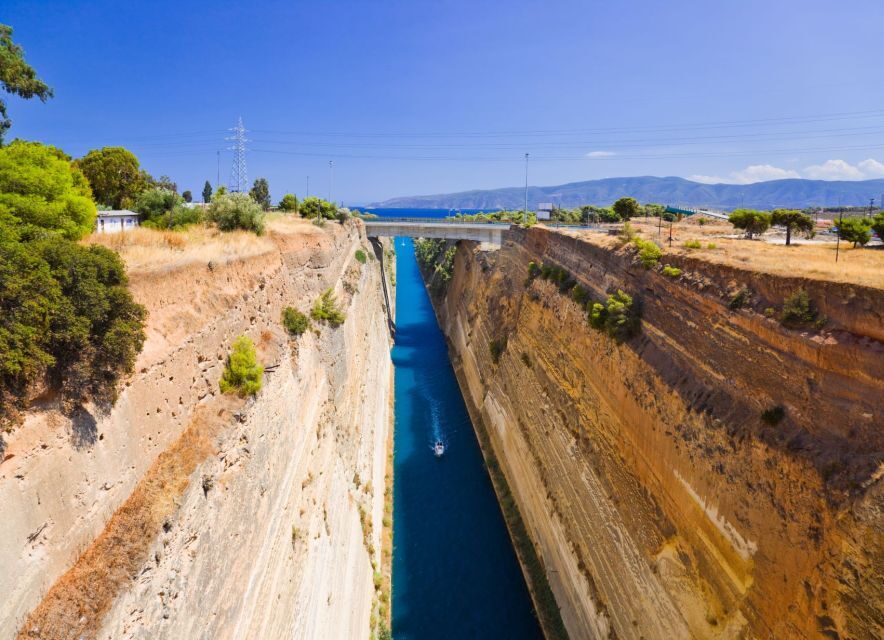
The day starts with a drive that sets expectations early: you’re heading toward the narrow Isthmus of Corinth, where the Corinth Canal connects the Aegean Sea with the Ionian Sea. Even if you’ve seen photos, the canal is one of those places that clicks in real life—steel-and-stone engineering cutting through the geography.
You’ll also travel along the coastal road of the Saronic Gulf. That matters because you’re not just going straight to the next ticket counter. The drive gives you the feeling of a peninsula and the rhythm of a coastal day trip, with your eyes constantly shifting toward water and open views.
The tour includes a quick break for you to appreciate the surroundings and the dramatic views. Don’t treat that break like a picnic window, but do treat it like your chance to orient yourself. Look both ways. Think of it as a “geography lesson” that makes the rest of the day more meaningful. When you later visit ancient sites tied to trade and travel routes, the shape of the region makes more sense.
Practical tip: when you step out for photos, keep an eye on time. The tour is built as a chain of stops, so it’s worth moving efficiently back to the vehicle when your guide signals it’s time to go.
The Mycenae stop: Lion Gate, Cyclopean Walls, and Royal Tombs
Then comes the big ancient centerpiece: Mycenae. This is a place you can understand fast, even if you don’t know every detail of Greek mythology. It was a major center of Greek civilization, and it’s also connected to the stories and names that shaped the classical world—often linked to Homer.
You’ll explore the ruins and see three landmark features that do the heavy lifting for understanding the site:
- The Lion Gate
- Cyclopean Walls
- Royal Tombs
The Lion Gate is the kind of thing you remember later. It has that monumental feel that makes you pause, even if you’re not a “ruins person.” The Cyclopean Walls are impressive in a different way: they communicate strength and purpose. You’re looking at how a civilization protected and defined its power with massive stonework.
The Royal Tombs add another layer. Instead of only focusing on the walls, you get a sense of elite life and burial practice—again, tied to the idea that Mycenae wasn’t a minor outpost. It was a center.
What makes the stop valuable is how it builds context. The tour doesn’t just dump you in front of a single ruin. It gives you a set of recognizable anchors—gate, walls, tombs—so you can leave with a mental map, not just a pile of photos.
Possible drawback to note: Mycenae is a site of uneven ground and outdoor walking. The tour asks for comfortable shoes, and I agree. You’ll want shoes that handle stone surfaces and longer stretches. Plan to move at a steady pace rather than expecting lots of “sit down and soak it in” time.
Lunch on this route: how to make it work
Lunch is included if you select it. That’s not just a checkbox—on a day this long, having lunch arranged can keep your energy from crashing halfway through the afternoon.
The tour keeps you moving: after Mycenae, you continue onward to Epidauros. So the lunch window is your chance to refuel in a predictable way rather than hunting for food once you’re already committed to the schedule.
My advice: if lunch is included in your selection, treat it as part of your plan. Eat earlier rather than trying to squeeze in extra shopping time. Also, bring a small water strategy if you tend to get thirsty on long outdoor days (the tour doesn’t list water as included beyond what’s offered with lunch). You’ll have extra food and beverages available to buy, but you’ll want to avoid decision fatigue when you’re tired.
Epidauros theater: why the acoustics are a big deal
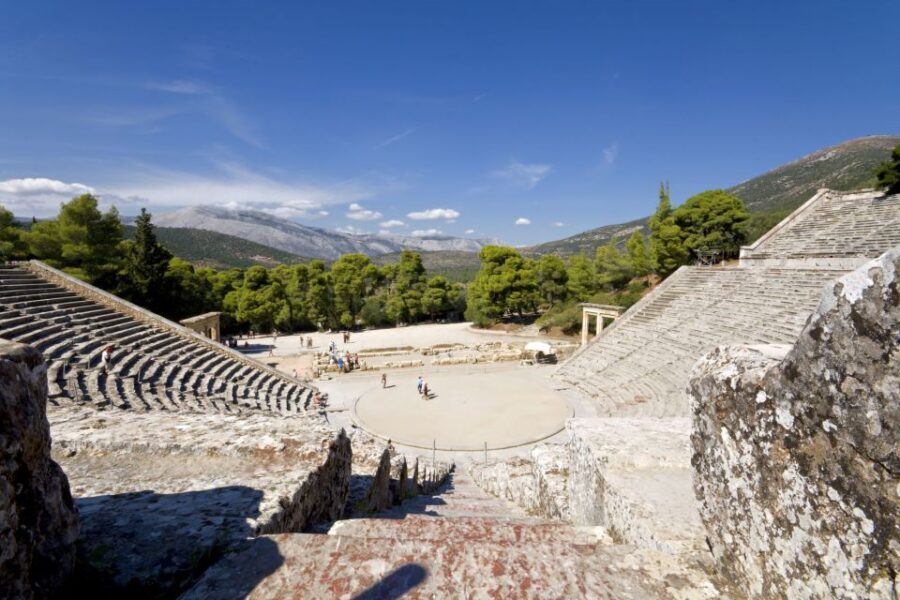
The day ends with a stop that’s easy to get excited about: Epidauros, and specifically its theater. This is the 4th-century BCE theater, and here’s what matters for your experience—it’s still used today and is known for its astonishing acoustics.
That combination changes how you experience the space. You’re not just standing among broken stone. You’re in a designed performance environment. Even without a show, the theater’s geometry makes you imagine how sound can travel and fill the seating area.
This is also a great “wrap-up site” after Mycenae. Mycenae gives you walls, gates, tombs—power and presence. Epidauros gives you culture and the human side of classical life: performance, storytelling, and the kind of public space that brings people together.
Practical tip: spend a minute locating viewpoints and thinking about how the stage area aligns with where the audience sits. If your guide explains what to notice, pay attention—the acoustics reputation is not random bragging. It’s a feature you can feel when you understand the space’s intent.
Driving the national road back to Athens without the stress
After Epidauros, the tour returns via the national road connecting Epidauros with Corinth, and then you’re dropped off back at your hotel in Athens.
That route detail matters for two reasons. First, it tells you the tour isn’t just “go out and hope traffic is kind.” Second, the drive is planned to keep the day within that 11-hour window.
For you, the benefit is stress reduction. You’re not negotiating directions with a GPS while tired. You’re not trying to figure out which bus connects to which train. Your main job is showing up on time and enjoying the ride between ancient stops.
If you get carsick, this is worth considering ahead of time because you’ll be in a vehicle for most of the day. The tour doesn’t list any special comfort features, so bring what you normally use for long drives.
What you actually get with the guide (and why languages matter)
This is a guided tour with a live guide, and the languages offered are French and English. That’s a real difference versus a self-guided “wander and read signs” plan.
A guide helps you connect the dots between stops. It’s one thing to see a gate in Mycenae. It’s another to understand how it fits into a larger story of Mycenae as a civilization center, and how those sites connect to classical themes like poets and philosophers.
Also, the guide likely handles pacing and time decisions. On a day like this, that matters as much as the attractions themselves. When you know when to focus and when to move on, you get more out of fewer hours.
If you’re picky about language: choose the tour in the language you feel most comfortable with, because you’ll probably want the explanations, not just the visuals.
Price and value: Is $124 per person a fair deal?
At $124 per person for roughly 11 hours, the value depends on what you’d otherwise do.
Here’s what this price covers (based on the info provided): transportation, a live guide, and lunch only if selected. You’re also seeing several major stops: Corinth Canal, the Saronic Gulf coastal route, Mycenae (with multiple landmark features), and Epidauros.
If you’re thinking about doing this independently, you’d need a plan for getting from Athens to each site, figuring out schedules, and dealing with the logistics of returning to Athens in a single day. Those costs—gas or transport tickets, plus time—can add up fast. And for ancient sites, the interpretation is part of the experience. Paying for a guide is often cheaper than paying in wasted time.
The other side of value is your time and comfort. This is a full-day commitment. If you only want one or two stops, a shorter outing could be a better match. If you want to hit the highlight reel with structure, this pricing looks pretty reasonable for what you pack in.
Who this Peloponnese tour suits best
This tour is a good fit if you:
- Want a one-day crash course in Argolis’s key ancient sites
- Like the idea of combining Corinth Canal with classical ruins and a major theater
- Prefer a guided route over DIY navigation and timing
- Are comfortable with a long day and outdoor walking
It may not be the best fit if you:
- Want a slow, flexible day with long free time at each site
- Need wheelchair accessibility (the tour is not suitable for wheelchair users)
- Travel with pets (pets aren’t allowed)
If you’re traveling as a couple, a small group, or solo, the structure works well because it reduces friction. You get the route, interpretation, and transport in one ticket.
Should you book this full-day Peloponnese tour?
I think you should book if your goal is classic Peloponnese highlights in one day and you value having a guide handle the “what am I looking at” part. The combination of Corinth Canal, Mycenae landmarks, and Epidauros makes the itinerary feel like a complete arc—from geography to power to culture.
I wouldn’t book if you hate long days or you prefer lots of unstructured time. This tour is built for efficiency, not for wandering at your own pace for hours.
A practical final check: wear good shoes, plan for outdoor walking, and mentally commit to an 11-hour schedule. If you do that, you’re likely to end the day feeling like you saw the region’s most recognizable classical moments—without the stress of planning every leg yourself.
FAQ
How long is the Full-Day Tour of Peloponnese from Athens?
It lasts 11 hours.
Where does the tour depart from?
The tour departs from Athens.
What are the main places this tour visits?
You’ll see the Corinth Canal, travel along the coastal road of the Saronic Gulf, visit Mycenae (including the Lion Gate, Cyclopean Walls, and Royal Tombs), and go to the theater at Epidauros.
Is lunch included?
Lunch is included if you select it. Extra food and beverages are not included.
What is included in the price besides lunch?
The price includes transportation and a live guide.
What languages is the tour guide available in?
The guide speaks French and English.
How much does the tour cost?
The price is listed as $124 per person.
Is this tour wheelchair accessible?
No, it is not suitable for wheelchair users.
What should I bring?
You should bring comfortable shoes.
Can I cancel for a refund?
Yes. You can cancel up to 24 hours in advance for a full refund. The tour also offers reserve now & pay later.