REVIEW · FULL-DAY
Full Day Private Tour to Monemvasia Medieval Fortress Town and Sparta
Book on Viator →Operated by CRISPY LOCAL MONOPROSOΡΙ Ι.Κ.Ε. · Bookable on Viator
Three legends, one long day.
This is a private Peloponnese loop that strings together Corinth Canal, Sparta, and the walled medieval town of Monemvasia. It’s built for travelers who want big variety without wrestling public transit or timing chaos.
I love the doorstep pickup in Athens and the comfort of a private executive car or van with bottled water. I also like that the driver often brings real story time in the car; in past rides, names like Theo, Harry, and Nathaniel were praised for steering the day with helpful background and even short prep materials for each stop.
The main drawback: it’s a long day, and a lot of that time is driving. Also, meals aren’t included, and the Olive Museum has a separate entry fee, so you’ll want to plan for food and budget a little extra.
In This Review
- Key highlights worth your time
- Why this private Athens-to-Peloponnese route works
- Pickup and the comfortable pace in the car
- Corinth Canal: the quick wow stop with real engineering context
- Sparta’s Acropolis site: where the story gets grounded
- Leonidas Monument and Spartathlon: a sporty nod to ancient fame
- Museum of Olive Oil: the best short stop for curious minds
- Monemvasia: the medieval fortress town that steals the show
- The return to Athens and how to time your energy
- Price and value: what you’re paying for (and what you’re not)
- Who this tour fits best
- Should you book this Monemvasia and Sparta day trip?
- FAQ
- How long is the full day private tour?
- Does the tour include pickup and drop-off from Athens accommodations?
- Are tickets included for the Corinth Canal, Sparta, and Monemvasia stops?
- What does the Museum of Olive and Greek Olive Oil cost?
- Will I have a guide inside the archaeological sites?
- Is transportation air-conditioned, and are water bottles provided?
- What is the weather rule and the cancellation rule?
Key highlights worth your time

- Corinth Canal photo stop: quick views from the bridge at the sea-level cut through the isthmus
- Sparta focus: time at the Archaeological Site of the Acropolis of Sparta plus a pass-by at the Leonidas Monument
- Olive Museum specifics: fossilized olive leaves (50,000–60,000 years old) and Linear B replica tablets
- Monemvasia’s medieval walk: 2.5 hours in a still-inhabited fortress town with narrow lanes and sea views
- Private, not guided-in-sites: your driver handles the day, but you explore most attractions on your own
- Comfort perks: air-conditioned transport, bottled water, and a culinary gift
Why this private Athens-to-Peloponnese route works
If you’re short on time in Athens, you still want the Peloponnese. This tour is a smart compromise: it’s not trying to cover every corner of Greece, but it hits three places that each feel like a different chapter.
What makes it work best is the private transport. You get air-conditioned driving and an actual plan for when you arrive and when you leave each stop. The day still runs long, but at least you’re not negotiating schedules. And because it’s only your group, there’s no awkward waiting for strangers to find the right gate.
I also appreciate that the stops are a mix of quick hits and longer “wander” time. You’ll do brief photo moments at famous landmarks, then you’ll get real walking time at Monemvasia.
Pickup and the comfortable pace in the car

The experience starts with pickup from your Athens accommodation in a private car or van. The tour is listed as about 10 to 11 hours, and the rhythm is clear: roughly 8.5 hours are spent at attractions, with the rest devoted to driving.
That “most of the day is moving” reality matters. If you’re the kind of traveler who needs frequent breaks, you’ll still get them in the form of the stops themselves, plus typical quick breaks along the way. But you should go in knowing it’s not a laid-back half-day.
One small but useful detail: you’ll have bottled water in the vehicle, and you’ll get a culinary gift as part of the package. It’s not a meal, but it helps on a long day. And the vehicle being air-conditioned is a practical win, especially if you hit a hot afternoon on the way back.
Corinth Canal: the quick wow stop with real engineering context
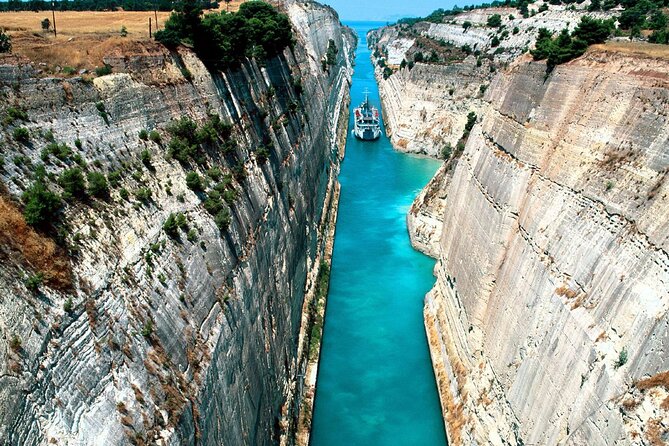
Next up is the Corinth Canal. It’s a short stop (about 10 minutes), but it’s exactly the kind of stop that earns its place on a busy itinerary.
Here’s what you’re looking at: the canal connects the Gulf of Corinth in the Ionian Sea with the Saronic Gulf in the Aegean Sea. It cuts through the narrow Isthmus of Corinth and separates the Peloponnese from the mainland—kind of like turning the peninsula into an island.
What I like about this stop is the specific detail: the canal was dug at sea level and has no locks. You can spot the scale even if you don’t know the engineering. And because you’re only here briefly, you can keep your energy for what comes next.
Practical tip: bring your phone camera-ready. This is a “get your shots fast” moment.
Sparta’s Acropolis site: where the story gets grounded
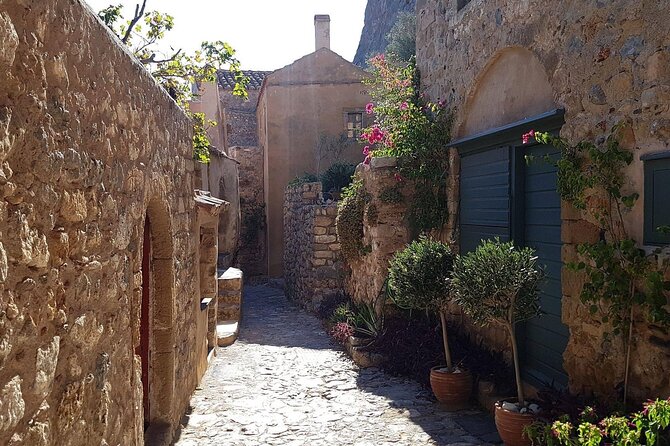
After about a 2.5-hour drive, you reach Sparta. Your first real stop is the Archaeological Site of the Acropolis of Sparta, with about one hour on site.
Sparta isn’t just a name from school books. You’ll see why it was treated as the long-time rival to Athenian democracy. In ancient times, Sparta ran on a very different set of values, shaped around a military society. It also has layers even earlier than the famous classical era—its ties stretch back to figures connected to Mycenaean periods, including the story world around Helen of Troy and the Kingdom of Menelaus.
You’ll also connect it to the famous moment of Leonidas and the 300 Spartans marching toward Thermopylae in 480 BCE. The day doesn’t ask you to memorize dates and names; it helps you place those legends in a physical setting.
How to get the most out of your hour: move slowly at the start, then speed up once you’re oriented. Without a certified guide inside the archaeological site, you’ll enjoy the place more if you look for the basic story the site is hinting at—power, defense, and the idea of a city built for readiness.
Leonidas Monument and Spartathlon: a sporty nod to ancient fame
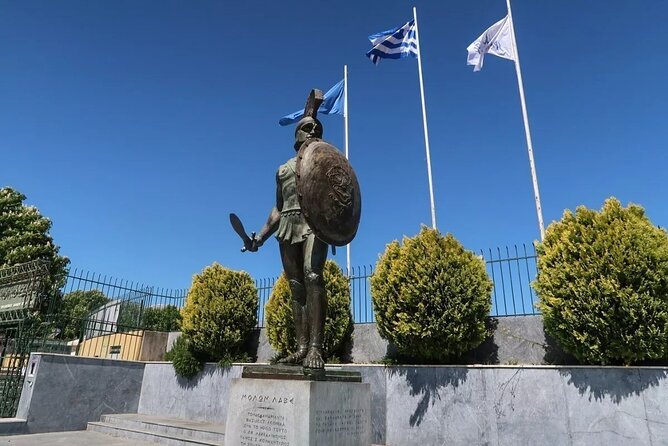
From the Acropolis area, you’ll pass by the Leonidas Monument and the nearby stadium area where the statue marks the ending point of the Spartathlon race (Athens to Sparta, 245.3 km).
This is a short stop—around 10 minutes—but it adds a modern layer. It’s one of those “ancient fame lives on” details that make the day feel less like a museum visit and more like a living place with people actively referencing its past.
If you’re into walking routes, running culture, or just enjoy spotting how Greeks reuse their own legends, this brief pass-by is worth your time.
Museum of Olive Oil: the best short stop for curious minds
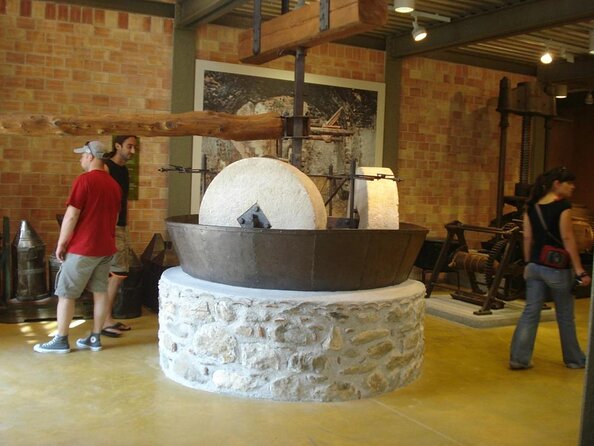
Your next stop is the Museum of the Olive and Greek Olive Oil in Sparta. Time here is about 20 minutes.
Two important things to know upfront:
- Admission is not included (listed at €6.00 per person).
- It’s an easier, more “indoor” stop than the outdoor archaeological sites, so it can be a relief if your feet are already tired.
What makes this museum stand out is the concrete evidence it uses. You’ll see fossilized olive leaves dated around 50,000–60,000 years old from Santorini. You’ll also encounter replicas tied to the Linear B tablets from the 14th century BC—early written references to olive and olive oil.
I love museums like this because they don’t treat olive oil like a product. They frame it as a long-running piece of how Mediterranean people ate, worshipped, worked, and built identity. If you’ve been tasting Greek olive oil already, you’ll probably find the museum helps connect flavor to history.
If you’re short on patience, keep expectations realistic. Twenty minutes is just enough to pick up the big ideas and see a few standout exhibits, not enough for a long, detailed tour.
Monemvasia: the medieval fortress town that steals the show
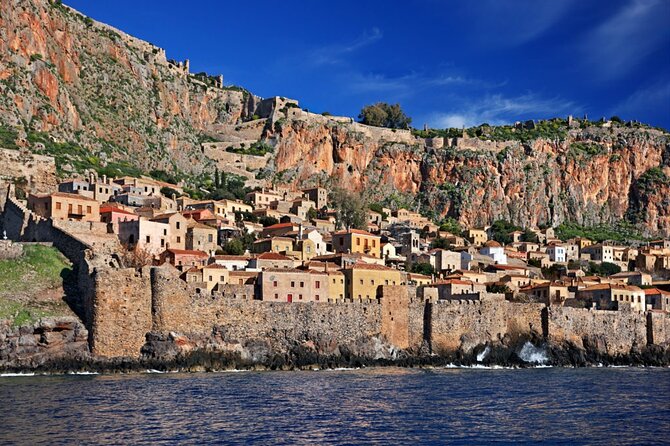
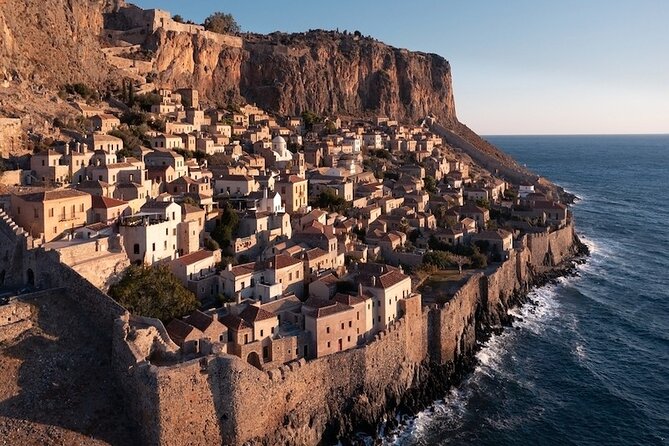
Then comes the big moment: Monemvasia. You’ll arrive after about 1 hour 30 minutes, and you’ll have around 2 hours 30 minutes to explore.
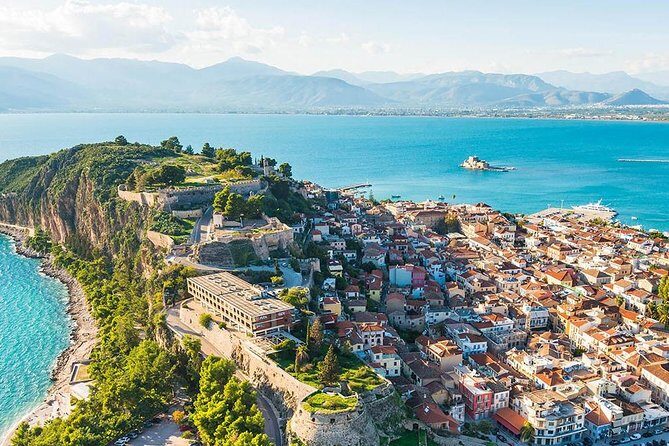
This is a living medieval city, developed on an island connected to the mainland. The town centers on a fortress and a prosperous Byzantine-era city structure. The name is described as meaning one entrance, and that detail matches what you experience on foot: narrow ways, controlled access feeling, and a town designed for defense long before it was designed for tourism.
Inside your 2.5-hour window, you’ll be able to:
- wander through narrow streets
- pass by mansions and small houses
- visit churches
- move along the wall, gate, and citadel areas
- find viewpoints and slow down for sea air and photos
One practical advantage: Monemvasia gives you options for lunch. You’ll have time to grab something by the sea, including the chance to eat with views from the area along the old wall.
What to watch for: medieval towns are full of uneven stone and tight lanes. Bring shoes you trust. If your legs are already tired from Sparta, Monemvasia can still be manageable—just keep your pace. Two and a half hours is long enough to explore without feeling rushed.
The return to Athens and how to time your energy
Your drive back is listed as about 3 hours 30 minutes, with drop-off at your accommodation in Athens.
By this point in the day, your job is simple: pace yourself in Monemvasia so you don’t arrive back exhausted and cranky. If you want shopping time or a longer lunch, Monemvasia is where you spend it, not where you cram it.
Because meals and drinks aren’t included, I suggest you eat with intention. Plan for at least one real meal during your Monemvasia time. Then, if you’re the type who likes snacks, consider using the bottled water and culinary gift to bridge the gaps.
If weather turns hot or rainy, the tour notes that the experience depends on good weather. It’s one more reason Monemvasia timing feels important—you’re choosing a weather-sensitive walking town.
Price and value: what you’re paying for (and what you’re not)
At $276.06 per person, this is not a cheap “drive around and hope for the best” option. But it does feel like solid value for a private, full-day route from Athens.
Here’s the value logic I see:
- You pay for private round-trip transportation in an executive car or van.
- You’re not paying for museum entrances at most stops; the itinerary lists free admission tickets for major outdoor and site visits, including the Corinth Canal photo stop and the Monemvasia time.
- You get comfort upgrades that matter on a 10 to 11 hour day: air-conditioning and bottled water.
What you should budget separately:
- Museum of Olive and Greek Olive Oil entry is €6.00 per person.
- Meals/drinks are not included.
And one more thing: while your driver has local knowledge, the listing is clear that they are not licensed to accompany you inside archaeological sites. That means you should be fine exploring on your own at the Acropolis site and Monemvasia. If you prefer a certified guide inside every site, this setup might feel light compared to a guided-everywhere tour.
That said, past experiences reported drivers like Theo, Harry, and Nathaniel bringing strong context and even simple prep materials before you hit each stop. If you get that kind of driver, the “not inside-site guided” factor hurts less.
Who this tour fits best
This itinerary is a great match if you want:
- a private day trip that feels efficient rather than stressful
- a mix of iconic sights and a real medieval walking town
- a comfortable long-day format with air-conditioned transport
- freedom at Monemvasia to explore at your own speed
You might choose another format if:
- you hate long drives and prefer shorter regional hops
- you want meals included
- you expect a certified archaeologist or licensed guide inside every site
Should you book this Monemvasia and Sparta day trip?
I’d book it if you’re the type who loves “major Greece” days—one where you come home with wide impressions: Corinth engineering, Sparta’s disciplined past, and Monemvasia’s stone-and-sea medieval feel.
It’s especially worth it when you value private transport and want time to wander without coordinating anything yourself. Just go in prepared for a long day, lace up comfortable shoes, and budget that olive museum entry plus your lunch in Monemvasia.
If you can align your visit with good weather, this tour hits its stride. When the skies cooperate, Monemvasia is the kind of place that makes the long drive feel like the price of admission.
FAQ
How long is the full day private tour?
It runs about 10 to 11 hours, with attraction time totaling roughly 8 hours 30 minutes and the rest for transportation.
Does the tour include pickup and drop-off from Athens accommodations?
Yes. The tour includes hotel/AirBnb pickup and drop-off in Athens. Airport or airport-area pickup/drop-off is an extra charge.
Are tickets included for the Corinth Canal, Sparta, and Monemvasia stops?
The stops for Corinth Canal, the Archaeological Site of Sparta, and Monemvasia are listed with free admission tickets. The Olive Museum is not included.
What does the Museum of Olive and Greek Olive Oil cost?
The museum entrance fee is €6.00 per person and is not included in the tour price.
Will I have a guide inside the archaeological sites?
No. The drivers are not licensed to accompany you inside sites. You’ll explore the sites independently during the time provided.
Is transportation air-conditioned, and are water bottles provided?
Yes. You’ll travel in an air-conditioned vehicle and receive bottled water.
What is the weather rule and the cancellation rule?
The experience requires good weather. If canceled due to poor weather, you’ll be offered another date or a full refund. You can cancel up to 24 hours in advance for a full refund.