REVIEW · PELOPONNESE
One day mosaic workshops in the Southern Peloponnese
Book on Viator →Bookable on Viator
Mosaic magic in Sparta takes just a few hours. This one-day class at Mosaic Art Greece is a hands-on workshop in Peloponnese style: pick your base, choose stone colors, then learn the Roman-era approach to setting pieces. I like the small-group size (max 6) because Dimitra Colomvakou can actually correct your grip and show you what to do next.
The second thing I love is the craft itself: you mix adhesive with dry pigments to land on the right shade, then work the mosaic with nippers and tweezers (and possibly a Roman Hardie-style tool if time allows). The one drawback to consider is time: it’s about 3 hours, so if you’re aiming for a very detailed, photo-real design, you may not finish it exactly the way you imagined.
In This Review
- Key highlights you’ll care about
- Entering Mosaic Art Greece Garden in Sparta (and getting started fast)
- What you’ll actually make: Greek-Roman base patterns (or your own idea)
- Choosing colors from natural stones (and why mixing pigments is the secret sauce)
- Tools you’ll use: nippers, tweezers, piping bags, and Roman-style technique
- The workshop flow: building, learning technique, and a noon break that keeps it human
- What you get when you leave: wrapping, an email guide, and take-home learning
- Snacks, drinks, and the small-group comfort factor
- Price and value: $108.37 for tools, materials, snacks, and real coaching
- Logistics that matter: meeting point, start time, and how to plan your day
- Who should book this mosaic class (and who might choose something else)
- Should you book One day mosaic workshops in the Southern Peloponnese?
- FAQ
- How long is the mosaic workshop?
- What language is the workshop taught in?
- Do I need any mosaic-making experience?
- Can I choose my mosaic design?
- How are colors handled during the workshop?
- What tools will I use?
- What happens around 12 noon?
- Are snacks and drinks included?
- How do I take the mosaic home?
- What is the cancellation policy?
Key highlights you’ll care about
- Personal coaching in a max-6 group, so you’re not just watching
- Color mixing with dry pigments, so your mosaic tone looks intentional
- Tools are all provided, including nippers, tweezers, and piping bags
- No experience needed, even if you’ve never picked up mosaic tools before
- A noon break with refreshments and a traditional snack, so you can reset
- Your finished mosaic is bubble-wrapped and taken care of, plus you get an email writeup afterward
Entering Mosaic Art Greece Garden in Sparta (and getting started fast)
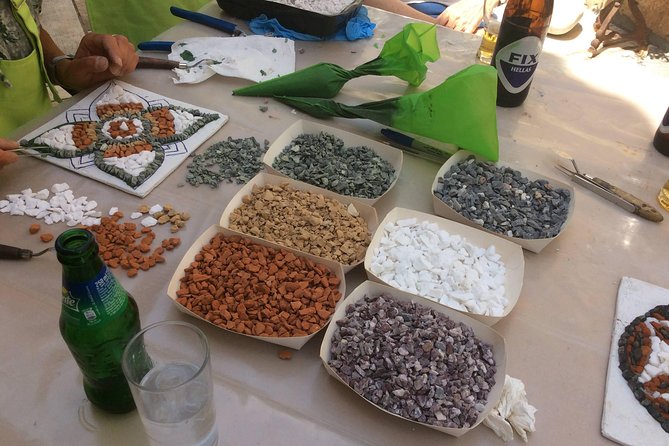
Your morning begins at Mosaic Art Greece, at the garden entrance in Sparta (Κων/νου Παλαιολόγου 132, Σπάρτη 231 00). The start time is 10:00 am, and the workshop ends back at the same meeting point. That loop matters. You don’t need to arrange extra transport or weave the class into a complicated itinerary.
This is also the kind of activity where you’ll feel comfortable quickly. No one needs mosaic experience. The workshop is built for people who are curious, hands-on, and a bit artsy—but not necessarily “art people.” Dimitra Colomvakou guides you through the whole process step by step, in English, with a small number of participants so you aren’t lost in the shuffle.
I’d frame your goal as learning the method and finishing a mosaic you’re proud of. The class is designed to get you there without needing weeks of practice.
What you’ll actually make: Greek-Roman base patterns (or your own idea)
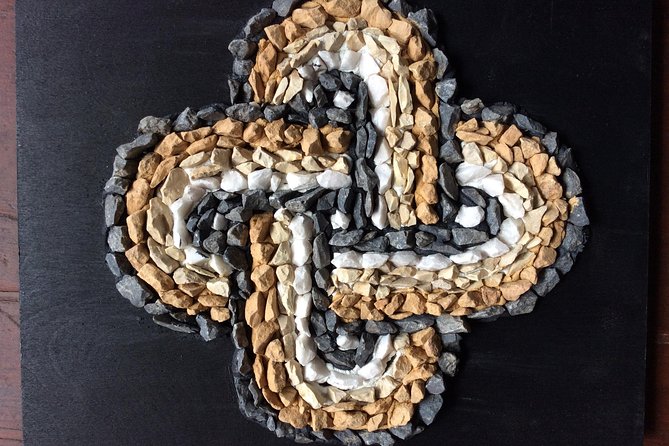
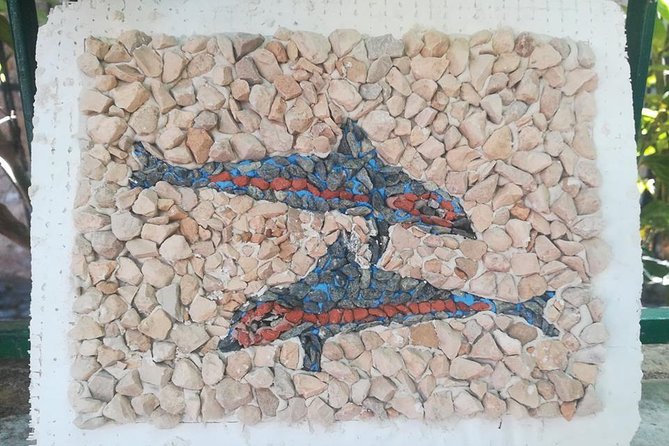
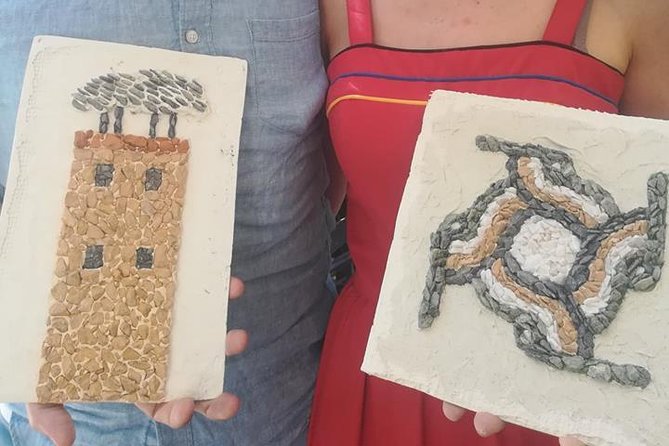
Each participant starts by choosing a base. You can go with a Greek Roman pattern base, or you can use your own design. That choice is more important than it sounds.
If you choose the Greek Roman base, you’re working within a style that already fits mosaic logic—patterns that look right even when you’re still learning the technique. If you bring your own design, you get more creative control, but you’ll want to keep it fairly manageable for a ~3-hour session. Think bold shapes and clear outlines more than fine details.
Either way, you’ll be guided through how the pieces should be placed. You’re not expected to invent the craft from scratch. You’re expected to make decisions and then execute them with coaching.
Choosing colors from natural stones (and why mixing pigments is the secret sauce)
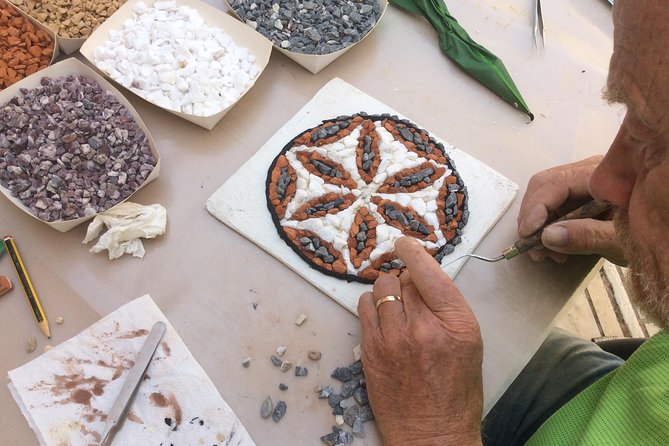
Here’s where the class gets genuinely interesting. Instead of simply picking pre-colored bits, you choose from a variety of natural stones and then you work on the shade by mixing adhesive with dry pigments.
That matters because mosaics often look either flat or accidental when the tones don’t match the design intent. Pigment mixing helps you tune the color so your adhesive background and the stone placement work together. You’re not just “sticking rocks.” You’re learning how mosaic makers control tone.
You’ll also get a sense for why natural stone color varies. The workshop’s approach gives you a way to steer the overall look while still respecting the stones’ character.
If you like the idea of crafts where technique changes the result, you’ll probably enjoy this part as much as the actual cutting and placing.
Tools you’ll use: nippers, tweezers, piping bags, and Roman-style technique
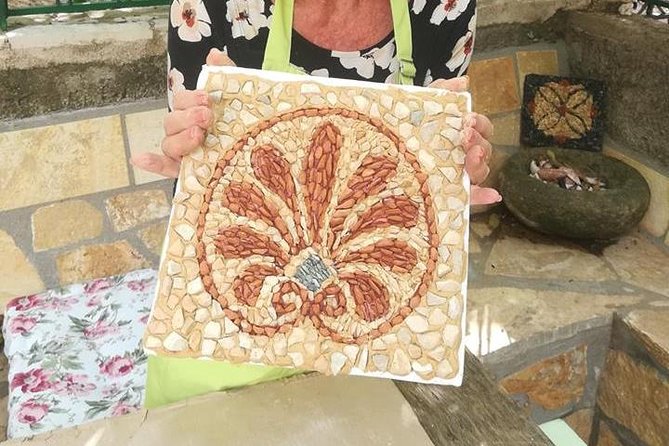
You’ll start working with nippers and tweezers—classic mosaic tools for shaping and placing small pieces precisely. You’ll also use piping bags, which are used to apply adhesive in a controlled way so you don’t smear or overdo the glue.
One detail I appreciated from the description is the mention of a hammer and Hardie used by the Romans for 2000 years, if time permits. Even if you don’t end up using that specific tool, it signals something: the workshop isn’t built around modern convenience alone. It leans into an old-school workflow where tools are part of the craft story.
Practical tip: keep your hands relaxed. If you grip too tightly, your cuts and placements slow down. Dimitra’s coaching helps here—small adjustments can make your work cleaner fast.
The workshop flow: building, learning technique, and a noon break that keeps it human
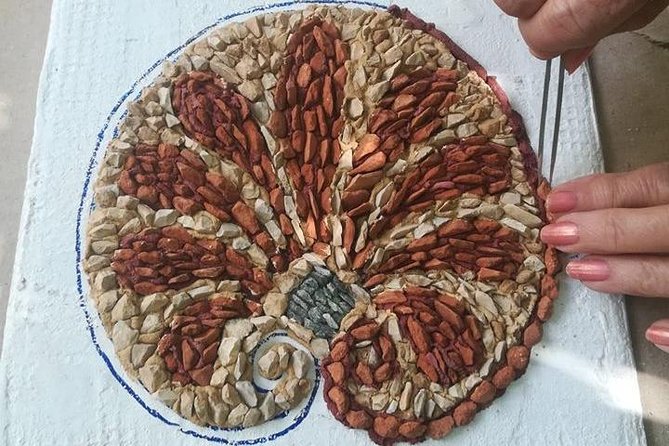
The schedule runs with a clear midpoint. Around 12 noon, you break. You’ll get refreshments and a traditional snack at that time, then you continue working with guidance.
That pause is a big deal in a hands-on class. Mosaic-making can get fiddly. You need a reset so your eyes and hands stay accurate. The snack also helps you keep a steady energy level through the second half.
After the break, the workshop continues in a guided way. You’ll keep placing pieces and refining how you set them. Dimitra’s role is to correct technique as you go—things like how to press without disturbing, and how to place pieces so the final surface looks even.
At the end, your mosaic is ready for travel. Each completed piece is wrapped in bubble wrap, which is simple but essential. You don’t want to rely on a paper bag and good luck.
What you get when you leave: wrapping, an email guide, and take-home learning
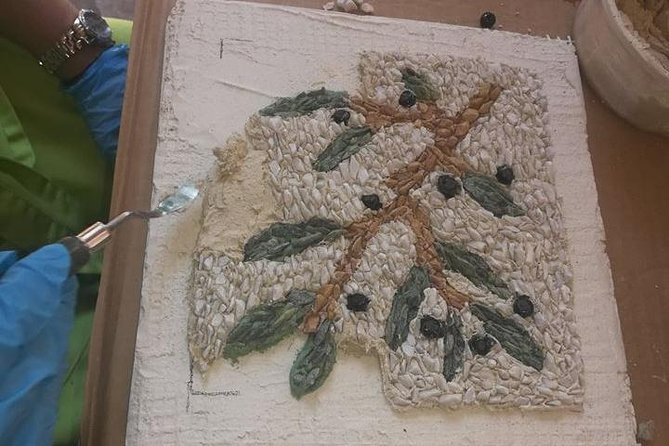
The wrap is your first “take it home” benefit. The bubble wrap is included, and it protects your work from bumps as you move around Sparta or the rest of your Peloponnese trip.
Then there’s the email you’ll receive afterward: a writeup of what you demonstrated in the workshop plus history of mosaics. This is genuinely useful. You’ll remember techniques differently once you can review them without someone talking while you’re building. It also turns your souvenir into something you can revisit.
I also like that the workshop includes safety-by-design habits. Even though you’re using tools, the class is paced for learning and completion, not for stress.
Snacks, drinks, and the small-group comfort factor
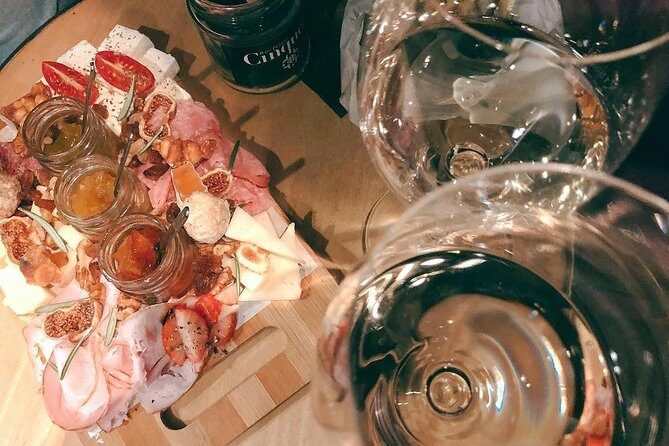
In addition to the traditional snack at noon, you’ll also have snacks and refreshments during the session. Coffee and/or tea are included, along with alcoholic beverages.
That doesn’t mean the class becomes a party. It means you can slow down, take a break, and still feel cared for while you focus on craft details. Mosaic work is often calmer than you expect. With the small group size, it tends to feel like a relaxed studio session rather than a rushed demo.
One review highlight is how welcoming Dimitra is—friendly, calm, and patient. In a recent class, she hosted a family group that included two teenage boys, and the vibe was relaxing enough that everyone stayed engaged. If you’re traveling with teens who get bored easily, this kind of structured hands-on activity can land well.
Price and value: $108.37 for tools, materials, snacks, and real coaching
The price is $108.37 per person for about 3 hours. On its face, that might sound like “just a craft.” But the value is in what’s included and how much you do yourself.
You’re not paying extra for:
- local taxes
- snacks and refreshments
- coffee/tea
- alcoholic beverages
- all tools and materials
- help and instruction throughout
- bubble wrap for travel
- an email writeup with techniques and mosaic history
- free parking
Also, there’s a practical savings baked in. Since it’s a max-6 class with English instruction and active coaching, you’re getting attention that larger, busier activities usually can’t provide. You’ll likely leave with a completed piece, which is harder to guarantee if you’re just taking a general arts activity.
What’s not included is the big obvious piece: transportation to/from attractions and hotel pickup/drop-off (unless you select an option). So you’ll want to plan your own way to Sparta and get yourself to Mosaic Art Greece on time.
Logistics that matter: meeting point, start time, and how to plan your day
The start is 10:00 am, and it ends back at the meeting point. That makes it easy to place on a day you’re already in Sparta.
A few details that help you plan:
- It’s near public transportation.
- Free parking is included.
- You get a mobile ticket.
- Confirmation comes at booking.
- Service animals are allowed.
Because you’re starting at 10:00, you’ll want to avoid any “late breakfast and hope for the best” strategy. Even though the class is relaxed, you’ll be sharpening tools early. Arriving on time helps you get the full instruction.
Also, the class is booked fairly ahead—on average, about 17 days in advance. If you’re traveling in peak season or on a popular weekend, booking sooner tends to make things smoother.
Who should book this mosaic class (and who might choose something else)
This is a great fit if you:
- want a hands-on arts and crafts activity that still feels structured
- enjoy learning techniques, not just making something quickly
- like Roman or Greek aesthetics and want to bring home a piece that fits that style
- are traveling with a friend or family member and want an activity that works for different skill levels
It’s also a solid pick for people who don’t want to commit to a longer workshop. You’ll get the method, you’ll use real tools, and you’ll finish a mosaic you can actually pack.
If you’re the type who always wants maximum creative freedom and maximum detail, consider that the class has a set duration. You can choose your own design, but the time limit means you’ll do best with bold, simple forms.
Should you book One day mosaic workshops in the Southern Peloponnese?
I’d book it if you want a small-group, guided mosaic experience in Sparta that doesn’t require experience and doesn’t waste time. The strongest reasons are the personal instruction, the chance to mix pigments for the right tones, and the included tools, snacks, and take-home wrapping.
Skip it (or choose a different class) if you’re traveling on a super tight schedule where a 10:00 start is hard, or if you’re aiming for an extremely detailed design that would normally take many sessions.
If you’re in the Peloponnese and you want a souvenir with actual craft behind it, this is a smart use of a half-day.
FAQ
How long is the mosaic workshop?
It runs for about 3 hours.
What language is the workshop taught in?
The workshop is offered in English.
Do I need any mosaic-making experience?
No. No experience is necessary.
Can I choose my mosaic design?
Yes. You can choose a base with a Greek Roman pattern or use your own design.
How are colors handled during the workshop?
You choose from natural stone options, and you mix adhesive with dry pigments to get the correct shade of the color.
What tools will I use?
You’ll work with nippers, tweezers, and piping bags, and if time permits you may use a hammer and Hardie tool.
What happens around 12 noon?
You break at 12 noon for refreshments and a traditional snack, then you continue making your mosaic.
Are snacks and drinks included?
Yes. Snacks and refreshments are included, along with coffee and/or tea, and alcoholic beverages.
How do I take the mosaic home?
When you finish, your mosaic is wrapped in bubble wrap for safe travelling.
What is the cancellation policy?
You can cancel for a full refund up to 24 hours before the experience start time.