REVIEW · ATHENS
Philosophy Experience at Plato’s Academy Park – basic version
Book on Viator →Bookable on Viator
Think like a philosopher, right on the ruins. This small-group, hands-on philosophy workshop uses Plato’s Allegory of the Cave as the anchor, then turns it into a guided discussion and debate you can actually use in everyday life. You’ll also get a free entry stop at the Plato’s Digital Museum, so the ideas have context before you sit down in the archaeological park.
Two things I really like: the chance to practice Socrates-style maieutic questioning in plain language, and the way the session happens in the historic place where students once gathered. One thing to weigh first: part of the experience is outdoors, and the Digital Museum can sometimes be closed or have technical issues, so flexibility helps.
In This Review
- Key highlights
- Plato’s Academy Digital Museum: your warm-up stop
- Walking the 300m to the ancient Gymnasium ruins
- Socratic dialogue in plain English: maieutic without the fog
- The Allegory of the Cave: from ancient images to modern life cases
- Basic version details: what you get for the $495 price
- Who this workshop suits best (and who might want a different plan)
- Practical tips before you go
- Should you book this Plato’s Academy philosophy workshop?
- FAQ
- How long is the Plato’s Academy Park philosophy workshop?
- Where does the workshop start?
- How much does it cost?
- Is the Plato’s Digital Museum included?
- Who leads the basic version?
- What group size should I expect?
- Is this experience outdoors, and what happens in bad weather?
Key highlights
- Small group (max 10): more speaking time, less audience-only sitting
- Free museum stop: screens, walls, and videos to set the stage before the dialogue
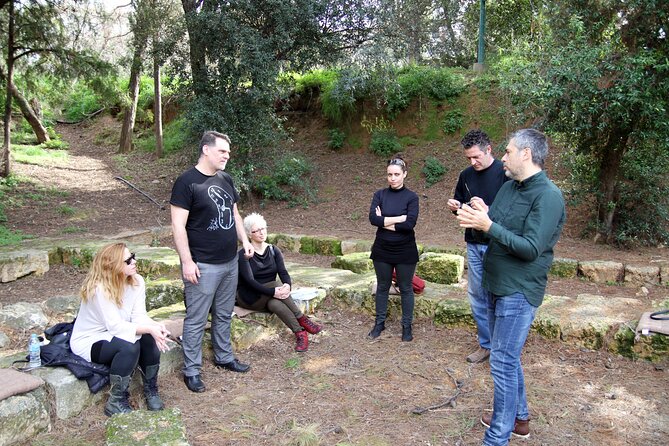
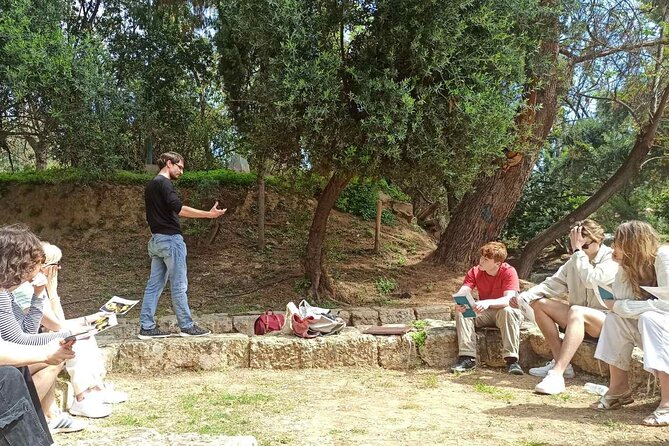
- Ruins setting: you sit on foundation stones at the ancient Gymnasium area under shaded trees
- Socratic practice, not a lecture: the facilitator guides you to ask and answer, midwife-style
- Modern scenario debates: Plato’s ideas get tested against real-life examples
- Basic version led by a junior facilitator: still interactive, with lots of group reassurance
Plato’s Academy Digital Museum: your warm-up stop
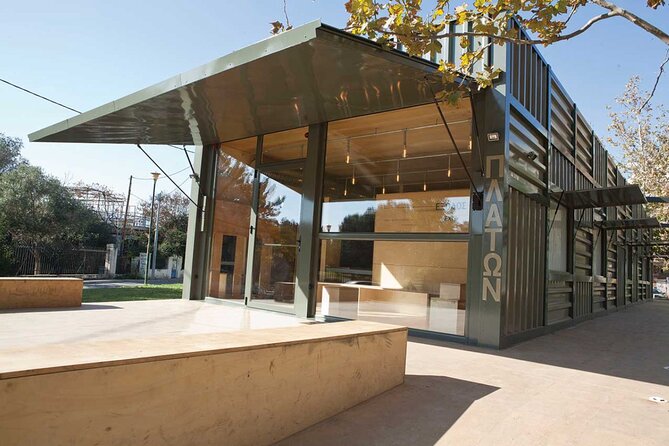
Your session starts at the Plato’s Academy Digital Museum at Alkmeonos 1. This isn’t just a “kill time before the main event” detour. It’s your entry ramp into the workshop theme: meeting Plato through his world, his methods, and his stories.
Here’s what makes this warm-up smart. You’re not thrown into the Allegory of the Cave cold. Instead, you’ll see information through digital screens plus museum-style interpretation like wall content and videos. That matters because the workshop moves quickly into dialogue, where you’re expected to exchange opinions and experiences. If the museum helps you get your bearings, the rest of the session feels less like abstract philosophy and more like a conversation you can follow.
One practical note: sometimes the museum is closed due to technical reasons. That can also mean some screens aren’t working as expected. If that happens during your time slot, don’t assume the whole program will fall apart. The facilitator is set up to keep things going and guide the group through the dialogue anyway.
Walking the 300m to the ancient Gymnasium ruins
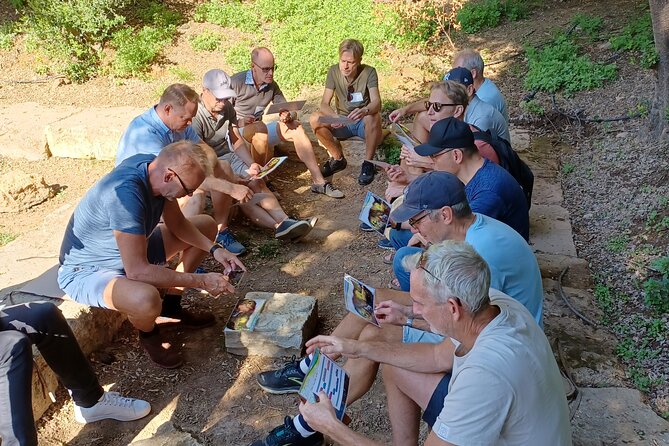
After the museum, you’ll walk about 300 meters through the archaeological park of the Academy. That distance is short enough to keep momentum, but long enough that you feel the change from modern presentation to ancient setting.
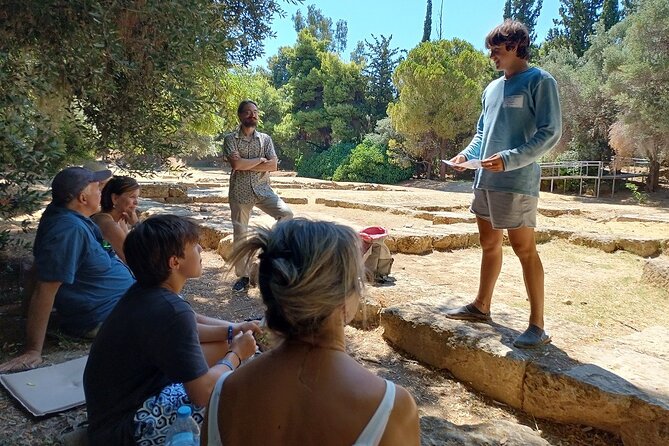
Then you’ll take your position on the ruins of the ancient Gymnasium—where young people trained and where philosophers often gathered to teach. You sit on the foundation stones of the ancient buildings, usually under shaded trees. It sounds simple, but the seating and the setting do work. Sitting on the remnants of learning changes the tone. You’re not just thinking about Plato; you’re doing the thinking in the physical atmosphere of an education space.
If archaeological excavation is happening, the plan shifts a bit. You’ll still see the ancient Gymnasium ruins from a short distance, and you’ll relocate within the park to a different spot. That’s not a problem so much as a reminder: this is a living archaeological site, not a movie set.
If you’re sensitive to heat or sun, think ahead. You’re outdoors, and shade can help, but comfort depends on conditions that day.
Socratic dialogue in plain English: maieutic without the fog
This workshop is designed to feel like participating in a philosophy class, not watching one.
The core method is Socrates’ maieutic approach—the midwife style of teaching. Instead of dropping answers on you, the facilitator plays another Socrates: they ask questions, then help you build your own reasoning out loud. You’ll practice Platonic dialogue techniques by swapping beliefs, experiences, and viewpoints, and doing it in a way where everyone is included.
That inclusion is important in a small-group format. With a maximum of 10 travelers, the facilitator can actually keep track of who’s speaking and who wants to contribute. The program is structured to reassure you that you’re not on the spot to be “smart.” You’re there to think, question, and refine.
The way it works in practice is pretty straightforward:
- The facilitator prompts you with questions.
- You respond with your take (no special terminology required).
- Then you react to other people’s ideas, guided back toward clarity.
The sessions are suitable for people without previous knowledge. You’re not expected to already know Plato’s vocabulary. That’s a big deal for anyone who worries they’ll be lost in philosophy talk.
The Allegory of the Cave: from ancient images to modern life cases
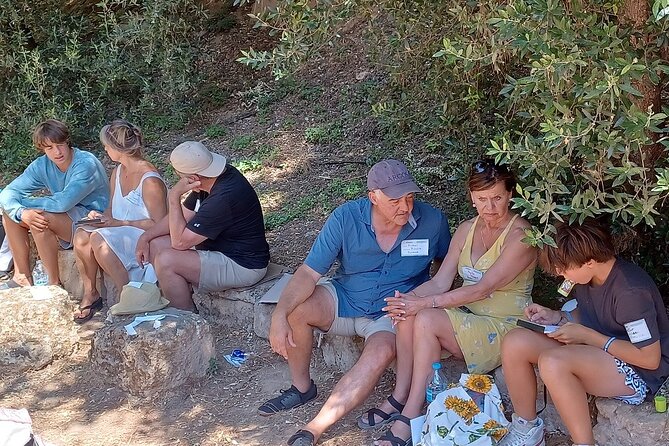
Plato’s Allegory of the Cave can sound like a school assignment: people in shadows, people outside, big meaning. This workshop aims to make it useful.
You’ll discover deeper meanings of the Allegory through guided discussion. The key is the bridge to modern life. The facilitator leads you through debates and dialogue using real, everyday examples—so you’re not only interpreting Plato’s story. You’re also testing how the story shows up in your own world.
This is where the experience tends to click. When you compare the cave idea to modern situations—what you see, what you assume, what you accept as real—you start noticing your own filters. And because the session is built around discussion, you’ll hear different perspectives from the group and have to adjust your thinking.
One of the strongest compliments tied to the experience is the way the debate stays joyful and fun while still being serious about ideas. The goal isn’t to “win” the argument. It’s to practice critical thought and self-awareness.
If you like philosophy that has a homework feel, this probably won’t work the same way. If you like philosophy that turns into discussion and personal reasoning, you’re in the right place.
Basic version details: what you get for the $495 price
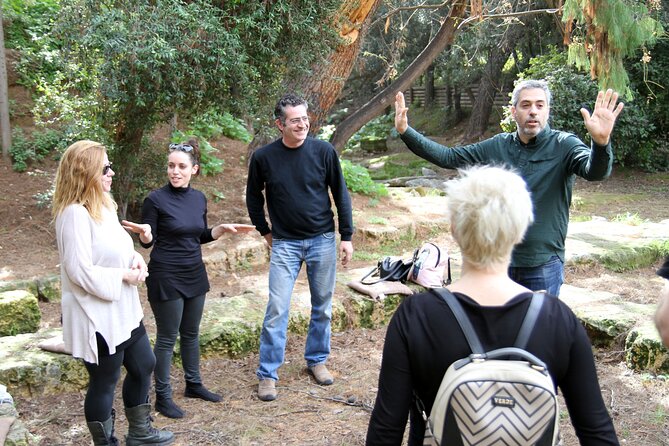
This version is hosted by a junior facilitator. That can mean a more guided, interactive workshop style, with someone who’s trained to keep the dialogue moving and include everyone.
So what are you paying for at $495?
- A 2-hour, small-group, highly interactive learning format (not a passive guided tour)
- A free museum entry included in the start stop
- A structured Socratic-style dialogue approach
- A capped group size (max 10)
- Liability insurance and local VAT
It’s also worth noting what you’re not paying for. The activity doesn’t position itself as a classic guided history tour with a strict museum guide script. Instead, it’s an educational workshop where the “content” is built through discussion.
Is it good value? For the right traveler, yes. If you want a unique Athens experience that’s not another checklist of sights—and you enjoy thinking out loud—this fits. If you’re only looking for facts, dates, and polished narration, you might find it less satisfying than a standard guided tour.
Who this workshop suits best (and who might want a different plan)
This is family friendly, but with a specific age boundary: it’s suitable for adults and teenagers over 15. Underaged participants can’t book alone; at least one adult must book and supervise.
So who’s a strong match?
- Teens who like discussion and don’t mind speaking up
- Adults who want a fresh, local-feeling experience beyond standard sightseeing
- Anyone curious about Plato but intimidated by philosophy classes
Who might struggle?
- If you hate group participation or speaking when prompted
- If you’re expecting a traditional lecture
- If you need fully indoor, climate-controlled activities (it’s outdoor)
Also consider your comfort with heritage sites. You’ll be expected to follow respectful conduct etiquette—things like sobriety, cleanliness, and keeping noise down. The facilitator can terminate participation without refund if behavior is disrespectful toward the site or people, so it pays to go in with a calm, respectful mindset.
Practical tips before you go
A few small prep steps can make the difference between an okay experience and a genuinely enjoyable one.
- Bring weather-aware clothing. It’s outdoor, and good weather is required.
- Dress appropriately for a historical heritage setting. You’ll be asked to respect a dress-code.
- If you’re sensitive to limited museum functioning, go in with the attitude that the dialogue is the main event.
- Since it’s a public space, you should assume photo/video may happen. You can withdraw consent in writing, but plan as if media recording could occur.
- If you’re traveling with service animals, they’re allowed.
And one logistics note: you’ll use a mobile ticket, and the meeting point is the museum itself, which is near public transportation. That keeps the start simple.
Should you book this Plato’s Academy philosophy workshop?
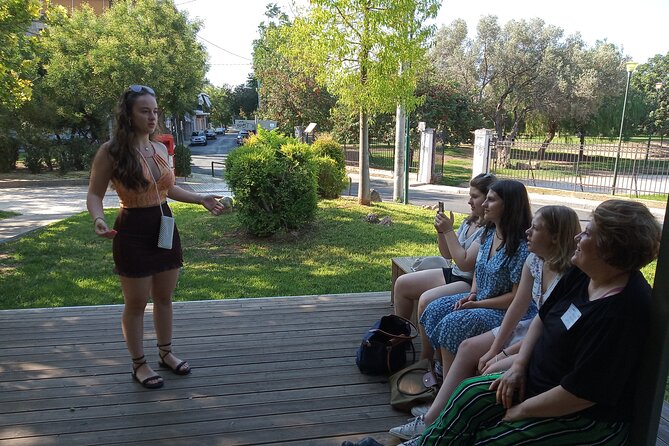
Book it if you want Athens in a different mode—less monuments-only, more mind-in-motion. The combination of a quick museum warm-up plus Socratic dialogue in the ancient Gymnasium ruins is exactly the kind of Athens experience that feels personal, not crowded, and not cookie-cutter.
Skip it if you only want information delivered to you. This is participation-focused. The reward comes from engaging: answering questions, reacting to others, and using Plato’s ideas on real scenarios.
If you’re the type who enjoys debate as a friendly tool for thinking, this is a strong choice. And if you’re worried about the museum working perfectly, don’t be. The session is designed to keep moving even when museum screens or access don’t cooperate perfectly that day.
FAQ
How long is the Plato’s Academy Park philosophy workshop?
It runs about 2 hours.
Where does the workshop start?
The meeting point is Plato’s Academy Digital Museum, Alkmeonos 1, Athina 104 42, Greece. The activity ends back at the meeting point.
How much does it cost?
The basic version is priced at $495.
Is the Plato’s Digital Museum included?
Yes. Free entrance to the Plato’s Digital Museum is included as part of the workshop start. The museum may sometimes be closed due to technical reasons.
Who leads the basic version?
The basic version is hosted by a junior facilitator. The format is still interactive, with guided dialogue and questioning.
What group size should I expect?
The workshop has a maximum of 10 travelers.
Is this experience outdoors, and what happens in bad weather?
Yes, it’s outdoors and requires good weather. If it’s canceled due to poor weather, you’ll be notified at least 3 hours ahead and offered either a different date, a similar workshop, or a full refund.