If you like your Bible with real street corners, this day fits. You’ll ride in a private air-conditioned car with an English-speaking driver, then spend your hours walking through the exact kinds of places where Paul argued, taught, and kept moving. It’s a long haul, but the pacing is built for comfort—transport is handled, and you get enough time at each stop to actually absorb what you’re seeing.
I like the simple setup: hotel or port pickup and drop-off plus a cool car and bottled water, so you’re not burning energy on logistics. I also like that you’re not stuck staring at a guide mic—there’s time to look around the Agora, the hill views, and the Corinth ruins without feeling rushed every five minutes.
One thing to consider: it does not include a licensed guide to go inside archaeological sites. You’ll still get an English-speaking driver with strong context, but if you want site-by-site “deep teaching” at every stop, plan for an add-on licensed guide.
In This Review
- Key highlights worth your attention
- Price and what you’re really paying for
- The A/C pickup machine: how this tour keeps your day sane
- Ancient Agora of Athens: where ideas got argued out loud
- Areopagus Hill: the Unknown God moment with skyline views
- St. Dionysius Areopagitis Church: a calm payoff after the hill
- The Isthmus and Corinth Canal: the geography that shaped travel
- Kenchreai port ruins: where Paul arrived by sea
- Ancient Corinth: Temple of Apollo, Glauke Fountain, and the Bema stops
- Temple of Apollo and the Apollo area
- Glauke Fountain: myth in the same frame as faith
- Paul’s Column / the Bema platform in the Roman Forum
- Corinth Archaeological Museum: artifacts that fill the gaps
- Acrocorinth: fort views plus layers of centuries
- Apostolos Pavlos Church: the story anchored in a modern sacred space
- Who should book this private Paul tour
- Should you book it or skip it?
- FAQ
- Is pickup included?
- How long is the tour?
- Is this a private tour?
- What language is the tour in?
- Are museum and archaeological entrance fees included?
- Does the tour include meals?
- What’s included in the vehicle?
- Do I get a licensed guide inside the sites?
Key highlights worth your attention
- Private, small-group format (1–4 in a sedan or 5–7 in a mini van) keeps the day flexible.
- A/C transport, WiFi onboard, and bottled water make the heat easier to manage.
- Areopagus Hill plus the nearby church connect the Unknown God moment to an early Athenian convert.
- Corinth day feels complete: canal views, Kenchreai port, Ancient Corinth, a museum, and Acrocorinth.
- Most stops have time built in (often 20–40 minutes), so you’re not just “passing through.”
Price and what you’re really paying for
The price is $250.90 per person for a private 8–9 hour experience. That number matters less than what’s bundled: pickup and drop-off, a private vehicle, WiFi onboard, and bottled water. In practice, you’re paying to turn a complicated route (two cities, multiple sites, long transfers) into one controlled day.
There’s also the add-on reality: archaeological site and museum entrance fees are extra (listed at €36 per person). And lunch cost is not included, even though you’ll have time for it. So the fair way to budget is: your tour price plus entrance fees, plus whatever you choose to eat in Corinth.
If you’re traveling as a couple or small group, private time here can be a strong value. You’ll spend less energy navigating and more time at places that connect tightly to Paul’s Athens-to-Corinth story.
The A/C pickup machine: how this tour keeps your day sane
This tour is built around transport from your Athens hotel or the port, with the driver waiting outside your location. If you’re coming from a cruise, you’ll meet the driver in the arrival area holding a sign with your name. That reduces the usual “find your person” stress, which is especially nice in Athens where traffic can make timing feel chaotic.
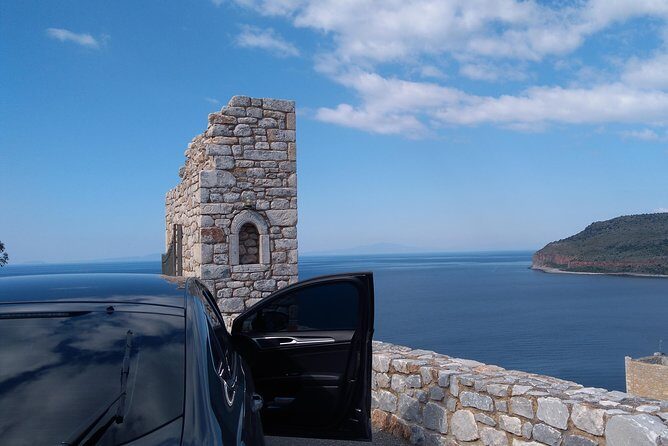
On the road, you get an air-conditioned vehicle, plus onboard WiFi and bottled water. In summer heat, that difference is real. You can cool down between stops, use your phone for notes and maps, and avoid the frantic scramble that turns a “good idea” day into a tired day.
Group size is capped small. If you’re 1–4 people, expect a sedan. If you’re 5–7, it’s a mini van. Either way, you’ll be moving like a private party, not a bus-tour stampede.
One more practical tip: Greece can be sunny. The tour recommends hat and sunscreen, and I agree—especially when you’re going uphill at points like Acrocorinth.
Ancient Agora of Athens: where ideas got argued out loud
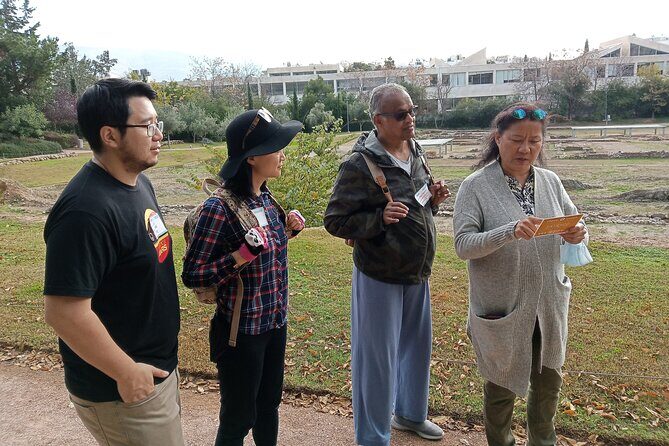
Your Athens stop begins at the Ancient Agora of Athens. This is where the city’s public life happened—courts, speeches, trade, and debate. The tour frames it around the setting for Paul’s message to Athenians, which helps you see the scene as more than “pretty ruins.”
Expect a walk-through feeling: ruins of temples, statues, and public buildings that were tied to civic and religious life. A key practical thing here is time. You’re given about 40 minutes, which is long enough to do two useful actions: (1) follow the main sight lines and (2) slow down to read the interpretive points you find most relevant.
Possible drawback: the stop isn’t “hands-on guided step-by-step inside every corner” since a licensed site guide is not included. You’ll still get context from the driver, but if you want every detail pinned to a specific Bible passage and a specific column or inscription, you may want to add a licensed guide.
Areopagus Hill: the Unknown God moment with skyline views
Next comes the Areopagus (Areopago), a rock outcrop overlooking Athens. This is one of those places where the view does half the teaching job. You stand above the modern city and you can picture what Paul was up against: a dense mix of philosophies and worship traditions, all swirling around public life.
You get about 30 minutes, which is just enough to:
1) see the broader city layout below, and
2) focus on the specific idea tied to the Unknown God message.
The tour highlights the meaning of Paul’s speech—how it pushed back on familiar religious assumptions and forced a conversation about what people were truly worshiping. Even if you’re not into ancient rhetoric, the hillside makes the moment feel human: a speaker facing real questions, in a place that commands attention.
This is also a good stop for quick photos. Just be mindful that it can be windy and sun-blasted.
St. Dionysius Areopagitis Church: a calm payoff after the hill
After Areopagus, you move to the Church of St. Dionysius the Areopagite. This stop is shorter—about 20 minutes—and it’s also quieter. The tour connects the church to the first Athenian convert associated with Paul’s message.
Why this works: it gives your day a shift in tempo. You’ve just been outdoors with city views and big ideas. Now you’re inside a peaceful setting where the story feels more personal than argumentative.
Admissions are listed as free for this church, so you’re not adding cost here. It’s also a nice mental reset before the long ride away from Athens toward Corinth.
The Isthmus and Corinth Canal: the geography that shaped travel
Then the day swings toward the Isthmus of Corinth, where the Corinth Canal cuts through the rock. This is not a “Bible lecture stop,” but it matters. Geography changes trade routes, travel time, and the places where missionaries actually pass through.
You get about 20 minutes plus panoramic views. The canal gives you a quick, modern contrast to what used to be a hard travel corridor. It’s a good reminder that ancient journeys were not just spiritual journeys—they were logistical ones too.
This stop is free of listed admission fees, so it’s a straightforward way to break up the travel time without paying more.
Kenchreai port ruins: where Paul arrived by sea
Next is the Ancient Port of Kenchreai, described as a commercial hub in the Roman era. The tour ties it to the idea that Paul arrived here around 53 A.D.
You’ll get about 20 minutes, enough time to stand in the “in-between” space—half archaeological remains, half imagination. Port sites can feel abstract until you connect them to movement: ships coming in, goods moving out, people arriving with letters, stories, and new communities.
Admissions are listed as free. So again, you’re paying for transport and time, not for another ticket.
Ancient Corinth: Temple of Apollo, Glauke Fountain, and the Bema stops
Corinth is where the day becomes packed. You’ll spend time in Archaia Korinthos areas tied to Paul’s preaching and the religious landscape of the city.
This is the part you should plan your attention for. Corinth ruins can sprawl, and you’ll want to connect names to settings as you go.
Temple of Apollo and the Apollo area
You’ll see the Temple of Apollo, described as one of the oldest Doric temples in the Peloponnese. The columns are the headline. They’re also a useful anchor for the idea that Paul preached in a place with deep, established religious traditions.
You have multiple segments tied to the Apollo area (one combined with other Corinth highlights, plus another short stop). That duplication sounds odd on paper, but in the real world it often means a chance to see the same complex from a different angle or pace the experience for what you want to focus on most.
Glauke Fountain: myth in the same frame as faith
The route includes the Glauke Fountain, tied to a legend involving Medea. This is a smart inclusion because it shows how ancient myth and religious practice lived side by side in people’s minds. Paul wasn’t speaking in a blank world.
If you’re into storytelling, this myth stop helps you understand what “cultural background” means on the ground.
Paul’s Column / the Bema platform in the Roman Forum
Then comes the Bema area in the Roman Forum—where the tour links Paul’s teaching with a public, elevated platform. You’re given about an hour for this bigger cluster, and then later another short stop focused on the Bema of Apostle Paul in Ancient Corinth for about 10 minutes.
That pattern works because it gives you both time and repetition: you see the forum setting, get the context, then return for a more focused biblical framing tied to Acts 18:12–17 and Gallio.
One caution: since entrance fees for archaeological sites are not included, this is one of the places where you’ll want your budget ready for the extra ticket costs.
Corinth Archaeological Museum: artifacts that fill the gaps
After you’ve walked among ruins, you move to the Archaeological Museum of Corinth. You get about 1 hour here, with no admission included.
Museums are where you stop guessing. Even with no “expert mode” added, an artifact room helps you connect the stones to real objects: pottery, statues, and finds tied to the sanctuary of Asklepios mentioned in the tour description.
The practical advantage: you can shift from sun to shade, and from walking to standing still. On a long 8–9 hour day, that reset is valuable.
If you’re the type who reads captions and turns history into a mental timeline, you’ll probably enjoy this museum stop more than you expect.
Acrocorinth: fort views plus layers of centuries
Next is Acrocorinth, a fortified acropolis with views that can feel like a reward for the entire day. You get about 1 hour 10 minutes, and there’s time scheduled for lunch at a nearby taverna.
This is the “layers” stop. The site described includes classical Greek ruins as well as Byzantine, Frankish, and Ottoman fortifications. That mix is exactly why Acrocorinth is worth your time: you’re seeing how places get reused, repurposed, and re-occupied long after the first story ends.
Admissions here are listed as free. So even though it’s a bigger time block, it doesn’t add ticket cost based on the provided info.
If you’re prone to walking fatigue, keep pace conservative on the uphill parts. You’ll get better views with less rushing.
Apostolos Pavlos Church: the story anchored in a modern sacred space
The last stop is the Apostolos Pavlos Church, described as a three-aisled basilica built in 1936 on the site of an earlier church associated with Paul. You’ll have about 20 minutes here.
This final piece matters because it ties the day to something ongoing rather than purely archaeological. You’re not just looking at ruins. You’re ending in a space built around the memory of Paul’s influence in Corinth.
You’ll also avoid more entrance fees here since it’s listed as free. It’s a fitting wind-down stop that lets you reflect without adding another ticket or another long walk.
Who should book this private Paul tour
I think this tour fits best if you want three things:
- You care about biblical context but also want comfort. You’ll get transportation handled, plus real time at the stops.
- You prefer small-group pacing over a big bus rhythm.
- You like pairing scripture ideas with the setting—Agora, hillside, ports, and Corinth ruins.
If you’re traveling with seniors or anyone who hates hectic transit, the A/C private car and pickup/drop-off structure helps a lot.
If you’re a hardcore history or theology traveler who wants every site explained at a granular level, you might need to plan for an extra licensed guide inside the archaeological areas, since that’s not included in the base price.
Should you book it or skip it?
Book it if you want a high-comfort private day tracing Paul’s Athens-to-Corinth route with enough time to actually see the key places, including a museum and Acrocorinth views. The value is strongest if your group is small enough that private transport is meaningful for your schedule.
Skip or adjust if your top priority is detailed, inside-every-site narration from a licensed archaeologist/guide. The tour can still be satisfying, but the base package does not include that kind of official site guidance.
For most people who want faith + geography + a calm plan, this is a solid pick. It’s the kind of day that helps the stories stop floating and start feeling real.
FAQ
Is pickup included?
Yes. You can get hotel or apartment pickup and the driver waits outside your location. Port pickup is also offered, with the driver meeting you in the arrival area with a name sign.
How long is the tour?
The duration is about 8 to 9 hours, including travel time between locations.
Is this a private tour?
Yes. It’s a private tour/activity, and only your group participates.
What language is the tour in?
The tour is offered in English.
Are museum and archaeological entrance fees included?
No. Entrance fees are not included and are listed as €36 per person for archaeological sites and museums.
Does the tour include meals?
Lunch stops are scheduled, but meal costs are not included.
What’s included in the vehicle?
You get an air-conditioned vehicle, WiFi onboard, and bottled water. Private transportation is included, and vehicle type depends on group size.
Do I get a licensed guide inside the sites?
A licensed guide to accompany you into archaeological sites is not included. The tour includes an English-speaking driver with historical context.