REVIEW · EVENING EXPERIENCES
Stargazing & Mythology of Paros Night Sky: Private Experience
Book on Viator →Bookable on Viator
Stargazing on Paros has a way of slowing you down. This private night experience pairs Greek mythology with real astronomy so the constellations feel less like dots and more like stories you can actually understand.
Two things I especially liked: the mellow, outdoorsy pace with wine and nibbles included, and the chance to learn the northern hemisphere constellations in a place with limited light pollution.
One thing to keep in mind: the experience depends on the sky cooperating, since weather and moon phase can affect visibility (and rain may change what you see).
In This Review
- Key things to know before you go
- Paros at 10:00 pm: why the sky feels different here
- Kay’s style: mythology that actually connects to the constellations
- What happens during the stargazing portion (and what you should look for)
- Bring binoculars and plan for photos the right way
- Wine, nibbles, and a private group that stays mellow
- Price and value: is $299.82 per person worth it?
- Practicalities: meeting point, timing, and how to prepare
- Weather, rain, and what happens if the sky is cloudy
- Who should book this Paros night-sky experience
- Should you book Stargazing & Mythology of Paros Night Sky?
- FAQ
- What time does the Paros night sky experience start?
- Where do we meet for this private tour?
- What does the tour include?
- Should I bring binoculars or a camera?
- Is this a private tour?
- What happens if it rains or the forecast is bad?
- Is there a mobile ticket?
Key things to know before you go
- Low light pollution on Paros gives you a real chance to see stars
- Mythology meets modern science, tied to the northern hemisphere night sky
- Kay guides you through the sky, with clear explanations built for a private group
- Wine and nibbles keep the whole outing relaxed and human
- Bring your own binoculars for a closer look
- Moon phase and weather can shift what’s visible, even with a great guide
Paros at 10:00 pm: why the sky feels different here
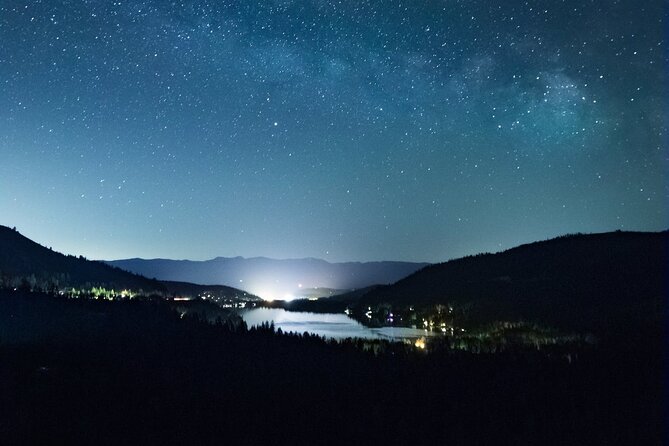
Paros is the kind of place where the dark actually lets the stars show up. That matters more than people think. In lots of cities, you can learn the names of constellations and still feel like you’re guessing, because the sky is washed out by nearby lights. Here, the pitch-dark conditions are part of the value.
You start at 10:00 pm, which is late enough that the night has fully settled in. The experience also runs about 2 hours, so you’re not committing to an all-night vigil. Instead, it’s built like a focused lesson: you arrive, you get oriented, you look up, and you keep going long enough to notice patterns in the sky rather than only seeing a couple of bright points.
The location is on Paros in the Cyclades, and you’ll meet at Anoussakis Market, Unnamed Road, Drios 844 00, Greece. From that base, the plan is to move to a quieter, low-light spot. The exact view location isn’t spelled out in the details you’re given, but the goal is clear: unspoiled Paros darkness.
Kay’s style: mythology that actually connects to the constellations
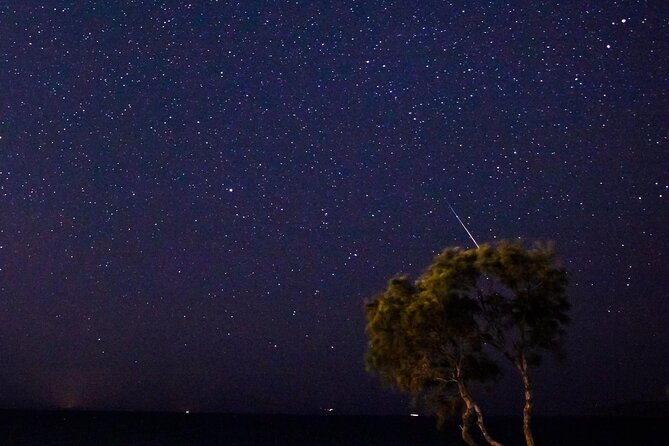
A lot of stargazing tours fall into one of two camps. Either they’re heavy on the myths, with astronomy left vague. Or they’re astronomy-first, with stories tacked on like decoration. This experience tries to do both, and it’s guided in a way that’s meant to click.
The big idea is that you’re not just naming constellations. You’re learning how ancient Greek myths and modern science both help you make sense of the northern hemisphere sky. When you connect a myth to what you’re seeing overhead, the stars become a map you can use—not just something pretty to look at.
In the strongest review, the guide is named Kay, and that name shows up for good reason. The praise focuses on how much Kay taught the group. Even when the night didn’t deliver ideal visibility, the explanations still landed. That’s important for managing expectations: stargazing is weather-dependent, but good interpreting isn’t.
For your planning, think of Kay as your translator. You’ll be guided through the sky, and the myths aren’t treated like trivia. They’re used to make the night sky feel more understandable and more anchored to place.
What happens during the stargazing portion (and what you should look for)
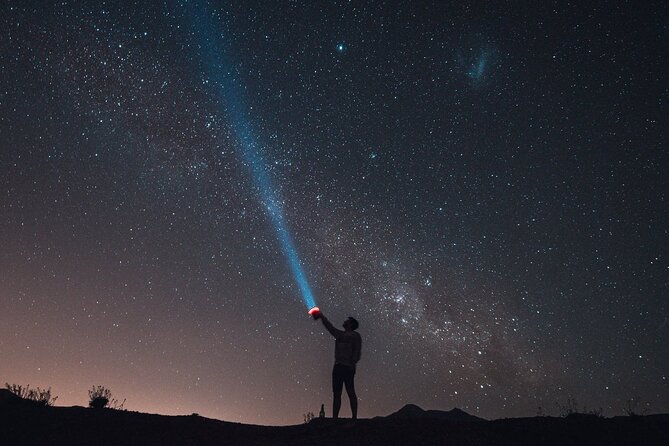
Once you’re at the nighttime viewing spot, the experience is structured around watching and learning—step by step. You’re outdoors, and you’ll spend the session learning about the stars, the universe, and the constellations of the northern hemisphere. That phrase matters. You’re not doing a general “best stars to see” pitch; you’re meant to understand what you’re looking at for your part of the sky.
The experience also includes wine and nibbles, which changes the feel of the whole night. You’re not rushing to keep up with a hard itinerary. You can settle in, look up, pause, listen, look again, and let your eyes adjust. That relaxed pacing helps, because astronomy explanations land better when you’re allowed a moment to actually see what the guide is pointing to.
If the sky is less clear than you’d hoped, you still get guidance through the myths and science side. That’s the difference between a tour that only works when the clouds cooperate and one that still teaches when conditions are imperfect.
Bring binoculars and plan for photos the right way
The details you get are pretty practical here:
- Bring your own binoculars if you want a better look.
- If you’re taking night pictures, you’ll want a DSLR camera with a tripod.
That advice isn’t random. Binoculars can help you go from “I see bright dots” to “I see structure,” especially when light is limited but not pitch-black. A tripod is what makes night photography feasible. Handheld shots usually turn into blur or disappointingly noisy images, especially under low-light conditions.
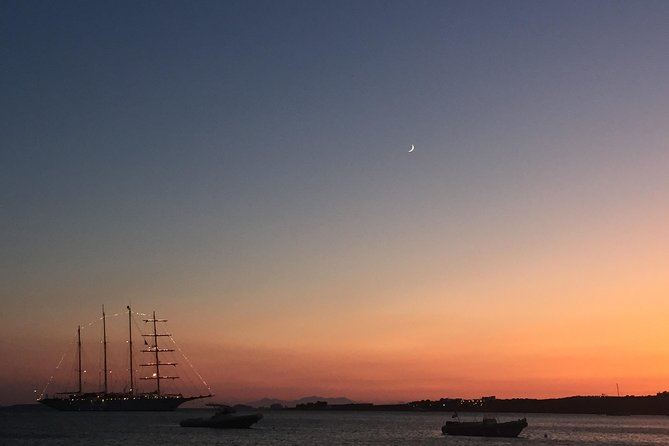
The experience also warns you that weather and moon phase can affect what you see. Moon phase matters because it changes how much natural light is in the sky. A brighter moon can make stars harder to see, even if the weather is clear. Weather can do the opposite by blocking the view entirely. Either way, the lesson part is still likely to be valuable—but your star visibility can vary.
My practical take: if you care most about photos, you should go in with flexibility. Your goal can be decent pictures, but the real success is capturing the night sky you actually get, not the sky you hoped for when you booked.
Wine, nibbles, and a private group that stays mellow
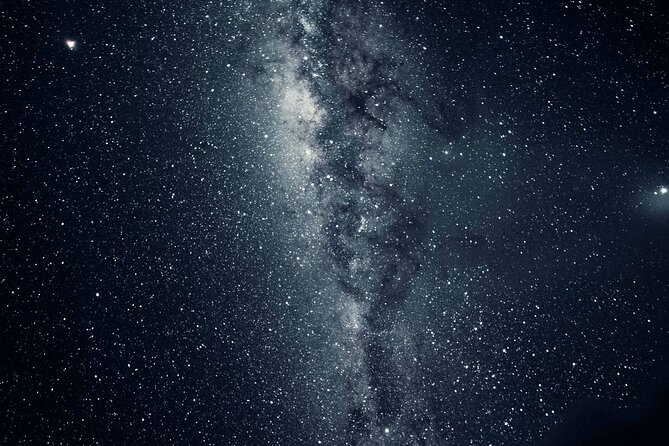
This is a private tour/activity, which means only your group participates. For a stargazing experience, that’s a big deal. In larger groups, people split attention between talking, moving, filming, and asking questions. In a private setting, the guide can respond to your pace and your questions without turning the night into a lesson with traffic jams.
The outdoor feel is intentional. You’re learning under the stars, with wine and nibbles included to keep the outing comfortable and social. It also helps you spend time lingering rather than treating it as a quick checklist of sights.
The whole thing lasts about 2 hours, which hits a sweet spot: long enough to learn and look, short enough that you’re not exhausted by standing outside for ages. If you’re traveling and you want something memorable that doesn’t eat your whole night, this format makes sense.
Price and value: is $299.82 per person worth it?
At $299.82 per person, this isn’t a budget casual add-on. You’re paying for a guided, private night-sky education in a place where visibility depends on conditions and where the low-light setting is part of the magic.
So what are you really buying?
- A guide-led connection between mythology and the constellations in the northern hemisphere.
- A private format, meaning your group gets the guide’s attention without scaling up the noise.
- On-site comfort items, since wine and nibbles are included.
- A specialist nighttime experience rather than a generic star “walk.”
If you compare this to the cost of a standard sightseeing day, it may sound high. But this is not sightseeing. It’s a 2-hour night lesson in a low-light environment, with a named guide in a private setting. For couples, small groups, or anyone who wants a deeper explanation instead of a quick look-up, the price can feel fair.
If you’re the type who just wants a casual glance at the sky and you’re happy using a phone app on your own, you may not get enough “value per hour.” But if you want meaning—myth + astronomy tied to what you can see—this is built for that.
Practicalities: meeting point, timing, and how to prepare
You meet at Anoussakis Market on the unnamed road in Drios 844 00 at 10:00 pm, and the activity ends back at the same meeting point. That loop matters because night logistics are easier when you don’t have to figure out a separate return plan on your own.
A few helpful details for planning:
- It’s a mobile ticket.
- It’s near public transportation.
- Most travelers can participate.
- Service animals are allowed.
Since the experience is outdoors, you should think about the basics of nighttime comfort. The one “preparation” item that is explicitly called out for you is bringing binoculars (and optionally a DSLR + tripod for photos). Beyond that, just be mentally ready for the sky to be unpredictable. Even with a perfect guide, the stars depend on conditions.
One more note: confirmation is received at booking, so you shouldn’t be left wondering what to bring or where to go after you book. The schedule is fixed: start time 10:00 pm and about 2 hours total.
Weather, rain, and what happens if the sky is cloudy
This experience depends on weather. The details you’re given are clear that rain can impact the experience, and the guide service accounts for that.
If it’s canceled due to poor weather, you’ll be offered a different date or a full refund. If rain is expected, the experience includes a full refund option as well. That gives you a safety net when the forecast turns messy.
Still, it’s smart to understand the tradeoff. On a clear night, your star visibility can be better. On a cloudy night, you may rely more on the teaching side than on the visual spectacle. The best part is that the experience is about learning, not only about seeing. The star-gazing portion can change in quality, but the mythology-and-science explanations are the core.
Who should book this Paros night-sky experience
This is a great match if you:
- Want a meaningful guide-led stargazing session instead of a random look-up
- Like how Greek mythology can give a story shape to what’s overhead
- Prefer a private night outing with a calmer pace
- Bring or plan to use binoculars
- Care about having time for night photos with the right gear
It may be less ideal if you’re mainly chasing a quick selfie moment and you don’t want to pay for a guided explanation. Also, if you’re extremely sensitive to weather and you only want the “perfect sky,” keep in mind that moon phase and rain can affect visibility.
Should you book Stargazing & Mythology of Paros Night Sky?
Yes, if you want more than stars-as-background. This experience is built to connect the northern hemisphere constellations to myths in a way that helps you understand what you’re seeing. The private setup, the wine and nibbles, and Kay’s strong reputation for teaching make it feel like a real night lesson, not just a location transfer.
Book it if you’re okay with the idea that the sky can change—and you still want the learning to be the main payoff. With the weather-based options for a different date or a full refund, you’re not stuck hoping for clear skies with no safety net.
If you want a memorable, atmospheric Paros night that blends story and science under limited light pollution, this is a solid choice.
FAQ
What time does the Paros night sky experience start?
The start time is 10:00 pm, and the activity lasts about 2 hours.
Where do we meet for this private tour?
You meet at Anoussakis Market, Unnamed Road, Drios 844 00, Greece.
What does the tour include?
The guide provides wine and nibbles and talks you through the night sky, including myths and the northern hemisphere constellations. You’ll also learn about the stars and the universe.
Should I bring binoculars or a camera?
You should bring your own binoculars. If you want to take night pictures, the note recommends a DSLR camera with a tripod.
Is this a private tour?
Yes. It’s a private experience, so only your group participates.
What happens if it rains or the forecast is bad?
If the experience is canceled due to poor weather, you’ll be offered a different date or a full refund. The highlights also mention a full refund in the event of rain or a rain forecast.
Is there a mobile ticket?
Yes, it uses a mobile ticket, and confirmation is received at booking.