REVIEW · CORINTH DAY TRIPS
Kalavryta CogTrain Anci.Corinth Private Tour from Athens/Nafplio
Book on Viator →Bookable on Viator
A day trip with real mountain drama.
This private route strings together Corinth Canal, the Diakopto–Kalavryta cog train through the Vouraikos Gorge, and key monasteries tied to Greek history—plus Ancient Corinth on the way back. I also like the door-to-door pickup from Athens (or Nafplio) with an English-speaking driver who brings along books and maps so the day feels organized, not rushed. One possible snag: the train ticket and a few entrances cost extra, and if the rail service has disruptions (weather, holidays, strikes), the schedule can shift.
What makes this feel like good value is the mix. You get both big highlights and the “side of the region” that most people skip: the mountain town of Kalavryta, the wartime memory stops there, and cave-monastery Mega Spilaeon. And yes, you’ll spend a chunk of time on the train—small seats, real views, and all.
Start early. The recommended pickup works best around 07:30 (or earlier in summer) so the train connection and monastery timing don’t get squeezed.
In This Review
- Key things you’ll notice right away
- Door-to-Door Private Transport from Athens or Nafplio
- Corinth Canal: Stop for Photos and the 80-Meter Walk-Over
- Diakopto to Kalavryta: The Vouraikos Gorge Cog Train Ride (Your Main Event)
- Train tickets: important, and easy to miss
- Seats are small, and the ride can be noisy
- If the rail day goes off script
- Kalavryta Village: A Mountain Town with Wartime Memory
- Agia Lavra Monastery: Birthplace Energy at 961 Meters
- Mega Spilaeon: The Cave Monastery on the Cliff
- Holocaust Museum of Kalavryta: The Stop You’ll Want Time For
- Ancient Corinth: Classic Ruins Plus a Museum Stop
- Price and Extra Fees: Where the Value Really Lives
- How Long Is Actually Long: Managing Timing Without Getting Frazzled
- Who This Tour Fits Best
- Should You Book This Kalavryta CogTrain + Ancient Corinth Private Tour?
- FAQ
- Is the Diakopto to Kalavryta train included in the tour price?
- Which monastery entrances are included, and which ones cost extra?
- How much time is spent at Ancient Corinth and what does it cost?
- Do you offer hotel pickup in Athens?
- What time should I plan for departure from Athens?
- Can I cancel for a full refund?
Key things you’ll notice right away
- A private driver + real planning support: English notes, maps, and helpful pacing so you’re not guessing.
- The Vouraikos Gorge cog train ride: 22 km of steep switching between regular track and the cog system.
- Mountain monasteries with strong ties to modern Greece: Agia Lavra plus Mega Spilaeon’s cave setting.
- Kalavryta beyond the postcard: you’ll also stop for the 1943 wartime story connected to the area.
- Ancient Corinth as a finishing touch: you can see major ruins and a museum stop on the return.
- Small but real extra costs: train, Holocaust museum, and Ancient Corinth admission add up.
Door-to-Door Private Transport from Athens or Nafplio
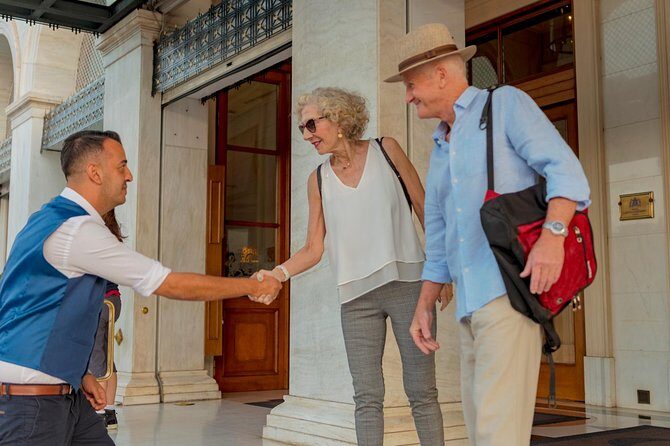
This tour is private, so you’re not stuck with a fixed group pace. Your day is built around a car ride with an English-speaking, experienced driver, plus a single major “signature” train segment. Pickup is offered from your hotel/apartment in Athens center up to 7 km, with an extra 15€ per way per vehicle if you’re farther out (including Piraeus Port and cruise terminals). If you’re starting from Nafplio, the same idea applies: you’re in control of the route with the driver’s guidance and timing.
Vehicle choice can matter on a long day like this. You can book a sedan (up to 3 adults), a minivan (up to 7 people), or a minibus (up to 14). There’s also a children policy noted in the tour options (up to age 11 may be free for some seats), which can improve value if you’re traveling with kids who can handle a long travel day and the train ride.
I like the “private + flexible” setup, because you’re not just being transported—you’re being coached. The driver provides informative books, maps, and an audio-style documentary with historical details as you go. That turns what could be a list of stops into a connected story across the Peloponnese.
Corinth Canal: Stop for Photos and the 80-Meter Walk-Over
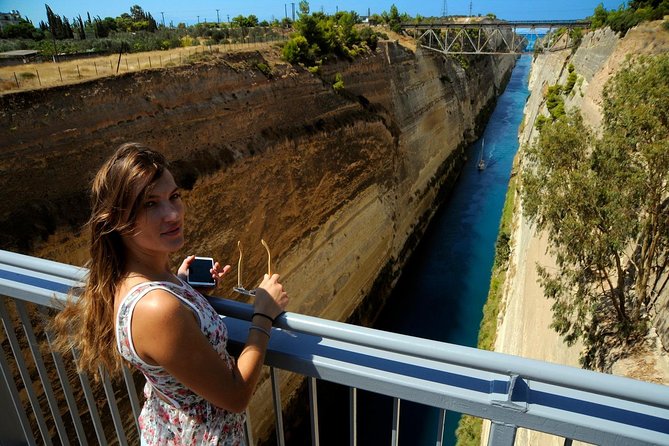
The day begins with the Corinth Canal, a man-made channel linking the Aegean and Ionian seas and slicing through the Peloponnese’s central connection to mainland Greece. The tour gives you a focused photo stop and time to walk across a pedestrian bridge, with a viewpoint from about 80 meters high.
This isn’t a long museum stop. It’s more like a “reset your eyes” moment. After that, you’re heading toward the coast rail town and the gorge. If you’re the type who likes architecture and engineering as much as ruins, this canal stop hits a sweet spot: it’s short, visual, and easy to appreciate even if your Greek history reading is rusty.
Practical note: use the bridge time. The view opportunities are best when you can slow down, not while you’re already sprinting to re-board the bus.
Diakopto to Kalavryta: The Vouraikos Gorge Cog Train Ride (Your Main Event)
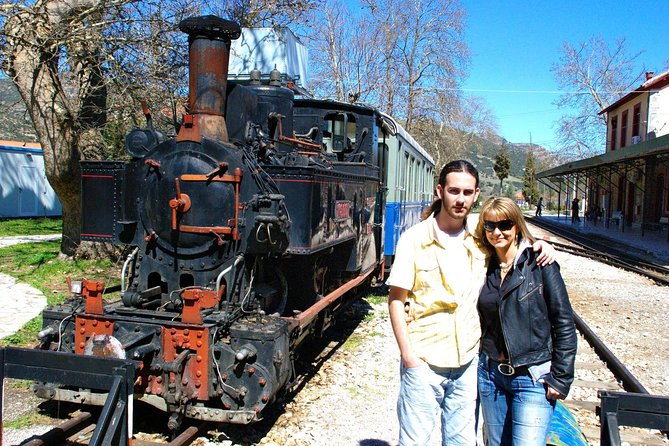
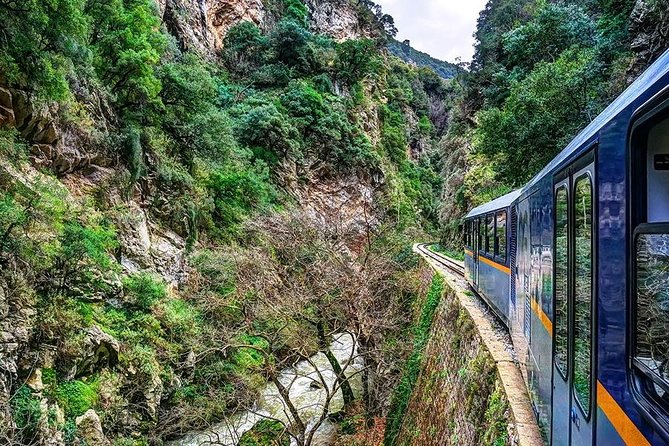
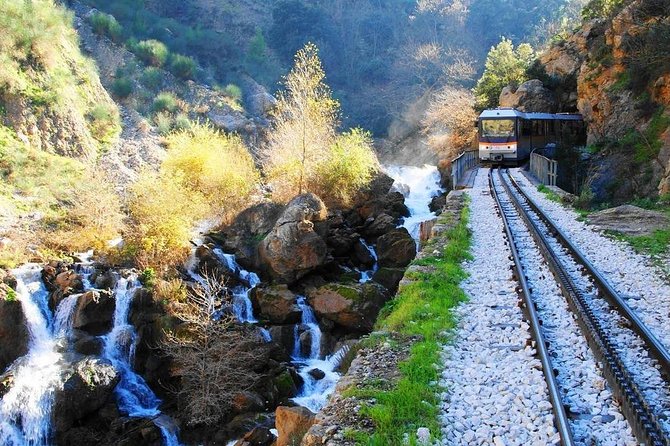
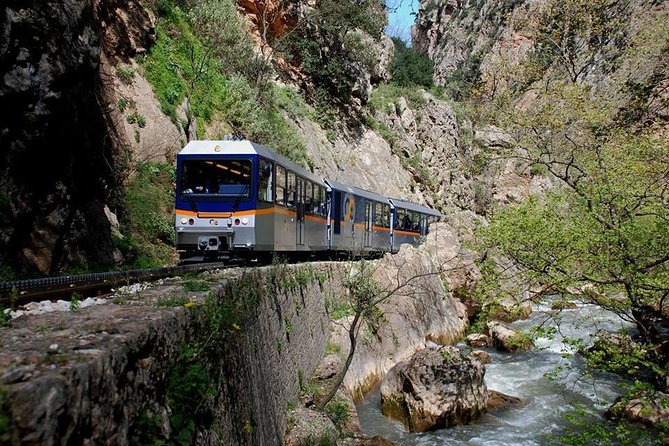
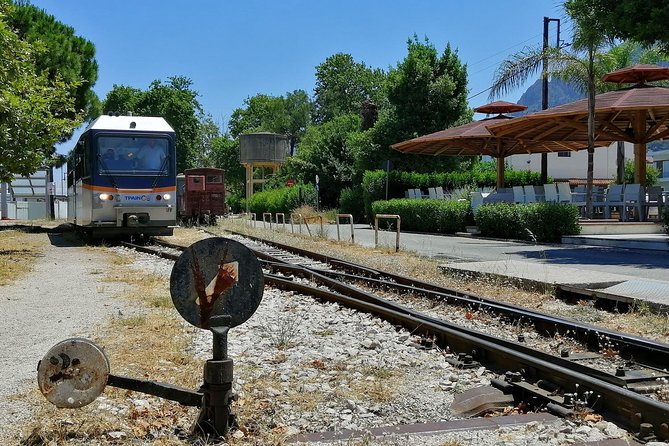
This is the reason many people book the day. You’ll go from Diakopto to Kalavryta by the famous rack railway (a historic 750 mm gauge cog railway). The ride covers about 22 km and takes about 1 hour 8 minutes, with a stop at Zachlorou along the way.
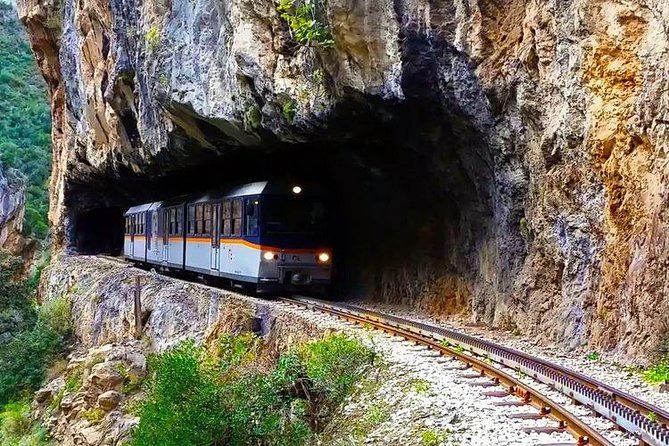
Here’s what makes it special: the train runs through the Vouraikos Gorge, climbing into the mountains while passing streams, bridges, tunnels, and forested sections. When the incline gets steep, it switches from regular track to the cog system. That mechanical change is part of the fun—this isn’t just pretty scenery; you can feel the effort of the climb.
Train tickets: important, and easy to miss
The train fee is 10€ per person one way and is not included. If you’re traveling on weekends or holidays, you may need to buy tickets online in advance. Your return from Kalavryta to Athens (or onward) is by car, so this is a one-way train experience in the plan.
Seats are small, and the ride can be noisy
One downside I’d plan for: the train seating is on the snug side. If you’re tall or wide, you’ll likely wish you had brought a small day bag and worn comfortable clothes. Also, the ride can be noisy, especially when schools are on board.
A tip that can genuinely improve comfort: when you buy your train seats, choose one that faces the other side if that option is available. It can make the train feel less crowded and more social.
If the rail day goes off script
In the real world, rail operations can get disrupted due to weather or service issues. When that happens, the driver may adjust the plan and substitute car-based views or alternate stops to keep your day moving. The trade-off is time: you might lose some time in Kalavryta or miss a few planned segments. I treat this as normal travel math. You’re booking a day built around a train, so you’ll want a flexible mindset.
Kalavryta Village: A Mountain Town with Wartime Memory
Kalavryta itself is a traditional mountain village, and the tour allows time to explore the town and visit a museum. The key context here is the 1943 tragedy linked to the area: in December 1943, German forces carried out Operation Kalavryta, including the execution of prisoners and later the killing of the male population of Kalavryta as part of reprisals.
That history is not shoved into the day as propaganda. It’s presented through the stop that follows—so you can understand why the town holds memorial spaces and museums, rather than treating the war story as an afterthought.
If you visit this kind of site, I suggest you slow down and read at least a few panels, even if you skim. The value isn’t only in facts; it’s in connecting the names of places to what happened there. It also changes how you experience the mountain setting—because you’re no longer seeing “pretty hills,” you’re seeing a community shaped by those events.
Agia Lavra Monastery: Birthplace Energy at 961 Meters
Next up is Agia Lavra Monastery, one of the most symbolic monasteries for modern Greek identity. The site is linked to the Greek War of Independence: the call for Eleftheria i Thanatos (Freedom or Death) is said to have been first heard here on 25 March 1821, launching the revolution.
The monastery is described as being built in 961 AD on Chelmos Mountain at an altitude of 961 meters. The tour also notes that it was burnt to the ground in 1585 by the Turks, and that it’s among the oldest monasteries in the Peloponnese.
This is a shorter stop, but it lands hard. Even if you’re not a religious-history person, you’ll feel why this place matters in Greek national storytelling. Dress smart for a monastery visit: shoulders and knees covered is the usual expectation, and you’ll want comfortable shoes because stone surfaces and stair areas can be uneven.
Mega Spilaeon: The Cave Monastery on the Cliff
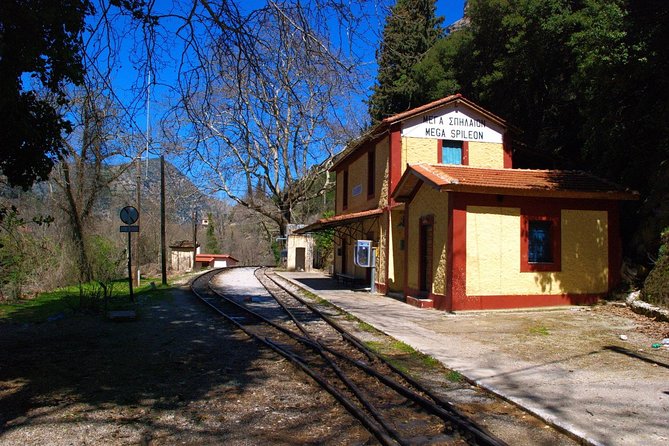
After Kalavryta’s town-and-museum time, you’ll head to Mega Spilaeon Monastery. This monastery is built in a large cave setting in a sheer cliff where Chelmos slopes down toward the Vouraikos river gorge. The tour description includes a tradition that the cave was known in antiquity and later occupied by Christian hermits.
Mega Spilaeon has its own origin story: it’s reputedly founded in 362, and tradition ties the discovery of an icon of the Theotokos (as described in the tour notes) to the brothers Symeon and Theodore, with help from a local shepherdess honored as Saint Euphrosyne. The tour also points out that some monks were involved in Greek independence activities.
And then comes the heavy part tied to World War II reprisals: on 8 December 1943, the German 117th Jäger Division destroyed the monastery and executed monks and visitors, part of the wider massacre connected to Kalavryta.
This stop is often what people remember when they think of the word dramatic, because the structure isn’t just a building—it’s carved into a cliff-cave environment. If you’re hoping for “cave photos,” plan to take a few minutes to orient yourself before you shoot. The best angles usually come from stepping aside and letting your eyes adjust to the cave light.
Entrance for this monastery is noted as included on the tour.
Holocaust Museum of Kalavryta: The Stop You’ll Want Time For
The Municipal Museum of the Kalavryta Holocaust is a separate ticketed stop. Admission is not included, with a listed fee of 5€ per person.
This museum ties directly to the Operation Kalavryta events described in the tour details: the German campaign to encircle resistance fighters in the mountainous areas around Kalavryta, followed by executions and reprisals. It’s not just background—it’s the core of why Kalavryta holds memorial weight.
I recommend budgeting extra patience here. Museums like this reward you when you let them land, rather than trying to “finish quickly.” You don’t need to read every line, but you do want to absorb what the museum is trying to communicate—how a town’s geography and its resistance connections played into what happened.
Ancient Corinth: Classic Ruins Plus a Museum Stop
On the way back, you’ll visit Ancient Corinth (Archaia Korinthos). The tour frames it as one of the largest cities of Ancient Greece, and it also connects it to early Christianity: Corinth appears in the letters of Saint Paul and is referenced in Acts as part of his missionary journeys.
You’ll get about an hour at the site. Tickets are not included, and the museum ticket cost changes by season:
- Summer (1 April–30 October): 15€
- Winter (1 November–31 March): 8€
The tour notes that the Ancient Corinth ticket includes the museum. If you’re only doing one “ancient ruins” moment on this trip day, this is a good choice. Corinth gives you a sense of scale without making you walk for hours and hours.
Price and Extra Fees: Where the Value Really Lives
The base price is $271.08 per person for an approx. 10-hour private tour. That price includes a lot of what makes the day work smoothly: air-conditioned vehicle, private transportation (with fuels, toll roads, parking), and an English-speaking driver, plus pickup/drop-off in Athens center (within the 7 km rule).
What isn’t included is the train ticket and certain admissions. Here’s what you should plan to pay on top:
- Diakopto → Kalavryta train: 10€ per person (one way)
- Municipal Holocaust Museum (Kalavryta): 5€ per person
- Ancient Corinth ticket: 8€ winter or 15€ summer (and includes museum)
- Gratuities are listed (example: 1€ per person)
So the “real cost” depends on the season you travel, but the structure is clear: you’re paying for private logistics and the driver, and you’re paying separately for the few ticketed attractions. I think that’s fair, because it lets you feel in control—especially with a train segment where timing matters.
If you’re comparing this to a group bus tour, the private value is the flexibility and the ability to manage a long day without constant crowd squeezes.
How Long Is Actually Long: Managing Timing Without Getting Frazzled
Even with private pacing, this is a long day. You’re combining:
- A canal photo stop
- A train journey through a gorge
- Time in Kalavryta and multiple monastery stops
- A return stop at Ancient Corinth
To keep it from turning into “hurry day,” lean into the breaks. The driver’s approach in the day is described as allowing time for stops and photos, and that matters on a route with stairs, cave light, and changing elevations.
One more real-world note: if there’s a disruption to the train ride (weather or service issues), you may end up losing time at some stops. The driver will likely try to compensate with alternate views or nearby options, but “compensation” isn’t the same as “equal time.” If you have a strict evening plan in Athens, give yourself buffer.
Who This Tour Fits Best
This tour is best if you want:
- A single day that mixes engineering + rail adventure + monasteries + major ancient ruins
- A private format where you can move at a calmer pace
- The kind of traveler who appreciates context, not just sight-seeing
You’ll probably love it if you like the idea of traveling from Athens to the mountains and returning with a completely different feeling in your head. It’s not only about monuments; it’s about how the region’s geography shaped people’s stories.
If you’re looking for a short, easy day with minimal driving and minimal walking, this may feel like too much. Same if you hate train rides with tight seating.
Should You Book This Kalavryta CogTrain + Ancient Corinth Private Tour?
I’d book it if you want a one-day “Peloponnese highlights with a twist” and you’re excited about the Diakopto–Kalavryta cog train. The private pickup, the English driver support (books, maps, documentary-style explanations), and the mix of Agia Lavra and Mega Spilaeon make it feel more intentional than a checklist tour.
I’d think twice if train disruptions would ruin your schedule. Since part of the plan depends on rail operations, build in a flexible mindset and avoid hard-to-move evening commitments.
If you’re deciding, the easiest rule is this: if the train ride is a must, this tour is a strong match. If the train is optional and you just want monasteries or ruins, you could pick a simpler route.
FAQ
Is the Diakopto to Kalavryta train included in the tour price?
No. The Diakopto–Kalavryta train fee is 10€ per person one way and it’s not included. The tour notes that on weekends or holidays, you may need to purchase tickets online in advance.
Which monastery entrances are included, and which ones cost extra?
The tour lists entrance as included for Agia Lavra Monastery and Mega Spileo Monastery. The Municipal Museum of the Kalavryta Holocaust has a listed fee of 5€ per person and is not included. Ancient Corinth admission is also not included.
How much time is spent at Ancient Corinth and what does it cost?
You’ll have about 1 hour at Ancient Corinth. The Ancient Corinth ticket is 8€ in winter (1 Nov–31 Mar) and 15€ in summer (1 Apr–30 Oct), and the ticket includes the museum.
Do you offer hotel pickup in Athens?
Yes, pickup is offered from/to your hotel/apartment in Athens center up to 7 km. If your pickup location is farther than 7 km, there is an additional 15€ per way per vehicle. Piraeus Port and Piraeus Cruise Terminal are specifically listed within this extra-charge category.
What time should I plan for departure from Athens?
The tour recommends starting at 07:30 am or earlier in summer time. You can adjust the time if 07:30 doesn’t work, based on your needs and the agent’s agreement.
Can I cancel for a full refund?
Yes. You can cancel for a full refund if you cancel at least 24 hours before the experience’s start time. Free cancellation is available under that condition.