REVIEW · LUNCH EXPERIENCES
Medieval Athens Walking Tour with Late Lunch and Wine
Book on Viator →Bookable on Viator
Medieval Athens hits different here. I love Petraki Monastery, still lived in by monks after roughly 1,000 years, and I love how the tour pairs it with the Byzantine and Christian Museum, where you’ll see over 25,000 artifacts and striking Coptic Christian paintings. One thing to consider: the museum can be partially closed on Sundays, so plan your expectations around what’s open that day.
This half-day format is built for people who want depth without a full day of planning. The tour runs about 4 hours, starting at 12:30 pm in Pl. Monastirakiou 6, and it ends back at the same meeting point. It’s also a private setup, so it’s just your group with a local guide.
You’ll walk through old neighborhoods like Plaka and stop at Ottoman and medieval landmarks, but not all entry fees are included. Church of Kapnikarea and Fethiye Mosque are not covered in the price, so budget for separate tickets if you want to go inside.
In This Review
- Key things I’d circle on your planning map
- A 4-hour tour that connects Athens’ Byzantine and Ottoman layers
- Meeting at Pl. Monastirakiou and getting oriented fast
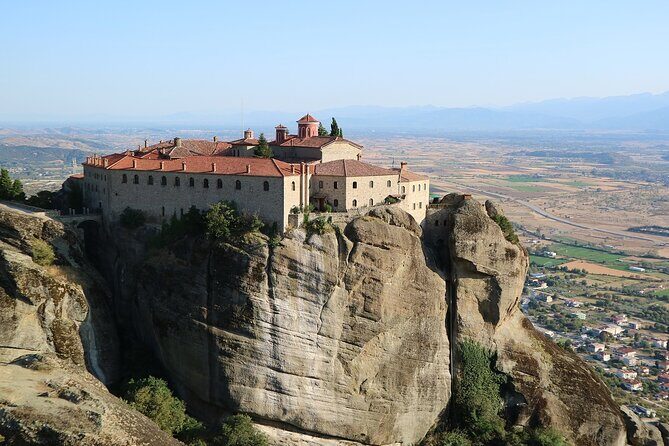
- Petraki Monastery: the medieval stop that’s still alive
- The Byzantine and Christian Museum in a former duchess palace
- Plaka on foot: how the neighborhood fits into a medieval route
- Fethiye Mosque and Church of Kapnikarea: two eras, two atmospheres
- Fethiye Mosque (Ottoman-era focus)
- Church of Kapnikarea (11th-century medieval Athens)
- The late lunch at the museum restaurant: why it’s worth the schedule
- Price and value: what $243.10 buys you (and what it doesn’t)
- Guides matter here: the difference between a walk and a story
- Tips to make this tour smoother on arrival
- Who should book this medieval Athens walking tour?
- Should you book this Medieval Athens walking tour?
- FAQ
- What time does the tour start?
- How long is the tour?
- Where do I meet the guide?
- Where does the tour end?
- What’s included in the price?
- Are tickets for Church of Kapnikarea and Fethiye Mosque included?
- Is the tour private?
- Can I use a mobile ticket?
- Is there a minimum number of people?
- What if I need to cancel?
Key things I’d circle on your planning map
- Petraki Monastery’s living monastery vibe, with monks still inhabiting the site
- Byzantine and Christian Museum inside a former duchess palace, with more than 25,000 artifacts
- Coptic Christian paintings and mosaics included in what you’ll see
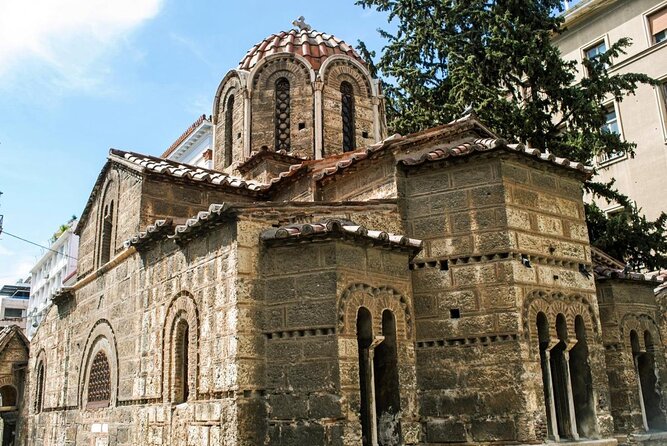
- Church of Kapnikarea (11th century) and Fethiye Mosque (Ottoman era) as two major time layers
- Plaka walking time built into the route so you don’t feel rushed
- Late 3-course lunch with wine that solves the where-to-eat problem for you
A 4-hour tour that connects Athens’ Byzantine and Ottoman layers
What I like about this experience is that it doesn’t treat medieval Athens like a side quest. You’re led through multiple eras in a short span—Byzantine-era religious art and architecture, then Ottoman-era religious history, and finally a look at a long-loved neighborhood atmosphere in Plaka. That mix gives you a mental map of how Athens kept changing while still keeping old foundations visible.
You’re also not stuck figuring things out alone. A guide stays with you, points out what matters, and keeps the pace realistic for a half-day. That matters in central Athens, where street directions can feel simple on paper but confusing on foot.
Meeting at Pl. Monastirakiou and getting oriented fast
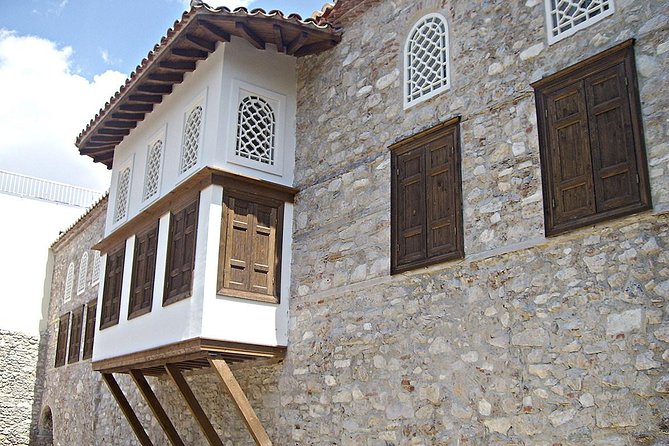
The tour meets at Pl. Monastirakiou 6, Athina 105 55. This is a smart starting point because Monastiraki is central and easy to reach, and it also makes the end-of-tour logistics painless since you return to the same meeting area.
At a 12:30 pm start, you avoid the early-day rush. It’s a good slot if you’ve got mornings for the Acropolis area or museum time and you want your midday to feel less about logistics and more about walking.
One practical note: this is a private tour/activity, meaning only your group participates. That tends to make the guide’s attention feel more direct, especially when you ask questions about artwork, places of worship, or what you’re looking at inside.
Petraki Monastery: the medieval stop that’s still alive
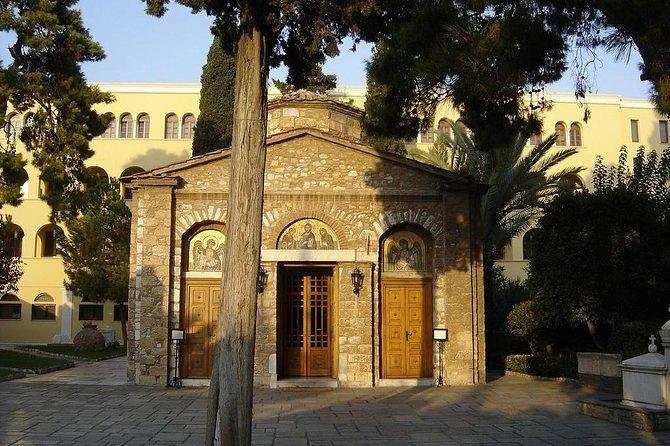
If you want one reason this tour feels different, it’s Petraki Monastery. You’ll step inside and learn about a site with about 1,000 years of history that is still inhabited by monks today. That living element changes the tone immediately. It’s not just photos and facts; it’s a real religious space you’re visiting with context.
Inside, you’ll see a church with Byzantine-style design. You’ll also be pointed toward the 18th-century frescoes, described as the work of hagiographer Georgios Markou. When a guide connects a name to what you’re seeing, it makes the art feel less generic. You’re not just staring at old paint; you’re being guided to understand what’s significant about the frescoes and the style.
The time you spend there is part of what keeps the whole day manageable. You’ll be moving to other stops after this, so it works best if you’re happy with a focused visit rather than a slow, hours-long monastery stay.
The Byzantine and Christian Museum in a former duchess palace
The museum stop is the anchor of the tour. It runs about 1 hour and includes your museum admission. The Byzantine and Christian Museum is housed in the former palace of a Greek duchess, and that setting matters—you feel like you’re walking through a space built for status, then stepping into collections tied to devotion, belief, and religious life across centuries.
What you’ll get to see is big on variety:
- More than 25,000 artifacts connected to Byzantine Greece, dated between 600 BC and the mid-15th century
- Religious artifacts and paintings
- A notable collection of Coptic Christian paintings
- Striking mosaics
This is also where having a guide helps. In a collection that size, it’s easy to wander and miss what would have made your visit feel meaningful. With a guide, the visit becomes a curated walk through the standout categories you’re likely to care about most.
One caution from real-world scheduling: the museum can be half closed on Sundays. If your trip lands on a Sunday, don’t panic, but do expect the tour to adapt to what’s open that day. The good news is that the experience still stays worthwhile, especially because your guide will keep you moving with purpose rather than leaving you to guess.
Plaka on foot: how the neighborhood fits into a medieval route
Plaka is your walking-time breathing room. You’ll spend about 2 hours here, and it’s built into the tour rather than left as a suggestion for later.
This is where you get to shift from “museum brain” back to “street brain.” The point isn’t only the view—it’s the atmosphere of an older neighborhood so you can place the religious sites you’ve just visited into a real, living city fabric.
Plaka’s entry is not included in the tour price, but since it’s a neighborhood, you’re not really paying for “entry” anyway. Instead, you’ll be using this block of time to slow down and absorb the old-town feel while you stay with the group.
If you want a practical approach: keep your phone charged, wear shoes you trust, and use this time to look for details like doorways, church exteriors, and street angles that change your perspective as you walk.
Fethiye Mosque and Church of Kapnikarea: two eras, two atmospheres
After the monastery and museum, you’ll shift into religious landmarks tied to different time periods. That contrast is the whole point.
Fethiye Mosque (Ottoman-era focus)
You’ll stop at the Fethiye Mosque, described as the most important mosque of the Ottoman era. The stop is about 30 minutes, so it’s enough time for a meaningful look without dragging your whole half-day off schedule.
Important detail: admission is not included. So if you’re planning to go inside, expect a separate ticket. Even if you end up focusing more on what you can see around the outside, the guide’s context helps you understand what makes this stop stand out historically within the route.
Church of Kapnikarea (11th-century medieval Athens)
Next comes the Church of Kapnikarea, an 11th-century medieval church. It’s a shorter stop—about 20 minutes—but that’s a good match for a church visit inside a busy city route.
Like the Fethiye Mosque, admission for Kapnikarea is not included. Still, you’ll get guided time that helps you spot what to focus on and how it connects with the other medieval religious stops you’ve already seen.
Together, these two places do a neat job of showing how religious architecture and cultural identity overlap in Athens. You’re not only seeing buildings; you’re seeing the city’s layers talk to each other.
The late lunch at the museum restaurant: why it’s worth the schedule
This tour doesn’t just tell you to go find lunch. It feeds you, with a late midday 3-course meal at the museum’s acclaimed restaurant, and it includes a glass of fine local wine.
Here’s the lunch structure:
- A starter
- A main dish
- Shared salads
- A shared dessert platter
That set-up is practical for a group: you don’t have to choose complicated options, and shared dishes make it feel less like you’re trapped in individual meal math.
In the reviews tied to this experience, the lunch stands out for food quality and attention from the restaurant. It also solves a real travel annoyance: after walking and museums, hunting for a good table can take longer than you planned. Doing lunch here means your energy goes into enjoying the meal instead of managing the search.
The best part is timing. With the tour starting at 12:30 pm, this late lunch approach keeps you from arriving hungry and rushed, but also prevents the whole day from turning into early-morning scheduling.
Price and value: what $243.10 buys you (and what it doesn’t)
At $243.10 per person, this isn’t the cheapest walking tour in Athens. But it also isn’t just a stroll with a guy holding a map.
You’re paying for:
- A local guide leading you through multiple eras and stops
- Byzantine and Christian Museum admission included
- A 3-course lunch with a glass of wine included
That combination adds up because two of the most time-consuming parts of travel—figuring out museum tickets and choosing lunch—are handled for you.
What the price does not include is also clear:
- Church of Kapnikarea entry
- Fethiye Mosque entry
- Anything about Plaka as a stop (it’s treated as not included, even though it’s a neighborhood)
So the value is strongest if you want the guide’s route and you’re happy to pay separate admission fees for the two church/mosque stops. If you only care about one museum and you’re fine planning lunch yourself, you might compare against cheaper options. But if you want a tidy package that moves you through medieval Athens with food and wine built in, this price starts to feel more reasonable.
Guides matter here: the difference between a walk and a story
One of the biggest strengths of this tour is the guide experience. The reviews I’m drawing from highlight Ephtimia as excellent—engaged, clearly invested in showing guests what mattered, and very good at turning stops into lessons you can remember later.
That’s the key: the guide doesn’t just list dates. They connect each site with what you should pay attention to—monastery life, frescoes and artists, why a museum collection is arranged the way it is, and what to notice at places like Kapnikarea.
If you care about understanding what you’re seeing while walking, you’ll likely feel the benefit of that kind of guiding more than you would on a basic highlights tour.
Tips to make this tour smoother on arrival
A few practical things will make your half-day feel easier:
- Wear comfortable walking shoes. You’re in central streets and old neighborhoods, and the schedule is tight enough that pain slows you down.
- If you’re visiting churches or mosques, expect that they may have rules. Follow your guide’s lead on respectful behavior and how to dress.
- Bring some flexibility for Sunday museum timing. If your day is Sunday, parts of the museum can be half closed, so keep a flexible mindset and rely on the guide to adjust what you focus on.
- Use the Plaka hours to reset. Stop for water, look around, and don’t try to cram extra sights beyond the planned route.
Who should book this medieval Athens walking tour?
Book this if:
- You want Byzantine and Christian art and artifacts, not just sightseeing photos
- You like religious architecture across eras, from Petraki Monastery to Kapnikarea and the Fethiye Mosque
- You prefer a plan that includes lunch and wine, especially a 3-course late lunch that takes the pressure off
Consider skipping or comparing if:
- You mainly want Ancient Greece sites and modern Athens vibes
- You’re allergic to paying separate entry fees at additional stops
- You’d rather wander freely without a scheduled guide route
This is a good fit for couples, friends, and anyone who likes structured time but still wants to breathe in a neighborhood like Plaka.
Should you book this Medieval Athens walking tour?
If you’re the kind of traveler who enjoys seeing different layers of a city in one afternoon, this is a strong bet. The combination of Petraki Monastery, the Byzantine and Christian Museum, and two major religious stops creates a route that feels more specific than generic Athens walks. Add the built-in 3-course lunch with wine, and you’re buying convenience as well as culture.
Book it especially if you want that guided “what to look for” advantage. If you’re going on a Sunday, just plan with the realistic expectation that the museum may be partially closed and the route will adapt.
FAQ
What time does the tour start?
The tour starts at 12:30 pm.
How long is the tour?
It lasts about 4 hours.
Where do I meet the guide?
You meet at Pl. Monastirakiou 6, Athina 105 55, Greece.
Where does the tour end?
The tour ends back at the meeting point.
What’s included in the price?
The price includes a 3-course meal with a glass of wine, entry to the Byzantine & Christian Museum, and a local guide.
Are tickets for Church of Kapnikarea and Fethiye Mosque included?
No. Entry/Admission for the Church of Kapnikarea and Fethiye Mosque is not included.
Is the tour private?
Yes. This is a private tour/activity, and only your group will participate.
Can I use a mobile ticket?
Yes. You can present either a paper or an electronic voucher for the activity.
Is there a minimum number of people?
Yes. A minimum of 2 people is required per booking.
What if I need to cancel?
You can cancel for free up to 24 hours in advance for a full refund. If you cancel less than 24 hours before the start time, the amount paid is not refunded.