REVIEW · ATHENS
Explore Athens Historical Centre by Bike
Book on Viator →Operated by Flat Tyres Psycling Club · Bookable on Viator
Athens by bike clicks fast. You’ll pedal a smart loop that links the big classics with real street-level Athens, all with a guide who keeps it moving and makes the history make sense. Starting at Flat Tyres Psycling Club, you head out along city bike lanes toward major monuments, but you also get the side streets, markets, and viewpoint moments that turn a list of ruins into a feeling for the city.
I especially like the small-group size (max 10) because it keeps the pace friendly and the guidance personal. And I love that you’re not stuck with just one zone: the route threads through Kerameikos, Psirri, Plaka, Syntagma, and the Acropolis area, then continues onward to the Ancient Agora and Roman Agora.
One thing to consider: this is city riding. You’ll be navigating intersections, pedestrians, and some short hills, and you’ll get the best experience in good weather (the tour can be rescheduled or refunded if weather cancels it).
In This Review
- Key highlights worth knowing
- Why Athens Works So Well on Two Wheels
- Flat Tyres Start Point: Quick Setup, Then City Riding
- Kerameikos to Psirri: Ancient Ground Meets Market Street Energy
- Plaka, Syntagma, and the National Gardens Cut
- Panathenaic Stadium to Olympieion and Hadrian’s Arch
- Acropolis Museum Area, Filopappou Hill, and Pnyka Views
- Ancient Agora, Roman Agora, and Monastiraki’s Everyday Athens
- Pacing, Safety, and How the Guide Makes It Feel Easy
- Price and Value: Where the $41.03 Adds Up
- Who Should Book This Bike Tour (And Who Might Not)
- Should You Book This Athens Historical Centre by Bike?
- FAQ
- How long is the bike tour?
- How much does the tour cost?
- Is the tour in English?
- Are bikes and helmets provided?
- Is bottled water included?
- What is the group size?
- Where do I meet the guide?
- Where does the tour end?
- Are snacks and drinks included?
- What happens if the weather is poor?
- Is hotel pickup or drop-off included?
- Is free cancellation available?
Key highlights worth knowing
- Max 10 travelers for a calmer, more personal ride
- Bikes and helmets provided (28-inch trekking bikes) plus bottled water
- Major Athens loop: Kerameikos, Plaka, Syntagma, Panathenaic Stadium, Acropolis Museum area
- Market + old-city mix at places like Varvakios and Monastiraki
- Viewpoint breaks around Filopappou Hill and Pnyka
- Stavros-style guidance with safety help at busy crossings and clear English explanations
Why Athens Works So Well on Two Wheels
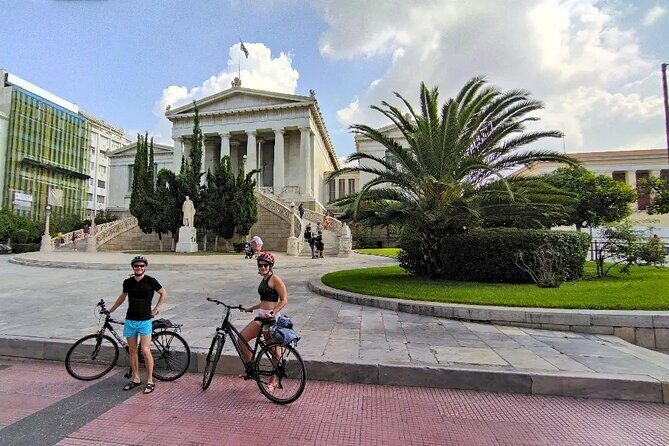
Athens can be a lot on foot, and it can be a lot in traffic. On a bike, the city’s rhythm changes. You move through areas that normally feel “too far” between sites, and you also get to see the in-between parts: the streets where people actually live, eat, and shop.
This tour is built around that idea. It starts with bike lanes and then braids into pedestrian-heavy neighborhoods in a way that still keeps you rolling. The payoff is that you get the big names—Parthenon area viewpoints, Panathenaic Stadium, Temple of Olympian Zeus, Hadrian’s Arch—without spending your whole day waiting your turn at a single monument.
And the guide, Stavros, is a big reason it works. Based on the ride style, you can expect clear routing, safety-first crossings, and story-driven explanations that connect what you’re looking at to what Athens became over time.
You can also read our reviews of more cycling tours in Athens

Flat Tyres Start Point: Quick Setup, Then City Riding
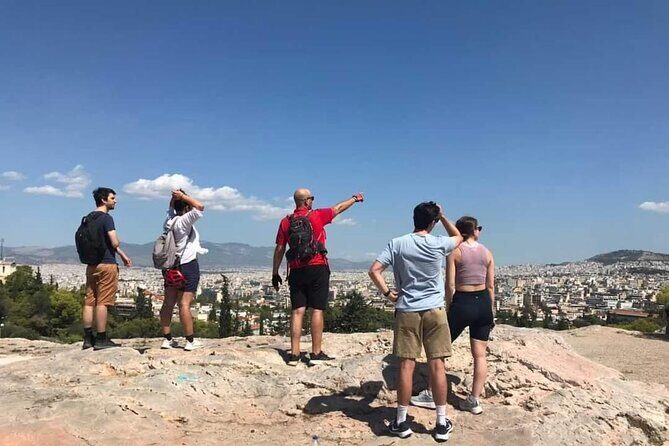
You meet at Flat Tyres Psycling Club on Thessalonikis 140 in Athens. You’ll get fitted with a 28-inch trekking bike and a helmet, and you’ll have a bottle of water for the ride. This matters more than it sounds. In Athens, “comfortable” bike handling helps you spend your energy on seeing things, not fighting the bike.
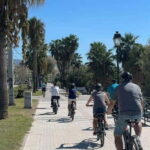
From the start, the route is designed to use metropolitan bike lanes first, which means you’re not thrown immediately into the busiest chaos. Then you gradually shift into the tighter, older districts—places like Psirri and Plaka—where the streets are slower but more interesting.
The tour also runs on several start times, which is handy if you’re trying to line up the best part of your day with the heat level and crowd level. If you like a plan but still want freedom to enjoy the stops, this format hits that sweet spot.
Kerameikos to Psirri: Ancient Ground Meets Market Street Energy
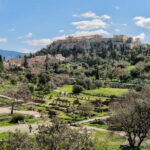
The first stop is Parthenon (or the Parthenon zone viewpoints and Acropolis area that pair with it), but the route quickly establishes an ancient spine. Next up is Kerameikos Cemetery, one of the best places to feel the layered nature of Athens. It’s not just “ruins.” It’s a way to understand how the city honored memory and how public life shifted over centuries.
Then the ride turns toward Psirri, where the vibe changes from monumental to lived-in. You get the feeling of getting a bit lost—in a good way—through town streets where you can see how neighborhoods function around the tourist map.
One of the best anchors here is Varvakios, the traditional and biggest food market of Athens. Seeing it from the street, as you roll past, is different than reading about it. You catch the scale and the daily flow. You also get context for why Athens is so food-forward: markets aren’t side quests here; they’re part of the city’s core habits.
If you like mixing your major landmarks with real local texture, Psirri and the market areas are a highlight.
Plaka, Syntagma, and the National Gardens Cut
After Psirri, the tour brings you through Plaka, the classic hillside neighborhood where the streets can look like a postcard. Cycling through Plaka is a smart compromise: you avoid the full crush of bus-and-foot sightseeing, but you still get that old-street feel.
From there you reach Syntagma Square, where you’ll see the Greek Parliament area. This is one of those places where Athens shifts from ancient time to modern state power. It’s also where you can feel the city’s center: major streets, lots of movement, and a strong sense of place.
Then the route slides into the National Gardens, heading toward Zappeion Hall and the Panathenaic Stadium zone. These garden stretches are more than pretty. They give your legs a break and help you reset your focus before you hit more monumental stops.
Practical thought: in hot months, gardens can be the difference between “I’m sightseeing” and “I’m surviving.” So pay attention when you get those shaded or calmer stretches.
Panathenaic Stadium to Olympieion and Hadrian’s Arch
You’ll pass through the Panathenaic Stadium area and ride onward toward some of Athens’ most iconic structures. The route includes the Temple of Olympian Zeus and Hadrian’s Arch. Even if you’ve seen photos, seeing them from the street is more powerful than scrolling. You understand scale—how these structures dominate their space and how they were meant to impress.
This section is also a good example of how the tour balances “big monuments” with motion. You’re not just parked in front of a gate. You’re moving through the city’s geometry, which helps you connect the sites to each other.
A likely reason this segment lands well: the route is paced so you don’t feel rushed, but you also don’t spend ages transferring from one far-away spot to another. The guide’s job is to keep you safe and keep you oriented, including steering you through the mix of cars, pedestrians, and the occasional bottleneck.
You can also read our reviews of more historical tours in Athens
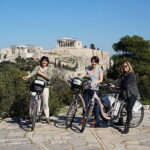


Acropolis Museum Area, Filopappou Hill, and Pnyka Views
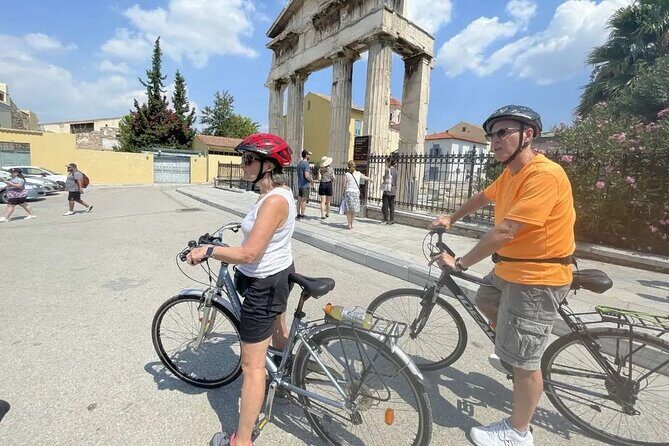
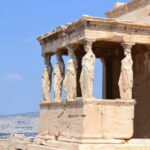
One of the most memorable parts of this ride is the way it approaches the Acropolis zone. You’ll pedal to the Museum of Acropolis, located right under the sacred rock area associated with the Parthenon. That’s a useful stop logic: it sets context before (or alongside) the viewpoints, so you’re not just guessing what you’re looking at.
Then you get a break at Filopappou Hill combined with a visit at Pnyka, with panoramic views over Athens. This is the moment when the city stops being only “ruins” and becomes “where people live.” From a viewpoint, you see how dense the neighborhoods are and how the ancient sites sit inside a modern city.
From a practical standpoint, hill viewpoints also give your body a pause. You’re not just pedaling and sprinting. You can slow down, look around, and take photos without feeling like you’re burning time.
Ancient Agora, Roman Agora, and Monastiraki’s Everyday Athens
After the viewpoint stops, the tour heads into another powerful contrast: Greek Ancient Agora and Ancient Roman Agora. You’re moving through spaces that were once social and political centers. On a bike, it’s easier to understand the layout because you experience the approach paths rather than only the front-facing museum angles.
Then you ride through Monastiraki, including the area with the open market feel. This part is what makes Athens feel like Athens, not just a collection of ancient stops. You shift from the ancient frameworks into a modern market atmosphere where commerce and daily life still drive the rhythm of the streets.
Finally, you cycle through Thiseio on paved streets and head back toward Petralona to end at the meeting point. That return leg matters. It turns the tour from a “go see, come back” pattern into a loop that feels complete—like you’re actually traversing the city, not hopping between pins.
Pacing, Safety, and How the Guide Makes It Feel Easy
This is not a race tour. It’s a sight-focused ride with an easy-going pace that still covers a lot of ground. The bike route includes some hills, but they’re handled in a way that keeps the experience comfortable for most people. The key is that you’re riding in control, not sprinting against the clock.
Safety is clearly a priority. You’ll be guided across busy streets and through foot-traffic zones, and the approach is to avoid the worst chaos when possible. Helmets are provided, and the bike handling is supported by the guide’s routing.
A big plus is that Stavros tailors the ride to the group speed and interests. That personalization shows up in how often you get to pause, how the explanations land, and how the route shifts to keep the whole group together without everyone feeling forced.
If you’re someone who likes order but hates being corralled, this kind of small-group leadership is ideal.
Price and Value: Where the $41.03 Adds Up
At about $41.03 per person for roughly 2.5 hours, the value is mostly about what’s included and what gets covered. You’re not paying for “just a bike.” You’re getting:
- A 28-inch Trekking bike
- A helmet
- A bike guide/leader
- Bottled water
- All fees and taxes
Most sightseeing tickets charge you per site. Here, you’re paying for guidance, access to the right areas, and the legwork of moving through Athens. When you add in the route’s range—ancient sites plus neighborhoods plus viewpoint stops—it’s a cost-effective way to compress your first-day orientation.
What you should plan for: snacks and drinks are not included. If you’re riding in warmer weather, bring the habit of a small energy top-up, even if you’re only on the bike for a couple hours.
Who Should Book This Bike Tour (And Who Might Not)
This tour is a strong fit if you want to:
- See many of Athens’ highlights in a single loop
- Combine ancient sites with markets and neighborhoods
- Get a structured orientation for where to go next
- Enjoy cycling at a relaxed pace with safety support
It might not be your best match if you:
- Hate bike riding in general, or you’re uncomfortable in city traffic environments
- Expect a fully seated, no-walking museum-only day
- Are traveling when weather is unstable, since the experience depends on good conditions
The good news is that the tour is designed for most people, and the small group size helps keep everyone on the same page.
Should You Book This Athens Historical Centre by Bike?
I think this is a smart first or second-day move for Athens. It’s short enough to fit into a busy schedule, but it covers enough ground to give you a real mental map: Kerameikos and the Agora areas anchor the ancient story, while Plaka, Syntagma, gardens, and Monastiraki make sure you understand how the modern city lives on top of it.
If you care about doing more than just taking photos—like getting the street-level context and the “why this matters” explanations—this tour is a practical win. And with Stavros guiding and keeping the group safe and comfortable, it doesn’t feel like chaos-on-a-bike. It feels like a guided Athens circuit.
FAQ
How long is the bike tour?
It runs about 2 hours 30 minutes (approximately).
How much does the tour cost?
The price is $41.03 per person.
Is the tour in English?
Yes, the tour is offered in English.
Are bikes and helmets provided?
Yes. You get a 28-inch trekking bike and a helmet.
Is bottled water included?
Yes, bottled water is included.
What is the group size?
The tour has a maximum of 10 travelers.
Where do I meet the guide?
You meet at Flat Tyres Psycling Club, Thessalonikis 140, Athina 118 53, Greece.
Where does the tour end?
The activity ends back at the meeting point.
Are snacks and drinks included?
No. Snacks and drinks are not included.
What happens if the weather is poor?
This experience requires good weather. If it’s canceled due to poor weather, you’ll be offered a different date or a full refund.
Is hotel pickup or drop-off included?
No. Hotel pickup and drop-off are not included.
Is free cancellation available?
Yes. You can cancel up to 24 hours in advance for a full refund.

More Historical Tours in Athens
More Cycling Tours in Athens
More Tour Reviews in Athens
- All Day Cruise -3 Islands to Agistri,Moni, Aegina with lunch and drinks included
★ 5.0 · 4,958 reviews