
REVIEW · ATHENS
Athens, Piraeus, and Coastline: Blue Hop-On Hop-Off Bus
Book on GetYourGuide →Operated by SIGHTS OF ATHENS-GRAY LINE · Bookable on GetYourGuide
This Athens-and-Riviera hop-on hop-off ticket is built for one thing: flexibility. You can ride the city’s main corridors and coast without locking yourself into a single walking route, and the hop-on hop-off setup makes it easy to stop for photos, food, or a quick ticketed attraction.
Two things I really like: the coverage across Athens, Piraeus, Glyfada, and Vouliagmeni, and the audio commentary in 16 languages that helps you understand what you’re looking at while you’re rolling past the sights. The one caution is that, like any city bus system, you’ll want to watch timing and plan for traffic delays—especially if you’re trying to make a connection back to a cruise ship.
In This Review
- Four Lines, One Ticket
- Key Highlights You’ll Feel Immediately
- Athens, Piraeus, and the Athenian Riviera: What This Pass Really Gives You
- The ticket’s rhythm: day one covers the main spread
- Blue Line from Piraeus: Marinas, the Port View, and the Acropolis Connection
- Museum of the Acropolis area: where the bus makes the climb worth it
- Small caution: port areas can confuse even good plans
- Orange Line Through Central Athens: Plaka, Zeus, Syntagma, and Monastiraki
- Plaka and old-town wandering: the easy win
- Temple of Olympian Zeus and Syntagma Square
- Shopping street time: Ermou and quick breaks
- Panathenaic Stadium and the modern-to-ancient link
- Monastiraki and the flea market area
- Yellow Line to Glyfada: A Real Coast Day Without a Car
- Niarchos Foundation to Marina Alimou: history meeting modern Athens
- Sunset and beach time: Marina Flisvou and Agios Kosmas
- Glyfada terminal: shops, cafés, and seaside drinks
- Green Line to Vouliagmeni: Beaches, Lake Views, and Thermal Baths
- Allied Forces Cemetery and Byzantine Museum
- Kavouri Oceanis beach and the water-focused payoff
- Vouliagmeni Lake and thermal baths
- How to Avoid Time Loss on a Hop-On Hop-Off Loop
- Choose a stop plan, not a full-circle plan
- Watch the last service timing
- Audio Commentary, Earphones, and Onboard Wi‑Fi: The Comfort Layer
- Audio in 16 languages with disposable earphones
- Wi‑Fi works, but don’t bet the day on it
- Getting on and off: Stops, QR boarding, and switching lines
- Switching at Acropolis: smooth when it’s clear
- Value Check: Why $14-ish Feels Fair (and When It Doesn’t)
- Who Should Book This Bus Pass
- Should You Book It
- FAQ
- How long is the ticket valid?
- What areas do the four bus lines cover?
- Can I hop on and off as many times as I want?
- Is audio commentary included?
- Are earphones provided?
- Is Wi‑Fi included on the bus?
- Do I need to buy tickets for attractions separately?
- Where can the bus pick me up?
- Is it wheelchair accessible?
- Are children free?
Four Lines, One Ticket
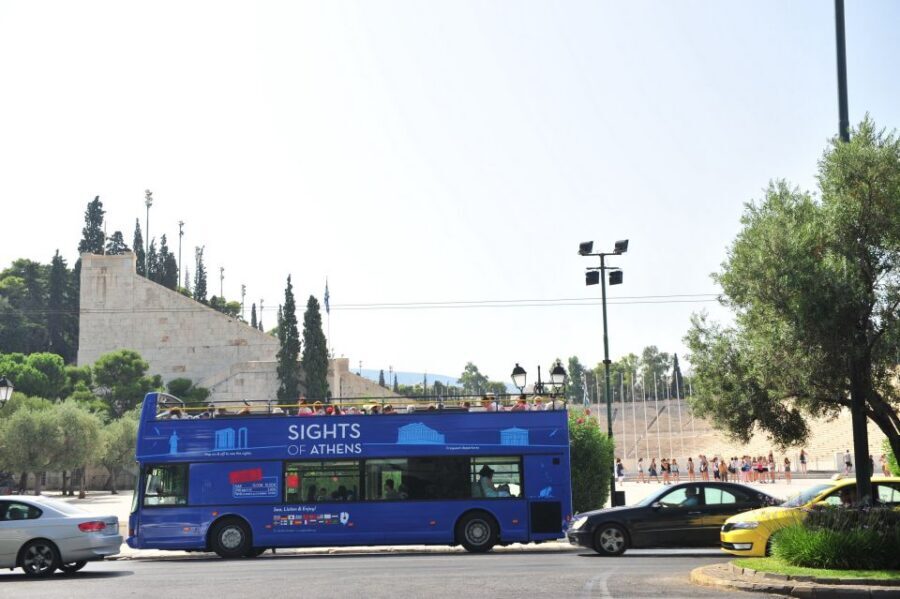
What makes this experience especially useful is that it helps you solve the practical Athens problem: “How do I see a lot without burning my legs?” On day one you can use four different lines (Blue for Piraeus, Orange for central Athens, Yellow for Glyfada and the coast, Green for Vouliagmeni). You’ll also get free earphones and Wi‑Fi on board, so you can keep moving even if you’re trying to coordinate dinner plans, maps, or a message home.
The possible drawback to keep in mind is simple: you might not always get smooth, zero-wait boarding at every stop, and some stops can feel confusing when you’re switching lines. If you miss a stop or end up on the wrong side of a terminal area, it can turn into a long walk in heat.
Key Highlights You’ll Feel Immediately
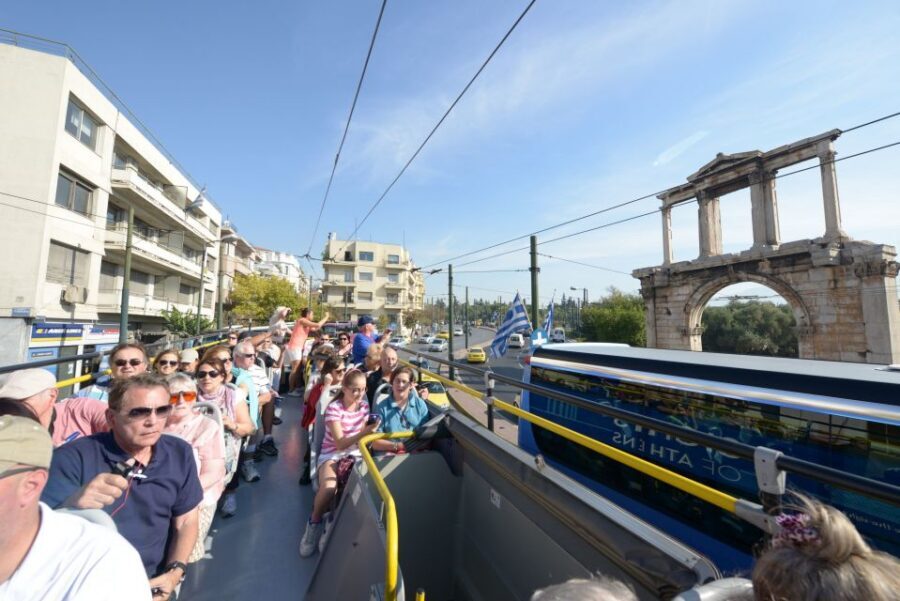
- Cruise-friendly Blue Line: hop on near the port terminals and connect into the city quickly
- Audio in 16 languages: turn sightseeing time into real context
- Athenian Riviera reaches the beaches: Glyfada and Vouliagmeni are built into the routes
- Hop on, hop off as often as you want: you control pacing, not the bus
- Stops at major landmarks: from the Acropolis area to Syntagma and beyond
You can also read our reviews of more tours and experiences in Athens.



Athens, Piraeus, and the Athenian Riviera: What This Pass Really Gives You
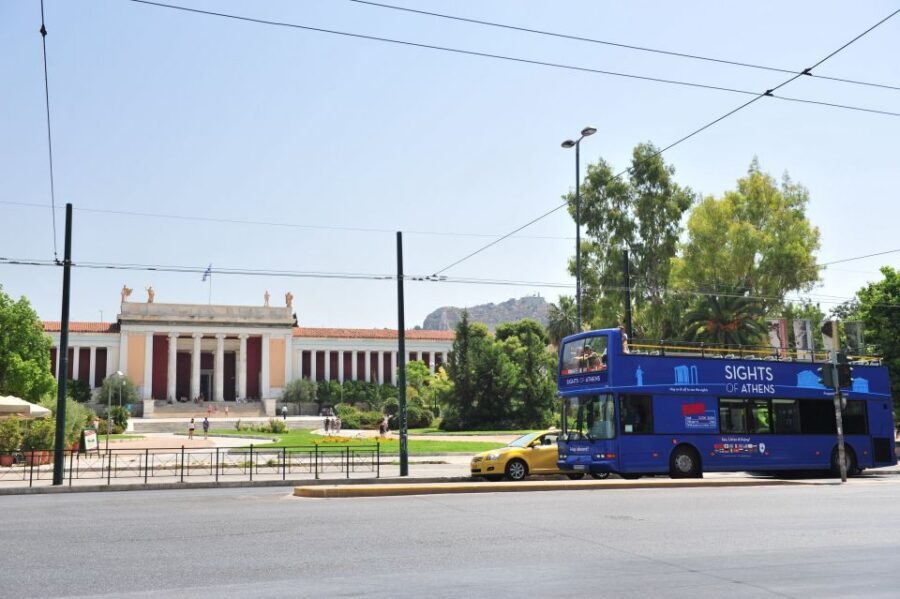
Athens is one of those cities where the highlights feel spread out, not stacked in one walkable cluster. This is why a hop-on hop-off bus ticket works so well here: it’s a way to stitch together major zones—ancient monuments, shopping streets, and then actual beach time—without building your own transport puzzle.
The big value is not just that buses exist. It’s that you get four routes tied together through frequent stops around the city. That means you can do a “greatest hits” day in central Athens, then still have the option to branch out to the Athenian Riviera the next day.
And if you’re on a cruise, this kind of ticket quietly earns its keep. People can lose hours just transferring from port to city sights. Here, the Blue Line is designed so you can board at cruise terminals and move toward Athens landmarks with fewer headaches.
The ticket’s rhythm: day one covers the main spread
The structure is straightforward: you use a 1-day ticket that covers four routes, then you get a complimentary extra day to explore Athens. Since your ticket is valid for 2 days from the first time you activate it, you can time the “big walking days” for when you feel fresh.
In practice, I’d treat day one as your orientation day—get oriented, pick your favorite viewpoints, and hit the main museum/monument stops you can’t easily replicate later. Day two is for repeats, slower wandering, or for focusing on central Athens after you’ve used the coast lines once.
Blue Line from Piraeus: Marinas, the Port View, and the Acropolis Connection
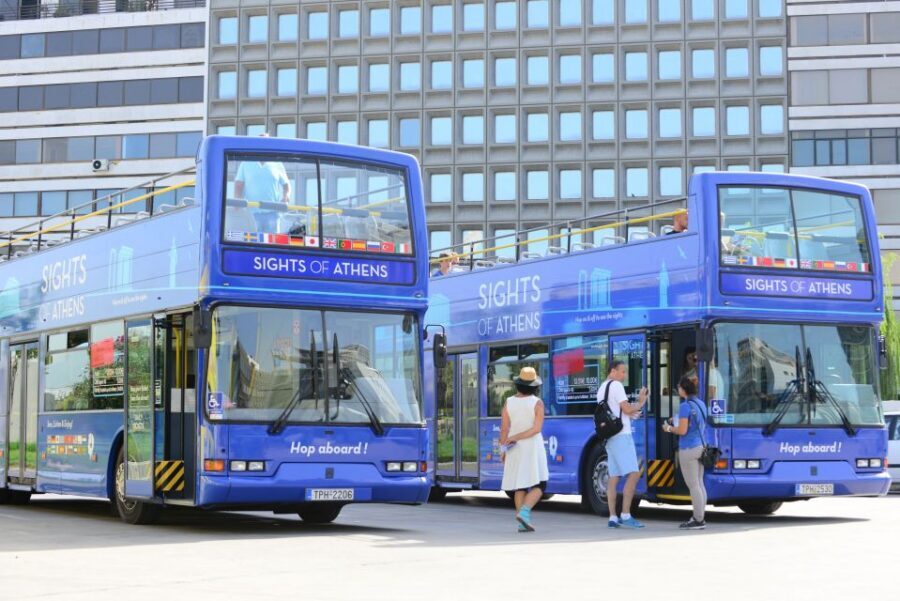
The Blue Line is a lifesaver if you’re arriving by cruise. It’s set up so you can board right by the port terminals, and the route runs past places like Pasalimani’s yacht marina and toward the ancient harbor area of Mikrolimano. Those aren’t just scenic stops—they’re a reminder that Piraeus has always been Athens’ gateway.
One practical reason I like this line: it helps you go from ship mode to city mode quickly. You don’t have to negotiate taxis right away or figure out complex transit. You just climb aboard, settle in, and let the bus do the positioning.
Museum of the Acropolis area: where the bus makes the climb worth it
The Blue Line drops you close enough that you can connect to the Museum of Acropolis area and then walk up toward the Parthenon viewpoint. The walk matters because the bus can’t place you on the mountaintop. But the route gets you to the right neighborhood so you’re not fighting half the city just to start the climb.
This also helps if you’re mixing sightseeing styles. You might spend less time staring at maps and more time deciding whether you want a museum visit, a photo stop, or just the best angles toward the Parthenon.
- All Day Cruise -3 Islands to Agistri,Moni, Aegina with lunch and drinks included
★ 5.0 · 4,958 reviews






Small caution: port areas can confuse even good plans
The bus experience is simple, but terminals and pick-up points can be less so. One review-style problem I see repeatedly with port-linked hop-on hop-off systems is terminal mismatch—people boarding at the wrong terminal area and then having to walk a long distance. If you’re using the bus for a cruise return, confirm which terminal you need before you start hopping around.
Orange Line Through Central Athens: Plaka, Zeus, Syntagma, and Monastiraki
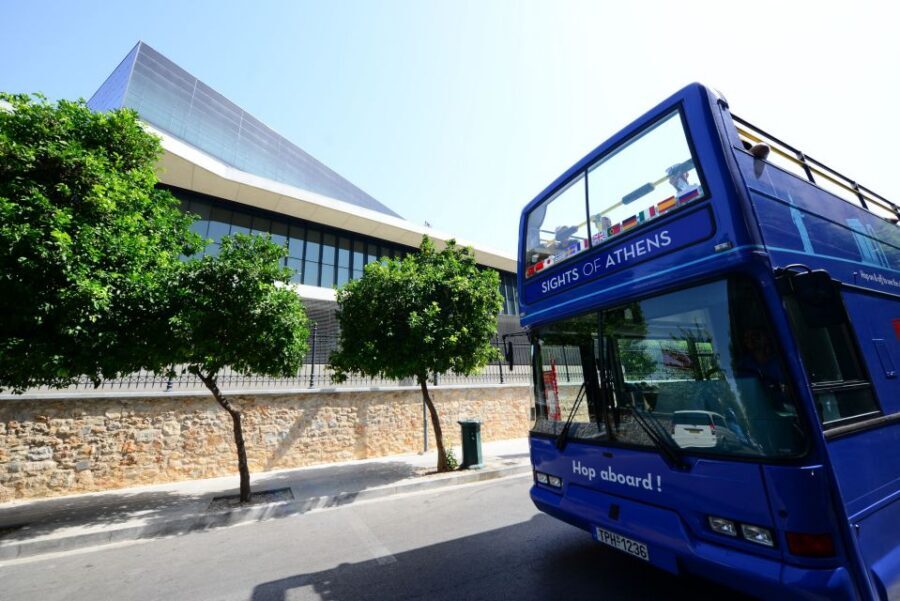
If the Blue Line gets you from the port to the historic core, the Orange Line is the heart of Athens sightseeing. It runs by the attractions deeper in the city center—exactly where you’ll want frequent stops for short bursts of walking.
This route is especially handy because it connects a bunch of Athens zones into one easy loop. You can jump off, explore, and then re-board when you’re ready.
Plaka and old-town wandering: the easy win
On the Orange Line, you’ll get positioned for the Plaka district, one of the classic areas for wandering. From there, you can also hit landmarks like the Gate of Hadrian, a stop that’s useful because it gives you a sense of Athens as layers—Roman influence is right there alongside ancient Greek references.
Temple of Olympian Zeus and Syntagma Square
The route brings you past the Temple of Olympian Zeus, including views of the huge Roman-era scale. Even if you don’t go inside, the sheer size is hard to process unless you see it in person.
Then you swing toward Syntagma Square for access to the Hellenic Parliament area and the guards. If you time it right, that’s the kind of moment where the bus drops you close enough that you’re not spending hours just getting to the spectacle.
Shopping street time: Ermou and quick breaks
One reason I recommend the Orange Line even for people who do not love shopping: it gives you a convenient stop for Ermou, the busy shopping street that’s also a practical place to reset. You can duck in for a snack, water, or a quick bite without planning a whole separate outing.
Panathenaic Stadium and the modern-to-ancient link
The Panathenaic Stadium is another Orange Line highlight. It’s not just a cool photo stop—it’s a reminder that Athens didn’t only preserve ancient ruins. It also re-used the athletic idea in a modern Olympic setting. It helps you connect the city’s ancient symbols to the modern world.
Monastiraki and the flea market area
If you want market energy without committing to an all-day market mission, the Monastiraki zone is perfect. The Orange Line puts you near the Flea Market area, and you can browse in short segments—hour here, coffee there—then move on when your feet say enough.
Yellow Line to Glyfada: A Real Coast Day Without a Car
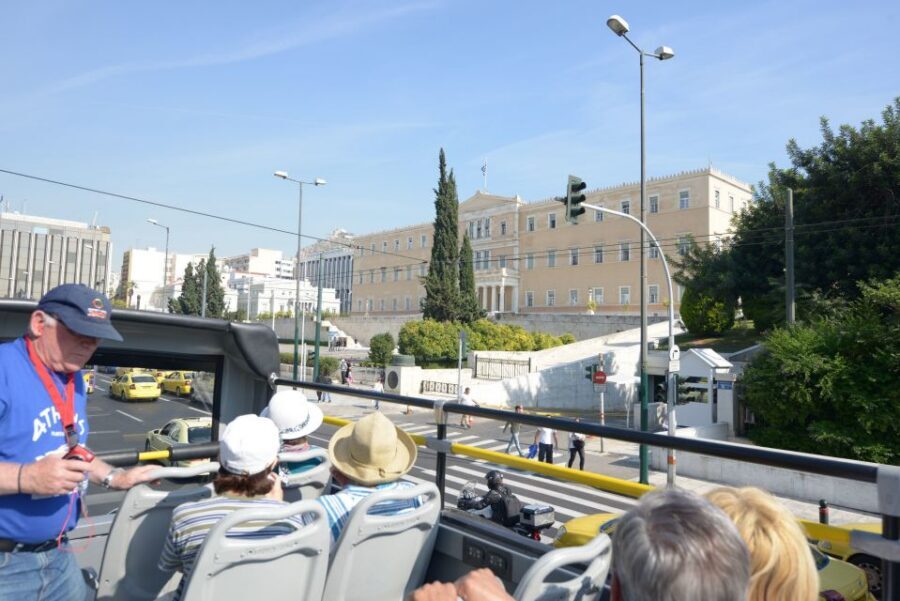
The Yellow Line is where Athens shifts from city streets to sea air. It’s routed for the Athenian Riviera experience, starting from a point near the Planetarium stop of the Blue Line. That matters because it makes the transfer logic smoother—you’re not starting from the far edge of nowhere.
Niarchos Foundation to Marina Alimou: history meeting modern Athens
As you head along the coast, you’ll pass big-name modern anchors like the Niarchos Foundation area, then toward the Marina Alimou. Even if you’re not doing a full visit at each stop, these are good orientation points. They show how the Riviera has both “old city” echoes and modern planning.
Sunset and beach time: Marina Flisvou and Agios Kosmas
This is the part of the day where hop-on hop-off buses shine. The route includes stops that set you up for either sunset viewpoints at Marina Flisvou or proper beach time at Agios Kosmas.
If you only have a short window, choose your beach based on what you want:
- If you want a quick reset and a walkable stretch, Agios Kosmas is the kind of stop that works well.
- If you want coastal views with minimal hassle, Marina Flisvou is the easier “stand, look, photograph, snack” option.
Glyfada terminal: shops, cafés, and seaside drinks
From the Glyfada side, the bus puts you into a more cosmopolitan suburb vibe. You can wander around Glyfada and check out shopping areas, including department stores, plus the general café culture. There are also beach bars you can line up with your own timing—great for that moment when you realize you’ve spent the morning seeing ruins and you still want a cocktail with a sea breeze.
Green Line to Vouliagmeni: Beaches, Lake Views, and Thermal Baths
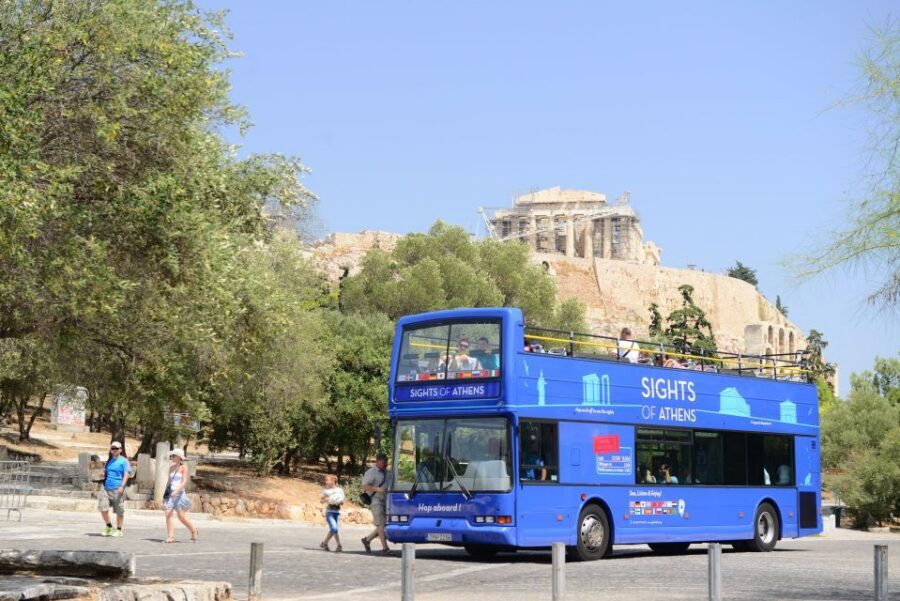
The Green Line is for people who want the Riviera to feel a bit more “destination” than just a beach stretch. Vouliagmeni is known for beaches, but the route also supports the area’s history and standout natural spots.
Allied Forces Cemetery and Byzantine Museum
One advantage of the Green Line is that it doesn’t only chase beach photos. You get access to places like the Allied Forces Cemetery and the Byzantine Museum area, which makes it easier to balance a day. If your group includes people who don’t want to spend the entire time in swim mode, this line keeps everyone interested.
Kavouri Oceanis beach and the water-focused payoff
The route includes Kavouri Oceanis, one of the popular beaches around Athens. If you’re aiming for actual water time—sand, swim, sun—this is the line to use.
Vouliagmeni Lake and thermal baths
The bus also connects you to Vouliagmeni Lake, plus the thermal baths area. The lake stop is valuable even if you don’t go into anything. It gives you a sense that this area is not just beach-and-bar. It’s a specific natural setting, which is why it can feel like a real escape compared with staying inside Athens traffic.
How to Avoid Time Loss on a Hop-On Hop-Off Loop
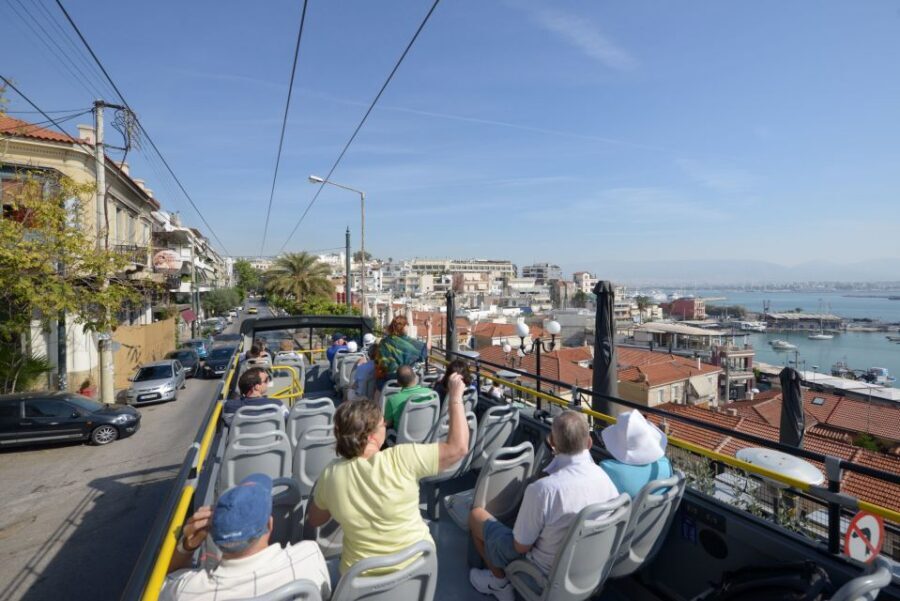
Here’s the big reality check: Athens traffic can slow the bus down, and the “full loop” can take a while. That’s normal. But you don’t have to accept inefficiency.
Choose a stop plan, not a full-circle plan
Instead of trying to ride every segment nonstop, pick your key stops and treat the bus like a tool. Get off, do your thing, then re-board. Many people run into fatigue because they assume the bus ride is the whole point. It’s not. The bus is the connector; walking and choosing viewpoints is the real sightseeing.
One useful tip from experience: if you’re trying to reach a specific stop and the bus route feels slow, it can be faster to walk a couple blocks to the opposite-direction bus. Athens roads don’t always make it intuitive, but a short cross-street move can save you a lot of waiting.
Watch the last service timing
A few reviews highlight timing issues like waiting longer than expected for a bus back in busy periods. This means you should plan your last ride with extra padding. If you’re using this to connect back to a cruise ship, treat the return ride as non-negotiable and leave buffer time.
Audio Commentary, Earphones, and Onboard Wi‑Fi: The Comfort Layer
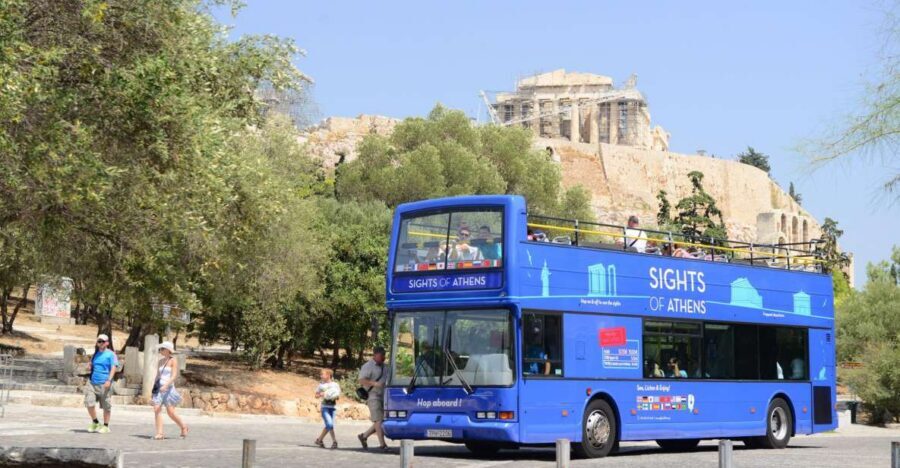
The onboard audio is more than a gimmick. It’s a way to make sense of what you’re seeing, especially when you’re not spending hours studying guidebooks.
Audio in 16 languages with disposable earphones
You get recorded commentary in 16 languages, plus disposable earphones. That’s a big deal for solo travelers and families, because you don’t have to worry about sharing one device or missing key details when the bus is moving.
Also: if you’re prone to losing your place while sightseeing, the audio helps you keep track. You’ll know what you’re passing, not just that something is near the window.
Wi‑Fi works, but don’t bet the day on it
Wi‑Fi is included as part of the onboard experience. Still, I’d treat it as a bonus, not a guarantee. Some buses have connectivity quirks, so if your plan depends on messaging or map loading, keep offline backups.
Getting on and off: Stops, QR boarding, and switching lines
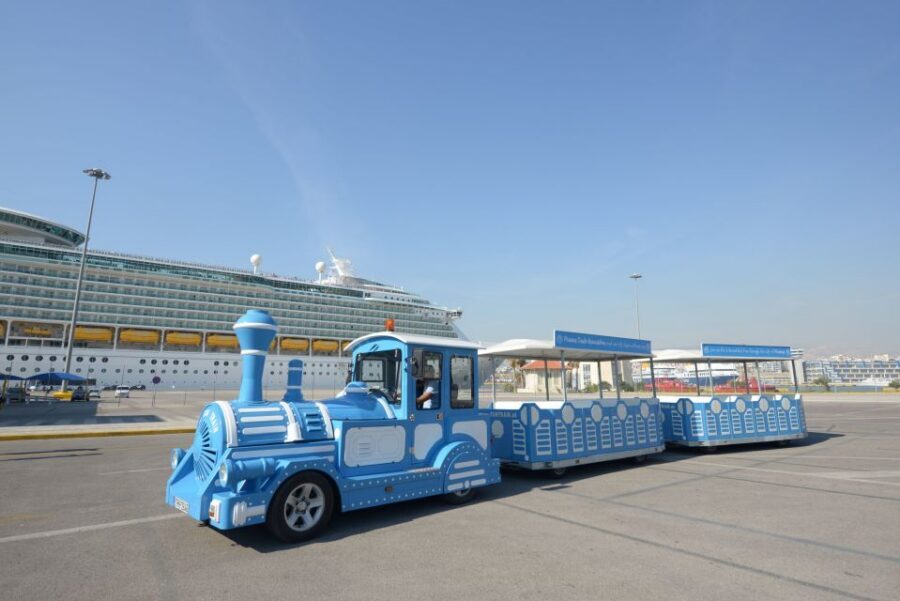
The bus system is built around multiple stops across Athens and the surrounding coast. It’s a big advantage: you can board where you are and choose where to exit.
Common stops listed include:
- Cruise terminals A, B, and C in Piraeus
- Syntagma Square and Omonoia Square
- Karaiskaki Square, Monastiraki Square, Kotzia Square
- Acropolis stop and Plaka area (near Melina Merkouri monument)
- The Parliament, Temple of Zeus, and museum zones like National Archaeological Museum and Benaki Museum
Switching at Acropolis: smooth when it’s clear
A key strategy is using the Acropolis area as a transfer hub. Many people do a Blue Line ride from Piraeus into the Acropolis stop, then jump to Orange for central sights. The important part is paying attention to signage and stop placement so you’re getting the line in the right direction.
One caution: if you’re waiting for a driver announcement and it doesn’t come through clearly, it’s easy to miss your stop. Use a simple method: keep an eye on the route map and confirm your stop name before you think you’re there.
Value Check: Why $14-ish Feels Fair (and When It Doesn’t)
At around $14 per person, this ticket price is doing real work. The biggest reason it feels like good value is that you’re not paying separate transit tickets for each region—port, central Athens, and the Riviera. You also aren’t paying separately for a guide to point out what you’re seeing every time you change zones.
It can be less cost-effective if you only ride one short segment and skip the rest. The pass is at its best when you use it as intended: hop, explore, re-board, repeat.
Also remember: admissions are not included. That’s normal for a bus pass, but it means you still should budget entrance fees for any museum or attraction you want to enter. The bus gets you close; you handle the ticketed part.
Who Should Book This Bus Pass
This hop-on hop-off pass is a strong fit if:
- You’re on a cruise in Piraeus and want an easy ship-to-city plan
- You want to see a lot without committing to a packed walking schedule
- Your group includes people with different energy levels (a bus ride makes that easier)
- You like the idea of audio guidance in your own language
It might be less ideal if:
- You hate waiting at stops and need a perfectly timed schedule
- You only want one area and won’t use multiple lines
- You’re traveling with tight deadlines where even small delays could matter
Should You Book It
Yes, I’d book it for most first-time visitors—especially if you’re starting from Piraeus. The route network is practical, the audio in 16 languages is genuinely useful, and the Riviera lines (Glyfada and Vouliagmeni) help you get beach time without complicated planning.
But do yourself a favor: build a simple stop plan and keep a buffer for transfers and return rides. If you treat the bus as your connector (not your entire itinerary), you’ll get that “I covered a lot” feeling without the stress.
FAQ
How long is the ticket valid?
The ticket is valid for 2 days, starting from the first activation.
What areas do the four bus lines cover?
You can use four different lines: Blue Line for Piraeus, Orange Line for Athens, Yellow Line for Glyfada, and Green Line for Vouliagmeni.
Can I hop on and off as many times as I want?
Yes. It’s a hop-on hop-off ticket, so you can get on and off as often as you like during the validity period.
Is audio commentary included?
Yes. Audio commentary is included in 16 languages.
Are earphones provided?
Yes. Disposable earphones are provided upon boarding.
Is Wi‑Fi included on the bus?
Yes. Unlimited Wi‑Fi is included on board.
Do I need to buy tickets for attractions separately?
Yes. Admissions to attractions are not included.
Where can the bus pick me up?
Buses run from many stops including cruise terminals A, B, and C in Piraeus Port, Syntagma Square, Acropolis, Omonoia Square, Karaiskaki Square, Monastiraki Square, Kotzia Square, Plaka old city, The Parliament, Temple of Zeus, Archaeological Museum, and Benaki Museum.
Is it wheelchair accessible?
Yes. The buses have low-floor easy access and include a designated wheelchair space.
Are children free?
Children aged 4 and under get free admission.



More Tour Reviews in Athens
- All Day Cruise -3 Islands to Agistri,Moni, Aegina with lunch and drinks included
★ 5.0 · 4,958 reviews