REVIEW · ATHENS
Athens: Acropolis, Parthenon & Acropolis Museum Guided Tour
Book on GetYourGuide →Operated by Athenian Tours · Bookable on GetYourGuide
The Acropolis hits you fast. This guided visit turns the ruins into a clear story, mixing myth, politics, and real archaeology as you move from Dionysus Theater to the Parthenon. I love the licensed guides and their on-the-ground explanations, and I also love the Acropolis Museum design, with original sculpture shown in natural light. One thing to plan for: this is a lot of walking on uneven ground and stairs, so comfort and stamina matter.
Guides like Sotos, Jason, Chrysa, Giota, Ioannis, and Julia are repeatedly praised for clear English, sharp pacing, and storytelling that makes the ancient place feel human. The main consideration is timing and comfort: the tour lasts about 3 to 4 hours (weather and group pace can change it), and audio can get messy in peak crowding even with earphones.
In This Review
- Key highlights worth your time
- What you actually see on the Acropolis hill: from Dionysus to the Parthenon
- A practical tip for your eyes
- Skip-the-line reality: what you gain (and what you still might face)
- How the tour keeps the story straight: myth, politics, and real functions
- Odeon of Herodes Atticus, Asclepius sanctuary, and the stops people forget
- The Propylea, Temple of Nike, Erechtheion, and Parthenon: how to not feel rushed
- Mobility note that actually matters
- New Acropolis Museum: natural light, Caryatids, and visible excavations
- Timing, breaks, and audio: getting the most from a 2–4 hour slot
- Price and value: is $40 a smart deal for Athens?
- Who should book this Acropolis + Museum tour?
- Should you book this Acropolis, Parthenon & Acropolis Museum guided tour?
- FAQ
- How long is the Athens Acropolis, Parthenon & Acropolis Museum guided tour?
- What does skip-the-line mean for this tour?
- Is the New Acropolis Museum included, and does the tour include Museum entry?
- Is this tour private or shared?
- Is the tour guided in English?
- Are earphones provided?
- What should I bring?
- What is not allowed during the tour?
- Is this tour suitable for people with mobility issues or young children?
- FAQ
- Do I need to buy tickets ahead of time if I choose the without-tickets option?
- What if I arrive without tickets for the without-tickets option?
- How do I cancel and get a refund?
Key highlights worth your time
- Skip-the-line tickets for both the Acropolis and the Acropolis Museum when you choose the ticket option
- Separate entrance at the Museum, so you spend less time stuck at check-in
- Theater of Dionysus stop, often framed as the first theater of humanity
- Acropolis Museum setup, with originals displayed using natural light and excavations visible under glass
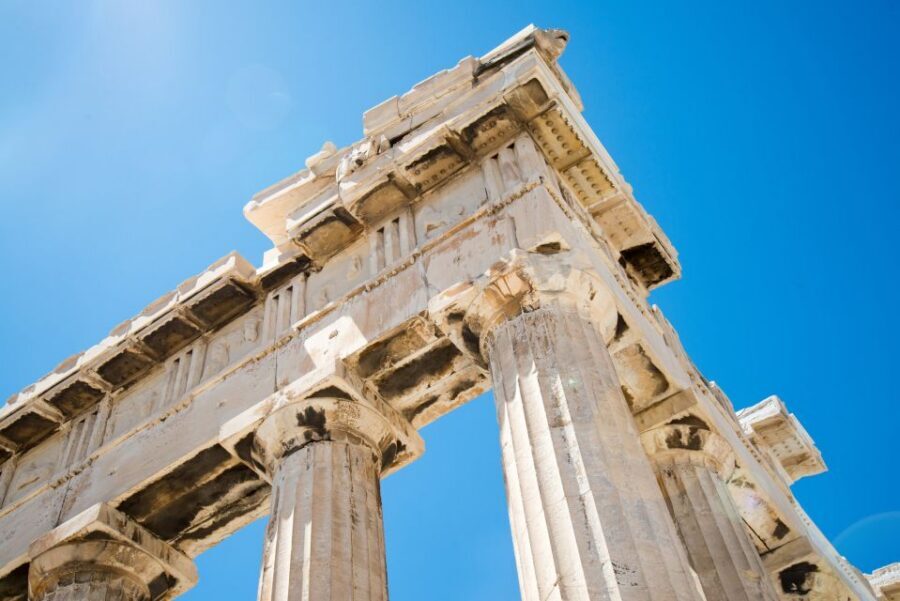
- Parthenon-focused viewpoints, including the frieze and Parthenon context right after you walk the hill
What you actually see on the Acropolis hill: from Dionysus to the Parthenon

You start on Acropolis hill with the feeling that every turn matters. The tour format is built around walking the main “nodes” so you’re not just looking at stone—you’re seeing how the parts connect.
One of the first big moments is the Theater of Dionysus, where famous ancient dramas and tragedies were first performed. This stop helps you understand why Athens cared about theater so much: it wasn’t background entertainment. It was a public space for ideas, values, and community debate.
From there you continue around the hill to the Odeon of Herodes Atticus, a stunning reminder that the Acropolis wasn’t only temples. It also held cultural life. You’ll also see the sanctuary of the healing god Asclepius, which is a helpful curveball. It adds depth beyond the usual “columns and statues” focus and shows how healing, ritual, and belief sat inside the same sacred complex.
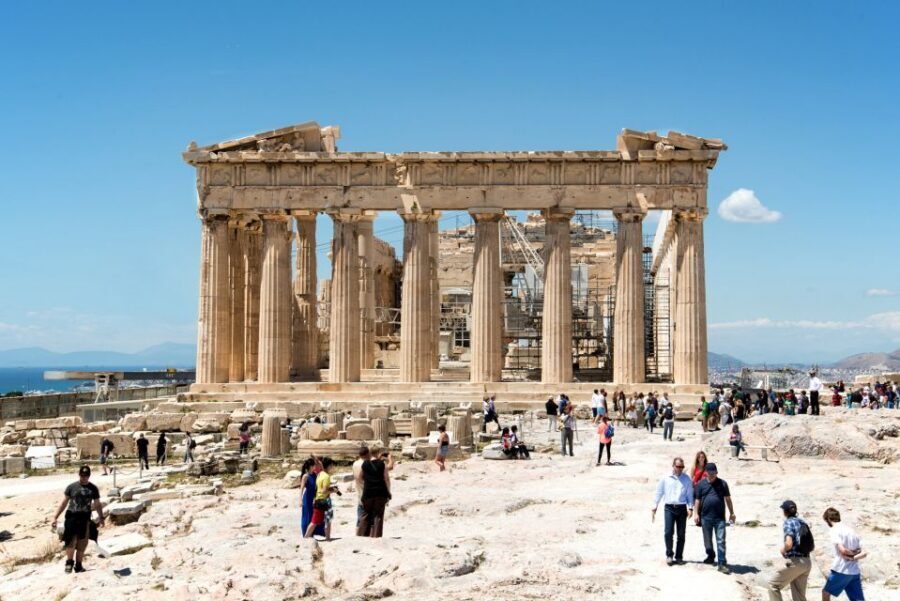
As you climb up toward the top, the temples begin to read like a map. You’ll visit the Propylea (gateway area) and the Temple of Nike, often described as a key marker near the ascent. Then comes the Erechtheion, known for its distinctive carvings, and it sets you up to appreciate why the final crown jewel—the Parthenon—isn’t only a monument. It’s a symbol tied to democracy and the era of Pericles.
You can also read our reviews of more guided tours in Athens



A practical tip for your eyes
When you’re up high, it’s easy to get “Parthenon tunnel vision.” I suggest you consciously rotate your focus: look at the ruins you’re standing by, then glance toward the city below. It helps you anchor the size and layout without feeling rushed.
Skip-the-line reality: what you gain (and what you still might face)

Skip-the-line sounds simple, but Athens crowd patterns can be sneaky. Here’s what the tour data supports.
You can get Acropolis and Acropolis Museum skip-the-line tickets depending on the option you choose. The Museum also includes entry through a separate entrance, which is the kind of advantage that actually saves time when lines stack up.
The important nuance is this: there is no separate skip-the-line entrance to the Acropolis itself. So while you can skip ticket-office lines, you should still expect some crowd flow once you’re heading into the site area.
Another real-world factor is sound. If your group is large, you’ll have disposable earphones, which helps a lot. Still, audio can be affected by other groups’ equipment during crowded times. In practice, that means you’ll hear best when you’re close to the guide and when groups aren’t overlapping at the same moment.
How the tour keeps the story straight: myth, politics, and real functions
The best part of a guided Acropolis visit is not reciting dates. It’s the logic of how each site functioned in ancient Athens.
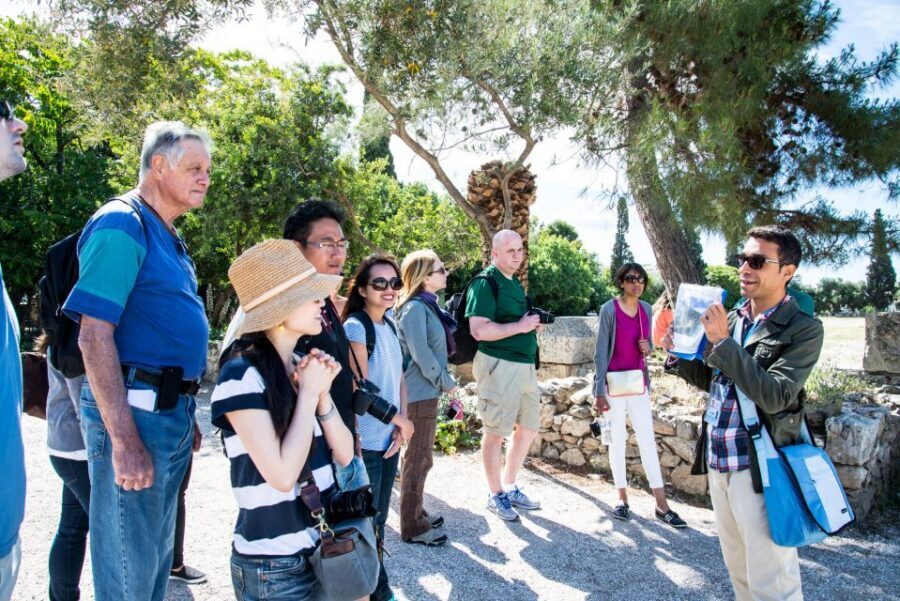
A good guide will connect what you’re seeing to the “why.” That’s exactly what the praised guides are doing—bringing the hill alive with an Athens timeline and a sense of cause and effect. One example from the guide style described in reviews: Jason’s storytelling is repeatedly singled out for keeping attention while making the ruins easier to place in time.
You’ll also hear explanations that turn big labels into something you can picture:
- Theater of Dionysus as a civic stage, not just a historic artifact
- Asclepius sanctuary as a place where ritual and health met
- Odeon of Herodes Atticus as proof that the Acropolis had cultural events too
- Parthenon as both a religious monument and a political statement from the Golden Age
If you’ve ever felt lost on ruins before, this structure helps. You’ll come away not only impressed, but oriented.
Odeon of Herodes Atticus, Asclepius sanctuary, and the stops people forget
A lot of Acropolis tours rush through the “less famous” parts. This one keeps them in the flow, and that’s valuable because those stops fill in the gaps.
The Odeon of Herodes Atticus gives you scale and tone. It’s where you start thinking about performance, crowds, and night events, not just sunlight on marble. The Asclepius sanctuary changes the mood in a good way. It reminds you that sacred spaces were multi-purpose: spiritual practice, healing rituals, and community gathering all had a home here.
These sections can also be a breathing moment. The main temples are spectacular, but the quieter corners are where the mind can settle. If you’re the type who likes to understand how a site worked day-to-day, you’ll likely appreciate these inclusions.
You can also read our reviews of more museum experiences in Athens




The Propylea, Temple of Nike, Erechtheion, and Parthenon: how to not feel rushed

The top-of-hill zone is where you’ll do most of your big photo moments. It’s also where you can feel pressure if the group pace is fast.
This tour is designed to cover the main areas with time for photos and looking around. Reviews describe a pace that’s not information-drenched, with enough downtime to breathe and reframe what you’re seeing. That matters because the Acropolis can overwhelm your brain in about five minutes if you’re learning everything at once.
Still, keep your expectations realistic. The route involves steady walking and uneven surfaces, and the tour duration is about 3 to 4 hours depending on pace and weather. The experience provider may change the order of stops to reduce discomfort, so don’t be surprised if the flow varies slightly day to day.
Mobility note that actually matters
The tour is not suitable for wheelchair users and isn’t built for people with mobility impairments. Also, elevator access at Acropolis hill isn’t included, so you’re relying on stairs and walking. If that’s a concern for you, it’s worth thinking hard before booking.
New Acropolis Museum: natural light, Caryatids, and visible excavations

After the hill, the museum feels like a reset button. You’ll have a short break before going in, including a bathroom stop, which is smart on a day that includes a lot of steps.
The Acropolis Museum is a major reason this tour earns its reputation. The building is designed so you see originals from the Acropolis with natural light—not dim display cases that hide surface details.
Here’s what to expect as you move through:
- Ground floor: immersive glimpses into daily life and the world around the Acropolis
- First floor: the Caryatids—the tour highlights the display of five here, with the sixth Caryatid in the British Museum
- Under-glass excavations: visible through glass floors and walkways, so you can literally connect the current site to what was found beneath
- Top floor: the Parthenon frieze plus a recreation of the Parthenon, paired with a breathtaking view back toward the Acropolis
This pairing is the value trick. You see the ruins, then you step inside to understand what you’re really looking at and where pieces came from. It turns a “wow” moment into a “now I get it” moment.
Timing, breaks, and audio: getting the most from a 2–4 hour slot

The activity window is listed as 2 to 4 hours, and the tour itself commonly runs 3 to 4 hours. That means you should plan the rest of your Athens day with buffer time rather than stacking another big activity right afterward.
Comfort-wise, the tour includes a break and gives you a chance to look around at both the Acropolis and the Museum. Some reviews note that the pacing allows time for photos and even coffee. That doesn’t mean it’s a slow stroll—it’s still an active walk—but it’s not a speed-run either.
For listening, remember: earphones are included for groups larger than 8. During peak crowding, audio may still be affected by other groups’ equipment. The easiest fix is simple: stand where you can see your guide and avoid getting stuck behind someone’s shoulder.
Price and value: is $40 a smart deal for Athens?

At about $40 per person, this tour can feel like a “nice upgrade” compared to DIY. Here’s what you’re really buying.
You’re paying for three things that are hard to replicate on your own:
- A licensed guide who connects the dots between monuments, mythology, and how Athens worked
- Skip-the-line ticket handling (at least at ticket offices), which can matter a lot in summer and on busy days
- Museum context that helps you decode what you’re seeing, especially with natural light displays and the frieze
If you’re the kind of person who hates standing in lines or wants a clear narrative without hunting for it, the price becomes easier to justify.
The only case where it might not be the best value is if you already know the Acropolis well and just want a self-guided museum pass. In that scenario, DIY can work. But if you want the hill to make sense without doing homework, the guided approach tends to feel like time well spent.
Who should book this Acropolis + Museum tour?
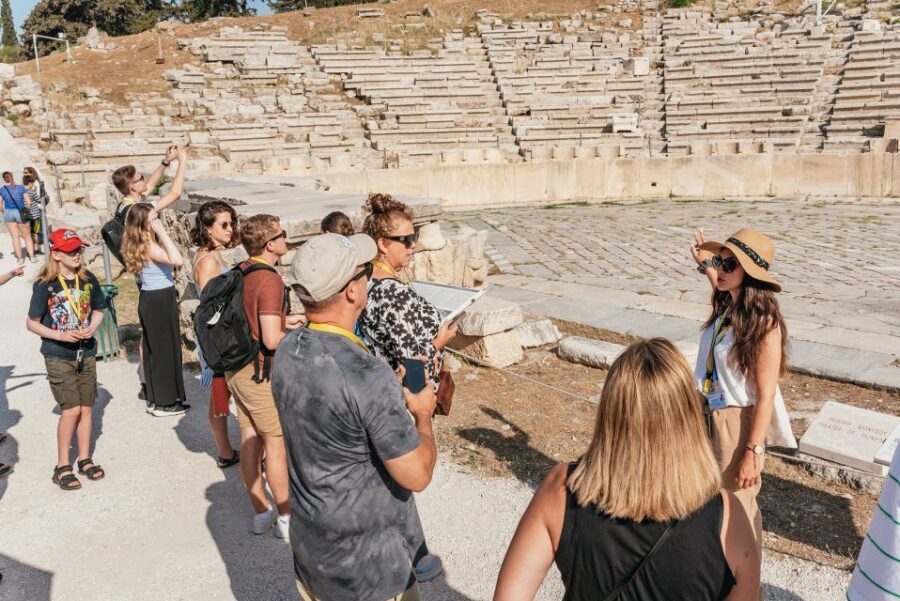
This works best if you:
- want a guided, English-language explanation rather than silent exploration
- like seeing the main monuments with a clear story arc
- care about context for the Parthenon beyond photos
- want the Museum experience right after the hill, so the connection lands immediately
It’s a weaker match if you:
- are planning for wheelchair use or have mobility limitations that can’t handle uneven terrain and stairs
- are traveling with young children (it’s not suitable for children under 6)
- have heart problems or find sustained walking hard
Also note the restrictions: no pets, no baby strollers, and no luggage or large bags. Plan to travel light.
Should you book this Acropolis, Parthenon & Acropolis Museum guided tour?
If your goal is to see the big sites and leave with understanding—not just souvenirs—this tour is a strong pick. The combination of hill monuments plus the New Acropolis Museum is the main reason to book, and the guide-driven storytelling is what turns the whole day into something you’ll remember.
I’d book it if you want to save time with skip-the-line tickets and get museum explanations that make the frieze and Caryatids easier to appreciate. I’d reconsider if stairs and walking are a deal-breaker for you, since the tour doesn’t include elevator access on the hill and isn’t designed for wheelchair users.
FAQ
How long is the Athens Acropolis, Parthenon & Acropolis Museum guided tour?
The tour duration is listed as 2 to 4 hours, and it typically lasts about 3 to 4 hours depending on group pace and weather.
What does skip-the-line mean for this tour?
You can get skip-the-line tickets for the Acropolis and the Acropolis Museum when you select the ticket option. The Museum also includes entry through a separate entrance. The note says there is no skip-the-line separate entrance to the Acropolis.
Is the New Acropolis Museum included, and does the tour include Museum entry?
Yes. The tour includes a visit to the Acropolis Museum, with Acropolis Museum skip-the-line tickets when selected, plus entry through a separate entrance.
Is this tour private or shared?
Private group availability is listed. The option can be private or shared depending on what you book.
Is the tour guided in English?
Yes. The live guide is English.
Are earphones provided?
Disposable earphones are provided for groups of more than 8 people.
What should I bring?
Bring comfortable shoes, a hat, water, and comfortable clothes.
What is not allowed during the tour?
Pets, baby strollers, and luggage or large bags are not allowed.
Is this tour suitable for people with mobility issues or young children?
No. It is not suitable for children under 6, people with mobility impairments, wheelchair users, or people with heart problems.
FAQ
Do I need to buy tickets ahead of time if I choose the without-tickets option?
If you choose the without tickets option, you should purchase Acropolis and Museum entry tickets at least one day before the tour, and contact the provider first to confirm appropriate time slots.
What if I arrive without tickets for the without-tickets option?
If you do not purchase ahead of arrival, the provider can supply full-priced adult entry tickets at the meeting point paid in cash.
How do I cancel and get a refund?
Free cancellation is available up to 24 hours in advance for a full refund.



More Guided Tours in Athens


More Tours in Athens



More Tour Reviews in Athens
- All Day Cruise -3 Islands to Agistri,Moni, Aegina with lunch and drinks included
★ 5.0 · 4,958 reviews