REVIEW · ATHENS
Athens: Exarcheia Walking Tour
Book on GetYourGuide →Operated by Exarchia Uncovered: Athens' Alternative Heartbeat · Bookable on GetYourGuide
Exarchia is Athens without the velvet rope. This 1.5-hour Exarchia walking tour trades statues and photo ops for street-level storytelling: memorials, graffiti-lined corners, and the feeling that the neighborhood’s politics are still in the walls. You’re walking with someone who knows the rhythms of the area, not just its calendar dates.
I love how personal it feels. On these walks, the guide has been Savvas, a longtime local who connects names, places, and protest culture to real life in the neighborhood. I also like that it’s not all talking: you’ll get live traditional music and a final music moment with a small Greek bouzouki-style instrument (baglamas).
One thing to consider: this is a political, emotionally direct kind of sightseeing. If you’re far behind the guide, you might miss some details while you’re walking, so plan to stay closer when the stories start getting specific.
In This Review
- Quick hits before you go
- Walking Exarchia like a local rebel, not a museum visitor
- Starting at Plateia Klavthmonos: the tone before the stories
- Academy of Athens stop: finding truth in the streets
- Mesologgiou and the memorial-minded walk
- Exarchia Square: behind metal fences, still human
- Kallidromiou Farmers’ Market: where the neighborhood buys real life
- Strefi Indoor Stadium and the hilltop baglamas moment
- Price and value: is 70 dollars worth 1.5 hours?
- What you should bring (and how to plan your walking pace)
- Group size and listening tips (so you don’t miss the best parts)
- Who should book this Exarchia underground-style walk?
- Should you book this tour or choose something else?
- FAQ
- How long is the Athens Exarchia Walking Tour?
- Where does the tour start?
- Where does the tour end?
- How much does it cost?
- What’s included in the tour price?
- Are food and drinks included?
- What language is the tour offered in?
- How big is the group?
- Is it suitable for wheelchair users or people with mobility impairments?
- What should I bring?
Quick hits before you go

- Klafthmonos Square sets the tone with a sense of public grief and unexpected survival myths
- Academy of Athens area gives you a clear route toward modern street truth, not just postcard Greece
- Exarchia Square is described as a place with people and energy, not tour staging behind barricades
- Kallidromiou farmers market is where the neighborhood shows up in daily life, shopping, and conversation
- Strefi Hill viewpoint ends the walk with city panoramas plus music from the baglamas
- Small group (max 8) means you can actually ask questions and keep up with the story
Walking Exarchia like a local rebel, not a museum visitor

Exarchia is the Athens you reach when you want more than ancient columns. It’s a neighborhood known for anarchist roots, street art, and political expression, and this walk leans into that reality instead of softening it.
The tour stays intentionally human-scale. No big group herding. No lecture-hall vibe. Just a guide who lives with the neighborhood’s contradictions day to day, turning corners into context.
If you’re used to ancient-site tours, this can feel like switching genres. Think of it as learning Athens from the street names, memorials, and conversations you’d never catch inside a museum.
You can also read our reviews of more walking tours in Athens


Starting at Plateia Klavthmonos: the tone before the stories
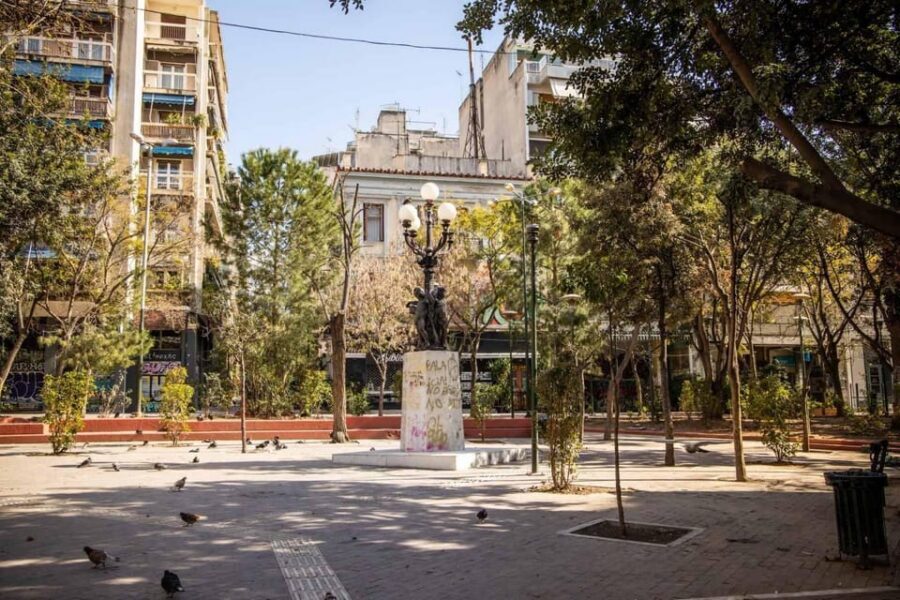
You begin at Πλατεία Κλαυθμώνος (Plateia Klavthmonos), a central Athens square that’s a practical launchpad and a symbolic one. The energy here is different from the quiet of historic ruins. It’s city life, noise, movement, and that sense that Athens keeps going even when it’s under pressure.
From the start, the tour frames what you’re seeing. Instead of treating Exarchia as a distant “alternative,” you’re taught to read it as part of the whole city—politics, grief, art, and everyday survival all in the same neighborhood.
This opening is important because it helps you stop expecting a neat storyline. Exarchia rarely gives neat. It gives layers.
Academy of Athens stop: finding truth in the streets

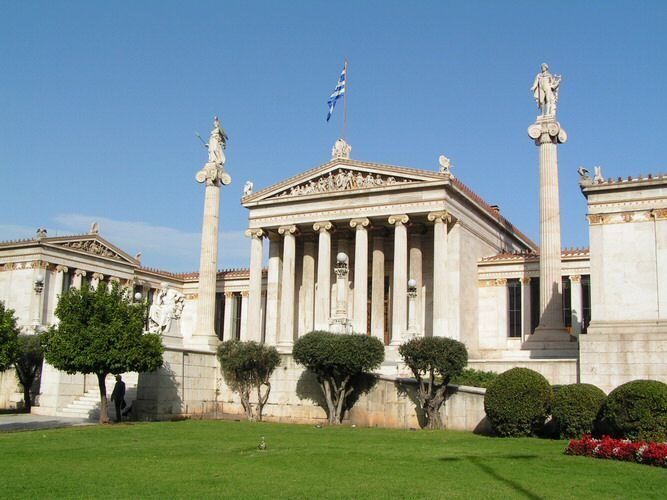
One of the first major points is the Academy of Athens area. You’ll get a break and photo time, and then you’ll get a guided walk through the streets with a clear intention: build a course toward freedom and truth in the way people live out their ideas.
This isn’t just “look at that building.” The value here is interpretation. You’re connecting the academic Athens you’ve probably seen in guidebooks to the modern Athens that argues, protests, and paints.
You’ll also have time to reset your pace. That matters because the tour is only 1.5 hours total—so breaks help you stay sharp for the more intense parts.
Mesologgiou and the memorial-minded walk
After the Academy area, you move toward Μεσολογγίου (Mesologgiou) for another break and a straight walk segment. This part is where you start noticing that Exarchia’s meaning lives in small, specific places: street corners, names, and the way public memory is handled.
A key emotional anchor on this tour is the story of Alexandros Grigoropoulos at his memorial. You don’t just pass it. You’re given the story in a way that connects it to counterculture and resistance—so the memorial doesn’t feel like a random stop. It feels like a pulse.
And yes, you’ll likely see the neighborhood’s political map written on surfaces. You’ll walk streets full of graffiti and political expression, and the guide helps you understand what those visuals are doing in the neighborhood’s public space.
Exarchia Square: behind metal fences, still human
Next you reach Exarchia Square, and it’s described as a place where you don’t feel like you’re in front of a “sight.” The idea is simple: there are people, not guided props.
At times, parts of the square can be hidden behind metal fences, but the spirit is still there. You’re not meant to treat it as a photo backdrop. You’re meant to register the contradiction: the neighborhood’s tension is visible, but it’s also alive.
This stop is great if you want a different angle on Athens. While the classic routes push you toward ancient perfection, Exarchia asks you to look at what happens when communities refuse to disappear.
- All Day Cruise -3 Islands to Agistri,Moni, Aegina with lunch and drinks included
★ 5.0 · 4,958 reviews




Kallidromiou Farmers’ Market: where the neighborhood buys real life
Then you hit Kallidromiou, described as lyrics on the walls—Bakunin t-shirts, jasmine, passion, all mixing with daily routine. That’s a big deal because it keeps the tour from becoming all ideology.
At Kallidromiou Farmers’ Market, you’ll have time for photo stops and a visit, with opportunity to shop and food-market browsing. The practical win here: you get a chance to do something you rarely do on street tours—buy something small, snack, or drink if you choose (food and drinks aren’t included, so plan to cover that yourself).
This stop also helps you understand how art and politics show up in ordinary transactions. People aren’t only protesting. They’re feeding themselves, arguing at the counter, laughing, and moving on.
If you’re sensitive to strong political imagery, this is a good moment to calibrate. It’s not hidden; it’s also not constant shouting. It’s just part of the neighborhood’s normal.
Strefi Indoor Stadium and the hilltop baglamas moment
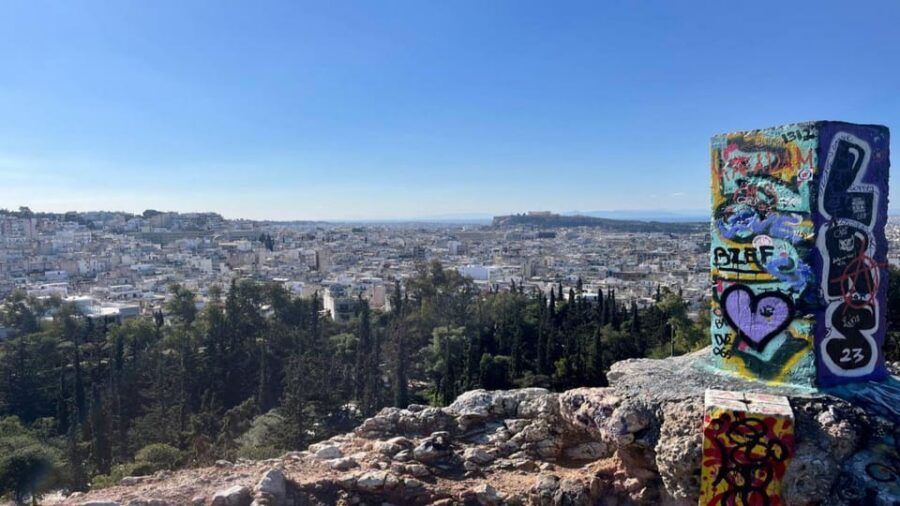
The tour finishes with Strefi Indoor Stadium for a photo stop and sightseeing walk, then it ends at Λόφος Στρέφη (Strefi Hill). This is where you get the panoramic view, and it’s one of the best ways to cap a street-history walk: you look down at the city and feel how big it is compared to one neighborhood.
The final emotional note is music. The tour includes a live performance of a traditional song, and you’ll also get a music moment from a baglamas. That combination matters because it changes the mood. You go from reading resistance on walls to hearing cultural continuity in sound.
Also, Strefi Hill is a nice reality check for your feet. The walk involves uneven surfaces, so the hill is a reminder to pace yourself and keep your shoes practical.
Price and value: is 70 dollars worth 1.5 hours?

At $70 per person for a small group (max 8), the price isn’t trying to compete with giant coach tours. It’s paying for something more specific: a personal guided walk with local street knowledge, plus live music and multiple site stops within a tight 90 minutes.
Here’s how I think about value on a tour like this:
- You’re not paying for a museum ticket or entry fees. You’re paying for the guide’s interpretation of place—how to connect names like Nikolas Asimos, Panos Sidiropoulos, and Katerina Gogou to what you’re actually seeing.
- You’re paying for access to the neighborhood as a lived space, not just a visual checklist.
- You’re paying for the small-group format, which makes it easier to ask questions and hear the story without a crowd noise problem.
If you want ancient sites in bulk, this won’t scratch that itch. But if you want Athens as a living argument—politics, street art, public memory—this is good value.
What you should bring (and how to plan your walking pace)
This tour is short, but it’s not a stroll. Wear comfortable shoes you can trust on uneven surfaces. Bring a water bottle since you’ll be walking and breaks may not be constant.
If you’re visiting in warmer weather, a sun hat helps more than you’d think. And bring a camera because the walls and street corners are the point, not the extras.
Language-wise, the tour runs in English and Greek, so you’ll be fine even if your Greek is basically zero. Still, if you understand any Greek, you’ll catch more from street signage and names.
Group size and listening tips (so you don’t miss the best parts)
With up to 8 participants, you’re not stuck listening through ten layers of bodies. Still, one review-style caution comes up: if the guide talks while walking, people behind may struggle to hear every detail.
My advice is simple: don’t treat it like a race to take photos. Stay near the guide when you see a story coming. When the group stops, use that moment to lean in and catch the names and context.
This tour rewards attention. You’ll get more out of it if you let the guide set the rhythm.
Who should book this Exarchia underground-style walk?
Book it if you want Athens beyond monuments. I’d especially recommend it if:
- you like walking tours that tell real human stories, including uncomfortable ones
- you enjoy street art and want help reading it as social expression
- you’re interested in modern Greek politics and how it shows up in public life
- you want a counterpoint to the classic ancient Athens route
Skip it if you need fully accessible routes, since it’s not suitable for people with mobility impairments or wheelchair users and involves walking on uneven ground.
Also consider whether you’re comfortable with political themes. Exarchia isn’t trying to be gentle.
Should you book this tour or choose something else?
I’d book this if you want to understand why Exarchia still matters to the people who live there. The mix of memorial context, street-art reading, market life, and a music finish is a smart way to spend 1.5 hours in Athens that won’t feel like just another city walk.
Choose a different option if you need quiet sightseeing, easy flat walking, or you’re not interested in political counterculture themes. In Athens, you can’t do everything, and this one works best when you come for the street-level Athens you usually miss.
If you’re curious, this tour is one of the most direct ways to get it.
FAQ
How long is the Athens Exarchia Walking Tour?
The tour lasts about 1.5 hours.
Where does the tour start?
It starts at Πλατεία Κλαυθμώνος (Plateia Klavthmonos).
Where does the tour end?
It finishes at Λόφος Στρέφη (Strefi Hill).
How much does it cost?
The price is $70 per person.
What’s included in the tour price?
You get a guided walking tour through Exarchia and stops at key historical and cultural sites, including a live performance of a traditional song.
Are food and drinks included?
No. Food and drinks are not included.
What language is the tour offered in?
The tour is offered in English and Greek.
How big is the group?
It’s a small group limited to 8 participants.
Is it suitable for wheelchair users or people with mobility impairments?
No. The tour is not suitable for people with mobility impairments or wheelchair users.
What should I bring?
Bring comfortable shoes, a sun hat if needed, a camera, and water. The tour involves walking on uneven surfaces.
More Walking Tours in Athens

More Tours in Athens


More Tour Reviews in Athens
- All Day Cruise -3 Islands to Agistri,Moni, Aegina with lunch and drinks included
★ 5.0 · 4,958 reviews