REVIEW · ATHENS
Athens Acropolis and Parthenon Walking Tour
Book on Viator →Operated by Athens Walking Tours · Bookable on Viator
Two hours changes your whole Acropolis day. I like this tour because a licensed guide leads you up the hill while you listen through earsets, so the stories land without shouting over crowds. The route is built for first-timers who want the big UNESCO hits fast, from the Acropolis to the Parthenon.
What I love most is the pacing and clarity. You don’t just see stones; you learn why each stop mattered in classical Greek life, from drama at the Theatre of Dionysus to the political and religious weight of the Parthenon. And I also like the practical add-ons afterward: you finish with an Athens map and an Acropolis guide magazine for the rest of your day.
One drawback to plan for: it’s a steep, uneven climb on archaeological ground, so comfortable shoes matter. There’s also no waiting for latecomers due to strict entry times, and you should expect that once you’re on site, conveniences like toilets are not part of the experience. Wind can also make hearing a bit harder if your earset isn’t snug.
In This Review
- Key points before you go
- Start at the base: tickets, security, and what earsets do for you
- Acropolis orientation: learning the “why” before you see the “wow”
- Theatre of Dionysus, Asklepius, and Herodes Atticus in one run
- Theatre of Dionysus: where drama started
- Temple of Asclepios: medicine and the quiet break
- Odeon of Herodes Atticus: ancient + modern performances
- Philopappos Hill viewpoints and the Temple of Athena Nike
- Propylaea, Erechtheion, and the Parthenon payoff moment
- Propylaea: the grand entrance feeling
- Erechtheion: Caryatids up close
- Parthenon: your main conclusion point
- Is this tour worth $41.12? Fit, pacing, and practical prep
- Should you book this Acropolis and Parthenon walking tour?
- FAQ
- How long is the Athens Acropolis and Parthenon walking tour?
- Where do we meet for the tour?
- Is the tour offered in English?
- Does the tour price include Acropolis entrance tickets?
- What happens if I book without an entrance ticket?
- Are earsets provided?
- Is a baby stroller allowed on the Acropolis site?
- Can I cancel for a full refund?
Key points before you go
- Licensed guide with earsets to keep commentary clear on crowded paths
- Tight, 2-hour route that covers the Parthenon area without eating your whole day
- Optional admission upgrade that can help with skip-the-line ticket handling
- Stops that widen the story beyond the Parthenon: Dionysus, Asclepius, and more
- Small group size (max 24) so you can hear the guide and still move as a group
Start at the base: tickets, security, and what earsets do for you
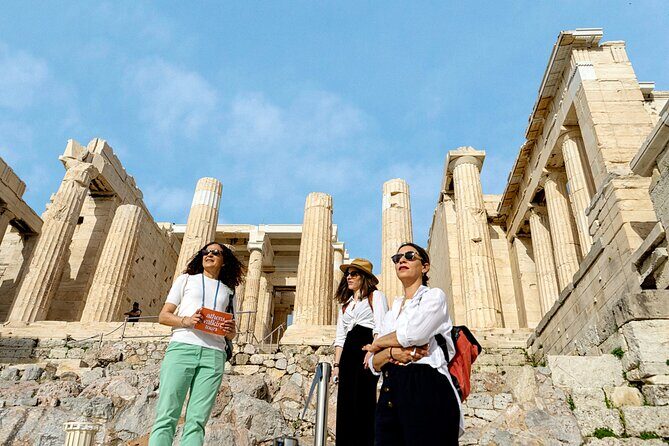
You meet at a yogurt bar near the base of the Acropolis, at the start time you chose. The exact meeting pin is listed as LUKUMAΔΕΣDionysiou Areopagitou 3, Athina 117 42, Greece. From there, your group heads uphill together with a licensed guide.
Earsets are a big deal here. With a larger site and lots of stone echo, the guide’s explanation is easier to follow when everyone is wearing the personal audio system. You’ll still be walking, so you get the best of both worlds: moving through the site at a human pace, while the guide keeps the story straight.
Tickets are the one part you need to match to your plan. If you choose the option without an admission ticket, the guide handles a prepaid setup—but you’ll need to give cash to the guide at the start. If you choose the upgrade with tickets, the tour includes skip-the-line handling for Acropolis entry (and the museum ticket office as well, if that option is selected). Either way, you must have valid entrance for the Acropolis to join.
Also, don’t underestimate the pre-entry process. Visitors go through airport-style security, and peak-season waits can reach 30-plus minutes. Add in strict entry times, and the smartest move is arriving early so you aren’t rushed or stuck in the latecomer problem.
Practical tip: bring water, and dress for sun. A hat and sunscreen are worth it even if you think the day looks mild.
You can also read our reviews of more walking tours in Athens


Acropolis orientation: learning the “why” before you see the “wow”
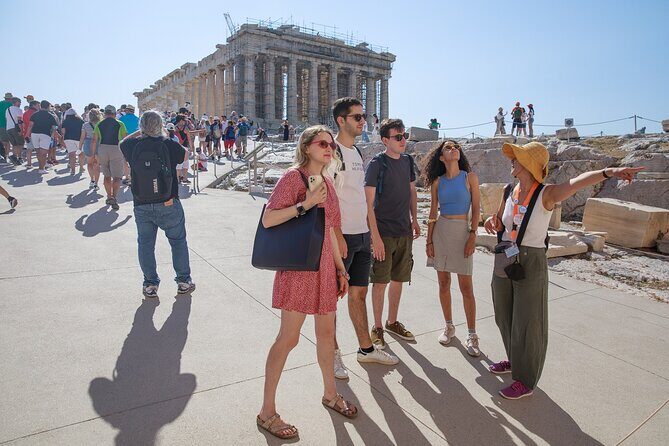
The first stop is the Acropolis itself (about 20 minutes). This is where your guide usually does the heavy lifting: setting the historical and cultural context so the hilltop doesn’t feel like a random collection of ruins. You’ll hear what the monuments were for, how power and religion were tied together, and how the Athenians used these spaces to stage ideas—not just ceremonies.
Then the route starts moving in a way that makes sense. You pass major landmarks as the guide explains them in order, so you’re not just staring at carvings and hoping it clicks. This is especially useful if you’re only doing one Acropolis experience and you want the story to stick.
Two things make this kind of orientation valuable for you. First, the Parthenon area is the most famous part, but the hill has layers. When you learn the role of each site, you look at the same structures with different eyes. Second, guided context helps when the crowds push you around. Instead of feeling like you’re being shuffled, you’re following a plan.
One small reality check: the ground is uneven and the climb is real. People in their 70s have found the pace doable, but on a hot day the uphill effort is noticeable. Your best defense is to take it slow in the first 10 minutes, and keep your footing careful.
If you’re visiting on a windy day, keep your earset adjusted. Some people have reported intermittent issues with hearing when conditions were tough. When the audio works, you’ll hear every story detail. When it doesn’t, the tour still moves well, but you’ll lose some of the fine points.
Theatre of Dionysus, Asklepius, and Herodes Atticus in one run
After the initial orientation, you head toward some of the most human parts of the Acropolis story.
Theatre of Dionysus: where drama started
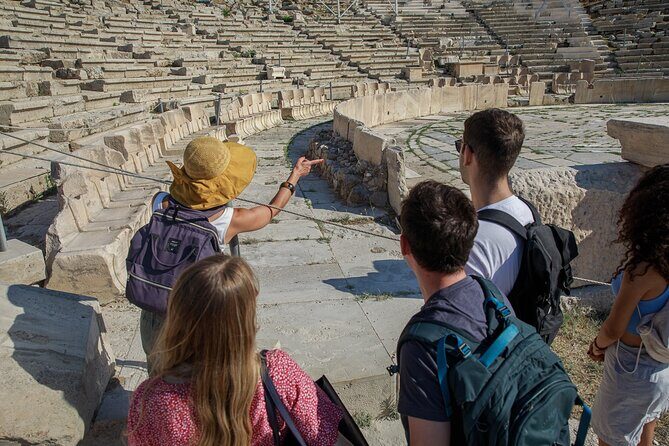
The Theatre of Dionysus is a short stop (about 15 minutes). This is where the guide brings the idea of ancient theater to life, including the role of major playwrights like Aeschylus, Sophocles, and Euripides. Standing near where drama was performed helps you understand why the Acropolis wasn’t only a temple hill—it was also a stage for ideas and identity.
This stop is also a nice reset. Even if the Parthenon steals the spotlight, theater is often what makes the ancient world feel personal.
Temple of Asclepios: medicine and the quiet break
Next is the Temple of Asclepios (about 10 minutes), also known as the Asklepeion. This sanctuary is for Asclepius, the god associated with medicine. The point isn’t just that Athenians believed in healing—it’s that they sought it in a specific sacred setting. Your guide frames this as a calmer pause from the city’s energy, which helps the whole tour feel balanced.
If you like seeing how different parts of daily life were shaped by religion, this is the stop that gives you that extra dimension.
- All Day Cruise -3 Islands to Agistri,Moni, Aegina with lunch and drinks included
★ 5.0 · 4,958 reviews




Odeon of Herodes Atticus: ancient + modern performances
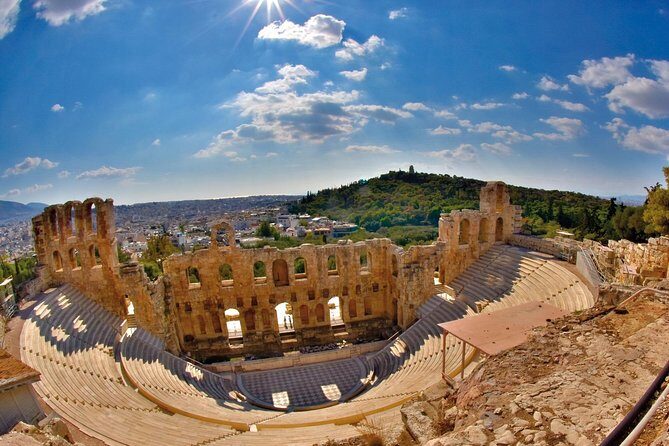
The Odeon of Herodes Atticus (about 10 minutes) is the bridge stop between ancient and modern. Built in 161 AD, it’s still used for performances today. Even if you don’t catch a show, it’s a strong reminder that these places were designed to be used, not just admired from a distance.
I also like this stop because it changes your brain’s focus. After temples and sanctuaries, you shift to sound, crowds, and performance—then you go right back into the religious architecture later.
Philopappos Hill viewpoints and the Temple of Athena Nike
You’ll make a brief scenic break at Philopappos Hill, also called the Hill of the Muses. A monument to Philopappos sits here, and the main payoff is the view over Athens. It’s a good spot to pause, take photos, and let your legs reset for the final push toward the Parthenon area.
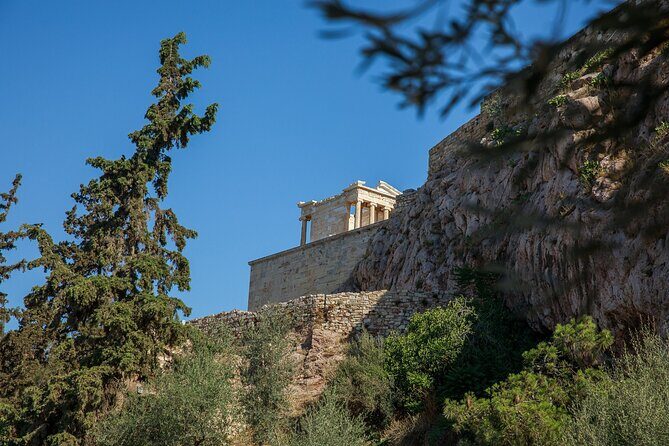
Then you’ll move to the Temple of Athena Nike (about 5 minutes), perched at the southwestern edge of the Acropolis. This is the temple dedicated to Athena as the goddess of victory. The quick stop format works because you get the meaning without spending forever in one spot.
This temple also does something practical: it shows you the layout of the hill’s edges and vantage points. When you later approach the major monuments, you’ll feel like you understand where everything sits.
Propylaea, Erechtheion, and the Parthenon payoff moment
Propylaea: the grand entrance feeling
Propylaea (about 5 minutes) is the marble gateway to the Acropolis. The guide’s job here is to help you feel what it meant to enter. This isn’t just a door in the ground; it’s the ceremonial shift from ordinary space to sacred space. Designed by Mnesikles, it’s one of those structures you can’t fully appreciate until someone explains the purpose behind the scale.
Erechtheion: Caryatids up close
Next comes the Erechtheion (about 15 minutes), dedicated to both Athena and Poseidon. The star is the Caryatid Porch, with six female columns (the famous sculpted figures) supporting the structure. This stop is where the guide’s storytelling and your eyes combine. The architecture becomes more than a shape—it becomes personality and symbolism.
If you’ve ever felt like ruins are just stone blocks, the Caryatids usually change that. They’re instantly human in a way that makes the craftsmanship feel alive.
Parthenon: your main conclusion point
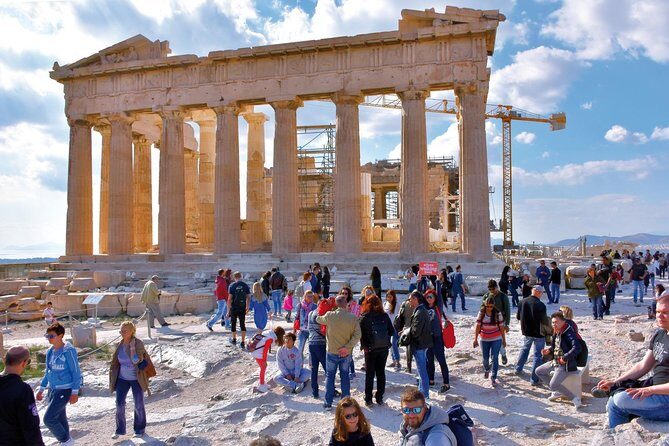
Finally, the Parthenon itself (about 25 minutes). This is the masterpiece on the hilltop, dedicated to Athena Parthenos. Your guide connects what you’re seeing—form, function, and symbolism—to why it became the enduring icon of classical Athens.
This is where the earlier stops matter. When you understand the Theatre of Dionysus and the sanctuary settings, and you see Athena’s role as victory and protection, the Parthenon reads less like a lone monument and more like the center of a whole worldview.
Photo tip: plan to take shots at multiple angles. The tour includes short time blocks at different points, so you can capture both close architectural details and the wide views.
Is this tour worth $41.12? Fit, pacing, and practical prep
At $41.12 per person for about 2 hours, the value depends on what you already plan to do. The big variable is the entry fee. Acropolis entry is €30.00 per person unless you choose the upgrade option. If you’re paying for tickets anyway, the tour’s price becomes a pay-for-organization deal: you’re paying for a licensed guide, earsets, and a guided path that keeps you from wandering.
I like this setup for people who have limited time in Athens. A guided loop helps you see the key Acropolis landmarks without turning the day into a map-reading exercise. It’s also a smart choice if you want to understand the symbolism, not just collect photos.
Group size helps. With a maximum of 24 travelers, the guide can still pace the group and answer questions without losing everyone. Some guides also make a point of helping with comfort—keeping people in shade when possible and pacing the walk so you reach the top without feeling wiped out.
Who should book it:
- First-time Athens visitors who want the core Acropolis story quickly
- People who prefer guided interpretation over self-guided wandering
- Anyone who’s okay with a steep walk and uneven surfaces
Who should think twice:
- Anyone who hates uphill walking or needs frequent breaks
- People who are very sensitive to wind or sound issues if earsets don’t hold up perfectly in tough conditions
- Anyone who expects lots of on-site convenience (plan for limited amenities once inside)
Quick prep list:
- Comfortable, grippy shoes
- Water bottle, sunscreen, and hat
- Weather plan: the tour runs in rain (bring appropriate protection)
- A baby pouch instead of a stroller (strollers aren’t allowed on the site)
Should you book this Acropolis and Parthenon walking tour?
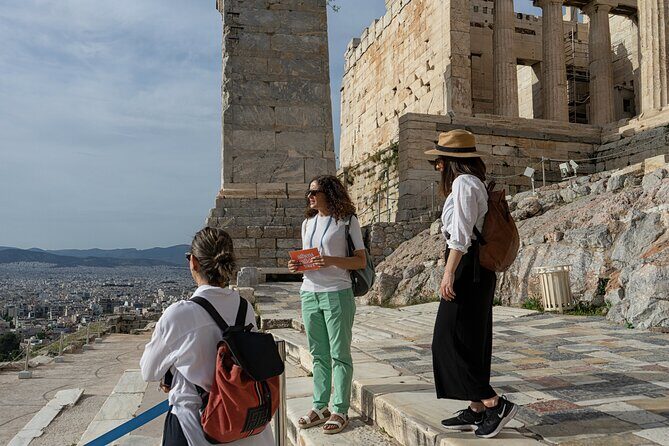
Yes, if you want the Acropolis to make sense in one visit. This tour is built for short time, with licensed guidance, personal earsets, and a route that hits both the headline monument (the Parthenon) and the supporting cast (Dionysus, Asclepius, and Herodes Atticus). If you choose the ticket upgrade, you also reduce the friction of entry day.
I’d book with confidence if you’re the type who likes context while you walk—especially since guides (including examples like Alexia, Andrea, Dora, Elena, Victor, Phillipa, Hermes, and Annie) have shown an ability to explain, answer questions, and pace people so the climb feels manageable.
If your main goal is total independence and you’re physically comfortable navigating alone, then you might consider self-guided. But if you want the hill to feel coherent, and you’d rather spend your energy looking and learning instead of figuring out what goes where, this is a solid pick.
FAQ
How long is the Athens Acropolis and Parthenon walking tour?
The tour lasts about 2 hours.
Where do we meet for the tour?
You meet at a yogurt bar near the base of the Acropolis. The listed start point is LUKUMAΔΕΣDionysiou Areopagitou 3, Athina 117 42, Greece.
Is the tour offered in English?
Yes, the tour is offered in English.
Does the tour price include Acropolis entrance tickets?
Not by default. Entrance fee is €30.00 per person, unless you select the option that includes admission tickets.
What happens if I book without an entrance ticket?
You need a valid entrance ticket to join the tour. If you select without tickets, you give cash to the guide at the meeting point, and you’ll also receive a link after booking to purchase the entrance tickets within the required time window.
Are earsets provided?
Yes. Earsets are included to help you hear the licensed guide clearly.
Is a baby stroller allowed on the Acropolis site?
No. Baby strollers are not allowed on the Acropolis archaeological site. A baby pouch is recommended.
Can I cancel for a full refund?
Yes. Free cancellation is available if you cancel up to 24 hours in advance for a full refund.


More Walking Tours in Athens

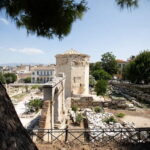

More Tours in Athens

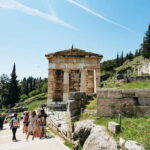

More Tour Reviews in Athens
- All Day Cruise -3 Islands to Agistri,Moni, Aegina with lunch and drinks included
★ 5.0 · 4,958 reviews