REVIEW · METEORA
Meteora Monasteries Half-Day Small Group Tour with Transport
Book on Viator →Bookable on Viator
Cliff monasteries, best seen with a guide. Meteora is a UNESCO rock-and-cloister world, and this half-day route ties the big story together with photo stops and round-trip transport from Kalambaka or Kastraki.
I love how the pacing balances driving time with real walking moments, so you actually get good views (not just a quick look from the roadside). I also like the guide setup: an English-speaking local guide plus a free smart audio guide for additional languages, so you can follow the same narrative even if you prefer earbuds. Guides like Apostolis and Jim pop up in earlier groups for their easy-to-follow explanations.
One consideration: you’ll still pay monastery entrance fees separately and you should plan for stairs and a strict dress code. If you have trouble with long climbs, the tour’s easier-access stop (Agios Stephanos) uses a small bridge instead of steps, but other viewpoints can be step-heavy.
In This Review
- Key things to know before you go
- Meteora at 9:00: UNESCO rocks, monasteries, and the big-picture story
- Pickup from Kalambaka or Kastraki: small-group pace and photo stops
- Saint Nicholas of Anapafsas: the name story and the first taste of the climb
- Roussanou Monastery inside: lower elevation, WWII scars, and a convent shift
- Varlaam and Great Meteoron: two major interiors and the origin story
- Agia Triada and Agios Stephanos: 140 steps versus the bridge approach
- English-only guide, free audio in many languages, and photo help on the move
- Price and value: what you get for $36.30, plus the realistic add-on
- Practical tips: dress code, cash, and comfy shoes for stairs
- Should you book this Meteora half-day tour?
- FAQ
- What time does the Meteora tour start, and where do you pick me up?
- How long is the tour?
- Is the cost $36.30 all-in, including monastery entrance fees?
- Which monasteries are included inside the tour?
- What dress code should I follow?
- Do I need to speak English?
Key things to know before you go
- Three monasteries inside: Roussanou, Varlaam, and Great Meteoron are the ones with separate entrance fees.
- UNESCO Meteora plus Natura 2000: the area is protected for rare birds and flowers, not just for stone buildings.
- WWII and founding myths: Roussanou includes a World War II damage chapter, and names connect to early hermits and pilgrims.
- Great Meteoron is the origin point: it’s tied to Saint Athanasios the Meteorite and the start of organized monastic life.
- Agia Triada vs Agios Stephanos: expect about 140 steps for Agia Triada, while Agios Stephanos is the easiest approach with a bridge.
- Small group logistics: capped at 18 people, with pickup/drop-off, bottled water, and onboard WiFi.
Meteora at 9:00: UNESCO rocks, monasteries, and the big-picture story
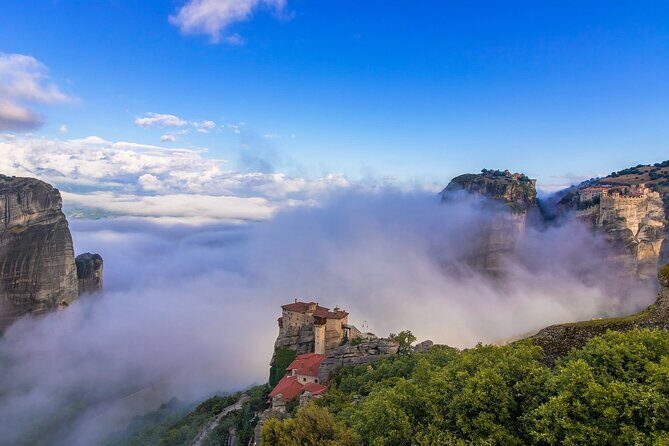
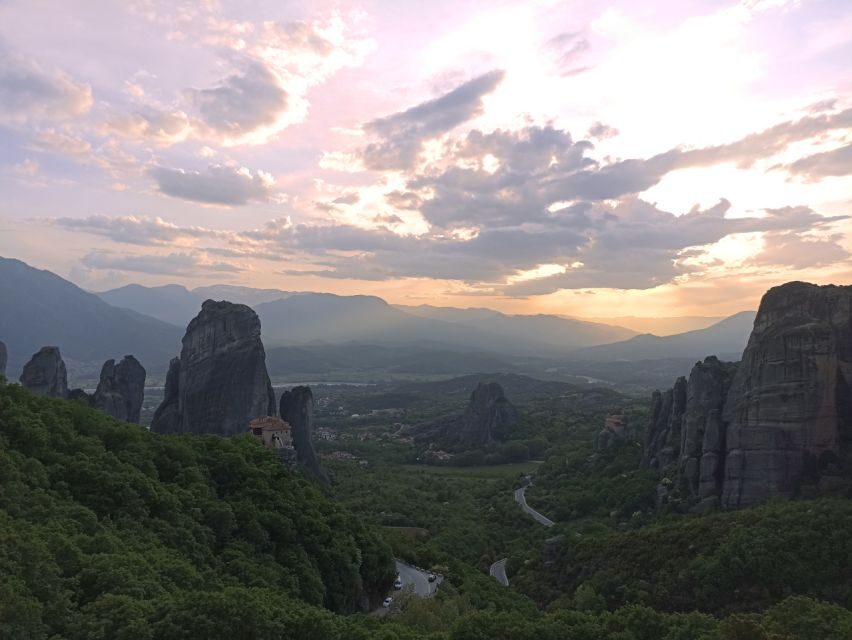
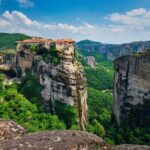
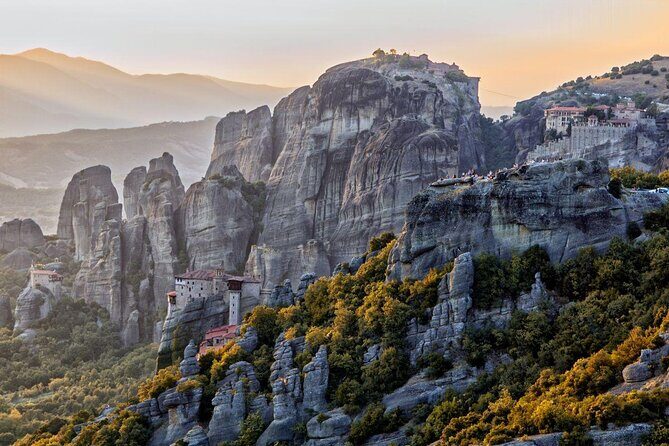
Meteora’s monasteries grew on huge rock pillars between the 14th and 16th centuries. Only six are still open to explore, and seeing them with context makes a big difference: these weren’t random lookouts. They became centers of Orthodox faith in the Byzantine era, producing important religious art and manuscripts that are preserved and displayed in museum collections.
This region is also officially protected in a way that surprises a lot of first-timers. Meteora-Antichassia is designated as a Natura 2000 Ecological Zone, created by Greece’s Ministry of Environment to protect rare birds and flowers. So yes, you’ll be focused on churches and views—but you’re also stepping into a protected natural area.
Starting at 9:00am helps you get your bearings early. You’ll have enough time to see the core interiors plus a couple of major viewpoint stops without spending the entire day climbing. And because the guide connects each monastery to the others, you don’t end up with three separate visits that feel totally unrelated.
You can also read our reviews of more tours and experiences in Meteora.
Pickup from Kalambaka or Kastraki: small-group pace and photo stops
Logistics are simple here, which matters in Meteora. The tour includes hotel pickup and drop-off from Kalambaka or Kastraki (including hotels and Airbnbs located in those villages). Your start time is 9:00am, and the tour runs about 4 hours.
Small-group touring is capped at 18 travelers, and that cap shows in how the van and timing work. There’s less waiting around, and the driver can position you at viewpoints without turning the day into a traffic jam. You also get bottled water, plus free WiFi on board, which is handy when you’re planning photo angles or checking your route for later.
One small but practical win: you don’t just arrive and rush. The tour includes planned photo stops while you travel between rock sites. That means you’re not stuck trying to capture the best views while the group is already moving—your guide will time breaks so you can get the shot, not just stand there looking while someone else takes it.
Saint Nicholas of Anapafsas: the name story and the first taste of the climb
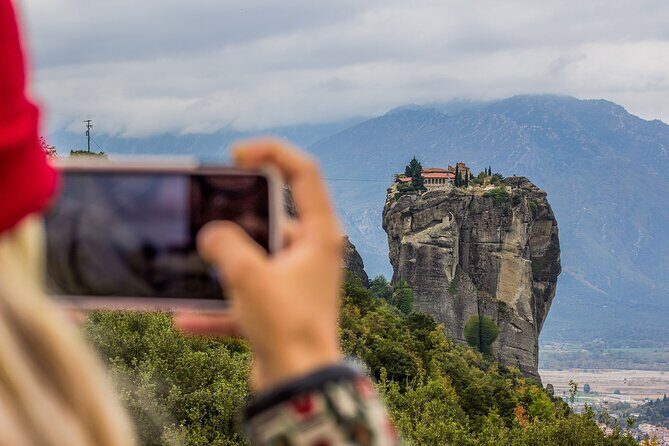
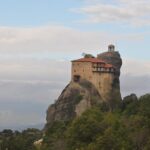
Before the main interiors, you hit a monastery that sets the tone: the Holy Monastery of Saint Nicholas of Anapafsas. It’s described as the first monastery encountered on your way up to Holy Meteora, founded at the end of the 14th century.
What makes this stop more than just a roadside photo? The meaning of Anapafsas comes with interpretations tied to how pilgrims moved through the area. One story says the name was given by a benefactor. Another says it references the monastery’s position as an early resting place for pilgrims and visitors before they continued their ascent.
This matters because Meteora can otherwise feel like a collection of buildings on cliff tops. That first monastery stop gives you a human rhythm—people traveling up, stopping to rest, then climbing again—so later interiors land with more weight.
Roussanou Monastery inside: lower elevation, WWII scars, and a convent shift
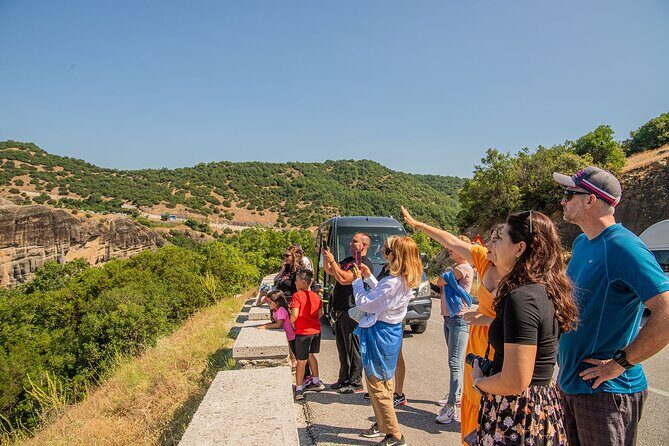
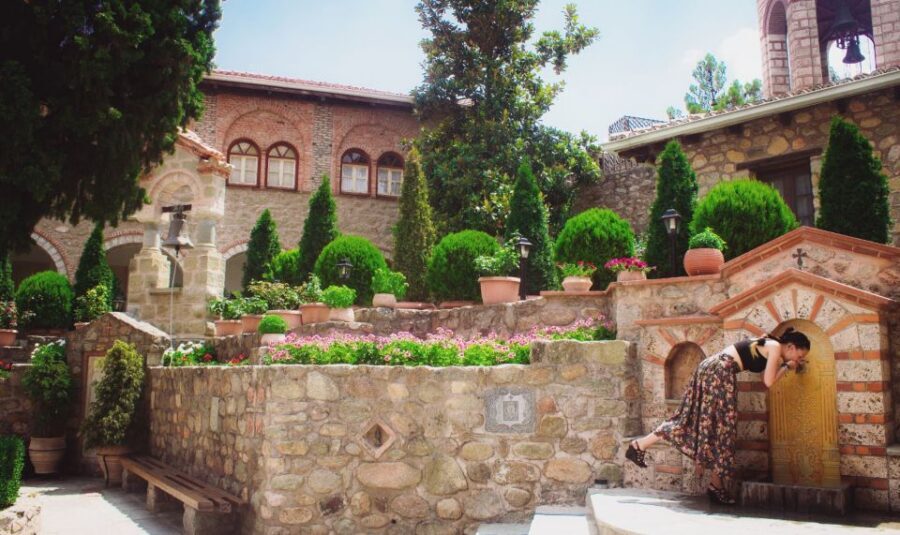
Roussanou is one of the best places to start your interior visits. The Holy Monastery of Roussanou has the advantage of being at a lower elevation than many others, which makes it more accessible in practice. Your time here is about 45 minutes, and the entrance fee is not included (it’s listed at €5 per booking).
Inside, Roussanou carries a name tied to early hermits: it’s named after what’s described as the first probable hermit who settled on the rock. The main cathedral was founded at the end of the 16th century, and it was decorated about 30 years later.
The history hits harder too. The monastery suffered severe damage during World War II, and later it became a convent in 1988. That mix of early tradition, later rebuilding, and modern monastic life helps you see why Meteora still feels active rather than frozen in time.
For your experience, this stop works because it combines viewpoint energy with an interior you can take in without sprinting. You’ll get a real sense of how these communities adapted to a place that’s physically extreme.
Varlaam and Great Meteoron: two major interiors and the origin story
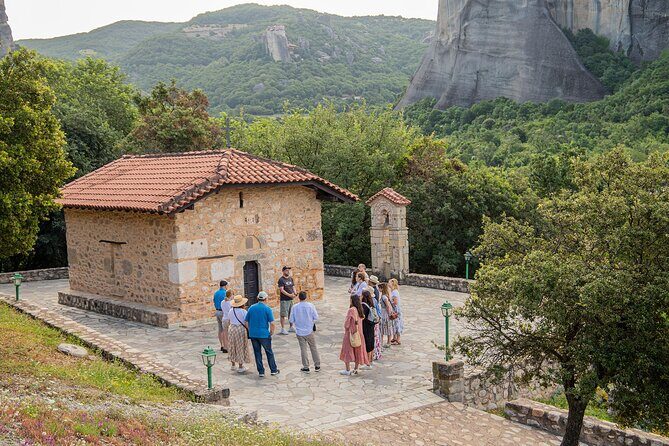
Next comes Varlaam, the second biggest monastery in the cluster. The Holy Monastery of Varlaam sits opposite the Great Meteoron Monastery, and it’s also a 45-minute interior visit with an entrance fee not included (again listed at €5 per booking).
Varlaam’s founding links to a religious figure: it was founded in the mid-14th century by Hosios Varlaam. The Catholicon (the main church) was built between 1541 and 1542, honoring Agioi Pantes, by two brothers from Ioannina. Later, the main church was decorated in 1548, with wall painting attributed to Frago Catelano based on stylistic criteria.
If you like art details, this is where your guide’s explanations make the visit click. The rock churches aren’t just dramatic. They’re organized around major religious spaces, and the frescos and church elements are part of the tradition that kept these communities connected to the wider Orthodox world.
Then you go to the biggest and oldest: Great Meteoron. This one gets more time at about 1 hour, and its entrance fee is listed at €5.00 per person (not included).
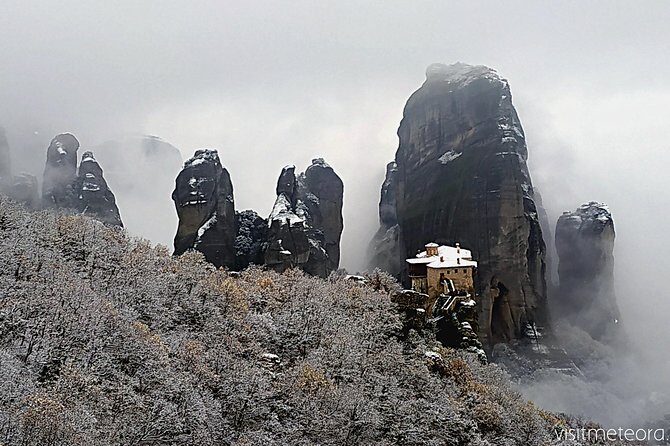
Great Meteoron earns its reputation with the meaning of the name. It’s often described as the monastery that was suspended in the air—meteoro—because of the gigantic rock it’s built on. More importantly, it’s tied to the start of organized monastic life in Meteora: founded by Saint Athanasios the Meteorite, who also organized the systematic koenovion. In the tour narrative, this is framed as a turning point, even the beginning of the organized monastic system at Holy Meteora.
Practical takeaway for you: Great Meteoron is the stop where the whole story makes the most sense. After Varlaam, you’ll understand the purpose. After Great Meteoron, you’ll understand the start.
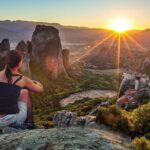

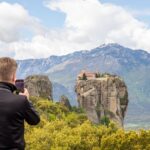
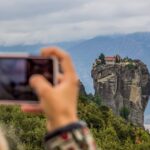
Agia Triada and Agios Stephanos: 140 steps versus the bridge approach
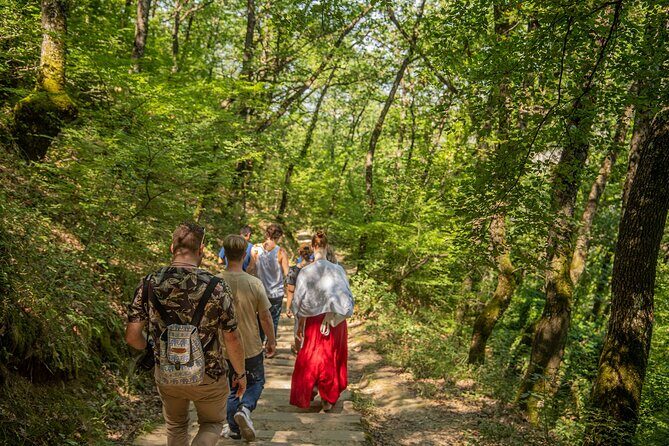
Not every stop is about long time inside. Two of the final highlights are built around reaching rock-top areas and getting big views.
First is the Holy Trinity Monastery, also called Agia Triada. This one is the most difficult to reach. It’s perched on a steep rock close to Saint Stephen’s Nunnery, and it’s described as having been organized as a monastery since 1362—referenced in a document by Symeon Uressis Palaeologos. To get there, visitors follow a pathway that leads to the foot of the rock, then walk up about 140 steps.
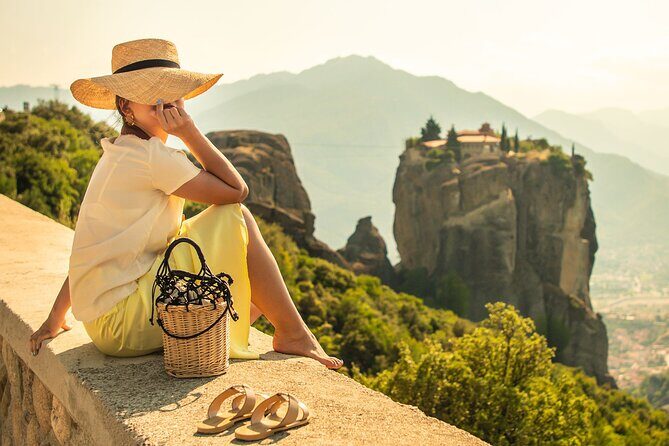
Once you do it, the reward is panoramic. The tour emphasizes that the view from the top is captivating, and this is the stop where Meteora really looks like its cliff-top self—wide, dramatic, and built for photographs.
Then you get the easier contrast: the Holy Monastery of Agios Stephanos. This is described as the most accessible monastery, because instead of steps you cross a small bridge to reach the entrance. Monastic life on the rock dates back to the early 12th century. Later founders mentioned include Hosios Antonios and Hosios Philotheos, who renovated (rebuilt from the foundations) the old small Catholicon. The present church of Agios Stephanos is noted as dating to 1545.
If you’re managing your legs, you’ll feel the difference between these two stops. Agia Triada is the workout. Agios Stephanos is the “keep it moving” option that still delivers the Meteora feel.
English-only guide, free audio in many languages, and photo help on the move
The tour is guided in English only by the local guide. If you want additional languages, you can use the included free smart audio guide. Languages listed include French, Spanish, German, Italian, Portuguese, Chinese, Japanese, Polish, and additional options also listed include Russian and Korean.
For many people, that setup is ideal. You get one clear narrative from the guide, then you can switch to audio if you need extra language support. It also helps if you’re the only English speaker in a group, or if you like reading the story in your own pace while looking at the rock tops.
One more practical point: the tour uses a driver as well as the guide. That matters on Meteora roads. The driver handles the steep and winding routes, and you’re more likely to get dropped off in the right spot for photos and quick access.
Price and value: what you get for $36.30, plus the realistic add-on
The price is listed at $36.30 per person, and the value is mostly about what’s included: hotel pickup and drop-off, guided touring, round-trip transport, bottled water, and onboard WiFi. The tour also covers multiple monastery areas, including inside visits to 3 monasteries plus exterior viewing of the others from the route.
What’s not included is the monastery entrance spending. The tour lists these fees separately:
- Great Meteoron: €5.00 per person
- Roussanou: €5.00 per booking
- Varlaam: €5.00 per booking
So your real total cost usually includes the tour price plus around €15 in entrance fees, depending on how the booking fee is structured for your group. Because some monasteries don’t accept credit cards, the tour asks you to bring cash.
The value sweet spot: if you want the highlights in a half-day window, with transport handled and an English guide to connect the dots, this tour is built for that. If you want lots of slow time inside each church and you’re chasing the art details frame by frame, you might feel slightly pressed by the half-day format.
Practical tips: dress code, cash, and comfy shoes for stairs
Meteora is beautiful, but it’s also physical. The tour explicitly asks you to bring comfortable shoes, and you should take that seriously. Agia Triada can involve about 140 steps, and other monasteries require walking on uneven terrain and climbing routes.
Also take the dress code seriously. The monasteries have strict rules:
- Men must wear trousers and long sleeves
- Women must wear a long skirt
If you show up in shorts or the wrong clothing, the tour notes that trousers and skirts will be provided.
Bring cash for the entrance fees. The tour also notes that some monasteries do not accept credit cards. And plan for the timeline: you’re looking at a morning start and several stops, so you’ll want to travel light and keep your entrance-fee money accessible.
Should you book this Meteora half-day tour?
I’d book this if you want a guided Meteora route that covers the key interiors in a 4-hour window, with transport handled and photo stops worked in. The combination of English guidance, free audio support, and a small-group cap at 18 makes it a practical choice for first-timers.
I might choose something else if your main goal is deep time inside each church with no rush, or if stairs are a clear deal-breaker for your body. In that case, look closely at which stops you can realistically handle, because Agia Triada is the steep one.
If you’re choosing between waiting on your own and going with a plan, this is the kind of trip where a guide helps you understand why these places were built where they were built—and that turns the views into something you can actually explain to your friends later.
FAQ
What time does the Meteora tour start, and where do you pick me up?
The tour starts at 9:00am. Pickup is offered from hotels and Airbnbs located in Kalambaka and Kastraki.
How long is the tour?
The duration is listed as about 4 hours.
Is the cost $36.30 all-in, including monastery entrance fees?
No. The entrance fees are not included for Great Meteoron (€5.00 per person), Roussanou (€5.00 per booking), and Varlaam (€5.00 per booking).
Which monasteries are included inside the tour?
The tour includes inside visits to three monasteries. The three monasteries listed with separate entrance fees are Roussanou, Varlaam, and Great Meteoron.
What dress code should I follow?
Men need trousers and long sleeves. Women need a long skirt. If you arrive in shorts or an outfit that doesn’t match, trousers and skirts will be provided.
Do I need to speak English?
The tour guide works in English only, but a free smart audio guide is also included in multiple languages listed by the tour.