REVIEW · METEORA
Meteora Scrambling Tour with Optional Pick-up
Book on Viator →Operated by TREKKING HELLAS · Bookable on Viator
Meteora goes vertical fast. This 3-hour scramble turns the region’s famous rock towers into a hands-on route, with ropes, instruction, and those payoff views at the end. I like that the guide handles your setup and coaching, so you are not guessing on unfamiliar trails, and I love how the group size stays small for real attention.
You start by meeting under the church of Kimisis Theotokou, then hike uphill to the rock features where the fun begins. My other favorite part is the guided flow from first footholds to via ferrata sections, then up toward a final balcony view. The pacing is built for active participation, not just sightseeing from a distance.
One possible drawback: this is physically challenging. You should bring moderate fitness expectations, and if you have knee issues or limited mobility, plan carefully since the climbing and cardio effort can be more than you expect.
In This Review
- Key highlights
- Meeting Under Kimisis Theotokou: How the Tour Starts
- The 1st Stretch: Getting Your Equipment and Learning the Basics
- Needle Rock and the Fixed-Rope Moment: Where Scrambling Turns into Climbing
- Via Ferrata Sections Inside the Rock: Carved Paths and Chimney Moves
- The View Payoff at the Holy Cross of Hagia
- Safety and Guide Support: What You Can Expect on the Rock Route
- Price and Value: Is $74.65 Worth It?
- What to Pack for a Meteora Scramble (So You Don’t Suffer)
- Timing, Pickup, and the Start Point in Kastraki Area
- Weather Matters in Meteora: How That Affects Your Plan
- Who This Tour Suits Best (And Who Should Rethink It)
- Should You Book This Meteora Scramble Tour?
- FAQ
- How long is the Meteora scramble tour?
- What time does the tour start?
- Where do we meet for the tour?
- Is pickup available?
- Do I need my own climbing or scrambling equipment?
- How physically demanding is this tour?
- What should I bring?
- Is the group small?
- Is the tour available in English?
- What happens if the weather is bad?
Key highlights
- Small group (max 15) so your guide can slow down when needed
- All equipment provided plus hands-on instruction before you touch the route
- Needle rock scramble with fixed ropes when you reach the key point
- Via ferrata-style climbing parts including carved paths and chimney-type sections
- Final stop at the holy cross of Hagia with a wide balcony view
Meeting Under Kimisis Theotokou: How the Tour Starts
This tour is built like a friendly training session wrapped in Meteora adventure. You meet your guide under the church of Kimisis Theotokou, which is a solid landmark when you arrive in the area. From there, the group gets organized and you get your gear before anyone heads onto the rock route.
The start time is 9:00 am, and the overall tour lasts about 3 hours. If you choose optional pickup, the exact time is sent to you one day before. Either way, you will end back at the meeting point when the walk-and-climb loop is done.
One practical benefit: this activity is marked as near public transportation. That matters in Meteora, where getting around can feel like hopping between viewpoints instead of following one straight road.
You can also read our reviews of more tours and experiences in Meteora.
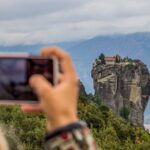
The 1st Stretch: Getting Your Equipment and Learning the Basics
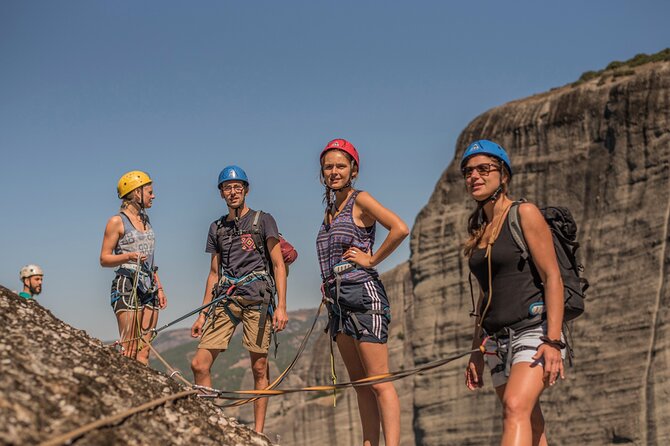
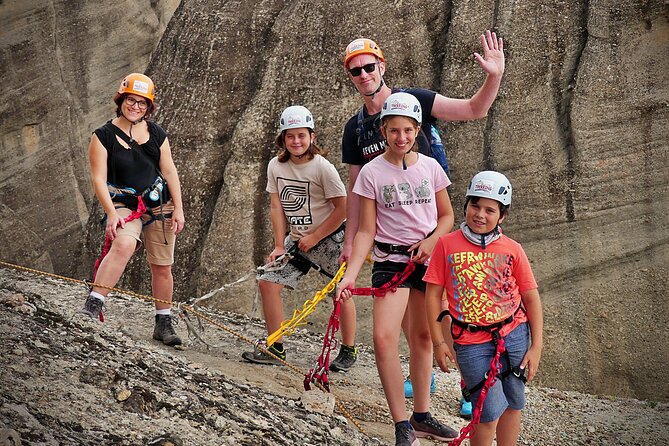
Before you scramble, your guide gives you your personal equipment and teaches you how to use it. That is not just a formality. It helps you understand how you will move, where your focus should be, and what the guide expects from you on steeper parts.
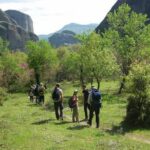
Then you hike a short uphill path between the rocks. Think of this as your warm-up plus your first taste of the terrain. Even if you are not climbing yet, you are already working your legs and breathing, because the route goes upward step by step.
What I like about this setup is that it removes a lot of stress. You are not trying to figure out where to stand, how to clip or move, or which section comes next. Your guide sets the order, and that makes the whole experience feel doable.
Needle Rock and the Fixed-Rope Moment: Where Scrambling Turns into Climbing
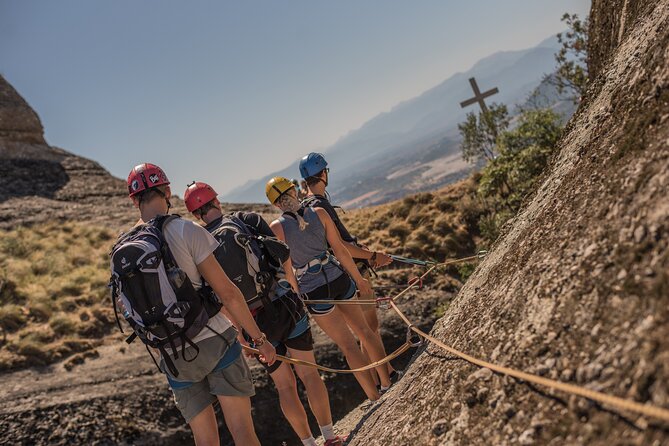
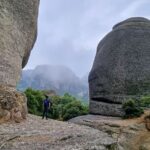
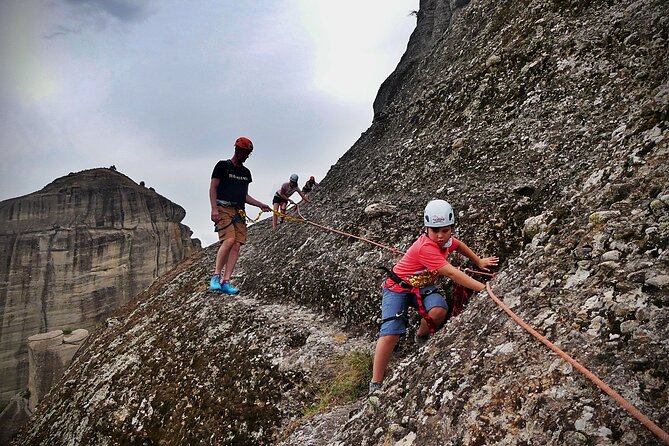
Once you reach the famous needle rock, your guide fixes the ropes and the scramble experience begins. This is a key turning point in the tour: you go from hiking on a path to using climbing features as part of your route.
At this stage, expect a mix of movement styles. You are climbing toward the top and meeting the first big rock challenges, not wandering around. The guide’s role becomes even more hands-on here, because you need clear cues for safety and balance.
A helpful detail from the experience design: the route includes multiple kinds of climbing parts, not just one. That is why instruction matters early. If you pick up the basics during the first gear-and-hike portion, the later sections feel less like a surprise test.
Via Ferrata Sections Inside the Rock: Carved Paths and Chimney Moves
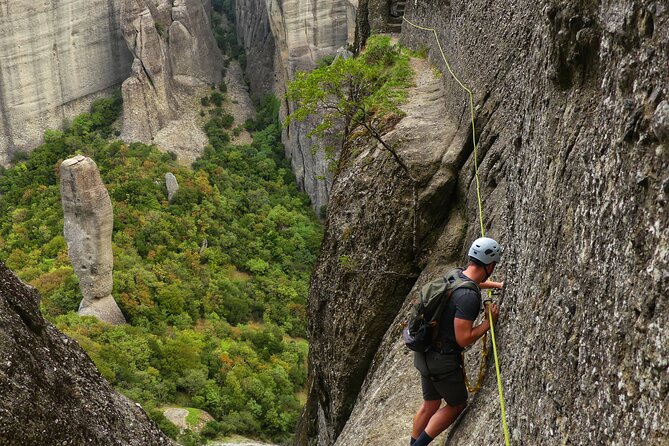
As you climb higher, you meet ferratas, paths carved inside the rock, and chimney-type climbing parts. In plain terms, you are moving through rock features that are part route and part obstacle course.
Carved paths inside the rock are usually tighter and more technical than open walking. They can be short, but they demand focus because you need stable footing. Chimney-type climbing parts are the kind of section where your body position matters, and you will likely feel your legs and core work harder than you expected.
This is also where the “hard but worth it” feedback makes sense. The route is not a casual walk, but it is designed with coaching in mind. One strong theme from the experience feedback is that instructors are patient and guide you through obstacles step by step.
If you have never done anything like this, you are not alone. The tour is positioned as an introduction to scrambling and climbing, and that is exactly what it feels like: you get support while you learn how to handle the route safely.
The View Payoff at the Holy Cross of Hagia
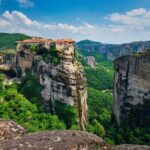
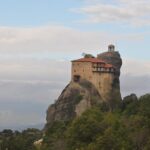
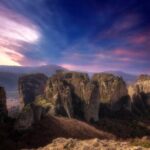
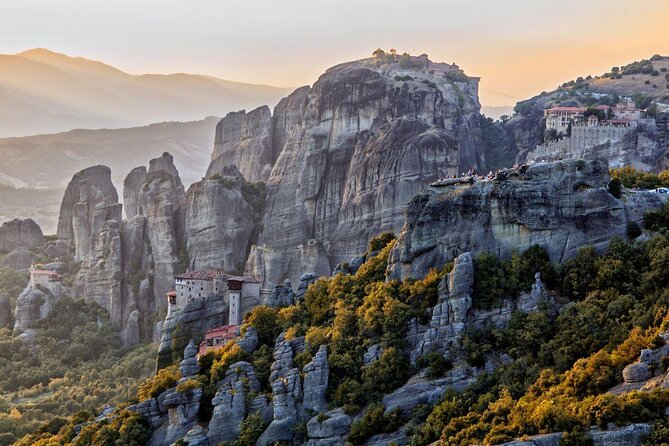
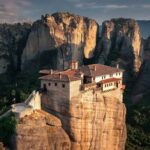
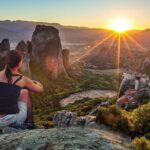
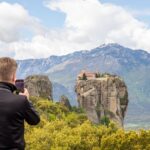
The final stop is the holy cross of Hagia, and it comes with a large balcony view. This is the reward section, where the effort makes sense. From the balcony, you get sightlines between the Thessalian plateau, the mountains of Pindos, and the giant pinnacles of Meteora.
It is also a good reset moment. After you have been concentrating on footing and handholds, you get to look up and out. It is one of the best times to notice why Meteora’s rock towers matter so much visually. Up close, you feel the scale during the climbing. From the balcony, it all snaps into place.
Also, since you are with a guide, you are not just staring at rocks. You typically get context and stories about the region along the way, which makes the view more than a camera backdrop.

Safety and Guide Support: What You Can Expect on the Rock Route
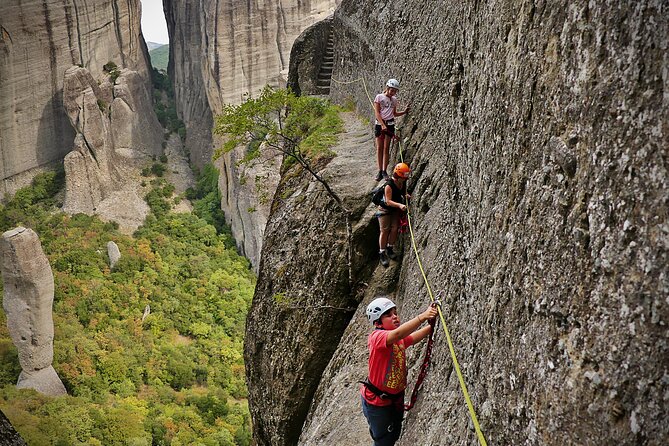
This activity uses fixed ropes at the needle rock and structured climbing elements afterward. You are not doing this as a DIY scramble. The guide equips you, explains what to do, and stays involved as the difficulty ramps up.
A big reason this tour earns top ratings is the vibe of real coaching. People describe the instruction as patient, safety-focused, and supportive even during tougher parts. That matters because via ferrata-style routes can be intimidating at first, even if you are physically capable.
Another safety-related factor: the tour has a small group size, capped at 15 travelers. That makes it easier for the guide to watch you and adjust if someone needs a slower pace.
Price and Value: Is $74.65 Worth It?
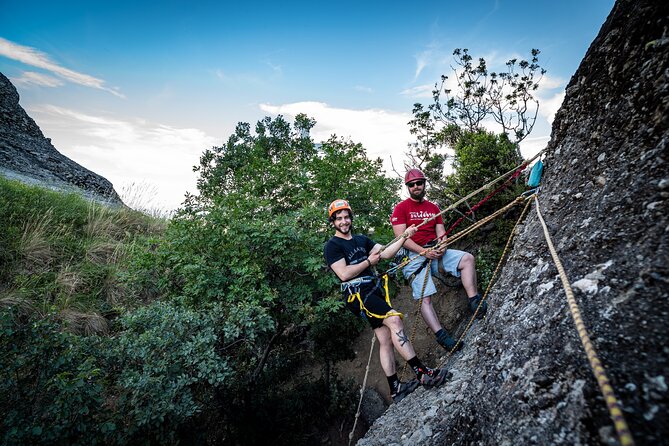
At $74.65 per person for about 3 hours, the pricing isn’t trying to compete with basic walking tours. You are paying for three things that are hard to replicate on your own:
- Equipment provided and explained before you climb
- A guided route through technical sections so you do not get turned around on rock trails
- Rope- and obstacle-focused instruction that helps you stay safe on a route you cannot just wander into
If you have ever tried to plan Meteora climbing on your own, you know how quickly the day can turn into guesswork. A guided scramble avoids that. You spend your time on the route rather than searching for the right lines or figuring out how to handle the tricky parts.
Also, a small group usually means less waiting and more actual attention. That is part of the value, even if you do not notice it until the climb starts.
In short: this is good value if you want hands-on climbing in Meteora without dealing with the heavy logistics of doing it independently.
What to Pack for a Meteora Scramble (So You Don’t Suffer)
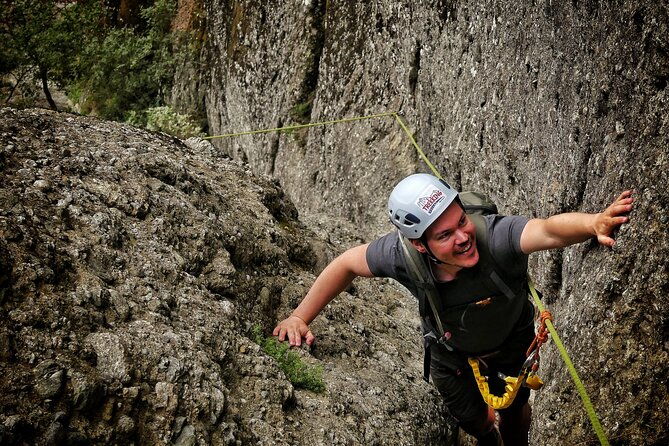
You will want to dress for movement and for changing conditions. Your tour guidance is clear on what to bring, and following it makes a big difference.
Here is a practical packing list based on the tour requirements:
- Small backpack
- Comfortable clothes, preferably quick-drying (cotton or polycotton). Avoid denim.
- Light hiking shoes or hiking boots
- Hat or beanie, plus sunglasses and sunblock
- Waterproof jacket for rainy days (membrane type is suggested)
- Your own water bottle, with an environmental policy aiming to eliminate plastic water bottles
A small, smart note: quick-drying fabric matters because you will be moving hard and sweating. Denim tends to get uncomfortable fast, especially on longer climbs.
Also, bring a real water bottle, even though you are going out for only about three hours. Scrambling burns more energy than you think.
Timing, Pickup, and the Start Point in Kastraki Area
This tour starts at 9:00 am. The activity ends back at the meeting point, so you are not signing up for a complicated half-day transfer.
The stated start location is Qastiro Meteoramesohori, Kαστράκι 422 00, Greece. If pickup is offered for your booking, the provider sends the pickup time one day prior. If you are arriving on your own, it helps to plan for a smooth arrival because you want to show up ready for the gear briefing.
Since the meeting church landmark is under Kimisis Theotokou, you can use that as your mental GPS when you get close.
Weather Matters in Meteora: How That Affects Your Plan
This experience requires good weather. That is not a vague warning. If conditions are poor, the tour can be canceled. In that case, you are offered a different date or a full refund.
For you, the takeaway is simple: pack for rain even if the forecast looks fine. Bring that waterproof jacket. Rock routes can feel rough when surfaces get slick, and the tour is designed to run when conditions are right.
If you are scheduling your Meteora day, give yourself flexibility. One calm-looking morning can be the difference between climbing comfortably and sitting on standby.
Who This Tour Suits Best (And Who Should Rethink It)
This tour is for people with moderate physical fitness. The walking is uphill, and the climbing sections are demanding enough that they can feel like a cardio workout.
Based on the feedback style you can expect: it works well for older teens to adults who can handle active movement. It also works if you are new to scrambling, because you get coaching.
But it may not work for everyone. If you have had knee surgeries or other serious limitations, you may not be able to finish the full route. One family experience included a husband who could not make it all the way up due to prior knee surgeries, even with helpful guides.
My advice: be honest with yourself about joints and stamina. The guide can be patient and supportive, but physics is physics.
Should You Book This Meteora Scramble Tour?
Book it if you want real climbing action in Meteora, not just viewpoints. You’ll get equipment, instruction, a guided route through technical sections, and a payoff balcony view at the end. The small-group format and strong safety coaching are exactly what you want for a first time on a via ferrata-style route.
Skip it or consider an alternate plan if you know your knees or mobility are fragile. Even with patient guidance, the route is physically challenging, and some parts can be too much for people with significant limitations.
If you are the kind of traveler who likes doing instead of only looking, this tour is a strong fit. You leave with more than photos. You leave with skills, confidence, and a new way to appreciate Meteora’s rock formations.
FAQ
How long is the Meteora scramble tour?
It runs for about 3 hours.
What time does the tour start?
The start time is 9:00 am.
Where do we meet for the tour?
You meet under the church of Kimisis Theotokou in Meteora. The activity start location is Qastiro Meteoramesohori, Kastraki 422 00, Greece.
Is pickup available?
Optional pickup is offered. If pickup is included for your booking, the exact pickup time is sent to you one day prior to the activity.
Do I need my own climbing or scrambling equipment?
No. The guide provides your personal equipment and teaches you how to use it.
How physically demanding is this tour?
It is recommended for travelers with moderate physical fitness. It includes uphill hiking and technical climbing sections, so it can feel like a cardiovascular workout.
What should I bring?
Bring a small backpack, comfortable quick-drying clothes, light hiking shoes or boots, a hat or beanie, sunglasses, sunscreen, a waterproof jacket for rainy days, and your own water bottle.
Is the group small?
Yes. The tour has a maximum of 15 travelers.
Is the tour available in English?
Yes. The tour is offered in English.
What happens if the weather is bad?
The experience requires good weather. If it’s canceled due to poor weather, you’ll be offered a different date or a full refund.