REVIEW · METEORA
Meteora: Self-Guided App-Based Driving Tour
Book on Viator →Operated by History with Action · Bookable on Viator
Monasteries on rock, minus the tour stress. This self-guided, app-based driving tour helps you see Meteora’s biggest spiritual landmarks with 25+ audio stories that play as you move between stops. It’s a smart way to do the area when you want freedom, not rigid timing.
What I like most is that the audio is truly hands-free. You don’t have to keep tapping the screen; the stories play automatically based on where you are, so you can focus on the views and the monasteries themselves. And you also get offline maps, which matters here because signal can get unreliable.
The main snag to plan for is the phone setup. You’ll need strong Wi‑Fi/cellular to download the tour while you’re still connected, and no one meets you at the start point—so if you fail to get rolling, you’ll need a little patience before the fun starts.
In This Review
- Key highlights you’ll care about
- Meteora monasteries by app: what this experience actually feels like
- Price and value: $16.99 per group (up to 4) and why that’s fair
- Setting up the Action audio tour: passwords, offline maps, and the one-day download rule
- Driving loop reality check: time, distance, and when to plan extra minutes
- Stop-by-stop: from Holy Monastery of Saint Stephen to the UNESCO stars
- Geological Formation Museum of Meteora (free, and great before you look outward)
- The first monastery in Meteora (late-14th-century pilgrim stop)
- Holy Monastery of St. Barbara Roussanou (one of six functioning monasteries)
- Holy Monastery of Varlaam (defense-focused architecture)
- Holy Monastery of Great Meteoron (largest, and the name Metamorphosis of the Saviour)
- Monastery of Saint Stephen (most accessible, with bridge access)
- The audio experience: how to get it working smoothly in a car
- Who should book this (and who should consider a different approach)
- Should you book this Meteora self-guided driving tour?
- FAQ
- Is the Meteora tour available in English?
- How long does the tour take?
- Where do I start and end the tour?
- What’s included in the tour price?
- Do I need cellular service for the tour?
- Will the audio play automatically as I drive?
- Can I pause the tour and start again later that day?
- What do I need to listen to the audio while driving?
- How many people can share one purchase?
Key highlights you’ll care about
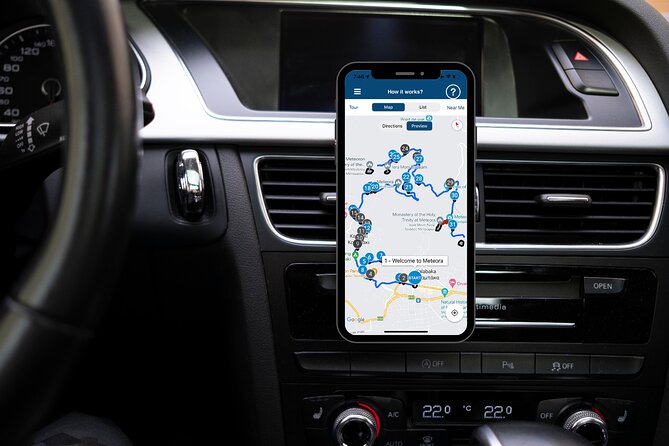
- Offline maps included so you can keep going even with spotty signal.
- Location-based audio that plays automatically as you follow the route.
- Purchase per car (up to 4 people), which keeps the cost friendly.
- Lifetime access with no expiry, so you can reuse the tour on future trips.
- 2+ miles of driving/walking plus 25+ stories means you’ll stay busy.
- Start and finish at Holy Monastery of Saint Stephen, with a convenient bridge access point.
Meteora monasteries by app: what this experience actually feels like
This tour is built for a simple goal: get you around Meteora with minimal friction. You park near Holy Monastery of Saint Stephen (Agia Meteora), Kalampaka, then you follow an audio guide that starts right at your first story point and keeps moving you along.
There’s no guide riding with you, which is the point. You control the stops and timing. If you want photos first, you can. If you need a break, you can pause and restart. That flexibility is helpful in Meteora, where you’ll often mix driving between viewpoints with short climbs and steps once you reach a monastery area.
The audio format is also part of the charm. You’re not just reading signs—you’re getting storytelling that keeps the place from turning into a checklist. You’ll hear monastic details, defensive architecture themes, and timeline context that makes each site feel more specific.
You can also read our reviews of more tours and experiences in Meteora.

Price and value: $16.99 per group (up to 4) and why that’s fair
At $16.99 per group (up to 4 people), this is priced like something you buy per car, not per seat. That matters because Meteora can get expensive fast if everyone in your group pays separate ticket prices for a bus or a guided group tour.
This option tends to be best when:
- you have a small group (family, friends, or two couples) sharing one car, and
- you’re okay using your phone as the brains of the trip.
You’re also getting lifetime access with no expiry. So if you return to Greece later, or if you’re visiting more of Meteora on a future trip, you’re not repurchasing the same route.
One caution on value: this is not bundled with attraction admissions. The tour includes the audio and route experience, but attraction passes, entry tickets, or reservations are not included. The good news is that one key stop—the Geological Formation Museum of Meteora—has free entry.
Setting up the Action audio tour: passwords, offline maps, and the one-day download rule
You’ll get setup instructions by email and text after booking, along with a password (look for the phrase audio tour). Then you download the separate app by Action’s Tour Guide App and enter that password.
Here’s the practical rule I’d follow: download the tour only when you have strong Wi‑Fi/cellular. The tour is built to work offline after download, but the initial download step is where people can get stuck. Once it’s downloaded, you’re set for your day—and because access is lifetime, you’re set for future trips too.
Audio starts once you’re onsite. You open the app at the starting point, select the correct tour version if needed, and then the first story begins automatically at your location. From there, you follow audio cues to each next stop.
Also note the connection options if you’re listening while driving:
- You can connect to your car stereo using Bluetooth, USB, or AUX.
- Playback is compatible with Apple CarPlay (Android Auto support is listed as coming soon).
- If you’re walking parts, the info suggests headphones as the best listening method.
If something goes wrong with audio, contact the tour’s support team. One support contact listed is Frank, available daily from 9 to 6 EST.
Driving loop reality check: time, distance, and when to plan extra minutes
The experience is listed at about 1 to 2 hours, but the route note says to expect around 2 to 3 hours to complete. That longer range makes sense because the route is over 2 miles long per tour and includes more than 25 audio stories.
So I’d plan like this:
- If you’re moving quickly and mostly listening from the car, you might finish closer to 1–2 hours.
- If you stop often for stairs, viewpoints, and museum time, plan 2–3 hours.
You can start anytime and pause anywhere, which is a big deal for Meteora. If you arrive and the light is great, keep rolling. If you arrive and you need caffeine first, pause the tour and handle it.
One more small but important detail: the info encourages you to stick to the tour route & speed limit for the best experience. That matters because the audio is location-triggered; staying on the intended route helps the stories fire in the right order.
Stop-by-stop: from Holy Monastery of Saint Stephen to the UNESCO stars
This route is built around Meteora’s monastery cluster, with your loop anchored by Holy Monastery of Saint Stephen. You’ll also pass key monasteries with different architectural and historical themes. Here’s what to expect at each stop.



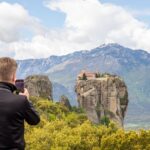
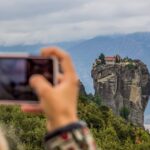
Geological Formation Museum of Meteora (free, and great before you look outward)
The tour begins with the Geological Formation Museum of Meteora. If you want the real “why are these rocks here” explanation, this is the place to start or catch early.
What you need to know:
- It’s open 8:00 AM to 3:00 PM
- Entry is free
- It adds context that makes the monasteries feel less random and more engineered into the region’s story
This museum stop can be especially useful if you’re the type who likes to look at big scenery and immediately ask what made it that way. Even if you keep it short, you’ll get background that helps the rest of the day click.
The first monastery in Meteora (late-14th-century pilgrim stop)
Next comes the first of the monasteries in Meteora, built in the late 14th century. The key theme here is how it served as a resting place for pilgrims who traveled to Meteora.
Why it’s worth your time: it shifts the story from architecture to people. You’re not just looking at stone on a cliff—you’re picturing travelers moving through rugged terrain with their faith and schedules.
A practical note: monasteries in Meteora often involve steps and uneven surfaces. Take it slow, especially if you’re wearing shoes that aren’t great for short climbs.
Holy Monastery of St. Barbara Roussanou (one of six functioning monasteries)
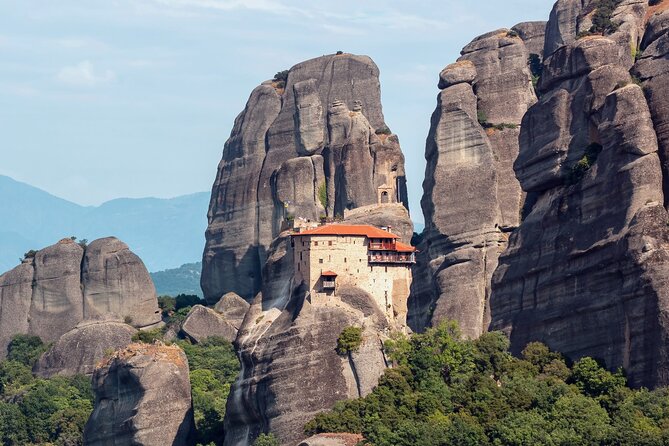
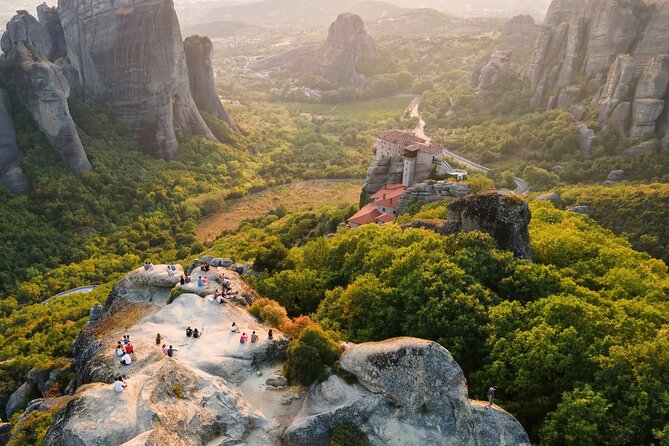
Then you reach Holy Monastery of St. Barbara Roussanou. This is a Greek Orthodox monastery near Kalambaka, listed as a UNESCO World Heritage Site. It’s also noted as one of six functioning monasteries in the area.
What I like about this stop is the way it balances “big setting” and “living tradition.” You’re not touring a fully frozen museum. The site is part of an ongoing religious landscape, and the audio helps connect that to why monasteries still matter here.
If you enjoy UNESCO sites, this is a good one to focus on. The audio framing helps you see what UNESCO recognizes beyond the postcard view.
Holy Monastery of Varlaam (defense-focused architecture)
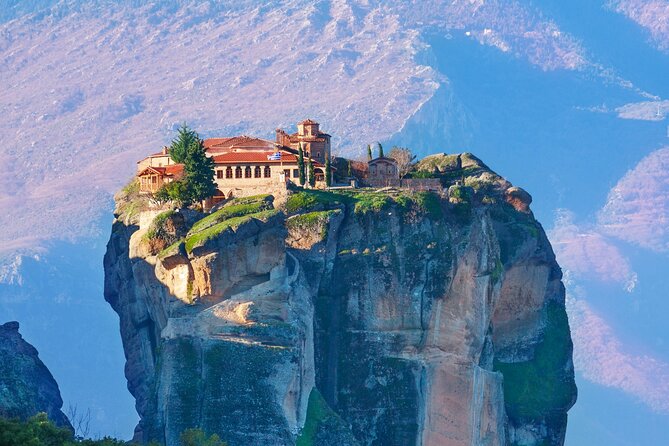
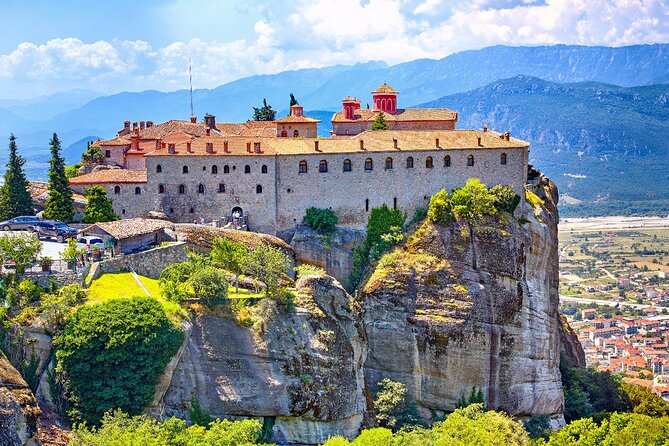
Varlaam is described as the second largest monastery in Meteora, and it’s a great place to think about protection. The audio emphasizes how important defense was to the monks who built these monasteries.
This is where your perspective changes. Instead of assuming monasteries were only about spirituality and solitude, you start noticing the practical reality of survival on steep terrain—control of access, strong structures, and building choices shaped by risk.
If you love architecture, Varlaam’s “defense” angle is a nice counterpoint to the pilgrim story from the earlier stop.
Holy Monastery of Great Meteoron (largest, and the name Metamorphosis of the Saviour)
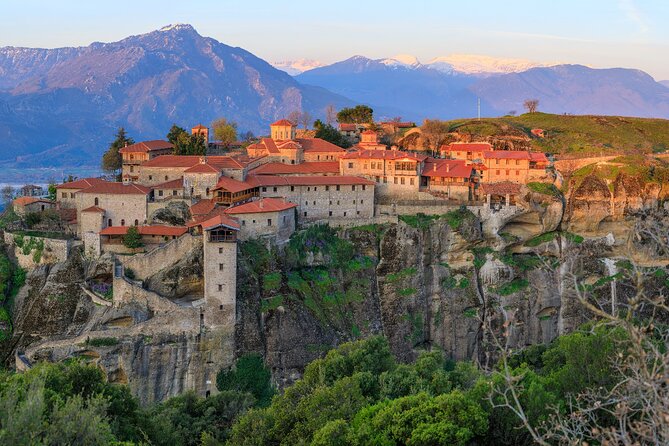
Up next is Holy Monastery of Great Meteoron, the largest monastery in Meteora. It’s also known as the Metamorphosis of the Saviour monastery.
The history here is described as a little sketchy, because it was built by different people across different time periods. The earliest construction might have begun around the mid-1300s, while the bulk is likely from around the 1470s.
Why it matters to you: size can sometimes feel like bragging rights. Great Meteoron feels different because it comes with messy, human timelines. People built, expanded, and adapted—so the place reads like a long project, not one perfect moment.
Also, because it’s the largest, it often means more stairs and more time on site. Build in a little buffer if you’re visiting during a busy part of the day.
Monastery of Saint Stephen (most accessible, with bridge access)
Finally, the loop returns to Holy Monastery of Saint Stephen. This stop is highlighted as the most accessible of Meteora’s monasteries because you cross a sturdy stone bridge to reach it.
It’s also described as both one of the oldest and newest monasteries in Meteora. That combo is the kind of thing your brain remembers because it breaks the usual “one date, one story” feeling.
If you want your day to feel doable without turning into a marathon, Saint Stephen is the friendly landing spot. You get a monastery experience without an overwhelming climb right at the end.
The audio experience: how to get it working smoothly in a car
The audio guide is designed to be easy once it’s loaded. The key is using the right listening setup.
If you’re driving between stops:
- connect your phone to the car stereo via Bluetooth, USB, or AUX
- adjust volume before moving into quieter moments so you don’t miss the story beats
If you’re walking:
- the info suggests headphones for the best experience during walking tours
If you use an iPhone or Android device, the recommended requirements are listed as:
- iPhone on iOS 15 or later
- Android version 9 or later
- or an iPad/tablet with GPS and cellular connectivity for navigation
You don’t need fancy tech skills. But you do need one thing: a charged phone. This tour depends on your device for both maps and audio.
Who should book this (and who should consider a different approach)
This self-guided format is a great fit if you want:
- flexibility to pause for photos and breaks
- a small group-friendly cost (up to 4 per purchase)
- a way to learn more than the basic viewpoint captions
You might also like it if you prefer driving yourself and controlling pacing, especially since the route includes steps and time on foot at monastery sites.
Consider another option if:
- you dislike phone-based tours or don’t want to manage downloads and setup
- your group wants a live guide to answer questions on the spot
- you’re traveling with limited phone battery and don’t plan to charge
Should you book this Meteora self-guided driving tour?
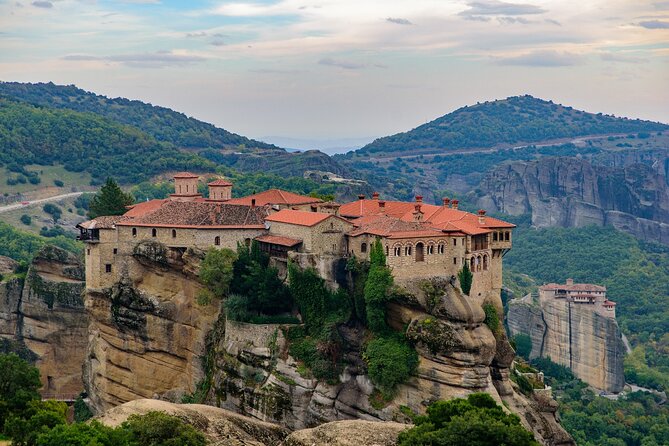
I’d book it if you’re visiting Meteora with a group up to 4, you want to keep costs reasonable, and you’re happy using your phone for navigation and audio. The fact that it includes offline maps, location-triggered stories, and lifetime access makes it feel like a tool you’ll reuse, not a one-time purchase.
Skip it only if the idea of downloading an app while on strong Wi‑Fi sounds like a hassle you can’t manage. The tour itself is smooth once running, but the setup step is where the trip can stall.
If you want an easy decision check: plan for 2–3 hours, aim to download ahead of time, and bring a charger. If you do those things, you’ll get a confident, story-led loop through some of Meteora’s most important monasteries.
FAQ
Is the Meteora tour available in English?
Yes. The audio tour is offered in English.
How long does the tour take?
It’s listed at about 1 to 2 hours. The route details also note the full experience takes about 2 to 3 hours to complete.
Where do I start and end the tour?
You start and end at Holy Monastery of Saint Stephen (Agia Meteora), Kalampaka 422 00, Greece.
What’s included in the tour price?
The tour includes the app-based audio stories, route and stops, and offline maps. Attraction passes, entry tickets, or reservations are not included.
Do I need cellular service for the tour?
You can use offline maps, and the tour is designed to work without cellular or Wi‑Fi after you download it. You must download the tour while you have strong Wi‑Fi/cellular.
Will the audio play automatically as I drive?
Yes. The audio stories are hands-free and play on their own based on your location, as you follow the route.
Can I pause the tour and start again later that day?
Yes. You can start anytime and pause anywhere, then come back when you want.
What do I need to listen to the audio while driving?
You can connect your phone to your car stereo using Bluetooth, USB, or AUX. The audio playback is compatible with Apple CarPlay.
How many people can share one purchase?
It’s priced per group (up to 4 people), so it’s intended to be bought for your car rather than per person.