REVIEW · METEORA DAY TRIPS
Meteora: A Private Journey to the Monasteries in the sky
Book on Viator →Operated by Bucket List Tours · Bookable on Viator
Meteora feels unreal, even before you climb. This private Meteora journey from Athens strings together six rock-top monasteries and a meaningful stop at Thermopylae. The day is long, but it’s paced so you can actually look, not just sprint between viewpoints.
I especially like the early-morning drive north through farmland and rolling hills, with the rock formations gradually taking over the horizon. I also like the way the driver-guide (often Alexander Papageorgiou) shares Greek stories in fluent English while you ride in a comfortable, A/C vehicle with bottled water.
One drawback to plan for: the sites involve stairs and uneven rock routes, and monastery entries are paid in cash. Also, the driver-guide can’t enter the monasteries with you, so you’ll rely on their orientation from outside and your own time inside.
In This Review
- Key moments that make this Meteora day work
- Athens to Meteora: the morning drive that sets your mood
- The Meteora rock zone: orientation time and photo-friendly stops
- Rousanos (St. Barbara): easier access, quiet views, strong fresco focus
- Varlaam Monastery: Byzantine flair plus a real museum stop
- Great Meteoron: the biggest names, biggest views, and major preservation role
- Holy Trinity (Agia Triada), steep access, and a James Bond connection
- Saint Stephen’s Monastery: a warmer welcome and garden views
- St. Nicholas Anapafsas: first encounter, small footprint, and famous fresco work
- Thermopylae on the return: Leonidas, Thespians, and an on-site center
- Price and value: what $387.21 includes and what costs extra
- Timing and walking reality: how to prepare for stairs without ruining the day
- What to wear at Meteora: skirts, scarves, and cash rules that matter
- Who this private Meteora tour is best for
- Should you book this Meteora private journey?
- FAQ
- What does the tour cost?
- How long is the Meteora private journey?
- Do you get picked up from your accommodation or cruise ship?
- Is the tour private?
- How many monasteries do you visit?
- Are monastery entrance fees included?
- What should I wear for the monasteries?
- Is lunch included?
- Can I cancel for a full refund?
Key moments that make this Meteora day work
- Private pickup and drop-off from your Athens hotel, Airbnb, or cruise ship for a low-stress start.
- Scenic northbound route timed for an early arrival at Meteora.
- Six monasteries in one day, including the major Great Meteoron and the more isolated Holy Trinity.
- Driver-guide storytelling in English, with the calm, careful driving people mention most.
- Thermopylae on the way back, so you finish with an ancient Greece reality check, not just views.
- Cash-only monastery fees and practical clothing rules for both men and women.
Athens to Meteora: the morning drive that sets your mood
The day begins early out of Athens, and that matters. As you move north, the scenery shifts from city life into countryside roads with open fields and distant mountain silhouettes. By the time Meteora starts appearing, you’re already in a slower rhythm, which makes the monastery stops feel more intentional.
The ride is set up for comfort: A/C on, bottled water ready, and the driver focused on getting you there safely. If you’re the type who wants the day to feel smooth instead of chaotic, this is a big reason people rate it so highly. It’s also private, so you’re not squeezed into a group pace.
You should still expect a long day. The total duration runs about 11 to 14 hours because you’re traveling plus visiting, and each monastery visit has a set time window.
The Meteora rock zone: orientation time and photo-friendly stops
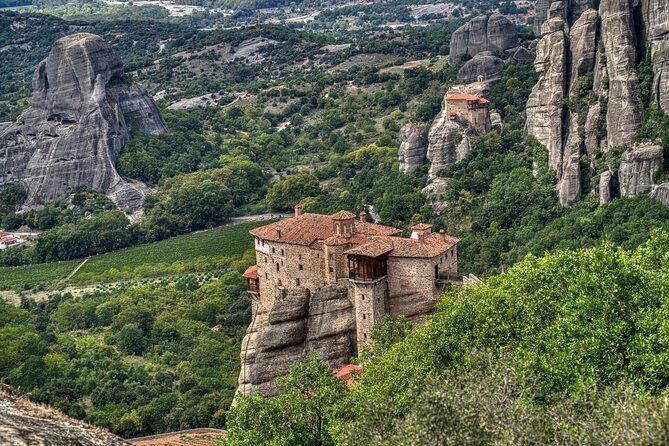
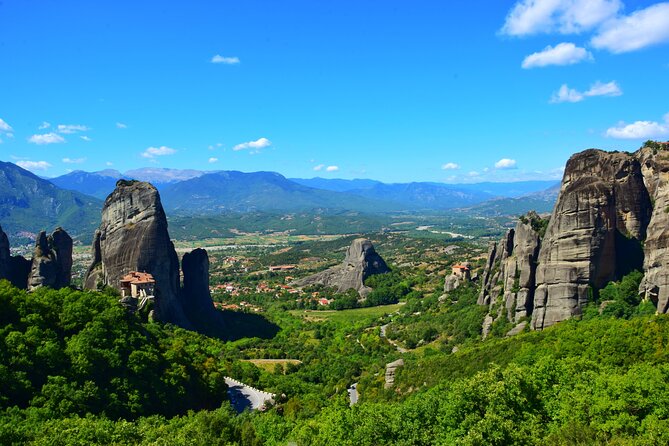
Your first stop is the Meteora area itself, with about 3.5 hours on the clock and a free admission ticket listed for this part. In practice, that time is what helps you get your bearings. Meteora isn’t one single building; it’s a whole cluster of monastic sites perched across dramatic rock towers.
This chunk of time gives you room to absorb the scale—how high these pillars rise above the valley—and to plan your movement for the next stops. You’ll also get practical context from your driver-guide as you move between locations, especially on what to look for inside each monastery.
If you’re hoping for the easiest stroll possible, this is also where you’ll feel the reality check: even when access is “easier,” you’re still in a stone-and-stairs world. Wear shoes you trust.
Rousanos (St. Barbara): easier access, quiet views, strong fresco focus
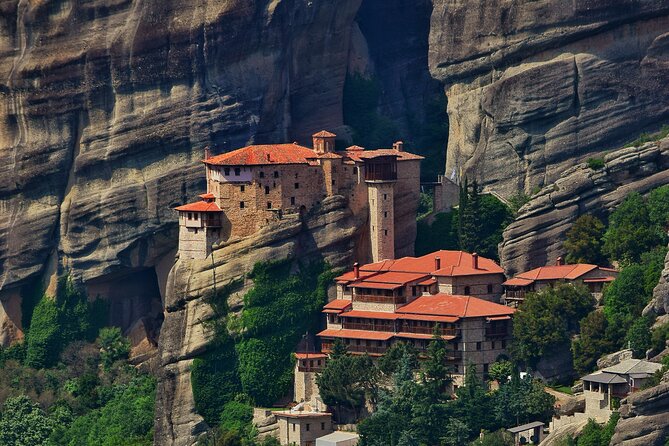
Rousanos—dedicated to St. Barbara—is perched on a narrow rock pillar and runs on a convent-life rhythm. It was founded in the 16th century, and today it’s a convent for nuns. One reason it’s popular is simple: the route to it is described as relatively easy compared with some of the more cliff-hugging monasteries, with staircases and bridges involved but not as severe as others.
Inside, the big draw is the frescoes—Bible scenes that help you connect Orthodox religious art to what you’re seeing in the architecture. You also get wide views over the valley and surrounding rock formations, which makes the stop feel less like a checklist item and more like a mental reset.
This is a good monastery for your first “anchor” visit. If you start the day at speed, Rousanos helps you slow down and understand the mood of Meteora.
Varlaam Monastery: Byzantine flair plus a real museum stop
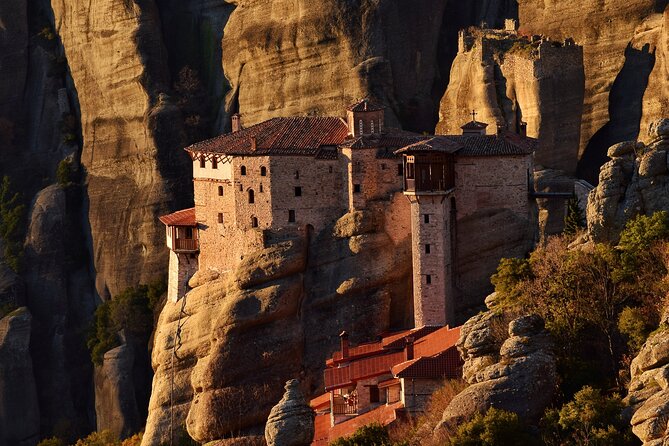
Next up is Varlaam, one of the most significant and visited monasteries in Meteora. It dates to the mid-14th century with expansions in the 16th century, and it’s associated with the monk Varlaam, who first climbed the rock to establish a small chapel.
Varlaam is a feast for the eyes if you like Byzantine design. The Church of All Saints is specifically noted for standout frescoes. You’ll also have time for a museum with religious artifacts and manuscripts, which is a nice break from just looking at rooms and ceilings.
The main catch: you must climb steps to reach the monastery. Varlaam is usually doable, but you should go into it expecting stairs and plan a steady pace. If your legs get tired early, you’ll want to save your energy for the later, more difficult sites too.
Great Meteoron: the biggest names, biggest views, and major preservation role
If you only remember one monastery from this day, make it Great Meteoron. It’s the largest and historically significant monastery in Meteora, also known as the Holy Monastery of the Transfiguration of Christ. Founded in the 14th century by St. Athanasios the Meteorite, it sits atop one of the highest rock formations in the area.
This is the monastery where the “why” behind Meteora becomes clearer. The complex played a crucial role in preserving Orthodox Christian traditions and culture during the Ottoman period—not just as a church, but as a continuing center of spiritual and cultural life.
Inside, you can explore the main church, frescoes, and a museum with icons, manuscripts, and artifacts. In a day that includes multiple monasteries, Great Meteoron gives you the strongest sense of scale and significance.
Plan to spend your time actively. Don’t just drift. Look at the church areas and then make your way to the museum pieces if you want the day to feel grounded in objects, not just views.
Holy Trinity (Agia Triada), steep access, and a James Bond connection
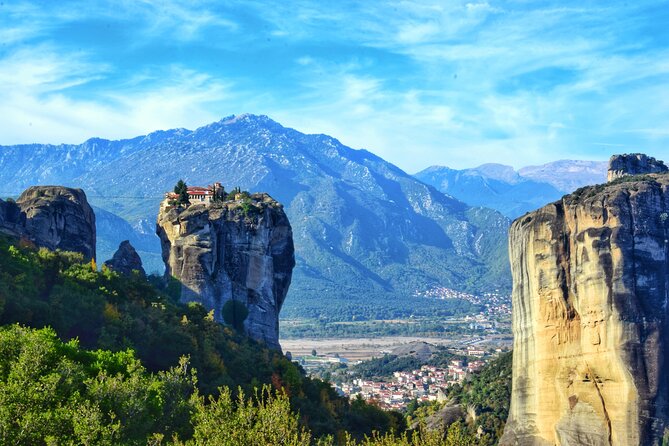
Holy Trinity, also called Agia Triada, is one of the most iconic monasteries in the region. It’s perched on a solitary rock pillar and is known for difficult access, including a steep staircase carved into the rock. If you’re comfortable with stairs, it’s a powerful stop. If you’re not, this is the place to slow down and take short breaks.
Founded in the 15th century, it’s relatively isolated, which adds to that feeling of seclusion. Inside, it houses frescoes and relics, plus a small chapel dedicated to the Holy Trinity.
There’s also a pop-culture note that’s specifically mentioned: Holy Trinity is famous for appearing in the James Bond film For Your Eyes Only. Even if you’re not a Bond fan, it’s a fun reference point that helps people picture how dramatic this setting is.
Saint Stephen’s Monastery: a warmer welcome and garden views
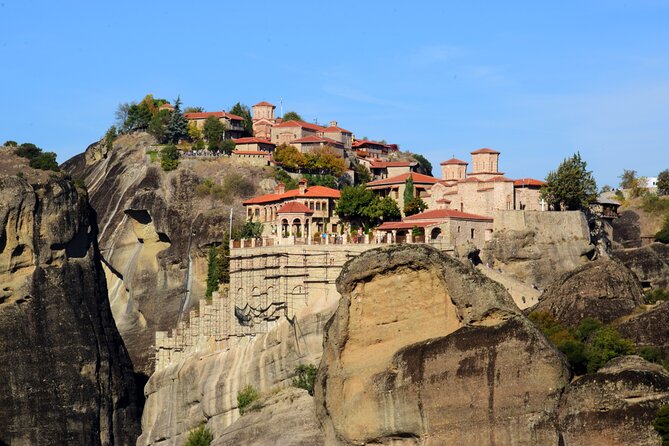
After the steeper climbs, St. Stephen’s Monastery feels more welcoming. It’s described as one of the more accessible monasteries because it sits on a relatively flat rock compared with the others perched on steep cliffs.
It was founded in the 14th century and is now a convent for nuns. The mood is calm and human-scale, and you can also see lush gardens within the complex, which is a nice change from pure rock-and-steps fatigue.
The church dedicated to St. Stephen is noted as a 16th-century highlight. There’s also another modern church dedicated to St. Charalambos, where you can find an impressive collection of relics. And from the monastery, the views over the plains of Thessaly are mentioned as breathtaking.
This is the stop that often feels like relief in the middle of a long day—spiritual quiet plus a little visual softness.
St. Nicholas Anapafsas: first encounter, small footprint, and famous fresco work
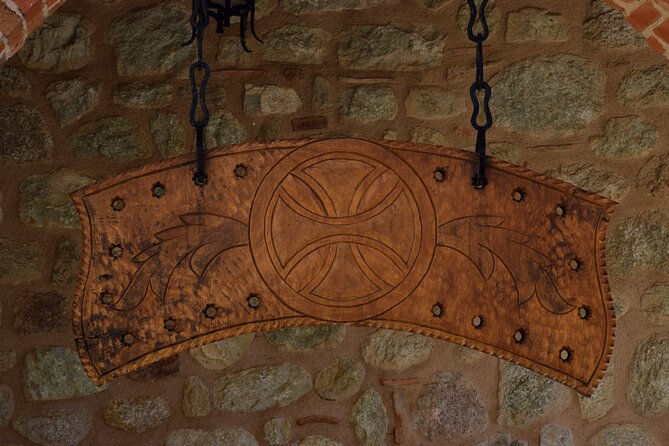
St. Nicholas Anapafsas is one of the six active monasteries in Meteora, and it’s known as the first monastery visitors encounter when ascending the rocks. It dates to the 14th century, and its small size is explained by limited space on its rock foundation.
Even with a smaller footprint, it’s worth your attention because of the art. The monastery is noted for exquisite frescoes by the Cretan painter Theophanes Strelitzas. If you like being able to focus on fewer things closely—like a mini museum of religious painting—this is a great fit.
It also has a tranquil, secluded feel, with views over the valley below. In a day designed for multiple stops, this one can give you a clean, focused ending to your monastery sequence before you head toward Thermopylae.
Thermopylae on the return: Leonidas, Thespians, and an on-site center
On the way back, the tour includes Thermopylae, tied to the famous stand in 480 BC. This stop is meaningful because you see the place while the story is still fresh in your mind.
You’ll find an imposing statue of King Leonidas, and there’s also a monument honoring the 700 Thespians who fought alongside the Spartans. An informative center is part of the visit, giving context about battle strategy and the long legacy it left in Western civilization.
This isn’t just a photo pause. It’s a chance to connect what you’ve seen today—monasteries built for survival and preservation—with an older theme too: people choosing duty and holding the line when it matters.
It’s also a nice reset if you’re mentally overloaded from stairs and rock platforms. Ground-level walking around the battlefield feels different, even if you only spend about 45 minutes there.
Price and value: what $387.21 includes and what costs extra
The listed price is $387.21 per person, and that number feels big until you look at what’s bundled.
You’re paying for:
- Private transport with pickup/drop-off from your Athens base or cruise ship
- A fluent English driver-guide (expert Athenian)
- Comfort items like A/C and bottled water
- A planned route that combines multiple Meteora monasteries plus Thermopylae
What’s not included adds up, but it’s still predictable:
- Monastery entrance fees: €5 per monastery, paid in cash
- Lunch: not included
- Optional licensed tour guide: available on request, depending on availability, at an extra cost
- Gratuities: at your discretion
This tour hits six monasteries. At €5 each, the cash-only entrance fees come to about €30 per person before you consider anything like scarf rental if needed.
That cash detail is important. If you arrive with a card-only habit, you’ll be slowed down. Bring euros, and you’ll keep the day moving.
Timing and walking reality: how to prepare for stairs without ruining the day
This experience requires moderate physical fitness. That’s not just a box to tick. You’re dealing with stone steps, steep staircases in some monasteries, and routes that depend on how the monastery is built on the rock.
A practical way to handle this: move slowly at the start so you don’t “spend” your energy too early. Varlaam and Holy Trinity are the two places where the physical effort can feel more noticeable. St. Stephen tends to feel easier thanks to its flatter rock.
Also plan for changing surfaces and tight interior spaces. Your best strategy is simple: comfy shoes, water you can sip (bottled water is provided), and a flexible mindset about how long you’ll want to pause for frescoes and views.
What to wear at Meteora: skirts, scarves, and cash rules that matter
Monastery dress rules are part of the experience at Meteora, not an optional extra. Women are required to wear a long skirt or dress or cover their legs with a scarf. The monasteries can provide coverage for €3 if you need it.
Men are suggested to wear long pants. You don’t want to arrive hoping you’ll be able to improvise comfortably on the spot.
Then there’s the cash-only rule: monasteries accept only cash for the €5 entrance fee each. That means euros in your pocket or day bag, not just inside your phone wallet.
If you want the day to feel smooth, do two things before you head out: bring the right clothing and bring cash. You’ll spend your time looking up at the rocks instead of figuring out the checkout line.
Who this private Meteora tour is best for
This tour makes a lot of sense for you if:
- You want multiple monasteries in one day without arranging separate transport
- You like history and culture, but also want a driver who keeps the ride safe and calm
- You’re traveling with a group that benefits from private pacing
- You want a day that connects Meteora with another iconic Greek site, Thermopylae
It’s also a good fit when you prefer a guide who can talk about Greek life and mythology while you drive. In the reviews tied to this operator, people specifically praised Alexander Papageorgiou for mixing stories with a feeling of safety on the road, and for helping with photo timing, including a sunset photo viewpoint.
It may be less ideal if you have limited mobility and need step-free access. Since the route includes stairs at several stops, you should judge your comfort level realistically.
Should you book this Meteora private journey?
Book it if you want the best value blend of scenic drive + six monastery stops + Thermopylae in one organized day, with pickup handled and a calm, careful driver-guide to set the tone. It’s also a strong choice if you like English commentary and don’t want to wrestle with logistics across multiple sites.
Skip it or consider alternatives if you need a guide who walks inside every site with you. This driver-guide cannot enter the monasteries with guests, so while they’ll orient you, the experience inside is on your own time. Also, if you’re sensitive to stairs, the rock design of Meteora won’t negotiate.
If you’re ready for stairs, dress rules, and a long but well-planned day, this is a smart way to see Meteora without turning it into a travel puzzle.
FAQ
What does the tour cost?
The tour is priced at $387.21 per person.
How long is the Meteora private journey?
It lasts about 11 to 14 hours total, including travel time.
Do you get picked up from your accommodation or cruise ship?
Yes. Pickup and drop-off are included from your Athens hotel, Airbnb, or cruise ship. If you’re arriving by cruise, the driver waits outside the arrivals terminal holding a sign with your name.
Is the tour private?
Yes. It’s a private tour/activity, and only your group participates.
How many monasteries do you visit?
You visit six monasteries in Meteora: Rousanos (St. Barbara), Varlaam, Great Meteoron, Holy Trinity (Agia Triada), Saint Stephen, and St. Nicholas Anapafsas.
Are monastery entrance fees included?
No. Each monastery has an entrance fee of €5 per person, and monasteries accept only cash.
What should I wear for the monasteries?
Women must wear a long skirt or dress, or cover their legs with a scarf (scarves may be available at the monasteries for €3). Men are suggested to wear long pants.
Is lunch included?
Lunch is not included.
Can I cancel for a full refund?
Yes, you can cancel for a full refund up to 24 hours in advance of the experience start time.