REVIEW · ATHENS
Athens: Temple of Olympian Zeus Entrance Ticket
Book on GetYourGuide →Operated by Key Tours · Bookable on GetYourGuide
One temple, two empires, and real scale. The Temple of Olympian Zeus is a big-deal ruin near the city center, and the timed entry keeps it simple when you’re juggling Athens landmarks. You’re also getting a self-guided Plaka audio tour, so your ticket doesn’t end the moment you leave the site.
I like two parts a lot: first, the selected time slot for entering the archaeological area (no aimless waiting). Second, the audio component that helps you connect what you’re seeing to the streets of Athens Old Town.
One thing to consider: the entrance ticket can feel pricey compared to what’s visible at ground level, and scaffolding can limit how many columns you can clearly take in during your visit.
In This Review
- Key Highlights Worth Your Time
- Temple of Olympian Zeus: Why This Ruin Still Feels Important
- Where It Is (and the Easy Connections to Acropolis and Syntagma)
- Timed Entry at the Entrance: The Simple Way In
- What You’ll See on Site: Surviving Columns and a Few Hidden Stories
- The view you’ll get (and why it varies)
- What makes the remains worth your attention
- Hadrian’s Temple, Explained Without the Headache
- Themistoclean Wall, Ancient Homes, and a Roman Bathhouse Nearby
- Using Your Time Slot Without Feeling Rushed
- Self-Guided Audio Tour for Plaka: Turning the Ticket into a Walk
- Price and Value: Is $30 Worth It?
- When it feels like good value
- When it can feel expensive
- Free admission could change the math
- Practical On-the-Ground Notes That Save You Stress
- Who Should Book This Ticket (and Who Might Skip It)
- Should You Book This Temple of Olympian Zeus Ticket?
- FAQ
- Do I get a self-guided audio tour with this ticket?
- How long do I have for the Temple of Olympian Zeus entrance?
- Where do I enter the site?
- Can I change my date or time slot after booking?
- Is the ticket refundable?
- Are there restrictions on what I can bring inside?
Key Highlights Worth Your Time
- Timed entry means you can plan the rest of your day instead of hovering at a gate.
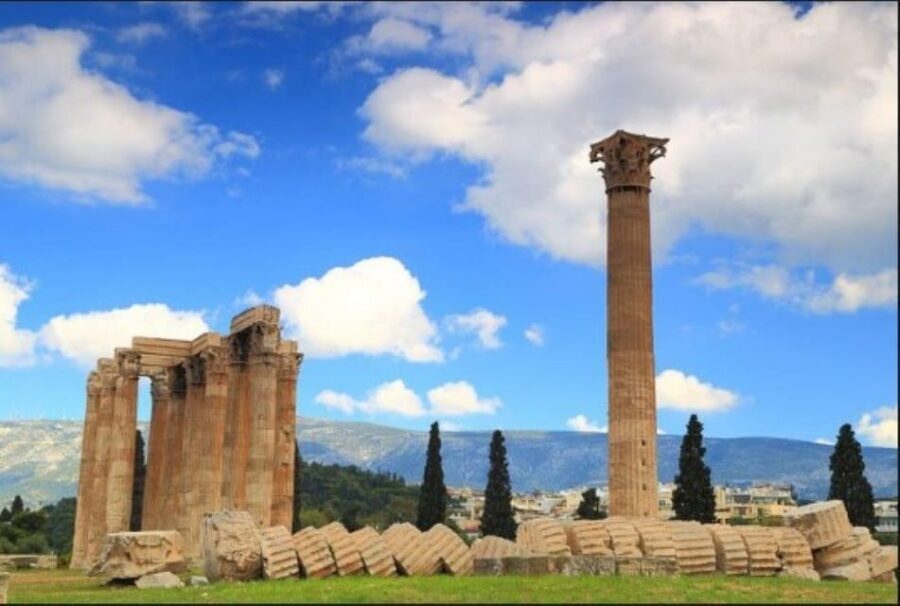
- Fifteen surviving columns still let you grasp the temple’s former size in the ancient world.
- Hadrian’s grand design: Corinthian columns, Pentelic marble, and the sheer “how many columns?” factor.
- Themistoclean Wall remnants nearby add an extra layer beyond the main temple.
- Self-guided audio for Plaka turns your ticket into more than a quick ruin photo stop.
Temple of Olympian Zeus: Why This Ruin Still Feels Important
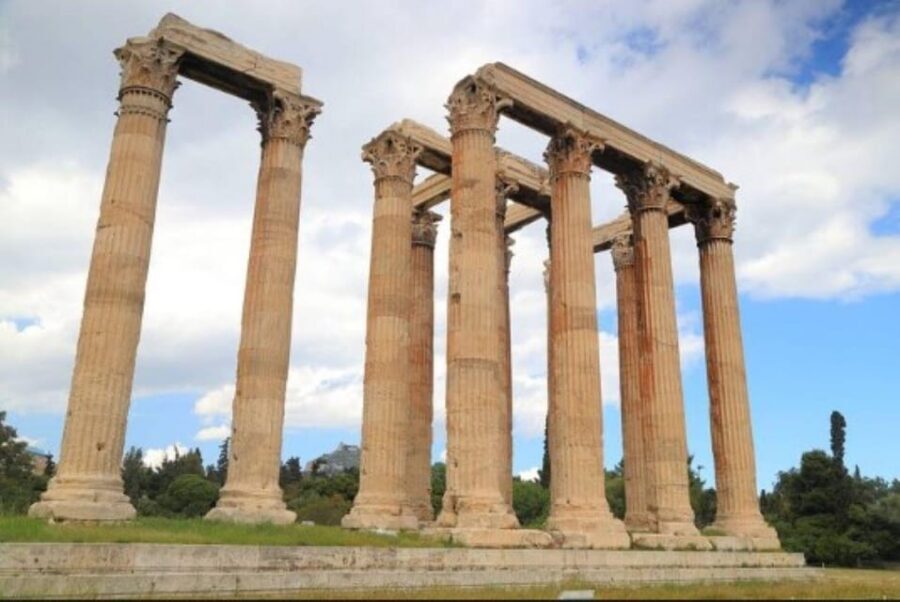
Athens has plenty of monuments that look dramatic even in ruins. This one hits a different nerve: it’s about scale. The Temple of Olympian Zeus was likely started around 515 BC, then finished in 131/132 AD by Emperor Hadrian, making it one of the largest temples in the ancient Mediterranean world. Even with most of it gone, you still get a sense of the ambition.
This is the kind of stop where context makes a real difference. If you walk in knowing that Hadrian’s temple was built in Corinthian style with Pentelic marble, the remaining columns stop being random stubs. They become pieces of a massive architectural plan.
I also like that it’s close to other major sights. You’re not stuck crossing the city just to see one site. You can treat it like a clean, focused “one-hour Athens” activity.
You can also read our reviews of more tours and experiences in Athens


Where It Is (and the Easy Connections to Acropolis and Syntagma)
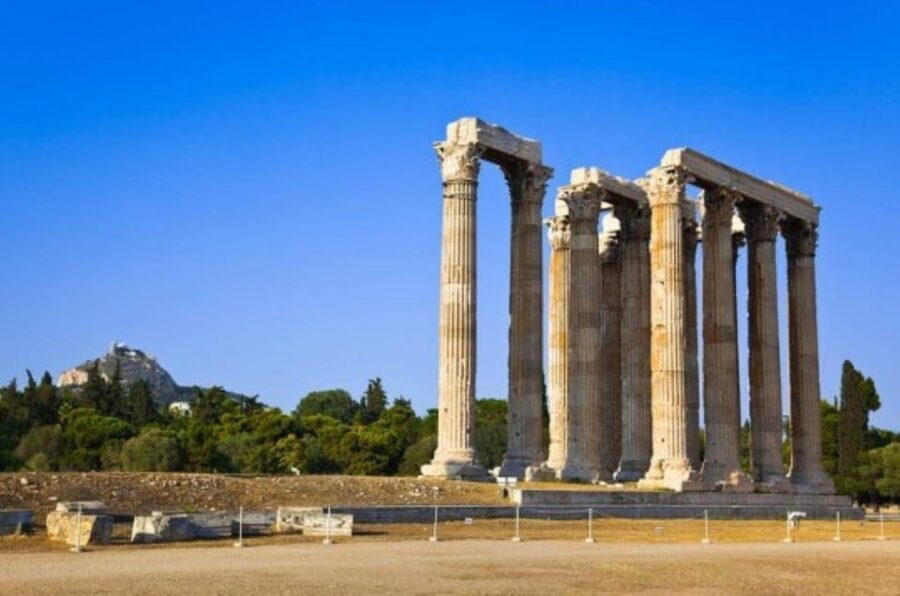
The site sits near the center of Athens—about a quarter-mile southeast of the Acropolis and within about a quarter-mile south of Syntagma Square. That location matters because it changes your day.
Instead of treating Temple of Olympian Zeus as a standalone mission, you can build a route around it:
- If you’re doing Acropolis in the morning, this can be a natural follow-on.
- If you’re basing yourself near Syntagma, it’s a manageable walk that doesn’t eat an entire afternoon.
In practice, that “in the middle of everything” position is part of the value. You spend less time on transfers, and more time on the actual viewing.
Timed Entry at the Entrance: The Simple Way In
Your meeting point is the entrance of the site, and you enter on your own. There’s no live guide included here, so the ticket is designed for self-paced use.
The monument runs on time slots. You’re allowed to enter only at your selected time slot (or within 15 minutes before/after). That window is short enough that you should plan to be ready—don’t treat the entry time as a loose suggestion.
Also note this important rule: your entry date and/or time slot can’t be amended for any reason. So if you’re the type who often changes plans last-minute, this ticket requires a bit more discipline.
What You’ll See on Site: Surviving Columns and a Few Hidden Stories
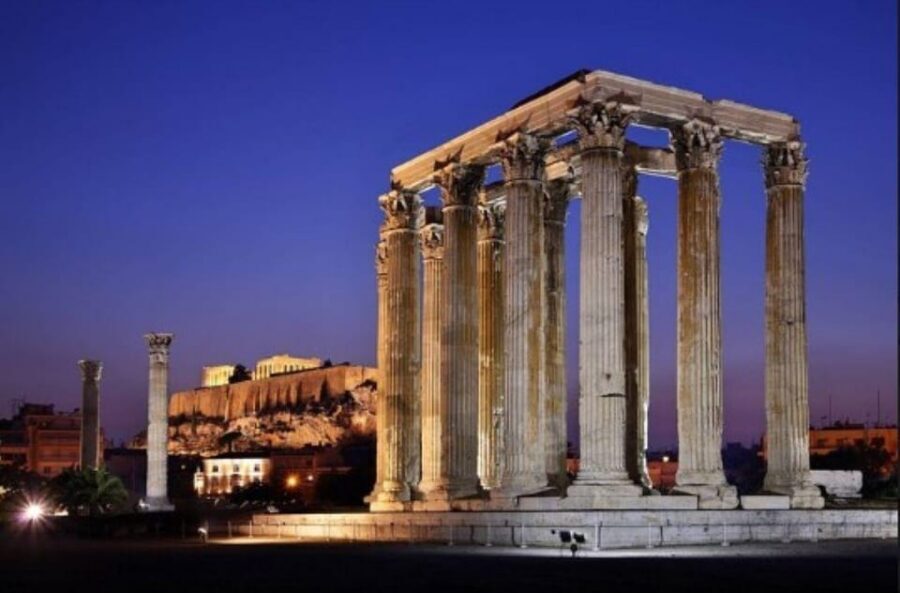
Here’s the reality check that helps set expectations. Today only 15 columns of the original colonnade remain standing. One even collapsed during a storm in 1852. That means your visit is less about “full temple recovery” and more about reading the footprint of what once existed.
The view you’ll get (and why it varies)
You’ll likely notice that some areas can be less open than you’d expect. Scaffolding may block parts of the structure from certain angles, which can make the temple feel smaller in person than it does in photos. On top of that, many visitors finish quickly if they just glance at the main features.
The upside is that you’re not rushed. A self-guided format lets you slow down where you care most—like the remaining columns, the layout, and nearby archaeological remnants.
- All Day Cruise -3 Islands to Agistri,Moni, Aegina with lunch and drinks included
★ 5.0 · 4,958 reviews





What makes the remains worth your attention
Even if you see only a portion of the colonnade clearly, the temple’s “logic” comes through if you’re willing to look a bit longer:
- The columns remaining are still tall enough to show proportion.
- The overall structure was built to be seen from a distance, so framing and angles matter.
- Informational signage helps you connect what you’re seeing to what used to be there.
If you like monuments where the construction idea matters as much as the photos, this is a good fit.
Hadrian’s Temple, Explained Without the Headache
If you enjoy architecture, you’ll get a lot out of learning the temple’s construction basics. It’s built in the Corinthian style and used Pentelic marble—the kind of detail that turns ruins into a real design problem.
A few numbers to lock in your mental picture:
- The temple likely started around 515 BC
- Hadrian completed it in 131/132 AD
- The surrounding colonnade totaled 104 columns
- The arrangement included two rows of twenty columns on the long sides
- And three rows of eight columns across the front and rear
Now translate that to today: with only 15 columns standing, your brain has to do some math. That’s the fun part. You’re not just looking at leftovers; you’re reconstructing a building that once dominated its setting.
I like how this site rewards the small effort of trying to “count what’s missing.” Even if you can’t see all columns from where you stand, the structure’s original rhythm is still there in the remaining pieces.
Themistoclean Wall, Ancient Homes, and a Roman Bathhouse Nearby
The main temple isn’t the only archaeological material you’ll run into. North of the site, you can still observe:
- Remnants of a gate from the Themistoclean Wall (built around 479/8 BC)
- Ancient dwellings dating from the 5th/4th BC to the 2nd century AD
- A Roman bathhouse remnant
This is a big deal if you get bored by “one monument, one story.” Here, you’re seeing layered use of space: Greek fortification-era infrastructure, civilian life across centuries, then Roman-era bathing infrastructure.
Practical tip: when you reach these north-side remnants, spend a moment reading what the site indicates rather than just walking past. It’s easy to let the main temple become the only focus, but this area is where the site can feel more like a lived-in timeline rather than a single ruin.
Using Your Time Slot Without Feeling Rushed
The ticket duration is listed as 1 hour, and you enter within your time slot window. With a self-guided experience, that one hour is a comfortable range—but it depends on your style.
If you’re a quick-scan type, you might move through faster and spend less time reading signs. If you prefer to absorb details, you’ll naturally spend longer—especially if you’re trying to piece together the 104-column original plan from the visible fragments.
A simple approach that works well:
- Spend the first stretch orienting yourself on the main temple remains.
- Then shift to the north-side features (wall gate remnants, dwellings, bathhouse).
- Use that final portion to re-check angles for the columns and signage.
Because the entry slot rules are strict and non-changeable, you want to arrive with a buffer. Wear comfortable shoes, and dress for the weather, since Athens walks are often short but frequent.
Self-Guided Audio Tour for Plaka: Turning the Ticket into a Walk
Your ticket includes a self-guided audio tour of Athens Old Town (Plaka). That’s a smart add-on because Plaka is the kind of neighborhood where it helps to have context while you’re wandering.
Instead of treating Plaka like a photo loop, the audio tour nudges you through the neighborhood with a purpose. Even if you don’t spend hours there, you can still use the audio to:
- understand what you’re looking at as you walk,
- connect street scenes to the broader Athens story,
- and keep your momentum after the temple site.
Timing-wise, you can treat the Plaka audio as a follow-on after your temple visit. Or, if you’re trying to reduce backtracking, you can line it up so it starts as you transition from the archaeological area toward Old Town streets.
Price and Value: Is $30 Worth It?
The ticket price is $30 per person, with entry controlled by a time slot. Whether that feels like a good deal depends on what you want out of the visit.
When it feels like good value
It tends to make sense if:
- you like planning with a set entry time,
- you enjoy architectural details like Hadrian’s Corinthian design and the Pentelic marble idea,
- and you’ll actually use the included Plaka audio tour afterward.
This ticket is essentially a two-part value proposition: the temple experience plus an Old Town audio walk.
When it can feel expensive
It may feel steep if your expectation is “a full temple you can roam freely.” With only 15 columns standing and possible scaffolding affecting sightlines, you might end up seeing fewer structural elements than you imagined from pictures. If you also skip most of the informational reading, the visit can feel short for the cost.
Free admission could change the math
For travel dates from April 1st, 2025, free admission applies to:
- EU citizens under 25, and
- Non-EU citizens under 18,
as long as you show the right ID at the ticket booth.
If you fit one of those categories, the value jumps a lot, because you’re paying only time and effort—not ticket cost.
Practical On-the-Ground Notes That Save You Stress
Before you go, here are the rules that can trip people up:
- What to bring: comfortable shoes and comfortable clothes.
- Not allowed: baby strollers, luggage or large bags, alcohol and drugs.
- Plan to keep your baggage light since large bags aren’t allowed.
- If you’re entering with anything bulky, sort it out before you reach the entrance so you don’t waste your time slot.
On accessibility: the site is wheelchair accessible, and people with disabilities receive free admission with a Disability Certificate at the ticket booth.
Who Should Book This Ticket (and Who Might Skip It)
This entrance ticket is best for you if:
- you want a low-stress, self-guided plan,
- you care about architecture and want the Hadrian details in a clear, manageable stop,
- and you’ll use the included audio tour for Plaka.
You might consider skipping it if:
- you dislike timed, non-changeable entry rules,
- you expect to see a fully intact temple at close range,
- or you’re only in Athens briefly and want the highest “wow-per-minute” stop.
For many first-time visitors, it lands in the sweet spot: short enough to fit almost anywhere, meaningful enough to be more than a quick photo.
Should You Book This Temple of Olympian Zeus Ticket?
Book it if you want a focused Athens stop with timed entry and an audio tool that extends your experience into Plaka. It’s a good choice for travelers who like to connect the dots—between ancient architecture, what remains today, and how the city moves around it.
Skip or reconsider if your priority is maximum visible structure. With only a portion of the colonnade standing—and the possibility of scaffolding affecting sightlines—the temple can feel smaller than expected. In that case, you might prefer a different Athens site where the remnants are more open to direct viewing.
If you’re price-sensitive, check the free-admission rules for your age and residency category (starting April 1st, 2025). That alone can turn this into a very smart buy.
FAQ
Do I get a self-guided audio tour with this ticket?
Yes. Your ticket includes a self-guided audio tour for Athens Old Town (Plaka).
How long do I have for the Temple of Olympian Zeus entrance?
The duration is listed as 1 hour, and entry is tied to your selected time slot.
Where do I enter the site?
The meeting point is the entrance of the site, and you enter on your own.
Can I change my date or time slot after booking?
No. The travel date and/or entry time slot cannot be amended for any reason.
Is the ticket refundable?
No. The activity is non-refundable.
Are there restrictions on what I can bring inside?
Yes. Baby strollers and luggage or large bags aren’t allowed, and alcohol and drugs are also not allowed.



More Tickets in Athens

More Tour Reviews in Athens
- All Day Cruise -3 Islands to Agistri,Moni, Aegina with lunch and drinks included
★ 5.0 · 4,958 reviews