REVIEW · ATHENS
The Best Way to See and Learn about Athens in 6 hours
Book on Viator →Operated by Timeless Athens Tours · Bookable on Viator
Athens can feel like a blur. This private 6-hour route turns the city’s biggest hits into a calm, guided day you can actually enjoy. You’ll ride above ground, learn the stories behind the stones, and still have time to look up at views instead of staring at maps.
I love two things most: the private transport (you’re not stuck in hot crowds or buses), and the way the day mixes monuments with real Athens street life. It’s also a strong choice if you’re on a cruise stop or a first visit and want the essentials without planning every step.
One thing to keep in mind: most major sites and museums require paid entrance tickets, and the price quoted is for the private driver-guide plus logistics, not admissions.
In This Review
- Key highlights you’ll care about
- Getting Oriented Fast: Why a Private 6-Hour Format Works
- The Acropolis First: Parthenon Views, Erechtheion Caryatids, and Athena Nike
- Acropolis Museum: Turning Stones into Meaning
- Zeus Olympios and Panathenaic Stadium: Two Fast Stops with Big Connections
- Syntagma and the Tomb of the Unknown Soldier: Modern Athens in 10 Minutes
- Academy of Athens and the Neoclassical Trilogy
- Ancient Agora: Where Philosophy and Market Life Overlap
- Museum of the Ancient Agora: A Quiet Bonus Stop
- Plaka, Monastiraki, and the Old Streets Under the Acropolis
- Optional Lunch in Petralona: Eat Like an Athenian (If You Want)
- How the Driver-Guide Works: What You Get Inside vs Outside Sites
- Pace, Timing, and the Biggest Mistake to Avoid
- Value and Price: What $505.23 Really Means for You
- Best Fit: Who Should Book This Tour
- Should you book this 6-hour Athens highlights tour?
- FAQ
- Is pickup included?
- How long is the tour?
- Is the tour only offered in English?
- Are entrance fees included?
- Can the driver-guide go inside museums or archaeological sites?
- Is lunch included?
- What’s included in the cost?
- Is this a private tour?
- What is the cancellation policy?
- Is the tour accessible for most people?
Key highlights you’ll care about
- Private ride, not a group shuffle: hotel or port pickup and a comfortable car for a time-tight day
- Acropolis coverage that makes sense: Parthenon area sights plus the viewpoints that explain the city layout
- Acropolis Museum first-rate context: you’ll see artifacts that connect directly to what you saw above
- Agora + Hephaestus: a fast route through the ancient market and one of Athens’ best-preserved temples
- Plaka and the historic triangle: old neighborhood streets, squares, and photo moments without deep backtracking
- Cultural Neoclassical landmarks: the Academy buildings and the National Library area add variety beyond ruins
Getting Oriented Fast: Why a Private 6-Hour Format Works

Athens is big, spread out, and full of layers. With this format, you’re not trying to master the whole city. You’re getting your bearings fast, then going straight to the places that matter most.
The biggest practical win is the private driver-guide setup. You get pickup from essentially anywhere in the city (including Piraeus port and cruise ships), and the car handle-distance so you can stay comfortable. It also means fewer decisions for you, which is great when you have limited time.
Another reason this works: the route is designed as a story arc. You start at the Acropolis, connect it to museum context, then step down into the Agora and the neighborhoods where Athens lives today. That flow is exactly what helps the city click.
You can also read our reviews of more tours and experiences in Athens.


The Acropolis First: Parthenon Views, Erechtheion Caryatids, and Athena Nike

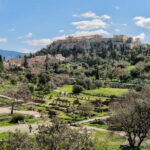
The day typically kicks off on Acropolis hill, where you can take in the full skyline picture. On a clear day, the views alone are worth the early start, because you see how major landmarks sit in relation to each other.
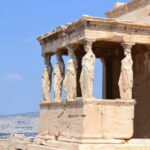
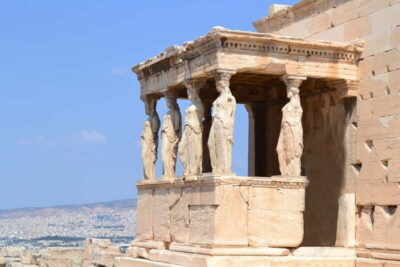
The core highlights on the Acropolis side include the Parthenon, the Propylaea (main entrance area), and the surrounding “Golden Age” structures like Erechtheion and the Temple of Athena Nike. Erechtheion is especially memorable for the Karyatides—the female statues that give the building its signature identity.
This is also where you get that classic Athens lesson: myth, religion, and politics weren’t separate things. The driver-guide experience focuses on the stories and meanings behind what you’re seeing, so when you look up at details, you know what they refer to.
Acropolis Museum: Turning Stones into Meaning
After the hill, the Acropolis Museum gives your brain a breather. It’s dedicated to the Acropolis, and that focus matters because it keeps the context tight. Instead of looking at ruins and guessing what’s what, you connect the artifacts to the structures you just visited.
The timing here is built for learning without burnout—about one hour at the museum. It’s enough time to see key pieces and understand why the Acropolis mattered so much, and it usually helps you walk around the next sites with better recall.
If you’re the type who enjoys explanations while you’re standing in place, this stop is a strong match. The museum’s whole purpose is to show the Acropolis story through objects, not just architecture.
Zeus Olympios and Panathenaic Stadium: Two Fast Stops with Big Connections
Next comes a “big scale” moment: Temple of Zeus Olympios. It’s described as the biggest temple ever built in the city, so even if you don’t buy tickets, you can appreciate the scale of what remains. It’s a good reminder that Athens wasn’t only about the Acropolis hill—it had monumental ambition across the city.
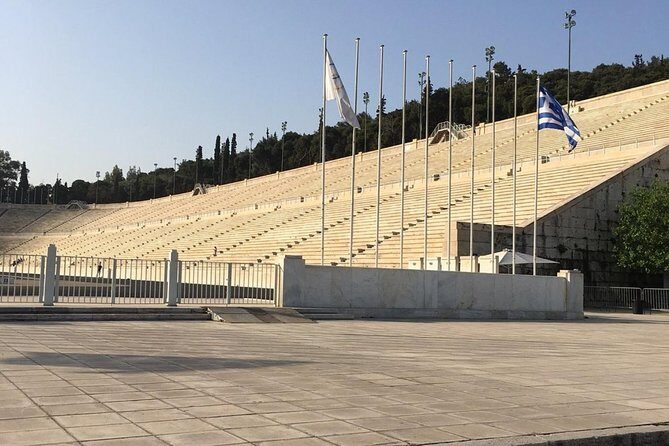
Then you head to Panathenaic Stadium, tied to the early modern Olympic story. It’s also connected to Pheidippides and the Marathon legend, which helps tie athletic myth to real historic movement. This stop runs around 20 minutes, and the entry is listed as free, so you can spend your time without feeling pressured to do everything.
These two stops work well together because they shift you from sacred hilltop spaces to places connected with public life and spectacle.
Syntagma and the Tomb of the Unknown Soldier: Modern Athens in 10 Minutes
A quick but powerful street-level stop is Tomb of the Unknown Soldier and the area around Syntagma Square. You’ll see the Evzones guarding in traditional uniform, and it’s one of those Athens scenes that feels very current even as you’re surrounded by older structures.
This stop is listed as free and short—about 10 minutes. That’s intentional: it’s enough time to experience the scene, grab photos, and keep the day moving.
If your timing lines up, you might catch the guard moment that draws people here in particular. Either way, it’s a simple way to understand how Athens performs national identity in the heart of the city.
- All Day Cruise -3 Islands to Agistri,Moni, Aegina with lunch and drinks included
★ 5.0 · 4,958 reviews





Academy of Athens and the Neoclassical Trilogy
Not every Athens tour focuses on the “newer” architectural Athens, so this is a welcome change of pace. The stop at the Academy of Athens area includes three Neoclassical buildings: the Academy of Arts and Sciences, the University, and the National library.
This is described as part of the Athenian Trilogy of Culture, and it helps you see Athens as a city that builds its identity in more than one era. The mix of classical references and European-style Neoclassical design makes the city feel continuous, not broken into unrelated time periods.
The time is short (around 10 minutes), and entry is listed as free, which makes it an easy win.
Ancient Agora: Where Philosophy and Market Life Overlap
The day’s next major anchor is the Ancient Agora of Athens. This is where public discussion and daily market activity happened, and the contrast between ideas and commerce is a big part of why the Agora matters.
You get a good taste of the site in about 40 minutes. The route highlights the market setting and the best preserved Temple of Hephaestus, which is one of the Agora’s strongest architectural remnants.
The Agora isn’t just ruins. It’s a place that helps you understand how Athenians lived and talked in public space. When you connect that to the earlier Acropolis stories, Athens starts to feel like a single system rather than scattered landmarks.
Museum of the Ancient Agora: A Quiet Bonus Stop

Right inside the Ancient Agora area, there’s the Museum of the Ancient Agora. It’s listed as free and about 20 minutes, which is perfect when you want one more layer without eating your whole afternoon.
This is where you can slow down after the outdoor walking. Even a shorter museum stop can help you put names and functions to things you passed on the site.
Plaka, Monastiraki, and the Old Streets Under the Acropolis
Now you shift from archaeology to neighborhoods, and that’s where Athens starts to feel like a real place. Plaka is described as the oldest neighborhood, and it sits right under the sacred hill of the Acropolis. You’ll walk streets with classic architectural style, plus plenty of souvenir shops and food options.
Then you visit the historic triangle via major squares: Omonia and Monastiraki. These stops are listed as quick and free (no tickets), which makes them good for orientation and people-watching.
Monastiraki is especially associated with the flea market area, and the mix of shopping and nearby archaeological sights gives you a fun, varied feel in a short time window. If you’re planning to return later for a longer walk, these squares also help you decide where you’ll want to spend extra hours.
Optional Lunch in Petralona: Eat Like an Athenian (If You Want)
If you have room for one local food moment, the route includes Petralona. It’s outside the main tourist lane, and the idea here is an optional taverna lunch stop. Lunch is not included, but it’s a chance to trade sight-seeing snacks for an actual meal with local flavor.
The route also includes a stop at a central open food market in the area. You’ll see where Athenians go for meat and fresh fish, and it’s the kind of experience that makes the city feel lived-in.
This is also a good point to ask your driver-guide what to order. In previous days with guides like John, Makis, and Markos (names mentioned in service experiences), the food suggestions tend to be practical and geared toward what you can actually eat comfortably after walking.
How the Driver-Guide Works: What You Get Inside vs Outside Sites
Here’s an important Athens rule to understand before you go. The service includes an experienced driver-guide who can share history, mythology, and culture during the ride and around the stops. But in Greece, drivers can’t provide guide services inside archaeological sites or museums. Licensed guides are required for that kind of in-site explanation, and they’re an extra service.
So what should you expect? You’ll still get a lot of context outside. The driver-guide can help you understand what you’re looking at, help you pace your time, and suggest the best way to move through areas. Then, if you add a licensed guide inside a site or museum, you’ll get deeper commentary while you’re actually in the rooms and walkways.
In service experiences tied to this itinerary, guides such as Dem, Markos, and Yanis have been described as friendly and passionate about storytelling. Some have also been noted for practical touches like keeping people comfortable in the heat with chilled water and helping with photo timing.
Pace, Timing, and the Biggest Mistake to Avoid
The biggest mistake on a tight Athens day is trying to do everything too quickly. This route is built to avoid that. Stops are scheduled to keep you from being trapped in one place too long, but they also include time to look up, not just pass through.
A very useful tip: start early if your schedule allows. One service note specifically recommends starting in the morning to beat crowds. Even if you don’t avoid every line, you’ll still feel less rushed.
Also, keep a bit of breathing room for Acropolis logistics. The hill can be the most crowded part of Athens, and the most important photo moments often happen when you’re standing still. The private ride helps, but you still need a calm mindset.
Value and Price: What $505.23 Really Means for You
The price shown is $505.23 per group, up to 3 people. That matters because you’re not paying per head for a standard group bus. You’re paying for a private car and driver-guide time plus parking and baggage charges.
Entrance fees and museum tickets are not included. The information provided estimates entrance fees at about 30 euros per person, which is a realistic planning number for the sites on the route. If you’re traveling as a pair or with a small group, the overall value often improves fast compared with piecing together taxis plus separate guided tickets.
The key question isn’t just the ticket price. It’s whether you save time and decision stress. With pickup from your hotel or port and a route that hits the essentials, you’re buying a day that runs like a plan, not a guessing game.
Best Fit: Who Should Book This Tour
This tour fits best if you:
- are on a first visit and want the core Athens landmarks
- have a cruise ship or short stay and need a structured day
- prefer learning with a local driver-guide while still moving efficiently
- like a mix of monuments and neighborhood street life
If you’re an archaeology deep-dive person who wants extended time inside every museum and temple, you may want to add a licensed guide for interior explanations. The driver-guide experience is strong, but the licensing rule limits what they can do inside.
Should you book this 6-hour Athens highlights tour?
Yes, if your goal is to get your bearings and see the essentials without planning stress. The private setup is the real advantage, especially for cruise arrivals and short layovers.
I’d book it if you want Acropolis structure plus museum context, then a smooth drop into Agora and Plaka. The itinerary also gives you a balanced taste of Athens today through squares like Syntagma and Monastiraki.
If you’re the type who loves sitting for hours in museums, you might find the timing more “taster” than “collector.” In that case, consider adding extra time after the tour in Plaka or around the Agora area, where you’ll already know your way around.
FAQ
Is pickup included?
Yes. You can be picked up from your hotel, apartment, Piraeus port, cruise ship, or a specific location in Athens.
How long is the tour?
It’s approximately 6 hours.
Is the tour only offered in English?
Yes, it’s offered in English.
Are entrance fees included?
No. Entrance fees are not included, and the estimate provided is about 30 euros per person. Some stops are listed as free, like Panathenaic Stadium and several other areas and museums.
Can the driver-guide go inside museums or archaeological sites?
No. Drivers can share information outside, but in Greece they cannot provide guided commentary inside archaeological sites or museums. Licensed guides are an extra service.
Is lunch included?
No. There’s an optional lunch idea connected with Petralona, but drinks and meals are not included in the tour price.
What’s included in the cost?
The rate includes service for a private driver-guide, plus parking fees and baggage charges. Tickets and licensed guide services are not included.
Is this a private tour?
Yes. It’s private, and only your group participates (up to 3 people under the group price).
What is the cancellation policy?
You can cancel for a full refund up to 24 hours before the start time. Free cancellation is available as long as you meet that deadline.
Is the tour accessible for most people?
The information says most travelers can participate.


More Tour Reviews in Athens
- All Day Cruise -3 Islands to Agistri,Moni, Aegina with lunch and drinks included
★ 5.0 · 4,958 reviews