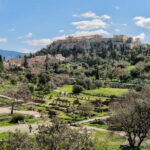
Ancient Greece, packed into four focused days. I love the UNESCO-heavy route from Epidaurus to Delphi and Mycenae, and I love that your guide’s stories help you connect the myths to what you’re actually seeing. The tradeoff is real: you’ll cover a lot of ground by bus, and you’ll climb stairs in key spots.
You’ll finish with Meteora’s rock monasteries, and that’s the moment most people remember most. With a maximum of 42 people, it’s usually not a cattle-car experience, but some sites still get crowded. The tour starts at 8:15am at Athanasiou Diakou 26, and you can also get pickup from select central hotels about an hour before departure.
In This Review
- Key things that make this tour work
- What You Really Get in 4 Days
- Day 1: Corinth Canal, Epidaurus Theatre, and Mycenae’s Tomb
- Olympia: Zeus, Hera, the Olympic Flame, and the Stadium Area
- Delphi at Sunrise Mode: Apollo’s Sanctuary and the Museum
- Meteora Monasteries: Dress Rules, Stair Reality, and Photo Timing
- Clothing rules you must follow
- Stair and walking advice (this matters)
- Hotels and Half-Board Meals: What to Expect from the Included Plan
- Price and Logistics: Is $760.28 Good Value Here?
- Walking Shoes, Stairs, and Timing: How to Enjoy the Hard Parts
- Should You Book This Tour?
- FAQ
- What UNESCO sites are included on this tour?
- How long is the tour and where does it start?
- Does this tour offer pickup from Athens hotels?
- Are entrance fees included?
- What meals are included?
- Is there a dress code for Meteora monasteries?
- Is the tour offered in English?
- Do I get a ticket on my phone?
- How many people are on the tour at most?
- Are hotel accommodations included, and is there a star-level choice?
Key things that make this tour work
- UNESCO sites in tight sequence: Epidaurus, Mycenae, Olympia, Delphi, and Meteora in four days
- Guide-led myth and history: you get explanations built into each stop, not a scavenger hunt
- Meteora photo time plus monastery rules: you’ll know what to wear before you arrive
- Half-board convenience: breakfast and three dinners included so nights are easy
- Bus coverage that’s honestly worth it: you gain time vs. trying to DIY the route
- Small-enough groups to feel human: max 42, and many departures run on the smaller side
What You Really Get in 4 Days
This is a “big hits, done right” route. Instead of spending your time just getting from one place to another, you’re taken to the sites that anchor Greek history: theatre, royal tombs, Olympic grounds, Apollo’s sanctuary, and those jaw-dropping monasteries perched on rock.
I especially like how the day flow stays coherent. Your guide sets you up with the story before you walk into the ruins or museums, so you’re not just looking at stones. And because meals and entrance fees are included, you’re less likely to get surprised halfway through by costs or decisions you didn’t plan for.
The tour is best if you’re comfortable with motion. Expect long drives, plus walking at each site. If you want a slow, beachy, no-stairs trip, this isn’t that kind of schedule.
You can also read our reviews of more tours and experiences in Athens
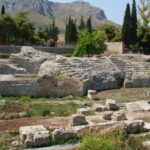
Day 1: Corinth Canal, Epidaurus Theatre, and Mycenae’s Tomb
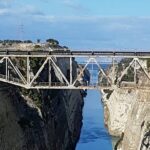
Day 1 starts with a quick, practical stop at the Corinth Canal. It’s short, but it’s useful for breaking up the Athens-to-Peloponnese transfer, and you typically get a moment for basic browsing and facilities around the canal area.
Next comes Epidaurus and its Ancient Theatre, famous for its outstanding acoustics. Even if you’ve only heard about it in passing, standing in the theatre area helps it click fast. You’ll get around an hour here, which is enough to see the shape of the space and appreciate why it matters.
Then you roll into Mycenae, traveling through the Argos plain area on the way. The highlight is the archaeological site and the Tomb of Agamemnon area. It’s a powerful stop because it feels like the setting for the stories—royal power, legend, and material proof sitting side by side. You’ll have time to walk the site with your guide’s framing, so you’re not stuck trying to connect names to ruins.
Drawback to note: by day’s end you’re already moving toward Olympia, so you’ll want good energy. I’d plan for an active day rather than expecting a gentle pace.
Olympia: Zeus, Hera, the Olympic Flame, and the Stadium Area
Day 2 is built around Olympia, the cradle of the Olympic Games. You get a solid block of time—about two and a half hours—for the main archaeological area. This is where the Temple of Zeus, the Temple of Hera, the altar of the Olympic flame, and the stadium are all part of the same experience.
What I like about Olympia is how visual it is even when you’re surrounded by ruins. You can still picture the layout and imagine what the crowds would have felt like. Your guide’s narration helps you understand what you’re looking at, rather than treating it like a checklist.
After the outdoor time, you continue to the Olympia museum. Museums here can be hit-or-miss on guided tours, but the value is that you can see objects in the context of the site you just visited.
Then the day shifts into travel mode. You go via Patras for a short stop, cross the Corinthian Bay using the Rion–Antirion bridge, and continue along the coastal road toward Delphi. You’ll also pass places along the way and stop near Nafpaktos.
Before you reach Delphi territory, you get time in Arachova, a picturesque mountain village stop in the afternoon. It’s a nice reset: less ruins, more local atmosphere, and a chance to stretch your legs after the driving.
Delphi at Sunrise Mode: Apollo’s Sanctuary and the Museum
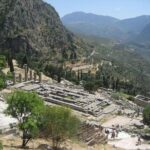
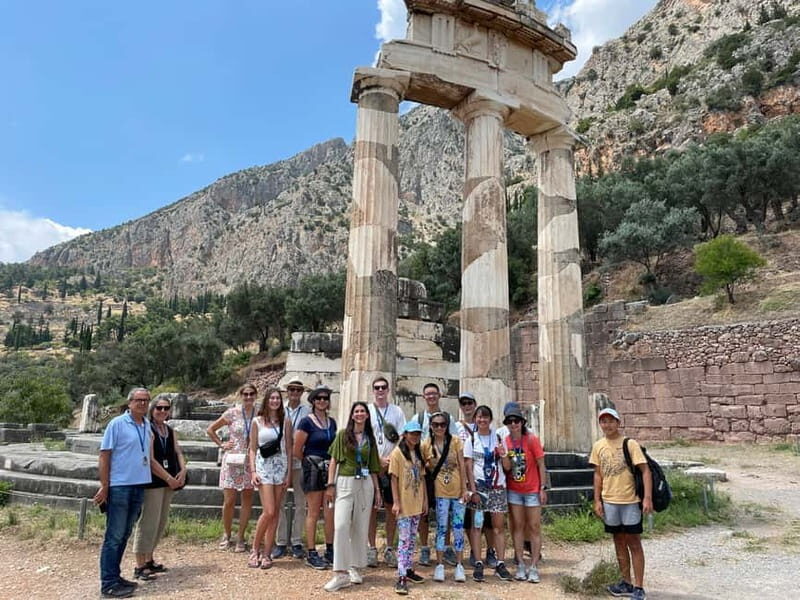
Day 3 starts early with the Temple of Apollo and the Delphi archaeological site. This is one of those UNESCO places that feels like more than a ruin set. The setting itself matters—Delphi was called the navel of the world in ancient times—and you’ll feel that “why here?” question as you walk.
You get about three hours here, which is a good amount for both viewing and absorbing the story. Delphi doesn’t reward rushing, so a morning start is smart. It also helps with crowds and light for photos.
After the ruins, you move indoors to the Delphi Archaeological Museum. This is where the experience gets less dramatic and more concrete. You’ll see artifacts connected to the sanctuary, including items dated back to the 15th century BC as part of the museum collection.
Then you head to Kalambaka, with an included short stop by Lamia along the route. This is your staging town for Meteora, so the drive is practical, not filler. You overnight in Kalambaka, which matters because Meteora is best visited with a morning plan rather than an end-of-day scramble.
Meteora Monasteries: Dress Rules, Stair Reality, and Photo Timing
Day 4 is Meteora, and it earns its reputation. You’ll leave in the morning for the Meteora Byzantine monasteries, a UNESCO site with more than 20 rock monasteries. The key word here is “rock.” These monasteries are built on towering rock pillars, and the walkways and stairs are part of the experience.
You’ll get about two and a half hours total on Meteora. That’s enough time to see the religious setting, absorb the views, and still have moments for pictures—if you move at a steady pace.
- All Day Cruise -3 Islands to Agistri,Moni, Aegina with lunch and drinks included
★ 5.0 · 4,958 reviews



Clothing rules you must follow
The monasteries have clear dress expectations:
- For ladies: avoid short skirts; wear long sleeves
- For men: no shorts allowed
Also, in practice, skirt coverings have been provided at the monasteries in past departures, which helps if you’re wearing something borderline.
Stair and walking advice (this matters)
Even if you’re not a hardcore hiker, plan for stairs. Some areas are not stroller friendly, and the terrain can be uneven. Bring sturdy walking shoes and take your time. You don’t want sore legs on the return drive.
Hotels and Half-Board Meals: What to Expect from the Included Plan
This tour includes hotel accommodation in a 3- or 4-star style, with half-board: breakfast three times and dinner three times. Lunch is not included, so think about grabbing something quick on your own during sightseeing or building small breaks into your day.
Where lodging varies is the biggest real-world swing factor. In feedback, the Olympia and Kalambaka stays often get described as quite solid, while Delphi lodging sometimes gets comments about being older or worn. One departure described a smaller pool and buffet-style dinners/breakfast with limited choices.
My advice: treat the hotel as a base, not part of the fantasy. The itinerary is built around ruins and monasteries, and that’s where most of the value is concentrated.
One more practical note: the included dinners are buffet-style. That’s convenient, but you won’t expect a custom menu. If you have dietary needs, you should plan to communicate them to the hotel staff when you arrive, since lunch isn’t included and your flexibility will come from what you choose on your own.
Price and Logistics: Is $760.28 Good Value Here?
At $760.28 per person for four days, the value comes from bundled effort: air-conditioned bus transport, a licensed English-speaking guide, entrance fees, and half-board. If you tried to DIY this yourself—tickets, guides for multiple sites, and getting up to Delphi and then Kalambaka—costs and stress stack quickly.
You’re also paying for time savings. This route crosses from Athens to Peloponnese, then works its way up to Delphi, then finishes at Meteora with an overnight stop. One review described the road coverage as around 1200 km, and that rough scale matches what the schedule feels like. You’re not doing that distance slowly.
The drawback in value is also the price you pay for speed: you trade free time for an efficient hit list. If you want more unstructured hours in each place, you’d need to add days or build a different trip.
Walking Shoes, Stairs, and Timing: How to Enjoy the Hard Parts
The tour isn’t too strenuous, but it is physical in short bursts. I’d pack for:
- walking on uneven ground
- museum staircases
- theatre seating areas
- Meteora stairs and narrow paths
A common mistake is assuming Ancient Greece sites are flat. Many aren’t. Delphi and Meteora can be especially step-heavy.
If you’re traveling with a stroller or someone who hates stairs, plan for limitations. Even when the route is manageable at a slow pace, the site design won’t change.
Also, bring layers. Even in shoulder seasons, you can shift from warm bus rides to cooler morning air at early stops like Delphi.
Should You Book This Tour?
Book it if you:
- want a guided way to see the biggest ancient Greek sites without researching for hours
- like the idea of a packed route that squeezes maximum value out of limited vacation days
- can handle walking, stairs, and long drives
Skip it if you:
- want slow travel with lots of downtime
- hate structured schedules
- need very step-light accessibility
If you’re in the sweet spot, this tour is a strong deal. The UNESCO trio of Olympia, Delphi, and Mycenae, plus the theatre at Epidaurus and the cliff monasteries at Meteora, is a lineup that’s hard to replicate efficiently on your own.
FAQ
What UNESCO sites are included on this tour?
You’ll visit UNESCO-listed sites including Epidaurus, Mycenae, Olympia, Delphi, and Meteora.
How long is the tour and where does it start?
The tour is 4 days (approx.) and starts back at the meeting point in Athens at Athanasiou Diakou 26, Athina 117 43, with a start time of 8:15am.
Does this tour offer pickup from Athens hotels?
Yes. A complimentary pickup is offered from selected centrally located hotels. You’ll receive an email with the pickup location and time about one hour before departure.
Are entrance fees included?
Yes. Entrance fees are included as part of the tour.
What meals are included?
Breakfast and dinner are included: breakfast (3) and dinner (3). Lunch is not included.
Is there a dress code for Meteora monasteries?
Yes. To enter monasteries, you need appropriate clothing. Ladies should not wear short skirts and must have long sleeves. Men are not allowed to wear shorts.
Is the tour offered in English?
Yes. The tour is offered in English.
Do I get a ticket on my phone?
Yes. This tour includes a mobile ticket.
How many people are on the tour at most?
The tour has a maximum of 42 travelers.
Are hotel accommodations included, and is there a star-level choice?
Yes. Accommodation is included with a choice of 3- or 4-star hotels (half-board). The tour also notes hotel accommodation class options (A class / T class).


More 4-Day Experiences in Athens
More Tours in Athens


More Tour Reviews in Athens
- All Day Cruise -3 Islands to Agistri,Moni, Aegina with lunch and drinks included
★ 5.0 · 4,958 reviews