REVIEW · ATHENS
Argolis Olympia Delphi & Meteora 4-Day Tour
Book on Viator →Operated by H.P.Tours - Hellenic Private Tours · Bookable on Viator
Ancient sites, neatly paced for real life. This 4-day Greece run connects Corinth Canal → Olympia → Delphi → Meteora with a door-to-door setup from Athens, so you spend less time figuring out logistics and more time looking at stone that’s older than most countries. You’ll also get smart road-story stops, like the Charilaos Trikoupis bridge built for Olympic flame logistics.
Two things I really like: first, the comfort-and-control of a private van with bottled water, WiFi, and air-conditioning—especially on the longer drives. Second, the option to add local licensed guides at the big moments, which helps you read what you’re seeing instead of just taking photos.
One consideration: the base price doesn’t include meals or most site entry tickets, and entrance fees are listed separately (plus you may choose the guided add-on). So it’s worth budgeting ahead instead of hoping everything is included.
In This Review
- Key highlights worth knowing before you go
- How the private setup makes this 4-day route easier
- Corinth Canal, Ancient Corinth, and Epidaurus: myths meet engineering
- Tolon, Nafplion, and Mycenae: seaside breaks and Cyclopean walls
- Olympia morning: Zeus, Hera, and the stadium where games were born
- The drive toward Delphi: ports, coffee stops, and an Olympic flame bridge
- Delphi full day: Apollo’s sanctuary and museum context
- Meteora: UNESCO cliffs, three monasteries, and that James Bond detail
- Thermopylae Museum and the Hot Gates stop
- What you’ll pay for (and why the price can still make sense)
- Should you book this private Argolis–Olympia–Delphi–Meteora tour?
- FAQ
- How many people are in a group?
- What’s included in the price besides the sightseeing?
- Are meals included?
- Are hotel stays included?
- Are entrance fees included?
- Can I add local licensed tour guides?
- Do you offer airport or port pickup?
- How many monasteries do you visit at Meteora?
Key highlights worth knowing before you go
- Private group setup (up to 2) means no one else’s schedule to manage.
- A/C van with WiFi and bottled water makes the long driving days feel less like punishment.
- Olympic details on the route, like the Charilaos Trikoupis bridge used to move the Olympic flame.
- Olympia + Delphi + Meteora in one run keeps your trip focused on the core classics.
- Meteora monasteries with UNESCO setting, visiting three of the six suspended monasteries.
- Budget for entrance fees and optional guide add-on so you don’t get surprised at the sites.
How the private setup makes this 4-day route easier
This is built for small groups. Your tour is private, up to 2 people, with pickup from an Athens hotel or the Piraeus port cruise terminal. That matters because the drive days can be long, and you don’t want to start your morning bargaining with buses, taxis, and confusing meeting points.
The vehicle is air-conditioned, with WiFi on board and bottled water. In practice, that’s a big deal when you’re moving through multiple regions and weather can change fast. It also means you’re not stuck overheating while you wait for the group to reform.
You’ll also notice a smart boundary: the drivers are professional, but they’re not described as being licensed to go into the sites and guide you inside. If you want deeper explanations while you walk, you can request four local licensed tour guides for an additional cost. Based on the tour experience pattern here, that add-on is what turns seeing ruins into understanding them.
You can also read our reviews of more tours and experiences in Athens
Corinth Canal, Ancient Corinth, and Epidaurus: myths meet engineering
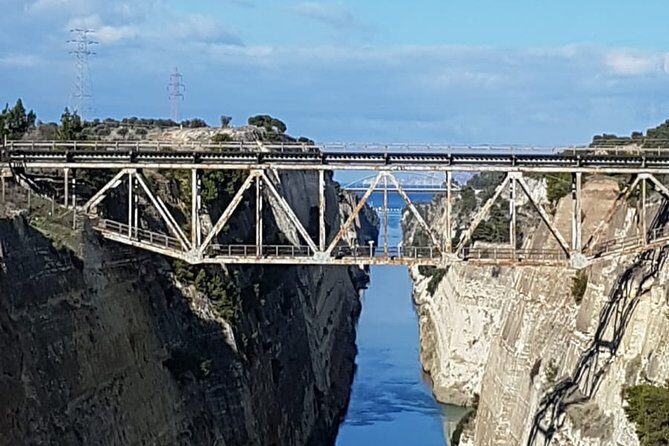
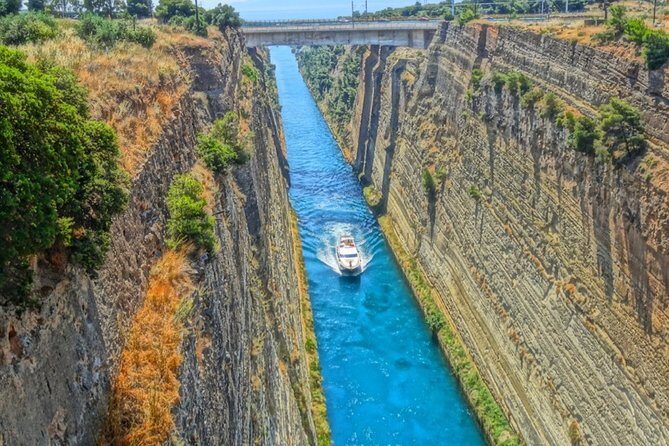
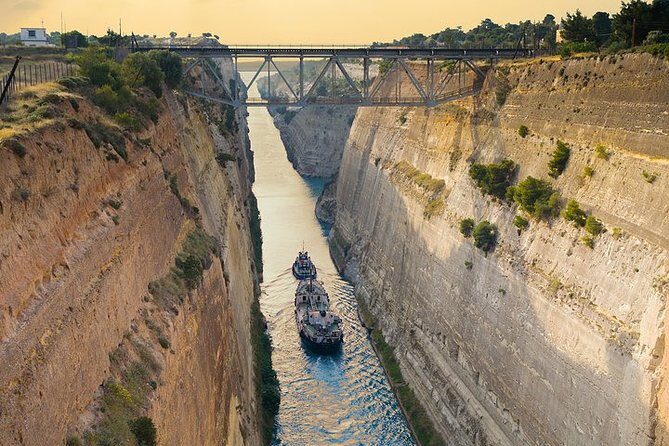
You start on the Isthmus of Corinth with a stop at the Corinth Canal. It’s short, but it’s the kind of engineering that makes you stop and think: the canal slices through the narrow Isthmus and separates the Peloponnese from mainland Greece, and it has no locks. Because it’s relatively narrow, it’s not a major shipping route today; it’s mainly there for you as a dramatic photo stop.
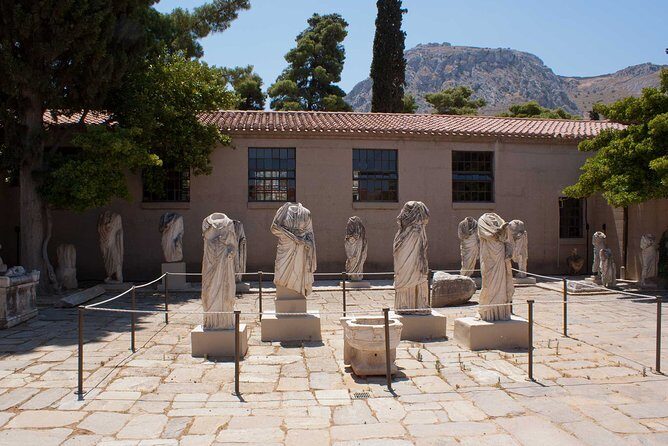
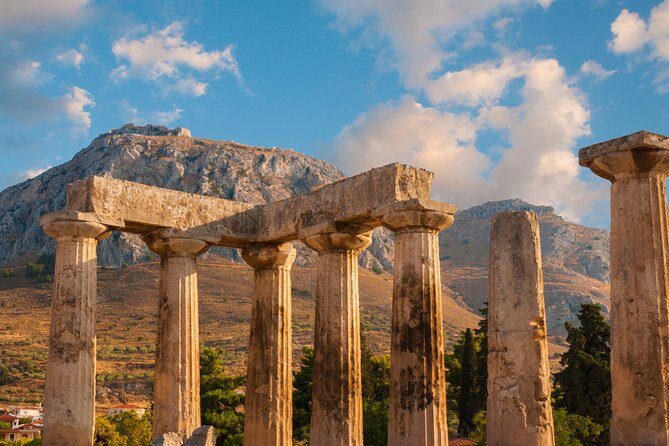
Next comes Ancient Corinth at Archaia Korinthos. You’ll have time to see the Temple of Apollo, one of the early Doric temples in the region. It sits on a rocky hill north of Acrocorinth, which makes it feel like the whole area was designed for visibility and power.
From there, you’ll likely hear the story tied to St. Paul’s Step. The traditional setting is the Bema, the elevated rostrum in the Roman Forum where officials addressed the public. During Byzantine times, it was transformed into a Christian church—so the same stone location keeps getting re-used in different eras.
Then you move into the Archaeological Museum of Corinth. The museum covers everything from prehistoric finds in the broader area to Roman, Byzantine, and Frankish layers. If you like context before you wander, this is the stop that helps.
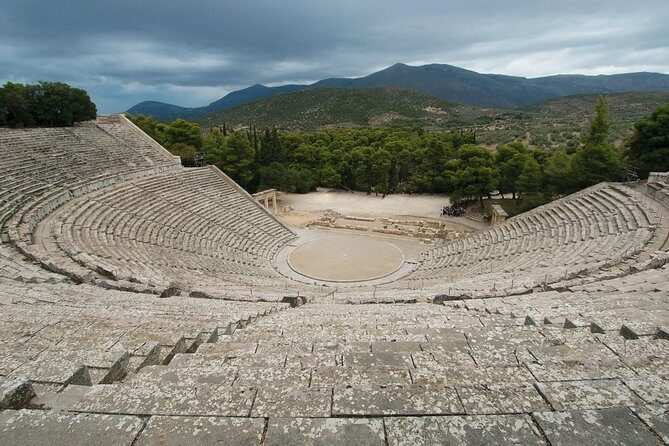
The day closes with the Ancient Theatre of Epidaurus. Epidaurus is famous for the Sanctuary of Aesculapius (a healing-and-culture center in antiquity) and for the theatre’s unique acoustics. Even today it’s still used, which makes your experience feel less like museum time and more like you’ve stepped into a place that’s still alive.
One practical note: several of these sites list admission tickets as not included, so plan for that “pay as you go” reality.
Tolon, Nafplion, and Mycenae: seaside breaks and Cyclopean walls
After the Corinth area, the route turns more scenic and slower-paced. You stop in Tolon, a sea town just east of Nafplion. This is your lunch window, and the description points to a traditional family-run restaurant with views over the Saronic Gulf. Meals aren’t included in the tour price, so you’ll pay for what you choose—but this is the kind of planned pause that keeps the day from turning into nonstop walking.
Then you reach Nafplion, one of the Peloponnese’s best-known port towns. It’s built up the hills near the Argolic Gulf, and its background is a mix of Venetian and Ottoman eras, plus a key role during the Greek Revolution period. Even if you don’t spend hours, you’ll get the sense of why this town became important.
Finally, you hit Mycenae. This is Late Bronze Age power in stone form. You’ll see the Cyclopean walls, the Lion Gates, and the path up toward the palace area connected to Agamemnon. After the acropolis, there’s a short stop on the opposite hill for the Treasury of Atreus, also called the Tomb of Agamemnon.
My suggestion for Mycenae: go in expecting strong views and steep paths, not a flat “stroll and snap.” If you’re traveling with knees that get cranky, take your time on the uphill sections.
Olympia morning: Zeus, Hera, and the stadium where games were born
Day 2 begins at Olympia with the big ticket (and the big story) done right early. You’ll visit the Temple of Zeus, described as the largest temple in the Peloponnese and a prime Doric example. Standing in the Altis area, you can understand why people in antiquity treated this as a sacred center rather than just another ruin.
Next is the Temple of Hera, located in the northwest corner of the sacred precinct. This is tied to the Olympic flame lighting every four years. If you like connecting ancient ritual to modern tradition, this is one of the best “wait, that’s still happening” moments on the route.
You’ll also see the workshop area of Pheidias, associated with the sculptor who created the gigantic chryselephantine statue of Zeus. Even when statues are gone, the planning of where they were made and displayed explains a lot about how culture worked then.
The stop continues with the Ancient Stadium of Olympia, the place that hosted the Olympic Games and also Heraia, the women’s games honoring Hera.
You’ll also have time at the Archaeological Museum of Olympia. It’s described as one of Greece’s most important. The highlight is the bronze collection, plus terracottas and sculpture. If you’re the type who gets more out of objects than ruins, this museum helps balance the day.
Admission here is listed as not included for parts of the visit, so treat this as another “budget line.”
The drive toward Delphi: ports, coffee stops, and an Olympic flame bridge
On the way from Olympia to Delphi, you get a few quick scenic breaks. There’s a stop for photos or coffee in Nafpaktos Old Port. Then you continue to Galaxidi, a seafront town known for its narrow cobblestone streets and a shipbuilding past. It even has a local nickname tied to the wives of missing sailors—the kind of detail that sticks once you’re on the ground.
You’ll also pass through Itea, described as a resort and important port area, including bauxite loading from mines in the region. You may not love thinking about mining on a “classics” tour, but it’s honest about what modern Greece does alongside ancient stone.
A standout roadside stop is the Charilaos Trikoupis bridge. It’s noted as one of the world’s longest multi-span cable-stayed bridges and opened just before the Athens 2004 Summer Olympics. It was used to transport the Olympic flame—so you’re literally moving from ancient games to modern Olympic infrastructure.
Then you arrive in Delphi and settle in for the night. Hotel accommodation is listed as not included in the tour package, but the experience is presented with overnight stays. Practically, that means you’ll want to confirm what level of assistance you’ll get for where to sleep.
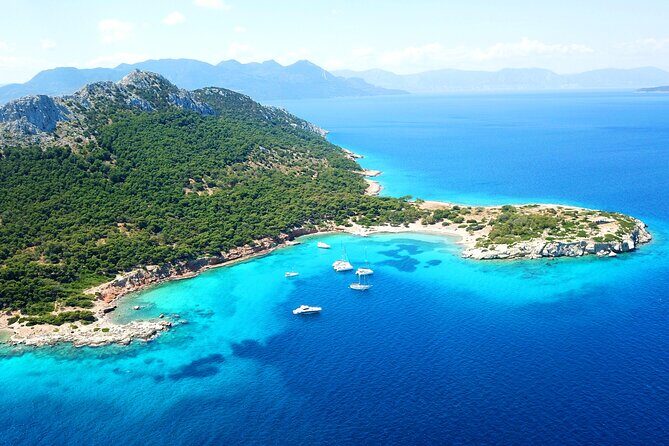
- All Day Cruise -3 Islands to Agistri,Moni, Aegina with lunch and drinks included
★ 5.0 · 4,958 reviews

Delphi full day: Apollo’s sanctuary and museum context
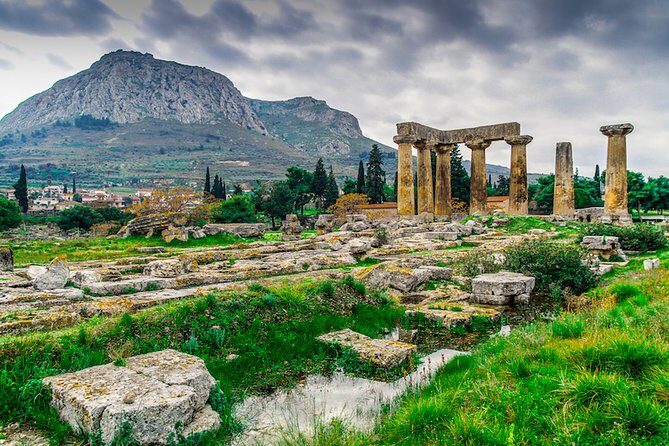
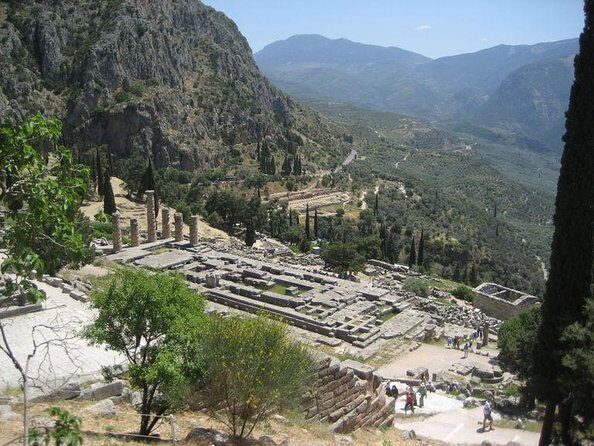
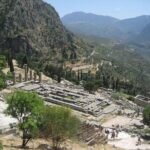
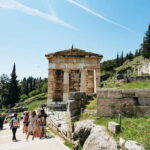
Day 3 is your “Delphi day.” You start at Castalia spring, then move through the Sanctuary of Apollo area and key points like the Treasury of the Athenians, the ancient stadium and theatre, and the bronze Charioteer. You’ll also see the Temple of Athena Pronea and the gymnasium.
What you’ll feel here is the layout. Delphi isn’t random. The sanctuary system helps you understand why the oracle mattered. Even if you don’t read every inscription, you’ll get the idea of sacred space designed for interpretation and public attention.
Then you go to the Delphi Archaeological Museum. This is the place to slow down and connect objects to sites. The museum is described as covering the sanctuary’s story from the 8th century BC through decline in Late Antiquity. It’s especially focused on architectural sculpture, statues, and smaller offerings—so you’ll see how people supported religious and political life with art.
After that, there’s a short stop in Arachova, about 10 km from Delphi. It’s described as traditional, mixing old and new at the foot of Mount Apollo. It’s a good place to stretch your legs and reset your brain before the drive to Meteora.
Meteora: UNESCO cliffs, three monasteries, and that James Bond detail
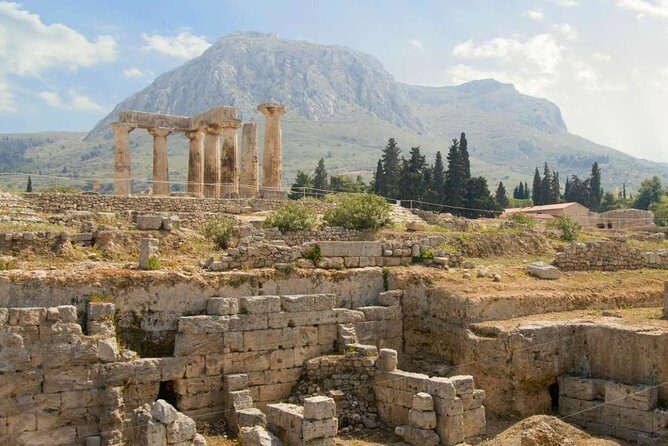
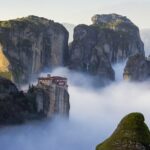
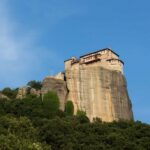
Day 4 starts at Meteora. The monasteries sit on natural sandstone pillars, suspended above the valley, and Meteora is a UNESCO World Heritage site. You’ll visit three of the six suspended monasteries.
The description also includes a fun pop-culture fact: For Your Eyes Only (the James Bond film) used the Monastery of Holy Trinity. If you’re a film fan, that alone can make the site feel more immediate.
Because admission tickets are listed as not included, you’ll want cash or a card strategy for on-site entry. Also, plan for stairs and uneven footing. Even when the time on site is limited, Meteora is physically demanding compared with flat museum visits.
You’ll likely appreciate that you’re not rushing through all six monasteries. Three stops gives you enough time to enjoy the views and to notice differences in each monastery’s setting rather than collecting stamps like it’s an airport.
Thermopylae Museum and the Hot Gates stop
Before your trip ends, you stop at Thermopylae, also called the Hot Gates. This is the battle among Greek forces, including the 300 Spartans led by King Leonidas, against the Persians in 480 BC.
There’s a mention of the Leonidas monument and the famous epitaph. Whether you’re a hardcore ancient-war person or just here for the names, this stop has a tone: it’s built to remind you that history is not just dates, but decisions made by real people.
The Thermopylae Museum admission is listed as not included, so again: budget for site costs.
What you’ll pay for (and why the price can still make sense)
The tour price is listed as $3,329.71 per group (up to 2) for the ~4 days. That’s not cheap—no way around it. But you’re paying for private transport, door-to-door pickup, and a route that strings together some of Greece’s most demanding logistics.
Here’s how I’d think about value:
- You’re not splitting your time between trains, rental cars, and constant re-planning.
- You’re getting comfort for the long drives and a plan that sequences major sites efficiently.
- You have an optional add-on for four local licensed tour guides at an extra cost (listed as 1100 euros). If you care about deeper interpretation, that’s often the difference between seeing rocks and understanding why those rocks mattered.
Your biggest “extra costs” buckets are clear from the details: meals aren’t included, and entrance fees are listed separately (with an overall estimate of €116 per person). Hotel accommodation is also listed as not included, though the experience is written in a way that suggests the operator helps manage the overnight plan.
Should you book this private Argolis–Olympia–Delphi–Meteora tour?
Book it if you want a first-timer-friendly route with private pacing, clean comfortable transport, and the option to add licensed guides for the major ruins and museums. It’s especially good for couples or small parties who don’t want to line up behind a bus schedule.
Skip (or adjust expectations) if you’re tight on budget for add-on entrances and meals, or if you prefer a slower trip with more time to wander without driving. This route is built to cover key sites in 4 days, so the tradeoff is intensity.
If you do book, my advice is simple: plan your budget for entrance fees and meals, and seriously consider the licensed guide add-on. With monuments like Olympia, Delphi, and Meteora, having someone explain what you’re standing in front of can turn a “nice day of photos” into a day you remember for years.
FAQ
How many people are in a group?
This tour is private and listed as up to 2 people per group.
What’s included in the price besides the sightseeing?
Included items are bottled water, an air-conditioned vehicle, WiFi on board, and private transportation with Athens Hotel/Piraeus Port pickup and drop-off.
Are meals included?
No. All meals are listed as not included.
Are hotel stays included?
Hotel accommodation is listed as not included, even though the schedule includes overnight stays in Olympia, Delphi, and Kalambaka.
Are entrance fees included?
No. Entrance fees are listed separately (shown as €116 per person), and several sites note admission tickets as not included.
Can I add local licensed tour guides?
Yes. Four local licensed tour guides are available upon request, with an additional cost listed as 1100 euros.
Do you offer airport or port pickup?
Yes for Athens hotel and Piraeus port pickup/drop-off. Airport pickup is listed as available on request for an additional fee that varies by vehicle type.
How many monasteries do you visit at Meteora?
You visit three from the six suspended monasteries, with admission listed as not included.
More 4-Day Experiences in Athens
More Tours in Athens

More Tour Reviews in Athens
- All Day Cruise -3 Islands to Agistri,Moni, Aegina with lunch and drinks included
★ 5.0 · 4,958 reviews