REVIEW · ATHENS
From Athens: Explore Ancient Greece 4-Day Tour
Book on GetYourGuide →Operated by Key Tours · Bookable on GetYourGuide
Four days, and the ancient world feels close. You get the kind of route that strings together the big-ticket sites of classical Greece, from the Epidaurus theatre (those famed acoustics) to Meteora’s cliffside monasteries with views that stay with you. My main caution is simple: you’ll spend a lot of time in the bus, and long driving days can cut into how slowly you want to wander each site.
I also like that you’re not doing this as a self-guided puzzle. There’s a live guide in English or Spanish, and names like Panaiota, Dozia, Ivan, and Christina Stamou show up in feedback for a reason: the commentary is clear and site-specific, not generic.
Finally, the meal and hotel setup is convenient for a tour at this price point. Breakfast and dinner are included, but lunch, drinks, and the hotel accommodation tax are not, so budget a bit for the extras. Also note there’s a strict no-shorts rule, and monasteries require covered clothing.
In This Review
- Key things to know before you go
- Why This Athens-to-Meteora Loop Works So Well
- Day 1: Epidaurus Theatre, Nafplio Break, and Mycenae’s Agamemnon
- Corinth Canal to Epidaurus: Apollo’s world meets healing
- Nafplio: a short seaport pause that resets your brain
- Mycenae: the ruins that still feel like control
- Your night: Olympia area
- Day 2: Olympia’s Temples and the Rio–Antirrio Bridge to Delphi
- Olympia: where athletes and gods shared the spotlight
- The modern detour: Patras, Rio, and the bridge
- Coastal road to Delphi: the navel of the world
- Evening near Delphi: Arachova as your mountain reset
- Day 3: Delphi Morning Energy and Kalambaka’s Meteora Viewline
- Delphi in a slower rhythm
- Travel to Kalambaka: where monastery time starts
- Day 4: Meteora Monasteries, Byzantine Icons, and the Return Past Leonidas
- Meteora: Eastern Orthodox monasteries built on sandstone pillars
- Optional icon factory stop: a quieter add-on
- Back toward Athens: Leonidas monument and late afternoon arrival
- Comfort, Hotels, and How the Meal Plan Really Feels
- Price and Value for $742 a Person
- What to Watch For: Shorts Rules, Walking Pace, and Bus Time
- Who Should Book This Tour (and Who Might Prefer Another Plan)
- Should You Book the Explore Ancient Greece 4-Day Tour?
- FAQ
- What ancient sites does this 4-day tour include?
- Are meals included?
- Is hotel pickup included in Athens?
- What type of transportation is used?
- What clothing is required for the Meteora monasteries?
- Is there an extra hotel accommodation tax?
- Is this tour wheelchair accessible?
Key things to know before you go
- Epidaurus theatre: plan to take your seat slowly; the acoustics are the star
- Mycenae + Olympia + Delphi: you’ll hit the classical “greatest hits” with context from your guide
- Arachova stop near Delphi: a mountain village break that helps the long travel day feel less flat
- Meteora monasteries: you’ll climb into a different Greece, Eastern Orthodox, high on sandstone pillars
- Hotel bases in central Greece: expect 3-star or 4-star stays with included breakfast and dinner
- Luxury A/C bus: comfort matters on this route, and it’s built for it
Why This Athens-to-Meteora Loop Works So Well
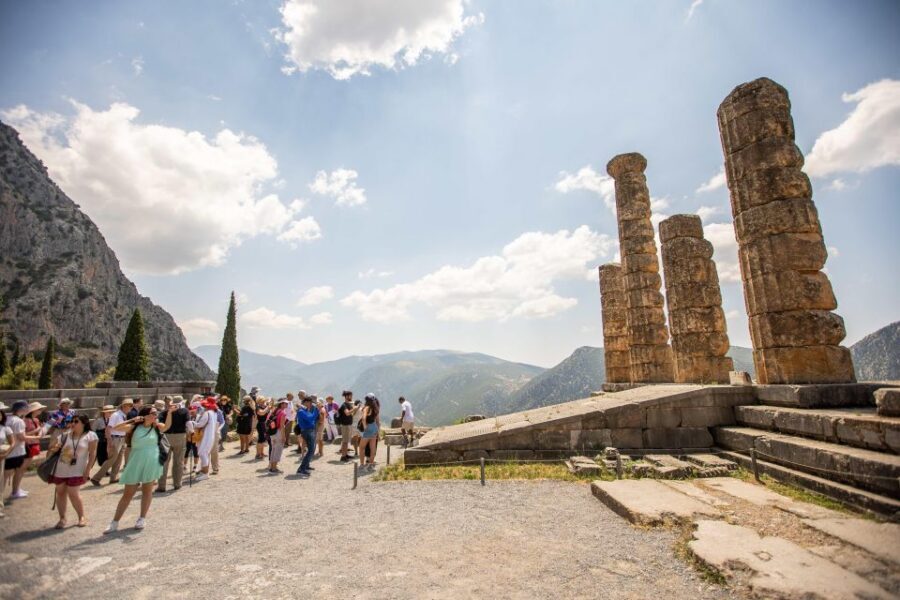
This is one of those Greek trips that feels efficiently “made for first-timers,” but it doesn’t feel rushed in the way some busy tours do. The route is built like a story: myth and healing at Epidaurus, power and empire at Mycenae, glory and ritual at Olympia, sacred prophecy at Delphi, then spirituality and stone-clinging monasteries at Meteora.
The value is in the package. You’re not just getting transport and a list of stops. You’re getting entrance fees, a live guide, and two meals a day (breakfast and dinner), which removes a lot of on-the-ground decision fatigue. When a day starts with an ancient site and ends with a hotel in a good spot near your next objective, it’s easier to enjoy the moments instead of managing the logistics.
And yes, the driving days are real. You’ll cross major stretches of Greece, including the Corinth Canal area early on and later the Rio–Antirrio bridge area. If you know you get restless on long coach rides, bring something to make those hours easier: music, a light book, and a plan for water and snacks, since lunch isn’t included and the bus won’t replace meals.
You can also read our reviews of more tours and experiences in Athens
Day 1: Epidaurus Theatre, Nafplio Break, and Mycenae’s Agamemnon
Day 1 sets the tone with a classic combination: a famous ancient sanctuary, a coastal break, and one of the most important archaeological power centers in Greece.
Corinth Canal to Epidaurus: Apollo’s world meets healing
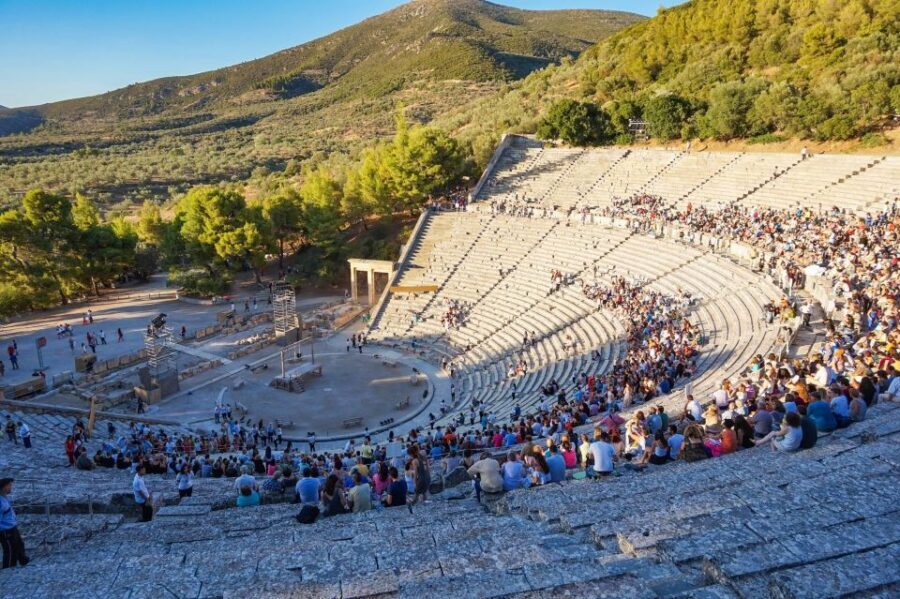
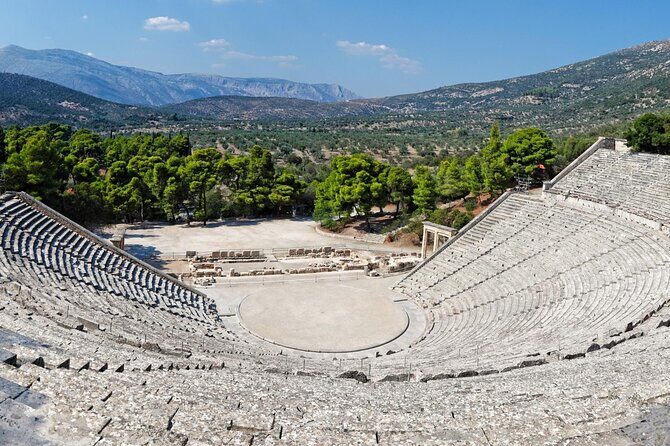
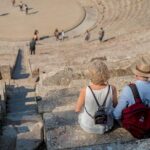
You start with a drive that takes you along the Corinth Canal before reaching Epidaurus, linked in Greek tradition with Asclepius—often described as Apollo’s son. You’ll visit the ancient theatre, famous for symmetry and exceptional acoustics. This is the kind of stop where the guide’s narration really helps. Without context, it’s just stone seats and a stage. With context, you start noticing how design and ritual were built together: sightlines, the shape of the space, and the feeling that voices mattered.
If you want the full effect, don’t rush to the first available spot. Move to a place where you can comfortably watch and listen. And expect walking on uneven ground around ancient structures.
Nafplio: a short seaport pause that resets your brain
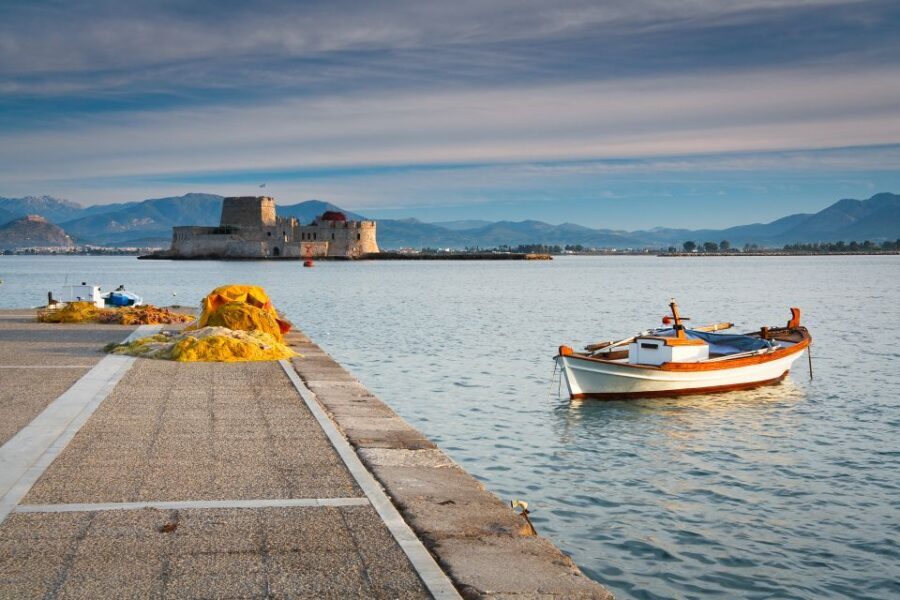
Next is Nafplio for a short stop. This isn’t a full town immersion, but it gives you what tour days often need: a break from the heat of ruins and a chance to get your bearings. Nafplio also acts like a gentle transition from the pure ancient focus of the day into the next big historical site.
Mycenae: the ruins that still feel like control
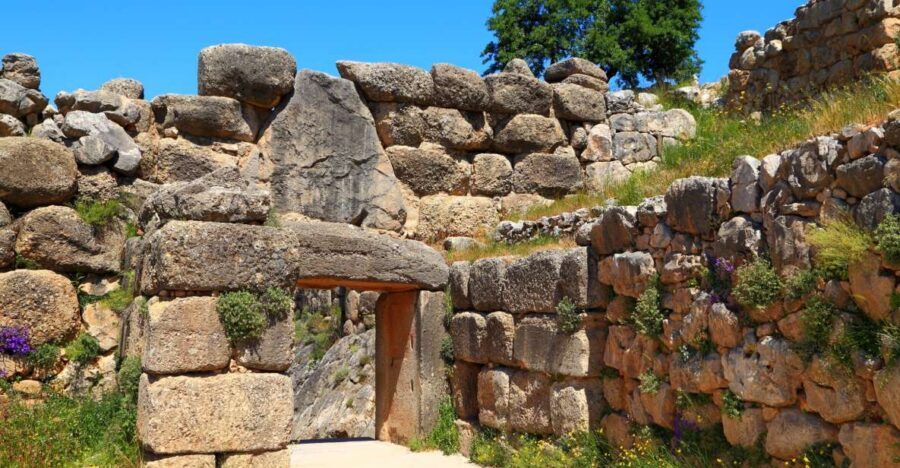
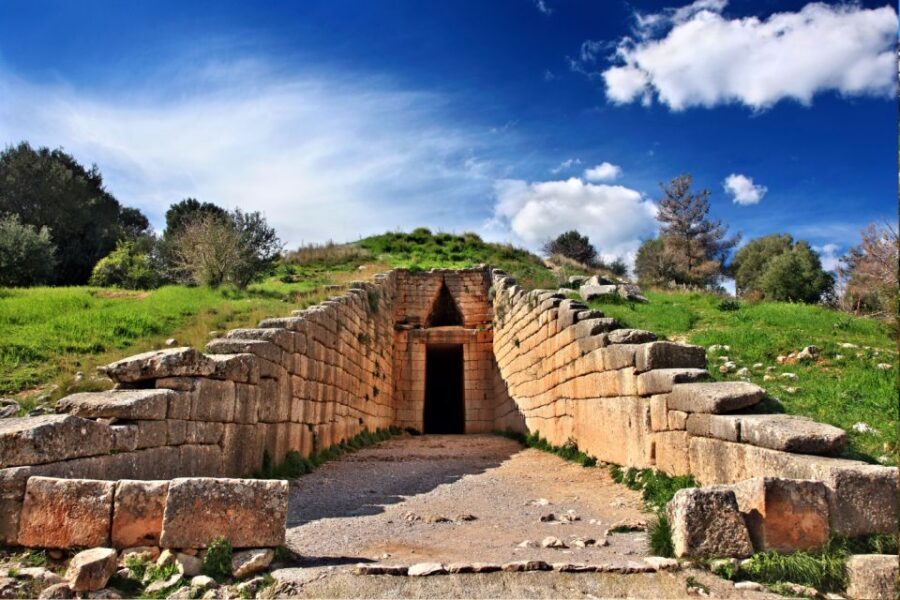
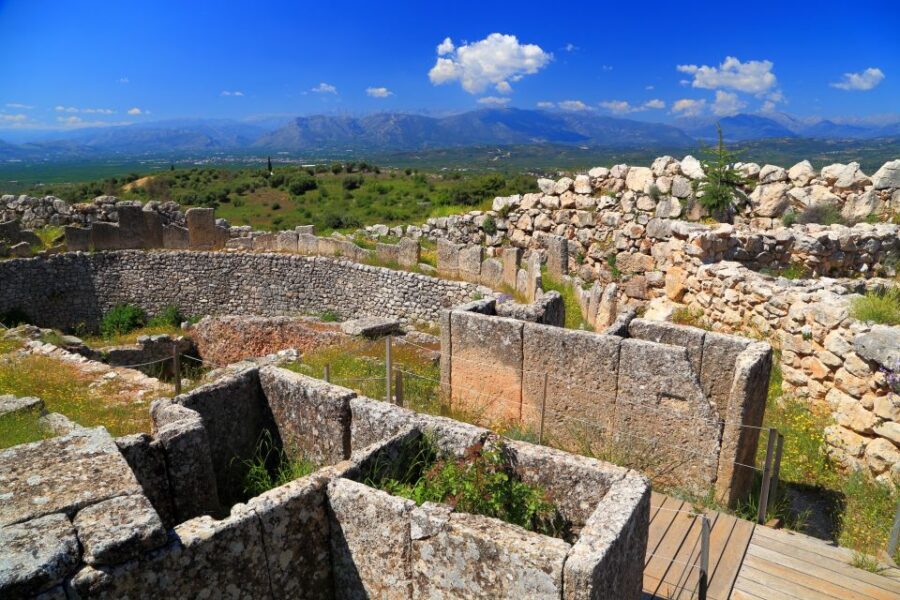
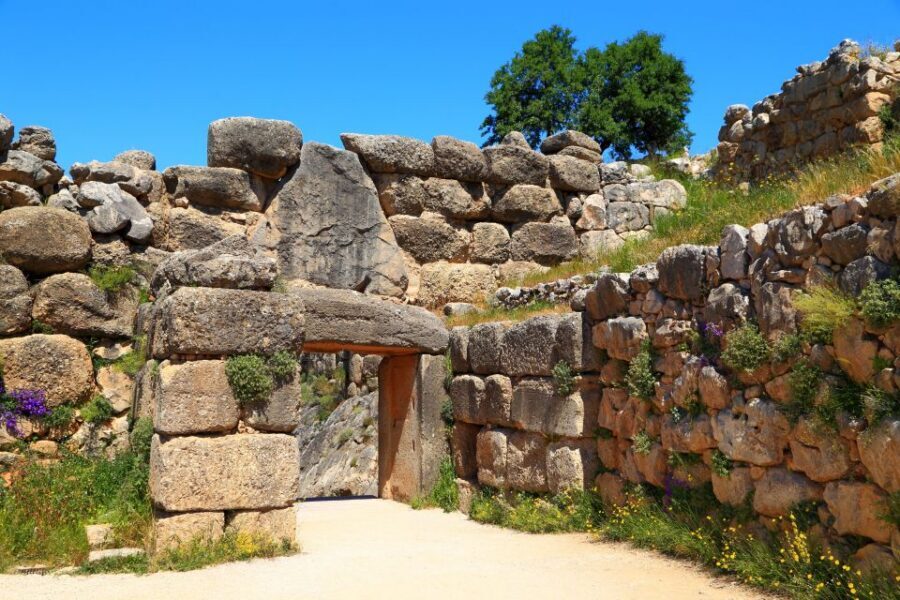
In the afternoon you head toward Mycenae, arriving via the plain of Argos area. Mycenae was once a major center of Greek civilization, and it’s home to the Tomb of Agamemnon. Even if you’re only loosely familiar with the stories, this is a place that gives you a physical sense of authority—stone structures that suggest political weight, not just “old things.”
One practical note: Mycenae is best when you slow down in spots rather than sprint from highlight to highlight. If you do that, you’ll get more out of the shapes, walls, and vantage points.
- All Day Cruise -3 Islands to Agistri,Moni, Aegina with lunch and drinks included
★ 5.0 · 4,958 reviews


Your night: Olympia area
You finish Day 1 with an overnight in Olympia. That matters because it makes Day 2 feel like a continuation, not a scramble.
Day 2: Olympia’s Temples and the Rio–Antirrio Bridge to Delphi
Day 2 is all about ritual and sacred sites, plus one of Greece’s most modern engineering moments on the travel portion.
Olympia: where athletes and gods shared the spotlight
Olympia is the home of the Olympic Games, and it earns its fame. You’ll explore the temples of Hera and Zeus and stand among key spaces tied to worship. There’s also the altar of the Olympic Flame, connected to sacrifices made in the ancient period. This is where the tour format works especially well. Your guide can help you connect what you’re seeing—temples, altars, and museum objects—with why it mattered.
The museum is part of the reason the day feels complete. Standing in a sacred site is powerful, but seeing artifacts and learning how they were used turns “cool ruins” into something you can explain to a friend.
The modern detour: Patras, Rio, and the bridge
After Olympia you’ll travel via Patras to Rio, crossing the state-of-the-art Rio–Antirrio bridge. Then you’ll pass Nafpaktos and take a coastal road toward Delphi. This break from ancient stone can feel like a breather, even if it’s still travel time.
Coastal road to Delphi: the navel of the world
Delphi is often described in Greek thinking as the navel of the world. You’ll arrive and then head back for an overnight stay. The timing is smart: Delphi works best when you’re not trying to fit it into a single quick afternoon. With another day later, you can take it in at a calmer pace.
Evening near Delphi: Arachova as your mountain reset
The day includes a trip to Arachova, a mountain village near Delphi, before returning. It’s not a random stop. It helps you feel the shift from sacred valley to mountain air, and it gives you a change of scene before another night in the Delphi area.
Day 3: Delphi Morning Energy and Kalambaka’s Meteora Viewline
Day 3 balances sacred atmosphere with “future-day payoff.” You start in Delphi with a more relaxed morning, then shift to Kalambaka, where Meteora is always in the backdrop.
Delphi in a slower rhythm
In the morning you’ll take in the atmosphere of Delphi as a center of Greek worship, described as a place where heaven and earth meet. This is one of the best parts of the itinerary because Delphi isn’t just one thing. It’s a complex of sacred areas, and the meaning changes as you move between spaces. With a live guide, you get help interpreting what you’re looking at, and the pacing feels more natural than if you had only a single visit.
Travel to Kalambaka: where monastery time starts
In the afternoon you depart for Kalambaka. Kalambaka is overlooked by Meteora, so even before you visit the monasteries, you’re starting to feel where the day is going. Your hotel night here is important: it positions you for an early start and gives you time to rest before climbing up to the monasteries.
If you care about photos and views, Kalambaka is the kind of place where the light changes your perception of the stone world above.
Day 4: Meteora Monasteries, Byzantine Icons, and the Return Past Leonidas
Day 4 is the finale with real atmosphere. It’s also the day with the most “dress for the moment” rules, because monasteries have requirements.
Meteora: Eastern Orthodox monasteries built on sandstone pillars
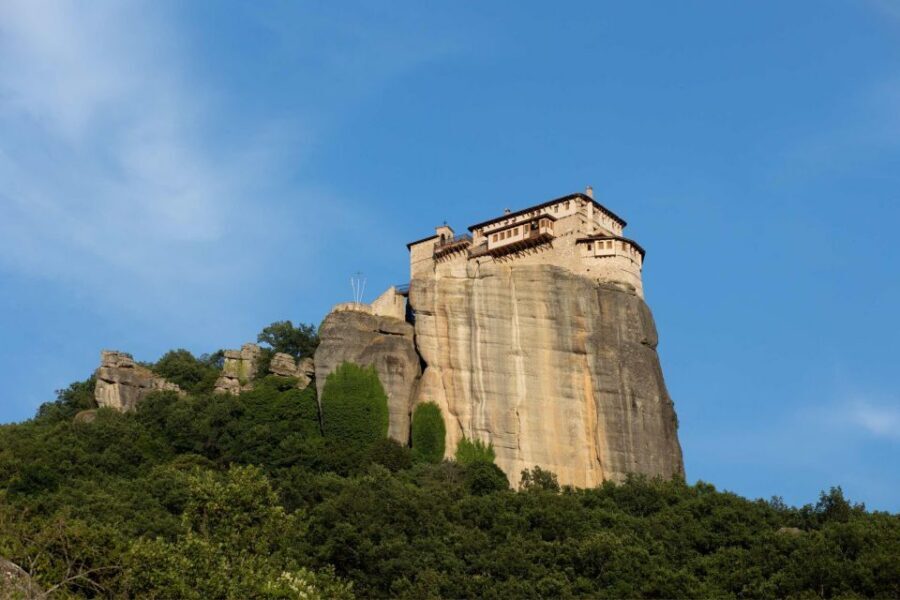
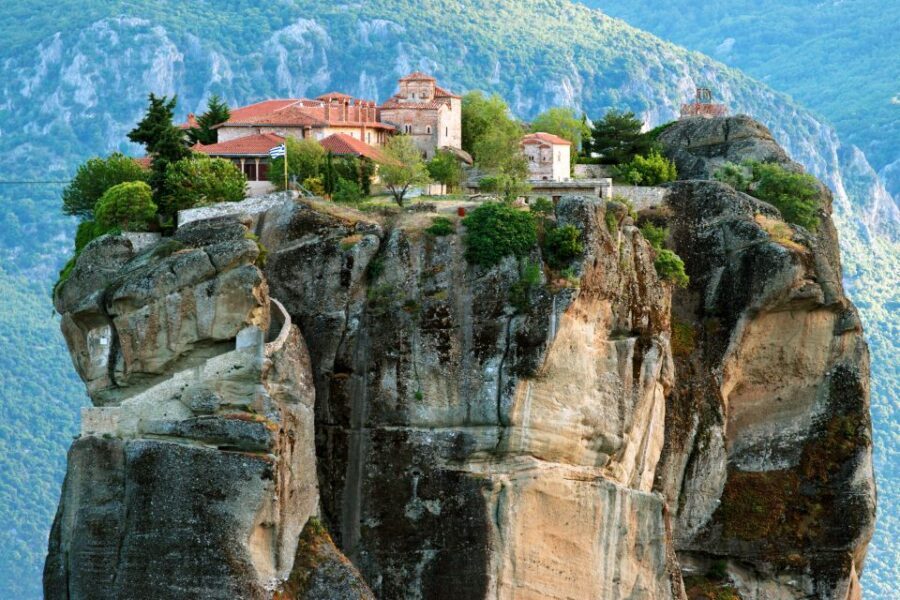
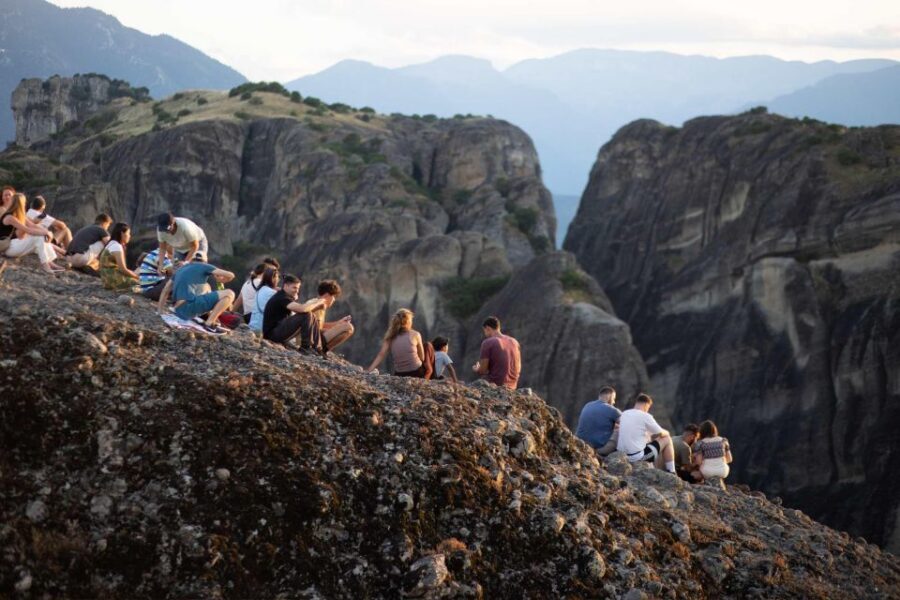
You’ll travel up to Meteora to visit the most important complex of Eastern Orthodox monasteries in Greece. These monasteries are built high on six sandstone pillars overlooking Kalambaka. The views aren’t just scenic background. They’re part of the site’s logic—why this place was chosen, how isolation works, and why stone was a lifeline.
Plan your visit with clothing in mind. Appropriate attire is required: no short skirts, and long-sleeved tops are requested for female visitors. You’ll also want comfy walking shoes because “high viewpoint” sites can still mean uneven steps.
Optional icon factory stop: a quieter add-on
On the return trip there’s an optional visit to a factory of Byzantine style icons. If you’ve been feeling overwhelmed by the speed of ancient history and just want a human-scale craft moment, this can be a satisfying counterbalance.
Back toward Athens: Leonidas monument and late afternoon arrival
You’ll pass the monument of Leonidas (King of Sparta) and then continue back to Athens, finishing the tour in the late afternoon. That late finish matters because it’s a full-circle feeling: you started with ancient Greek myth and rituals, and you end with a final Sparta reference before your return.
Comfort, Hotels, and How the Meal Plan Really Feels
This trip is built around a luxury A/C bus and regular hotel check-ins, which is a big part of why the pacing works. You’re not stuck improvising meals at each stop, since breakfast and dinner are included. That said, lunch isn’t included, so you should expect a snack strategy for the busiest driving stretches.
Hotel quality depends on whether you select 3-star or 4-star options, and there can be differences in the towns where you sleep. Some people report wonderful stays with nice food and views, and a couple mention pools at certain hotel choices. Even when the hotel is simply “fine,” being able to shower, eat dinner, and regroup matters because the next day starts with another major site.
The bus itself seems designed for long days: air conditioning and chargers are specifically mentioned in feedback. That might sound minor, but on a route with big travel legs, it’s the difference between arriving fresh and arriving grumpy.
Price and Value for $742 a Person
At $742 per person for four days, the math only makes sense if the package is doing what it’s supposed to do: saving you time, paying entrance fees for you, and reducing planning stress.
Here’s what you get that’s typically expensive or time-consuming on your own:
- Entrance fees for multiple major sites
- A tour guide for interpretation across several locations
- Luxury A/C bus transportation for the full route
- Overnight hotels in 3-star or 4-star options
- Breakfast and dinner daily
What’s not included (so it won’t surprise you at the end):
- Lunch and drinks
- Personal expenses
- Hotel accommodation tax paid directly to the hotel: €10 per room/per night for 4-star, €5 per room/per night for 3-star
In other words: you’re paying for convenience plus guided context. If you hate wasting a day booking tickets, figuring out routes, and then discovering you chose the wrong museum timing, this price can feel very fair. If you’re the type who likes full independence and slow wandering with no coach schedule, you may prefer a DIY plan—because you will sometimes feel the squeeze of set departure times.
What to Watch For: Shorts Rules, Walking Pace, and Bus Time
This tour has a few constraints that can affect your day-to-day experience.
First: clothing. Shorts are not allowed. And for monasteries, no short skirts; long sleeves are requested for female visitors. If you show up in the wrong outfit, you risk either losing time or being asked to cover up.
Second: walking. Ancient sites are not flat and not designed for slow rolling sidewalks. Wear shoes you trust. You’ll likely move over uneven surfaces at Epidaurus, Mycenae, and Delphi.
Third: the bus. You’ll travel between regions and across major infrastructure. The advantage is comfort, but the cost is time. One possible frustration is that driving days can reduce how long you get at each site, and lunch isn’t included to fill the gaps. If you handle schedule well, you’ll probably love the “hit the highlights” feel. If you prefer long site stays, plan to adjust your expectations.
Fourth: accessibility. The tour is not suitable for wheelchair users.
Who Should Book This Tour (and Who Might Prefer Another Plan)
You’ll likely be happy on this tour if you want:
- A single guided loop that covers Epidaurus, Mycenae, Olympia, Delphi, and Meteora
- A guide-led explanation that turns ruins into stories you can follow
- Hotel convenience plus breakfast and dinner so you can focus on sites
You might want to think twice if:
- You get annoyed by long coach days and fixed departure times
- You’re the kind of visitor who wants to linger for hours inside one museum or one sanctuary
- You want full flexibility around lunch and snacks during travel
Also, if Meteora doesn’t interest you much, the last day could feel like a big emphasis on monasteries. But if you do want to see how Eastern Orthodox faith shaped high-stone life, the day is usually the highlight.
Should You Book the Explore Ancient Greece 4-Day Tour?
I think this is a smart booking for first-time Greece visitors who want maximum payoff with minimal planning. The combination of major sites plus a live guide plus comfortable bus travel makes the days feel usable, not overwhelming. And the strong emphasis on Epidaurus’s theatre experience and Meteora’s elevated monasteries gives you two moments that many Greece trips never manage to deliver so clearly.
Book it if you want a structured route, solid site interpretation, and hotels that take care of the “where do we sleep” question. Skip it if you’re chasing total freedom and want to spend more time in fewer places.
If you do book, do yourself a favor: pack for the monastery dress rules, wear reliable shoes, and accept that part of the deal is coach time. Then you’ll be free to enjoy the ancient world as a sequence, not a pile of random ruins.
FAQ
What ancient sites does this 4-day tour include?
It includes stops at Epidaurus, Mycenae, Nafplio, Olympia, Delphi, and Meteora.
Are meals included?
Breakfast and dinner are included. Lunch and drinks are not included.
Is hotel pickup included in Athens?
Yes. Pickup is included from the majority of centrally located hotels in Athens and happens about 1 hour before departure. You can also meet at the tour supplier’s office 15 minutes before departure.
What type of transportation is used?
You’ll travel by luxury A/C bus.
What clothing is required for the Meteora monasteries?
Appropriate clothing is required. No short skirts may be worn, and long-sleeved tops are requested for female visitors. Shorts are not allowed.
Is there an extra hotel accommodation tax?
Yes. The hotel accommodation tax is paid directly to the hotel: €10 per room/per night for 4-star hotels and €5 per room/per night for 3-star hotels.
Is this tour wheelchair accessible?
No. It is not suitable for wheelchair users.

More 4-Day Experiences in Athens
More Tours in Athens


More Tour Reviews in Athens
- All Day Cruise -3 Islands to Agistri,Moni, Aegina with lunch and drinks included
★ 5.0 · 4,958 reviews