REVIEW · ATHENS
Acropolis Skip The Line Private Tour with Licensed Expert Guide
Book on Viator →Operated by WARMPENGUIN · Bookable on Viator
Athens feels calmer with the right guide. This private Acropolis skip-the-line tour is built around a licensed expert who keeps the focus on what you’re actually standing in front of, from Mycenean-era walls to the big temple icons. I also like that you meet at a clear spot near the Acropolis Metro stop, so you’re not hunting around once you arrive.
Two things I especially like: you get myths with structure (not random storytelling), and you’re guided at a pace that helps you stop, look, and take photos without feeling like you’re being pushed through. With the Golden-Light option, the timing adds an extra layer, aiming for that low-light drama over the plateau.
One thing to consider: the entrance tickets aren’t automatically included unless you pick the Including Admission option, and the site involves uphill walking, uneven steps, and heat. If that’s a factor for you, plan on breaks and bring what you need.
In This Review
- Key Highlights You’ll Care About
- Meeting at Makrygianni Street: Start Fast, No Acropolis Guessing
- The Acropolis Wall and the Big Picture That Makes Temples Make Sense
- Theatre of Dionysus: The World’s Oldest Stage Feeling Real
- Propylaea and Athena: The Gateway Scene Visitors Miss on Their Own
- Temple of Athena Nike: A Small Temple With Big Location Value
- Parthenon Time: How to Actually See the Masterpiece
- Erechtheion and the Statue Stories You’ll Want to See Again
- Herod Atticus Odeon: When Ancient Sound Still Carries
- Ending in the Acropolis: More Photos, Less Rushing
- Golden-Light vs Tailored 3-Hour: Choose Your Acropolis Mood
- The Acropolis Golden-Light Tour (90 minutes)
- The Acropolis Tailored 3hr Tour (plus one more site)
- Price and Value: What You Pay For (and Why It’s Not Just the Sticker)
- Guide Style That Actually Changes Your Day
- Who Should Book This Acropolis Private Tour
- Should You Book This Tour?
- FAQ
- Where do we meet the guide?
- How long is the Acropolis tour?
- Are admission tickets included?
- What are the booking options?
- Is this a private tour?
- Is skip-the-line access always included?
Key Highlights You’ll Care About

- Licensed official expert leading you through the Acropolis with permission to be there
- Start point is easy to find: Makrygianni 7 near the Acropolis Metro stop (close to the main entrance)
- A smart route that hits the Theater of Dionysus, Propylaea, Athena Nike, Parthenon, Erechtheion, and more
- Golden-Light timing designed for afternoon light effects on the plateau (90 minutes)
- Optional 3-hour tailored extension to your pick: Acropolis Museum, Ancient Agora, or Plaka (default is Plaka)
- Comfort in crowds: the guide handles navigation and makes shade/rest stops when needed
Meeting at Makrygianni Street: Start Fast, No Acropolis Guessing
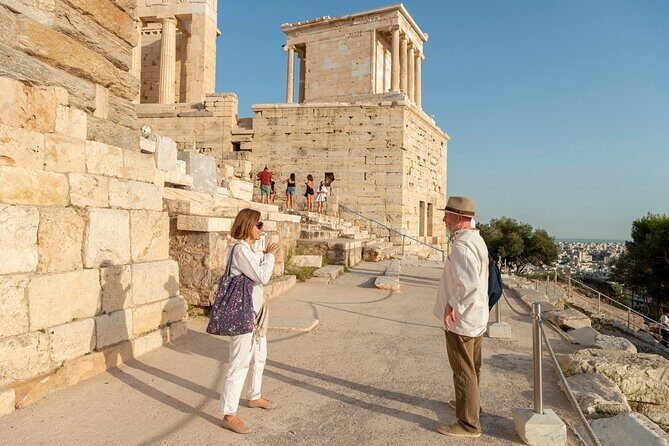
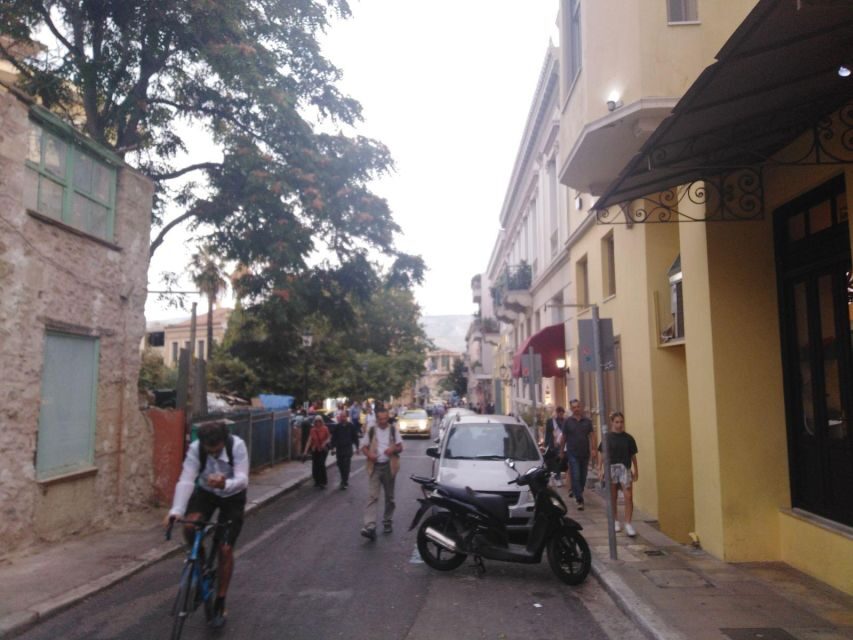
The biggest “win” on an Acropolis visit is being able to start reading the site immediately. Here, you meet your guide at Makrigianni 7 on Makrygianni Street, by the Acropolis Metro stop, just around the corner from the main entrance. It’s the kind of meeting point that helps you get oriented fast, especially if it’s your first day in Athens.
From that area, you also get a useful first viewpoint: the surrounding wall of the Acropolis built by earlier Mycenean civilization. Instead of jumping straight to the famous temples, the guide frames the whole place as a real setting people lived around, defended, and used over time.
And because this is a private tour, you’re not stuck waiting for a slow-moving group or sprinting to keep up. That matters when the ground is uneven and the walking starts right away.
You can also read our reviews of more guided tours in Athens


The Acropolis Wall and the Big Picture That Makes Temples Make Sense
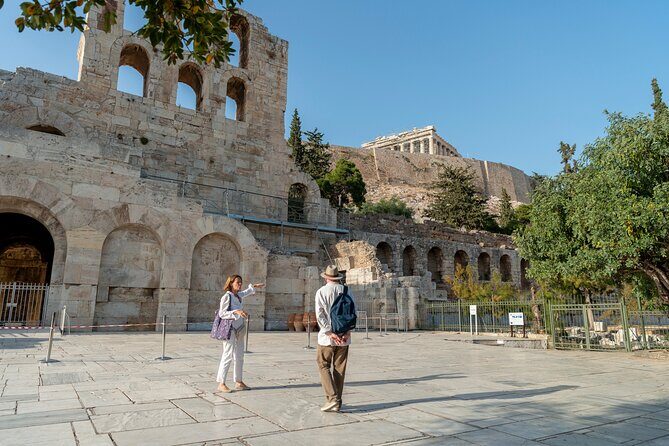
Before you climb, you get the context that usually takes visitors hours to piece together from guidebooks and maps. The guide explains why the Acropolis mattered in ancient Greek life and what role it played as a cultural and civic center. This is one of those details that sounds abstract until you’re looking at the temples and realizing they connect to specific stories, ceremonies, and political pride.
You’ll also hear the overview of the major monuments ahead. That helps you understand what you’re seeing at each stop, instead of treating every structure like a separate trivia question. It’s an efficient way to build a mental map before you’re surrounded by crowds.
Note: admission isn’t always included. If you choose the option that does include tickets, you’ll roll into the monuments with fewer steps. If you don’t, you’ll need to handle your own entry timing, and the tour itself is still designed to be smooth.
Theatre of Dionysus: The World’s Oldest Stage Feeling Real

One of my favorite “first stops” here is the Theatre of Dionysus—because it breaks the usual temple-only mindset. This theater is in good preservation and sits in a natural amphitheater on the slopes of the Acropolis. The guide points out what that placement means: the stage wasn’t just an isolated building, it was part of a dramatic hillside setting where audiences could see and hear.
It’s also worth remembering the scale: the theater is described as having an estimated capacity of 25,000 and dating to the 4th and 5th century BC. Your guide connects that to why so many famous ancient Greek plays mattered. Even if you’ve never read a Greek tragedy, you’ll feel how theatrical this place was by design.
This stop is short, but it’s high value. It helps you understand the Acropolis as a living stage for ideas—not only a stone museum.
Propylaea and Athena: The Gateway Scene Visitors Miss on Their Own
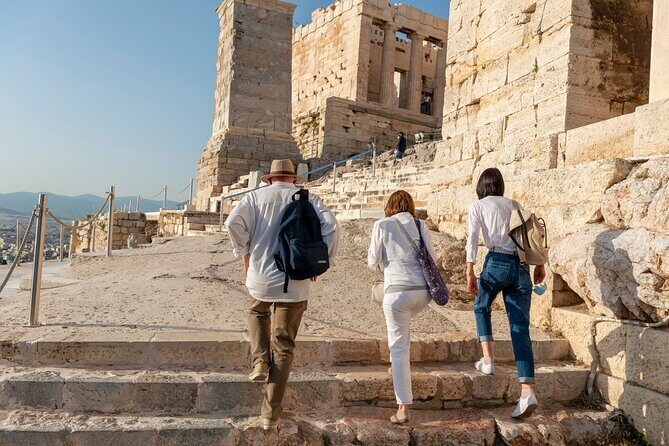
Next comes the climb toward the monumental gateway, the Propylaea, which is essentially the ceremonial “arrival” point to the Acropolis interior. You’ll start seeing the temples as you ascend, and your guide explains what incoming visitors would have noticed visually and symbolically.
One of the best details here is the story tied to the bronze statue of Athena. As legend goes, the tip of her upheld spear could be seen by incoming ships in sunlight. That’s the sort of myth that sounds like decoration until you understand what Athens wanted travelers to feel long before they stepped on the steps.
If you’re the type who likes a clear narrative arc, Propylaea is perfect. You’re moving from outside city energy into a space designed for worship, ceremony, and identity.
Temple of Athena Nike: A Small Temple With Big Location Value
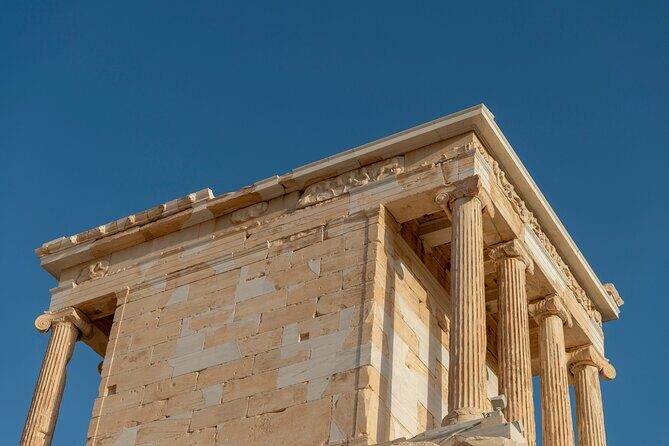
The Temple of Athena Nike is an Ionic Classical temple dedicated to Athena, built around 420 BC. What makes this stop practical is where it sits: the guide has you look at how it overlooks the city, so you get a strong sense of the Acropolis as a command-and-prayer vantage.
It’s largely restored, so the visual impact can feel clearer than some of the more worn parts of the site. Your guide explains the basics of what to focus on so you’re not just checking a box.
This is also a good moment to catch your breath. The tour’s timing works well if you want a steady rhythm instead of long stretches where you’re only climbing.
You can also read our reviews of more private tours in Athens





Parthenon Time: How to Actually See the Masterpiece
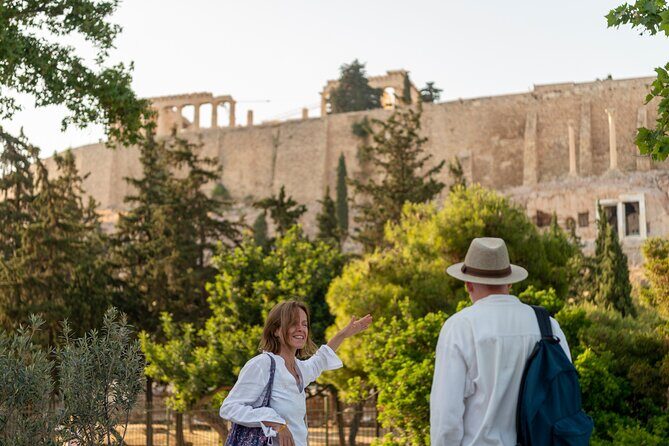
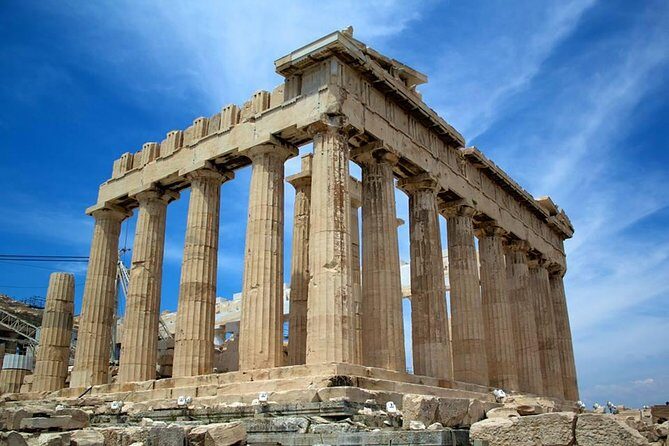
The Parthenon is the anchor stop for a reason. Your guide takes time here and gives you an overview of its construction, mythology, and historical importance. The goal isn’t just facts. It’s teaching you what to look for as the building fills your field of view.
The Parthenon also becomes the place where the whole route starts clicking. Earlier stops like Dionysus and Athena’s gateway context help you interpret what the Parthenon represented as the heart of ceremony and worship in Athens during the Golden Age.
Plan on this being your most visually intense moment. The tour includes about a 20-minute stop at the Parthenon, and if you want photos, this is where your guide’s timing and positioning help most. If the site is busy, having someone manage flow through the crowd can make a huge difference.
And when the climb and heat build, this stop can also function as a reset: take in the view, check your bearings, and remember you don’t have to do everything at once.
Erechtheion and the Statue Stories You’ll Want to See Again
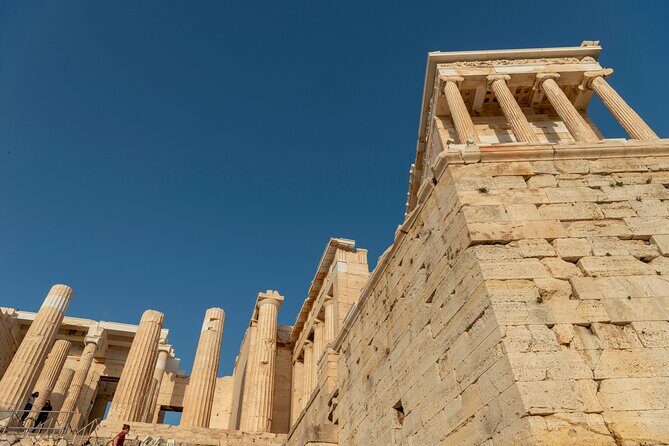
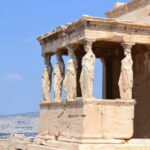
Next is the Erechtheion, dedicated to both Zeus and Athena. It’s described as the second largest temple on the Acropolis, and your guide focuses on its mythology and standout features. This is a great place to slow down because the Erechtheion’s famous statues and elements are exactly the kind of detail that disappear when you’re just wandering.
The tour also links what you see on site to what you can view in the museum. That matters because the Acropolis Experience is more than walking around outdoors—it’s also about understanding what fragments mean and why they’re displayed the way they are.
In real terms, this kind of guidance helps you avoid a common mistake: staring at a structure without learning what to notice. With the guide’s cues, you’ll spend your attention where it counts.
Herod Atticus Odeon: When Ancient Sound Still Carries
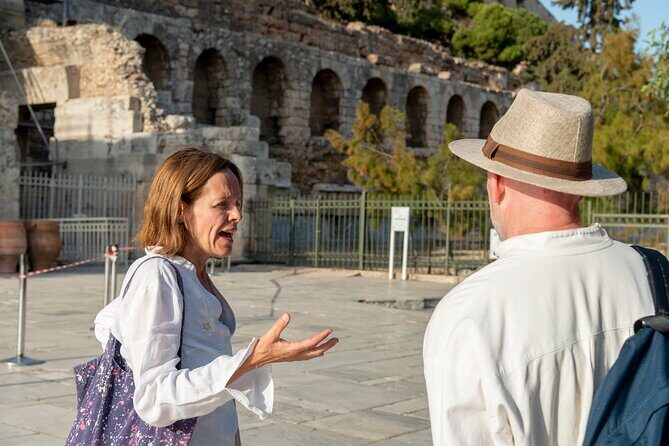
The Herod Atticus Odeon brings you to the later period of the site. Built in AD 161 in memory of his wife, it’s a marble amphitheater that continues as a working theater to the present day.
Your guide uses this stop to connect ancient and modern use. The fact that it still hosts performances adds an emotional layer to your visit. Even if you’re just standing there, it’s easy to imagine how sound might carry and how the crowd would gather.
This stop is short, but it’s a memorable punctuation mark after the temple focus. It also gives you a quick win: a different kind of structure, different stories, and a slightly different viewing angle.
Ending in the Acropolis: More Photos, Less Rushing
At the end, you don’t get yanked away immediately. Your guide ends the standard Acropolis tour inside the Acropolis so you can take in views and photos. If you choose a continuing option to a second site, the tour flows onward with your guide and ends at your additional stop instead.
This is one of the practical perks of a private format. You get the structure while you’re learning, then you get time to just enjoy. It helps a lot if you want the skyline photos without trying to squeeze them in while someone else’s group is moving ahead.
A useful note: the Golden-Light and the Acropolis-only options are designed to end inside, giving you extra time for the light and scenery.
Golden-Light vs Tailored 3-Hour: Choose Your Acropolis Mood
This company offers two main ways to shape your time.
The Acropolis Golden-Light Tour (90 minutes)
If you want the classic “afternoon drama,” pick the Golden-Light Tour. It’s timed for the magical light effect in the low-light plateau area. The point isn’t just aesthetics. That lighting changes how you read texture, shape, and distance across the monuments.
In practice, 90 minutes is also a smart choice if you’re arriving from a long flight or you know you’ll feel fatigue on uneven steps. You’ll still hit the key monuments, but without turning the day into an endurance test.
The Acropolis Tailored 3hr Tour (plus one more site)
If you want more depth or variety, choose the Tailored 3hr Tour. It extends the Acropolis and adds a second site of your choice: Acropolis Museum, Ancient Agora, or Plaka. If you don’t pick in advance, Plaka is the default.
This longer option can be great for first-timers who want a broader Athens mix: you see the monuments on the hill, then you move into the city side to connect the stones with daily streets and museum context.
One caution: extensions take energy. If heat, stairs, or mobility are concerns, you’ll want to factor in breaks and hydrate.
Price and Value: What You Pay For (and Why It’s Not Just the Sticker)
The published price is $188.26 per person with an Acropolis-focused experience listed at about 2 hours overall. On top of that, admission works differently depending on your booking choice.
Here’s the part I’d plan around:
- Tickets are included only if you choose the Including Admission option.
- Otherwise, entrance fees aren’t included, and the tour notes €35 per person for the admission fee when tickets are included.
- The tour also says that skip-the-line tickets can still be arranged by request for an extra cost, depending on your chosen option.
So is it worth it? For many people, yes—because the value is not just “getting in faster.” It’s having a licensed guide who helps you interpret what you’re looking at, manages the flow of crowds, and can point out details that are easy to miss when you’re on your own.
In the reviews, the recurring theme is that the guide makes the experience feel personal and smooth, even when it’s hot and crowded. I’ve also seen comments about guides finding shade, slowing down for water, and adjusting the pace for older guests and families—exactly the kind of practical help you want to pay for.
If you’re traveling solo and you want the bare minimum, you might skip a guided option. But if you want to understand the Parthenon, not just photograph it, a private licensed guide tends to be money well spent.
Guide Style That Actually Changes Your Day
Private tours sound good in theory. The real difference is how the guide works with the site’s physical reality: hills, stairs, uneven ground, and thick crowds.
In the feedback, guides like Vicky, Mondo, Katarina, Marina, Becky, and Anna come up again and again. The consistent patterns:
- They keep you engaged and moving at a pace that fits your group.
- They make strategic stops instead of walking past details you’d miss.
- They help with photos and navigating through crowds.
One review-style detail I’d treat like a pro tip: bring an umbrella for shade if you can. Even with a great guide, the Acropolis sun can be intense. Having someone who actively finds shady spots and builds in rest breaks is a real quality-of-life upgrade.
Also, communication matters. The tour mentions a whisper communication system for groups of 6 or more. If you’re in a larger party, that can help you hear clearly without straining in the busy sections.
Who Should Book This Acropolis Private Tour
This is a strong fit if:
- You’re visiting Athens for the first time and want a guided “Acropolis framework.”
- You care about history tied to stories, myths, and monument meaning, not just random dates.
- You dislike racing through ruins or being pushed by a big group.
- You want an English-speaking licensed guide with official access.
It might be less ideal if:
- You hate walking uphill and handling stairs, even with breaks.
- You want a super-cheap option where you only need a map and a ticket.
If you’re traveling with teens, parents, or mixed ages, the tour specifically notes guides are family friendly and adapt the pace and level of detail. That flexibility is often the difference between everyone enjoying the day versus only one person enjoying it.
Should You Book This Tour?
If you want the Acropolis to make sense—especially the Parthenon and the temples’ connections—you’ll likely be happy you booked. The biggest reason is that you’re not just touring stone. You’re getting guided interpretation at each key stop, with help navigating crowds and time to take photos.
My call: book it if you’re budgeting for a first-rate Athens experience and want a licensed guide to manage both the history and the flow. If admission cost is your main concern, double-check whether you selected the option that includes tickets, and plan for that €35 per person where applicable.
FAQ
Where do we meet the guide?
You meet at Makrigianni 7, Athina 117 42, near the Acropolis Metro stop, close to the Acropolis main entrance.
How long is the Acropolis tour?
The Acropolis tour is listed at about 2 hours. The Golden-Light option is 90 minutes, and the Tailored option extends to 3 hours.
Are admission tickets included?
Admission fees and tickets are included only if you choose the Including Admission option. For other options, the fee is not included (listed as €35 per person when tickets are included).
What are the booking options?
You can choose the Acropolis Golden-Light Tour (90 minutes focused on afternoon low-light effects) or the Acropolis Tailored 3hr Tour, which adds a second site you select (Acropolis Museum, Ancient Agora, or Plaka; Plaka is the default if you don’t choose).
Is this a private tour?
Yes. It’s a private tour/activity, and only your group participates.
Is skip-the-line access always included?
Skip-the-line tickets are included only when you select the Including Admission option. For other options, skip-the-line tickets can be requested by request for an extra cost.

More Guided Tours in Athens

More Tours in Athens


More Tour Reviews in Athens
- All Day Cruise -3 Islands to Agistri,Moni, Aegina with lunch and drinks included
★ 5.0 · 4,958 reviews