REVIEW · ATHENS
Private Biblical Tour Ancient Corinth & Isthmus Canal from Athens
Book on Viator →Operated by Ancient Greece Tours & Transfers · Bookable on Viator
Paul’s world feels close today. This private day trip links the engineering of the Corinth Canal with the lived reality of Apostle Paul’s Corinth, using a driver-guide who connects biblical themes to what you see on the ground. I especially like the hotel pickup convenience and the way the route flows without rushing you between meaningful stops.
I also love the chance to climb Acrocorinth for that hard-won panorama—plus the walkable Ancient Corinth areas tied to Paul’s story. One drawback to plan for: it’s a long 8-hour day, and Ancient Corinth site and museum entrance aren’t included (plus the Acrocorinth climb is steep and rocky, so proper shoes matter).
In This Review
- Key things that make this tour worth your time
- Private biblical Corinth and the Isthmus Canal: how the day hangs together
- Getting from Athens to Corinth without losing the morning
- Isthmus Canal and the gateway to the Peloponnese: where geography gets biblical weight
- The Corinth Canal plus Ancient Diolkos: trade tech that changed everything
- Acrocorinth: the steep climb that makes the story make sense
- Hadjimoustafa spring and the Pegasus story: a stop that adds texture
- Ancient Corinth churches, mosaics, and the Paul-to-Corinth storyline
- Ancient Corinth archaeological site and the Bema area: where preaching connects to the setting
- Archaeological Museum of Corinth: artifacts across Greek, Roman, Byzantine, and Ottoman eras
- Temple of Apollo, Roman Agora, and the sense of everyday city life
- Lunch time in Ancient Corinth or by the sea: choosing your pace
- Ancient Port of Kenchreai (Cenchreae): Paul sails again
- Price and value for a private, Paul-focused day
- Who should book this (and who might want a different option)
- Should you book this Ancient Corinth and Isthmus Canal tour?
- FAQ
- How long is the Ancient Corinth and Isthmus Canal private tour?
- Where does the pickup happen?
- Is this tour private or shared?
- Are entrance fees included for Ancient Corinth and the museum?
- Is a licensed guide inside the museum and site included?
- Is lunch included?
- What’s included in the vehicle during the day?
- FAQ
- Can I cancel for free?
- What language is the tour in?
- Is there a mobile ticket?
Key things that make this tour worth your time
- Hotel-to-door pickup in Athens (or Corinth/port options) means less stress before you even start
- Air-conditioned, Wi-Fi private vehicle keeps the day comfortable and flexible
- Corinth Canal + Diolkos engineering shows how trade shaped the ancient city’s power
- Acrocorinth viewpoints give you the best sense of why Corinth could defend itself
- Ancient Corinth stops tied to Paul include the church areas, mosaics, and the Bema area
- Kenchreai (Cenchreae) port brings Paul’s travel story back to the sea
Private biblical Corinth and the Isthmus Canal: how the day hangs together
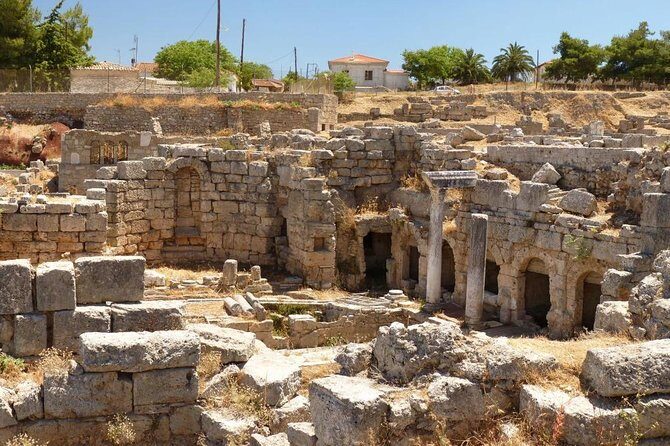
This is one of those routes where the “biblical” part doesn’t float in the air. You start with the land bridge—the narrow strip of Greece that controlled movement between the Ionian and Aegean seas—and you end with a port town where Paul’s travels connect back to shipping and vows.
The format is simple: you spend your time in the right places, and your driver-guide handles the storytelling. In real life, that matters. It turns a list of ruins and sites into a cause-and-effect day: geography → trade → Corinth’s influence → Paul’s long stay and ministry.
You can also read our reviews of more private tours in Athens
Getting from Athens to Corinth without losing the morning
Most people want to do Corinth while still in Athens, and this tour is built for that. You’re picked up from your Athens hotel, Airbnb, or apartment lobby, then you head out toward the Peloponnese in a private vehicle.
You get the practical stuff too: air-conditioning, Wi-Fi, and bottled water in the car. On an 8-hour day, that isn’t a small detail. It helps you arrive fresher, and it makes the return trip easier after you’ve been walking and climbing.
If you prefer a calmer day, the private setup helps. It’s just your group, and the driver can adapt the flow when you need a restroom break or want a slower pace at a specific stop.
Isthmus Canal and the gateway to the Peloponnese: where geography gets biblical weight
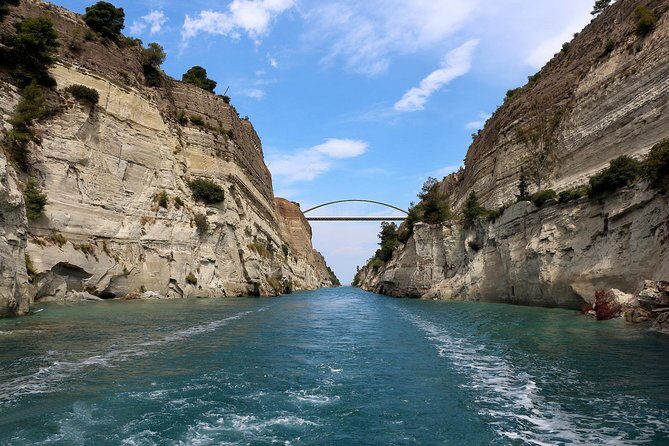
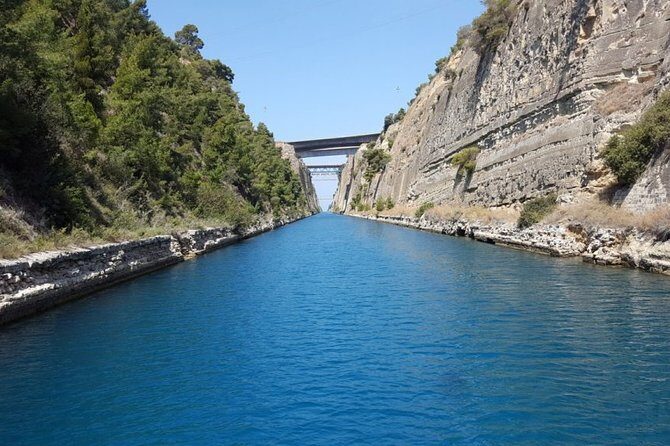
The first “wow” moment is the Isthmus Corinth Canal area. You’ll drive to the canal as the gateway to the Peloponnese, then park and take it in.
A short time here works because the canal is such a clear visual lesson. It’s a 19th-century project, and the point is bigger than sightseeing: the canal played a catalytic role in Mediterranean trade by shortening maritime routes. That sets you up to understand why Corinth mattered so much—ancient and modern alike.
You don’t need to be an engineering fan for this to land. Even a quick stop gives you context for later sites like the Diolkos, where you’ll see how people handled boats before the canal existed.
The Corinth Canal plus Ancient Diolkos: trade tech that changed everything
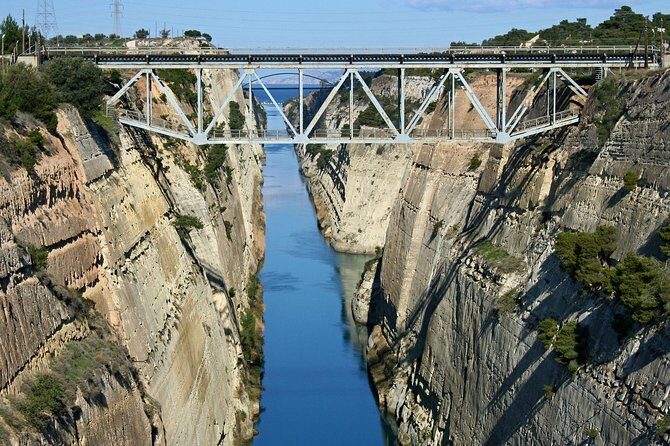
Next comes the Corinth Canal visit, then a key stop called the Diolkos—ancient limestone roads used to haul boats.
This is where the tour earns its biblical label, because the Diolkos explains the real engine behind Corinth’s dominance. Before the canal, boat trailers, people, and animals helped pull ships across the land between the Corinthian Gulf and the Saronic sea. That kind of movement controlled routes, connected cities, and fed the economy of a place with power.
The tour frames it in terms of Corinth’s reach—controlling over 270 Greek colonies—and that’s a big idea to take into your Paul reading. When Paul chose to spend 18 months in Corinth, you’re not just imagining a random city. You’re seeing a hub built for motion: goods, people, ideas, and faith traveling along the same corridors.
If you like the “how did ordinary life work” angle, this is one of the strongest stops.
Acrocorinth: the steep climb that makes the story make sense
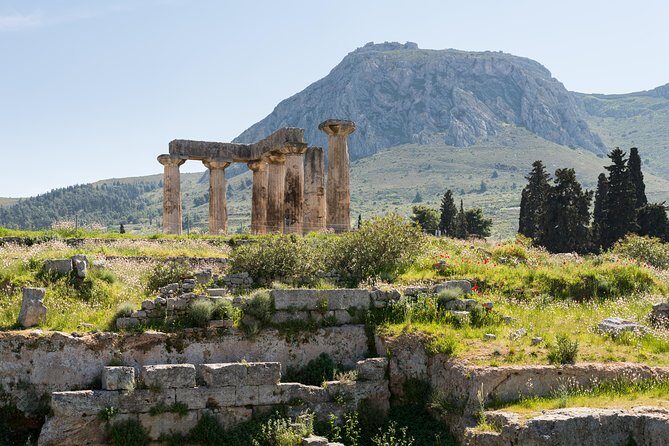
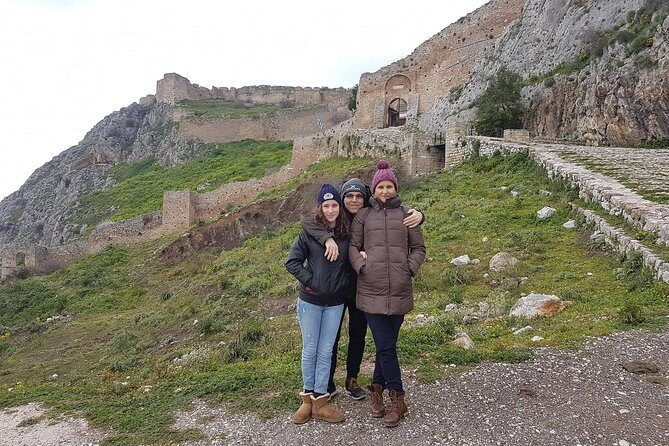
Acrocorinth is the acropolis of ancient Corinth, perched on a monolithic rock well above the plain. You’ll learn how defensive fortifications shaped the city’s survival—walls, gates, and a layout that still reads clearly from viewpoints today.
The tour also points out the many layers of what you’ll see: remains of churches, mosques, houses, cisterns, and the former temple of Aphrodite. Even if you’re not doing a history seminar in your head, you can feel the place’s purpose when you look across the valley and sea.
There are two practical reasons Acrocorinth is worth it:
- Views over the Corinthian and Saronic seas help you picture why Corinth could guard this corridor.
- The setting helps you connect biblical references to the real terrain Paul would have navigated.
One consideration: the climb is steep and rocky. Reviews highlight that you should wear sturdy shoes with gripping soles, and there may be no handrails for parts of the route. Bring the right footwear and plan for some effort.
- All Day Cruise -3 Islands to Agistri,Moni, Aegina with lunch and drinks included
★ 5.0 · 4,958 reviews



Hadjimoustafa spring and the Pegasus story: a stop that adds texture
On the Acrocorinth stretch, you’ll also be directed to Hadjimoustafa spring, described as a fountain built during the Ottoman period in 1555 AD, with water still flowing due to a spring discovered accidentally.
Then there’s the Pegasus element—local legend says Pegasus struck the ground with his hoof as he tried to fly away from a winged escape story, and the goddess Athena is tied into why the water continues. Even if you treat the myth as myth, the stop adds a different kind of “why this place is famous” layer than ruins alone.
It’s also a nice break between bigger archaeological moments—short enough not to stall the day, but meaningful enough to remember later.
Ancient Corinth churches, mosaics, and the Paul-to-Corinth storyline
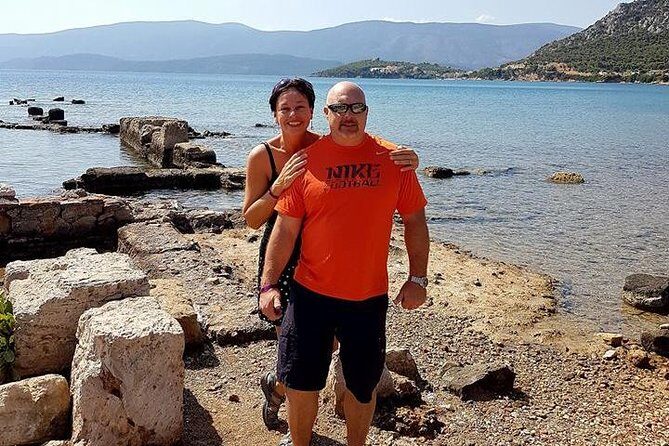
The tour’s mid-day focus is Ancient Corinth (Archaia Korinthos), where the biblical storytelling becomes more direct.
You’ll visit a Neo Byzantine church of the Virgin Mary and see a marble plaque referencing the love passage from First Corinthians 13—love as the greatest theme. That’s a clever way to ground scripture in an actual sacred space instead of keeping it abstract.
Next comes a Neo Byzantine church dedicated to the apostle Paul. Here you get visuals tied to Paul’s journey. The tour discusses a mosaic by Vlasis Tsotsonis showing Saul on the way to Damascus (dated to 34 AD in the narrative presented), plus the transition from persecution to ministry, including baptism by Ananias.
From there, the tour ties those life events to Corinth: Paul’s hardships in the city, and the idea of his judgment connected with Gallio as recorded in Acts (including Acts 18). The goal isn’t to memorize references. It’s to help you understand why Corinth becomes a turning point in Paul’s life and why his ministry takes the shape it does in a commercial and cosmopolitan environment.
If you’re even moderately interested in scripture geography, this section is strong because it turns the Bible into something you can point at: places, themes, and people.
Ancient Corinth archaeological site and the Bema area: where preaching connects to the setting
After the church stops, you’ll move into the archaeological site area and focus on a major theme: Paul preaching in a public civic context.
A highlight here is the Bema—the podium/platform described as where Paul was presented officially as a Roman citizen and where he preached. That’s a big deal because it gives you a more concrete picture of what “public ministry” looked like in the Roman world.
The tour also connects this area with key Acts references (Acts 18:12–17 is mentioned as part of the story context). Again, you don’t need to be a Bible scholar to get it. You just need to stand where the story says something happened and let the setting do some of the explaining.
If you get energized by the overlap of faith and civic life—law, public speaking, citizenship, and community life—this stop will work well.
Archaeological Museum of Corinth: artifacts across Greek, Roman, Byzantine, and Ottoman eras
At some point you’ll visit the Archaeological Museum of Corinth, which is where you can slow down and see the “material side” of the story.
The museum houses a large collection of artifacts from the local site and nearby smaller sites. The tour frames the range across Greek, Roman, Byzantine, and Ottoman periods. That variety matters because it shows Corinth didn’t freeze in one era. The city changed, rebuilt, and kept accumulating layers.
Expect the museum and site to take real time. You should plan for a longer visit here—about 1 hour 40 minutes—so you’re not rushing through labels.
Temple of Apollo, Roman Agora, and the sense of everyday city life
On the site side, the tour points you to standout structures, including:
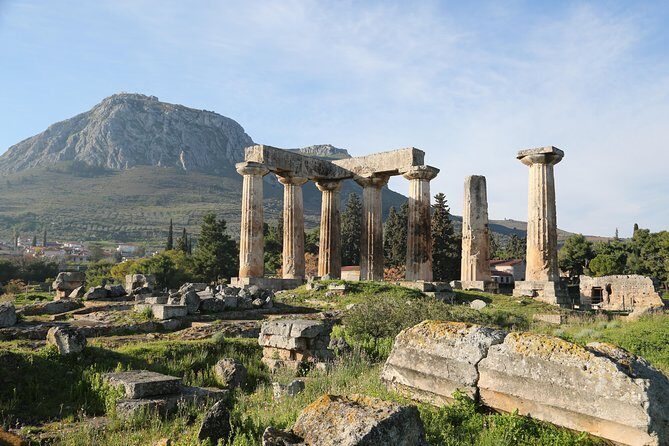
- The Temple of Apollo, described as one of the earliest Doric temples in the Peloponnese and Greek mainland (built around 560 BCE).
- The Roman Agora, with central shops and market-space features.
- Roman buildings, an amphitheatre and odeon, plus baths and fountains.
- The Lechaion Road and broader forum-like areas.
- The Glaufkus fountain, and more civic features that help you picture daily movement.
This is one of the best ways to understand why Corinth was such fertile soil for new ideas. You’re not just seeing temples. You’re seeing a city designed for traffic—people, goods, announcements, and public meetings.
If you’re trying to connect Paul’s letters to real life in a specific city, these spaces give you scale.
Lunch time in Ancient Corinth or by the sea: choosing your pace
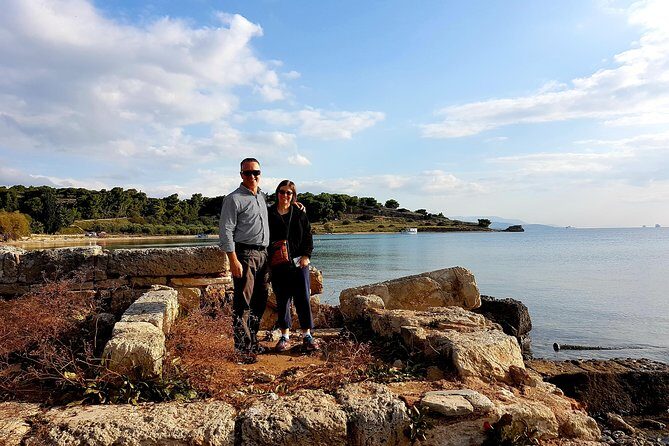
You’ll have a lunch break built into the day, roughly 1 hour 20 minutes. The tour mentions an authentic village-style lunch in Ancient Corinth, or a seaside option at the Baths of Helen of Troy.
This is worth deciding early in your head. If you want more calm and atmosphere, pick the village-style feel. If you want a visual reset—water views and a slower mood—the seaside lunch option can be the kind of break that makes the afternoon easier.
Also, plan to use this time strategically. Restrooms and energy matter more than you’d think when the afternoon includes the port and the long ride back to Athens.
Ancient Port of Kenchreai (Cenchreae): Paul sails again
The last key stop is Kenchreai (Cenchreae), an ancient port by the Saronic sea. The tour frames it as one of Corinth’s two ports, connecting the inland city life to maritime movement.
This is where Paul’s travel story gets “motion” again. You’ll follow the footsteps of Paul’s exodus from Corinth around 53 AD and his sailing route toward Ephesus with Aquila and Priscila. The tour also ties in the Nazarite vow (including the cutting of hair) as part of the narrative context.
For a lot of people, this is the emotional payoff. You’re not ending on another ruin—you’re ending where shipping would have carried faith and people across the sea.
Then you return to Athens. The drive back takes about 70 minutes, giving you time to decompress after a full day.
Price and value for a private, Paul-focused day
The price is $301.72 per person for an approximately 8-hour private tour. Whether that feels like a deal depends on what you compare it to:
- If you’re using public transport and piecing together stops yourself, you’d likely lose hours and still need to manage timing, tickets, and finding the best spots.
- If you care about the Paul story, the value comes from the way the driver-guide connects scripture themes to the exact places you visit.
What’s included:
- A first-class private vehicle with air-conditioning and Wi-Fi
- Bottled water
- Hotel/Airbnb/port pickup and drop-off in Athens or Corinth-area meeting points
- A driver-guide with a deep focus on biblical and modern Greek history
- Free admission at multiple listed stops, with the notable exception below
What costs extra:
- Ancient Corinth site and Archaeological Museum entrance: about €15 per person, bought on-site
- Food and drinks: not included
- An optional licensed tour guide for inside the site/museum: €190 per booking if you want that added layer
If you want a strong biblical day without spending time figuring logistics, the price can feel fair. If you’re only interested in ruins with no Paul storytelling, you could find cheaper alternatives. But for a faith-and-place experience, this one aims squarely at that goal.
Who should book this (and who might want a different option)
This tour fits best if you:
- Want a private day with pickup from your lodging in Athens
- Care about Apostle Paul in a specific location, not just “Corinth in general”
- Enjoy combining engineering and everyday life with scripture references
- Are okay with a long day and at least one real climb at Acrocorinth
You might choose something else if:
- You hate steep, rocky walking and don’t want to tackle Acrocorinth
- You’d rather spend more time inside the museum/archaeological site with a licensed guide specifically
- You want a short, light outing rather than a full itinerary
Should you book this Ancient Corinth and Isthmus Canal tour?
Book it if you want a focused day that connects Paul’s story to real geography—canal, trade routes, city defenses, civic platforms, and a port tied to travel. The private setup, air-conditioned comfort, and Paul-centered stop sequence make it a practical way to turn a single day in Athens into something specific and memorable.
Skip or adjust if you’re sensitive to long walking and steep terrain. If you do book, wear the right shoes and bring patience for a schedule that’s packed with meaning.
FAQ
How long is the Ancient Corinth and Isthmus Canal private tour?
It runs about 8 hours.
Where does the pickup happen?
You can be picked up from your Athens hotel, Airbnb, or apartment lobby (and the tour also mentions pickup options tied to Corinth/port areas). Your driver meets you in the lobby or at the building entrance.
Is this tour private or shared?
It’s private, so only your group participates.
Are entrance fees included for Ancient Corinth and the museum?
Ancient Corinth site and the Archaeological Museum entrance fees are not included. The tour states you can purchase them on-site for about €15 per person.
Is a licensed guide inside the museum and site included?
Not automatically. The tour offers an optional licensed tour guide to accompany you inside the site and museum for €190 per booking, paid directly.
Is lunch included?
No. Food and drinks aren’t included, but the itinerary includes a lunch stop with options in the Ancient Corinth area or near the Baths of Helen of Troy.
What’s included in the vehicle during the day?
The vehicle has air-conditioning, Wi-Fi, and bottled water.
FAQ
Can I cancel for free?
Yes. Free cancellation is available up to 24 hours in advance for a full refund.
What language is the tour in?
The tour is offered in English.
Is there a mobile ticket?
Yes, mobile tickets are included.

More Private Tours in Athens


More Tours in Athens

More Tour Reviews in Athens
- All Day Cruise -3 Islands to Agistri,Moni, Aegina with lunch and drinks included
★ 5.0 · 4,958 reviews