REVIEW · ATHENS
Athens: Acropolis, Parthenon & Acropolis Museum Guided Tour
Book on GetYourGuide →Operated by Athens Walks Tour Company · Bookable on GetYourGuide
Ancient Athens gets real fast. This Acropolis guided tour walks the south slope with a licensed guide who explains what you’re seeing, plus what’s been uncovered by excavation. You’ll hit the Theatre of Dionysus, the Parthenon, and the Erechtheion, then connect the dots with the Acropolis Museum and its glass galleries.
Two things I really like about this experience are the storytelling and the setup. First, guides (I’ve seen names like Petros and Dionissos in past tours) use wireless hearing devices, so you can stay close to the group without craning your neck. Second, the museum stops don’t feel like a separate activity; they explain the craft and daily life behind the monuments you just climbed toward.
One consideration: this is a real walking day. It’s not for wheelchair users, and there’s no Acropolis elevator included, so plan for uneven stone, some stairs, and plenty of uphill energy. Comfortable shoes are not a suggestion here.
In This Review
- Key highlights I’d plan around
- Starting at Porinou 5: how you get into the Acropolis day
- Dionysus and Herodes Atticus: why the theatres feel more than historical
- From gateway to Nike temple: the architecture lesson you’ll actually remember
- Parthenon time: photos, myths, and the Erechtheion shift
- The New Acropolis Museum: where the stones become objects
- Pace, hearing devices, and crowd survival (without losing the plot)
- Price and value: what $41 actually buys you
- Who this tour fits best—and who should think twice
- Should you book this Acropolis and Museum guided tour?
- FAQ
- Where do I meet for the tour?
- How long is the tour?
- Is there skip-the-line access?
- Does the tour include the Acropolis elevator?
- What language is the tour conducted in?
- Are wireless hearing devices provided?
- What should I bring?
- Is the tour suitable for wheelchair users?
- Are food and drinks included?
Key highlights I’d plan around
- South-slope start that sets the tone before you reach the big-ticket monuments
- Theatre stops that connect myth to performance, including Dionysus and Herodes Atticus
- Parthenon + Erechtheion routing that keeps the architecture clear
- New Acropolis Museum glass floors (including a gallery tied to the Parthenon temple)
- Wireless hearing devices that make crowd-heavy sections easier to enjoy
- A short reset built into the schedule so you can keep your energy for the museum
Starting at Porinou 5: how you get into the Acropolis day
Your day begins at the Athens Walks tour office on Porinou 5 (ground floor). From there, you’ll start moving toward the Acropolis with a guide who’s also an archaeologist (the experience is built around interpretation, not just pointing at stones). The route starts from the south slope, which matters because you get context before you reach the Parthenon area.
A big practical win is the skip-the-line approach. If you choose the option that includes entrance tickets, you’ll use a separate entrance route for quicker access, and the Acropolis Museum entry is also handled as skip-the-line. That means more time looking, less time stuck.
Expect a walking rhythm that’s leisurely but still active. Reviews and tour structure both suggest a pace where you’ll pause for photos and listening, then keep moving. You do get some breathing moments, like a break and short free/photo time later on the Acropolis, but don’t plan on turning this into a long sit-down tour.
Also, bring a basic Athens kit: ID/passport, comfortable shoes, and a sun hat. If you’re easily overheated, plan your water strategy too. One small thing to know: site rules can be strict about what you can carry in, and glass bottles have been an issue for some guests—so consider carrying water in an allowed format.
You can also read our reviews of more guided tours in Athens



Dionysus and Herodes Atticus: why the theatres feel more than historical

Early on, you’ll stop at the Theatre of Dionysus, often described as a birthplace of Greek performing arts. This isn’t just a photo stop. The guide shows you how the space worked and then has you imagine what an audience experienced when Aeschylus, Sophocles, and Euripides wrote for the stage. A favorite moment in this part of the tour is being invited to perch on stone seating to get the scale and sightlines.
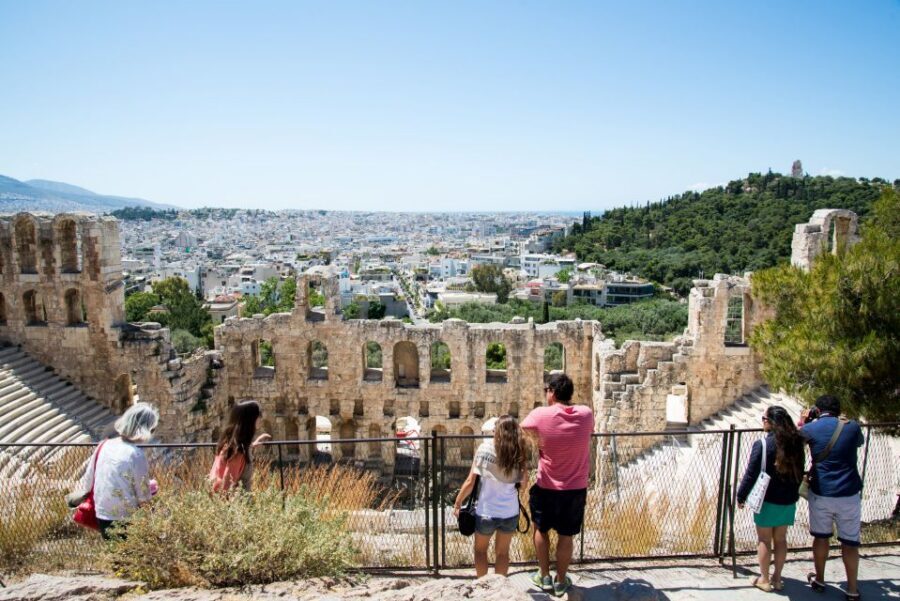
Next comes the Odeon of Herodes Atticus, the amphitheater that’s still used for performances today during the Athens Festival (May to October). This is a good stop for two reasons. First, it turns the Acropolis into a living cultural site, not a frozen ruin. Second, it gives you a reference point for how these buildings were made to shape sound and crowds.
Drawback? This area can be crowded, and the theatres are still open space—so if you’re sensitive to glare or heat, you’ll want your hat ready and sunglasses handy. The upside is that the guide’s route timing and crowd management keep the experience moving without feeling chaotic.
From gateway to Nike temple: the architecture lesson you’ll actually remember
As you work your way up, you’ll pass key structural landmarks that help you read the Acropolis like a map. One important segment includes the Propylaea (the grand gateway area). You’ll get guided explanation plus a photo stop—this is where many people start feeling the Acropolis is more than a climb to the Parthenon. It’s the entry point into an entire sacred complex.
Then you’ll reach the Temple of Athena Nike. This stop is short, but it’s useful. It helps you notice how the Acropolis architecture uses rhythm, proportions, and placement to guide your eye toward the main monuments. It also reinforces a theme you’ll keep seeing throughout the tour: the relationship between civic power, religion, and building design.
At this point, you’ll likely start seeing why starting on the south slope helps. You’re not arriving at the biggest names cold. You’re building an understanding step by step, so the Parthenon doesn’t come off as a random highlight—it becomes the center of a larger design and meaning.
Parthenon time: photos, myths, and the Erechtheion shift
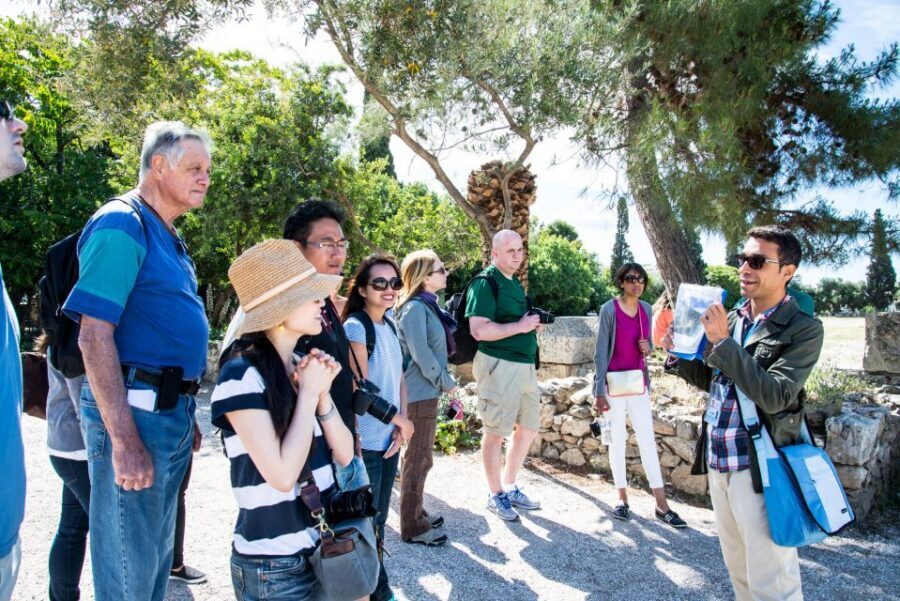
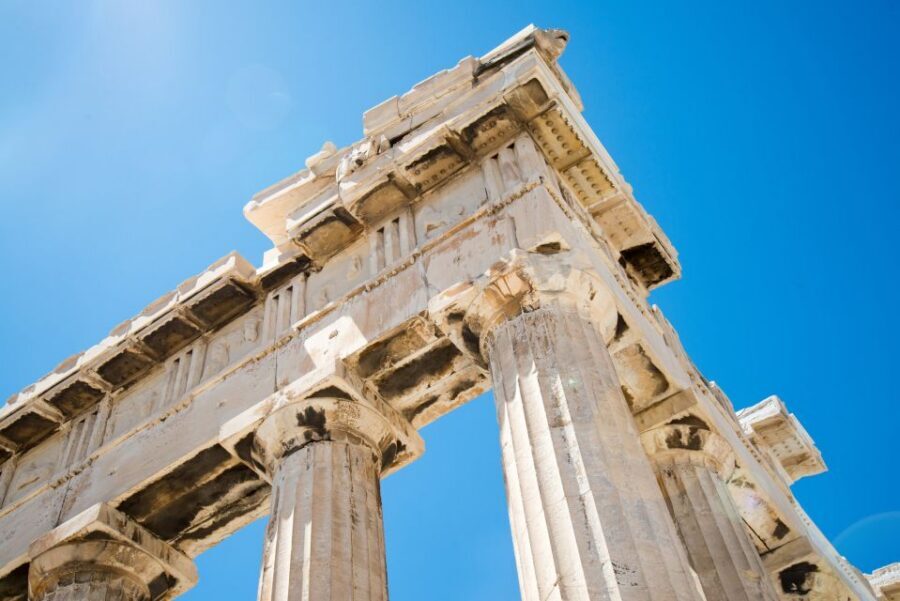
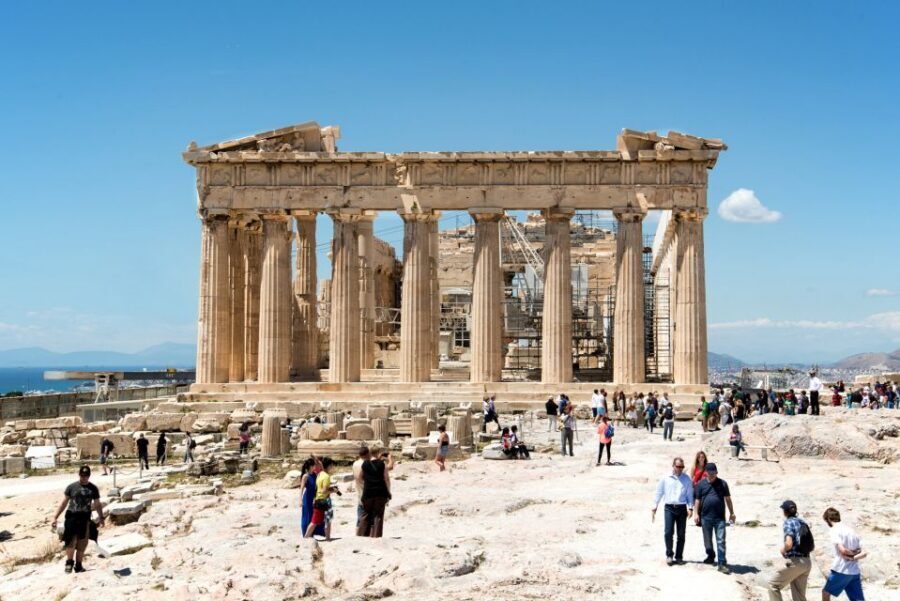
The heart of the day is the Parthenon. You’ll visit, get a guided explanation, and have time for sightseeing and photos. What makes this stop work well on a guided format is the way a good guide ties the building’s features to the bigger story: why it was built, how it was constructed, and what people believed it represented.
A smart routing choice follows you from the Parthenon to the Erechtheion. This helps you avoid the common “one building only” approach. The Erechtheion area is different in feel, and it’s where you’ll likely notice changes in style and sacred association.
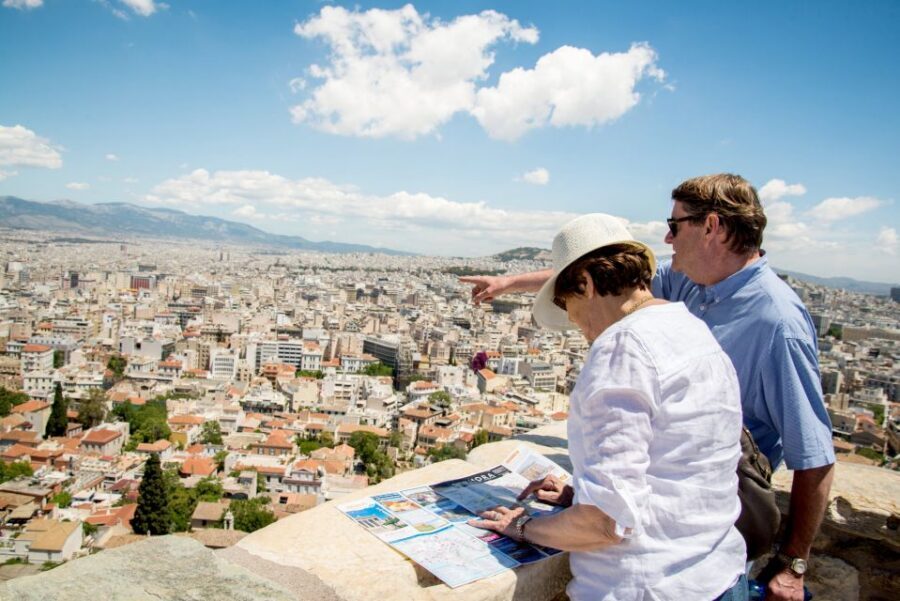
Once you’ve covered the core monuments, you’ll get a break time, photo stop, and short free time on the Acropolis. That free time is valuable because it lets you stop listening for a minute and just look—especially if you want to take in the Athens skyline from the top. If you’re the kind of person who likes to re-check details you just heard about, this is your moment.
Small reality check: the Acropolis is uneven and exposed in places. If your legs are sensitive, go slow on the steps and don’t try to outpace the group. The tour’s structure is designed to keep you safe and together, but you still need to own your pace.
The New Acropolis Museum: where the stones become objects
After the outside portion, you head to the New Acropolis Museum for about 1.5 hours guided. This is where the tour really pays off, because it connects monument scale to everyday materials and designs. The museum is also known for its high-ranking reputation, and the space is set up to make comparisons easy.
One standout is the Gallery of the Slopes of the Acropolis, where you’ll see the way excavated remains are presented. A glass floor occasionally reveals an archaeological excavation site, which is a cool moment because it reminds you that what you see outside sits on layers of earlier history.
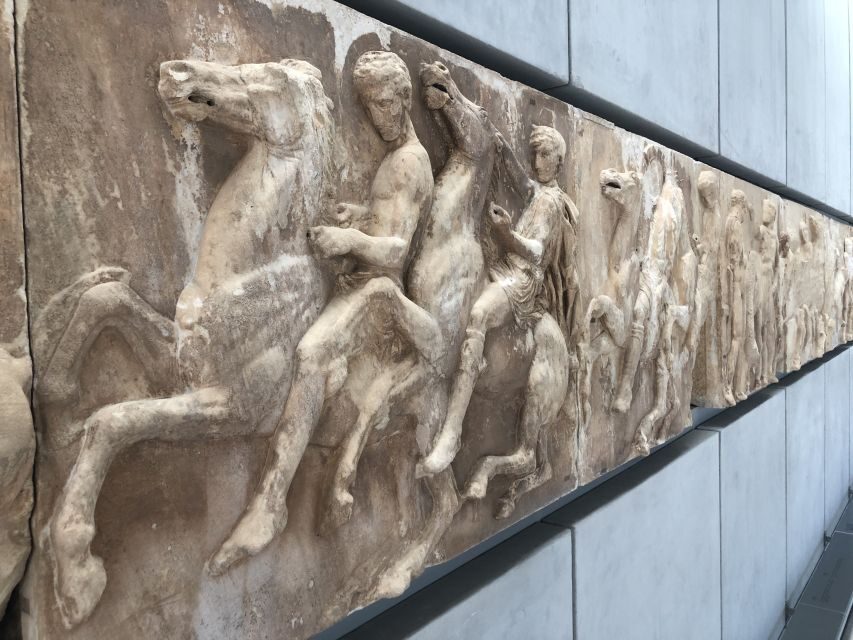
You’ll also get to experience the Parthenon temple glass gallery, a feature that helps you understand how the temple relates to its reconstructed pieces. Instead of treating the Parthenon as a single finished image, you start seeing it as a work assembled from specific elements—made, placed, damaged, and then studied.
Then there’s the focus on daily life. You’ll see statues and artifacts tied to ordinary people, not only royal-level mythology. That’s an underrated part of this tour. It makes the Acropolis feel less like a distant legend and more like something connected to Athens as a real city.
A quick note on breaks: there’s a short indoor reset planned with a café stop in the museum area. Refreshments are available, but you pay at your own expense. Food isn’t included, so if you want lunch after, plan on grabbing something nearby once you’re done.
You can also read our reviews of more museum experiences in Athens




Pace, hearing devices, and crowd survival (without losing the plot)
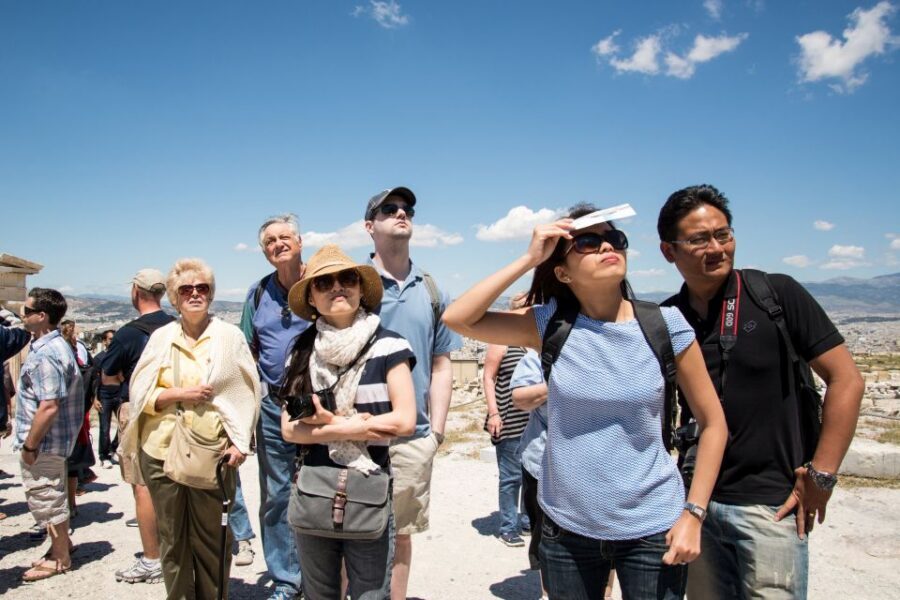
This is where the tour’s design shines. You’ll get wireless hearing devices, which lets you hear the guide even when you’re surrounded by other groups and shifting positions. It also reduces the pressure to stand perfectly still, which is a comfort in busy areas.
Group size in the experience you’re booking is usually not huge. Reviews often describe groups around 15 to 20 people, which is big enough for energy but small enough for the guide to manage. Guides like Anna and Lisa have been praised for balancing narration with real time for photos and pauses, and that balance is exactly what you want on the Acropolis—because the views are part of the experience, not an accessory.
Still, keep your expectations realistic. You get some free time on the hill, but most of your time is guided. If you prefer to wander for hours independently, this style might feel structured. On the other hand, if you want the fastest route to meaning—how each stop fits together—you’ll appreciate the way the guide keeps you moving in a logical sequence.
Practical tips that make this smoother:
- Wear shoes with grip. Stone can be slick or uneven.
- Bring a sun hat and take shade breaks when they appear.
- Keep your essentials minimal. Oversize luggage isn’t allowed, and strollers and pets are not permitted.
Price and value: what $41 actually buys you

At about $41 per person with a 2 to 4 hour duration, you’re paying for three things that add up quickly in Athens: an archaeologist-led narrative, time savings, and museum context.
Here’s the value math in plain terms:
- You’re not paying just for entry. You’re paying for an expert to interpret the site while you’re standing in the exact spot where the story happened.
- Skip-the-line access helps you reclaim energy. The Acropolis is high-demand and time-sensitive. Buying your way out of long waits matters.
- The museum portion is guided for about 1.5 hours. Without that, you’d still see impressive galleries, but you might miss the connections that make the statues and reconstructions land.
Included extras are also part of the price:
- Guide throughout the key monuments and museum time
- Skip-the-line entrance tickets if the tickets option is selected
- Skip-the-line entry to the Acropolis Museum
- Wireless hearing devices
Not included are the things you’d normally spend on yourself anyway: food and drinks, plus pickup and drop-off. The Acropolis elevator is also not part of the package, which reinforces that you should plan for walking.
If you’re visiting Athens for the first time and want a “hit the core, understand the core” day, this is a solid deal at this price range.
Who this tour fits best—and who should think twice
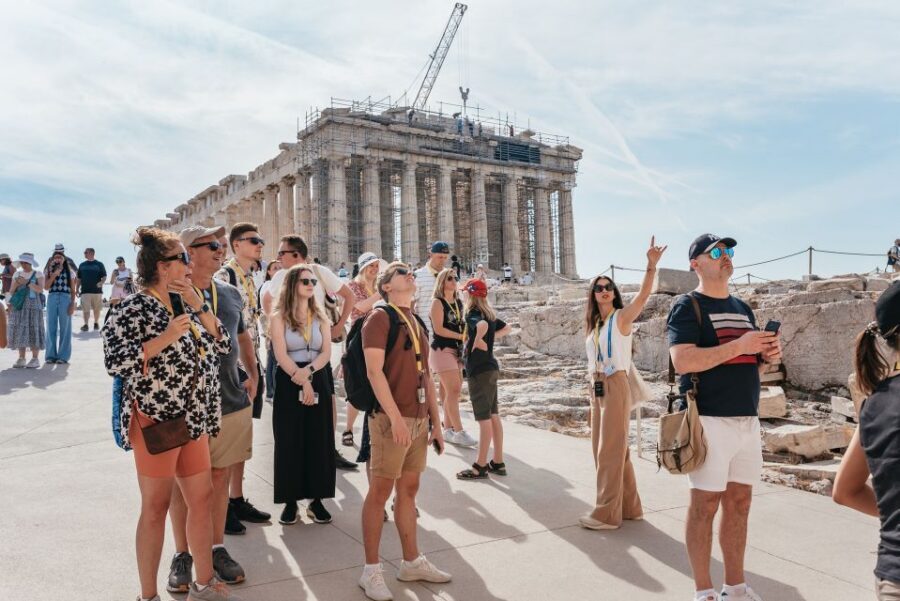
This tour is a great match if you want a guided, structured path through the Acropolis highlights and the museum context that explains them. It’s especially helpful if you:
- Are short on time and want the Parthenon area without guessing your way through it
- Enjoy myths and want them tied to visible places and architecture
- Appreciate when a guide makes stops feel connected rather than separate
It also tends to work well for families who can handle active walking. Some guides have been praised for engaging kids and keeping the group together without turning it into a slog. That doesn’t remove the physical demands, though, so consider your kids’ tolerance for stairs and uneven ground.
Who should think twice: people with mobility impairments and wheelchair users. The tour is not suitable, and the lack of an Acropolis elevator option is relevant here. Also, if you dislike crowds or you need long downtime, you may find the schedule a bit tight.
Should you book this Acropolis and Museum guided tour?
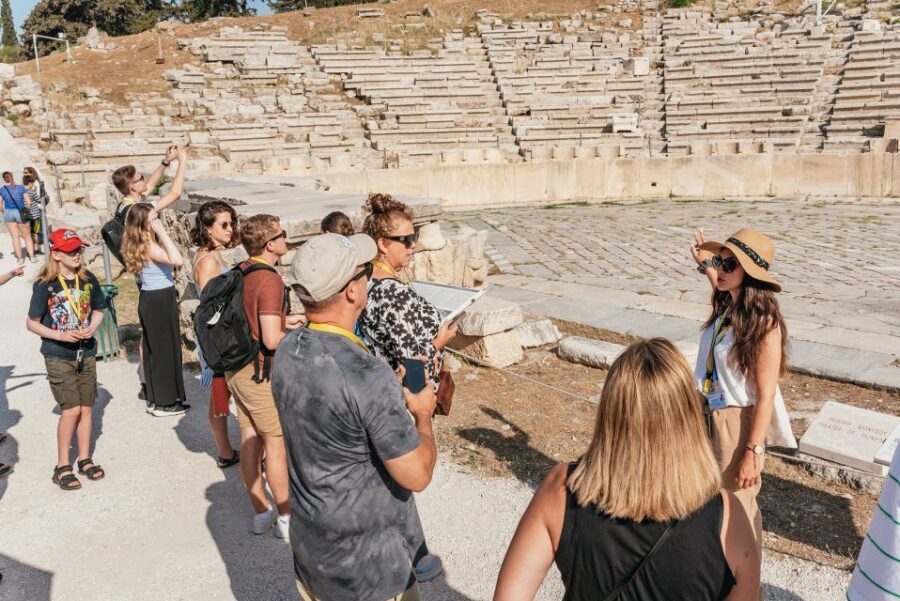
I’d book it if you want the Acropolis to make sense quickly. The combination of key monuments plus a guided museum visit is where this tour earns its keep. You get skip-the-line convenience, wireless hearing devices, and a guide-led chain of meaning from theatres and gateways to the Parthenon and then into the objects and reconstructions inside.
I’d skip or rethink it if you want a lot of solo wandering, long unscripted breaks, or you need mobility accommodations. In that case, the physical realities and tour structure will likely frustrate you.
If you do book, arrive with the right expectations: bring solid shoes, a hat, and ID, and plan to spend most of the day walking and listening—because that’s how you get the full payoff.
FAQ
Where do I meet for the tour?
Meet at the Athens Walks tour office on Porinou 5, ground floor.
How long is the tour?
The duration is listed as 2 to 4 hours, depending on the starting time and flow of the day.
Is there skip-the-line access?
Yes. The tour includes skip-the-line entrance tickets if you select the option with tickets, and it includes skip-the-line entry to the Acropolis Museum.
Does the tour include the Acropolis elevator?
No. The Acropolis elevator is not included.
What language is the tour conducted in?
The live guided tour is in English.
Are wireless hearing devices provided?
Yes. Wireless hearing devices are included so you can hear the guide in crowds.
What should I bring?
Bring a passport or ID card, comfortable shoes, and a sun hat.
Is the tour suitable for wheelchair users?
No. It is not suitable for people with mobility impairments or wheelchair users.
Are food and drinks included?
No. Food and drinks are not included. There is a café break, but refreshments are at your own expense.



More Guided Tours in Athens


More Tours in Athens



More Tour Reviews in Athens
- All Day Cruise -3 Islands to Agistri,Moni, Aegina with lunch and drinks included
★ 5.0 · 4,958 reviews