REVIEW · KALABAKA
Meteora: Panoramic Morning Small Group Tour with Local Guide
Book on GetYourGuide →Operated by Meteora Thrones - Travel Center · Bookable on GetYourGuide
Meteora hits different in the morning. This half-day tour lets you see the full scope of the UNESCO cliffs fast, with sweeping viewpoints plus visits to three major monasteries perched on towering rock pillars.
I especially like the way the guide connects the Byzantine-era monastic story to what you’re looking at, and how the day is paced for photos and short walking stretches. And I like that you get to see all six active monasteries from smart angles, even though you only go inside three.
One consideration: expect steps and kneeling/covered-clothing rules. The monastery routes include uneven stairs, and interior time is tight—so if mobility is limited, plan carefully.
In This Review
- Key highlights at a glance
- Meteora’s Morning Edge: why this half-day works so well
- Pickup in Kalabaka or Kastraki, then straight into the Meteora world
- The panoramic viewpoints: seeing all 6 active monasteries before you choose what to enter
- St. Nicholas Anapavsa: a quick look that sets the tone
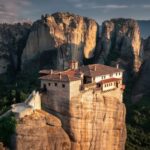
- Great Meteor Monastery: the main interior visit and your best photo payoff
- Varlaam: longer visit time, steep effort, and strong payoff
- Rousanou: a shorter interior stop that still feels like a full chapter
- Holy Trinity and St. Stephen: the payoff of seeing them without rushing inside
- Hermit Caves: the extra layer that makes Meteora feel more real
- What your guide actually does: stories plus smart pacing
- Audio guide tips: make it work without stress
- Price and entrance fees: is it good value?
- Dress code and stairs: the two things that can make or break your visit
- What it’s like for small groups and families
- Should you book this Meteora Thrones panoramic morning tour?
- FAQ
- FAQ
- Where does the tour pick up?
- How long is the tour?
- How many monasteries will I visit inside?
- Will I see all 6 active monasteries?
- Which monasteries are included for interior visits?
- Are monastery entrance fees included?
- Is there an audio guide?
- What do I need to use the audio guide?
- What’s the dress code for entering monasteries?
- Is the tour good for a small group?
- Is there free cancellation?
Key highlights at a glance
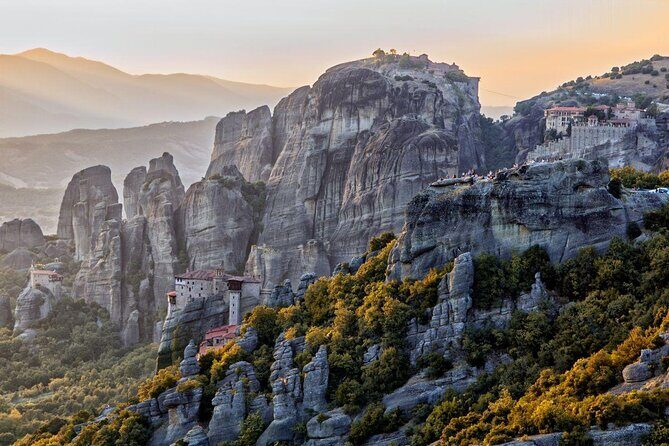
- All-six viewing, not just three: you’ll get panoramic stops for the full set of active monasteries.
- Three interior visits: Great Meteor, Varlaam, and Rousanou are the ones you go inside.
- Local guide + smart audio guide: English-speaking guide on the bus, plus multi-language audio inside.
- Photo stops built into the schedule: multiple pull-offs so you don’t feel rushed at each overlook.
- Hermit Caves included: you get extra context on how the monastic life worked on these rocks.
Meteora’s Morning Edge: why this half-day works so well
Meteora can feel overwhelming at first. Six monasteries stacked on cliffs, lots of stairs, and crowds that build as the morning slips by. This tour’s big win is that it’s a morning program, designed to get you the classic views before the day turns into a line-management exercise.
The other smart part is the format. You’re not only hopping between entrances—you’re learning what you’re seeing as you travel. A local guide (I’ve seen great ones like Yannis, Giannis, Christo, and Alexandria in recent trips) explains the religious and human reasons monasteries were placed here, then points out what to notice when you’re standing at the viewpoints.
You also get something practical: the tour plan is built around photo pull-offs and enough breathing room to enjoy the buildings, not just sprint between them. The result is an overview you can actually use later—whether you return on your own or simply want the highlights without burning a full day.
You can also read our reviews of more guided tours in Kalabaka
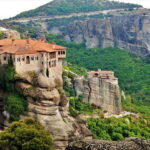
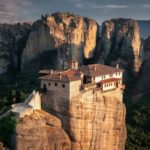
Pickup in Kalabaka or Kastraki, then straight into the Meteora world
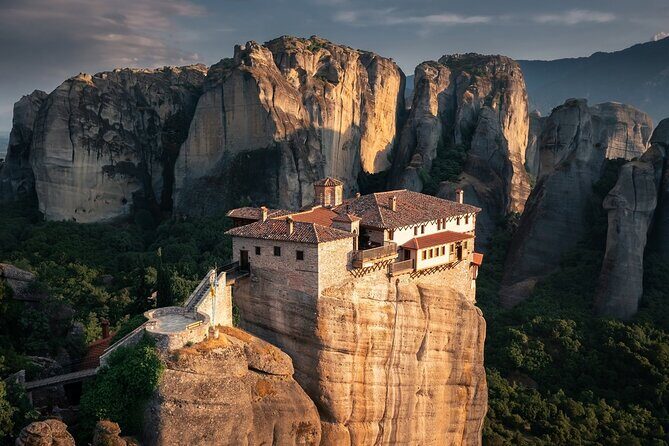
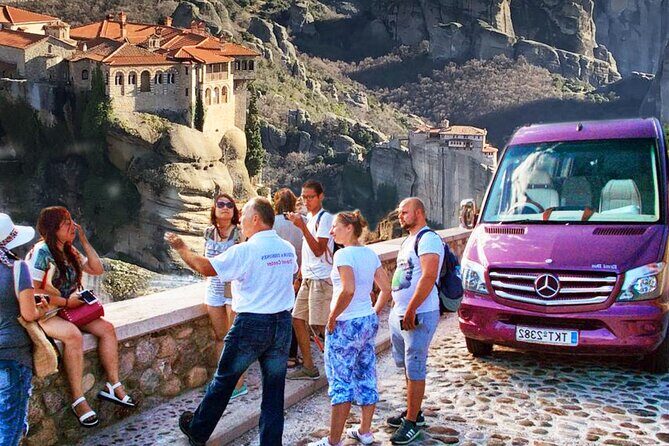
This starts with hotel pickup in Kalabaka or Kastraki (and there’s also mention of pickup from Trikala as one of the options). From there, you ride a few miles northwest to the Meteora area in a small group vehicle.
The minibus is air-conditioned, and the day includes free WiFi plus a free panoramic Meteora map—small touches that make the rest of your time in the area easier. You’re also set up with onboard commentary in English from a live local guide, and then a smart audio guide that you can use both to review details and to keep your pace inside the monasteries.
Timing matters on Meteora. Your early start helps with two things you’ll feel immediately:
- it’s easier to take photos without constant crowd shuffle
- you spend less time standing and more time looking carefully
The ride itself is short, so you’re not stuck commuting for long. You’re quickly in that dramatic scenery zone where the monasteries look like they were placed there by design.
The panoramic viewpoints: seeing all 6 active monasteries before you choose what to enter
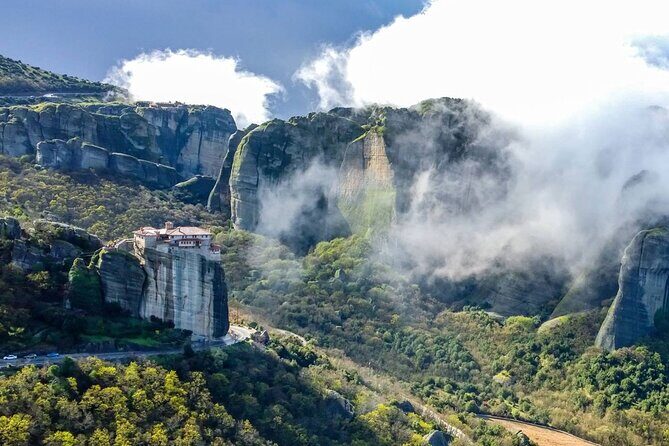
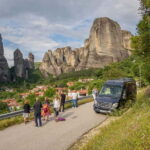
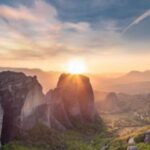
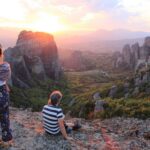
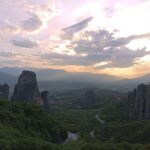
One of the best ways to understand Meteora is to see the whole cluster first. This tour does that. You’ll stop for scenic views and photo opportunities that show the six active monasteries from different perspectives, including the major cliff-top placements you’ll later recognize when you walk closer.
If you’re wondering why that matters, it’s simple. Meteora is full of repeating shapes—stone towers, stairways, and cliff edges. When you view all six early, your brain starts mapping the site. Later, inside the monasteries you’re not just looking at walls—you know where you are in the wider picture.
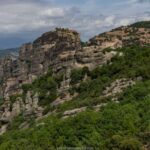
Expect lots of short stops along the way. You’ll get the chance to capture wide shots, plus angles that show how the rock formations frame each monastery. These viewpoints are also where your guide can point out what makes each monastery distinct, even if you’re only planning to enter three of them.
St. Nicholas Anapavsa: a quick look that sets the tone
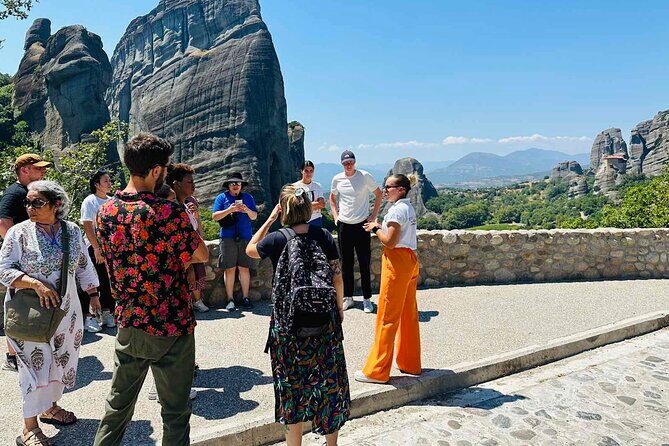
Not every stop is a long one. Monastery of St. Nicholas Anapavsa is handled as a photo-and-sightseeing moment (about 15 minutes). That’s enough time to get the key visual impression and understand its place in the wider monastic lineup.
This kind of stop is useful if you’re trying to keep the day balanced. You see more than three monasteries without having the schedule swallowed by building visits. It also gives you a comparison point for the interiors you’ll do later, since you can contrast what you saw from outside with how the space feels once you enter.
If stairs are already tiring you early, this is a good sign that the tour includes shorter pauses. You still get the big Meteora experience without forcing every stop to be an intense climb.
Great Meteor Monastery: the main interior visit and your best photo payoff
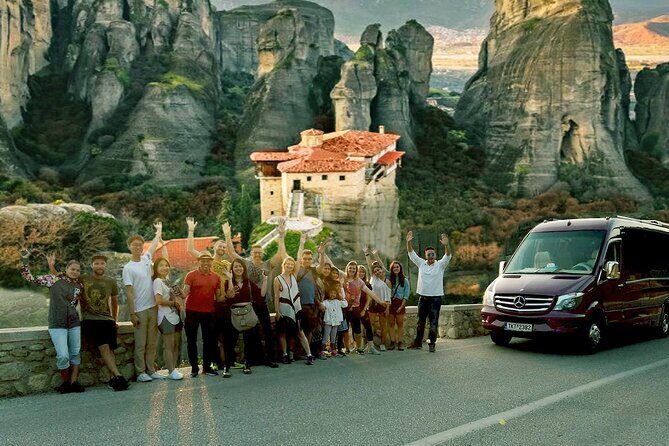
Great Meteor Monastery is one of the main stars, and the tour gives it the time it deserves (around 1 hour including photo and visit). This is where you’ll likely feel the most “wow” moment, because it’s both visually commanding and part of the major story of Meteora’s monastic era.
Here’s how to use your time well:
- Use the exterior viewpoints first, then go in with a sense of orientation.
- Don’t try to absorb everything at once. Focus on a few highlights: the layout, the preserved religious artifacts you’re shown, and the atmosphere of the space.
The tour includes smart audio inside the monasteries, and your guide’s job is to set you up with context before you get too far into the details. That combo—live explanation plus audio for the interior—helps you move at your pace instead of feeling like the group is controlling your eyes.
One more practical note from real pacing: there can be busy moments even early in the morning. Having an organized guide helps you manage the flow without feeling lost.
You can also read our reviews of more tours and experiences in Kalabaka
Varlaam: longer visit time, steep effort, and strong payoff
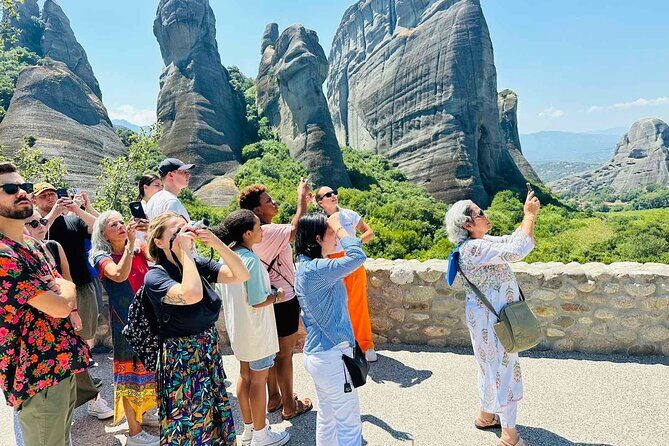
Monastery of Varlaam is another interior stop (about 45 minutes including photo and visit). This is often the kind of place where you feel the verticality. Meteora is famously climbed—so you should go in expecting steps.
The good news is that the tour pacing usually gives you time to take photos and then actually look. You’re not stuck in a hallway with 200 people. You can pause, walk slower if you need to, and use the audio guide for details.
From a planning standpoint, Varlaam is a good test of whether Meteora stairs and stairs-adjacent surfaces work for you that day. If you do fine here, you’re likely to handle the other interior stops as well.
Rousanou: a shorter interior stop that still feels like a full chapter
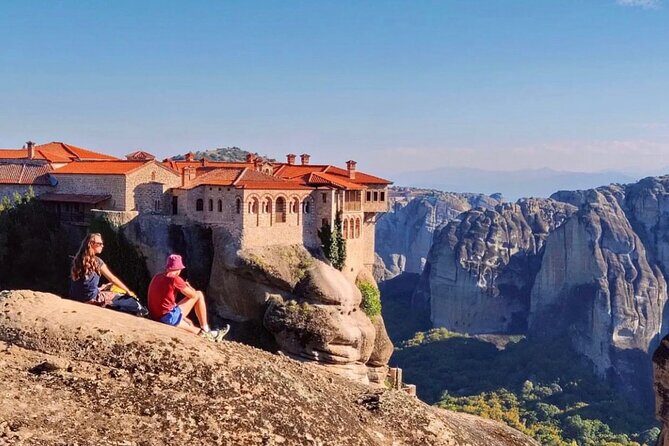
Monastery of Rousanou is included as a third interior visit (around 30 minutes including photo and visit). It’s shorter than Varlaam, but that’s not a downgrade. A shorter time here helps you keep momentum so you can still enjoy the full schedule without feeling cooked.
This is a smart pairing with Great Meteor and Varlaam because it breaks up the day. You get one bigger, one medium, then a slightly lighter interior window—perfect if you’re balancing a trip that’s only four hours long.
As with the other monastery interiors, you’ll rely heavily on your audio guide for the specifics while you explore. Bring what you’re told to bring: earpads and a smartphone—so you can hear clearly without blasting audio in a sacred space.
Holy Trinity and St. Stephen: the payoff of seeing them without rushing inside
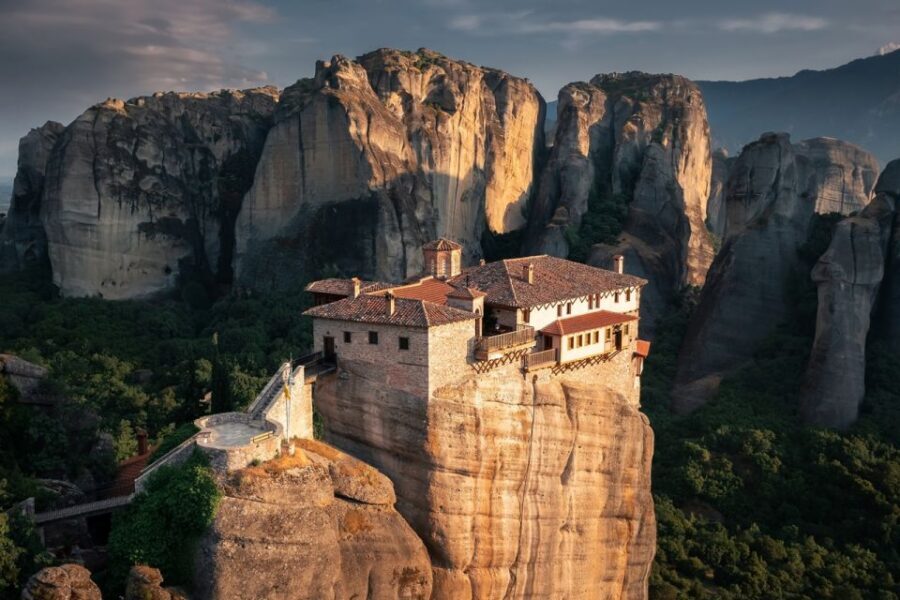
Two monasteries in the schedule are handled as photo stops:
- Holy Trinity Monastery (about 10 minutes)
- Monastery of St. Stephen (about 10 minutes)
This is a very Meteora-smart approach. You still get the full set of monasteries on your horizon, which is what helps you understand the UNESCO scale. But you aren’t spending every minute fighting for space inside a cliff-top building.
If you’re the type who likes freedom, these quick stops are where you can step away for photos, compare angles, and reset before the next interior visit. It also helps if you’re trying to match your energy level to the day.
Hermit Caves: the extra layer that makes Meteora feel more real
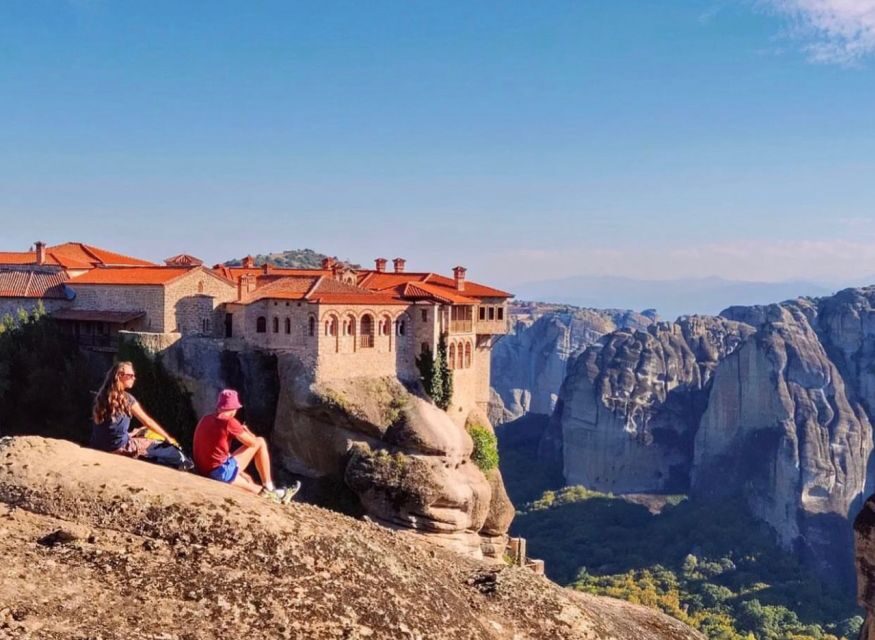
One of the included extras is time to discover the Hermit Caves. This matters because Meteora isn’t only about big monasteries; it’s about how people lived, prayed, and withdrew into the rock itself.
The caves add a human scale to the cliffs. When you learn the background as you move around, Meteora becomes less of a photo spot and more of a place with a lived-in pattern—still strict, still isolated, but with clear reasons behind it.
If you love stories tied to place, this part gives you a mental hook that stays with you after the tour ends.
What your guide actually does: stories plus smart pacing
This tour stands or falls on the guide. The strengths I see repeatedly in recent trips are:
- clear explanations of what you’re looking at
- the right amount of context during bus rides between stops
- flexibility when people need a little more time
I’ve seen guides like Vavos, Yannis, Giannis, and Nancy described as excellent at matching the pace to the group. One recurring plus: your guide typically doesn’t crowd your time inside the monasteries, so you can walk at your own speed while the audio guide handles the detailed descriptions.
You’ll also hear answers to questions on the spot. That’s important on Meteora, because visitors often notice something specific—construction style, location logic, or the way the monasteries sit on the rocks—and you want a real explanation, not a quick label.
Audio guide tips: make it work without stress
The smart audio guide is part of the value here. It’s free, multi-language, and tied to 11 points of interest.
To get the best experience:
- bring earpads
- keep your smartphone charged (you’ll use it for the audio)
- download or open the audio before you’re deep in the monastery areas, where signal can be unpredictable
I like this setup because it gives you control. When crowds are thick, you can pause where you want and listen for the right detail—without waiting for a group leader to finish a paragraph.
And since monastery interiors can feel quiet and rules-focused, audio lets you learn without causing distractions.
Price and entrance fees: is it good value?
At about $35 per person for a 4-hour half-day tour, you’re paying for logistics done well: pickup, transport in a small group vehicle, live local guiding, and the structure to see the full Meteora sweep quickly. That’s good value compared with trying to coordinate everything yourself, especially if you don’t want to drive and park in a busy area.
Just plan for the extra cost that isn’t included:
- monastery entrance fees are €5 each, paid in cash
- you’ll visit three monasteries for interiors, so you should budget for three entrance fees
Meals and drinks aren’t included. That’s not a dealbreaker for a half-day, but you’ll be happier if you eat beforehand or plan a later stop for lunch.
If you only have a morning in Kalabaka/Kastraki, this tour is usually the fastest path to a real understanding of Meteora without turning the day into pure logistics.
Dress code and stairs: the two things that can make or break your visit
The monasteries have strict clothing expectations, and it’s worth taking seriously before you leave your lodging. The rules provided are:
- women must wear knee-length or longer skirts and cannot wear pants, shorts, or sleeveless shirts
- men cannot wear sleeveless clothing or shorts
Also expect stairs. In practice, there are around 120 steps referenced for some monastery routes, and at least one stop can feel more demanding than first-time visitors expect.
My practical advice:
- wear shoes with solid grip
- bring layers you can adjust indoors
- if you’re unsure about mobility, consider how you’ll handle climbs at three separate interior locations
The tour is designed to include short walks and time at each site, but it’s still Meteora. You’re visiting cliff monasteries, not a flat museum.
What it’s like for small groups and families
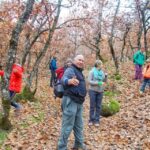
This is a small-group experience in an air-conditioned minibus. Many recent departures have stayed under about 20 people, which helps the guide manage questions and photo stops without constant bottlenecks.
For families, this can work, but keep expectations realistic. There are stairs, and some kids do fine while others get tired fast. One family with children aged 10 and 7 completed the route successfully, so it’s not automatically out of reach—but you should prepare for walking and climbs.
If you like a plan you can mostly follow, with photo stops built in and guided context along the way, this tour is a good match. If you want a completely hands-off experience, you might prefer longer independent time with fewer structured stops.
Should you book this Meteora Thrones panoramic morning tour?
Book it if you want:
- a 4-hour overview that covers the iconic Meteora viewpoints
- the confidence of a local guide explaining what you’re seeing
- a practical plan that includes three interior monasteries plus sightlines to all six active ones
I’d skip or adjust your expectations if:
- you have mobility limitations and stair climbs would be difficult
- you strongly prefer spending most of your time inside only one or two monasteries rather than seeing a wider set in a short day
If your goal is to understand Meteora without spending an entire day wrestling with transportation and crowds, this morning format is one of the easiest ways to get there.
FAQ
FAQ
Where does the tour pick up?
Pickup is available from hotels in Kalabaka or Kastraki (with Trikala also listed as an option for pickup/drop-off locations).
How long is the tour?
The tour duration is about 4 hours.
How many monasteries will I visit inside?
You’ll visit 3 of the 6 monasteries inside during the tour.
Will I see all 6 active monasteries?
Yes. The tour is designed so you can see all 6 active monasteries from panoramic viewpoints, even though you enter 3.
Which monasteries are included for interior visits?
The schedule includes interior visits to Great Meteor, Varlaam, and Rousanou.
Are monastery entrance fees included?
No. Entrance fees are €5 per monastery and are payable in cash.
Is there an audio guide?
Yes. A smart audio guide is included and available in multiple languages. You can use it inside the monasteries and at points of interest.
What do I need to use the audio guide?
You’ll need a smartphone and earpads.
What’s the dress code for entering monasteries?
You’ll need appropriate clothing. Women must wear knee-length or longer skirts and cannot wear pants, shorts, or sleeveless shirts. Men cannot wear sleeveless clothing or shorts.
Is the tour good for a small group?
It’s run as a small group in an air-conditioned minibus, which helps keep the experience comfortable and manageable.
Is there free cancellation?
Yes. Free cancellation is available up to 24 hours in advance for a full refund.