REVIEW · KALABAKA
From Kalabaka/Kastraki: Meteora Monasteries Morning Tour
Book on GetYourGuide →Operated by Visit Meteora · Bookable on GetYourGuide
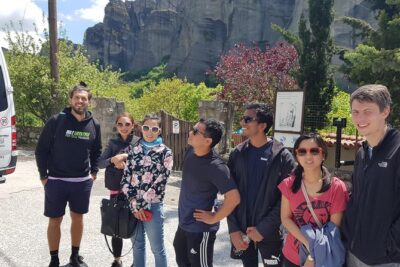
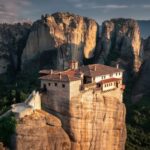
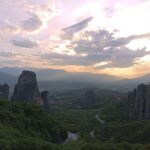
Meteora feels unreal in the morning. This guided 4-hour loop from Kalabaka/Kastraki strings together viewpoints, quick bus rides, and visits to three monasteries so you see how the rocks and the monasteries connect—without fighting traffic or searching for parking. I especially like the mix of guided context plus free audio so you can keep moving and still get the story. One thing to plan for: monastery entry fees are extra, and you’ll need to match the dress code to get inside.
What makes this tour work well is that it’s built for your energy level. You’ll get hotel pickup on a/c minibus (Mercedes Sprinter style), smart photo stops for getting your bearings, and enough time at each monastery to actually look around. I also love that the audio guide covers 19 points of interest, so even when you’re walking on your own time, you’re not guessing what you’re seeing. The drawback is simple: the guide does not go inside with you at the monasteries, so your experience depends on using the audio app and following the rules once you arrive.
In This Review
- Key Points I’d Plan Around
- Meteora, Explained in One Tight Morning
- Hotel Pickup and the Mercedes Sprinter Comfort
- How the Morning Route Keeps You Seeing More
- Doupiani Chapel and Saint George’s Hermit Cave Story
- Inside Three Monasteries: What You Get (and What’s Not Included)
- Audio Smart Guide: Use It Like a Seatbelt
- Price and What to Budget Beyond the Ticket
- Who Should Book This Meteora Morning Tour
- Should You Book It
- FAQ
- Are monastery entry fees included?
- How many Meteora monasteries do you visit inside?
- Is the tour guided in English only?
- Do I need a smartphone for the audio guide?
- Where does pickup happen?
- Is this tour suitable for wheelchair users?
Key Points I’d Plan Around
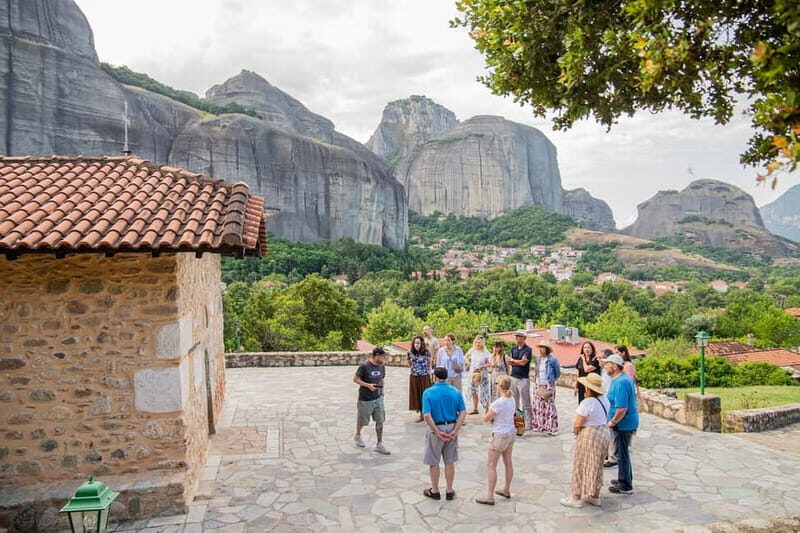
- You visit 3 monasteries inside, but you still get a full overview of Meteora’s main sites (all six are seen from the route)
- Hotel pickup and drop-off included, using an air-conditioned mini bus that reduces driving and walking stress
- Audio smart guide app is included (10 languages; 19 points of interest), so you’re never just standing around
- Photo-stop timing is built in, including multiple viewpoints across the rocks during the morning drive
- Doupiani Chapel and the Saint George Hermit Cave story are part of the morning narrative
Meteora, Explained in One Tight Morning
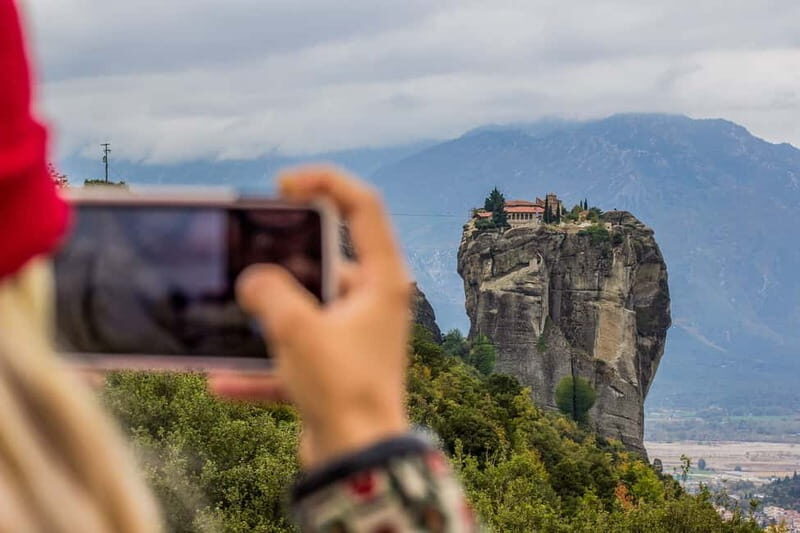
If you’ve ever seen Meteora in photos and thought it looked staged, this morning tour does the opposite. You’ll learn why monks risked steep, hard-to-reach rock towers to build monasteries in what felt like the dark ages, and how those early hermits shaped what came next. The guide’s talk is paired with the audio app, so the story keeps going even when you’re taking photos or wandering on your own.
I like that the route isn’t just scenic. It’s about cause and effect: the rocks formed in deep time, the monasteries appeared for spiritual reasons, and later generations built on that pattern. On this kind of tight schedule, that framing matters because otherwise the sites can blur together into three separate “pretty stops.” Here, you get the why behind the wow.
Also, you’re not stuck with one long walk. The morning is broken into bus segments, viewpoint breaks, and dedicated monastery time, which means you can see plenty without exhausting yourself before the best views.
You can also read our reviews of more tours and experiences in Kalabaka
Hotel Pickup and the Mercedes Sprinter Comfort
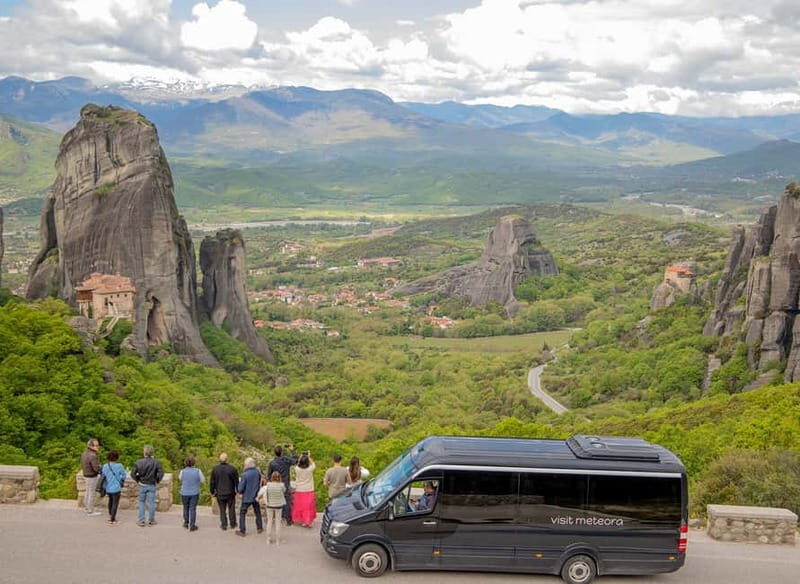
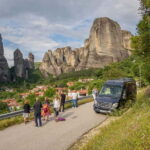
The biggest practical win is that you start and finish at your place in Kalabaka or Kastraki (the tour offers pickups from hotels and apartments in those areas). You’re picked up from the lobby or main entrance, and you’ll spot the Mercedes Sprinter mini bus. The tour operator notes the pickup process can take a few minutes, so it’s smart to be ready a bit early.
Once you’re on board, the setup is friendly to a short day-trip. There’s air-conditioning, Wi‑Fi on the bus, and a bottle of water included. That doesn’t sound dramatic, but in Meteora weather—sunny, breezy, and sometimes chilly in the morning—small comfort things add up.
One more thing I appreciate: the tour is designed to save your legs from repeated back-and-forth driving on winding roads. If you’re basing yourself in Kalabaka or Kastraki, you could rent a car or take a local bus, but you’ll still be walking between sites. This tour reduces the hauling and helps you spend your energy on looking, not coordinating.
How the Morning Route Keeps You Seeing More
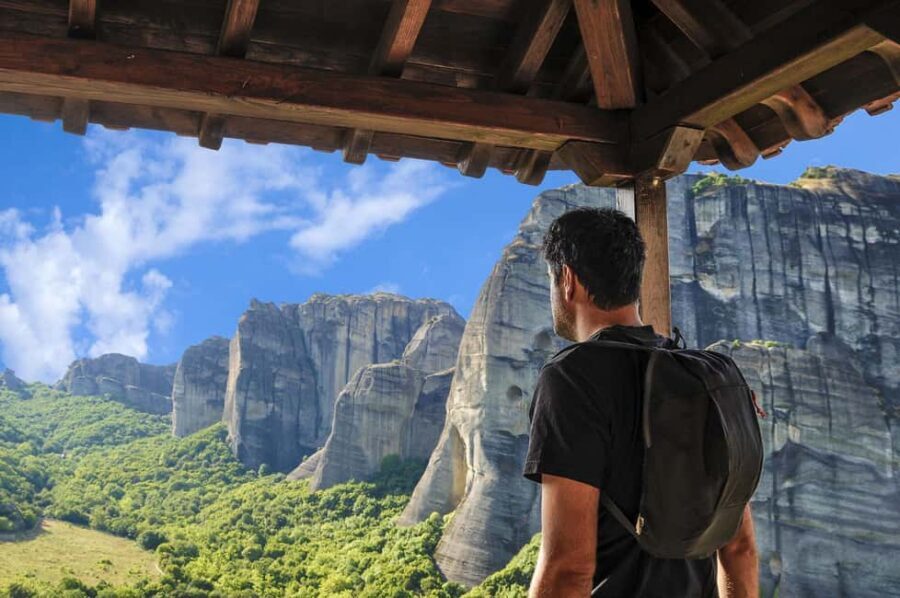
The morning is structured as a sequence of bus drives, viewpoint pauses, and monastery time. You start with pickup, then a short bus ride, and you’re quickly out to the first photo and sightseeing moments.
A few stops matter because they set your mental map:
- There’s an early photo-stop and viewpoint phase where the guide helps you read the area, not just admire it.
- You’ll have multiple scenic-drive segments with short breaks for photos, so you’re not trapped inside the bus for the whole stretch.
- Then the tour shifts into monasteries, where your time becomes more “wander and look” than “listen and look.”
Monastery time works like this:
- You’ll have one monastery visit with about 1 hour to explore on your own.
- Another monastery stop comes with about 45 minutes.
- A third monastery stop gives you around 30 minutes.
That schedule is long enough to walk around, find the best angles for photos, and see key spaces. It’s not so long that you feel stuck when the stairs and stone surfaces start to feel tiring.
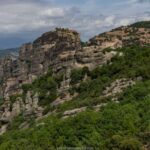
Also note the tour passes key locations and viewpoints between sites. That matters because Meteora isn’t one flat attraction. The viewpoints help you understand the vertical scale and why the monasteries cling to those walls so stubbornly.
Doupiani Chapel and Saint George’s Hermit Cave Story
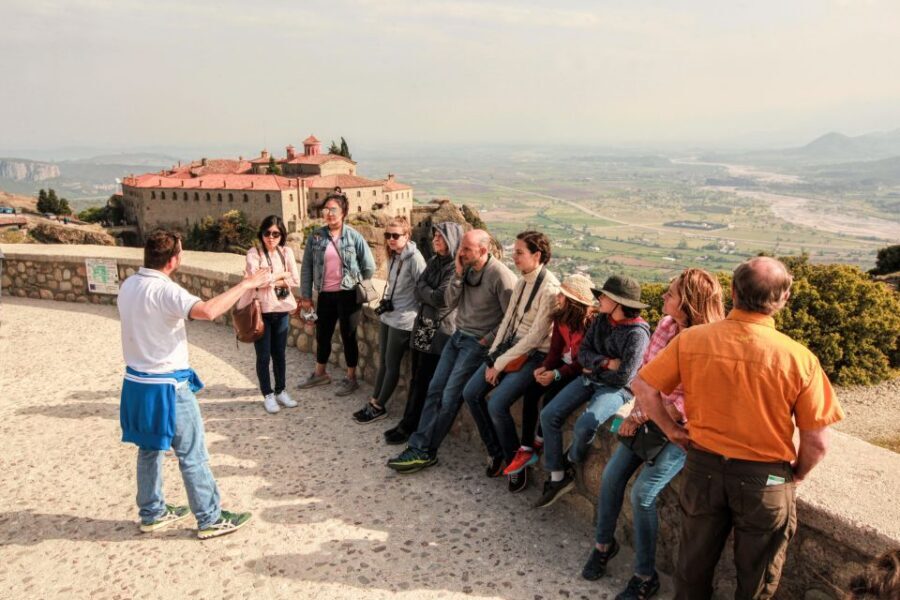
This tour includes a special stop tied to the religious legends of the area: Doupiani Chapel and the tale of Saint George’s Hermit Cave. Even if you’re not a “religion-history” fanatic, these stories add meaning to what you see in stone.
Why I think this inclusion is valuable: Meteora can look like an art exhibit from far away—stark architecture perched on huge cliffs. But when you learn the local spiritual narrative, the sites become more than geometry. The chapels and caves give you a sense that the rock formations were not just convenient. They were part of the myth-making and devotion of the people living near these monasteries.
Expect the guide’s storytelling to connect these areas back to the bigger theme: early hermits seeking solitude, then later communities formalizing that search into buildings. With the audio app running in the background, you’ll have a second way to keep the story straight while you’re walking and taking photos.
Inside Three Monasteries: What You Get (and What’s Not Included)
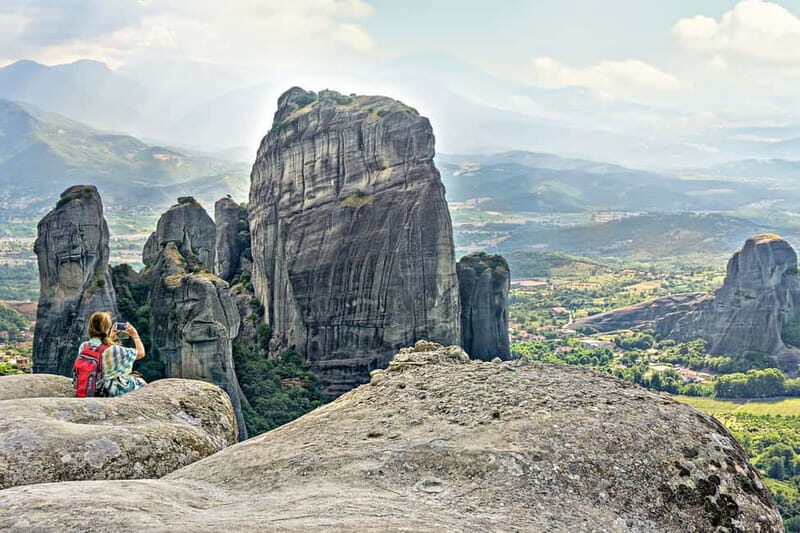
Here’s the trade-off you’ll want to understand up front. The tour visits three monasteries inside, and you’ll see all six main monasteries from the route. But the guide is not included inside the monasteries.
That means you’ll get:
- A guided explanation while you’re approaching and moving between sites
- Time to explore each monastery
- A free multilingual audio app to interpret what you’re looking at
You still need to follow the rules once you arrive. The tour notes strict monastery clothing requirements: no sleeveless tops for men, no shorts above the knee, and for women, you’ll need a skirt down to at least the knee (pants or short skirts won’t work). If you show up in the wrong clothes, you might be stuck waiting or buying something on the spot—so I recommend bringing a scarf you can use for quick coverage.
Also budget the entry fees. Monastery entry fees are 5 EUR per person at each monastery. Because you visit three, you should plan for about 15 EUR total in addition to the tour price. If you’re comparing “cheap vs pricey” tours, this is part of the real arithmetic.
Finally, remember how the monastery stops are timed. One place gets around an hour, another about 45 minutes, and the last around 30 minutes. If you love slow museum-style wandering, you may wish the visits were longer. But for most people, this pacing hits a sweet spot: enough time to see key rooms and artwork, not so much that you run out of stamina.

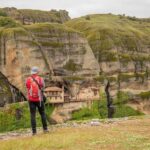
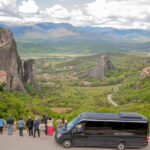
Audio Smart Guide: Use It Like a Seatbelt
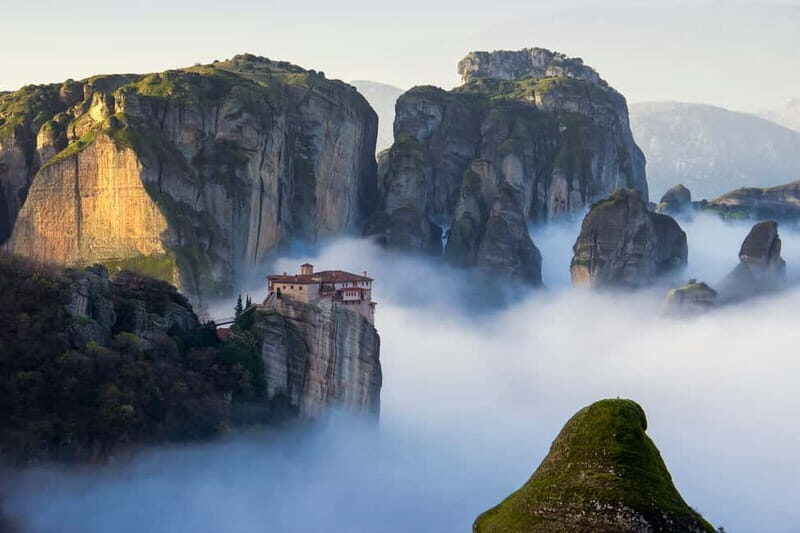
The free audio smart guide app is one of the smartest parts of this tour. It covers 19 points of interest and supports 10 languages. The app is available in languages including English, French, German, Italian, Portuguese, Spanish, Polish, Chinese, and Japanese (it’s also listed with additional language options). That’s a big deal because it turns your “free time” into guided time.
The practical tip is right there in the rules: bring earpads and use a smartphone. You’ll get the most from the audio if you listen while you walk rather than only listening at the start. It also helps you keep your place when you move between areas, especially inside monasteries where it’s easy to lose the thread.
I also like that the audio can work alongside the guide’s talk. If you miss a detail on the bus, the app can fill gaps while you’re looking at floors, icons, and spaces. It’s a simple way to make the tour feel “complete” without forcing someone to lecture you the whole time.
And since the tour includes Wi‑Fi on the bus, you have a decent chance to get set up before key stops if you’re traveling with data limitations.
Price and What to Budget Beyond the Ticket
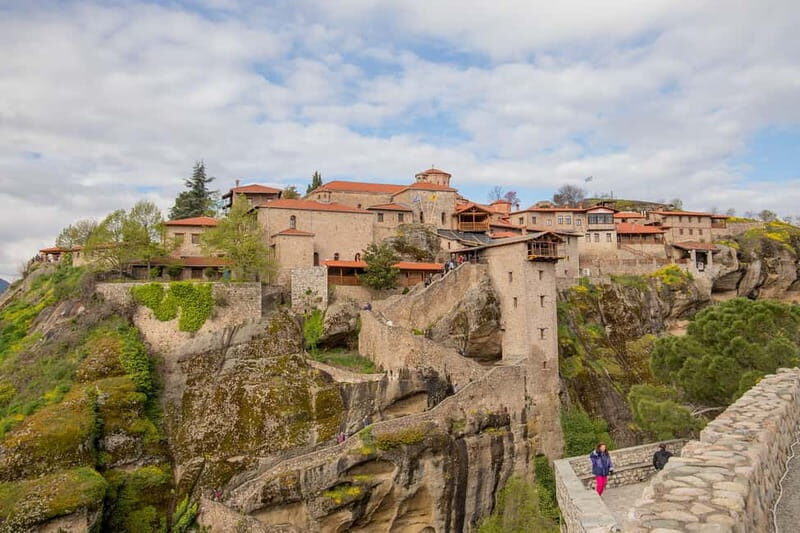
At $27.67 per person, the tour is priced like a value-focused morning activity. For that money, you’re paying for a local English-speaking guide, mini bus transport with pickup and drop-off, multiple photo and scenic stops, and the audio app.
What you’re not paying for:
- Monastery entry fees (5 EUR per person at each monastery)
- A guide inside the monasteries
- Food and drinks
When I look at value, I treat the entry fees as part of the true total. Plan for the base tour price plus three monastery entries. Once you do that, you’ll see the tour is still a solid deal for the amount of ground you cover and the structure it gives you.
The “extra money” is not wasted either. Monasteries are the reason you’re there, and the stops are timed so you get to experience them without playing logistics roulette.
Who Should Book This Meteora Morning Tour
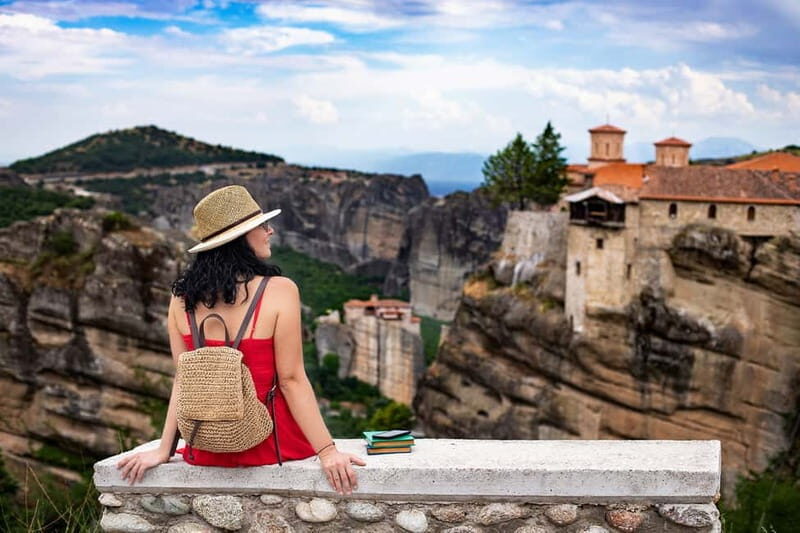
This tour is best for people who want structure. If you like having your day planned but you still want time to roam inside the monasteries, this format fits.
It’s also a good pick if you’d rather save energy for the sites than spend it driving. Reviews around the experience consistently point to smooth organization, punctual pickup, and strong guide storytelling. You may even meet guides such as Toulis, Kate, Demetrius, Eva, Vasily, Christos, or Jim/Dimitris, all of whom were specifically praised for keeping the morning entertaining and clear. Drivers are often praised too, which matters in Meteora traffic and winding climbs.
Consider choosing a different plan if:
- You have mobility issues or can’t handle uneven stone and stairs (the tour is listed as not suitable for wheelchair users and mobility impairments)
- You have trouble with the monastery dress code requirements
- You want a long, slow, museum-style visit at a single monastery (this tour is built for overview)
If you’re a normal walker who can handle short hikes and stairways, you’ll likely feel like you got a full Meteora primer without burning out.
Should You Book It
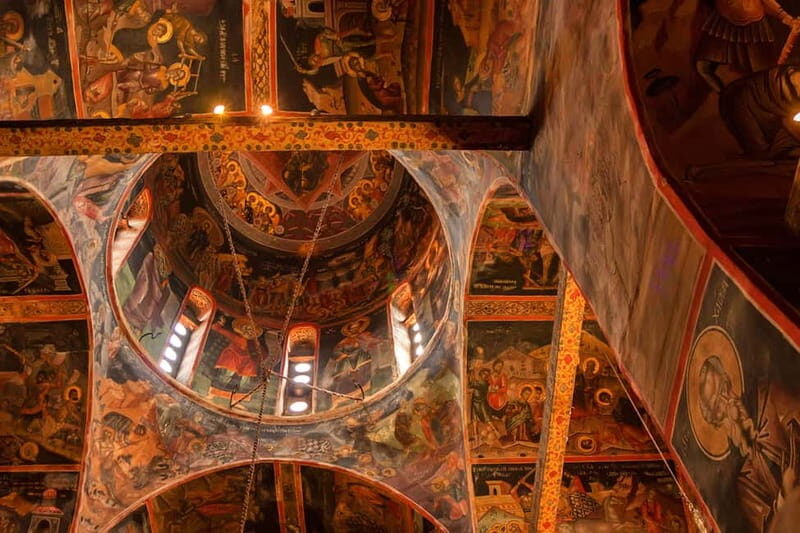
I’d book this tour if you want the Meteora “big picture” in one morning with minimal hassle. The combination of pickup, multiple photo-friendly stops, and audio in multiple languages makes it easy to get real understanding fast.
If you hate extra costs, just remember the monastery entry fees are separate. If you’re comfortable with that and you’re willing to dress appropriately, the schedule is tight in a good way: you see a lot, but you’re not rushed through everything you came for.
FAQ
Are monastery entry fees included?
No. You pay monastery entry fees separately at each monastery (5 EUR per person at each one). Since you visit three monasteries inside, budget about 15 EUR total for entry.
How many Meteora monasteries do you visit inside?
You visit three monasteries inside. The tour also includes viewpoints where you can see all six of Meteora’s main monasteries.
Is the tour guided in English only?
Yes, the live tour guide is English only. You can use the included audio smart guide app in multiple languages.
Do I need a smartphone for the audio guide?
Yes. The tour instructions say you’ll need a smartphone to use the audio guide, and you should bring ear pads.
Where does pickup happen?
Pickup is included from hotels and apartments in Kalampaka town and Kastraki Village. If your address is not listed, you need to contact the provider to arrange pickup.
Is this tour suitable for wheelchair users?
No. The tour is listed as not suitable for wheelchair users and people with mobility impairments.