REVIEW · ATHENS
Acropolis Monuments guided tour with German Speaking Guide
Book on Viator →Operated by Athens Walks Tour Company · Bookable on Viator
The Acropolis makes more sense with a guide. This small-group afternoon walk is led by a German-speaking licensed tour guide and archaeologist, so you’re not just looking at ruins. You get a clear route through the site’s big moments—especially the Parthenon area—and how the monuments connect.
One thing I really like is the way the story gets explained in plain terms. A guide named Selina was praised for teaching the Acropolis in five eras in a refreshing, easy-to-follow way, while still answering questions without brushing anyone off.
One possible drawback: Parthenon entrance is not automatically included unless you choose the option with entrance tickets, so you may need to pay on the day.
In This Review
- Key highlights worth your attention
- A German-speaking archaeologist makes the Acropolis click
- Where you start at Athens Walks (and how to stay on time)
- Parthenon time: the sculptures and the view you earn
- What can make Parthenon time feel tight
- Temple of Athena Nike, Propylaea, and the rhythm of arrival
- Beyond the Parthenon: theatre, healing, and the Odeon
- A small caution: don’t rush the connections
- Theater of Dionysus: a 15-minute stop that helps you picture performance
- Erechtheion and the Caryatids porch ruins
- If you hate crowds
- Group size and timing: plan for a steady walking pace
- Tickets, price, and what $46.26 really buys you
- What to bring and how to dress for the Acropolis
- Who should book this Acropolis monuments tour
- Should you book it?
- FAQ
- FAQ
- Where does the tour meet?
- What language is the guide?
- How long is the tour?
- Is the Parthenon entrance ticket included?
- Do I need a mobile ticket or voucher?
- Is there pick-up or drop-off?
- What dress code should I follow?
- Do I need ID?
- How big is the group?
- Can I cancel and get a refund?
Key highlights worth your attention

- Licensed archaeologist guide: you’ll hear context, not just names and dates
- German storytelling with clear explanations and room for questions
- Parthenon focus: plan for a solid look at the temple and its sculptures
- Temple of Athena Nike and Propylaea gateway: key transitions on the walk
- Theater of Dionysus and Erechtheion: performance space and the Caryatids porch ruins
A German-speaking archaeologist makes the Acropolis click
The Acropolis is famous for a reason, but it can also feel like a lot of stone. A guided route fixes that fast. On this tour, the licensed guide works like a translator between what you see and what it meant—politics, religion, theatre, and everyday meaning wrapped into one hilltop complex.
The German language matters too. If you’ve ever visited Athens with a headset that barely helped, you’ll understand why this is a big deal. You can actually follow the explanations while you stand in front of the monuments, instead of trying to reconstruct everything later.
And yes, the Parthenon is the star. But the tour also takes you through other major stops on the Acropolis so the Parthenon doesn’t feel like an isolated postcard. You’ll see how the site functioned as a whole.
You can also read our reviews of more guided tours in Athens



Where you start at Athens Walks (and how to stay on time)
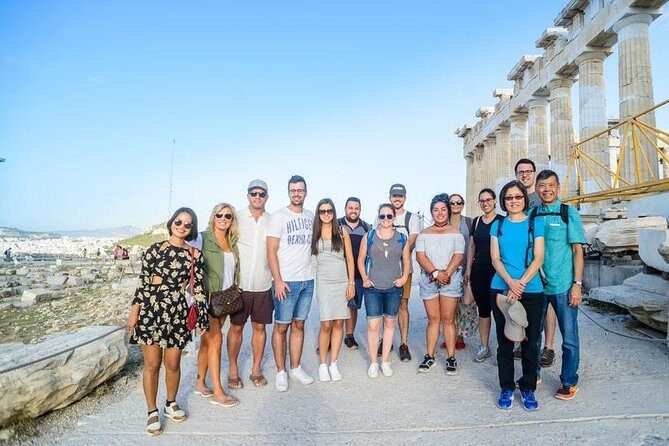
This tour meets at the Athens Walks office on Athanasiou Diakou street 16, about a five-minute walk from Acropolis metro. It ends back at the same meeting point, so you’re not stuck figuring out transport after you finish your hilltop circuit.
I like this setup because it keeps the afternoon simple. You can arrive a bit early, use the area around the station to orient yourself, and then step into the route without a complicated logistics puzzle.
One practical note: the dress code is listed as smart casual, with formal also mentioned. Athens weather can be changeable, but on the Acropolis you’ll still want shoes you can trust. Save the slick sandals for the beach.
Parthenon time: the sculptures and the view you earn
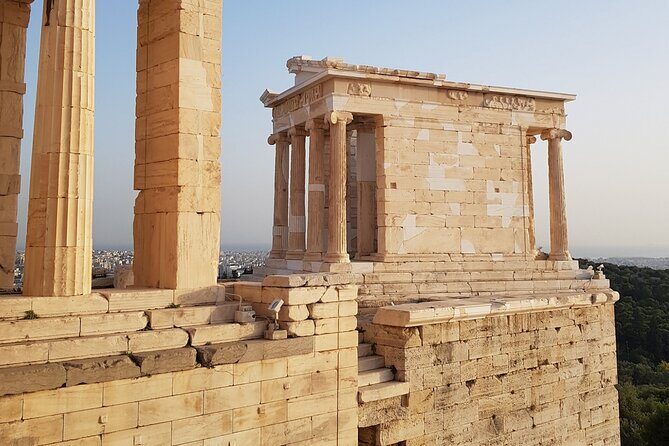
You spend substantial time at the Parthenon area (about 45 minutes in the schedule). This matters because the Parthenon isn’t just one building—it’s a system of parts. When you slow down, you start noticing the details you’d otherwise miss: how the structure sits on the hill, how the sculptural program communicates meaning, and why this temple became the symbol it still is.
Here’s what I think is the real value of the Parthenon block on a guided tour: you learn what to look for. Instead of a generic wow, you get explanations that help you connect the sculptures to the story being told across the site.
You also get one of the best payoffs in Athens: the higher viewpoints. From the Parthenon area, you can see a lot of the city spread out below. That big view is why people love coming here—but it’s even better when you understand what you’re seeing in terms of how the Acropolis shaped civic life.
What can make Parthenon time feel tight
Forty-five minutes sounds generous until you’re standing in front of crowds. If you want extra quiet, aim to take in one main angle carefully, then rotate with the group rather than trying to freeze in the busiest spot. The tour is designed for a walking circuit, not a slow museum experience.
Temple of Athena Nike, Propylaea, and the rhythm of arrival
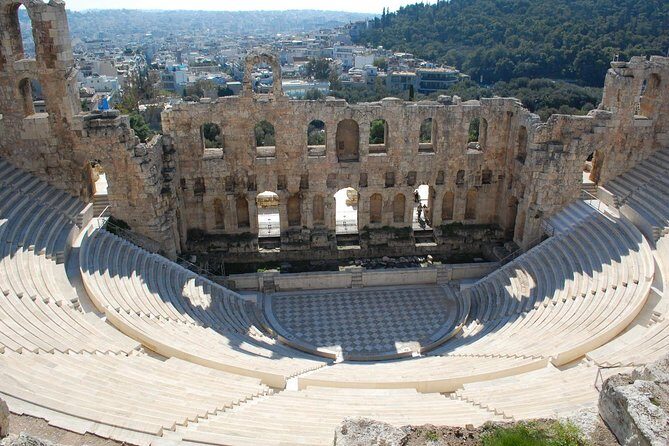
After the Parthenon focus, the tour route moves through key “gateway” and “approach” points that explain how you experienced the Acropolis as you entered. Two big stops in the plan are the Temple of Athena Nike (often called the Wingless Victory) and the gateway to the Propylaea.
Why these matter: they show you that the Acropolis wasn’t only a final destination. It was an experience. You’d approach, pass through thresholds, and encounter monuments arranged to guide the eye and the mind. These transitions also help you understand the layout—where you are relative to the Parthenon and why certain views feel framed.
If you’ve ever felt lost on ruins, this section helps. The talk connects the dots while you’re still close enough to match the explanation to the stone.
- All Day Cruise -3 Islands to Agistri,Moni, Aegina with lunch and drinks included
★ 5.0 · 4,958 reviews




Beyond the Parthenon: theatre, healing, and the Odeon
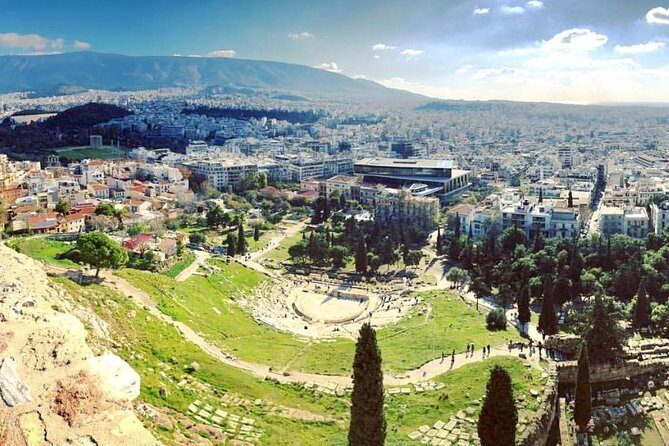
The Acropolis wasn’t just religion and government. It also hosted cultural and public life. The tour includes highlights tied to that wider use of the hill, including the Theater of Dionysus, the Healing Temple of Asclepius, and the Odeon of Herodes Atticus.
Even if you’re not a theatre buff, the Theater of Dionysus stop is a strong moment because it forces you to picture what people did here. Athens didn’t treat performance as a side activity—it was part of civic identity. Seeing the theatre context on site turns the idea of ancient “entertainment” into something closer to a public institution.
The Healing Temple of Asclepius brings another angle: the Acropolis as a place where people came for more than politics. You get reminded that sacred spaces could also be tied to wellbeing and ritual.
A small caution: don’t rush the connections
These stops are part of a single afternoon circuit. If you go full speed only to grab photos, the value of the guide’s connections drops. The tour works best when you let the explanation guide which direction you look next.
Theater of Dionysus: a 15-minute stop that helps you picture performance

The schedule includes about 15 minutes at the Teatro Di Dioniso area. That’s not a long time, so the key is how you use it. Take the guide’s cue and build a mental map: where the audience would have been, how a performance space changes your perception of the hill, and why this theatre is often tied to the idea of theatre’s deep roots.
In other words, use the short time to understand the function—not to memorize every ancient detail. The guide is there so you leave with a sense of why the theatre mattered, not just where it sits.
Erechtheion and the Caryatids porch ruins
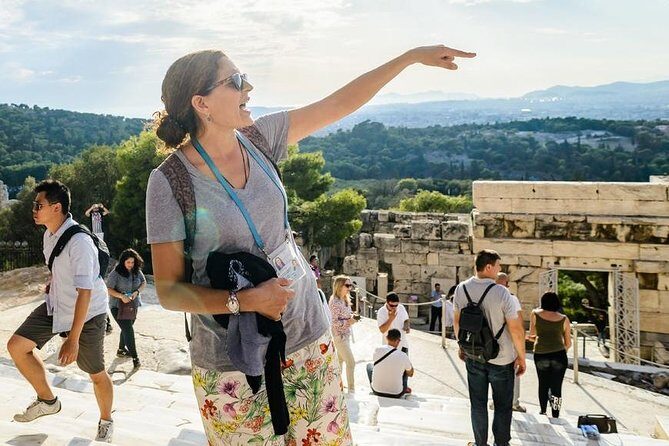
One of the most recognizable features of the Acropolis is linked to the Erechtheion, especially the remains of the Porch of the Caryatids. This tour plans another 15-minute stop at the Erechtheion area.
This is a good segment for people who love craftsmanship. Caryatid-like forms are instantly eye-catching, but the real fun begins when you understand what you’re looking at—how the architecture turns sculptural figures into structural storytelling.
Even in ruins, the porch area has a strong presence. It also gives the tour variety: compared to the massive, iconic Parthenon, the Erechtheion brings a different mood and a different kind of attention to detail.
If you hate crowds
The Acropolis can be packed. If the area is jammed, focus on one or two viewpoints from the guide’s suggested spots. You’ll still get the meaning, and you’ll waste less energy trying to find a perfect photo line.
Group size and timing: plan for a steady walking pace
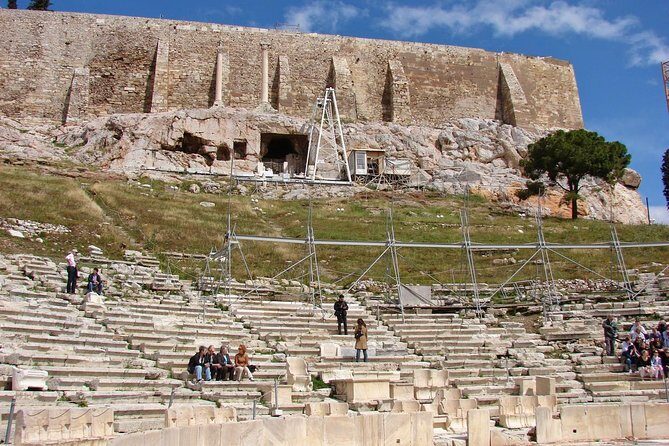
This is an afternoon walking tour of about 2 hours. The schedule shows multiple “micro stops” (two Parthenon blocks and shorter segments at theatre and Erechtheion), which means you’ll be moving through the site rather than staying parked in one place.
Group size is kept small, and capacity is listed with an upper limit note that points to a controlled group experience (max values are shown in the tour details). Practically, that’s what you want here: enough people that the tour feels lively, but not so many that you can’t hear the guide at each monument.
Moderate physical fitness is noted as needed. That’s mostly about stairs and uneven paths on the hill. If you can comfortably walk Athens’ sidewalks and handle steps, you’ll be in the right zone.
Tickets, price, and what $46.26 really buys you
The price is listed at $46.26 per person, and this is commonly booked about 50 days in advance. That timing suggests people plan their Acropolis visit early, which is smart since the hill is popular.
The big value question is the ticket situation. Parthenon admission is not guaranteed to be included unless you choose the option with entrance tickets. If you don’t, you should expect to pay entrance on the day for the Parthenon.
So is the tour still good value? Yes—because you’re paying for interpretation. Without a guide, the Acropolis can feel like a lot of impressive fragments. With a licensed archaeologist and a structured route, you get meaning that you can carry with you after you leave the hill.
Also, the tour includes tour guidance, and the schedule points to mobile ticket use. That reduces friction on the day and helps you spend more time actually learning and looking.
What to bring and how to dress for the Acropolis
Here’s the practical take: dress code is listed as formal, with smart casual also stated. That usually means you shouldn’t show up in beachwear and flip-flops. Aim for comfortable clothes that still look neat.
Bring your passport or ID if you’re under 25 years old. That’s a detail people sometimes forget, and Athens attractions can be strict when it comes to age rules.
You’ll want shoes with grip because the surfaces can be uneven. Service animals are allowed, and the meeting point is near public transportation, which helps if you’re building your day around trains and metro.
And if you prefer planning with confidence: it’s listed as having a mobile ticket option, with the ability to present a paper or electronic voucher.
Who should book this Acropolis monuments tour
This tour fits best if you want:
- A German-speaking guide who can explain what you’re seeing in real time
- A structured route that covers major monuments, not just the Parthenon
- Short, focused stops that build understanding through connections
It’s also a good match for people who feel overwhelmed by crowds. A guided circuit helps you prioritize. You can still take photos, but you won’t lose the thread.
If you’re the kind of visitor who wants to read every inscription for an hour, this may feel too compact. But if you want to leave with a strong grasp of how the Acropolis worked across time, it’s a solid afternoon choice.
Should you book it?
I’d book this tour if German guidance and a licensed archaeologist explanation matter to you. The schedule gives meaningful coverage of the Parthenon area plus other major stops like the Theater of Dionysus and the Erechtheion Caryatids porch ruins, and the guide’s ability to explain in a clear way is a real strength.
Just check the entrance situation before you go. If the Parthenon ticket isn’t included in your option, you’ll need to pay on the day. Once you’re clear on that, this feels like a good-value way to turn a crowded hilltop into a story you can actually follow.
FAQ
FAQ
Where does the tour meet?
The meeting point is at Athens Walks office on Athanasiou Diakou street 16, about a five-minute walk from the Acropolis metro station.
What language is the guide?
The guide is German speaking.
How long is the tour?
The duration is about 2 hours.
Is the Parthenon entrance ticket included?
Parthenon admission is included only if you book the option with entrance tickets. Otherwise, entrance fees are not included and you pay on the day.
Do I need a mobile ticket or voucher?
You can present either a paper or an electronic voucher, and the tour supports a mobile ticket.
Is there pick-up or drop-off?
No pick-up/drop-off service is included.
What dress code should I follow?
The tour lists dress code expectations as formal and smart casual. Plan to dress neatly.
Do I need ID?
A current valid passport or ID is required on the day of travel for ages under 25.
How big is the group?
The tour is listed with a maximum of 50 travelers, and it also notes a maximum of 25 travelers.
Can I cancel and get a refund?
Yes. Cancellation is free if you cancel up to 24 hours in advance for a full refund.



More Guided Tours in Athens

More Tours in Athens

More Tour Reviews in Athens
- All Day Cruise -3 Islands to Agistri,Moni, Aegina with lunch and drinks included
★ 5.0 · 4,958 reviews