REVIEW · ATHENS
Athens to Meteora DayTrip by Train in Spanish language – Local Agency
Book on Viator →Operated by Meteora Thrones -Travel Center · Bookable on Viator
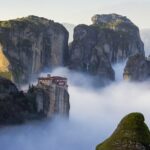
Meteora changes how you picture mountains. This full-day outing combines round-trip transport with a Spanish-speaking guide and a careful “see it all” plan for Meteora’s cliffside monasteries. I like the fact that you get panoramic views of all six monasteries plus time to enter three of them, without the hassle of coordinating buses and tickets yourself. The one thing to weigh is that flood-related disruptions can turn the train day into a long bus ride.
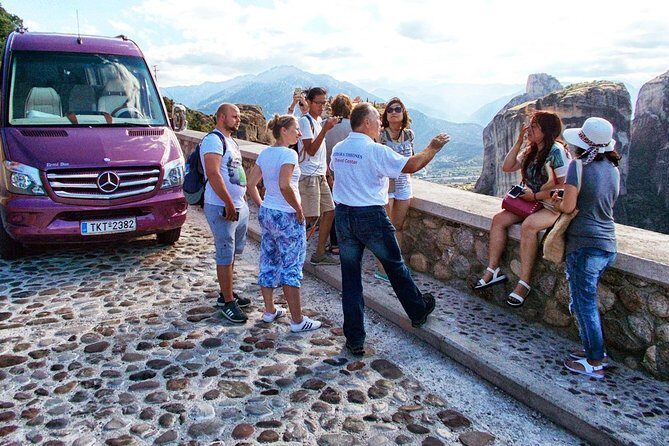
The experience is built for comfort and clarity. You’ll travel with a guide who explains what you’re looking at, then you move through the Meteora area by air-conditioned vehicle with WiFi on board. A small group size also helps you get practical attention at the stops.
Still, plan for a big day. With monastery visits, photo breaks, and the return trip, it’s not a relaxed stroll. If you get tired easily on long road days, you’ll want to mentally prepare.
In This Review
- Key things to know before you go
- Meteora by train and bus: why this format makes sense
- Timeline from Athens: train seats vs bus replacement
- Option A: Original train plan (when trains are running)
- Option B: Flood replacement bus plan (until further notice)
- The Spanish-speaking guide: how it improves the day
- Kastraki under the rocks: your first real Meteora moment
- Great Meteoron: the big one and the time to take it in
- Varlaam and the nunnery-style stops: variety in what you see
- Photo stops, local angles, and pacing that doesn’t feel chaotic
- Kalambaka coffee stop: resetting before the return
- Transport comfort and WiFi: the long-day factor
- Dress rules: don’t let fabric ruin your monastery time
- Entrance fees and what’s actually included
- Price and value: what $91.36 buys you
- Who this Meteora day trip is best for
- Should you book this Athens to Meteora day trip?
- FAQ
- How long is the Athens to Meteora day trip?
- Will the tour definitely be by train?
- Are monastery entrance fees included?
- Is the guide available in Spanish?
- Do I get WiFi during the trip?
- Are the train tickets electronic?
- Can I cancel and get a refund?
Key things to know before you go
- Spanish-speaking tour leader helps you understand what you’re seeing at each monastery stop
- All six monastery viewpoints, plus inside visits to three (entrance fees not included)
- WiFi on the vehicle keeps you connected during the long travel stretches
- Kastraki viewpoint time gives you a classic Meteora village-under-the-rocks perspective
- A flood-update means the tour may run by air-conditioned bus instead of train
Meteora by train and bus: why this format makes sense
Meteora is the kind of place where first impressions can be misleading. You see towering rock pillars and think you’ll get a few photos and a quick look. Then you get there, and you realize the monasteries are not just perched for scenery. They’re part of a whole way of life and a landscape of decisions—where to build, where to hide, and how to move between sacred spaces.
That’s why the structure of this day trip matters. You’re not trying to solve the logistics yourself from Athens. You start with included transport to Kalambaka, then you spend your main time in the Meteora area touring from the right base. The guide’s job is to put meaning behind the views—so the stops don’t feel like a checklist.
You also get a small-group setup. The tour caps at 20 travelers, which usually helps with meeting times, gathering everyone for photo moments, and getting answers without feeling rushed.
You can also read our reviews of more tours and experiences in Athens.


Timeline from Athens: train seats vs bus replacement
This trip has an important update. From September 2023 until further notice, flooding has affected train services, and the provider may replace the train route with a modern air-conditioned bus.
Here are the two patterns the day can follow:
Option A: Original train plan (when trains are running)
- Depart Athens from Athens Train Station (Larissis) at 8:28am
- Arrive in Kalabaka at 12:49pm
- Your mini bus waits at Kalabaka Train Station to start the Meteora touring portion
Option B: Flood replacement bus plan (until further notice)
- Depart from Athens Larissis station at 7:45am
- Travel takes about 5 hours, with a 20-minute refreshment stop
- You then spend about 5 hours in Meteora
- Return to Athens with an arrival around 11:00pm
Either way, the goal is the same: get you to Meteora early enough to see the monasteries in good daylight, then bring you back safely to catch your return timing.
If you’re the type who hates schedule surprises, treat this like a day that can be long no matter what. The train version is smoother. The bus version is more time-consuming. Either way, bring patience.
The Spanish-speaking guide: how it improves the day
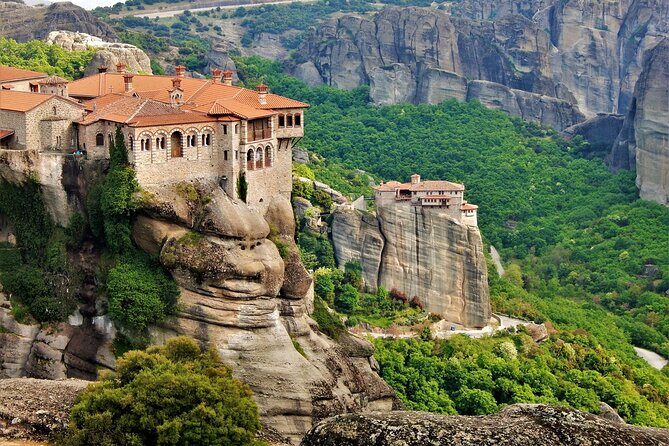
Meteora can feel overwhelming at first. You’re looking at multiple monasteries, different views from different angles, and buildings that look similar from a distance—but aren’t identical. A Spanish-speaking guide helps you sort out what you’re seeing.
The tour notes emphasize a local expert Spanish-speaking tour leader, and the reviews specifically mention a guide named Nick as professional and attentive. When the group is small, that personal attention becomes more than a nice-to-have. It helps you understand why one monastery is positioned the way it is, what you’re meant to notice from the viewpoint stops, and how to keep up with the movement between locations.
Also, the tour includes a panoramic Meteora map. That sounds small, but it’s useful when you’re standing in multiple places all day and your brain wants to connect the dots.
- All Day Cruise -3 Islands to Agistri,Moni, Aegina with lunch and drinks included
★ 5.0 · 4,958 reviews


Kastraki under the rocks: your first real Meteora moment
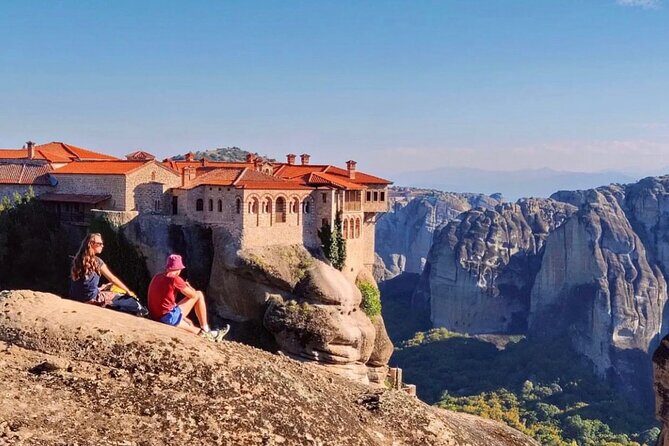
Before you start the monastery circuit, you get a stop for Kastraki, the village sitting beneath the rock formations. This is the part where Meteora stops being abstract and becomes visual. You’ll get a chance to frame the monasteries with the settlement and the cliffs around them.
Why this matters: it gives you a reference point. After this, when you jump to the other viewpoints, you’ll be able to understand where the monasteries sit relative to the valley.
If you like photos, this is one of the early moments when you should slow down. Light and angles can change fast across the day, and early stops often set the best comparison shots.
Great Meteoron: the big one and the time to take it in
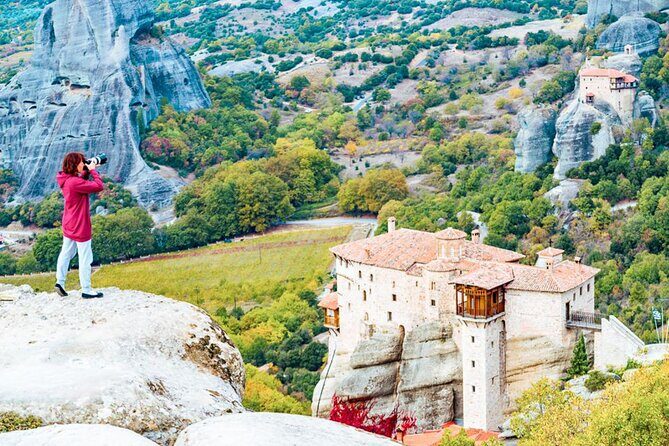
One of the highlights is Great Meteoron, described as the biggest and oldest monastery of Meteora. Your stop here is about 1 hour.
This is your anchor stop. Even if you’re not an architecture expert, you’ll feel the scale. For many people, Great Meteoron becomes the place where the whole site clicks—how the monasteries operate as distinct communities, yet share the same dramatic rock setting.
One practical note: admission tickets are not included, and entrances cost around 5 euro each, paid in cash. The tour itself covers transport and visits into the three popular monasteries, but you’ll still need to budget for on-site entry.
Varlaam and the nunnery-style stops: variety in what you see
After Great Meteoron, the itinerary moves through other monasteries and religious sites, including:
- Varlaam Monastery (~35 minutes)
- Agios Stefanos (St Stephen) Nunnery (~35 minutes)
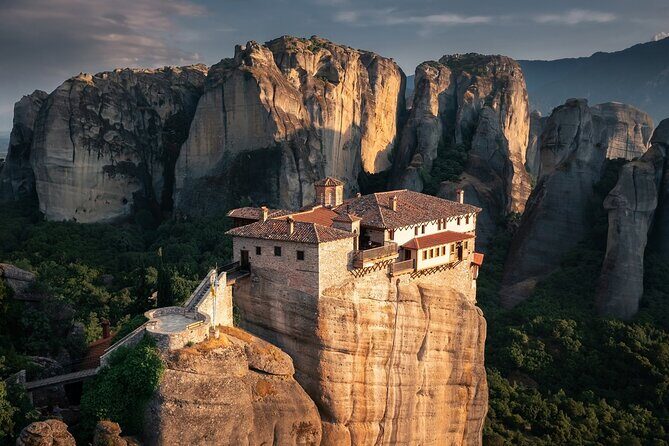
- Holy Monastery of Rousanos – Saint Barbara (~35 minutes, admission ticket free on the tour schedule)
- Holy Trinity Monastery (Agia Triada) (~35 minutes, admission ticket free on the tour schedule)
- Agios Nikolaos Anapaphsas (~35 minutes, admission ticket free on the tour schedule)
Even though the stops are shorter than Great Meteoron, the variety is the point. Meteora isn’t one monastery. It’s a cluster of communities across steep rock faces. Seeing different sites back-to-back helps you understand that the layout isn’t random—it’s shaped by geography, access routes, and the practicalities of life on the cliffs.
A key detail for expectations: the tour includes visits inside three of the monasteries. For the others, you’re likely doing more exterior viewing and viewpoint time, depending on the stop. The route is designed to show you the full set of six monasteries from the right angles.
Photo stops, local angles, and pacing that doesn’t feel chaotic
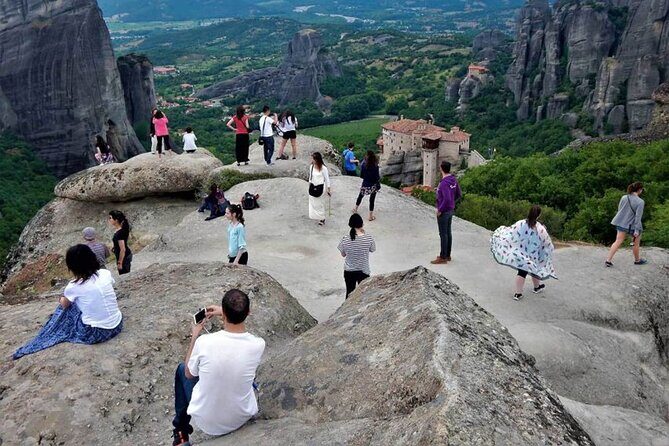
Meteora rewards the people who slow down at the right moments. This tour is built around that idea: you get panoramic views of all six monasteries, plus dedicated timing where you can step off, look around, and get photos.
The itinerary also calls out specific viewpoint opportunities. That matters because with Meteora, the “same” monastery can look completely different depending on where you stand. A view that looks good from one angle can be blocked from another stop. By moving you around, the tour gives you options.
Still, keep your expectations realistic. You’re touring in a day that starts early and includes a long return. The guide’s job is to keep you moving while still giving you time to see what’s worth seeing.
Kalambaka coffee stop: resetting before the return
At Kalambaka, you get about 30 minutes. It’s positioned as a break with a coffee overviewing Meteora.
This stop is practical in a way that’s easy to overlook. By the time you reach Kalambaka, you’ve done multiple cliffs, stairs, and viewpoints. A short sit-down pause helps you recover and re-focus for the ride back.
It’s also a good moment to check your photos and plan your next shot if you want one last angle before you leave.
Transport comfort and WiFi: the long-day factor
You’ll be moving most of the day, and that’s true whether you’re on the train route or the bus replacement. The good news is that the touring part uses an air-conditioned vehicle, and the bus replacement includes WiFi.
WiFi won’t make the day short, but it does help with the mental load. You can download offline maps, post a quick message, or just pass time without staring at the scenery nonstop.
The bus replacement may feel tiring compared with train travel, based on the experience reports. If you choose this tour thinking it will be easy, I’d reframe it as comfortable but long. Bring water, wear supportive shoes, and expect to spend most of the day upright and moving between stops.
Dress rules: don’t let fabric ruin your monastery time
Monastery entrances mean you need to dress respectfully and practically. The tour’s clothing guidance is very clear:
- For women: skirts to the knee or longer are required; no pants; no shorts; no sleeveless tops
- For men: no sleeveless clothing; shorts over the knee are prohibited
This is one of those details that can derail your day if you ignore it. Don’t count on a last-minute solution unless you have one already. If you’re touring in summer heat, choose breathable long options you’ll actually want to wear all day.
Entrance fees and what’s actually included
Let’s separate included costs from what you’ll handle on the ground.
Included:
- Round-trip train tickets (Athens–Kalabaka–Athens) as part of the original plan
- Admission to visit inside three monasteries (but see cash note below)
- Spanish-speaking local guide
- Air-conditioned minivan/bus for Meteora area transport
- WiFi on the bus
- Panoramic Meteora map
- Pickup and drop-off at Kalambaka train station
- Photo-friendly panoramic viewpoints of the six monasteries
Not included:
- Entrance fees to monasteries (about 5 euro each) paid in cash
- Meal and soft drinks
- Guide inside the Holy Monasteries
That last point matters. You’ll have interpretation from the guide on the tour portion, but you should be prepared to walk through some interior spaces on your own during the times allocated.
Price and value: what $91.36 buys you
At $91.36 per person, this tour can feel like a lot until you break down what’s bundled.
What you’re paying for:
- Included transport out of Athens and back (train tickets in the normal plan)
- A guide who speaks Spanish and helps you understand what you’re looking at
- Vehicle transport around Meteora with air-conditioning
- Time allocations that cover multiple sites instead of a single monastery-focused trip
- Access to interior visits at three monasteries, plus viewpoints for all six
What you’re not paying for:
- On-site monastery entrance fees (cash)
- Food
- Any additional interpretation inside the monasteries
So here’s the value logic: if you try to DIY this, you’d likely spend time solving schedules, finding transport between the rock sites, and matching the monastery hours. This tour reduces decision fatigue and gets you a coherent route in one day.
If you’re traveling as a family or a small group and you’d otherwise struggle with logistics, the structure can save time and stress. If you hate guided pacing and want complete freedom to linger, you may find the day a bit timed.
Who this Meteora day trip is best for
This is a smart fit if you:
- Want a Spanish-speaking explanation so the monasteries make sense
- Prefer organized transport instead of juggling schedules on your own
- Like panoramic viewpoints and want to see more than one monastery in a day
- Can handle a long day with a lot of moving between stops
It might be less ideal if you:
- Struggle with long bus days, especially when schedules change to the flood replacement route
- Need flexible time to explore interiors without guided timing
- Have strict accessibility constraints and rely on longer walking segments (the tour does require monastery-appropriate movement and clothing)
Should you book this Athens to Meteora day trip?
Yes, if you want an organized, guided way to see Meteora’s core monastery circuit without turning the day into a logistics project. The big selling points are the Spanish-speaking guide, the plan that covers all six monastery viewpoints, and the fact that you get inside access to three while still traveling in air-conditioned comfort with WiFi.
One caution: build your expectations around a potentially long ride. If the flood replacement bus is in effect, treat the travel time as part of the deal. If you can handle that, this tour is a strong way to get a meaningful Meteora day with less stress and better context than going it alone.
FAQ
How long is the Athens to Meteora day trip?
The tour is listed at about 14 hours. In the flood replacement version, the journey from Athens takes about 5 hours (including a 20-minute refreshment stop), you spend about 5 hours in Meteora, and you return to Athens arriving around 11:00pm.
Will the tour definitely be by train?
Not always. Due to flooding affecting train services, the tour can run by a modern air-conditioned bus replacement departing from Athens Larissis station at 07:45am.
Are monastery entrance fees included?
No. Entrance fees are not included. The tour notes say around 5 euro each, paid in cash. Visits inside are included for the tour’s most popular monasteries, but you still pay the entrance fees on site.
Is the guide available in Spanish?
Yes. The tour includes a Spanish-speaking local tour leader.
Do I get WiFi during the trip?
Yes. WiFi is available on the bus.
Are the train tickets electronic?
Yes. Your train tickets are e-tickets sent to your email about 4 days before the trip (or immediately for last-minute reservations). You do not need to print them.
Can I cancel and get a refund?
Yes. You can cancel up to 24 hours in advance for a full refund. If you cancel less than 24 hours before the start time, you will not be refunded.
More Tour Reviews in Athens
- All Day Cruise -3 Islands to Agistri,Moni, Aegina with lunch and drinks included
★ 5.0 · 4,958 reviews