REVIEW · ATHENS
6 Day Tour Ancient Greece & Corfu to Explore History and Beauty
Book on Viator →Operated by Private Tours Greece · Bookable on Viator
Six days can feel impossible, but this route makes it work. You get UNESCO sites across mainland Greece and then two nights to slow down on Corfu, with a private English-speaking driver and ferry tickets handled for you. I particularly love the way the plan pairs Delphi’s Apollo and oracle world with Meteora’s cliff-top monasteries at sunset, so you see Greece at its most dramatic and layered. The other big win is convenience: pickup, transfers, and connections are organized into one flow, highlighted by a driver named Spyros who answered questions and kept everything moving smoothly.
One consideration: entrance fees to archaeological sites are at your expense, and several days involve long stretches of driving plus ferry time. If you want a strict schedule with minimal time in vehicles, this may feel like a lot.
In This Review
- Key things that make this trip click
- A Six-Day Greek Route With UNESCO at the Center
- Pickup From Athens or Piraeus, Then the Fast Track Into Greece’s Past
- Delphi: Apollo, the Oracle, and the Delphi Museum Hallway of Clues
- Delphi stop: sanctuary highlights with the key story
- Delphi Archaeological Museum: where context gets clearer
- Arachova: a quick reset with local cheese
- Meteora’s Monasteries: Suspended in the Air, Lit for Sunset
- What the monasteries add to the trip
- Kalambaka break and lunch
- The Ferry to Corfu: Old Town First, Vacation Energy Second
- Corfu Old Town: Venetian streets and Liston views
- Mon Repos, Mouse Island, Achilleion, and Paleokastritsa Views
- Mon Repos Palace: sea views and shaded walking
- Panagia Vlacherna and Mouse Island (Pontikonissi)
- Achilleion Palace: Sissi’s palace on Corfu
- Paleokastritsa: the Capri-of-Greece comparison, with a real monastery climb
- Lakones: God’s Balcony
- Corfu Old Fortress, Then Back to the Mainland Through Patras
- Ferry back and an overnight in Patras
- Ancient Olympia: Where the Games Started
- Nafplio: Seaside Strolls, Bourtzi Harbor Views, and the 999 Steps
- Mycenae, Epidaurus, and Ancient Corinth: Myth to Music to Paul’s Footsteps
- Nafplio in the morning, then Mycenae’s fortress logic
- Epidaurus Ancient Theatre: the acoustics moment
- Ancient Corinth and the Canal: the modern-to-ancient bridge
- Price and What This Private Setup Actually Covers
- What Kind of Traveler This Suits Best
- Should You Book It?
- FAQ
- Which UNESCO sites does this tour include?
- How many nights are included, and how many are on Corfu?
- Are ferry tickets included?
- Are entrance fees to archaeological sites included?
- What kind of transportation do I get during the tour?
- Does the tour include meals?
- How is the accommodation handled?
- Is this tour private?
- Do I need to pay hotel taxes?
Key things that make this trip click
- UNESCO in six days: Delphi, Meteora, Olympia, Epidaurus, Mycenae, plus Corinth
- Corfu for a breather: two nights with Old Town and big viewpoints
- Sunset plan in Meteora: designed around the rocks and the light
- Private transport: English-speaking driver for smoother pacing
- Ferries included: Igoumenitsa to Corfu and back are part of the package
- On-site support: local specialists join at cultural stops to explain what you’re seeing
A Six-Day Greek Route With UNESCO at the Center
This itinerary is built like a chain: each day links famous sites that are far apart, so you spend less time figuring out logistics and more time looking up at the places you came for. The payoff is intensity. You’ll move from sanctuaries and theaters on the mainland to Venetian-era Corfu streets, then back again to epic ruins and coastal towns.
The trip is private, meaning it’s just your group. That matters because pacing is everything on a schedule like this: you can ask questions, slow down for photos, and keep the day from turning into a frantic sprint.
You can also read our reviews of more historical tours in Athens

Pickup From Athens or Piraeus, Then the Fast Track Into Greece’s Past
The day starts with pickup. You can be met from your Athens hotel or from Piraeus port, and if you’re arriving by cruise, the pickup is arranged as well. You also get private two-way transfers, which is a big quality-of-life upgrade compared with stitching together buses, taxis, and ticket lines on your own.
Start time is 8:30 am. That early start is not a gimmick; it’s what makes it possible to fit Delphi and then continue to Meteora. If you’re the type who likes to sleep in, just know this route runs early on purpose.
Delphi: Apollo, the Oracle, and the Delphi Museum Hallway of Clues
Delphi is one of those places where “what am I looking at?” is a fair question. The tour gives you the structure to answer it as you walk—sanctuary spaces, museums, and the main theater setup in one go.
Delphi stop: sanctuary highlights with the key story
You’ll pass through the plain of Boeotia and the city of Thebes along the way. That connection isn’t random. It frames Delphi as part of the wider Greek myth landscape, not just a pile of stones in a valley.
At Delphi, you focus on the most important ritual and architectural pieces. You’ll see:
- the Tholos of Athena Pronaia
- the Ancient theater of Delphi
- the Treasury of the Athenians
- the Ancient gymnasium
- the Castalian Spring, which was sacred for the cult and oracle procedures
- the Temple of Apollo, the sanctuary described as the center of the ancient world
Even if you’ve read some mythology before, Delphi lands differently when you know where the oracle fits in. The oracle priestess, Pythia, was the vessel through whom Apollo spoke—so seeing the temple area with that role in mind helps everything click.
A small practical note: the itinerary lists some museum time as included for your route, but entrance fees are ultimately at your expense for sites and museums. Budget for that so it doesn’t feel like a surprise later.
Delphi Archaeological Museum: where context gets clearer
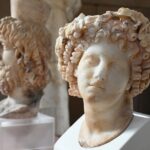
The Delphi Archaeological Museum visit is worth taking seriously because it turns the site into a story. You’re not just staring at ruins; you’re looking at the artifacts and exhibits that explain how the sanctuary functioned.
There’s also time pressure baked into the schedule. You’ll have about three hours listed for the museum portion, so wear comfortable shoes and keep your phone charged so you can save the moments you’ll want to revisit later.
You can also read our reviews of more tours and experiences in Athens

Arachova: a quick reset with local cheese
Lunch is planned either in the Delphi area or in Arachova, known for traditional cheese called formaela (often seen in different forms). This is a good pause between big walking days. It’s also one of the best chances to eat something simple and local without derailing the itinerary.
Meteora’s Monasteries: Suspended in the Air, Lit for Sunset
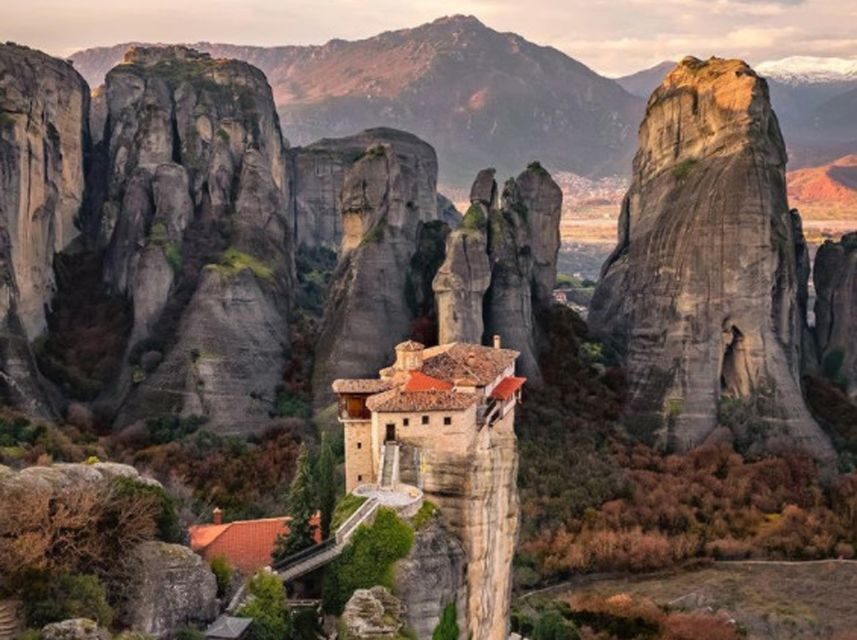
Meteora is a different kind of Greece. Here, you’re not walking through a temple complex—you’re climbing the edges of the world to visit monasteries placed on giant rock formations.
You’ll spend the night near Meteora, so the tour doesn’t rush you out of the area the same day. The next morning includes two Byzantine monastery visits:
- Great Meteoron Monastery, described as the biggest and oldest
- St. Stephan, a monastery resting on the plain rather than a cliff
What the monasteries add to the trip
The UNESCO value here is not just the architecture. It’s the way the landscape and buildings work together: you’re seeing how faith, defense, and isolation were built into the location.
The tour also includes a sunset angle around the rocks. That matters because the rocks look different at different hours, and sunset tends to reduce the harsh contrast that can make photos and reading inscriptions harder.
Kalambaka break and lunch
After the monastery visits, you’ll reach the area of Kalambaka for a traditional Greek lunch. It’s a smart timing choice: you finish the climbs while you still have enough energy to eat, and it keeps the next travel day from feeling like a grind.
The Ferry to Corfu: Old Town First, Vacation Energy Second
Then you hit the sea. You continue to the port of Igoumenitsa for the ferry to Corfu. Ferry tickets are included, which removes a common hassle—trying to match ferry schedules to an already tight plan.
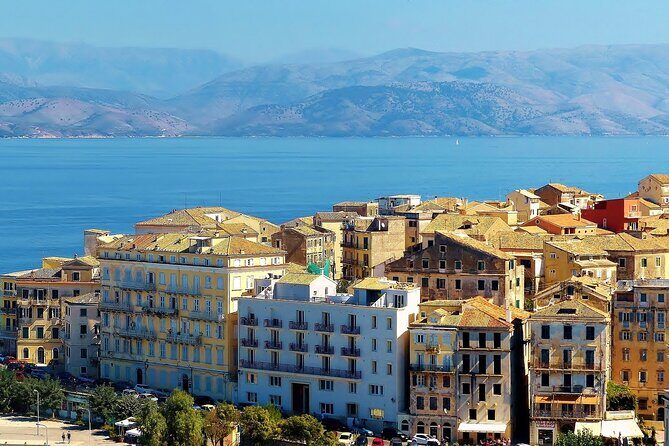
Once you arrive on Corfu, you check in and get free time to explore. The evening focus is Corfu Old Town, a UNESCO World Heritage Site.
Corfu Old Town: Venetian streets and Liston views
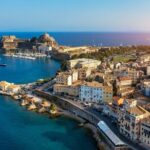
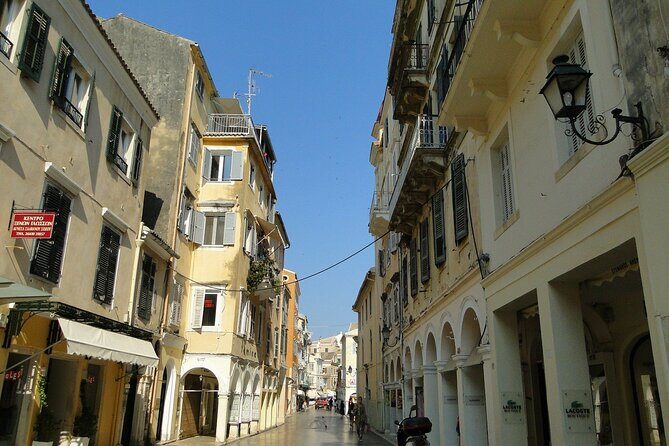
Old Town is a labyrinth of narrow cobblestone streets, with lots of small churches and the famous Liston area. The tour also points you toward the look and feel of Venetian-influenced architecture, which is a major reason Corfu feels distinct from mainland Greece.
What you should do with your free time:
- walk slowly and let the street turns surprise you
- stop for coffee or dessert when you’re ready, not when the schedule forces you
- look for the Venetian-style details between the shops
This is also where you’ll want to plan your shopping and eating. The tour gives you time to do it without turning it into a chore.
Mon Repos, Mouse Island, Achilleion, and Paleokastritsa Views
Day 3 is Corfu in full color—palace, island views, museum stop, then beach-and-hills scenery.
Mon Repos Palace: sea views and shaded walking
You’ll visit Mon Repos Palace, a neoclassical building built in 1830 with a sea view. It’s been transformed into a museum, and the grounds are set up for relaxed strolling under older trees. This stop is a nice shift from temples and ruins. It lets you breathe before the more dramatic coastal viewpoints.
Panagia Vlacherna and Mouse Island (Pontikonissi)
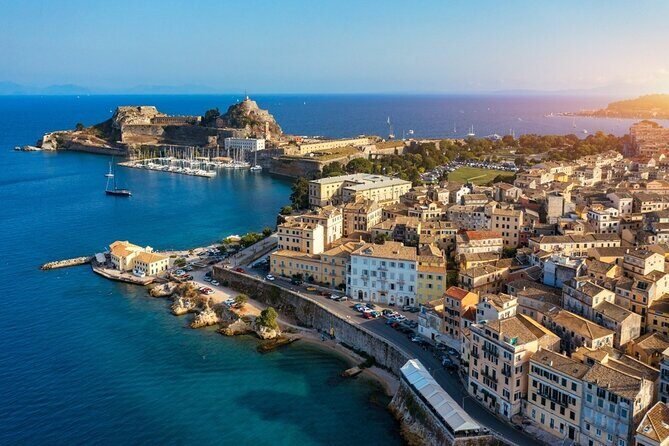
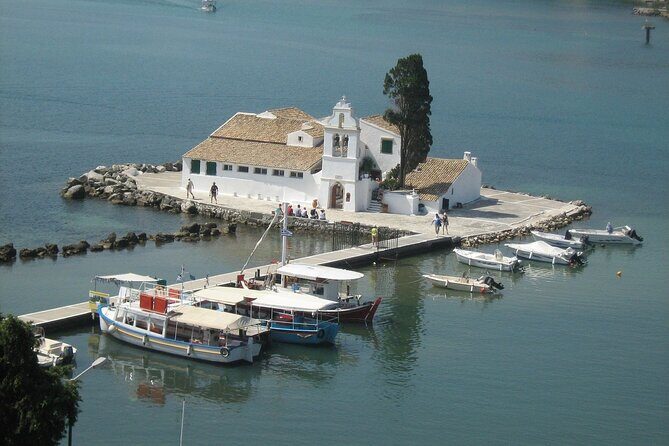
Next is Mouse Island, also called Pontikonissi, reached in the broader area of Panagia Vlacherna and Kanoni. The story here is almost cinematic: a tiny island with a chapel and the iconic setting people remember from photos.
You’ll see:
- the church of Panagia Vlacherna and the Mouse Island views
- the wooden-carved iconostasis and frescoes inside the chapel
- the church of Pantokrator at the center of the island
Even if you do only one “wow shot” on Corfu, make it this one. It’s a view you can understand instantly.
Achilleion Palace: Sissi’s palace on Corfu
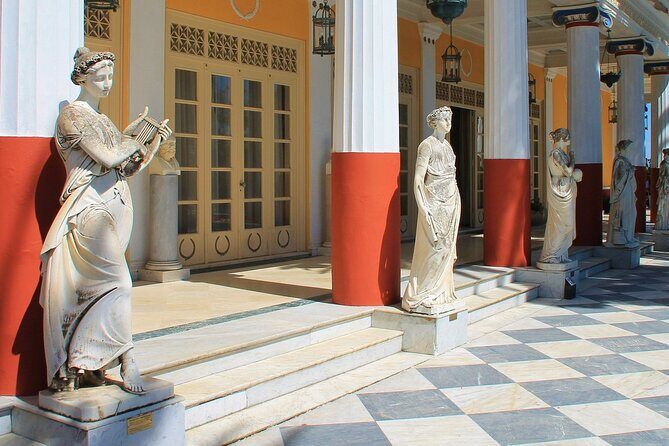
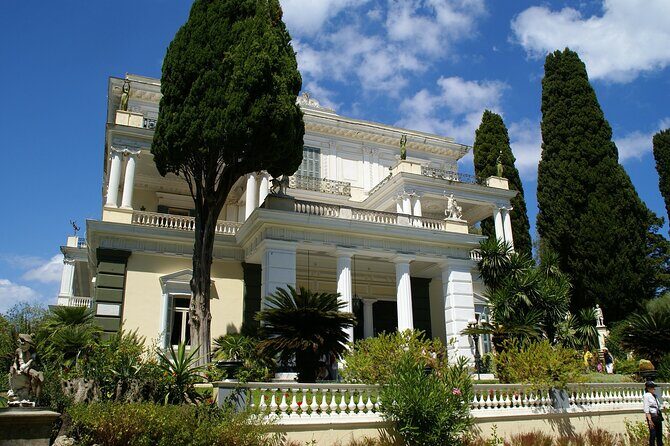
Then comes Achilleion Palace in Gastouri, built in 1890 by Empress Elizabeth of Austria, nicknamed Sissi. This stop adds a different layer of European history to the island, so you’re not only seeing Greek tradition—you’re also seeing how Corfu became part of broader European aristocratic culture.
Paleokastritsa: the Capri-of-Greece comparison, with a real monastery climb
Paleokastritsa is described as the Capri of Greece, and you’ll also visit a Byzantine monastery still inhabited by monks. The key practical detail is the climb: you ascend about 400 meters uphill to reach icons and relics in the chapel and museum.
Wear shoes you trust on uneven ground. If you’re short on mobility, this is one stop you’ll want to approach with care.
Lakones: God’s Balcony
You also pass through traditional villages and reach Lakones, called God’s Balcony for its panoramic view over Paleokastritsa Bay. This viewpoint is less about a single landmark and more about how Corfu’s terrain folds into itself.
Corfu Old Fortress, Then Back to the Mainland Through Patras
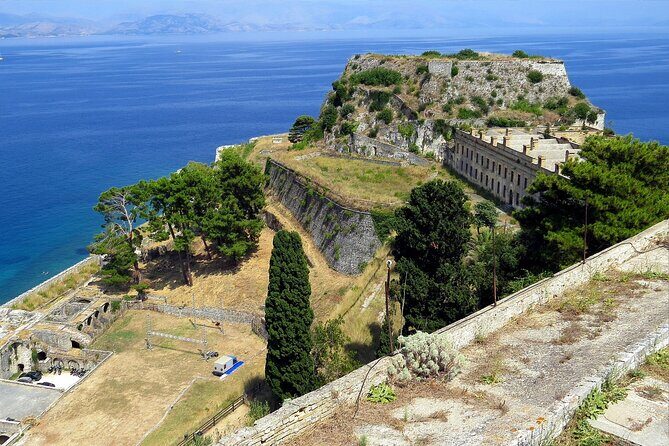
Day 4 starts after breakfast with the Old Venetian Fortress in Corfu. Built in the 15th century, it’s an imposing stronghold designed to protect the town from enemies, and the views help justify the climb.
From the fortress area, you walk to Spianada Square, described as the second largest square in Europe. The entrance is arched with a Venetian symbol carved in marble—details like that are exactly why you want guided pacing here, because someone points out the elements you might otherwise miss.
Ferry back and an overnight in Patras
After the tour ends in Old Town, you meet the driver and continue to Igoumenitsa port again for the ferry. From there, the plan takes you toward Patras for overnight.
This day is a “transfer day,” so manage expectations. You’re not wasting time; you’re repositioning for the next UNESCO sites on the mainland.
Ancient Olympia: Where the Games Started
On Day 5, you leave Patras after breakfast and head to Ancient Olympia, birthplace of the Olympic Games in 776 B.C.
At Olympia, you focus on major structures in the sanctuary area:
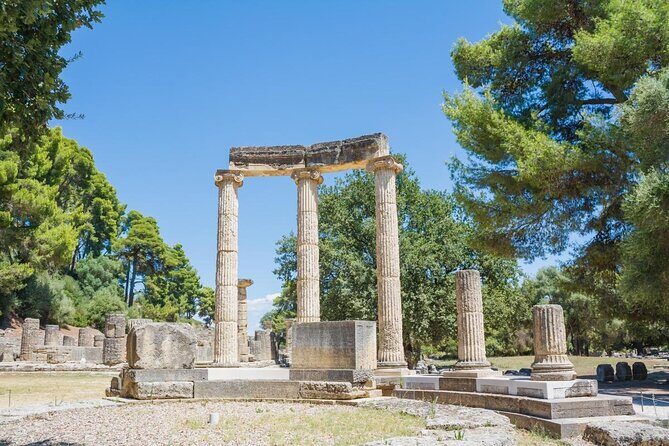
- the Temple of Zeus, one of the most celebrated sanctuaries
- the Temple of Hera
- the shrine of Pelops
- the Council house where athletes took the Olympic oath
- the Treasury houses
- the Gymnasium
- the Palestra, where athletes trained for a month before the Games
This stop works best if you slow down enough to picture the setting. The ruins are spread out, but the overall layout makes sense once you see the key buildings grouped as a training and ritual zone.
Nafplio: Seaside Strolls, Bourtzi Harbor Views, and the 999 Steps
After Olympia, you go to Nafplio, described as a seaside town with a cosmopolitan feel. Here you get time to stroll its narrow old-city streets full of shops and restaurants.
The tour also builds in signature views:
- Bourtzi, the small island in the middle of the harbor
- the sea fortress feel around the coastline
- a stop at the town’s castle area with the 999 steps, plus the amazing viewpoint
This is a key contrast day. You go from the sacred athletic grounds of Olympia to a relaxing waterfront town. Even if you’re still in “tour mode,” Nafplio gives you a place to reset your eyes.
Mycenae, Epidaurus, and Ancient Corinth: Myth to Music to Paul’s Footsteps
Day 6 is the big Greek finale. It stacks three heavy hitters plus Corinth, so you’ll see a wide range of ancient life in one day.
Nafplio in the morning, then Mycenae’s fortress logic
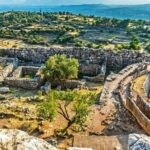
You start with more Nafplio exploring time. Then you head to Ancient Mycenae, described as the center of Greek civilization and home to the kingdom of mythical Agamemnon.
At Mycenae, you’ll see the defensive and monumental markers:
- the Cyclopean Walls
- Lion’s Gate
- the Atreus King Tomb
This stop is where you see how power was built into stone. Mycenae feels like a whole system, not just a few monuments.
Epidaurus Ancient Theatre: the acoustics moment
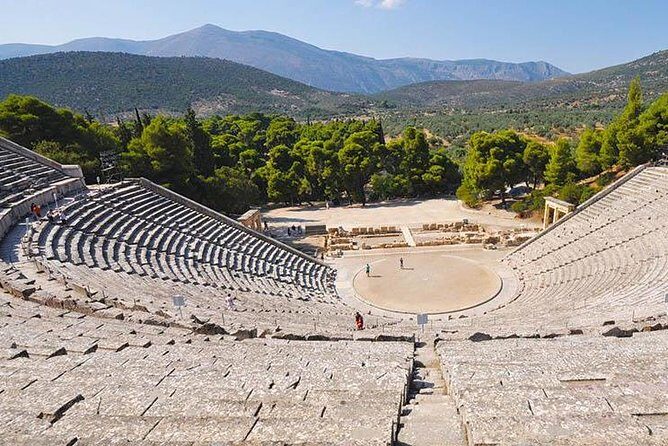
Then you visit the Ancient Theatre of Epidaurus, with seating for about 15,000 and famous for its breathtaking acoustics. Even if you don’t catch a performance, the geometry is the point: you stand in a place designed for voice to carry, and you can feel why it mattered.
Ancient Corinth and the Canal: the modern-to-ancient bridge
You’ll then visit Ancient Corinth (Archaia Korinthos). The tour connects it to the path Apostle Paul walked, and you also do a scenic stop at the Corinth Canal, about 6 km long and 80 m high, before heading back toward Athens.
The Corinth Canal stop is short but extremely photogenic. It’s a good final visual punctuation mark after theaters, tombs, and walls.
Price and What This Private Setup Actually Covers
At about $3,816.74 per person, this tour is not cheap. But it’s also not just a checklist of tickets. You’re paying for a private setup that includes:
- five nights of accommodation and breakfast
- ferry tickets from Igoumenitsa to Corfu and back
- a private vehicle with an English-speaking driver
- sunset time in Meteora around the rocks
- two nights on Corfu to slow the trip down
You can also choose between 3-star and 4-star accommodation, so you can shape the comfort level to your budget.
What you should plan financially for: entrance fees to archaeological sites are at your expense. Also remember hotel city tax is paid at the hotel. If you budget for those ahead of time, the overall value tends to feel more balanced—because the itinerary is built to save your energy and time.
What Kind of Traveler This Suits Best
This works best if you:
- want maximum classic Greece landmarks without DIY headaches
- like structure, with a driver coordinating the long travel days
- care about UNESCO sites and want them grouped in a logical order
- don’t mind early mornings when the payoff is big-name sights
It may feel like a lot if you want lots of free days or slow travel with minimal movement between stops.
Should You Book It?
If you want a one-shot plan that connects Delphi, Meteora, Olympia, Epidaurus, Mycenae, and Corinth—with Corfu Old Town plus major viewpoints—this is a strong choice. The private transport and ferry coverage are the real value, especially with a driver like Spyros who keeps things organized and answers questions. Just make sure you’re comfortable paying entrance fees separately and handling long days where you’re moving from one UNESCO stop to the next.
FAQ
Which UNESCO sites does this tour include?
It includes Delphi, Meteora, Ancient Olympia, Epidaurus, and Mycenae, plus other ancient sites such as Corinth.
How many nights are included, and how many are on Corfu?
The package includes five nights of accommodation, with two nights on the island of Corfu.
Are ferry tickets included?
Yes. Ferry tickets from Igoumenitsa port to Corfu port and back are included.
Are entrance fees to archaeological sites included?
No. Entrance fees are at your own expense.
What kind of transportation do I get during the tour?
You get a private vehicle with an English-speaking driver, plus private transfers from your Athens hotel or Piraeus port.
Does the tour include meals?
Breakfast is included for six mornings. Lunch and dinners are not included in the information provided.
How is the accommodation handled?
You can choose between 3-star and 4-star accommodation. Room sharing is listed as double-sharing for 2 people, triple-sharing for 3 people, and 1 person has a private single room.
Is this tour private?
Yes. It’s a private tour/activity, and only your group participates.
Do I need to pay hotel taxes?
Hotel city tax is not included and is paid at the hotel.
More Historical Tours in Athens
More Tours in Athens


More Tour Reviews in Athens
- All Day Cruise -3 Islands to Agistri,Moni, Aegina with lunch and drinks included
★ 5.0 · 4,958 reviews