REVIEW · ATHENS
Athens: History of Rebellion Walking Tour
Book on GetYourGuide →Operated by Culture Hunters · Bookable on GetYourGuide
Athens feels different after this walk. I love how it links Ottoman-era resistance to modern protest culture, and I especially like the stop in Exarchia, where activism isn’t a museum topic—it’s daily life. The only real drawback is the tone: this tour spends time on politics and social struggle, so if you want a purely neutral walk-through of landmarks, you might not enjoy it as much.
Part of the magic is the guide. Maelle brings clear, human storytelling (and smart humor) that helps you keep the timeline straight, from the Greek Revolution-era roots to present-day calls for justice around Syntagma Square. The group stays small, so you can ask questions and actually talk, not just march.
One more thing to plan for: this is a 2.5-hour walking tour with plenty of standing. Bring comfortable shoes, water, and sun protection, and know it’s not suitable for people with mobility impairments.
In This Review
- Key Things I’d Book This For
- Athens’ Rebellion Trail: From Ottoman Rule to Today’s Protests
- How the Walk Works: Monastiraki Start and a Pace You Can Handle
- Monastiraki to Syntagma: The Ottoman-Era Lead-In You Didn’t Know You Needed
- The Big Political Anchors: Syntagma, the Hellenic Parliament, and the Tomb
- Kolonaki and the Academy of Athens: Power, Culture, and the Shape of Neighborhoods
- Exarchia: Where Resistance Is a Neighborhood, Not a Topic
- The Guide Factor: Why Maelle’s Style Changes the Whole Tour
- What to Watch For as You Walk
- Price and Value: Is $44.04 Worth It?
- Who Should Book This Tour (and Who Might Skip It)
- Final Call: Should You Book Athens: History of Rebellion Walking Tour?
- FAQ
- How long is the Athens: History of Rebellion Walking Tour?
- What does it cost?
- Where do I meet the guide?
- Where does the tour end?
- What languages are offered?
- Is this a private or group tour?
- What’s included in the price?
- Is the tour suitable for people with mobility impairments?
- What should I bring?
- Is there free cancellation, and is pay later available?
Key Things I’d Book This For

- A resistance-focused Athens story that connects the Ottoman period to today’s social justice movements
- Maelle as the guide, with answers, context, and real conversation instead of a lecture
- Syntagma and the Greek Parliament area as a living stage for protest and civic emotion
- Exarchia and Exarchion Square, where activism, refugees, artists, and the LGBT+ community are part of the neighborhood’s fabric
- Short “secret” and “lesser-known” stops that help you see sides of Athens most people miss
Athens’ Rebellion Trail: From Ottoman Rule to Today’s Protests
This tour gives you Athens as a story of pushback. Not in the abstract. You move through places where people resisted outside control, then you land in areas where residents keep fighting for fairness, autonomy, and dignity.
It starts with the earlier chapter: Athens under Ottoman rule and the kinds of resistance that helped spark the Greek Revolution about two centuries ago. That’s useful, even if you’ve already seen ancient Greece. It explains how the modern Greek state formed—and why parts of the story still feel unfinished in everyday life.
Then the tour jumps forward to the present. You don’t just hear that Athenians protest. You learn why protests happen in certain spaces, why crowds gather, and how civic anger can turn into organizing. The heart of that modern chapter is Syntagma Square, near the seats of government.
If you like your history with stakes—people risking something, building movements, arguing about power—this is the style you’ll appreciate.
You can also read our reviews of more walking tours in Athens



How the Walk Works: Monastiraki Start and a Pace You Can Handle

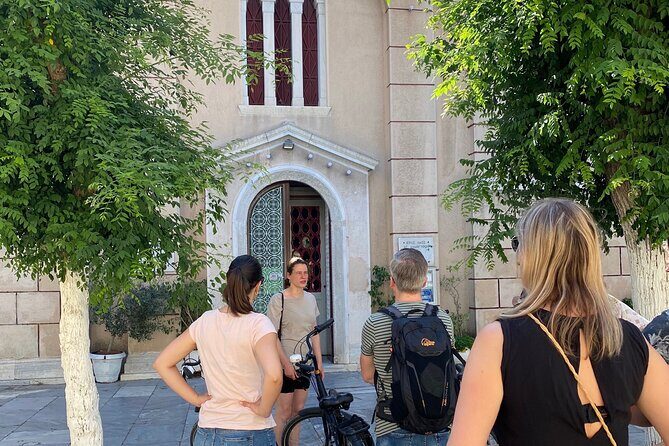
You meet in Monastiraki Square, right in front of Pantanassa Church. Look for your guide holding a sign that says Athens City of Rebellion.
From there, the walk is designed to help you get oriented fast. You start in a classic tourist hub, but the guide steers you away from the usual “photo-only” route. You’ll do a bit of passing-by at a few sites, then you’ll get short guided moments where the context matters—especially when you reach political landmarks later.
Expect a steady rhythm: short transit, brief explanations, then more walking toward the next anchor point. At around 2.5 hours total, it’s long enough to feel like you learned a map of the city, but short enough that you’re still free to explore on your own afterward.
Practical tip: bring water and shade. Athens sun can be rude, and this tour isn’t a sit-down seminar.
Monastiraki to Syntagma: The Ottoman-Era Lead-In You Didn’t Know You Needed

The opening stretch sets your “why Athens” framework. You begin in Monastiraki, then you move toward Syntagma, which the guide treats like the heartbeat of modern civic protest.
Along the way, there’s a mix of quick orientation stops and guided moments. One site you pass is the Metropolitan Church of Athens. It’s not the star of the rebellion story, but it helps you understand how different layers of Athens sit side by side: religion, national identity, and political life all in the same visual neighborhood.
Then you hit a lesser-known stop (your guide calls attention to it with a brief guided explanation). This is the pattern of the whole experience: you get the big landmark to anchor the story, then you get smaller places that show you how people actually lived and argued. That contrast is what makes the walk feel more real than a list of famous monuments.
As you approach Syntagma Square, you’ll understand why this space matters. It’s easy to recognize the square. It’s harder to understand its emotional pull. The guide makes that connection, linking historical resistance with the modern habit of showing up.
The Big Political Anchors: Syntagma, the Hellenic Parliament, and the Tomb
Once you reach Syntagma Square, the tour shifts from background to spectacle. You’ll get guided time at the Hellenic Parliament and learn how civic tension and political authority share the same streets.
Right nearby is the Tomb of the Unknown Soldier in Athens. You’ll have a short guided moment there too. The point isn’t just the monument. It’s what monuments represent in national stories—what they honor, what they simplify, and what they leave out.
This is also where the tour becomes especially useful if you want to understand modern Greece as something more than a collection of ancient ruins. When you know what the modern state wrestled with—fascism, violence, oppression, and the push for freedom—you start reading the city differently. You stop thinking of politics as something that happens only in news headlines.
You also learn how individuals and mass movements interact. Some resistance stories are personal—one person becomes a legend. Other resistance stories are crowd-led and long-term—organizing across many daily lives. The guide keeps both in view.
Kolonaki and the Academy of Athens: Power, Culture, and the Shape of Neighborhoods
After Syntagma, you move into an area that many visitors experience mostly as “nice streets” and shopping blocks: Kolonaki. You pass through it, and the guide uses the transition to explain how different zones of Athens relate to power and culture.
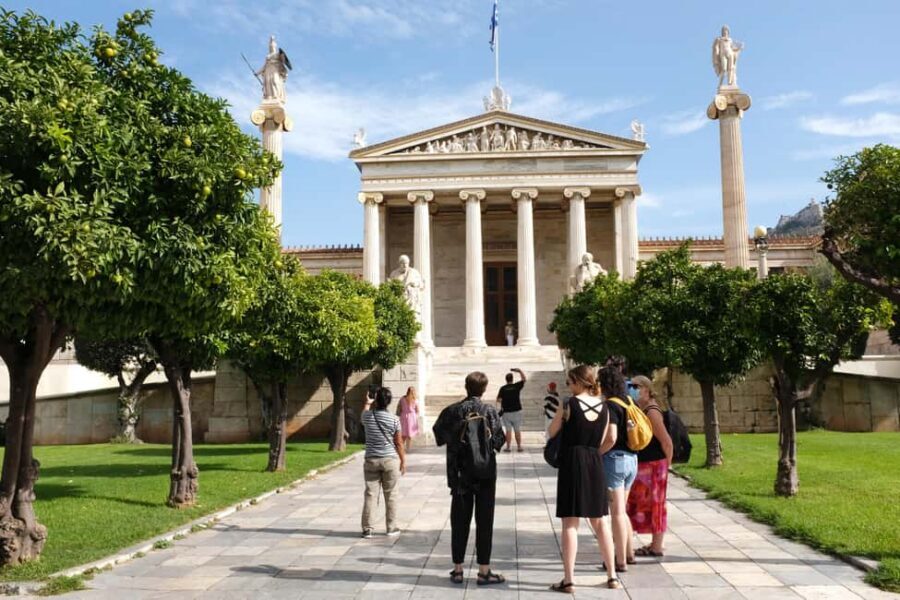
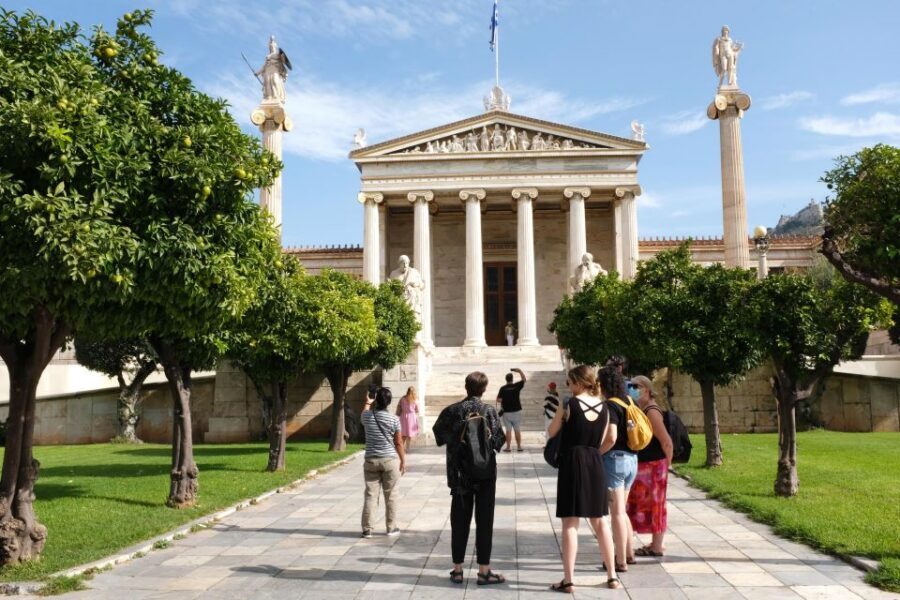
Then you head toward the Academy of Athens, where you’ll have another guided stop. This part helps connect the dots between civic identity and public institutions. It’s not just “Greek buildings.” It’s what Athenians built, who had access, and how ideas travel through space.
This section can feel like a breather compared to the direct symbolism of Parliament and the Tomb—but it’s still part of the political puzzle. I like this structure because it prevents the walk from feeling like nonstop anger. You get both pressure and policy, street life and official life.
And if you’re the kind of person who likes to make sense of a city map, you’ll appreciate how the tour ties neighborhoods together instead of treating them as isolated stops.
You can also read our reviews of more historical tours in Athens




Exarchia: Where Resistance Is a Neighborhood, Not a Topic
Then comes the real payoff: Exarchia.
Your tour includes guided time there (and yes, the guide makes it clear this is not a generic “cool district” stop). Exarchia is presented as a current hotbed of resistance and activism, a place that welcomes anarchists, refugees, the LGBT+ community, and artists. That combination matters, because it explains why activism here isn’t only political. It’s social, cultural, and community-driven.
You’ll also spend time near Exarchion Square before the tour finishes back in the area around Plateia Exarcheion. Along the way, you’ll have a couple of short guided moments at additional stops—one described as a secret stop and another as a shorter guided segment in the neighborhood.
What I found particularly helpful is how the guide treats lived experience with care. The tone isn’t “show up and consume.” It’s more like: pay attention, ask thoughtful questions, and notice how art and public speech carry messages.
One detail that stood out in the tour experience is the attention to street art. You may learn about graffiti by a street artist named WD, and the guide uses those visuals as a way to discuss ideas Athens residents broadcast in public spaces.
If you want to understand why people defend certain neighborhoods from gentrification and police repression, this is where the tour gives you human scale. Exarchia stops being a line on a map and becomes a model of how a city argues with itself.
The Guide Factor: Why Maelle’s Style Changes the Whole Tour

If you take nothing else away from this review, take this: the guide makes the difference.
In many reviews of this tour, Maelle gets praised for being enthusiastic, authentic, and able to connect modern Greek history to daily life. You’ll feel that in how she explains the timeline—keeping events in order without turning everything into dry dates.
What I also like is the balance. The tour includes serious topics like violence and oppression, but it doesn’t turn into grimness. You’ll often get humor mixed in, plus thoughtful questions that push you to think about what resistance means, not just what happened.
And because groups are small or can be private, you’re more likely to have a real conversation. That matters if you’re visiting Athens for only a few days and want to leave with a framework you can use while you wander on your own.
What to Watch For as You Walk

This tour rewards attention. When you’re moving between stops, slow down mentally and notice what the guide points out:
- How official power shows up in space (Parliament, the Tomb, major squares)
- How protest culture uses the city layout (why certain streets feel like rally points)
- How art and graffiti act like public commentary (including the example of WD mentioned in the experience)
- How neighborhood identity shows up in who uses the streets and what kinds of voices are visible
- How the past echoes in the present without the story getting stuck in either era
You don’t need to be a political expert. You do need curiosity—and the willingness to read Athens as a place where history still has fingerprints.
Price and Value: Is $44.04 Worth It?

At $44.04 per person for about 2.5 hours, this tour is priced like a serious guided experience, not a quick “see the sights” add-on. For value, it comes down to two things.
First, the guide work. If your tour includes thoughtful context, active discussion, and personalized tips for what to do after the walk, you’re getting more than sightseeing. Many people rate this experience highly for exactly that reason—Maelle’s ability to explain modern and contemporary Greek history in clear, memorable ways.
Second, the focus. Most Athens tours center on ancient ruins and classic landmarks. This one spends its time on modern Greece, social movements, and neighborhood activism—areas that are harder to understand on your own. If you want that extra layer, you’re paying for time with someone who can interpret what you’re seeing.
So yes, it can be worth it. But only if the topic fits your travel style. If you want a strictly neutral history walk with no emphasis on present-day resistance, you may feel the tour leans too strongly into politics.
Who Should Book This Tour (and Who Might Skip It)
Book it if:
- You want modern Greek history with context you can use while you walk around town.
- You like small-group discussion and real answers to questions.
- You’re curious about Exarchia beyond stereotypes.
- You enjoy hearing how resistance movements connect to everyday life.
Skip it if:
- You’re only looking for ancient sites and simple landmark facts.
- You prefer a strictly non-political itinerary.
- Long standing and walking are a problem for you, since it’s not suitable for mobility impairments.
Also, schedule it early if you can. One of the most common benefits people describe is that the tour changes how they interpret the city for the rest of the trip.
Final Call: Should You Book Athens: History of Rebellion Walking Tour?
I’d recommend this tour if you want Athens with a pulse. It’s not just “what happened.” It’s how people organize, argue, and keep pushing—then how that shows up in squares, institutions, and neighborhoods like Exarchia.
If you’re open to politics as part of history, and you’re ready for a focused walking experience with a strong guide, this is a high-value use of your time in Athens. If you want only postcard Athens or only ancient Athens, you’ll probably find it too pointed.
FAQ
How long is the Athens: History of Rebellion Walking Tour?
The tour lasts 2.5 hours.
What does it cost?
It costs $44.04 per person.
Where do I meet the guide?
Meet in Monastiraki Square in front of Pantanassa Church. The guide will have a sign that says Athens City of Rebellion.
Where does the tour end?
The schedule shows a finish at Plateia Exarcheion. The activity information also indicates it ends back at the meeting point.
What languages are offered?
The live guide is available in English and French.
Is this a private or group tour?
It can be private or small groups, depending on availability.
What’s included in the price?
The tour includes a walking tour and a guide.
Is the tour suitable for people with mobility impairments?
No. It is not suitable for people with mobility impairments.
What should I bring?
Bring comfortable shoes, a sun hat, sunscreen, and water.
Is there free cancellation, and is pay later available?
Yes. You can cancel up to 24 hours in advance for a full refund, and you can reserve now and pay later.


More Walking Tours in Athens


More Tours in Athens




More Tour Reviews in Athens
- All Day Cruise -3 Islands to Agistri,Moni, Aegina with lunch and drinks included
★ 5.0 · 4,958 reviews