REVIEW · ATHENS
Discover your talent in sculpture, in a country where golden section was born.
Book on Viator →Operated by Ancient Symposium · Bookable on Viator
Clay beats marble in Athens. I love that you learn from Manos and his team, known for making real props for Assassin’s Creed Odyssey. I also like the up-close setup: you touch sculpting tools and watch videos on ancient methods before you start. The one catch is that your final piece is a handcrafted clay souvenir, not a museum-grade statue.
This is a hands-on, small-class style workshop focused on creating a face of Hermes using air-dry clay (Cretan-style materials). You’ll get step-by-step guidance, and you’ll leave with something you actually made with your own hands—plus a studio “mini-museum” feel that makes it more than a generic art class.
In This Review
- Key highlights at a glance
- How an Assassin’s Creed prop studio turns into a sculpture workshop
- Walking into the ancient room and mini-museum layout
- Tool time: touching sculpting instruments before you start carving
- Ancient technique ideas: lost-wax casting and stone carving inspiration
- Making a face of Hermes with air-dry clay (what you’ll do step by step)
- Taking your sculpture home: packing and keeping your souvenir intact
- Price and value for a 2-hour Athens creative stop
- Getting the most out of your class: pace, questions, and expectations
- Who should book this Athens sculpture workshop (and who might skip)
- Should you book Ancient Symposium in Athens?
- FAQ
- How long is the sculpture workshop?
- What will I make during the class?
- Do I need prior sculpting experience?
- What else is included besides making a clay sculpture?
- Can I take my artwork home?
- Who teaches the workshop?
- Where do we meet?
- Is the workshop private?
- What is the cancellation policy for a full refund?
Key highlights at a glance
- Assassin’s Creed Odyssey prop workshop energy with real museum-like objects and stories
- Hands-on tool time: touch sculpting tools and learn how they’re used
- Ancient technique inspiration from videos, including lost-wax casting and stone carving ideas
- A guided clay project built around a recognizable figure: Hermes
- A keepsake you take home the same day, packed carefully for the trip
How an Assassin’s Creed prop studio turns into a sculpture workshop
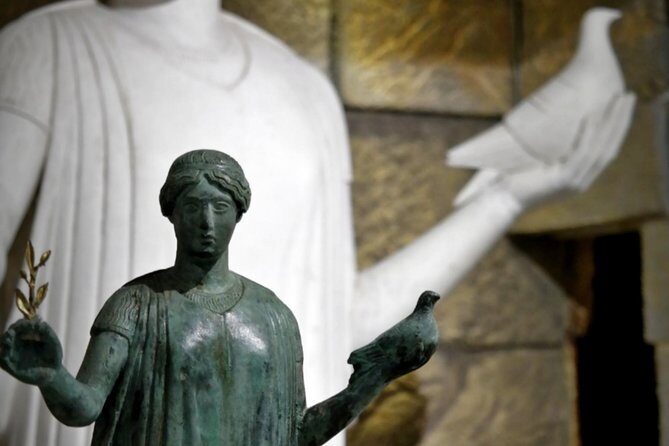
What makes Ancient Symposium different is the doorway it uses to get you into sculpture. You’re not just signing up for a class in the abstract. You start inside a studio that also functions like a cultural space—complete with weapons/objects tied to the Assassin’s Creed Odyssey world.
That matters, because it changes the tone from schoolwork to curiosity. One minute you’re looking at props and talking through how sculptors translate design into real forms. The next, you’re holding tools and getting the idea that sculpture is both craft and problem-solving. Athens already has plenty of marble monuments. This gives you the back-and-forth process—the part you usually only see in museum restoration labs.
And yes, the personal connection helps. Reviews keep circling back to Manos’ pacing and encouragement, even for people who think they have zero artistic talent. If you’re the type who worries you’ll be “bad at it,” this is the kind of workshop that helps you relax into doing the next step correctly.
You can also read our reviews of more tours and experiences in Athens.
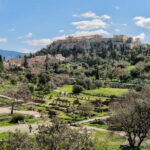


Walking into the ancient room and mini-museum layout
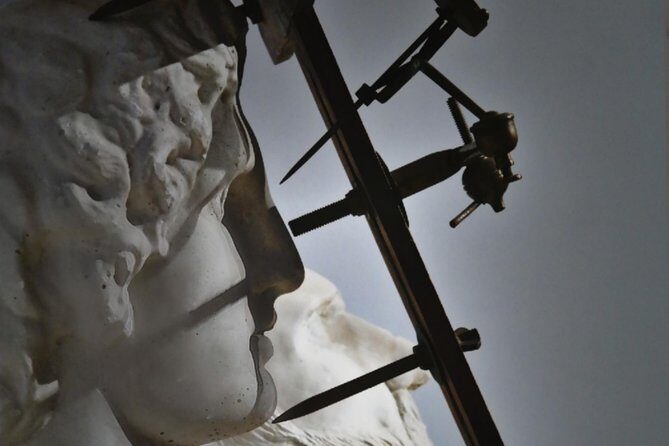
Before clay ever touches your hands, you get a guided introduction to the studio’s atmosphere. Expect an “ancient room” tour, plus a look at items in the collection—among them weapons and other objects connected to the Assassin’s Creed Odyssey props.
This part isn’t filler. It helps you understand what you’re making and why sculpting in ancient Greece wasn’t only decoration. You’ll also talk about ancient Greek art, and the instructor ties in the idea of daily-life crafts—what people made, how they made it, and how tools shape results.
You’ll even get some context around wine in ancient Greece. That isn’t a random add-on. It’s part of how the workshop frames ancient culture as a set of practical skills, not just big statues behind glass.
One more thing I like here: this is a private setup for your group. That usually means you can ask questions without feeling rushed. If you’re traveling with a partner, this format also makes it easier to take your time and enjoy the explanations instead of watching the clock.
Tool time: touching sculpting instruments before you start carving
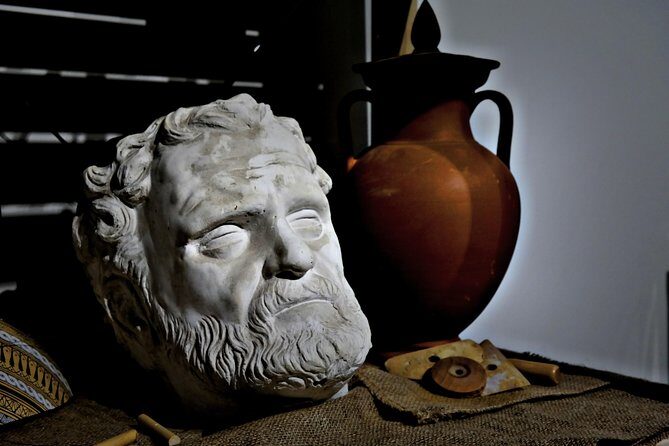
You’ll touch a selection of sculpting tools, and you learn how they’re used. That’s a big deal for beginners. When you only watch videos, sculpture can look like magic. When you hold the tool and see what it’s for, it clicks.
This is also where you start learning the “logic” of sculpting:
- how to approach shaping
- how to refine details
- how to work without accidentally breaking the form
The workshop doesn’t just toss you into a clay mess. You’ll get instructions, a feel for the tools, and a sense of the order of operations. That’s why people with different skill levels report having a good time and walking out with something they like.
Ancient technique ideas: lost-wax casting and stone carving inspiration
The workshop builds your understanding with videos showing ancient sculpting techniques. Two highlights mentioned are lost-wax casting and precious stone carving.
Now, you’re not necessarily performing lost-wax casting or stone carving in the session itself. Instead, think of this as “technique literacy.” You’re learning what older sculptors did, so your clay work feels connected to real traditions rather than a one-off craft project.
That connection matters because it guides your choices. For example, when you watch how forms were planned and built, you start understanding why sculptors cared about proportions and surface detail. Ancient Greece is famous for artists paying serious attention to how humans look when the proportions feel right. You can feel that influence in the way the class frames making facial features.
And since you’ll create a recognizable subject—Hermes—it helps to understand what makes a face read as a face: placement, symmetry, and careful refinement rather than random scraping.
Making a face of Hermes with air-dry clay (what you’ll do step by step)
This is the core of the experience. Your hands-on project is a face of the god Hermes made with air-dry clay. You model and carve with your tutor’s guidance, and you take your work home as a souvenir.
Here’s the reality check that makes this class work for most people: you’re not expected to start with professional-level skill. The instructor supports you as you go. In particular, you’ll get help with shaping and finishing the details on the faces—so you’re not left guessing whether your result will look right.
Expect the session to include:
- A short setup and demonstration
- Working time where you build the form
- Encouraging, hands-on correction and refinement
- Finishing so you have something worth taking home
The workshop is also built for pacing. Reviews mention that Manos is great at giving the right level of support, without rushing people or taking over completely. That’s the sweet spot: you do the work, and you get enough guidance to make it better.
If you like projects with a clear subject (a face, not an abstract blob), Hermes is a good choice. It gives you a target. You can tell when your result is improving because the face starts looking like a face.
- All Day Cruise -3 Islands to Agistri,Moni, Aegina with lunch and drinks included
★ 5.0 · 4,958 reviews




Taking your sculpture home: packing and keeping your souvenir intact
You’ll bring your artwork home. That’s one of the biggest practical advantages of this type of workshop. It turns your Athens day into something physical and personal, not just photos and museum hours.
The studio also boxes up creations for travel, based on feedback from past participants. That matters because clay is fragile while it’s curing and during transit. If you’ve ever had a souvenir arrive as dust, you’ll understand why this detail matters.
Practical advice for your trip:
- Keep the packed sculpture somewhere safe in your bag or vehicle.
- Avoid squeezing or compressing it.
- If you’re flying, treat it like fragile cargo and don’t stash it under heavy items.
Also, remember it’s air-dry clay. Your piece may continue to finish drying over time. So once you get it home, give it the dry, stable conditions it needs rather than trying to speed up the process.
Price and value for a 2-hour Athens creative stop
At about $58.05 per person for roughly 2 hours, this class feels priced like a “do something memorable” activity rather than a quick pass-through. For value, you’re getting:
- A guided studio tour
- Tool handling and technique videos
- A structured guided sculpture session
- A finished clay souvenir you take home
If you’re the type who usually spends a day hopping between museums, this can actually be a good trade. You’re not buying another ticket to look at art. You’re buying time and instruction to create it.
And the booking pace tells you something. On average, it’s booked about 28 days in advance, so it’s popular. If you’re traveling in a busy season, I’d plan ahead instead of assuming you’ll always find a slot.
What keeps the cost from feeling steep is the instructor support. Reviews repeatedly highlight patient teaching and the fact that you can enjoy the results even if you don’t think you have talent. In other words: you’re paying for coaching, not just clay.
Getting the most out of your class: pace, questions, and expectations
I’d go in with a simple mindset: do the next step, then the next step. Sculpture punishes impatience. Clay rewards calm.
A few tips that match how the workshop runs:
- Arrive ready to concentrate for about two hours, not to multitask.
- Ask questions while you’re working. If you’re unsure about a feature (eyes, nose, mouth), this is the moment to clarify.
- Don’t compare your piece to the finished objects in the studio. Those are built by professionals and families of sculptors. Your job is to make yours look like the face you’re aiming for.
- Take a photo early, if you like. Sometimes it helps to see how quickly the shape evolves.
Also, plan your route to the meeting point. The start is Doiranis 39, Athina 176 72, Greece. The studio is described as near public transportation, but in real life you may still find it’s a bit of a walk depending on where you’re staying. If you’re short on energy that day, a taxi can make everything smoother.
Who should book this Athens sculpture workshop (and who might skip)
This class is a great fit for:
- couples who want a shared activity and a keepsake
- travelers who like hands-on experiences more than lecture-style attractions
- fans of Ubisoft and Assassin’s Creed Odyssey who enjoy connecting gaming props to real craft
- people who feel nervous about art classes, because the teaching style is described as patient and supportive
You might skip it if:
- you’re looking for a classic “big sights” itinerary (this is about making sculpture)
- you strongly prefer watching from a distance rather than getting your hands dirty
- you want a highly polished, perfect reproduction of a museum piece (this is personal craft, not a mass-produced artwork)
Should you book Ancient Symposium in Athens?
Yes—if your idea of a great Athens day includes making something real with guidance. The best part of Ancient Symposium is how it blends art history storytelling with actual sculpting time. You’re not just hearing about techniques like lost-wax casting or stone carving. You’re using tools, shaping clay, and learning how facial detail comes together.
I’d especially recommend it if you’re a fan of the Assassin’s Creed Odyssey props angle. The studio connection to real armor and weapons created for the game adds a fun layer that makes the workshop feel like a behind-the-scenes workshop, not a generic souvenir factory.
One last decision helper: if you’re the kind of traveler who loves bringing home a tangible memory, this is a strong pick. The sculpture becomes your Athens story in object form—the kind you can place on a shelf and remember, instead of a ticket stub you toss in a drawer.
FAQ
How long is the sculpture workshop?
The experience runs for about 2 hours (approx.).
What will I make during the class?
You’ll sculpt a face of the god Hermes using air-dry clay, with guidance from your tutor.
Do I need prior sculpting experience?
No. Most travelers can participate, and the instructor is described as patient and encouraging, with support to help you finish details.
What else is included besides making a clay sculpture?
You’ll tour the studio’s ancient room, view items including Assassin’s Creed Odyssey weapons/props, touch sculpting tools, and watch videos on ancient sculpting techniques. You’ll also learn about ancient Greek art and wine.
Can I take my artwork home?
Yes. You’ll bring your finished sculpture home as a souvenir.
Who teaches the workshop?
The class is taught by the workshop’s sculptor/tutor, Manos.
Where do we meet?
Meet at Doiranis 39, Athina 176 72, Greece.
Is the workshop private?
Yes. It’s a private tour/activity, and only your group participates.
What is the cancellation policy for a full refund?
You can cancel up to 24 hours in advance for a full refund. If you cancel less than 24 hours before the start time, the amount paid is not refunded.

More Tour Reviews in Athens
- All Day Cruise -3 Islands to Agistri,Moni, Aegina with lunch and drinks included
★ 5.0 · 4,958 reviews