REVIEW · ATHENS
Biblical Corinth in 7 hours private tour
Book on Viator →Operated by Athens Tours Greece · Bookable on Viator
If you want a Biblical place you can actually walk around, this is a strong match. This private Athens-to-Corinth day is designed to move fast but still give you real time at the key ruins and viewpoints, with a driver who handles the road and the context until you enter the sites. I especially liked the way the route builds meaning from coast to isthmus, then up to Acrocorinth, so the day feels like a story instead of a checklist.
Two things I’d pick out right away: first, the convenient pickup from your Athens hotel or from the Piraeus cruise area, so you avoid rail transfers and timing headaches. Second, the mix of stops that connect geography with the New Testament setting—Ancient Corinth, Cenchrea, and the hill fortress above it all. One possible drawback: entrance fees aren’t included, so your final total will be higher once you’re standing at the ticket windows.
This works best when you treat it as a guided day-trip with a driver-led narrative, not as a full licensed-guide package inside every museum room. If you want someone licensed to accompany you inside the archaeological areas, you can arrange that for an extra cost (subject to availability).
In This Review
- Key Highlights Before You Go
- Private Corinth in 7 Hours: What You Really Get
- Getting There: Attica Coast Driving and the Athens-to-Isthmus Rhythm
- Piraeus Stop: Coastal Views and the Temple Area Time Block
- Corinth Canal: Engineering With a Biblical-Route Backdrop
- Ancient Corinth: Walk the Place Where Stories Became Real Locations
- Acrocorinth: The Hill Fortress That Explains Control
- Cenchrea (Kechries): The Harbor Stop That Connects to Paul
- Submersible Bridges and the Canal’s Modern Rhythm
- Price and Logistics: Is It Worth $433.48?
- Who This Tour Suits (and Who Might Prefer Something Else)
- Should You Book This Private Biblical Corinth Tour?
- FAQ
- How many people are in a group on this private tour?
- What’s the tour duration?
- Do I get hotel pickup, or only cruise port pickup?
- Is the tour offered in English?
- Do I need to buy entrance tickets?
- Are food and drinks included?
- Is there a guide included inside the sites?
- Do I get a mobile ticket?
- What’s the cancellation policy?
Key Highlights Before You Go
- Private group of up to 3 with only your party in the vehicle.
- Corinth Canal engineering views plus the submersible bridges on the way.
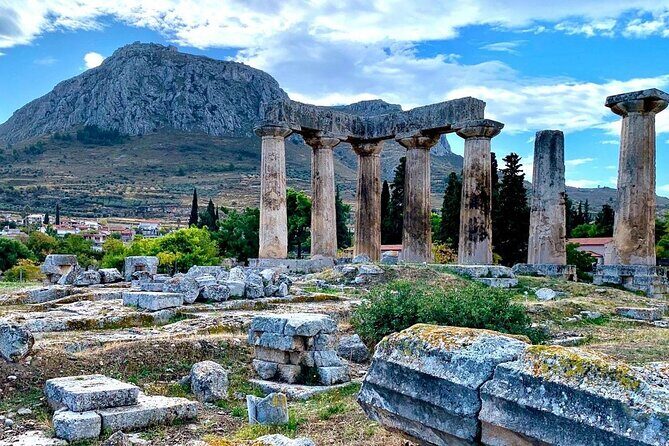
- Ancient Corinth + Acrocorinth with enough time to see what matters.
- Cenchrea stop tied to Paul’s sailings and a vow story in the Bible.
- Driver-led history up to site entry, with optional licensed guidance inside sites.
Private Corinth in 7 Hours: What You Really Get
This tour is built around one simple idea: in one day, you can cover the major Corinth area that shows up again and again in early Christian history—Corinth itself, the surrounding harbors, and the dramatic hill fortress above town. The duration is about 7 hours, and it’s a round-trip loop starting in Athens and ending back at the same pickup point in Athens or Piraeus.
Because it’s private for up to 3 people, you can set a relaxed pace without dragging a group through slow or fast decisions. You also get that “right order” effect: you see the canal first, then the ancient city, then the defensive views from Acrocorinth.
The big value here is focus. You’re not trying to do five places you can barely pronounce. You’re doing fewer places, in a route that makes physical sense.
You can also read our reviews of more private tours in Athens

Getting There: Attica Coast Driving and the Athens-to-Isthmus Rhythm
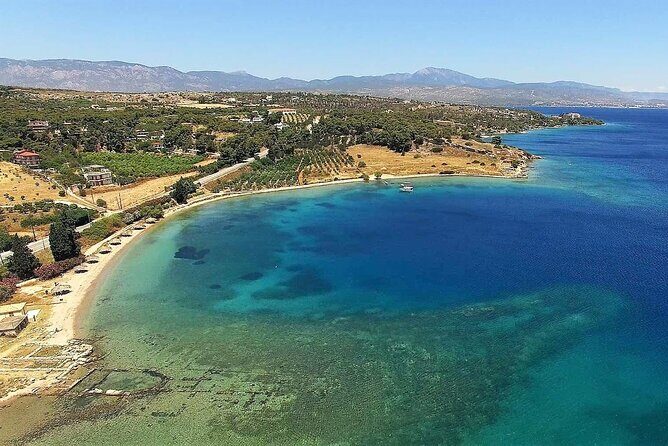
The day starts with an early drive through Attica until you reach the famous Corinth Canal. Attica matters because it frames what you’re about to see: Athens is the cultural center, but the wider region connects the road and sea routes that shaped trade and movement for centuries.
If you’re leaving from a cruise, the pickup is handled from Piraeus port, and you’re not expected to figure out local transit. If you’re starting from a hotel, the driver meets you at the main entrance and you’re pointed to the exact place they’ll call for you—small detail, big stress-saver.
One more practical point: this tour is offered in English, and the driver is described as having good knowledge of Greek history and culture—enough to give you context until you actually enter the archaeological sites and museums.
Piraeus Stop: Coastal Views and the Temple Area Time Block
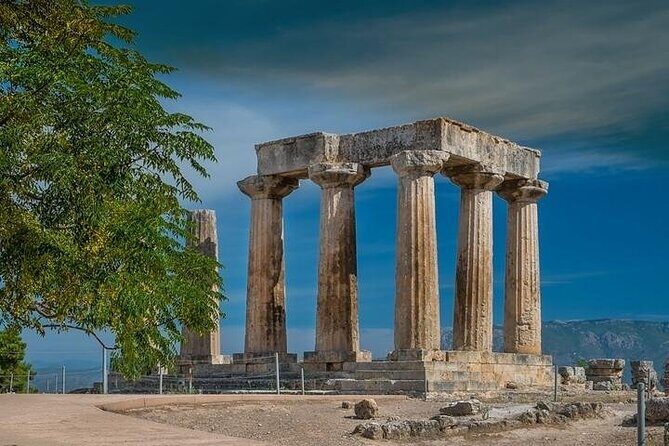
You’ll begin with a stop in Piraeus and drive along the coastal road of the Saronic Gulf. The Saronic Gulf route is a classic “getting your bearings” move: you ease into the day with sea views and the Athens Riviera feeling, then head toward central landmarks.
There’s also a Temple of Democracy stop as part of this early timing. It’s listed as a 1 hour 10 minute segment, and it’s marked as no admission fee for the tour time block.
What I like about starting here is that you don’t jump straight into ancient ruins right away. You get a breather, and then the day’s historical intensity ramps up as you cross toward the Peloponnese and the isthmus.
Corinth Canal: Engineering With a Biblical-Route Backdrop
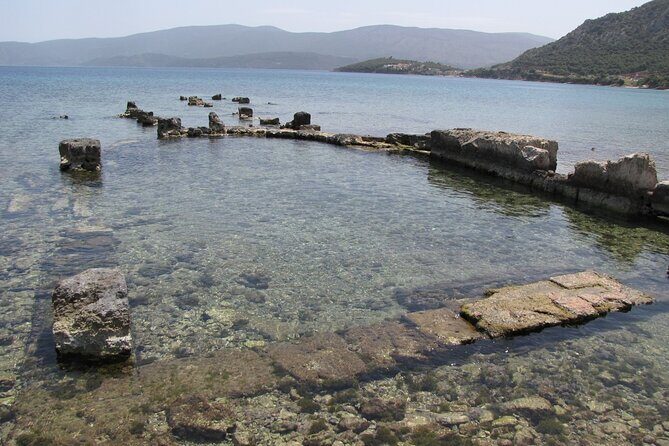
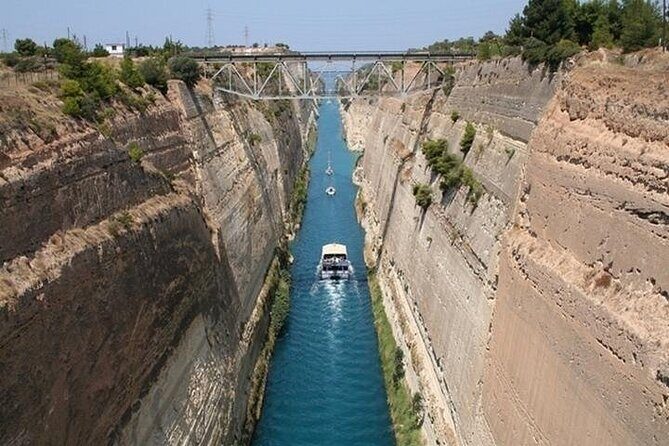
The Corinth Canal is the kind of place that makes you understand geography fast. The canal cuts through the narrow isthmus of Corinth, linking the Gulf of Corinth with the Saronic Gulf, turning the Peloponnese into something like an island.
You’ll get a short 15 minute stop here, and it’s free. Even in that short window, the facts make it feel substantial: it’s 6.4 kilometers long and only 25 meters wide, and it was dug at sea level. The tour info also points out the bigger dream behind it: a roughly 2,000-year long concept of making this crossing easier.
Here’s why this stop matters for your day: when you understand how ships previously avoided the long route around the Peloponnese (an extra 185 nautical miles), the importance of Corinth’s position becomes clearer. This is where trade and travel efficiency meet real human movement—exactly the world Paul would have traveled through as routes shifted.
Tip: keep your camera ready for the “this is cut through solid reality” feeling. Even if you’ve seen canals before, this one is compact and dramatic.
Ancient Corinth: Walk the Place Where Stories Became Real Locations
Ancient Corinth is the core of the day, and this is where the Biblical connection stops being abstract. You’ll spend about 2 hours at Archaia Korinthos. Admission for this stop isn’t included, so plan for ticket time and budget.
The site sits at the northern base of Acrocorinth hill. That positioning is part of the appeal: fertile land below, strategic routes around it, and a commanding view point above. The information you’re given emphasizes why Corinth mattered early—its location at intersections of land routes toward the Peloponnese and waterways linking the western Mediterranean to areas in the east.
It’s also a place where you can sense layers. The tour highlights Neolithic origins, then Mycenaean-era continuity, and later expansion in trade, including Corinthian colonies founded from the 8th century BC onward. You don’t need a full archaeology degree to feel the scale of influence—especially once you’re there and looking at the layout.
Possible downside: 2 hours goes quickly once you start reading and walking. If you’re the type who loves stopping every few minutes for a longer look, you’ll want to keep your focus on the main areas your driver discusses so you don’t burn out before you reach Acrocorinth.
- All Day Cruise -3 Islands to Agistri,Moni, Aegina with lunch and drinks included
★ 5.0 · 4,958 reviews



Acrocorinth: The Hill Fortress That Explains Control
After Ancient Corinth, the tour climbs to Acrocorinth, the “Upper Corinth” acropolis overlooking the ancient city. This stop is about 50 minutes, and it’s listed with free admission for this segment.
Acrocorinth is a monolithic rock with defensive works that span eras. The site description points out that you can see fortification remains across pre-Christian times, Byzantine periods, Frankish and Venetian domination, and the later Turkish occupation. That long timeline matters because it shows how long strategic control of this hill kept reappearing in different forms.
The fortress layout includes three circuit walls reinforced by towers, and the tour info notes traces of a temple of Aphrodite where later stood a church and then a Turkish mosque. On the hill, you also find remains of churches, mosques, houses, fountains, and cisterns within other precincts.
Why this stop is worth the climb: from up here, you understand why a city with trade importance needed serious defense. You’re not just viewing ruins—you’re looking down at the logic of power.
Practical note: wear shoes with grip. Hill paths can be uneven, and you’re in the sun when you’re at the higher rock.
Cenchrea (Kechries): The Harbor Stop That Connects to Paul
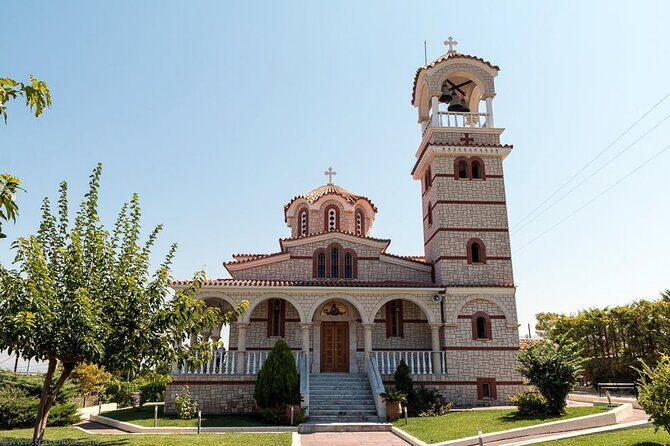
Cenchrea—sometimes written as Kechries—is the tour’s “Biblical side quest” that still feels grounded in geography. It’s one of two controlled harbors on the eastern side of the isthmus, tied to moving goods between places like Asia Minor and Italy.
Your time here is about 1 hour, and it’s listed as free. The tour info connects this area to the Bible through Paul’s second missionary journey. Specifically, Paul stops at Cenchrea, fulfills a vow, and then sails on toward Ephesus on the way back to Syria. The details mention a Nazirite vow, including that he has his hair cut off as a sign that the vow ends.
This stop is valuable because it gives you a sense of where travel routines would have intersected with spiritual life. Corinth wasn’t just one city street; it was a harbor-and-road network. Cenchrea helps you picture the “before and after” of sailing days.
One consideration: this stop is tied to scripture context, but it won’t feel like a massive stand-alone ruin complex in the way Ancient Corinth does. If you’re purely architecture-driven, you may treat it as interpretive and take extra time listening to the context the driver provides.
Submersible Bridges and the Canal’s Modern Rhythm
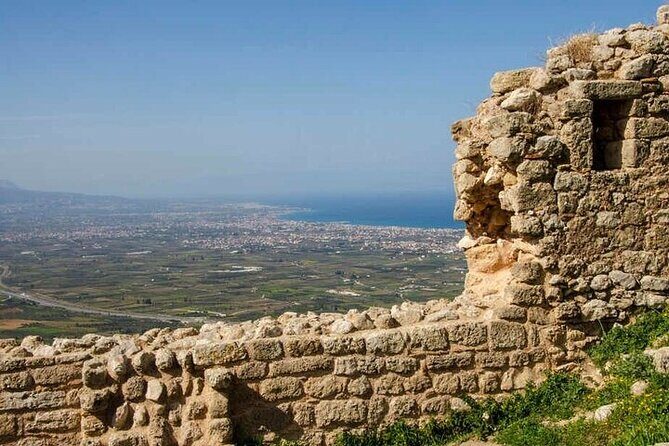
The tour includes a stop called Submersible Bridges, timed at about 15 minutes, and it’s free. This is the kind of engineering detail that makes the Corinth Canal feel alive rather than museum-still.
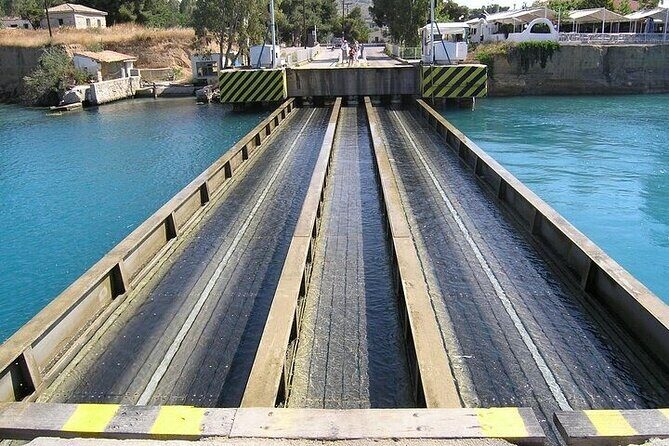
The key idea: a submersible bridge lowers the bridge deck below water level so water traffic can pass. The tour info also describes the canal’s one-way system for ship movement, and how larger ships may need towing by yanks.
You’ll also learn something very specific and memorable: in 1988, two submersible bridges were built across the Corinth Canal, one at each end, and the deck lowers about 8 meters beneath the water level. The advantage given is that there’s no restriction on ship height since nothing rises into the shipping channel.
Why I think this stop belongs: it ties the canal’s 2,000-year dream to modern logistics. You see that this is still an active route, used by tourist ships in large volume each year—so the “Corinth crossing” is still happening, even now.
If you’re into how places work as systems—routes, tides, construction decisions—this stop is a real payoff.
Price and Logistics: Is It Worth $433.48?
The listed price is $433.48 per group for up to 3 people, for an about 7-hour private day. That’s not cheap in absolute terms, but the math can look fair if you’re splitting it between a small group and you value not wrestling public transport in and out of Piraeus.
Here’s what you’re buying beyond the vehicle: you’re buying time efficiency and route planning, plus a driver who provides history and culture context until you reach the sites. Because you’re private, you can ask quick questions and adjust your pace without negotiating with strangers.
Where costs can creep up: entrance fees are not included, and food and drinks are also not included. You’ll want to plan for tickets at the archaeological sites and any optional guidance you choose. If you need a licensed, state tour guide to accompany you inside the archaeological areas and museums, that’s offered as an extra-cost option subject to availability.
My take on value: if you want one strong day focused on Corinth’s main anchors—Ancient Corinth, Acrocorinth, and Cenchrea—this is a clean way to do it. If you’re trying to stretch every euro and you don’t mind doing logistics yourself, you can sometimes DIY this route for less. But for a short stop in Greece or for people who hate transit uncertainty, the private format pays you back.
Who This Tour Suits (and Who Might Prefer Something Else)
This is a great fit for small groups who want structure and context: couples, adult siblings, or parent-child combos who want the story of Corinth without turning it into a navigation project.
It also suits people who like mix-and-match: you get archaeology, a fortress viewpoint, and engineering stops tied to the modern canal. And if you have faith-based curiosity, the explicit Pauline connection in the Cenchrea stop gives you a tangible grounding for scripture.
You might prefer a different setup if you’re hoping for museum-heavy time with a licensed guide inside each site at no extra cost. This tour uses a driver, and driver accompaniment inside archaeological sites and museums is not included under the standard format.
Should You Book This Private Biblical Corinth Tour?
I’d book it if your goal is a focused Corinth day with minimal stress: pickup handled, driving handled, key sites covered with a logical order, and enough time to actually see the hilltop defenses and the ancient city layout.
I’d hesitate only if you strongly prefer a fully licensed guide experience inside every site without extra costs, or if your group needs lots of extra time beyond the scheduled stops. With entrance tickets and optional licensed guidance, you’ll want to budget and plan your priorities ahead of arrival.
If you’re traveling with up to 3 people and you like the idea of connecting geography to the stories—land routes, sea routes, and the hill fortress—you’ll likely come away satisfied with what you managed in one day.
FAQ
How many people are in a group on this private tour?
The tour is priced per group and is private for up to 3 people.
What’s the tour duration?
It runs for about 7 hours.
Do I get hotel pickup, or only cruise port pickup?
Both are available. You can be picked up from your accommodation in Athens, or from the cruise ship pier at Piraeus port.
Is the tour offered in English?
Yes, it’s offered in English.
Do I need to buy entrance tickets?
Entrance fees to the archaeological sites and museum are not included, so you should expect to pay for tickets at the sites where admission is required.
Are food and drinks included?
No, food and drinks aren’t included.
Is there a guide included inside the sites?
You’ll have a professional English-speaking driver with history and culture knowledge until you enter the archaeological sites and museums. Drivers are not licensed to accompany you inside the sites, but a licensed tour guide can be arranged for an extra cost subject to availability.
Do I get a mobile ticket?
Yes, a mobile ticket is provided.
What’s the cancellation policy?
You can cancel for free up to 24 hours in advance for a full refund.
More Private Tours in Athens


More Tours in Athens

More Tour Reviews in Athens
- All Day Cruise -3 Islands to Agistri,Moni, Aegina with lunch and drinks included
★ 5.0 · 4,958 reviews