REVIEW · ATHENS
BEST 4-Day CLASSICAL GREECE: Corinth Epidaurus Delphi Meteora
Book on Viator →Operated by WARMPENGUIN · Bookable on Viator
Ancient Greece, packed into four smooth days. This private route stitches together the big names—Corinth, Mycenae, Epidaurus, Olympia, Delphi, Meteora, and a final hit at Thermopylae—without you juggling schedules. I like that it’s private for your group, run in English, with a professional driver and a mobile ticket.
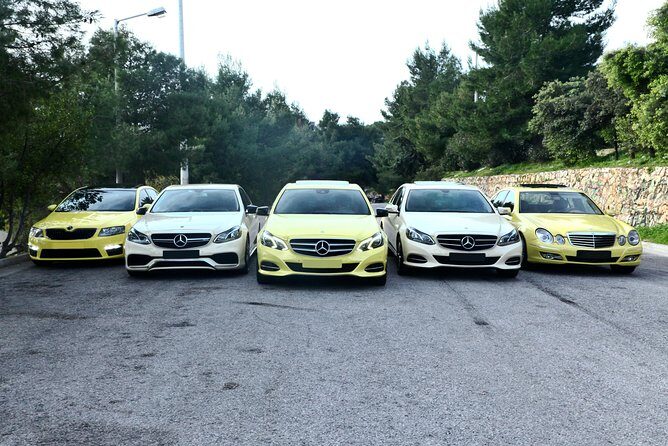
What really makes this tour feel practical is the comfort level. You’ll travel in a Mercedes-class sedan/minivan/sprinter and stay in minimum 4-star or boutique hotels with breakfast—so your “after the ruins” time is actually restful.
One thing to plan for: the driver can’t enter archaeological sites, so the best on-site storytelling may require adding licensed archaeological guides at select stops (and you may also want to budget for entrance fees and meals).
In This Review
- Key things that make this tour work
- Private 4-Day Classical Greece Route: Corinth to Meteora
- Day 1: Corinth Canal, Ancient Corinth, Mycenae, Epidaurus, and Nafplio
- Day 2: Olympia, the Rion-Antirion Bridge, Nafpaktos Old Port, and Galaxidi
- Day 3: Delphi plus Hosios Loukas and Arachova to Kalambaka
- Day 4: Meteora Monasteries, Kalambaka Lunch, Thermopylae, and Return to Athens
- Price and value: hotels, vehicles, and what you still pay for
- Comfort and real-world pacing: how the days feel in motion
- Site guides vs driver narration: what you can expect at the gates
- What to book and who this tour suits best
- Should you book this Classical Greece tour?
- FAQ
- Is this tour private for our group?
- What’s included in the tour price?
- Are entrance fees included?
- Can I add lunch to the itinerary?
- Can the driver enter archaeological sites with you?
- Is pickup available from Athens or the airport?
- How many breakfasts are included?
Key things that make this tour work
- Private group routing across seven standout regions, so you’re not stuck with a crowd rhythm
- 4-star or boutique hotels with breakfast built into the pace of the trip
- A tight classic route from Corinth and Mycenae to Epidaurus, Olympia, Delphi, and Meteora
- Optional licensed site guides when you want deeper explanations inside specific archaeological areas
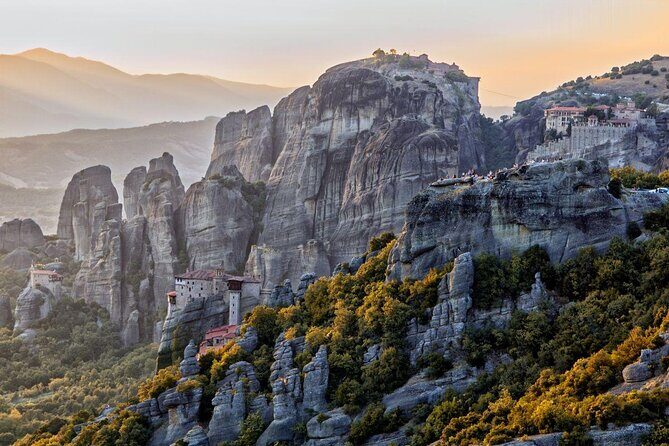
- Meteora monastery visit (you’ll tour at least two, typically including Grand Meteora and Varlaam or Agiou Stefanou)
- High ratings from past guests (4.9/5 average, 93% recommended)
Private 4-Day Classical Greece Route: Corinth to Meteora

This is the kind of trip you book when you want the “greatest hits” of mainland Greece—fast, logical, and with minimal logistics stress. Instead of hopping trains or hiring multiple cars, you ride a dedicated vehicle between regions, then spend your time where it counts: the ruins, the sanctuaries, and the monasteries.
Because it’s private, you can move at the pace of your group. That matters on a route like this, where some stops are all uphill and stone steps. It also makes the long ride days feel less like commuting and more like a planned sightline tour.
The other big advantage is decision support. Your driver can explain what you’re seeing en route, and if you upgrade with licensed archaeological guides for certain sites, you can trade “headsets and quick stops” for real context.
You can also read our reviews of more tours and experiences in Athens
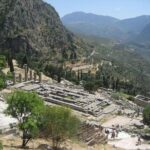
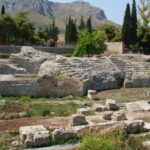
Day 1: Corinth Canal, Ancient Corinth, Mycenae, Epidaurus, and Nafplio
Day 1 is a strong opener: engineering, city-state power, legendary kings, and theater acoustics in one long arc.
Corinth Canal (short stop, mostly to orient you)
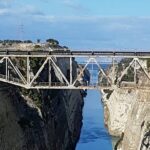
You’ll pull up for a quick look and hear the history behind this striking cut through the land. Even if you don’t linger, it’s a good way to “set the geography” before you start walking ancient streets later.
Ancient Corinth (easy walking through big ideas)
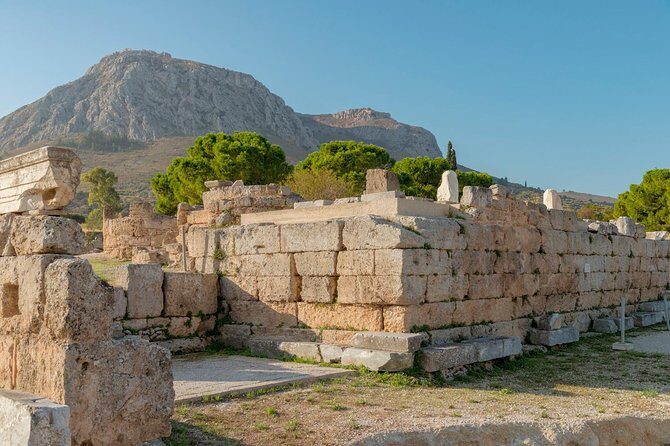
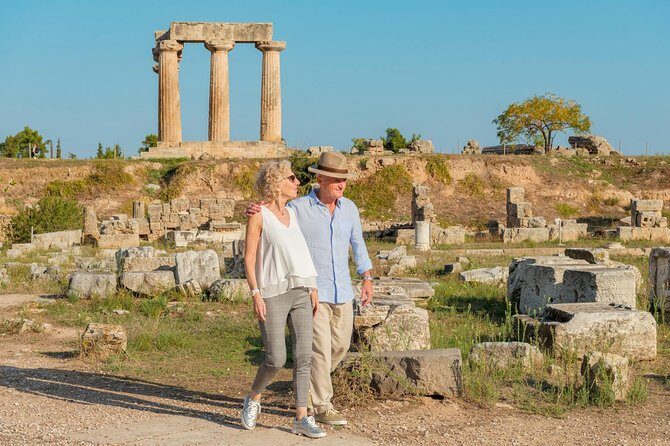
Ancient Corinth is the moment where the trip shifts from scenic history to lived-in ancient city. You get time to stroll through areas connected to temples, markets, and the kind of street layout that makes ancient Greece feel less abstract. If you like religion, commerce, or early Roman-era layers, this stop gives you plenty to chew on.
One practical note: there’s plenty of chance to pause for refreshments at cafes at the entrance area if you need a reset.
Archaeological Site of Mycenae (Lion Gate to the heart of legend)
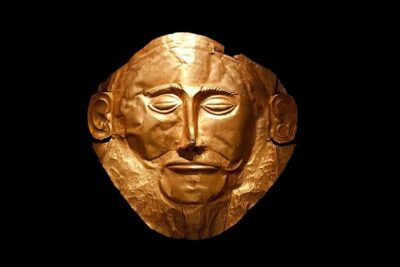
Mycenae is where you get the citadel feeling—thick walls, monumental entrances, and the sense that this was power you could measure in stone. You’ll walk through the famous city walls, pass through Lion’s Gate, then into areas connected to Agamemnon’s throne room and the palace buildings. The treasury of Atreus is a highlight because it gives you that “this mattered a lot” visual punch.
If you like artifacts, the on-site museum is worth your attention too. It helps connect the site you’re walking with the objects that survived.
Sanctuary of Asklepios and the Theatre of Epidaurus (that acoustics moment)
This is one of the best stops for that almost unfair “how did they do that?” reaction. The sanctuary connects to healing in the ancient world, and the theatre is the famous showpiece—UNESCO listed—and known for world-class acoustics.
You’ll likely find yourself pausing to imagine performances here, especially since people often try simple voice tests during the visit. If you’re the kind of person who loves atmosphere, plan to spend extra minutes just sitting and listening even after the tour beats have passed.
Nafplio lunch and evening transfer toward Olympia
After a packed morning, you’ll eat lunch in Nafplio, a medieval port town with sea views and the Venetian castle presence over the bay. This is a smart break: Nafplio gives you calmer streets and craft-shop browsing energy, which helps after multiple archaeological sites in a row.
Then you continue onward to your hotel in Olympia for the night. This is also where having a good hotel matters, since you’ll be tired by Day 1 even if your group keeps moving comfortably.
Day 2: Olympia, the Rion-Antirion Bridge, Nafpaktos Old Port, and Galaxidi
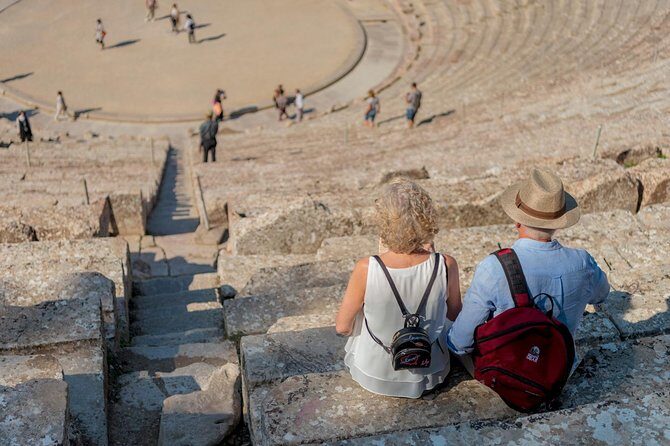
Day 2 is about athletic myth, modern engineering, and two charming ports that feel like “real Greece” rather than only museums and monuments.
Ancient Olympia (the stadium tunnel effect)
Olympia is magical because you can still feel the athletic ceremony. You’ll see training areas, the tunnel route that athletes used to emerge into the stadium, and major temple remains including the Temple of Zeus and Hera. It also includes the museum with masterpieces from the site.
I love Olympia because it’s not just ruins. It tells a story with space. You walk through routes that connect directly to the Olympic concept you’ve heard since childhood.
Rion-Antirion Bridge (quick engineering wow)
This stop is short but memorable. You’ll cross one of the longest suspension bridges in the world while traveling between the Peloponnese and mainland Greece. It’s the kind of break that resets your attention without eating hours.
Nafpaktos Old Port (the Venetian-postcard lunch pause)
Nafpaktos feels less like a must-see tourist machine and more like a place you’d wander for no reason other than pleasure. You’ll get lunch time and views over the Venetian castle reminder of older conflicts and trade eras.
If you want a photo stop that doesn’t feel like a chore, this is it.
Galaxidi (evening calm near the water)
Galaxidi gives you an alternative vibe to Delphi. You’ll have an evening to stroll, eat well, and enjoy sea views without the heavier crowds that come with the most famous sites.
A small but real travel strategy: after Olympia, use Galaxidi to slow down. You’ll thank yourself the next morning when the day becomes more sacred/steep and less casual.
Day 3: Delphi plus Hosios Loukas and Arachova to Kalambaka
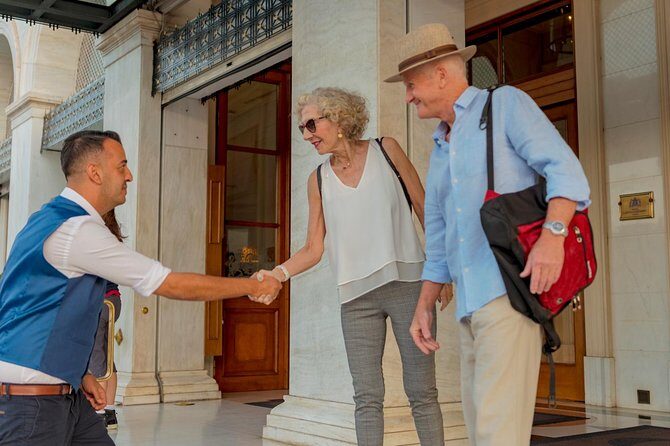
Day 3 turns up the mythology dial. It’s also the day where the trip gives you variety: a classic oracle sanctuary, a Byzantine monastery, then a mountain-town lunch before Meteora.
Delphi (Apollo, terraces, treasures, and the Castalian Spring vibe)
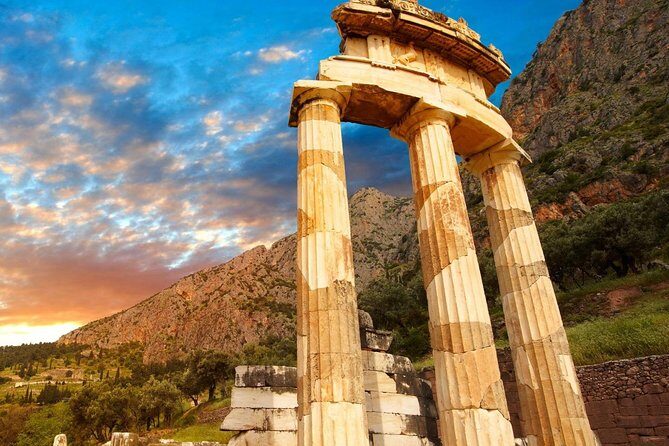
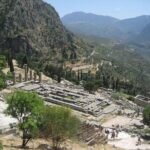
Delphi is famous for a reason. You’ll walk along terraces on the hillside, seeing structures connected to Apollo and the Oracle. You’ll also notice key buildings and areas like the theatre, treasury buildings, temples of Athena, and the gymnasium.
What I find useful is that the visit ties structures to story beats. You’re not just seeing stones; you’re seeing how the ancient site worked as a place for decisions, rituals, and myth. The modern museum also helps a lot because it holds major finds connected to the ancient city over many centuries.
Monastery of Hosios Loukas (UNESCO Byzantine refresh)
If you want a non-ancient layer, this stop is it. Hosios Loukas is UNESCO listed and known for well-preserved architecture and frescoes. You’ll explore the monastery and its long timeline.
There’s an optional element here: you can omit this stop if you prefer to keep energy for Delphi and the Meteora day. That’s a valuable flexibility, especially for groups who don’t love steep, slow pacing.
Arachova lunch (craft shops and mountain-valley views)
Arachova is your lunch reset. You’ll have time to browse local craft shops and enjoy views over the olive-filled Pleistos river valley before continuing toward Kalambaka.
This is also your “transition day” into Meteora territory. By the time you reach Kalambaka, the rock formations above are already part of your mental map.
Day 4: Meteora Monasteries, Kalambaka Lunch, Thermopylae, and Return to Athens
Day 4 is the day of heights—literal stone pillars, plus the historical weight of Thermopylae.
Meteora (at least two monasteries, with sky-high rock pillars)
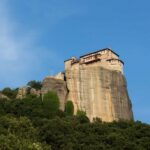
Meteora is built on sandstone rock pillars rising up to about 1,312 feet. You’ll visit at least two of the remaining monasteries, typically including Grand Meteora Monastery and then Varlaam or Agiou Stefanou.
This stop is special because it blends geography and faith. You don’t just read about monks living high above the world—you see the hard reality of how that life shaped architecture and access.
Keep in mind: you’ll do a lot of walking and stair-climbing. Wear shoes you trust, and take short breaks when you need them. The views are the payoff, but the steps are the price.
Kalambaka traditional lunch (rest before the final drive)
After Meteora, you’ll have a traditional lunch in the town’s main square. It’s timed well: you need food and downtime after the monastery climbs and photo stops.
Thermopylae with a new Visitor Center recreation
On the ride back toward Athens, you stop at Thermopylae and can see the monument and enter the newly built Visitor’s Center. The center recreates the battle where King Leonidas led the Spartans in 480 BC.
If you like history that explains itself with visuals, this helps. It can turn a name you’ve heard into something you can picture clearly.
Then you continue back to your onward destination in Athens with the day’s images still fresh.
- All Day Cruise -3 Islands to Agistri,Moni, Aegina with lunch and drinks included
★ 5.0 · 4,958 reviews

Price and value: hotels, vehicles, and what you still pay for
At $2,375.79 per person for a 4-day private tour, this is not a budget trip. The value comes from three things you’d otherwise piece together separately: private transportation, multiple overnights, and time-efficient routing across far-flung sites.
You get:
- Professional English-speaking driver throughout
- A private vehicle (sedan/minivan/sprinter depending on group size and package)
- Minimum 4-star or boutique hotels with breakfast
- Mobile ticket and optional add-ons like lunch and licensed guides
You usually do not get:
- Entrance fees
- Licensed archaeological guides (available on request)
- Lunch unless you choose the lunch-included package
So the best way to judge cost is to ask: Do you want to pay for convenience and comfort, or do you want to manage entry tickets and site guides yourself? If you want low-stress, this price starts to make sense fast.
Also, this route is popular. It’s commonly booked about 131 days in advance on average, which is a decent hint that you should plan ahead rather than hope for last-minute availability.
Comfort and real-world pacing: how the days feel in motion

This itinerary is front-loaded and active. Day 1 and Day 2 stack major archaeological sites and then end with towns that let you walk without constant museum energy. Day 3 adds Delphi first, then a monastery option, then Arachova before you reach Kalambaka. Day 4 finishes with Meteora and Thermopylae on the return.
That structure matters because it prevents the trip from feeling like only “ruins marathons.” You get breaks through Nafplio, Nafpaktos, Galaxidi, and Arachova, plus a proper lunch slot on Day 4.
A practical watch-out: you’ll likely average a lot of walking, and some sites sit above roads. If your group has mobility limits, you’ll want to talk with the operator early about pace and which stops to prioritize. Shoes and water are not optional for this one.
Site guides vs driver narration: what you can expect at the gates
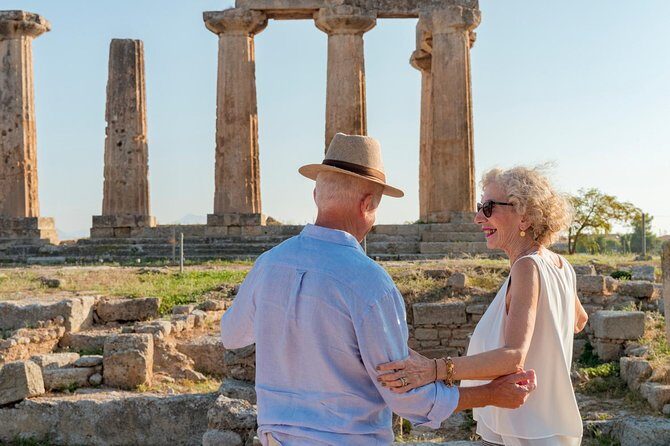
Here’s the key detail to keep your expectations straight. Your tour driver can provide history and explanation en route, but they can’t enter archaeological sites. That’s why the tour offers optional licensed archaeological guides for one or more sites.
When you add those guides, the experience can shift from “very interesting facts” to “full explanations on your walk through the remains.” In past trips, people felt the money spent on site guides was worth it because it turns the site into a map of stories, not just walls and columns.
If you skip licensed guides, you’ll still get plenty from signage and from what your driver explains while traveling between stops. But if your group wants the deeper context inside each area, plan to add guides at least at your top one or two priorities.
What to book and who this tour suits best
This tour fits best if you want:
- A high-comfort private itinerary with hotels handled for you
- A classic mainland route that hits the big UNESCO-listed stops
- The option to add licensed guides when you want more than quick interpretation
- A group trip where you can move together and avoid the churn of bus schedules
If you’re the kind of traveler who loves reading quietly, you might find some sites self-guided enough. But if your interest is history-as-story (not just history-as-photo), the optional guides are the upgrade that changes the feel of the day.
It’s also a good choice for mixed-age groups who don’t want to plan driving between regions, choose accommodations, and coordinate entry times.
Should you book this Classical Greece tour?
I’d book it if you want the mainland highlights in a private format, with 4-star/boutique hotels and enough structure that you’re not spending your limited vacation time on logistics. The itinerary is strong: Corinth and Mycenae for power and legend, Epidaurus and its theatre acoustics, Olympia for the Olympic origin story, Delphi for mythology, and Meteora for the dramatic finale.
I’d think twice if you dislike paying extra for entrance fees and you don’t want the optional cost of licensed site guides. This tour’s big payoff comes when you’re ready to spend real time inside a few key places and accept that your driver will be storytelling from outside the gates.
If you want an efficient, high-comfort classic Greece run—this one is built for that.
FAQ
Is this tour private for our group?
Yes. This is listed as a private tour/activity, meaning only your group will participate.
What’s included in the tour price?
The tour includes professional English-speaking tour driver services, a private vehicle based on your group size and chosen package, and minimum 4-star or boutique hotels with breakfast (4 breakfasts). Entrance fees and licensed archaeological guides are not included by default.
Are entrance fees included?
No. Entrance fees are not included.
Can I add lunch to the itinerary?
Yes. There are lunch booking options you can add later on request, including traditional menu lunches each day in one of the best local restaurants (vegetarian dishes available; you should inform the operator about allergies).
Can the driver enter archaeological sites with you?
No. Your driver can inform you en route but cannot enter archaeological sites. Licensed archaeological guides can be added on request for one or more sites.
Is pickup available from Athens or the airport?
Pickup is offered, and pickup time is flexible on request. Airport pickup and/or return are free if your arrival/departure dates coincide with the tour. For Airbnb stays, you provide the exact address.
How many breakfasts are included?
Breakfast is included for the 4 days of the tour, listed as breakfast (4).
More 4-Day Experiences in Athens
More Tour Reviews in Athens
- All Day Cruise -3 Islands to Agistri,Moni, Aegina with lunch and drinks included
★ 5.0 · 4,958 reviews