REVIEW · ATHENS
4day Spanish tour in Epidaurus Mycenae Olympia Delphi and Meteora
Book on Viator →Operated by ArtyTours · Bookable on Viator
Five ancient sites, one nonstop story.
What makes this tour fun is the big-pause contrast: sea-level classics, mountain views, and monastery cliffs, all stitched together in Spanish with headsets so you can actually follow the explanations without straining. I love that the route is built around the major “first-visit” names—Mycenae, Epidaurus, Olympia, Delphi, and Meteora—so you’re not spending this trip on filler. I also like that most entrances and key museum visits are handled for you, plus skip-the-line access. One drawback to plan for: you’ll be on the bus a lot, and not everyone loves the 6–7 hours/day feel when you’re covering serious distance.
The value side is strong if you want guidance and logistics handled. You get 3 or 4 star hotels with breakfast and dinner, and the group stays capped at a maximum of 55 people (so it’s large enough to be organized, not a private car). Still, this is a “see a lot” style trip, not a slow cruise through one region.
In This Review
- Key things worth knowing before you go
- Meeting at Melina Mercouri Monument and setting your rhythm
- Day 1: Corinth Canal photos, Mycenae’s power walls, and Epidaurus’ acoustic magic
- Where Olympia earns its museum time (and how the bridge fits in)
- Day 3: Delphi’s Via Sacra, the Temple of Apollo, and the Auriga bronze
- Day 4: Meteora monasteries in the morning and Thermopylae’s Leonidas stop
- Price and value: what $728.56 buys you in real life
- The bus time question: comfort, fatigue, and how to cope
- Guides make the difference: the Spanish team that powers the story
- Should you book this 4-day Spanish tour?
- FAQ
- What languages is the guide?
- Where does the tour start?
- What time does the tour begin?
- Where does the tour end?
- What is included in the price?
- What is not included?
- Is lunch included?
- How big is the group?
- Is the tour weather dependent?
- When can I cancel for a full refund?
Key things worth knowing before you go
- Spanish guide end-to-end: you won’t lose your story halfway through the week.
- Skip-the-line access: fewer time-wasters at the busiest sites.
- Museums included, not just ruins: Olympia and Delphi museums are part of the deal.
- Long drives, built into the experience: you’re trading comfort for range.
- Meteora in the morning: you get monasteries while the day is still young.
- Praxiteles and Delphi bronzes: real art anchors the archaeology.
Meeting at Melina Mercouri Monument and setting your rhythm
The tour meets at the Melina Mercouri Monument area in central Athens (Leof. Vasilisis Amalias 54). You start at 8:00 am, which is early enough to make the day feel efficient, and early enough that you should sleep like you mean it.
Because the guide travels with you all four days and the bus comes with headsets and WiFi, you can treat the ride time as learning time, not just transit. It helps with pacing too. If you tend to get road-fatigued, bring simple fixes: water, a small snack for the bus, and something for eye comfort on long drives. You also need to accept that the itinerary moves across regions in a short time window, so the “slow moments” are limited to the scheduled breaks.
Group size matters here. With up to 55 people, you’ll have room to move at sites, but you still feel the schedule. The upside is that tours at big archaeology hot spots can become chaotic without a plan; this one is clearly built around staying on time.
You can also read our reviews of more tours and experiences in Athens
Day 1: Corinth Canal photos, Mycenae’s power walls, and Epidaurus’ acoustic magic
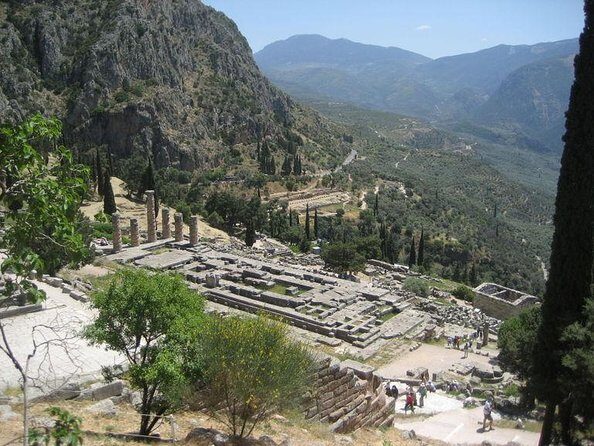
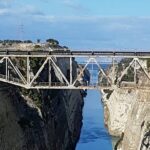
Day 1 opens with a quick stop at the Corinth Canal. It’s not a long wander, but it’s a classic photo break: the canal connects two gulf waters, and the view snaps you into “ancient routes” mode fast. If you like quick scenic stops, this one works. If you hate being rushed, you’ll want to arrive early to the bus so you’re not starting the day already irritated.
Next comes Mycenae, and this is where the tour earns its ticket. You’ll tour the archaeological area and hit the highlights in a focused way: the Gate of the Lions, the Cyclopean Walls, the Royal Tombs, the Treasure of Atreus (Agamemnon’s royal tomb), and the local museum. This is one of those places where guided context really matters. Without it, you see walls and tombs; with it, you understand why those sites mattered and how the stories connect.
One more smart move is the museum stop. It gives your brain a place to store what you just walked through outside. That helps later in the trip when you bounce to other centers like Olympia and Delphi.
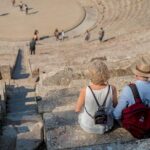
Then you finish the day at the Ancient Theatre of Epidaurus. This theater (4th century BC) is famous for harmony and acoustics, and your time there is set up as a proper visit, not a quick walk-by. If you’ve ever sat in a modern venue with bad sound, you’ll appreciate what people mean when they talk about Epidaurus. Even if your day ends with a bit of travel fatigue, this stop is the kind that makes the miles feel worth it.
Where Olympia earns its museum time (and how the bridge fits in)
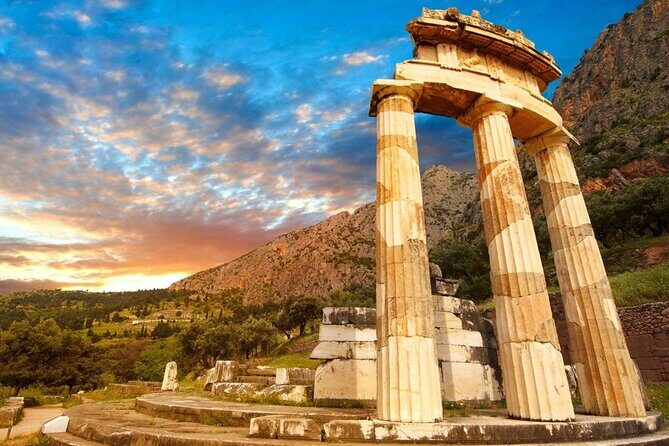
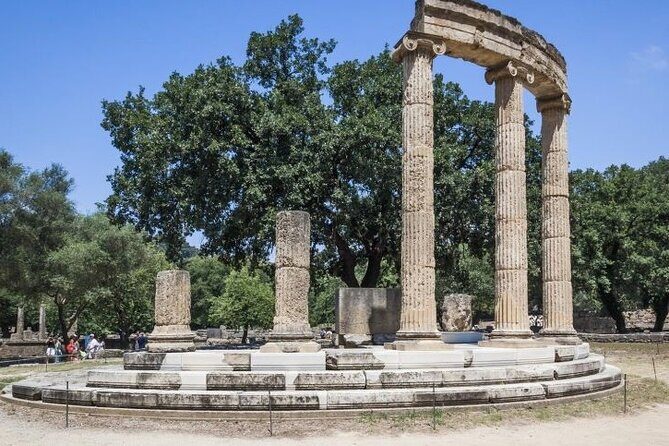
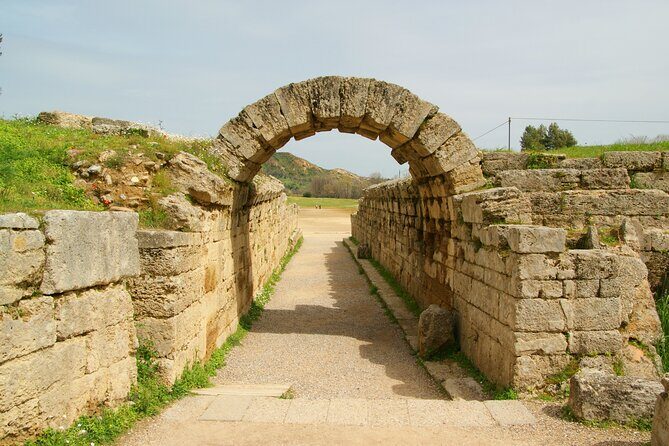
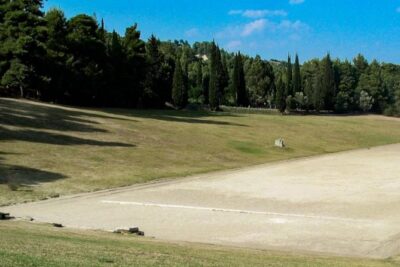
Day 2 starts at the archaeological site of Olympia with a morning tour and museum time. This matters because Olympia isn’t just “ruins in a field.” The site includes major structures tied to ancient athletic and religious life, and then the museum sharpens the story with objects you can actually see up close.
You’ll spend real time at the museum, including the famous statue of Hermes by Praxiteles. That’s not a small detail. When you can connect the archaeology to art you can view at human scale, the whole place stops feeling abstract.
After Olympia, you transfer toward Delphi and cross the Rio–Antirrio Bridge. The bridge crossing is one of those “logistics becomes scenery” moments, and the tour gives you a bit of engineering context: it’s 2,883 meters long and built with techniques designed to protect the structure in extreme conditions. It’s a nice palate cleanser after dense ruins.
Then you arrive at Delphi. This is the point where the rhythm changes. Delphi is dramatic, hilly, and visually layered, and you’ll feel that shift the moment you start moving around the area.
Day 3: Delphi’s Via Sacra, the Temple of Apollo, and the Auriga bronze
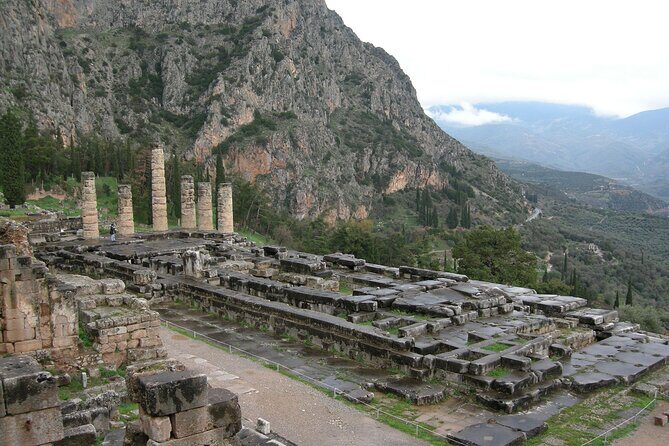
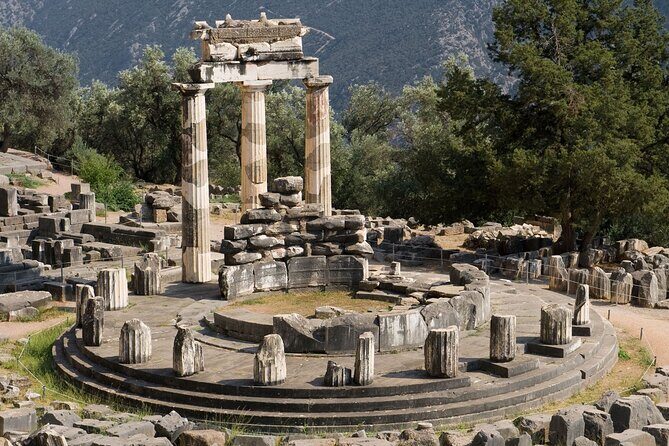
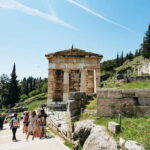
Delphi is the kind of site where a tour guide can make or break the experience. Here, you get the core beats: the Temple of Apollo, the Via Sacra route, the Treasury of Athens, and a panoramic view from up near the theater.
The Temple of Apollo stop is built around understanding the place, not just taking photos. The Via Sacra part helps you imagine movement and procession—how people would approach and why certain spots mattered. The Treasury of Athens is short on time but big on meaning because it’s tied to civic pride and the way offerings and monuments worked at Delphi.
You’ll also see a viewpoint from the theater area. That matters because Delphi’s power isn’t only what’s on the ground. It’s how the site sits in its setting, with layered views that help you “read” the ruins.
Then you go to the Delphi Archaeological Museum. The highlight mentioned is the bronze figure known as L’auriga de Delphi—the bronze charioteer-like athlete figure. A museum stop like this gives you something tangible to hold in your mind while you’re done walking and you’re ready to move on.
You’ll also pass through Arachova, known for crafts. This isn’t presented as a full shopping hour, but it’s a nice break from pure archaeology. The value of that short stop is mostly mental: you switch from stone stories to everyday local texture.
Finally, you continue toward Kalambaka and your overnight base for Meteora.
Day 4: Meteora monasteries in the morning and Thermopylae’s Leonidas stop
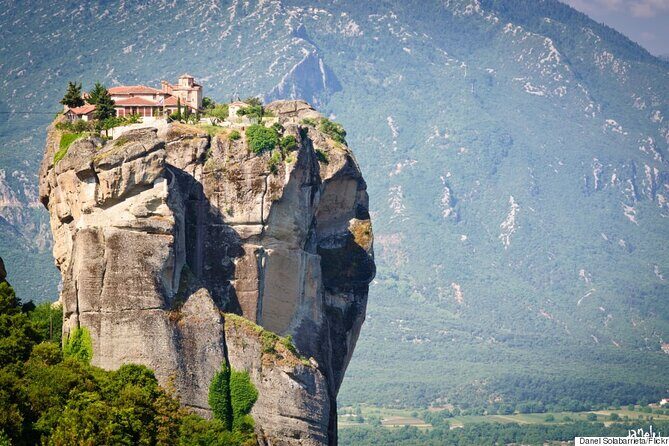
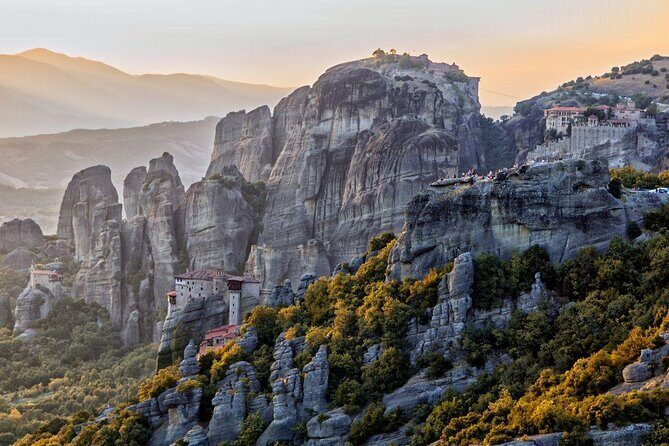
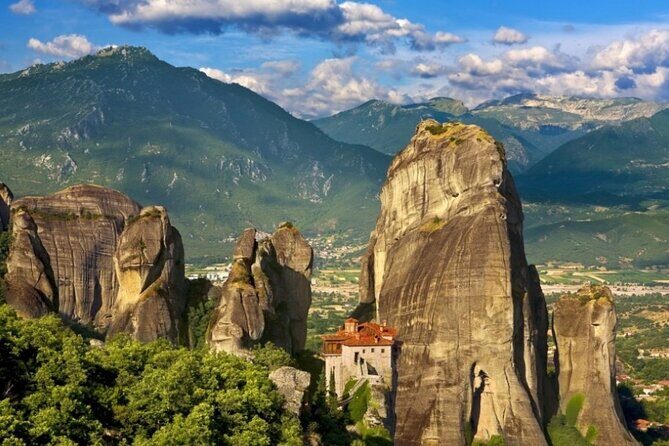
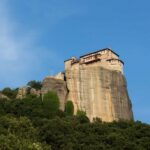
Day 4 is the “wow” day for many people, and for a practical reason: Meteora monasteries are visually intense, and the trip schedules them in the morning with a visit to two monasteries. They’re on UNESCO World Heritage land (listed since 1988), and the focus is Byzantine art.
This is one place where you’ll want to watch your footing and dress accordingly. The program calls for a monastery visit dedicated to Byzantine art, and you’ll see why these places were preserved high above the plain. Even if you’re not a museum person, church interiors and icons often hit harder here because the setting amplifies the feeling of time and faith.
Then you stop briefly at the Leonidas Monument in Thermopylae, connected to the famous battle in 480 BC. It’s a short stop—20 minutes—but it’s a clean way to link Greek myth, history, and the real geography of the Thermopylae story before you head back to Athens.
The day ends with the return to Athens at the same meeting point where you started.
- All Day Cruise -3 Islands to Agistri,Moni, Aegina with lunch and drinks included
★ 5.0 · 4,958 reviews

Price and value: what $728.56 buys you in real life
At $728.56 per person, this tour is priced like a structured guided circuit, not a budget DIY plan. The best way to judge value is to total what you’re getting bundled:
- Entrance fees are included for the major sites and museums.
- You get accommodation in 3 or 4 star hotels with breakfast and dinner (3 breakfasts and 3 dinners).
- Transportation is provided by luxury A/C coaches.
- The bus includes WiFi, plus headsets to hear the guide.
- You get skip-the-line access.
What isn’t included is also clear. Lunch and drinks are on you, tips are extra, and you may need to pay a hotel fee per room per night depending on season and hotel star category (winter 1.5€ or 3€; summer 3€ or 7€, depending on 3 vs 4).
So who wins with this price? You do if you want a guided Spanish experience that strings together multiple UNESCO-level sites without you having to plan drives, ticket logistics, or museum timing. If you like tight itineraries and you don’t want to waste hours at entrances hunting for the right line, the skip-the-line piece matters.
Who might feel the price less? If you already know you’d rather spend more time in fewer places, this is built for breadth. You’ll see a lot, but you won’t linger for long.
The bus time question: comfort, fatigue, and how to cope
A key theme in the feedback is the reality that you’ll drive a lot. Some people love the pace because it turns the trip into a “great hits” sampler. Other people get cranky because they feel the day is mostly transit.
Here’s how to make it work for you:
- Treat mornings as productive time. The headsets make the early hours easier to enjoy.
- Plan for a practical “in-bus routine” (snack, water, sun protection).
- Keep expectations realistic: this is not one-region lounging. It’s Peloponnese, Central Greece, and Thessalia in one tight schedule.
The good news is that the tour is clearly designed around structure. You don’t just drive; you stop, tour, and get museum context. Still, if you’re very sensitive to long rides, choose lighter days to recover when you can—especially after Meteora, which is visually and physically demanding.
Guides make the difference: the Spanish team that powers the story
This tour is guided exclusively in Spanish, and the guide quality shows up again and again in reviews with specific names. You might have a guide such as Fanery Aguirre, Gogo, George C. Panagos, Magdalena, Elena, ZOE, or Estela, and the common thread is clear storytelling about history, mythology, and art.
Even if the guide changes, the format is the same: you get context at each stop, and the headsets keep it accessible for the whole group. That’s exactly what you want in Greece when sites are close enough to compare, but complex enough to misunderstand without help.
Should you book this 4-day Spanish tour?
Book it if you want a single trip that covers the major classical hits: Mycenae, Epidaurus, Olympia, Delphi, and Meteora, with museums and skip-the-line entry built in. I’d also say yes if you value a Spanish guide all the way through and you like the idea of structured days with hotels and dinner plans handled.
Think twice if you hate long days on the road or you’re the type who needs lots of downtime between sites. This route is for motion. It’s also for people who can appreciate that the bus time is part of how you get to see so much.
If you fit the “big, guided circuit” style, you’ll likely come away with clear connections between the places—how power, religion, art, and myth move from one site to the next.
FAQ
What languages is the guide?
The tour is guided exclusively in Spanish.
Where does the tour start?
It starts at the Melina Mercouri Monument area (Leof. Vasilisis Amalias 54, Athina 105 58, Greece).
What time does the tour begin?
The start time is 8:00 am.
Where does the tour end?
It ends back at the meeting point in Athens.
What is included in the price?
Entrance fees, 3 or 4 star hotel accommodation with breakfast and dinner, a professional Spanish guide, luxury A/C coaches, WiFi on board, headsets, skip-the-line access, and 3 breakfasts and 3 dinners.
What is not included?
Lunch and drinks, tips, personal expenses, and the hotel fee per room per night (depending on season and hotel star category).
Is lunch included?
No. Lunch and drinks are not included.
How big is the group?
Maximum group size is 55 travelers.
Is the tour weather dependent?
Yes. The experience requires good weather, and if it’s canceled due to poor weather you’ll be offered a different date or a full refund.
When can I cancel for a full refund?
You can cancel up to 3 days in advance of the experience for a full refund.
More 4-Day Experiences in Athens
More Tours in Athens
More Tour Reviews in Athens
- All Day Cruise -3 Islands to Agistri,Moni, Aegina with lunch and drinks included
★ 5.0 · 4,958 reviews