REVIEW · ATHENS
Athens Highlights & Ancient Corinth Private Full day tour
Book on Viator →Operated by H.P.Tours - Hellenic Private Tours · Bookable on Viator
One day, two ancient worlds. This private Athens highlights and Ancient Corinth tour strings together the classics of Athens with a real feel for the Peloponnese at a relaxed pace. You’ll move by air-conditioned vehicle, get story-filled explanations from your driver, and keep your day moving without the hassle of figuring out timing and connections yourself.
I especially like two things: the true private pacing (no random strangers, and you can spend time where you care), and the onboard Wi-Fi plus bottled water that makes the long drive feel less like a chore. The one thing to watch is that it’s an 8–9 hour day and the two big sites have entrance fees on top, plus lunch is not included.
In This Review
- Key points worth knowing before you go
- Why this Athens-to-Corinth itinerary works so well
- Pickup, comfort, and why the small stuff matters
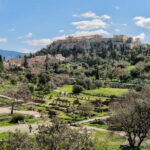
- Acropolis highlights: the rock that still dominates Athens
- Temple of Olympian Zeus and the marble roar of a stadium
- Syntagma Square: Parliament views and the Evzones’ change of guard
- Corinth Canal: a quick window into engineering dreams
- Ancient Corinth: where the stories go bigger than Athens
- Kechries port add-on: a short stop with a Paul connection
- Timing, value, and how to plan your day
- Should you book this private Athens Highlights and Ancient Corinth tour?
- FAQ
- How many people is the group for this private tour?
- Where can the driver pick us up?
- How long is the tour?
- Are entrance fees included?
- Do we get an English-speaking guide at the sites?
- Is lunch included?
- What’s included in the tour price?
- Is there Wi-Fi and a mobile ticket?
Key points worth knowing before you go
- Skip-the-line option for the Acropolis: ticket-booth queues can be reduced if you book in advance.
- Door-to-door pickup: hotel, Piraeus port, or the airport, with a sign and clear meeting instructions.
- A driver who tells the stories: you get context on what you’re seeing, even though your driver can’t enter the sites.
- Comfort for the drive: air-conditioning, Wi-Fi onboard, and bottled water are part of the deal.
- Ancient Corinth with walking time: you’re not just stopping at a photo point; you get time to explore the main ruins.
- Extra port history if you want it: Kechries is a brief add-on tied to Apostle Paul’s travels.
Why this Athens-to-Corinth itinerary works so well
Athens can feel like a lot when you’re trying to self-guide. This tour fixes that by doing the hard parts for you: a private car, round-trip pickup, and a logical route that keeps travel time tight.
You’ll also like the way the day is paced. The tour is private for up to 2 people, and it’s designed so you can linger at the places that grab you. In past bookings, drivers such as Frank, Kyriakos, Jimmy, and Evan have been praised for being punctual, friendly, and genuinely helpful on the road. And if you want more in-site commentary, the option exists to add a licensed tour guide inside the monuments (more on that below).
One note: because it’s a full day, your feet will do some work. The big payoff is that you’ll connect the dots between Athens’ political and cultural power and Corinth’s commercial and religious influence—without feeling like you’re sprinting from stop to stop.
You can also read our reviews of more private tours in Athens


Pickup, comfort, and why the small stuff matters
This tour starts the minute you’re met. If you’re staying in Athens, your driver picks you up at your hotel. If you’re arriving by cruise, pickup is at Piraeus Port (with specific terminal instructions for Terminals A, B, and C). And if you’re flying in, your driver meets you at Athens International Airport at the customs exit with a sign.
The comfort details are real value on a long day:
- Air-conditioned vehicle (big deal in the Greek sun)
- Bottled water during the drive
- Onboard Wi-Fi so you’re not burning data or hunting for signal
- Mobile ticket for your day plan
Also, you’re getting a professional driver who explains what you’re about to see. Just know the legal limits: the driver can’t enter the sites with you, so you’ll still want to plan on reading signs and using your time well at each stop.
If you’re bringing teens, older relatives, or anyone who hates the idea of standing in lines, the private format helps a lot. One of the best parts is how easy it is to ask for small adjustments—where to take photos, when to pause for shade, and when you want to speed up versus slow down.
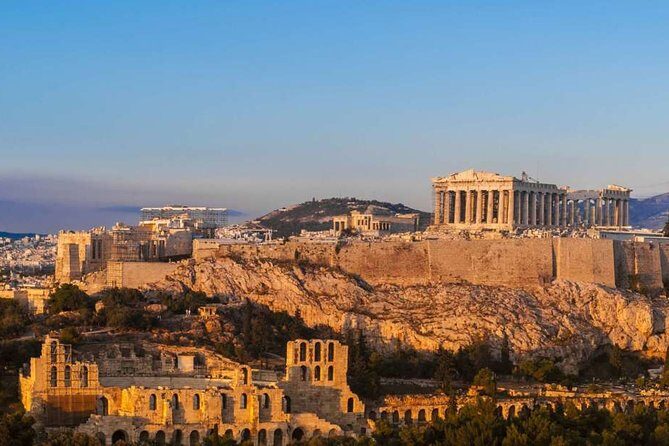
Acropolis highlights: the rock that still dominates Athens
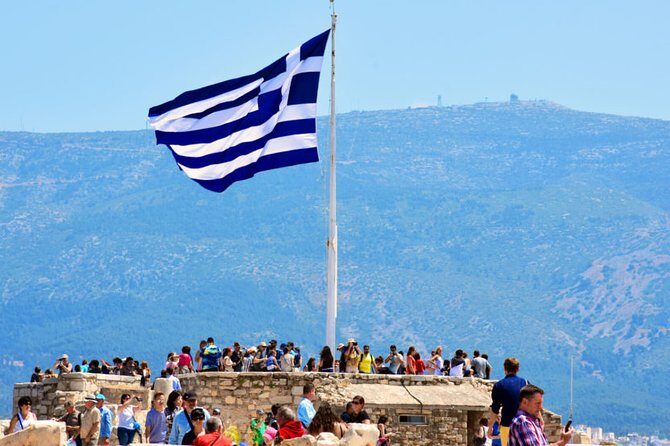
Your day’s headline act is the Acropolis area, and it’s paced for a serious visit without turning into a rushed checklist. Plan on about 1 hour 30 minutes here, and use that time intentionally.
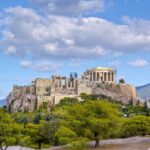
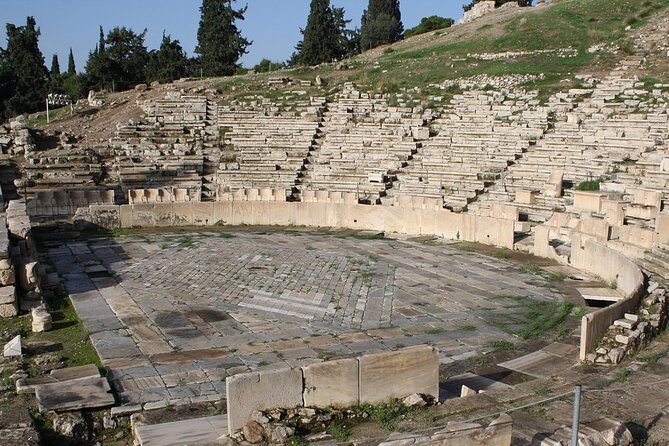
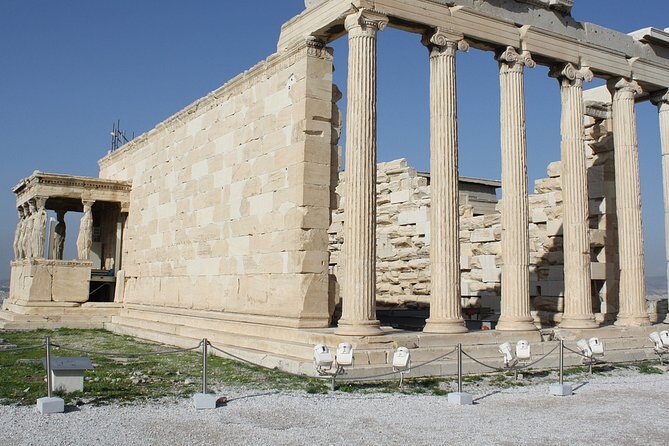
You’ll see the Parthenon (Athena’s temple on top of the sacred rock), the Propylaea (the monumental entrance), the Temple of Athena Nike, and the Erechtheum with its famous Caryatides—those carved female figures that look like they’re holding the sky up. From there, you’ll also work your way through the theatre landscape: the Odeon of Herodes Atticus (still used for music festivals) and the theatre of Dionysus, linked to the great classical playwrights.
Why this stop feels different with a private tour: you’re not just moving like a crowd. You can spend the extra minutes you want on the details that click for you—columns, angles, and that whole skyline view over modern Athens. Acropolis is also where it’s easy to lose the story thread when you’re self-guiding. Having your driver narrate the “why” behind what you see helps you walk away with a clearer mental map.
One practical note: Acropolis admission is not included. The tour is designed to skip the Acropolis ticket-booth queues when advance booking is available, which can save time. Still, bring patience for the overall site flow and sun, because the Acropolis is the Acropolis.
Temple of Olympian Zeus and the marble roar of a stadium
After the Acropolis, you’ll head to two more landmarks that show Athens at different stages.
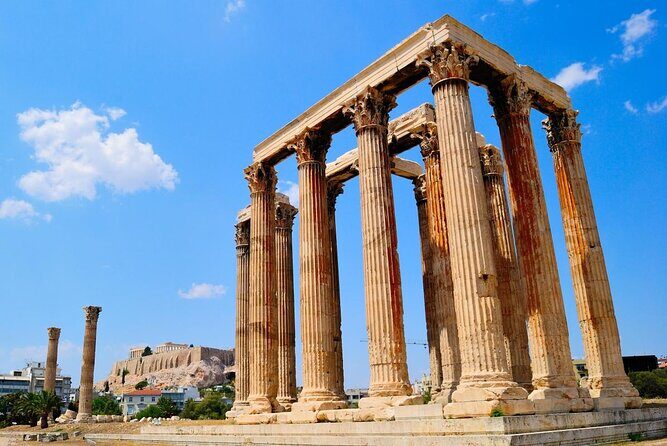
First is the Temple of Olympian Zeus. It’s hard to look at the remaining columns and not feel the scale. Construction began in the 6th century BC, continued (in fits and starts) through centuries, and wasn’t completed until Roman emperor Hadrian in the 2nd century AD—about 638 years after the project started. During the Roman period, it was known for being the largest temple in Greece, with 104 colossal columns.
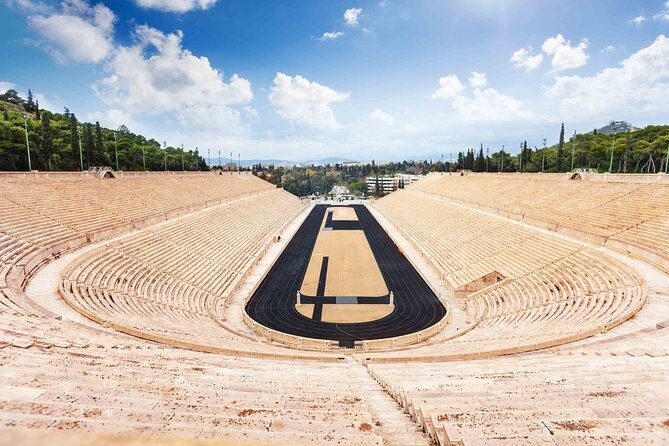
Next comes the Panathenaic Stadium (Kallimarmaro), which most people don’t realize is a once-in-a-lifetime kind of structure. It’s the only stadium in the world built entirely of marble. A stadium existed on this site since 330 BC for the Panathenaic Games, then it was rebuilt in marble by Herodes Atticus around 144 AD. It once held about 50,000 seats.
Why you’ll enjoy stopping here: the stadium ties ancient athletics to modern Greece in a very physical way. It hosted the opening and closing ceremonies of the first modern Olympics in 1896, and later served as a venue again in 2004. It’s also the finish point for the Athens Classic Marathon and part of the tradition around the Olympic flame handover.
This is a short stop (about 15 minutes), so the best move is to decide in advance what you want to see: the field and seating angles, or the history story. Either way, it’s worth the quick stretch.
Syntagma Square: Parliament views and the Evzones’ change of guard
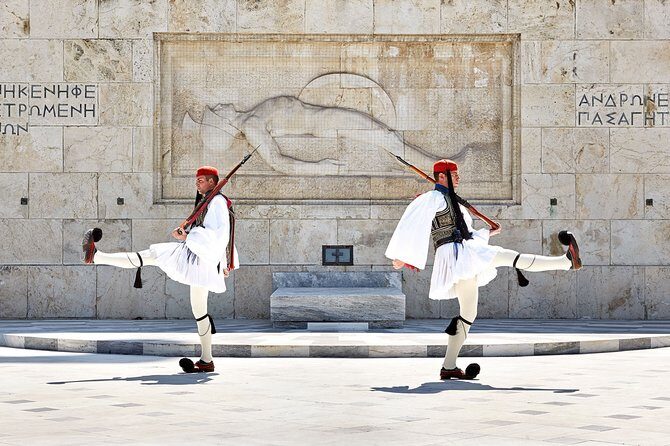
Now you shift from ancient stone to living tradition—right by Syntagma Square.
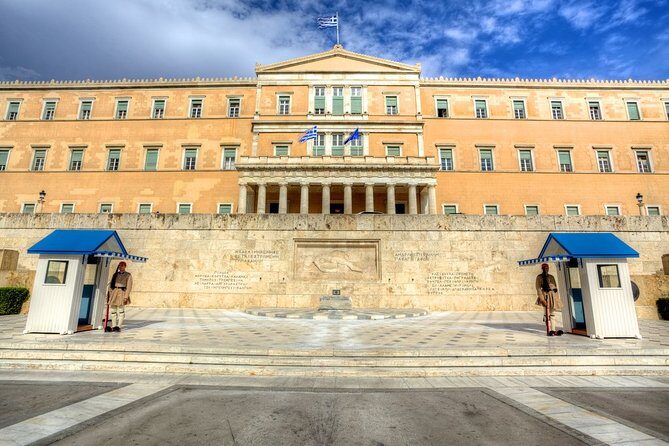
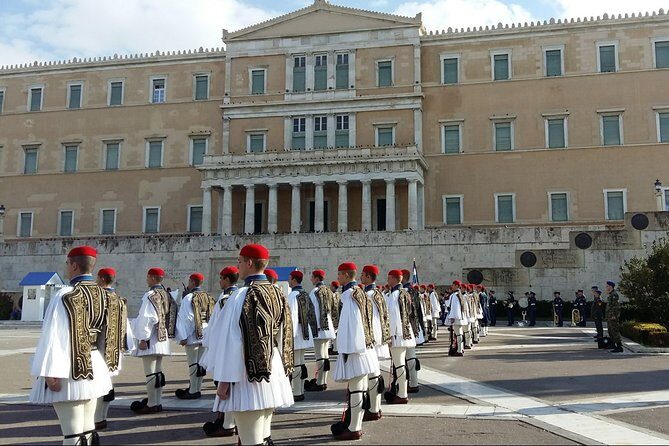
You’ll visit the Hellenic Parliament, located in the Old Royal Palace overlooking the square. The site matters because it sits at the heart of Greece’s democratic system, with the elected Members of Parliament representing citizens. Even if you’re not there to read every sign, the location gives you that sense of Greece being both historic and current.
Then comes one of Athens’ most photo-friendly moments: the Changing of the Guard at the Tomb of the Unknown Soldier and the Presidential Mansion. The unit is the Presidential Guard, the Evzones, known for their traditional uniform style, including the fustanella, a kilt-like garment. This stop is about 15 minutes, and it’s typically timed enough for you to watch the ritual and get a few good shots.
If you’re visiting in peak season, show up ready to stand in the open for a bit. If you’re sensitive to crowds, this is still manageable in a private-day format because you can time your own viewing and take breaks between stops.
You can also read our reviews of more tours and experiences in Athens
- All Day Cruise -3 Islands to Agistri,Moni, Aegina with lunch and drinks included
★ 5.0 · 4,958 reviews



Corinth Canal: a quick window into engineering dreams
On the road to the Peloponnese, you’ll stop at the Corinth Canal (about 20 minutes). It’s one of those places that looks simple from a distance, but has a huge story behind it.
The canal connects the Saronic Sea and the Corinthian Sea, saving ships from sailing around the Peloponnese. That means a practical reduction of travel time compared to the old route—ships avoided a detour that could cost about 185 nautical miles.
The canal itself reflects centuries of ambition:
- The idea is linked to ancient Corinthian ruler Periander (associated with the earlier diolkós, a stone road that moved ships overland).
- Emperor Nero attempted construction around 67 AD with a workforce of about 6,000 slaves, but he was murdered before plans were finalized.
- Completion happened much later, in the late 19th century.
This is a short stop, so don’t expect a long walk. The value is the perspective: you’ll see the narrow cut and connect it to why Corinth mattered as a hub for trade and power.
Ancient Corinth: where the stories go bigger than Athens
Ancient Corinth is the main ruins stop in the afternoon, with about 1 hour on site. This is the moment where you start feeling the difference between the two regions.
Corinth’s myth and reputation are part of the experience. The foundation story ties into Sisyphus and the endless punishment of rolling a boulder. But what really makes the site matter is the city’s position on trade routes: because of traffic and commerce across the Isthmus, Corinth could compete with Athens in wealth and fame.
At the archaeological site, you’ll focus on major highlights rather than getting lost:
- The Temple of Apollo from the mid-6th century BC, known for monolithic columns (instead of column drums) and the fact that seven columns still stand.
- The Agora and surrounding civic structures, including the Basilica Iulia and the bema/rostrum platform used for public announcements.
- Lechaion Street, a striking Roman-era commercial corridor that once formed a kind of shopping and public-life backbone for the city.
- The Peirene fountain area, connected in tradition to Pegasos.
- The Stoa built by Philip II of Macedonia, and the theatre/odeion zone, including a concert-hall space associated with Herodes Atticus.
One of the more interesting layers here is how archaeology handles religious claims. You may hear references linking a location in the civic area to Apostle Paul and Gallio, but the tour frames it in a careful way—historical and archaeological research doesn’t support the strongest versions of that tradition.
Why this stop is worth the long day: it gives you a place to walk and picture how a major city functioned—markets, courts, streets, and public life—then connect it to what the Romans later inherited and reshaped. It’s also easier to appreciate compared with some sites that are mostly scattered foundations. Ancient Corinth still reads as a city.
If you want more context on the ground—especially for the civic spaces and claims around Paul—consider adding a licensed English tour guide (extra cost, paid in cash, subject to availability). Otherwise, you’ll rely on your driver’s narration and the signage.
Kechries port add-on: a short stop with a Paul connection
After Ancient Corinth, you’ll have the option to visit Kechries, the remains of the ancient port (about 15 minutes). It’s one of Corinth’s ports and is tied to eastern trade routes via the Saronic Gulf.
The connection offered here is very specific: Apostle Paul is associated with arriving at Kechries during his second missionary. It’s not a long time on this stop, but it’s a nice way to anchor Corinth’s story to movement—ships coming and going, not just city walls and ruins.
If you’re the kind of person who likes history that connects to travel routes, this brief add-on can feel oddly satisfying.
Timing, value, and how to plan your day
This tour typically runs about 8 to 9 hours, and the schedule is built around smart clustering: Acropolis first, then down to Syntagma, then out toward Corinth with a canal break and a major ruins block.
Here’s the value math in plain terms. The price is $565.43 per group (up to 2), which is not cheap. But you’re paying for:
- round-trip private transfers from your exact pickup point
- an air-conditioned car and professional driver time
- onboard Wi-Fi and bottled water
- a private format where you’re not squeezed into group logistics
What is extra? You should budget for entrance fees—Acropolis and Ancient Corinth are listed at €45 per adult. Lunch is also not included, so you’ll want to plan ahead for where you eat near Corinth that day.
There’s also an optional add-on that can change the experience level: an English-speaking licensed tour guide inside the sites for €360 (cash), subject to availability. Your driver can explain monuments and history during travel, but cannot go into the sites. If you’re a deep-history person who wants line-by-line detail while standing in front of the ruins, this is the piece to consider.
What to bring:
- comfortable walking shoes (Acropolis and ruins are not flat)
- sun protection (Syntagma and Corinth both get bright)
- a light layer if evenings cool down
- your patience for crowds at the most famous points
Also, because this experience requires good weather, keep an eye on forecast days—Greek weather can change quickly, and the day’s flow can depend on it.
Should you book this private Athens Highlights and Ancient Corinth tour?
Book it if you want a stress-free full day that links Athens’ icon sights (Parthenon, Zeus, the stadium, the guard ceremony) to a major ancient city (Corinth) without the frustration of buses, tickets, and route planning. It’s also a strong choice if your travel style is calm and personal: you’ll get private transport, a driver who tells the stories, and time to look rather than just sprint.
I would think twice if your group is easily fatigued by long days or if you’re not interested in ruins enough to justify extra entrance fees. Also, if you specifically want an in-site licensed guide for detailed commentary, plan for the optional extra cost so expectations match reality.
If your goal is one day where ancient Athens and ancient Corinth actually connect in your head, this is a solid way to do it. With the private setup and the comfort touches, you spend more of your energy on seeing and less on figuring out how to get there.
FAQ
How many people is the group for this private tour?
It’s a private experience for your group, with pricing listed per group up to 2 people.
Where can the driver pick us up?
Pickup is offered from an Athens hotel, the Piraeus port, or the airport. For cruise guests, the driver meets you at the correct Piraeus terminal exit (A, B, or C).
How long is the tour?
The duration is listed as approximately 8 to 9 hours.
Are entrance fees included?
No. Entrance tickets for Acropolis and Ancient Corinth are not included. The listed entrance fees are €45 per person for Acropolis & Ancient Corinth.
Do we get an English-speaking guide at the sites?
An English-speaking driver provides explanations, but the driver is not allowed by law to accompany you into the sites. A licensed English-speaking tour guide is optional and costs €360 payable in cash, subject to availability.
Is lunch included?
Lunch is not included.
What’s included in the tour price?
Included items are bottled water, an air-conditioned vehicle, private transportation with pickup and drop-off from Athens/Piraeus/airport, Wi-Fi onboard, and professional drivers. Skip-the-Acropolis booth queues is optional with advance booking.
Is there Wi-Fi and a mobile ticket?
Yes. Wi-Fi is offered onboard, and mobile tickets are included.



More Private Tours in Athens


More Tours in Athens



More Tour Reviews in Athens
- All Day Cruise -3 Islands to Agistri,Moni, Aegina with lunch and drinks included
★ 5.0 · 4,958 reviews