REVIEW · ATHENS
Acropolis & Acropolis Museum Group tour in German or Dutch
Book on Viator →Operated by Little Owl Tours · Bookable on Viator
Acropolis feels bigger with the right guide. This half-day small-group walk turns the Acropolis and the Acropolis Museum into a connected story, with a Dutch-language guide explaining what you’re seeing as you move between major monuments. You also get a calmer pace than the big groups, so questions are actually possible.
I especially like two things about this tour. First, it’s structured like a guided tour across real places, with stops that hit the Parthenon complex in a logical route rather than a random shuffle. Second, I like how the guide format makes listening easier, with reports of a microphone/headphones setup and lots of lively explanations (including guides like Maria, noted for a PhD in archaeology, and Jessica, praised for fun and clear storytelling).
The main drawback to consider is the setting. This is 3 hours on the Acropolis hill, so if you don’t handle uneven ground and stairs well, you may find the pace tough, especially on hot days (the tour also depends on good weather).
In This Review
- Quick highlights
- Small group Acropolis: why it matters on your first trip
- Where you start and how the morning unfolds
- The Acropolis hill route: what each stop really teaches you
- Theatre of Dionysus Eleuthereus: where performance became culture
- Temple of Athena Nike: the victory symbol in miniature time
- Propylaea: the ceremonial gate into the sacred zone
- Parthenon: the big icon and the big questions
- Erectheion: the Caryatids and why details matter
- The 360-degree view: use it like a map
- Acropolis Museum: the moment the story makes sense
- Your Dutch (or German) guide: what makes this tour feel different
- Price and value: what $69.77 buys you, and what you still pay
- Practical notes: walking, weather, and expectations
- Who should book this Acropolis + Museum tour?
- Should you book Little Owl Tours for the Acropolis + Museum?
- FAQ
- FAQ
- Is the tour offered in Dutch or German?
- How long does the Acropolis + Acropolis Museum tour take?
- What is the maximum group size?
- Where do we meet the guide?
- Where does the tour end?
- Are entrance tickets included in the tour price?
- Does the tour include food or drinks?
- Is hotel pickup or drop-off included?
- What fitness level is required?
- What if the weather is bad or I need to cancel?
Quick highlights

- Small group (max 20): easier questions and more personal pacing than standard buses
- Licensed guide: archaeologist or historian leads, with stories tied to what you’re standing in front of
- Acropolis + Museum in one go: you see the monuments first, then the artifacts make them click
- Route through iconic stops: Theatre of Dionysus, Athena Nike, Propylaea, Parthenon, Erectheion
- 360-degree view from the hill: built into the Acropolis portion of the tour
- Clear listening setup: many groups report microphone/headphones for strong audio
Small group Acropolis: why it matters on your first trip
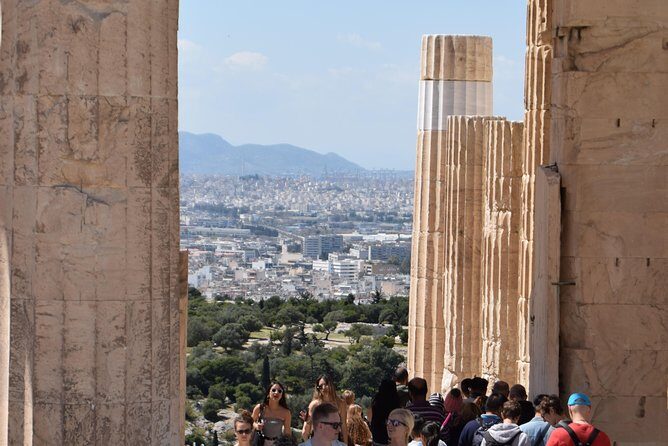
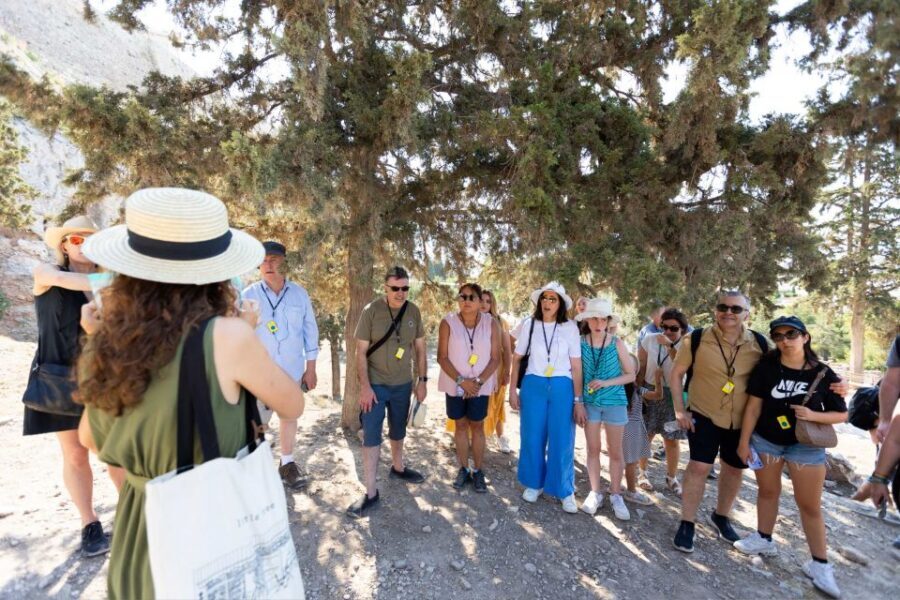
The Acropolis is one of those places where the stones are famous, but the experience can go sideways fast if you’re in a crowd. A big group means you’re usually waiting, craning, and moving just when you want to linger. Here, the max 20 group size keeps you moving, but not trapped.
I like that the tour’s format is “walk, look, explain” rather than “read facts off a sign.” On a site this layered, it helps to have someone connect the dots while your feet are still on the ground. You’ll also get a better sense of scale, because you’re not only seeing one famous building—you’re moving through the spaces around it.
One more practical win: the tour is designed as a half-day. That’s a big deal in Athens, where you’ll otherwise burn time doing logistics and then feel rushed at the sites.
You can also read our reviews of more museum experiences in Athens

Where you start and how the morning unfolds
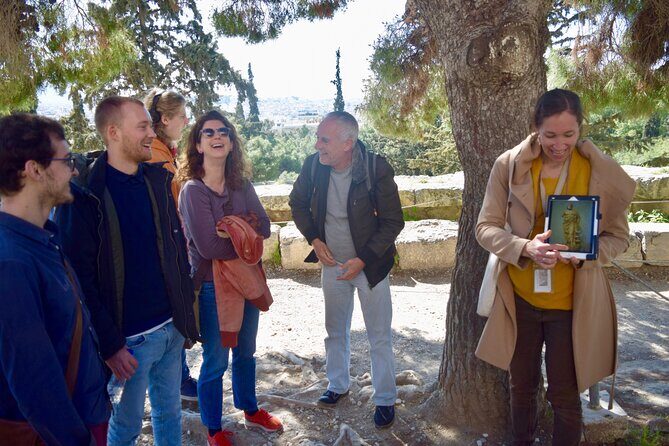
You meet your guide near the Acropoli metro station, at the exit, and you head to the entrance from there. The walk uphill is part of the experience: it’s not just transportation, it’s how your view and perspective shift as you climb.
At the Acropolis itself, the tour is planned around short stops with enough time to look up, not only forward. The schedule is built for attention: a first pass over major monuments, then targeted moments at key structures.
A good thing to know: entrance tickets are not included in the tour price. The tour operator says they will arrange your entry fee with a skip-the-line ticket, so you’re not stuck in the slowest part of the day. Still, you’ll want to budget for that.
Bring a simple plan for comfort. Bottled water is not included, but it’s strongly recommended. And if you get heat-sensitive, try to come prepared for Athens-style sun even in cooler months—your body feels it on the hill.
The Acropolis hill route: what each stop really teaches you
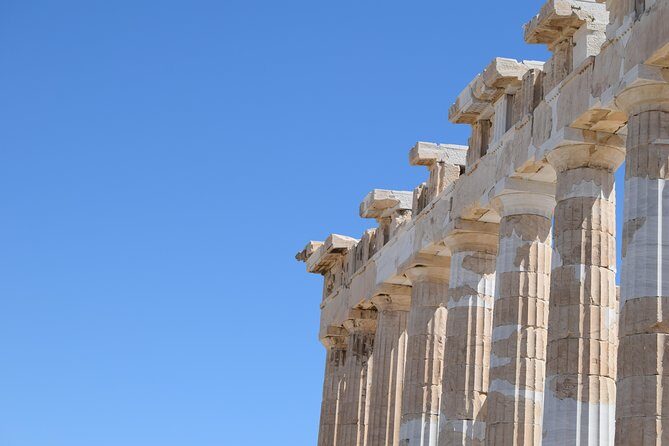
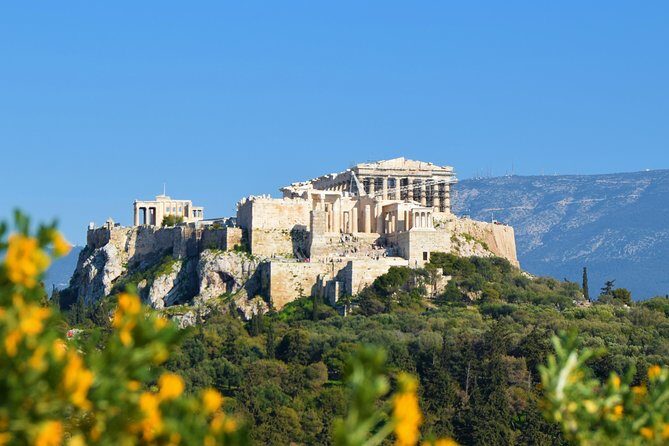
This is the heart of the tour: roughly 1 hour at the Acropolis site with a sequence of specific monuments. The structure makes sense, because each stop highlights a different piece of the story—religion, civic life, architecture, and the myth of victory that shows up in the details.
Theatre of Dionysus Eleuthereus: where performance became culture
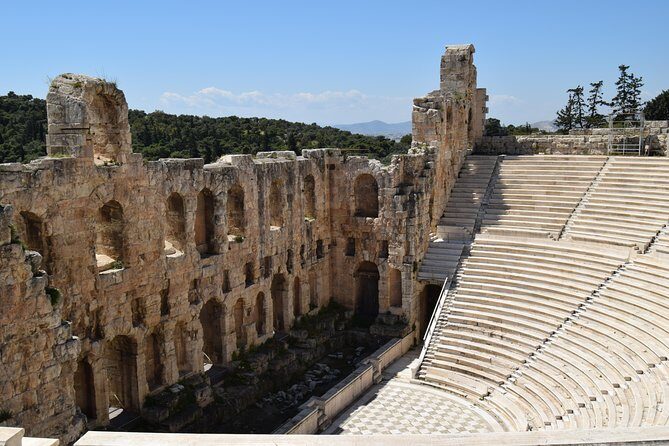
The route begins with the Theatre of Dionysus Eleuthereus, described as the birthplace of ancient Greek theater. This stop is short, about 15 minutes, but it’s an important “context anchor.”
What you’re looking at here changes how you read the rest of the site. When you understand that Athens didn’t just build temples—it staged drama and public ideas—then the monuments stop being isolated masterpieces and start feeling like part of daily Greek life. It’s also a useful mental reset before you climb into the most iconic sacred buildings.
Temple of Athena Nike: the victory symbol in miniature time
Next is the Temple of Athena Nike, a stop of about 5 minutes. Short stops can feel rushed, but on the Acropolis they work if the guide explains what you’re seeing.
Think of this temple as a message in stone: Athena as a symbol of victory. Even if you only get a quick look, you learn how victory wasn’t just a battlefield story—it was tied to religious meaning and civic identity. A guide who knows the architectural intent helps you notice proportions and design choices that you’d otherwise miss.
- All Day Cruise -3 Islands to Agistri,Moni, Aegina with lunch and drinks included
★ 5.0 · 4,958 reviews





Propylaea: the ceremonial gate into the sacred zone
Then comes Propylaea, the monumental entrance gate to the top of the hill, about 10 minutes. If you’re wondering what makes the Acropolis feel ceremonial, this is one of the reasons.
You’re not walking into a random ruin field. You’re moving through a designed transition from outside city life to a sacred complex. This is the point where the uphill walk finally feels like it’s doing something. The gate and the approach route train your eye for the idea that architecture can control your experience.
Parthenon: the big icon and the big questions
The Parthenon stop is around 20 minutes. This is the time to slow down. It’s the biggest temple on the hill dedicated to Athena, and it’s the one most people recognize from pictures.
But the value of the guided format is that you get more than “this is the Parthenon.” You’ll learn why it was built, what it represents, and how the design choices connect to the religious purpose of the site. You also get a better sense of how the building sits within the overall complex, not just as a standalone photo backdrop.
A practical note: the Parthenon area is busy when you’re there. The tour’s small-group pace helps you spend more time looking rather than inching forward.
Erectheion: the Caryatids and why details matter
Finally on the Acropolis complex is the Erectheion, including the famous Caryatids—the female column figures. This stop is about 10 minutes.
Ten minutes doesn’t sound like much, but it’s enough to do the important thing: look closely at what makes the figures feel human rather than purely structural. When your guide explains the intent behind the design, you start noticing the difference between decoration and meaning.
This is also where kids and first-time visitors often light up. It’s easier to engage with sculptures you can recognize and interpret, rather than only sweeping temple geometry.
The 360-degree view: use it like a map
Along the way, you get a stunning 360-degree view over Athens. This isn’t just a scenic bonus—it’s how you orient yourself.
When you can see the city spread out below the hill, you can mentally place what you learned: the Acropolis as a landmark, and Athens as the living city around it. Even if you just use it for direction, it improves the whole day.
Acropolis Museum: the moment the story makes sense
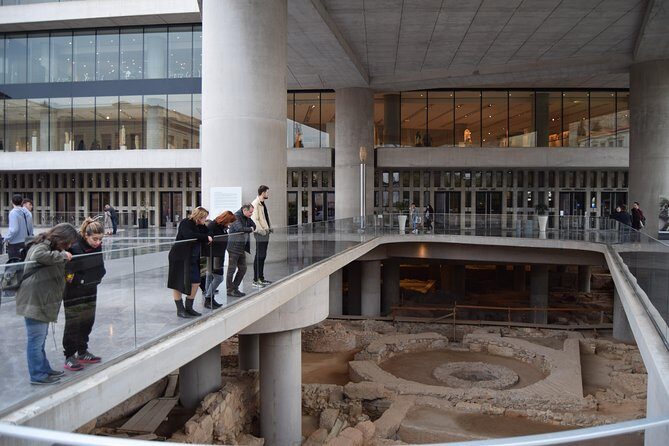
After the monuments, you move to the Acropolis Museum, which takes about 1 hour. The museum is new, and it’s designed to house the treasures of the Acropolis hill, so it works as the “payoff” for the walk.
Here’s why it’s worth the time: at the site, you’re looking at buildings. In the museum, you can connect the buildings to the objects and design elements that once gave them meaning. A good guide helps you connect what you saw outside to the context inside, so your photos aren’t just pretty—they’re clues.
You’ll likely get the kind of explanation that turns museum glass into something you can actually understand: what the pieces are, why they were made, and how they relate to the structures you visited. That is the big value of doing Acropolis + Museum back-to-back instead of separating them by hours or days.
Your Dutch (or German) guide: what makes this tour feel different

This is a tour led by an expert licensed guide—either an archaeologist or historian. In past groups, guides like Maria (PhD in archaeology) and Jessica have been singled out for two things: strong content and a lively delivery style.
You can expect stories that go beyond basic dates. The best part is the way explanations are tied directly to what you’re looking at in front of you. That approach makes the site easier to remember after you leave, because the details are anchored to a specific view, doorway, column, or sculptural figure.
There’s also a very practical angle. Multiple groups highlight that listening is clear, helped by microphone/headphones or a receiver system. That matters on the Acropolis, where wind, distance, and crowds can make it hard to hear a guide speaking over everyone else.
And if you’re traveling with family: the tour has worked for groups with children, including kids around primary-school age, because the guide style apparently keeps attention moving with humor and room for questions.
Price and value: what $69.77 buys you, and what you still pay
At $69.77 per person, the tour price is only part of your total day. The big additional cost is entrance: the operator states 50 EUR per adult for entry, and they arrange this with a skip-the-line ticket.
So what are you paying for, beyond entry?
- A licensed guide (archaeologist or historian)
- A small-group experience (max 20)
- The planned route of stops that cover the most important areas
- The inclusion of the Acropolis Museum visit
- A structure that minimizes wasted time and supports better understanding
What you’re not paying for:
- Entrance fees (you handle via the arranged skip-the-line setup)
- Food and drinks
- Hotel pickup and drop-off
For value, I’d look at it like this: you’re buying your time and comprehension. If you were to do it without a guide, you’d likely spend more time trying to figure out what matters and where to go next. Here, the “what to look for” part is the product.
If you’re trying to pack Athens efficiently, this pairing is also smart. You’re doing two major hits in a short window, without switching your brain between sites on separate days.
Practical notes: walking, weather, and expectations
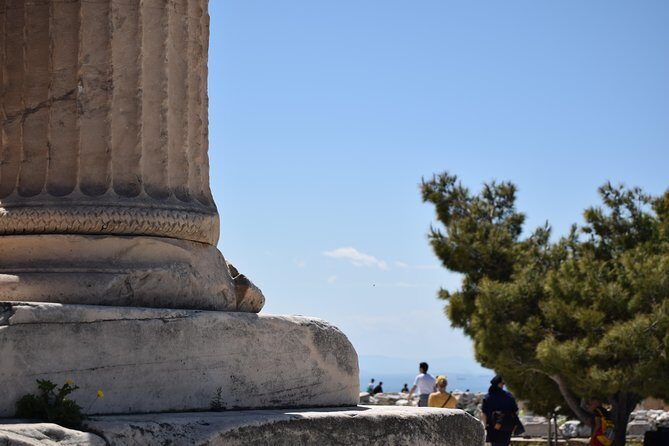
This tour asks for moderate physical fitness. The Acropolis hill means uneven ground and stairs. It’s manageable for many people, but you should be honest with yourself about mobility needs.
It also runs only with good weather. If conditions are poor, the experience may be canceled and you’ll be offered another date or a full refund. That’s Athens in winter and shoulder seasons: don’t plan your whole week around a single outdoor slot without a little flexibility.
Language is another practical point. This group tour is offered in German or Dutch, and the guide style is built around that language delivery. If you want Dutch specifically, double-check your booking language before you pay attention to timing.
Who should book this Acropolis + Museum tour?
I’d book it if you want a guided first-time understanding of the Acropolis without spending the whole day lost in reading. It’s ideal if you like walking with a purpose, asking questions, and getting a clean story arc from the hill to the museum.
It also makes sense for families with kids who are old enough to listen for short stretches and handle a museum stop. Several groups have found the guide style engaging for children, and the short stop lengths help keep attention from dragging.
You might look elsewhere if you need lots of wheelchair-level accessibility support or you’re not up for hilly walking. The tour doesn’t advertise a low-steps alternative, and the schedule assumes you can handle the main Acropolis terrain.
Should you book Little Owl Tours for the Acropolis + Museum?
If you care about getting meaning, not just photos, this is a strong choice. The small-group size, licensed guide, and museum follow-up make it easier to remember what you saw—and easier to understand why it matters.
Book it if:
- You want an organized Acropolis route with specific monuments
- You want the museum visit to reinforce what you learned outside
- You prefer a group that stays small enough for questions
- You’re comfortable with a moderate walk on the hill and about three hours of total time
Skip it (or research alternatives) if:
- You can’t handle stairs or uneven ground
- You’re traveling on a tight schedule with no flexibility for weather
FAQ
FAQ
Is the tour offered in Dutch or German?
Yes. This group tour is offered in German or Dutch, with a guide speaking the selected language during the experience.
How long does the Acropolis + Acropolis Museum tour take?
The duration is about 3 hours (approximately).
What is the maximum group size?
The tour is described as a small group with a maximum of 20 participants.
Where do we meet the guide?
You meet the guide at the exit of the Acropoli metro station and walk to the entrance of the Acropolis site.
Where does the tour end?
The tour ends at the top of the Acropolis hill, at the Acropolis of Athens area.
Are entrance tickets included in the tour price?
No. Entrance fees are not included. The operator arranges your entry fee with a skip-the-line ticket, and the entrance cost is listed as 50 EUR per adult.
Does the tour include food or drinks?
No. Food and drinks are not included. Bottled water is recommended.
Is hotel pickup or drop-off included?
No. Hotel pickup and drop-off are not included.
What fitness level is required?
The tour notes a moderate physical fitness level because it involves time on the Acropolis hill and walking between stops.
What if the weather is bad or I need to cancel?
The experience requires good weather. If it’s canceled due to poor weather, you’ll be offered a different date or a full refund. Free cancellation is available up to 24 hours in advance for a full refund.



More Museum Experiences in Athens



More Tours in Athens

More Tour Reviews in Athens
- All Day Cruise -3 Islands to Agistri,Moni, Aegina with lunch and drinks included
★ 5.0 · 4,958 reviews