REVIEW · KALAMBAKA
Meteora: Morning Monasteries Tour with Photo Stops
Book on GetYourGuide →Operated by Meteora Tour · Bookable on GetYourGuide
Morning Meteora hits different. The tour uses a comfortable, air-conditioned minibus, then strings together the big spiritual sights with hermit cave history and multiple cliff-top photo stops. I love that you enter up to three monasteries (depending on opening hours) and still get views of all six from outside. I also love the way the guides, including names like Panos, Joana/Joanna, and Areti, explain how the monks lived and what you’re looking at—so the time feels meaningful, not rushed. The main drawback is simple: four hours goes fast, so if you want long indoor wandering, you’ll feel time pressure.
Meet-up is easy at the Kalampaka Train Station, and the ride out to Meteora is part of the fun—scenic drives, short walks, and pull-offs timed for good light and fewer hassles. Just plan to dress properly (shoulders and knees covered) and remember that entrance fees and meals are extra.
In This Review
- Key things to know before you go
- Why the Meteora Morning Tour Works So Well From Kalabaka
- Hermit Caves and St. George the Mandilas: Meteora’s Origin Story
- Photo Stops and Exterior Viewpoints for All Six Monasteries
- Entering Up to Three Monasteries: How the Interior Stops Feel
- Modest Dressing and No-Flash Rules (So You Don’t Get Stuck Outside)
- Price and Value: Is $34 Really a Good Deal Here?
- Who This Tour Suits Best (And Who Might Want Another Option)
- Should You Book This Meteora Morning Monasteries Tour?
- FAQ
- Where is the meeting point for the tour?
- How long is the Meteora morning monasteries tour?
- Will I be able to visit monasteries inside?
- Do we visit the hermit caves?
- What type of transport is included?
- How much are monastery entrance fees?
- What should I wear?
- Is flash photography allowed?
- Can I cancel or pay later?
Key things to know before you go
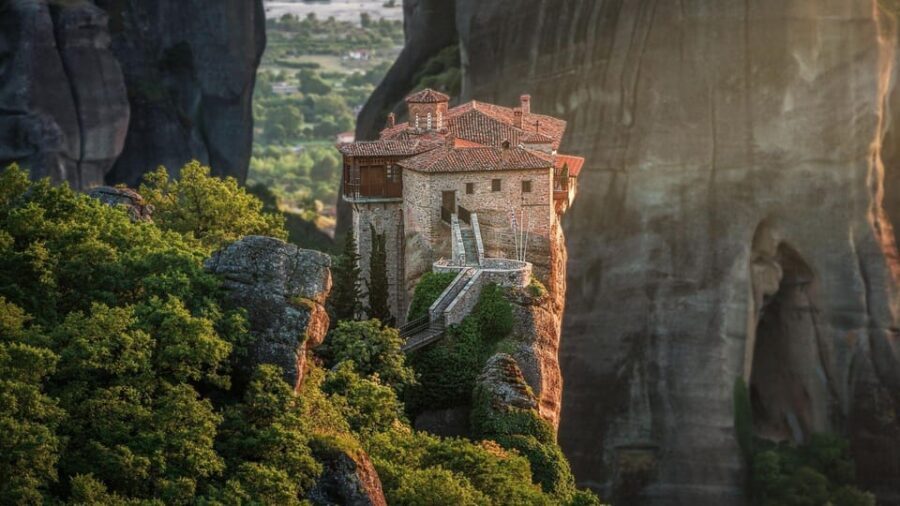
- Kalabaka start, four hours total: a compact morning format that works well as a first Meteora outing.
- All six monasteries from the viewpoints: you’ll see the full set without trying to hop between them on your own.
- Enter up to three monasteries: interior access depends on opening hours that day.
- Hermit caves included: you’ll visit the early ascetics’ setting, plus the cave of St. George the Mandilas.
- Photo stops are built in: you get the right roadside moments for pictures and not just hurried passing views.
- Bring modest outfit + comfy shoes: short skirts and flash photography are out.
Why the Meteora Morning Tour Works So Well From Kalabaka
This is the kind of tour that respects your schedule. You’re picked up in Kalabaka (from the Kalampaka Train Station), then you’re on the Meteora roads with an air-conditioned minibus. The start point matters—Kalabaka is where most visitors base themselves, and being picked up at a major hub helps you avoid guesswork.
The rhythm is also smart for first-timers. In a half-day you get:
- a focused look at early monastic life (the hermit caves),
- multiple exterior viewpoints across the rock formations,
- and time to actually enter up to three monasteries when openings allow.
That mix is the key value. If you only do one monastery, Meteora can feel like one good view. If you cram too many, it turns into logistics and stress. This keeps it balanced: you get the big-picture view of all six, then the deeper experience inside a limited number.
Transport is another plus. People consistently describe the minibus as clean and comfortable, and the drivers as careful and confident on the roads. Some of the guide teams are clearly hands-on with practical comfort too—like making sure there’s water available on board.
One more detail I like: the tour includes short walks. That means you’re not stuck staring out a window the whole time. You’ll step out for photo points and quick stretches, which helps you actually absorb the area.
You can also read our reviews of more tours and experiences in Kalambaka.

Hermit Caves and St. George the Mandilas: Meteora’s Origin Story
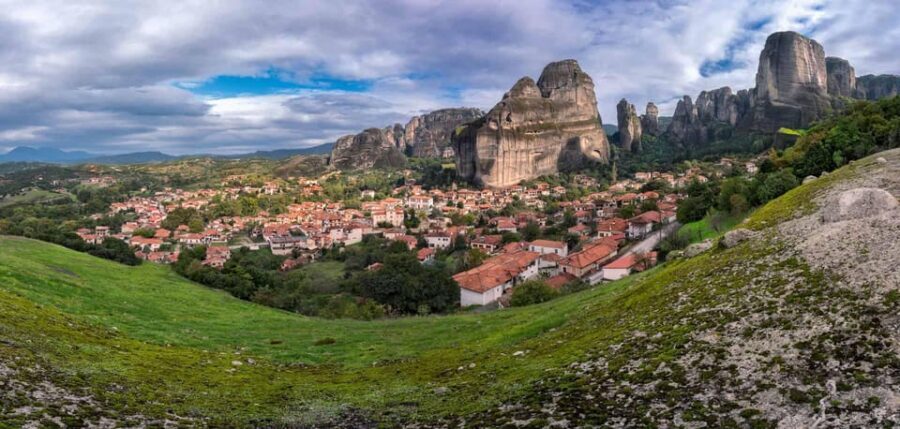
The hermit caves stop is more than a checkbox. Meteora wasn’t built by people chasing comfort. The whole story starts with solitude—first ascetics arriving and seeking isolation on these cliffs.
On this tour, you visit the hermit caves and get context for how the earliest monastic life formed the foundations of Meteora’s later monastery community. You also see the cave of St. George the Mandilas. It’s one of those places that quietly explains why these monasteries became possible here at all: you’re looking at a setting where living small, living apart, and living around faith wasn’t an idea—it was daily reality.
Practical tip: wear shoes you can trust on uneven ground. Even when a walk is short, you’re moving around old pathways and viewpoints where footing matters. Also, this is a great moment to pull out your camera—but don’t forget the rule: flash photography isn’t allowed.
If you care about the human side of history, this stop is one of the strongest. You’ll understand Meteora less as a postcard and more as a life choice that reshaped the region.
Photo Stops and Exterior Viewpoints for All Six Monasteries
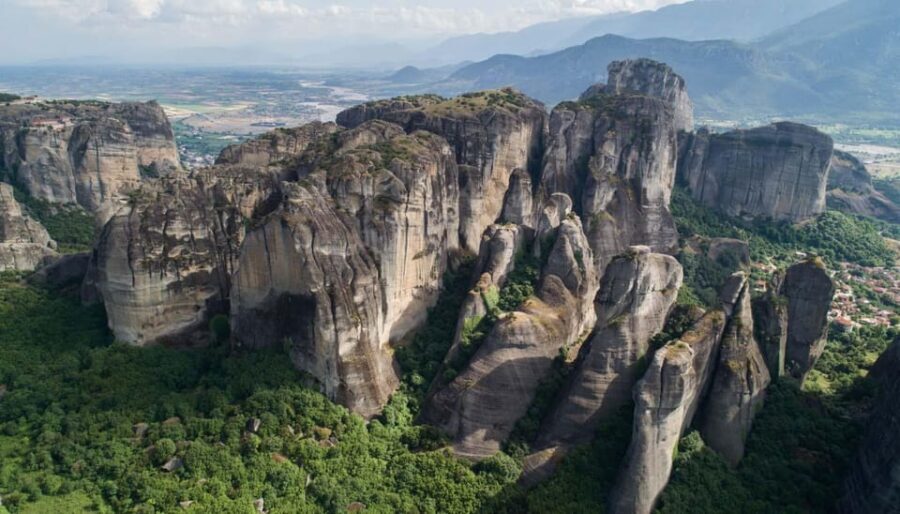
One of Meteora’s quirks is that the monasteries feel scattered—until you realize they’re arranged like a visual system. From the right angles, you can see multiple monasteries in relation to each other across the rock faces.
This tour is built around that idea. You’ll see all six monasteries from outside, using different vantage points across the area. The minibus ride between points is scenic, and the guide times photo stops so you can actually frame the monasteries instead of snapping whatever you can catch while moving.
This is where guides earn their keep. On past runs, guides like Thanos with Jana/Joana teams have been praised for pointing guests toward the best photo spots and angles. Even if you’re not a serious photographer, you’ll notice the difference between random views and guided viewpoints—light hits differently, and scale becomes clear.
A good way to think about it: exterior viewing is about geography. Interior visiting is about faith, art, and daily monastic practice. You get both without needing a car.
Entering Up to Three Monasteries: How the Interior Stops Feel
The “best of both worlds” part is this: you’ll enter up to three monasteries, but you’ll see all six from outside. Interior access depends on opening hours, which vary by the date—so your exact combination of monasteries can shift.
What does that mean for you? You’re not guaranteed the same inside set every time. But you are guaranteed a structure:
- you’ll get the full monastery picture from viewpoints,
- then you’ll choose a smaller number of places to experience up close.
If you’re the type who loves art and symbolism, aim to slow down once you’re inside. Frescoes, stonework, and the architecture give you more to notice when you’re not spending all your time figuring out where to go next.
One specific monastery got called out as a standout on at least one recent day: St. Stephen’s Monastery. If it’s on your route, treat it as a priority stop—especially for interior time, since that’s where monasteries really differentiate themselves.
Also pay attention to guide-led pacing. In one situation, a guide worked around the group’s prior visit so the day still produced three fresh interior monasteries rather than repeating something people had already seen. That kind of flexibility is worth something, because Meteora days are short.
Modest Dressing and No-Flash Rules (So You Don’t Get Stuck Outside)
Meteora monasteries have rules, and it’s smart to treat them as part of the experience, not a hassle.
Here’s what you need to know:
- Dress modestly. Shoulders and knees covered.
- Short skirts aren’t allowed.
- Flash photography isn’t allowed inside.
This matters because you want your entry time to go smoothly. If you show up in clothing that’s too bare, you may lose the chance to enter the monasteries you’re hoping to see.
Practical move: plan your outfit as if you’re visiting sacred spaces everywhere—especially churches and monasteries. Carrying a light layer in your day bag can save you if you misjudge the weather.
And don’t forget your camera. This tour is timed for photo stops, and there are viewpoints where your phone won’t capture the scale the way you’ll see it with your own eyes.
Price and Value: Is $34 Really a Good Deal Here?
At $34 per person for a four-hour guided morning tour, the value comes from what’s included versus what isn’t.
Included:
- English-speaking tour leader
- transport by air-conditioned minibus
- outside viewing of all six monasteries from different vantage points
- interior entry to up to three monasteries (based on opening hours)
- visit to the hermit caves
- photostops at scenic spots
Not included:
- monastery entrance fees (about 3 EUR per person per monastery)
- food and drinks
So what’s the real cost? If you enter three monasteries, you’re looking at roughly an extra 9 EUR for entrances (since it’s about 3 EUR per monastery). Your total outlay then lands around the mid-40s in euros/dollars depending on your currency situation and whether you buy snacks.
That’s still good value for the time and hassle you avoid. Driving yourself between viewpoints, finding the correct monastery access at the right hours, and coordinating the inside visits takes more effort than it sounds like it should. Here, the planning is done for you, and the guide helps you understand why each place matters.
If your goal is to see Meteora efficiently, this price structure makes sense. If your goal is to slow-travel every monastery interior like a full-day pilgrimage, you may feel boxed in by the half-day format and might prefer extra time on your own after the tour.
Who This Tour Suits Best (And Who Might Want Another Option)
This tour is a strong fit if you’re:
- short on time but want a proper Meteora overview,
- new to Meteora and want context fast,
- interested in both early monastic history and the monasteries themselves,
- the kind of traveler who likes photo stops with guidance rather than guesswork.
It’s also a good option for solo travelers. At least one departure was run as a solo experience without canceling in low season, which says a lot about how seriously the operator keeps the day moving when there’s demand.
What might not work as well:
- People with mobility impairments or wheelchair users. The tour is not suitable for wheelchairs, and you’ll likely encounter walking and uneven ground around monasteries and viewpoints.
- Anyone who hates schedules. Four hours is four hours. You’ll follow the route plan and the opening hours that day.
One more honest note: monasteries can get busy, and even with smart timing, you should expect some crowds. The upside is that you’re not stuck in one single location all morning—you’ll get variety, viewpoints, and multiple entries when possible.
Should You Book This Meteora Morning Monasteries Tour?
Yes—if you want an efficient, guided Meteora hit from Kalabaka. For $34, you’re not just buying a ride. You’re getting a plan that covers early ascetics in the hermit caves, exterior views of all six monasteries, and interior entry to up to three of them depending on the day. That combination is exactly what most first-timers need.
Book it especially if you:
- care about learning what you’re seeing,
- want help finding the best photo angles,
- prefer comfort and clear logistics over driving and timing yourself.
I would skip it only if you need full mobility accommodations or if you’re committed to slow, long interior stays at every monastery. In that case, you’ll probably want a different pace and more independent time.
FAQ
Where is the meeting point for the tour?
The tour starts from the Kalampaka Train Station.
How long is the Meteora morning monasteries tour?
It lasts 4 hours.
Will I be able to visit monasteries inside?
You can enter up to 3 monasteries, depending on their opening hours on the day. You’ll also view all 6 monasteries from outside.
Do we visit the hermit caves?
Yes. The tour includes a visit to the hermit caves, where the first ascetics of Meteora lived, including the cave of St. George the Mandilas.
What type of transport is included?
The tour includes transport by an air-conditioned minibus, with pickup provided by a vehicle such as a black Mercedes Sprinter or black Peugeot Boxer.
How much are monastery entrance fees?
Monastery entrance fees are not included. They cost around 3 EUR per person per monastery.
What should I wear?
Dress modestly for monastery visits, with shoulders and knees covered. Short skirts are not allowed.
Is flash photography allowed?
No, flash photography isn’t allowed.
Can I cancel or pay later?
There is free cancellation up to 24 hours in advance for a full refund, and you can reserve now and pay later.