REVIEW · KALAMBAKA
Meteora: Guided Sunset Tour with Monasteries & Caves Visit
Book on GetYourGuide →Operated by Meteora Trip · Bookable on GetYourGuide
Meteora hits different at sunset. This 4-hour guided ride gets you from hotel pickup to cliffside viewpoints, with stops for monasteries, a visit to the Bandovas hermit caves, and time near the end for sunset photos. The one downside is timing: you typically only get interior access to one monastery on this sunset-focused schedule, since the rest start closing earlier.
I like that the experience feels both structured and flexible. Guides such as Nikolas and Katerina (and others) do the talking, and you also get audio help in multiple languages if you want it, with WiFi onboard for the drive. Just be ready for cash-only monastery and church entry fees and the strict dress code before you arrive at the rock churches.
In This Review
- Key highlights worth getting excited about
- Golden-hour views from Meteora’s cliff monasteries
- What $35 buys: hotel pickup, monasteries, one interior, and caves
- Pickup from Kalabaka or Kastraki: the practical win
- Dress code and cash-only entry fees: plan 10 minutes ahead
- Stop-by-stop: St. Stephen to Varlaam, plus the Bandovas caves
- St. Stephen (first monastery stop, about 45 minutes)
- Holy Trinity Monastery (short scenic stop, about 15 minutes)
- Dormition of the Virgin Mary church (about 45 minutes)
- Bandovas hermit caves (about 45 minutes)
- St. Nicholas Anapavsa, Rousanou, Great Meteor, and Varlaam (short scenic stops)
- Sunset viewpoint (about 30 minutes)
- One interior monastery visit: how to use your free time
- Guides, languages, and the story you get with the views
- The sunset photo stop: getting the best shots in 30 minutes
- Who this Meteora sunset tour fits best
- Should you book this guided Meteora sunset tour?
- FAQ
- Where are the pickup and drop-off locations?
- How long is the Meteora sunset tour?
- Do I get to visit the interior of monasteries?
- Which places are included besides the monasteries?
- Are monastery and church entrance fees included in the ticket price?
- Does the tour include guided entry inside monasteries?
- What should I bring with me?
- What is the dress code for entering monasteries?
- Is there an audio guide?
- What happens on Mondays during July and August?
Key highlights worth getting excited about
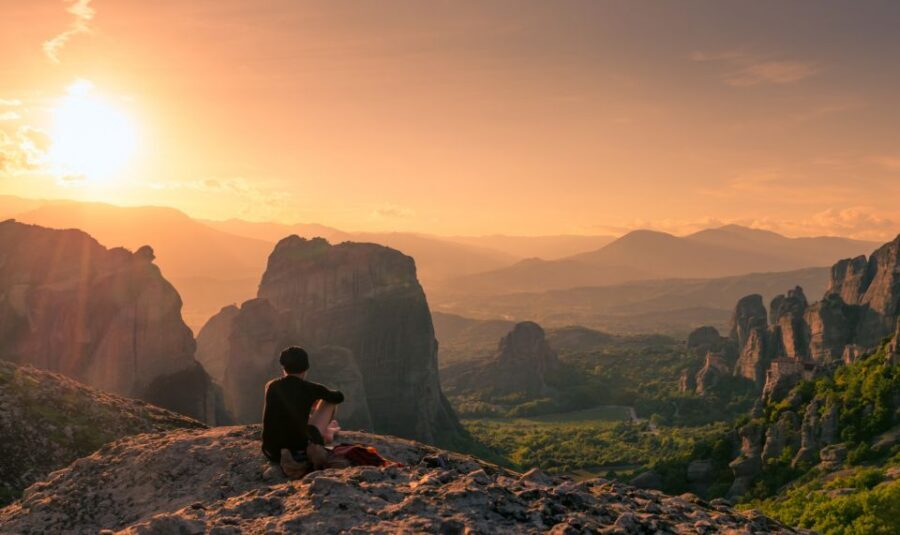
- Sunset viewpoint time: you get a dedicated 30 minutes to watch the light change over the rocks
- All six monasteries in one outing: you’ll see them from the right angles, plus one interior stop
- Bandovas hermit caves: a more remote, eerie-feeling stop that adds variety beyond the main monasteries
- Hotel pickup from Kalabaka or Kastraki: fewer logistics, more time on-site
- Real photo stops: the schedule builds in time to shoot, not just pose and rush
Golden-hour views from Meteora’s cliff monasteries
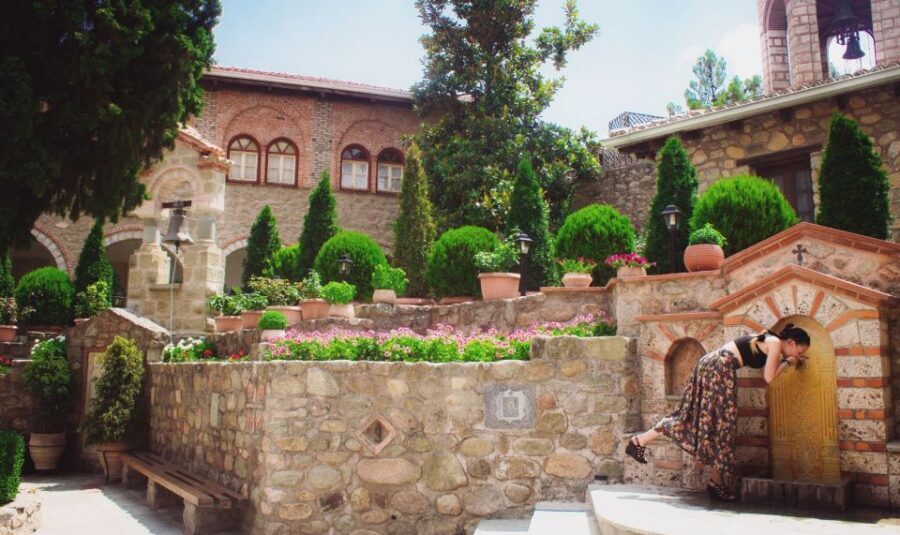
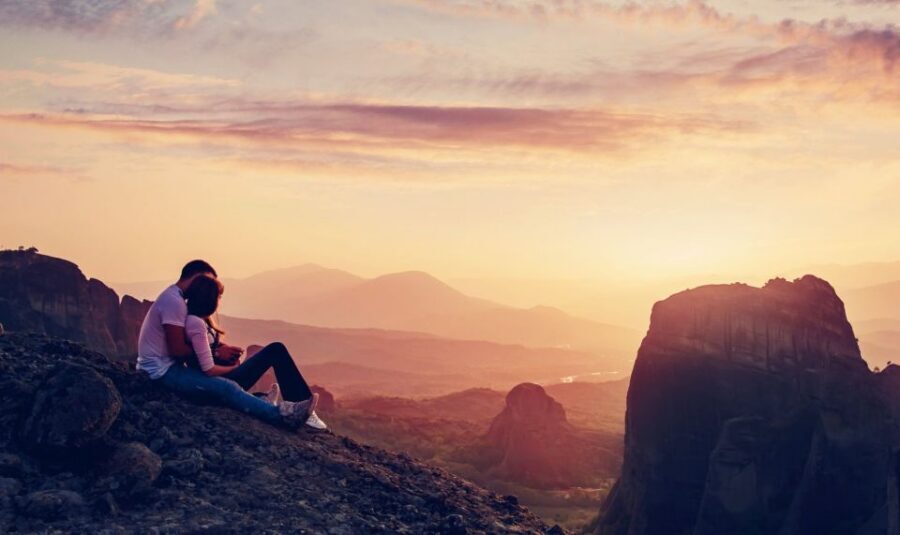
If you’ve only got one shot at Meteora, this is the one time slot I’d aim for. At sunset, the rock towers look taller, the shadows stretch longer, and the whole place feels less like an attraction and more like a living lookout point.
This tour is built around that mood. You spend the bulk of your time moving through the monastery area and then finish at a viewpoint designed for the sunset moment. Even if clouds move in, you still get dramatic views and a strong photo run, because the best angles are already built into the route.
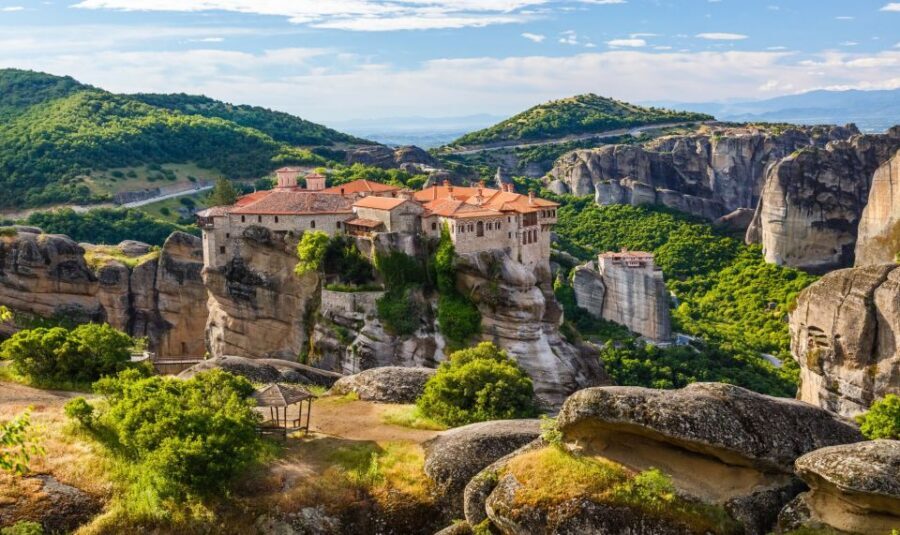
One smart detail: the tour isn’t just about snapping photos from one overlook. You rotate between monastery sites and viewpoints, so you see Meteora from multiple levels and distances. That matters here, because the monasteries sit on different rock shelves, and they never look the same twice.
You can also read our reviews of more tours and experiences in Kalambaka.

What $35 buys: hotel pickup, monasteries, one interior, and caves
At around $35 per person, this tour is priced like a “best value” option for people who don’t want to rent a car or play parking and timing roulette. You’re paying for transport plus a guide to connect the dots between the monasteries, the churches, and the rock-hewn history.
Here’s what you get for the base price:
- Round-trip pickup and drop-off from Kalabaka or Kastraki
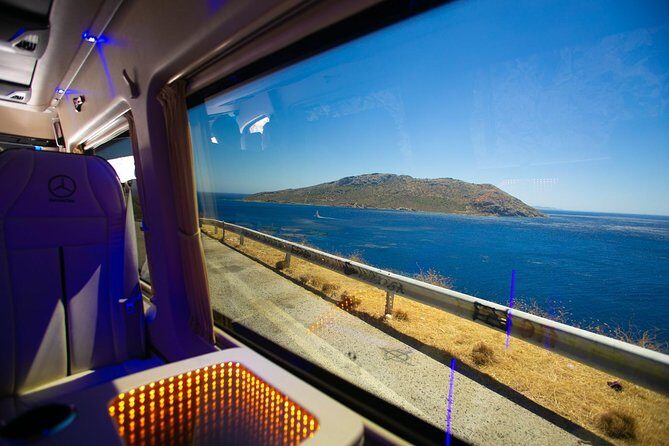
- Air-conditioned minibus with WiFi onboard
- A local English-speaking guide on a small-group format
- Stops to see all six monasteries
- Free time to visit the interior of one monastery
- A visit to the ancient hermit caves of Bandovas
- Panoramic photo stops
- A bottle of water
What you don’t get (and what you should budget for):
- Monastery entrance fees (cash only) at about €5 per person
- Byzantine church entrance fee (cash only) at about €2 per person
- Any guided explanation inside the monasteries (your guide handles the story on the outside stops)
So your real cost is the ticket plus cash for entrances. If you show up prepared, this can still feel like a bargain because the time savings are real. Meteora’s road network is winding, and parking can be a hassle during busy hours.
Pickup from Kalabaka or Kastraki: the practical win
Hotel pickup is more than convenience here. Meteora is spread out across viewpoints and monastery access roads, and you don’t want to spend your short time calculating drives and arrival windows.
This tour meets you in either Kalabaka or Kastraki, then drops you back at the end in the same area set. That keeps the last part of your evening smooth, especially if you plan to keep exploring after sunset.
Transport is handled by an air-conditioned minibus. Multiple guide-driver teams in the past have been praised for safe, confident driving, which matters on cliff roads. And while this is a shared tour option, it’s run as a small-group experience rather than a huge coach with hundreds of people. In at least one case, the group size has been around 18, which typically means less scrambling at viewpoints.
Dress code and cash-only entry fees: plan 10 minutes ahead
Meteora monasteries have a strict dress code, and you’ll feel it fast if you arrive wrong. Men need long trousers. Women need long skirts below the knee and shoulders covered. A long scarf wrapped around the waist can work for monastery entry.
Entrance fees are also a practical gotcha:
- The monasteries and the Byzantine church only accept cash for entry.
- Bring cash with you, even if you’ve paid for the tour.
One more timing reality: monasteries close at different times depending on the day and season, and a sunset schedule can mean interior access is limited. On this kind of tour, you’re usually doing exterior viewing at multiple monasteries and saving interior time for one.
If you want a relaxed evening, I’d do two things: pack the right clothing and pull out the cash before you start climbing steps.
Stop-by-stop: St. Stephen to Varlaam, plus the Bandovas caves
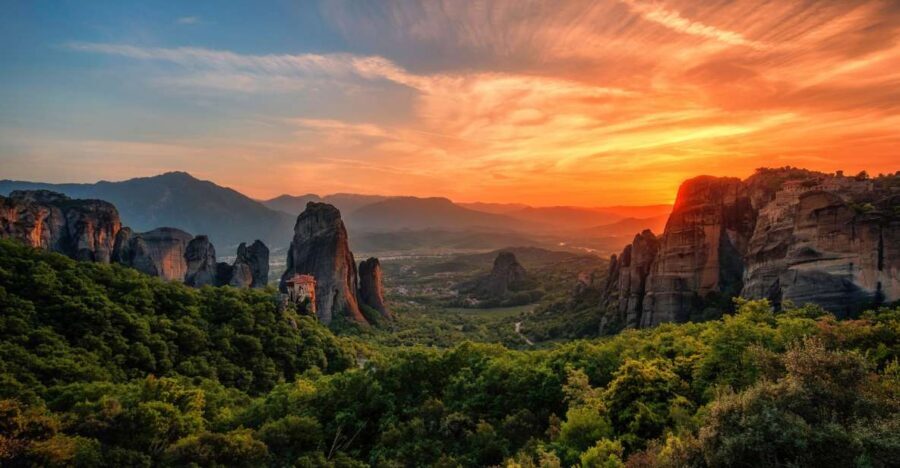
This is a packed 4-hour circuit, but it’s not random. Each stop has a job: introduce a monastery, balance the view from different angles, and build up to the sunset payoff.
Here’s how the route plays out in plain terms:
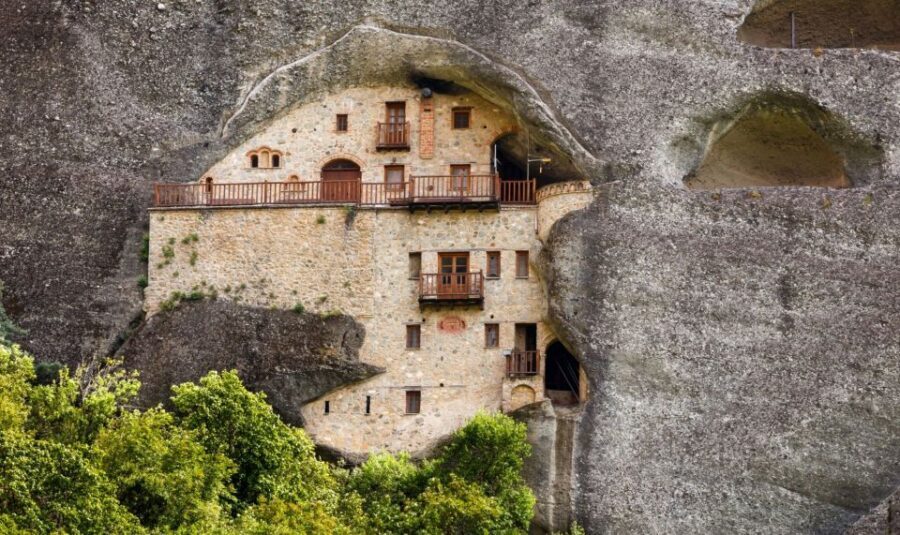
St. Stephen (first monastery stop, about 45 minutes)
This is where you get oriented. You’ll have enough time to approach, take photos, and get a feel for the scale of the rock formations and how the monastery clings to the cliff. It’s also a good place to ask your guide what to look for, since the guide’s explanations make later stops easier to “read.”
Holy Trinity Monastery (short scenic stop, about 15 minutes)
This one is about seeing the monastery from the right vantage point. With limited time, you focus more on the exterior architecture and the surrounding rock shelf than on lingering.
Dormition of the Virgin Mary church (about 45 minutes)
This stop is a major reason to do the tour. You get time at the Holy Church of the Dormition of the Virgin Mary, which adds a church-focused layer beyond just monastery viewpoints. In particular, this is often singled out as an absolute highlight.
Bandovas hermit caves (about 45 minutes)
This is the contrast stop. After all the big monastery towers, the Bandovas caves feel more secluded and human-scale. You’re visiting ancient hermitages, which changes the mood from lookout photography to something more grounded and atmospheric.
One practical note: expect stairs and walking. Comfortable shoes aren’t optional. If your feet aren’t happy with rocky steps, this part can turn into a chore.
St. Nicholas Anapavsa, Rousanou, Great Meteor, and Varlaam (short scenic stops)
You then sweep through the remaining monasteries:
- Monastery of St. Nicholas Anapavsa
- Monastery of Rousanou
- Great Meteor Monastery
- Monastery of Varlaam
Each gets around 15 minutes. The goal here is coverage and angle. You see them in sequence so you can compare silhouettes and placement, without losing your evening to driving between far-flung viewpoints.
Sunset viewpoint (about 30 minutes)
The end is simple: you park at the best spot for the light show, then watch the rocks change color. This is the moment that makes the whole schedule feel worth it.
Seasonal swap note: on Mondays from 01 July to 31 August, the tour starts at 16:00 and may visit St. Nicholas instead of St. Stephen due to closure.
One interior monastery visit: how to use your free time

On a sunset tour, interior access is limited by the monasteries’ closing times. The good news is that the tour still includes free time to visit the interior of one monastery. That’s the moment you should treat like the crown jewel.
When you get interior access, don’t try to see everything at once. Instead:
- Go in and focus on what your guide highlighted earlier from the outside.
- Take a slow look at the church details and layout.
- If you’re short on time, prioritize the main interior areas rather than running through every corner.
You’ll also notice that the interior experience is not guided inside. Your guide explains the context during the outside stops, so your interior minutes are about looking and absorbing.
If you absolutely want to go inside multiple monasteries, you’ll probably be happier doing a morning-focused plan too. Even on a sunset tour, you can only do so much before closing times tighten the schedule.
Guides, languages, and the story you get with the views

This tour is carried by your guide. In past runs, names like Nikolas, Nicolas, Katerina, Vasili, Julia, and George have shown up, and the common thread is strong explanation and clear answers to questions.
That matters because Meteora isn’t just visual. The monasteries connect to myths, religious life, and why these places were chosen in the first place. When the guide ties those threads together, the rocks stop being background and start becoming part of the story.
If you prefer extra support, the tour offers free audio guides in several languages. You’ll just need your smartphone and earphones. That can be a nice option if you want to hear more without always leaning in toward group narration.
The sunset photo stop: getting the best shots in 30 minutes
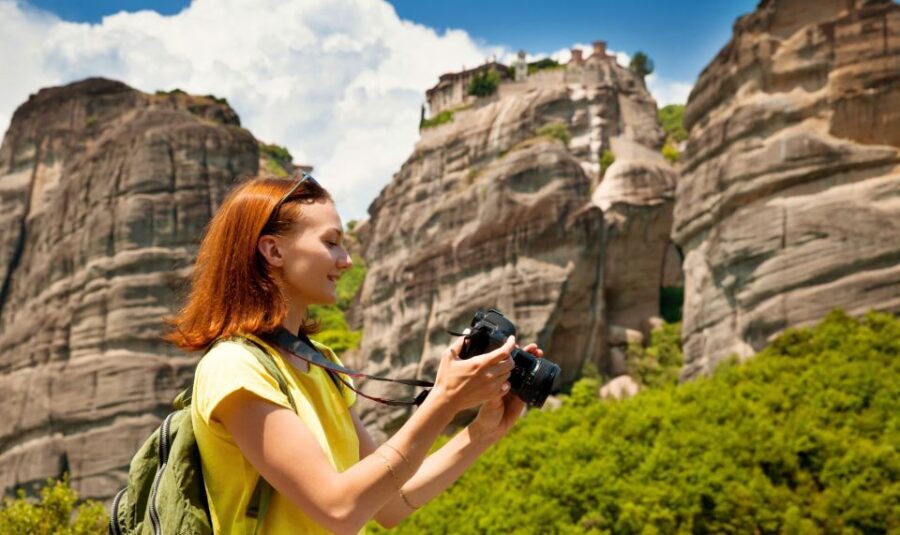
Thirty minutes sounds short. In practice, it’s long enough if you treat it like a photo session with a plan.
Here’s how to maximize it:
- Arrive ready. Use your last stops for quick photos, then save the big shots for the viewpoint moment.
- Wear shoes you can stand in comfortably. The viewpoint area isn’t about sprinting.
- Take a few photos, then pause and just watch. Meteora’s light shift is why people come back.
Also, have a backup mindset. Clouds happen, and weather can shift quickly in the mountains. When that happens, the tour can still deliver strong views and photo opportunities because the key perspectives have already been built into the route.
Who this Meteora sunset tour fits best
This is a good match if:
- You’re staying in Kalabaka or Kastraki and want hotel pickup
- You have limited time and want coverage of all six monasteries
- You care about photos but also want historical context from a local guide
- You like a timed, guided route more than driving and finding viewpoints on your own
It might be less ideal if:
- You’re the type who wants lots of interior time in multiple monasteries
- You don’t want to walk on uneven stone steps
- You hate cash-only entry fees and don’t want to carry some for the churches
For couples, this tour often works because it balances scenic stops with a shared story arc that ends at sunset. For families, it can be a fun way to see Meteora fast, but check everyone’s comfort with steps.
Should you book this guided Meteora sunset tour?
I’d book it if your priority is a high-impact evening with all monasteries covered, plus the more unusual Bandovas hermit caves, without the headache of transport and timing.
It’s also a good value when you add up the convenience. For roughly the price of a couple of monastery entrance fees, you gain guided routing, hotel pickup, a small-group format, and multiple timed viewpoints. Just be sure you budget for cash entrances and pack the right outfit for monastery entry.
If you want to spend the day slowly inside multiple monasteries, you may want a different plan. But for most first-timers, this sunset-focused route is the practical way to get the Meteora “wow” in one go.
FAQ
Where are the pickup and drop-off locations?
Pickup and drop-off are available from accommodation in Kalabaka or Kastraki, and the tour also offers drop-off in Trikala.
How long is the Meteora sunset tour?
The tour lasts 4 hours.
Do I get to visit the interior of monasteries?
You get free time to visit the interior of one monastery.
Which places are included besides the monasteries?
You’ll visit the Byzantine Church of the Dormition of the Virgin Mary and also see the ancient hermit caves of Bandovas, with panoramic photo stops.
Are monastery and church entrance fees included in the ticket price?
No. Entrance fees are not included. Monastery entry is €5 per person and the Byzantine church entrance is €2 per person, and they require cash.
Does the tour include guided entry inside monasteries?
No. The tour includes stops and free time, but it does not include a guided tour inside the monasteries.
What should I bring with me?
Bring comfortable shoes and cash for entrance fees.
What is the dress code for entering monasteries?
Men should wear long trousers. Women should wear long skirts below the knee and cover their shoulders. A long scarf wrapped around the waist is also sufficient to enter.
Is there an audio guide?
Yes. You can use free audio guides on your smartphone, in Spanish, French, German, Italian, Japanese, Chinese, and Korean, using earphones.
What happens on Mondays during July and August?
Every Monday from 01 July to 31 August, the tour starts at 16:00 and visits St. Nicholas instead of St. Stephen due to closure.