REVIEW · KALAMBAKA
Meteora Monasteries “Byzantine Walks” From Thessaloniki
Book on GetYourGuide →Operated by Holiday Tours by Filos · Bookable on GetYourGuide
Rock towers and monks in one long day. Meteora is one of those UNESCO sites where the setting feels almost unreal: towering stone pillars, shaped over 60 million years, with monasteries perched like they grew there. On this Byzantine Walks tour, you get a full guided day out of Thessaloniki focused on the spiritual and geological story behind the cliffs.
I like two things in particular. First, the tour’s two-monastery plan is hands-on, with time to see architecture, frescoes, icons, and museum pieces instead of just rushing past doors. Second, the guide builds the context, including the link to monks from Holy Mount Athos and how these places developed from the 12th century onward.
One thing to weigh: you only visit two of the best-preserved monasteries (not all six), and the day also has extra costs like monastery entrance fees and your lunch in Kalambaka. If you’re hoping for an Italian guide, double-check—some bookings were only supported in English, even when Italian was implied.
In This Review
- Quick hits: what makes this Meteora trip click
- Meteora’s rock pillars: why this place feels different
- Leaving Thessaloniki: the comfort math of a long bus day
- Two monasteries, one strong guided flow
- Inside the monasteries: frescoes, icons, and museum pieces
- The monk story: Holy Mount Athos and the 12th-century thread
- Kalambaka lunch break: where the day slows down
- Meteora and James Bond: spotting the pop-culture link
- Timing and photo moments: how to plan your light
- Cost and value: is $82 actually a good deal?
- Guide quality: what to expect from the person leading the day
- Who this tour suits best (and who should consider another option)
- How to dress and prepare for a monastery day in Greece
- Should you book Meteora Byzantine Walks from Thessaloniki?
- FAQ
- How long is the Meteora Byzantine Walks tour from Thessaloniki?
- What is included in the price?
- Do I have to pay entrance fees for the monasteries?
- Is lunch included in the tour?
- Will the tour skip the ticket line?
- What language is the tour guide?
- Is the tour suitable for wheelchair users?
Quick hits: what makes this Meteora trip click
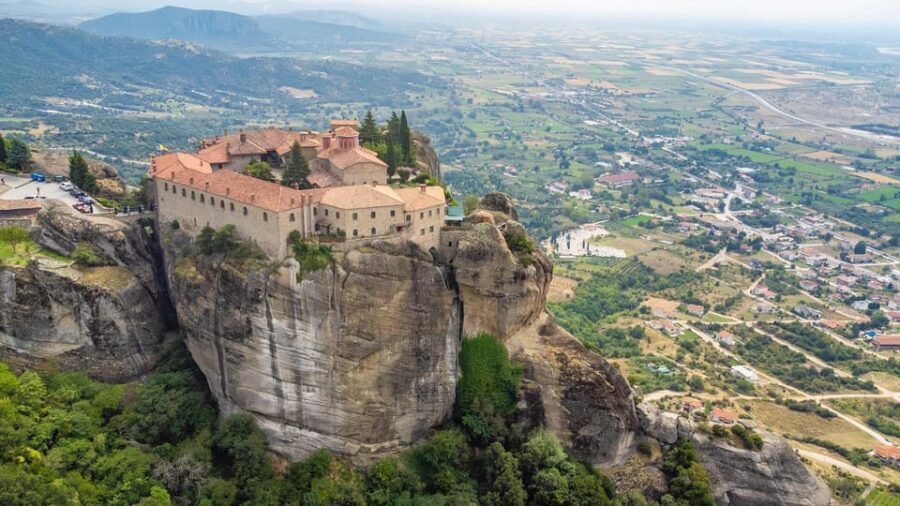
- Two guided monasteries with time for artwork, icons, and museum collections, not just quick photo stops
- Professional English-speaking guide who ties the sites to the Holy Mount Athos monk tradition
- Kalambaka lunch break with free time and planned scenic photo moments
- AC luxury bus and comfortable round-trip transit from Thessaloniki
- Ticket-line savings through group coordination (entrance fees still apply)
- James Bond fact: Meteora appeared in For Your Eyes Only (1981)
Meteora’s rock pillars: why this place feels different
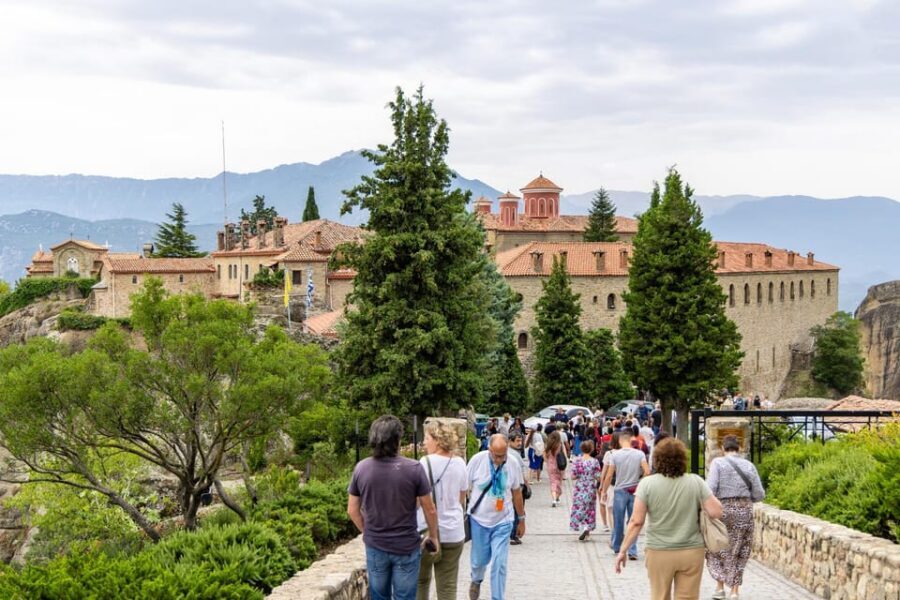
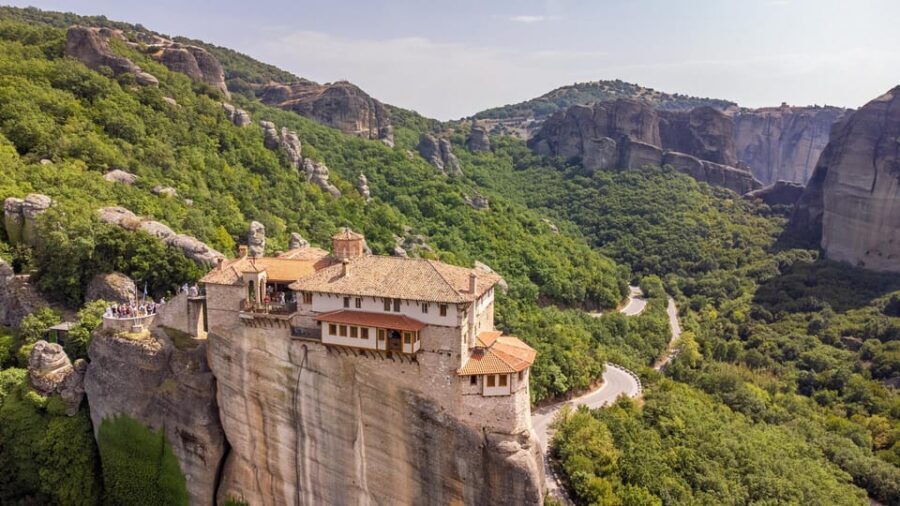
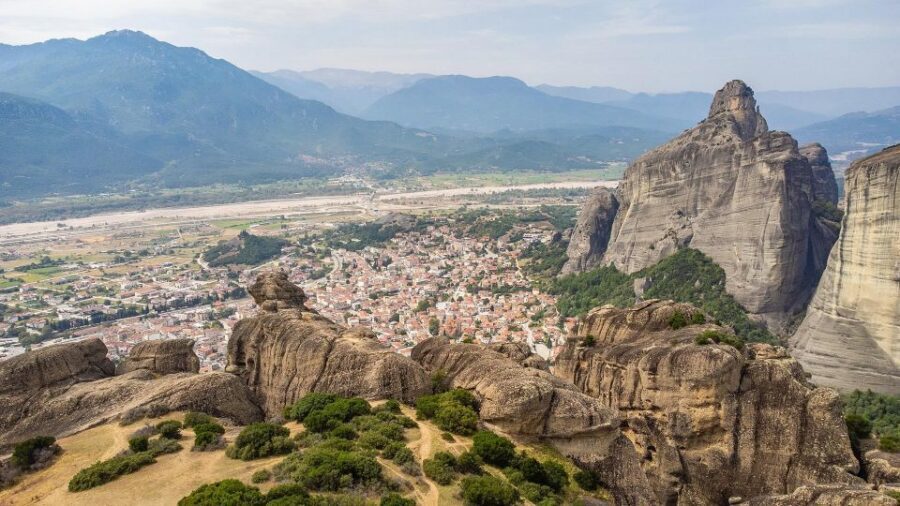
Meteora isn’t just a monastery stop. It’s a geology story you can walk through. The whole site is built on dramatic rock columns that formed millions of years ago, and the monasteries sit on top like tiny fortresses of faith.
What I like about doing this as a guided day trip is that you’re not left guessing. Your guide connects the cliffs to the people who lived there—why monks chose these places, how daily life worked on the rocks, and how spiritual purpose shaped architecture over centuries. That context changes how you look at every stair, doorway, and wall painting.
And yes, you’ll also get the famous views. When you’re standing where the monastery overlooks the valley, you understand why this UNESCO site keeps pulling filmmakers and history-lovers back in.
You can also read our reviews of more tours and experiences in Kalambaka.

Leaving Thessaloniki: the comfort math of a long bus day
This is a long day, and the transit plan matters. You’re picked up from several Thessaloniki meeting points (including major hotels and landmarks like the Arch of Galerius area and the Statue of Eleftherios Venizelos area). Then you ride by A/C luxury bus for about three hours toward Meteora.
That bus time has two real upsides. You start early enough to get solid sightseeing time later, and you avoid the headache of driving on your own through mountain roads. The other upside is simple: an English-speaking guide is with you from the start, so the day doesn’t feel like dead time between stops.
If you’re the type who hates sitting, plan your comfort ahead. Bring water, wear layers (buses can swing temperatures), and wear shoes you already trust for uneven surfaces later.
Two monasteries, one strong guided flow
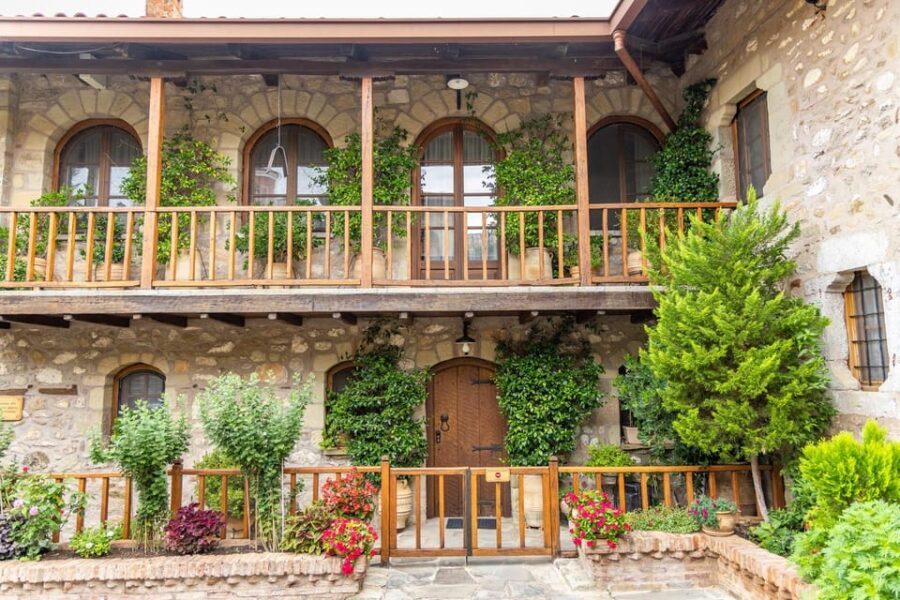
You visit two of Meteora’s best-preserved monasteries, with guided touring and a walk inside the complex. The total guided monastery time is about 2.5 hours, so it’s enough time to see the big visual highlights and still move at a human pace.
Why two monasteries makes sense: if you try to do all of them, you end up with a blur of entrances and steps. Here, you’re given a real chance to compare how each monastery handles the same setting—different approaches to architecture, the way artwork is displayed, and how the space supports prayer, study, and storage.
A practical note: monastery sites in Meteora often involve stairs and walking on uneven surfaces. Even if you’re in good shape, plan on paying attention to where you step. The walk isn’t described as extreme, but it’s not a sit-and-stroll either.
Inside the monasteries: frescoes, icons, and museum pieces
The tour focuses on what you’ll actually see once you’re inside. Expect guided viewing of priceless frescoes, icons, and museum collections connected to the monasteries you visit.
This is where a guide helps you get more than pretty photos. Frescoes and icons can look “beautiful” without telling you what you’re looking at. A good guide points out details—religious themes, symbols, and why certain rooms matter—so the artwork turns from decoration into information.
You’ll also get a better feel for the overall monastery setup: where visitors would gather, how the architecture supports worship, and how the collections reflect everyday spiritual life over time. Even if you’re not a church-art person, the stories make the viewing feel purposeful.
The monk story: Holy Mount Athos and the 12th-century thread
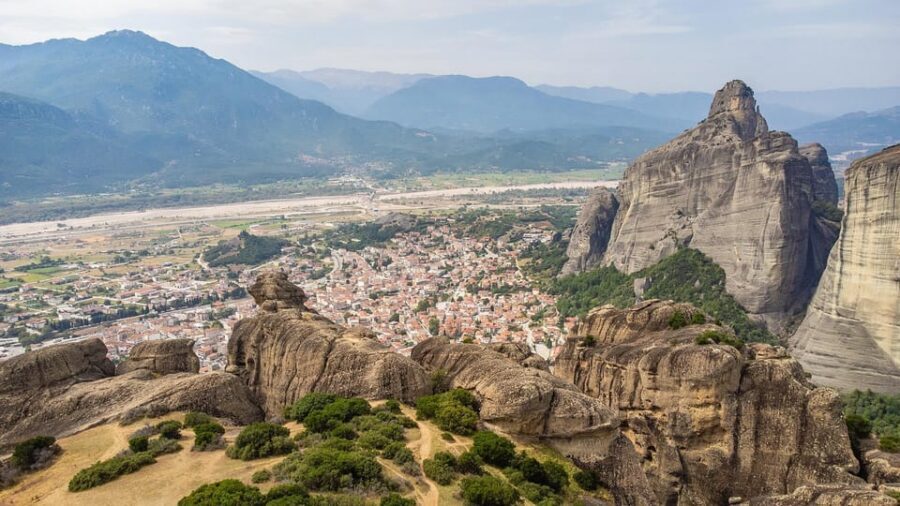
One of the most valuable parts of this tour is the storyline. The guide shares insights into legends, the land, and myths tied to Meteora—and specifically the idea that monks associated with Holy Mount Athos helped shape this tradition and these extraordinary structures from the 12th century onward.
This matters because Meteora can get sold as a visual spectacle. With the monk context, it becomes a human place again. You’re not just looking at buildings on rocks; you’re learning why people would live there, what they believed, and how the environment shaped the way they built and maintained their communities.
I also like that this story-first approach fits different travel styles. If you love history, you’ll catch dates and development. If you prefer spiritual travel, the emphasis is on belief and practice, not just facts.
Kalambaka lunch break: where the day slows down
After the monastery time, you head to Kalambaka for a break. This part is about resetting: a chance to stretch, take photos, and eat.
The plan includes lunch time (with free time and photo stops) and around 1.5 hours in the village. The tour’s structure is practical here: you get scheduled sightseeing moments, then you’re not trapped in a bus for every minute.
Important cost note: lunch isn’t included. The tour provides the time and setting, but you’ll be paying for your meal. That’s a good thing for flexibility—just be ready to choose a place when you arrive. Also, because this is a busy area on tour days, menus can be limited to what’s easiest for groups. If you care about food quality, I’d ask your guide what restaurant options are best that day.
One more tip your guide can help with: ask for best photo spots and gastronomic recommendations in Kalambaka. A local-focused suggestion can beat wandering aimlessly in a village built to serve view-hunters.
Meteora and James Bond: spotting the pop-culture link
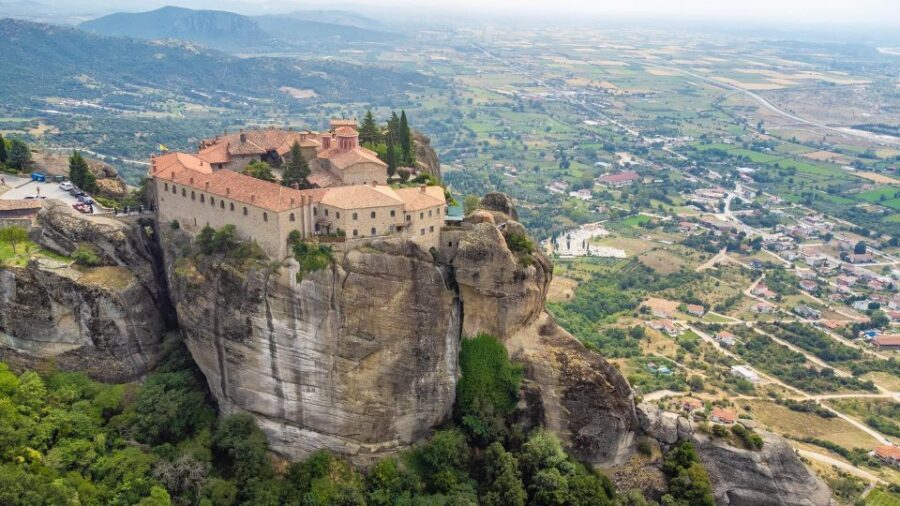
Here’s a fun detail that makes the day feel extra connected: Meteora was a filming location for For Your Eyes Only (1981).
Even if you’re not a Bond fan, that fact changes how you look at the scenery. The cliffs and monastery angles are so dramatic that they’re basically built for the camera. When you know a scene was shot there, your brain starts matching real viewpoints to movie-style framing.
It’s a small thing, but it’s the kind of detail that keeps the day lively, especially when you’re waiting between climbs and viewpoints.
Timing and photo moments: how to plan your light
This is not a short hop. It’s a day with multiple phases: long bus transfer, monastery walks, then Kalambaka time, then the return.
The itinerary includes scenic moments and light-focused photo opportunities (including planned sunset/sunrise viewpoints depending on the day’s timing). That’s useful because Meteora looks different in different light—shadows deepen the rock texture, and the monastery silhouettes stand out more.
What I recommend: do your wide photos early, then come back for details later. Capture the overall view, then focus on close-ups like fresco textures, icon panels, and architectural lines. If you wait until the end for everything, you’ll miss some of the better angles when you still have energy.
Cost and value: is $82 actually a good deal?
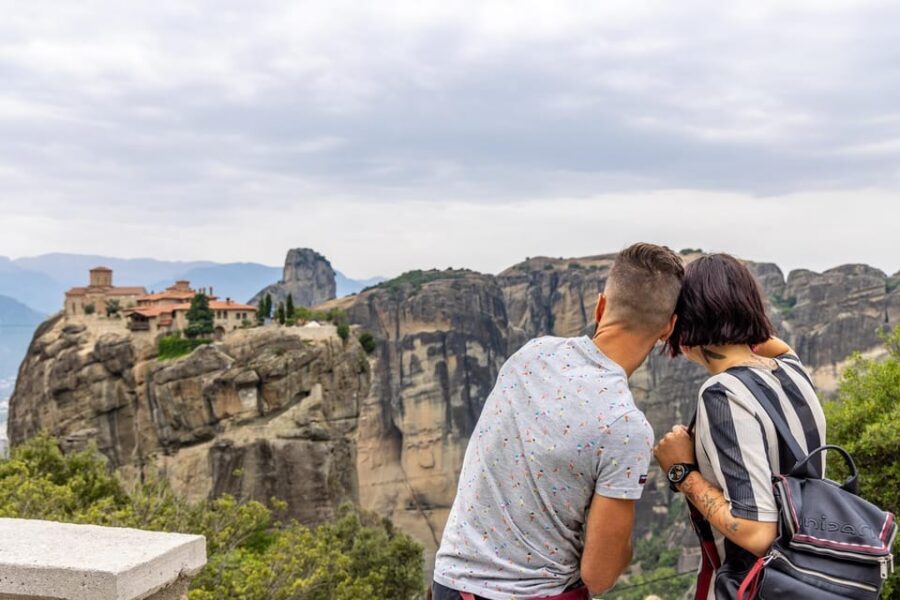
At $82 per person for an 11-hour day, the value depends on how you weigh transportation + guiding + sight time.
Here’s the value logic. You’re paying for a guided experience plus A/C luxury bus round trip from Thessaloniki, and you get group coordination that can help you skip the ticket line. That reduces friction and keeps you moving on schedule.
Now the add-ons you should budget:
- Monastery entrance fees are listed as €5 per person per monastery
- Lunch is not included
If you do the math for two monasteries, entrances alone come to about €10 total (plus any spending you choose for lunch). When you add that, you’re still getting guided time inside two major sites plus the long transit—so it’s not just a “cheap bus trip.”
The biggest value question for you: do you want guidance? If you’d rather wander independently, you’ll need to compare self-planning costs (transport, timing, entry tickets) and accept more uncertainty. If you want a guided, structured day with less hassle, this price is easier to justify.
Guide quality: what to expect from the person leading the day
The reviews put most of the praise on the guide. One review specifically highlighted a guide named Dimitra, praising excellent English and a lot of information during the monastery visits. Others also noted punctual pickup and detailed explanations.
So what should you expect in practice? Clear English interpretation of what you see, storytelling tied to the monks and legends, and help with answering the usual questions people ask on site. That matters at Meteora because the place is confusing at first glance—you’ll be staring at stairs and walls, and you want a way to understand what matters.
Just be aware of the language mismatch issue. Some bookings indicated Italian, but the guide coverage was only in English. If language is important to you, plan to confirm the operating language before you go.
Who this tour suits best (and who should consider another option)
This tour works best if you want one day that covers the big ideas: UNESCO Meteora, two monastery visits, guided art viewing, and a real break in Kalambaka.
You’ll also like it if:
- you value a professional guide who connects the stories to the actual site
- you don’t want to handle transportation logistics alone
- you prefer a structured day rather than piecing together buses and tickets
It may not be ideal if:
- you strongly want to see more than two monasteries in a single trip (this one doesn’t)
- you need a wheelchair-accessible option (the tour is listed as not suitable for wheelchair users)
- you’re depending on Italian language support
How to dress and prepare for a monastery day in Greece
Even with a guide, you’ll enjoy the day more if you show up ready for monastery rules and walking surfaces.
Bring:
- comfortable walking shoes
- a long-sleeved shirt (this is specifically recommended)
- a camera
- something light for layers, since you’ll switch between bus and outdoor air
Also, pace yourself. There’s walking involved inside the monastery area, and you’ll want energy for viewing frescoes and icons without rushing. The guide will keep you moving, but your comfort is what decides whether the day feels calm or stressful.
Should you book Meteora Byzantine Walks from Thessaloniki?
I’d book this tour if your goal is a guided, no-stress Meteora day with meaningful time inside two monasteries and a stop in Kalambaka that feels like a break, not just a checkpoint.
Pass or at least rethink it if you’re a see-everything person who expects all monasteries in one outing, or if you’re strict about lunch expectations since lunch isn’t included and restaurant quality can vary. Also confirm operating language if you’re expecting Italian.
For most people, though, this hits a smart balance: transportation from Thessaloniki, expert guidance, and enough monastery time to actually understand what you’re looking at.
FAQ
How long is the Meteora Byzantine Walks tour from Thessaloniki?
The duration is about 11–12 hours, including pickup, travel time, visits, and the return trip.
What is included in the price?
You get a guided tour with visits to two Meteora monasteries, an English-speaking professional guide, transportation by A/C luxury bus, and liability insurance valid during transport. Entrance fees and lunch are not included.
Do I have to pay entrance fees for the monasteries?
Yes. Entrance fees are listed as €5 per person for each monastery you visit.
Is lunch included in the tour?
No. There is lunch time in Kalambaka, but lunch itself is not included in the price.
Will the tour skip the ticket line?
The activity description says it helps you skip the ticket line.
What language is the tour guide?
The tour is offered in English. Some bookings indicated Italian in their expectations, but the guide coverage mentioned was English, so it’s worth confirming if language matters to you.
Is the tour suitable for wheelchair users?
No. The tour is listed as not suitable for wheelchair users.