REVIEW · KATAKOLO
Olympia Tour & Archeological Museum – All Included
Book on Viator →Bookable on Viator
Ancient Olympia feels closer than you expect. This tour from Katakolo brings you straight to the birthplace of the Olympic Games, then backs it up with the museum where the art and objects make the whole story click. You’ll cover the main highlights in about four hours, with a real guide handling the big-picture context.
I especially like the tight pacing: you get an hour at the archaeological site to see the temples, stadium area, and iconic sculptures, and then a focused hour in the museum so it all makes sense. I also like that the package is built for cruise days: port pickup and drop-off are included, entrance tickets are included, and you’re not left figuring out buses and lines.
One possible drawback: hearing the guide can be tricky, especially in larger groups or the museum’s hard-walled rooms. The tour offers whisper audio headsets as an optional upgrade, so if clear audio matters to you, plan for that up front.
In This Review
- Key highlights at a glance
- Katakolo Port Pickup to Olympia: How the Day Stays Manageable
- Stop 1: The Archaeological Site of Olympia and the Zeus Sanctuary
- Stop 2: Olympia Museum—Where the Art and Objects Explain the Ruins
- Stop 3: Olympia Village—A Short Break from Ruins
- Price and What You’re Really Paying For
- The Hearing Factor: Headsets, Accents, and Museum Acoustics
- Walking Comfort, Time Pressure, and Who Should Book
- Should You Book This Olympia Tour from Katakolo?
- FAQ
- How long is the Olympia Tour and Archaeological Museum experience?
- What stops are included on the tour?
- Is port pickup and drop-off included?
- Are entrance tickets included?
- Is food included?
- Do I need to bring identification?
- Are headsets included for the guided commentary?
Key highlights at a glance
- Ancient Olympia in a timed, guided hit: 1 hour on the site, focused on the Olympic Games and the Zeus sanctuary
- Museum artifacts that explain what you saw: the Hermes and Nike statues, plus bronze and terracotta highlights
- Port-first logistics for cruise passengers: port pickup/drop-off and air-conditioned transport
- Short walk in Olympia village: enough time to reset, browse, and grab a drink since food isn’t included
- Real-world comfort details: uneven paths, gravel, and steps mean you’ll want good shoes
Katakolo Port Pickup to Olympia: How the Day Stays Manageable
This is the kind of day trip that works when you’re on a cruise and you don’t want to gamble on local timing. The tour starts at John Latsis Katakolo Port, and once you disembark you walk a short stretch along the pier and out of the gated area to the main port gate. You’re looking for the Avalon Travel sign under the big blue structure.
A key detail for your planning: total driving time between the scheduled stops and visits is about 1 hour 30 min. That means the itinerary is designed to keep sightseeing time efficient, not stretched out. The full experience is about 4 hours total, so you’ll feel like you’re doing a lot without getting stuck for half the day on the road.
You also get a licensed professional guide plus an actual tour leader, and the vehicle is air-conditioned. Those sound like basics, but on a warm Greek day they matter more than you’d think. If you’re sensitive to heat or you just want the transfer to feel smooth, this setup helps.
Stop 1: The Archaeological Site of Olympia and the Zeus Sanctuary
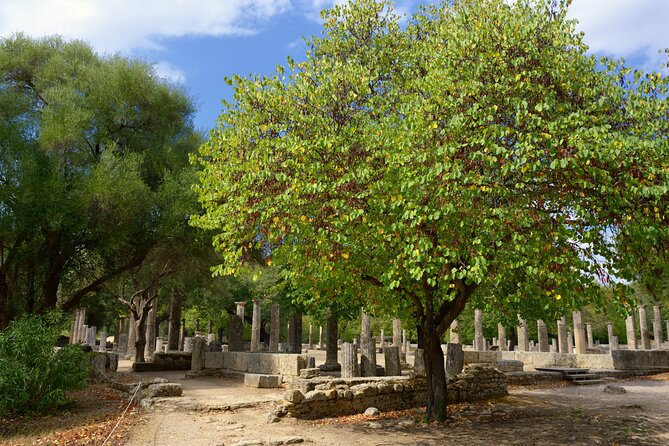
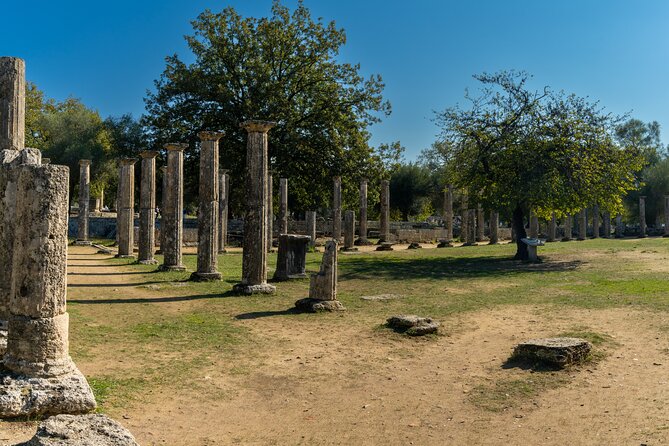
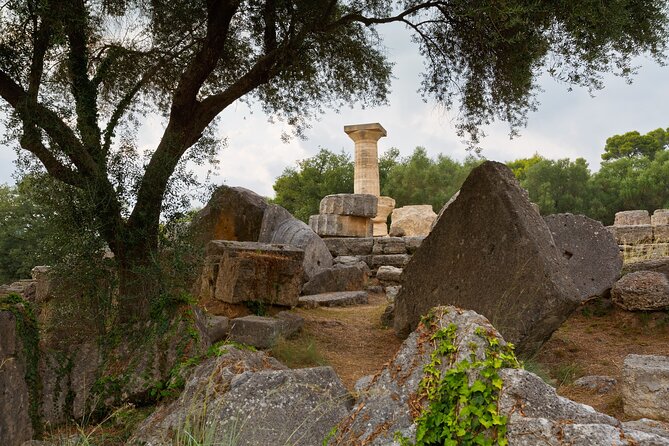
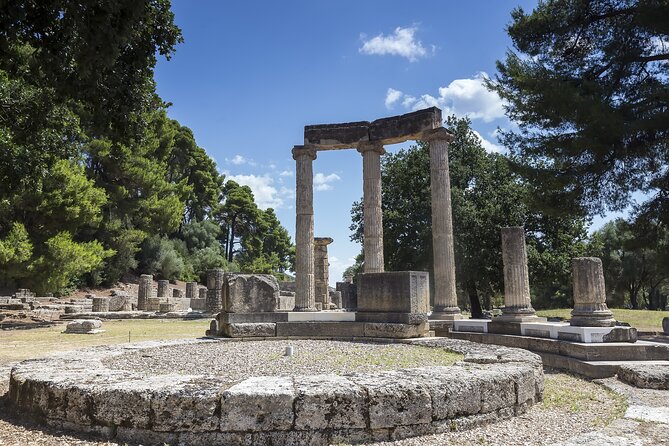
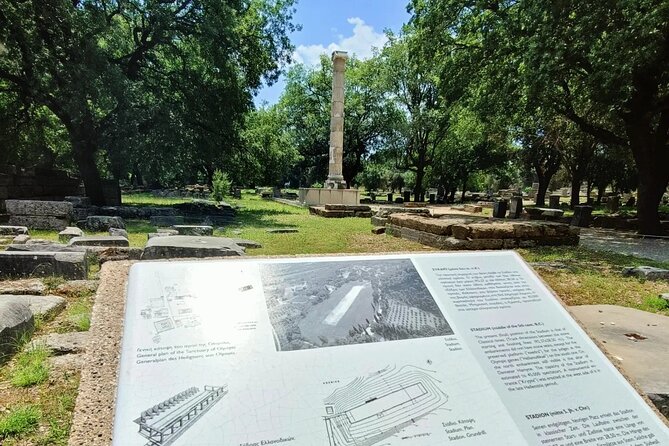
Your first real step into the past happens at the Archaeological Site of Olympia. This is where the Olympic Games were born—held every four years starting in 776 BC and continuing until 393 AD. The site is also tied to worship of Zeus, beginning around the 10th century BC. So you’re not only looking at sports history; you’re looking at religion, civic pride, and elite culture layered in one place.
What makes this stop special is that you’re shown the site’s logic. The tour focuses on the biggest emotional anchors first: the temple area connected to Zeus and the sculptures tied to it. You’ll also run into standout works, including the Hermes of Praxiteles and the statue of Nike of Paionios. Even if you’ve seen images before, it lands differently when you’re standing near the locations that people treated as sacred and important.
Plan for moderate walking. The site includes uneven ground, gravel paths, and steps. That doesn’t mean it’s a strenuous hike, but you should wear shoes with grip and expect to step around rocks and changes in surface level. If your pace is slow, it’s still worth going—just give yourself room to move without rushing.
The tour allots about 1 hour at the site. That’s enough to get oriented and see the main pieces, but not enough for slow, independent wandering. If you’re the type who likes to linger and read every stone, consider that trade-off. For most people—especially cruise passengers—it’s a smart length.
Stop 2: Olympia Museum—Where the Art and Objects Explain the Ruins
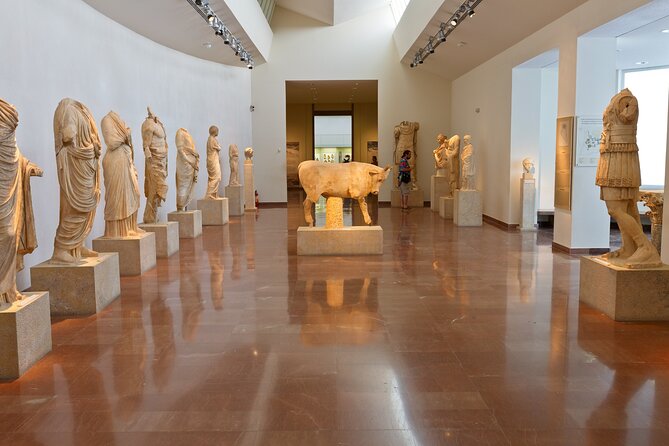
After the site, the museum turns the trip from sightseeing into understanding. Olympia’s Archaeological Museum is one of Greece’s most important museums, and the best part is how the exhibition is organized. You’ll see pieces arranged in chronological and thematic order, going from Prehistoric periods through Roman times.
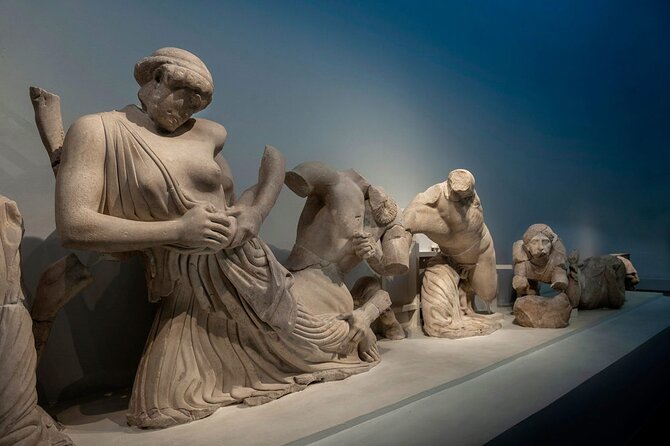
The museum highlights include major sculptures linked to the Zeus sanctuary—plus iconic works like Nike of Paionios and the Hermes of Praxiteles. The Hermes is particularly famous because it’s perhaps the only surviving original statue connected to Praxiteles. Seeing that kind of art up close helps you grasp what visitors and athletes would’ve experienced here.
But don’t skip past the “big names.” You’ll also get bronze objects that make ancient daily and ceremonial life feel physical. The display includes items like cauldrons, tripods, figurines of humans and animals, and detailed mythic creatures such as sphinxes and griffins. There are also various weapons, vessels, and examples of toreutic art (decorated metalwork).
Another highlight you’ll want to keep an eye out for: the terracotta statues, including complex groupings such as Zeus and Ganymede. It’s the kind of exhibit detail that makes you go, oh—this place wasn’t just a sports field. It was a whole world of story and symbolism.
About the hearing issue: this is where it matters most. The museum rooms can be echoey and visually spread out, and hearing a guide from a distance is not always easy. If you’re relying on English narration, plan for clarity by selecting the whisper audio headset upgrade during booking (more on this in a later section). The time is about 1 hour, so you don’t want to lose half of it to audio frustration.
Stop 3: Olympia Village—A Short Break from Ruins
After the museum, you walk to the nearby Olympia village area. This isn’t a deep cultural immersion stop; it’s more like a reset. The tour gives you about 30 minutes to wander around the little shops, traditional taverns, and coffee shops near the archaeological area.
This is a practical moment for two reasons. First, it’s a chance to stretch your legs after stone floors and museum rooms. Second, it helps solve the one thing this tour doesn’t include: food and drinks. You’ll have time to buy a drink, snack, or simple meal plan on your own terms.
If you’re traveling with other people, this village stop is also the “agree or split” point. Someone can browse, someone can grab water or coffee, and you can regroup without needing another ticketed attraction.
Price and What You’re Really Paying For
At $132.17 per person, this tour is not a bargain. But it is priced like a “no-stress day” package, not a DIY excursion.
Here’s what the price covers: port pickup and drop-off, a licensed professional guide, an air-conditioned vehicle, entrance fees to both the archaeological site and museum, and the tour leader. That combination matters on a cruise day, when time is tight and you don’t want hidden costs popping up at the last minute. In other words, you’re paying for fewer moving parts.
What’s not included is also clear: food and drinks. That’s normal for a four-hour outing, but it means you should budget for at least water (and likely something to eat) during or after the village walk.
Also consider the group size. This tour has a maximum of 45 travelers. That upper limit doesn’t automatically mean it will feel crowded, but some reviews describe situations where hearing was an issue without headsets. If you’re someone who needs clear narration to enjoy a museum, that’s not a small detail—it’s part of the value equation.
The Hearing Factor: Headsets, Accents, and Museum Acoustics
Let’s talk straight about what can make or break this kind of guided day: whether you can understand the guide. This tour offers whisper audio headsets as an optional upgrade, and the wording is important. You have to select them during booking to guarantee availability, and availability can’t be guaranteed on the day of the tour.
If you skip the upgrade, expect that hearing may depend on where you stand and how the room carries sound. Museums have hard surfaces, larger rooms, and people spacing out, and accents can add another layer. When the guide turns or moves with the group, even good commentary becomes harder to catch.
So here’s my practical advice: if you care about understanding details—names, dates, sculpture explanations—choose the headsets upgrade. It’s the easiest way to protect the value you’re paying for. If you’re comfortable reading signs and taking it in visually, you can still have a great time without them, but don’t pretend the audio part will always be perfect.
This is also why the museum stop is such a big deal. The museum is where the guide’s context really helps you connect what you saw outside to the objects inside. When audio fails, the trip turns into a collection of rooms and artifacts with less meaning.
Walking Comfort, Time Pressure, and Who Should Book
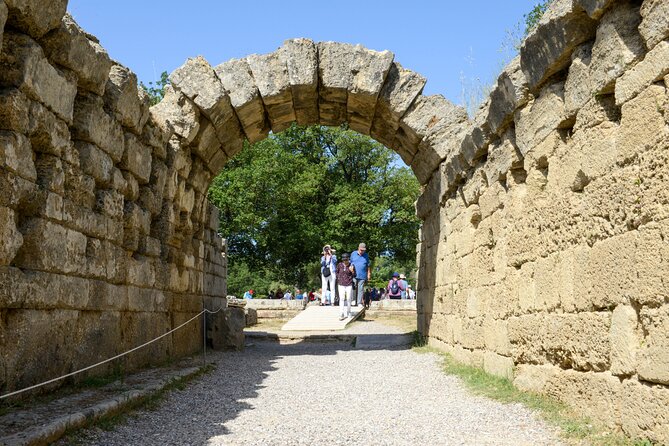
This isn’t a rugged trek, but it isn’t a sit-down tour either. You should have a moderate physical fitness level. The archaeological site includes uneven ground, gravel paths, and steps. That means you’ll benefit from steady footing and a calm pace.
Time-wise, you’re on a schedule. You’ll see the site first, then the museum, then the village walk. The driving time between stops is about 1 hour 30 min, and the whole tour stays around four hours. For most cruise passengers, that’s ideal. You get the highlights without eating your whole shore day.
Who this suits best:
- Cruise travelers who want two top sights (Olympia site + museum) without DIY logistics
- People who like guided context, especially if you’re new to Greek antiquity
- Visitors who can handle some stairs and gravel at an outdoor site
Who might want a different style:
- Anyone who struggles with steps and uneven surfaces
- People who strongly depend on spoken narration and don’t want to deal with potential audio limits (then: book the headsets upgrade)
One more practical tip: bring a valid form of identification (like a driver’s license or government-issued ID). The entry process to the Olympia site asks for it, so don’t leave it in the cabin.
Should You Book This Olympia Tour from Katakolo?
I’d book it if you want a structured, efficient Olympia experience that combines ruins plus the museum in a single morning/afternoon block. The included entrance fees, port pickup/drop-off, and air-conditioned vehicle add up, especially when shore time is short.
I would book the headsets upgrade too, unless you’re totally fine relying on visuals and nearby standing positions. In Olympia, the difference between a “cool visit” and a “this makes sense” visit is often whether you can hear the guide while the story is happening.
If you’re traveling with limited time, this is one of the most sensible ways to get the Olympic origins story and see the major sculptures in context—without spending your day hunting for transport and tickets on your own.
If you want, tell me your cruise arrival time and whether you’d rather move fast or linger. I can suggest how to plan your buffer and what to prioritize on this 4-hour schedule.
FAQ
How long is the Olympia Tour and Archaeological Museum experience?
It runs about 4 hours (approx.), including visits to the archaeological site and the museum, plus a short walk in Olympia village.
What stops are included on the tour?
You’ll visit the Archaeological Site of Olympia, then the Archaeological Museum of Olympia, and finish with a walk around Olympia village near the site.
Is port pickup and drop-off included?
Yes. Port pick up & Drop Off are included, with pickup arranged at John Latsis Katakolo Port.
Are entrance tickets included?
Yes. Entrance fees to the archaeological site and museum are included in the tour price.
Is food included?
No. Food & Drinks are not included.
Do I need to bring identification?
Yes. You should carry a valid form of identification (such as a driver’s license or government-issued ID) for entry to the Olympia site.
Are headsets included for the guided commentary?
Whisper audio headsets are available as an optional upgrade at an additional cost. To guarantee availability, you must select them during booking. Availability cannot be guaranteed on the day of the tour.