REVIEW · KATAKOLO
Small group Katakolon to Olympia tour
Book on Viator →Operated by Niki Olympic Tours · Bookable on Viator
Olympia hits you fast, even before you read a thing. This small-group trip from Katakolon turns the story of the Olympic Games into walkable, viewable places, with a real archaeologist-style guide and good pacing. You’ll cover the key ruins, see what was dug up in the museum, then shift gears with time in the modern village right next door.
I especially love the focused stops: the archaeological site first, then the museum, then the town. And I like that the tour includes the entrance fees for both the site and the museum, so you’re not doing mental math while you’re standing in the sun.
One drawback to plan for: Olympia can get very hot, and the ruins don’t offer much shade. Bring a hat or umbrella and plenty of water, or you’ll end up rushing the details instead of enjoying them.
In This Review
- Key things I’d plan around
- Katakolon To Olympia: Why This Day Trip Works
- Getting There From John Latsis Katakolo Port (And Staying On Schedule)
- Stop 1: Archaeological Site of Olympia (Plan for the Sun)
- Stop 2: Archaeological Museum of Olympia (Where the Objects Explain the Stones)
- Stop 3: Market of Ancient Olympia (Modern Village, Different Pace)
- The Real Secret Sauce: What the Guide Adds (Zoe and Friends)
- Heat, Walking, and What to Pack for Olympia
- Lunch: What’s Missing From the Base Price
- Price and Value: Is $179.24 Worth It?
- Who This Tour Suits Best (And Who Might Want to Skip It)
- Should You Book the Katakolon to Olympia Small-Group Tour?
- FAQ
- What’s the meeting point for the Katakolon to Olympia tour?
- How long is the tour from Katakolon to Olympia?
- Is the tour offered in English?
- What’s included in the price?
- Is lunch included?
- What are the main stops on the itinerary?
- Are admission tickets included for the archaeological site and museum?
- How large is the group?
- Is there a physical fitness requirement?
- Are service animals allowed?
Key things I’d plan around
- Small-group pacing (max 25): easier movement and a more relaxed feel than big coach crowds
- Two included entry tickets: archaeological site plus the museum are covered
- Serious ruins, explained well: you’ll see stadium, temples, and the work area linked to Phidias
- Museum adds context: finds and famous sculptures help the ruins make sense
- Town time at Ancient Olympia: a totally different vibe for a drink or shopping
Katakolon To Olympia: Why This Day Trip Works
If you’re starting the day in Katakolon Port, this tour is one of the cleanest ways to reach Olympia without stress. You get transport, a licensed guide, and a structured route that hits the big themes of the place: athletics, religion, and the workshops/art that powered the visual spectacle.
The timing is also sensible for a cruise stop day. Starting at 8:30 am gives you real daylight hours for the outdoor ruins, and the full day lands you back at the port meeting point at the end. The tour runs about 6 hours, which feels like the right length: long enough to learn, not so long that you feel fried.
Getting There From John Latsis Katakolo Port (And Staying On Schedule)
You meet at John Latsis Katakolo Port at 8:30 am. The pickup is straightforward, and the tour includes private transportation, so you’re not bouncing between multiple stops or waiting on half a dozen different groups.
The “small group” cap (up to 25 travelers) matters here. Fewer people means you tend to move together, the guide can keep the pace under control, and you spend more time looking at the actual stones and less time wrangling crowds.
Based on guide feedback from previous outings, you may also get audio support so you can hear commentary clearly while walking between points. If you’re the sort who likes to keep eyes on the site (not on the guide), that detail can really help.
Stop 1: Archaeological Site of Olympia (Plan for the Sun)
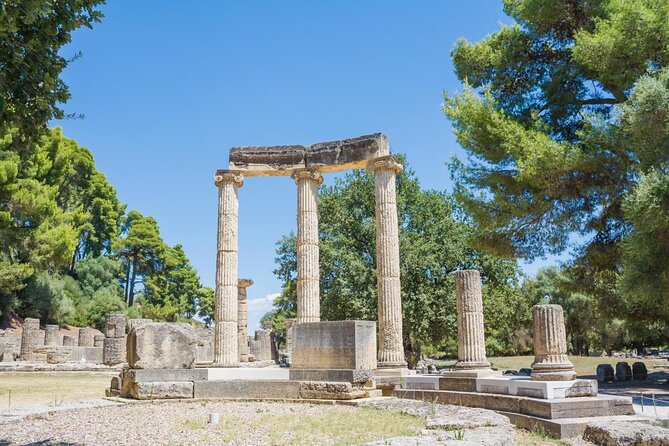
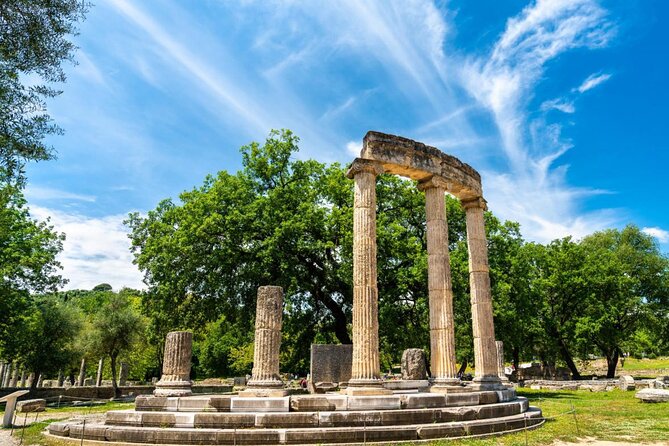
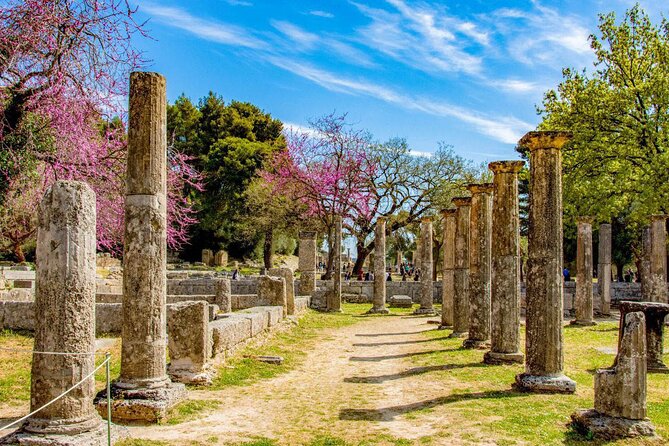
This is the star of the show: the Archaeological Site of Olympia, with stops that connect directly to how the ancient Olympics functioned. You’ll spend about 1 hour 30 minutes, and the admission ticket is included.
What I’d focus on first is the way the layout tells a story. You’re not just looking at random ruins. You’re seeing the physical pieces that made athletics and ceremony work.
Here are the major highlights you can expect to see:
- The gymnasium and palaestra, the training spaces that shaped athletes’ lives
- The round Philipeion, a distinctive building that stands out from the rest
- The workshop of Phidias, connected to the making of the gold-and-ivory Statue of Zeus
- The temples of Zeus and Hera, the religious heart of the sanctuary
- The altar where the Olympic torch is lit in modern days
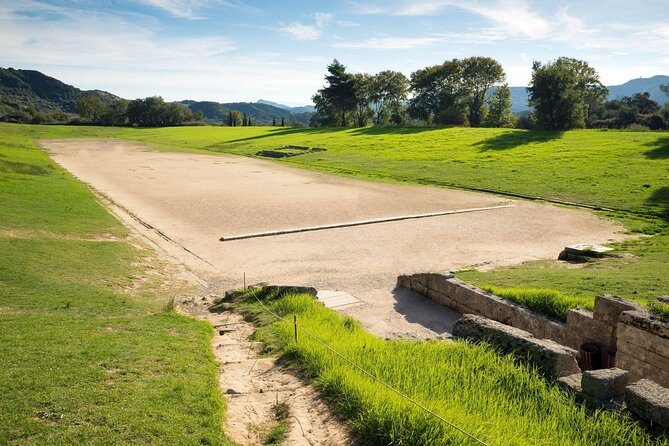
- The ancient Olympic stadium, the place where competition happened
At the site, the main consideration is comfort, not content. One review pointed out that there is some shade, but not enough to count on when the sun climbs. I recommend a hat (or a compact umbrella), water you can actually drink during the walk, and shoes you’re comfortable in for uneven ground.
If you want to learn fast, don’t only look for the biggest structures. Pay attention to the workshop area and the sports spaces. Those are the details that turn Olympia from a myth into a functioning place with roles, work, and daily routines.
Stop 2: Archaeological Museum of Olympia (Where the Objects Explain the Stones)
After the outdoor heat, the Archaeological Museum of Olympia adds a much-needed layer of context. Your time here is about 1 hour, and the entrance ticket is included.
This is the stop where you stop thinking in generalities and start thinking in specifics. The museum houses finds excavated from the archaeological site, so you get the “what did they make and use?” answer to match what you saw in the sanctuary.
Look out for the types of objects (and the famous named pieces) that show the craft level and the artistry:
- Bronze and clay offerings, including tripods and figurines
- Armor and everyday gear tied to the people who lived around the sanctuary
- Vases and tools from the area associated with Phidias’s workshop
- A Hermes associated with Praxiteles
- A Nike associated with Paeonios
- Highly preserved classical statues from the pediments of the temple of Zeus
This museum stop is also a quality-control move for your day. Without it, the ruins can feel like an impressive set of foundations. With it, the site gains texture: you can picture ceremonies, dedications, and the level of skill behind the famous images.
If you care about art and the workshop-to-statue connection, this is where you’ll feel the most satisfaction. The museum helps you see how the sanctuary wasn’t just about one event. It was about the long-term culture around it.
Stop 3: Market of Ancient Olympia (Modern Village, Different Pace)
Then you switch gears: the Market of Ancient Olympia is in the modern village right by the archaeological site and museum. This section runs about 2 hours, and there’s no admission charge.
This is where you can breathe, slow down, and get a sense of what “Olympia” means now. You can grab a drink, browse the main street, and look for small souvenirs like jewelry, clothes, and arts and crafts.
I like this stop because it balances the day. Two hours gives you space to recover from walking, and it keeps the day from feeling like a march of ticket scans. If you’re in a hurry to get back to the port, use this time strategically: do your shopping first, then sit with a drink to refuel.
Also, a market area means you can adjust your day. If the heat got to you at the ruins, this is your chance to take it slower without missing the core value of the tour.
The Real Secret Sauce: What the Guide Adds (Zoe and Friends)
The tour is built on licensed guiding, and the guide is a big part of the payoff. In past outings, guides such as Zoe and Joanna have been singled out for their clarity and for knowing how to connect details to what you’re standing in front of.
Zoe in particular has a reputation as a trained archaeologist, and that kind of background makes a difference. When a guide understands the site as a physical system—where parts were placed, what buildings likely did, why certain objects matter—you get less guessing and more understanding.
There have also been mentions of other capable guides (like Shelly), with the common thread being that the commentary stays focused without filling the day with unrelated stops. That’s exactly what you want on a port day: strong explanations, minimal wasted time, and an easy return plan.
Heat, Walking, and What to Pack for Olympia
This isn’t a tour where you can comfortably coast in sandals and luck out. It’s moderate physical work, and the ruins are outdoors. You’ll be standing and walking around archaeological ground that isn’t flat like a city sidewalk.
Here’s what I’d pack based on what the day calls for:
- Hat or umbrella (shade helps, but it’s not guaranteed)
- Water (plan on needing more than you think)
- Comfortable walking shoes
- Sunscreen and something with you for quick reapplication
If you’re sensitive to heat, the museum is a real relief. But you’ll still need to manage the sun during the first stop, when you’re outdoors at the site for 1.5 hours.
Lunch: What’s Missing From the Base Price
The tour price includes the licensed guide, private transportation, and entrance fees for the archaeological site and museum. Lunch is not included.
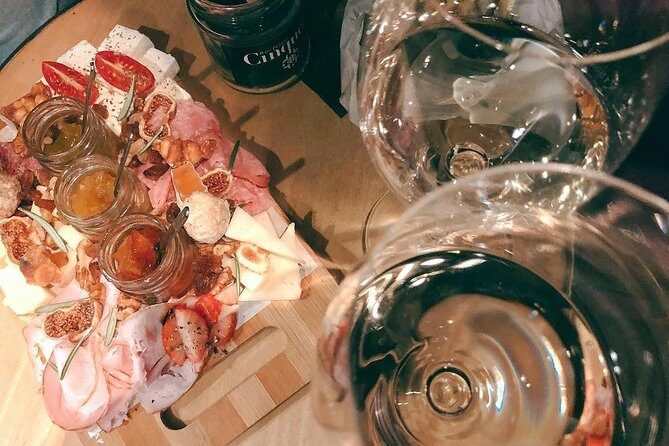
That matters for budgeting. If you don’t want to make choices under pressure while hungry, consider confirming whether an optional lunch stop is offered on your departure. Some departures include a Greek restaurant lunch option, and one previous day included authentic food with music and dancing, plus wine with the meal.
If lunch isn’t offered on your specific day, you can still eat near the town stop since you’ll have 2 hours in the market area.
Price and Value: Is $179.24 Worth It?
At $179.24 per person, this sits in the “okay, but make it count” category. The value comes from three things you actually get:
- A licensed guide (not a self-guided audio-only day)
- Private transportation from Katakolon and back
- Entrances included for both the archaeological site and museum
When both entry tickets are bundled, you avoid the most annoying cost surprises on the ground. And since the tour covers multiple key sections in a single structured day—site, museum, and town—the time efficiency is a real benefit.
If you were to DIY it, you’d likely still need transport and you’d still need to figure out the “what am I looking at” part once you’re at the site. This tour pays for that explanation in a way that keeps you moving and learning instead of wandering.
Also, the satisfaction rate is strong: it’s been rated 4.7 with 92% recommended. That’s consistent with what matters most on a day like this—clear guidance, a workable pace, and getting back on time.
Who This Tour Suits Best (And Who Might Want to Skip It)
This is a great fit if you:
- Want the key Olympia sights without turning the day into logistics
- Like historical explanations that connect buildings, art, and rituals
- Prefer a smaller group atmosphere (up to 25) and a calmer pace
It may be less ideal if you:
- Don’t want organized structure and prefer free time only
- Are very heat-sensitive and hate walking outdoors
- Have extremely limited mobility, since you’ll be moving around an archaeological site
Should You Book the Katakolon to Olympia Small-Group Tour?
If you’re spending a cruise day in Katakolon and you want Olympia to make sense—not just look impressive—this is a smart booking. The combo of site + museum + town time is exactly how you avoid the common “big ruins, big blur” problem.
I’d book it if you value guided interpretation and want your tickets handled. And I’d especially book it if you’re drawn to the Olympic story as a mix of sport, religion, and workshop craft, because the stops are laid out to cover all three.
If you’re only chasing quick photos, you might feel the day is too structured. But if you want to leave with real understanding and a clear sense of where the Olympics started, this one does the job.
FAQ
What’s the meeting point for the Katakolon to Olympia tour?
The tour starts at John Latsis Katakolo Port in Katakolo, Greece, and it ends back at the meeting point.
How long is the tour from Katakolon to Olympia?
The duration is about 6 hours.
Is the tour offered in English?
Yes, the tour is offered in English.
What’s included in the price?
The price includes licensed tour guide services, private transportation, and the entrance fees for the archaeological site and the archaeological museum.
Is lunch included?
No, lunch is not included.
What are the main stops on the itinerary?
You’ll visit the Archaeological Site of Olympia, the Archaeological Museum of Olympia, and then the Market of Ancient Olympia.
Are admission tickets included for the archaeological site and museum?
Yes. Admission tickets are included for both the archaeological site (about 1 hour 30 minutes) and the archaeological museum (about 1 hour).
How large is the group?
This tour has a maximum of 25 travelers.
Is there a physical fitness requirement?
The tour is listed for moderate physical fitness. It involves walking around archaeological areas.
Are service animals allowed?
Yes, service animals are allowed.