REVIEW · NAFPLIO
Visit Ancient Corinth Mycenae Nafplio Canal Private Tour 8H
Book on GetYourGuide →Operated by Yomadic.Tours · Bookable on GetYourGuide
Corinth feels closer than you think. This private day tour links a big modern feat (the Corinth Canal) to the stones of Ancient Corinth and Mycenae, then finishes in Nafplio with medieval fortresses and a coastal break. I like the private pickup-and-drop-off setup, because you start your day where you’re staying and you don’t have to herd with a group.
I love that you’re given skip-the-ticket-line help at the main stops, which matters when time is tight. The one thing to watch is that you’ll still face real walking and stairs at Acrocorinth and Palamidi, and the tour isn’t suitable for people over 95. Add entrance fees and lunch costs on top, and you’ll want to budget for the full day.
In This Review
- Key highlights worth getting excited about
- Corinth Canal: the isthmus shortcut that reshapes the map
- Ancient Corinth, Acrocorinth, and the museum stops
- Acrocorinth: the rock-top fortress view that explains defense
- Mycenae’s Lion Gate and citadel: walking through Agamemnon’s seat
- Nafplio’s Palamidi Castle, Akronafplia Fortress, and Bourtzi harbor
- Private pickup and small-group comfort in a Wi‑Fi vehicle
- Timing, tickets, and the extra costs you should expect
- Packing list for castle stairs and ancient stone
- Price value: is $207 per person a good deal?
- Who should book (and who should skip)?
- Should you book this Corinth–Mycenae–Nafplio private tour?
- FAQ
- How long is the tour?
- Is this tour private or shared?
- Where does pickup and drop-off happen?
- Are entrance fees included?
- Is lunch included?
- Does the tour include skip-the-ticket-line?
- Is the tour wheelchair accessible?
- Is airport pickup included?
Key highlights worth getting excited about
- A quick 20-minute hit at the Corinth Canal where the canal connects the Gulf of Corinth to the Saronic Gulf and separates Greece into “mainland vs Peloponnese.”
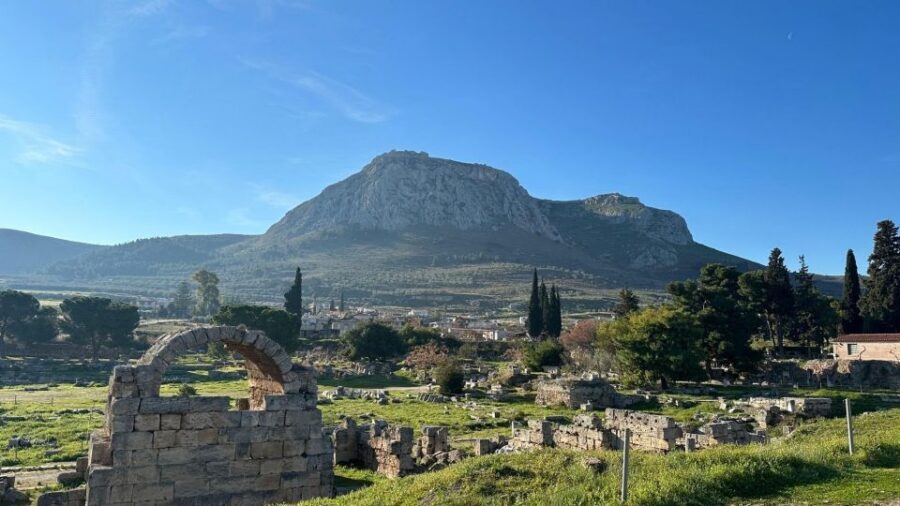
- Ancient Corinth plus Acrocorinth (Upper Corinth), with the rock-top fortress role in guarding the isthmus.
- Acrocorinth water-and-defense context that turns views into a story about why the fortress mattered.
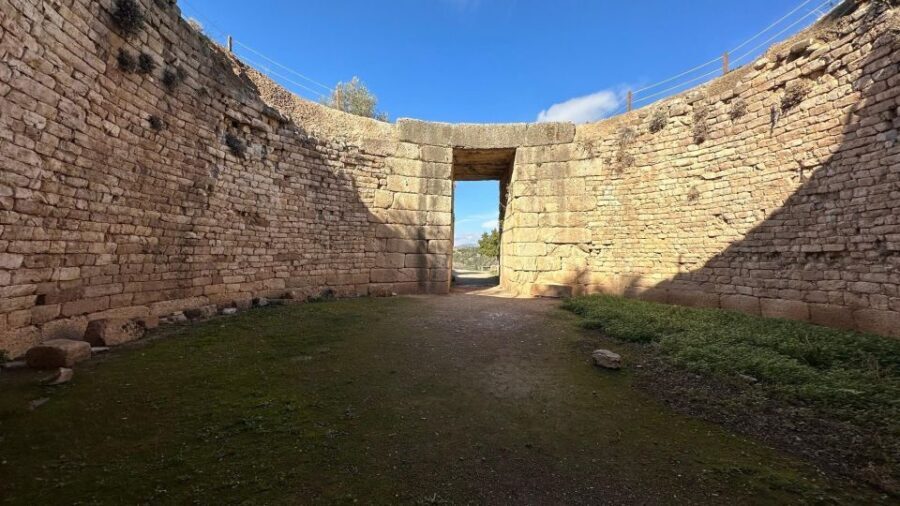
- Mycenae’s Lion Gate and citadel complex, including time for key museum and site sections like the Treasury of Atreus.
- Nafplio’s Palamidi Castle and Akronafplia Fortress, with short but meaningful viewpoints.
- Private pacing and stop flexibility, with drivers praised for smooth, safe driving and helpful suggestions for your day.
Corinth Canal: the isthmus shortcut that reshapes the map
The day starts with a stop at the Corinth Canal area, near Isthmia and Loutraki. In just about 20 minutes, you get the main idea: the canal cuts across the narrow isthmus of Corinth, linking the Gulf of Corinth to the Saronic Gulf. That’s not just trivia. It explains why this area matters so much in trade, travel, and defense.
What I find useful is how the canal frames everything else you’ll see. You’re not only visiting ruins and castles. You’re also seeing the physical reason Greeks kept caring about this strip of land. The Peloponnese feels like a separate world, and the canal makes that separation obvious in a way that a photo never quite does.
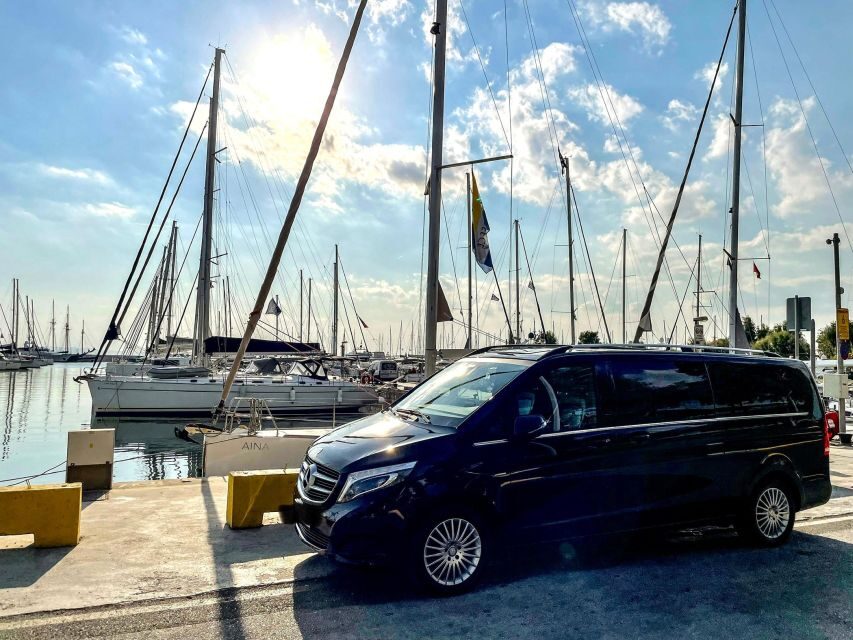
Also, the tour vehicle is built for comfort. You’ll have modern transportation with A/C and Wi‑Fi, plus bottled water. That’s a small detail, but it helps a lot when you’re moving through heat and sunlight on a tight schedule.
You can also read our reviews of more private tours in Nafplio


Ancient Corinth, Acrocorinth, and the museum stops
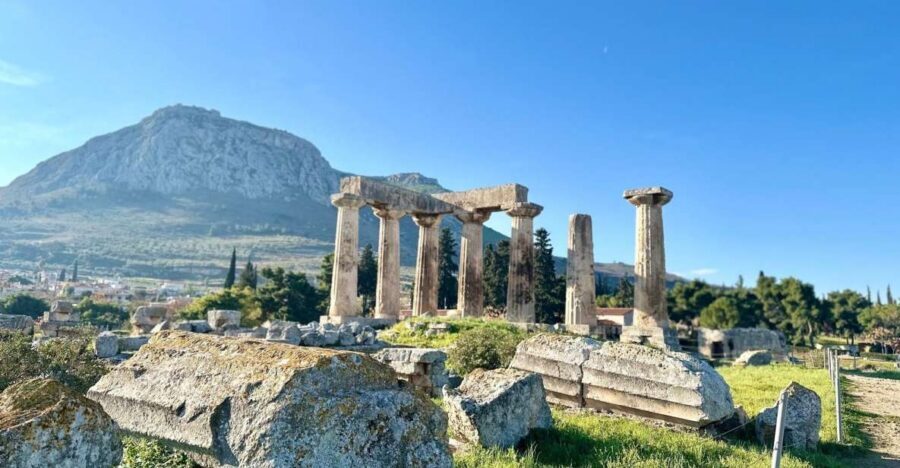
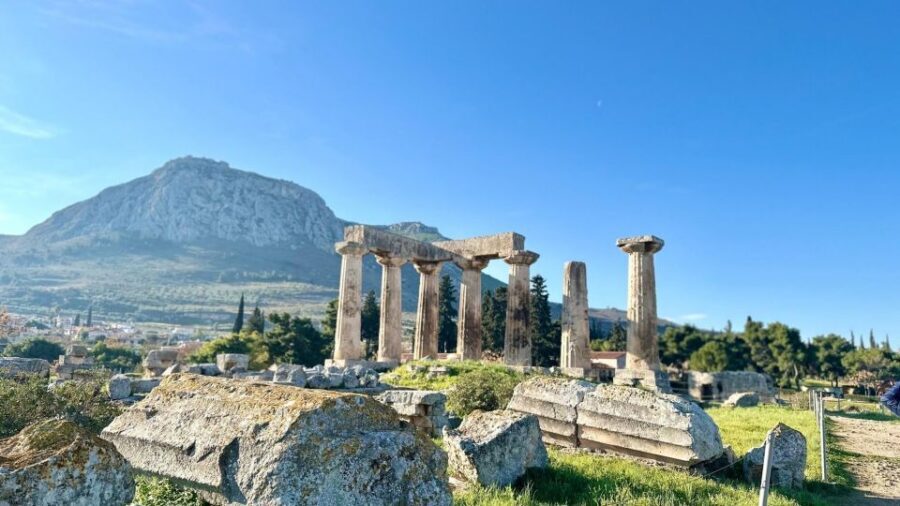
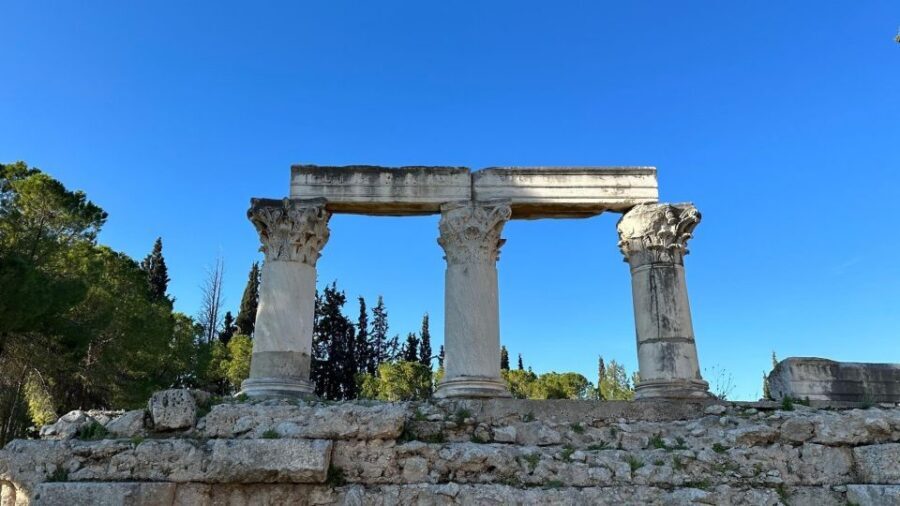
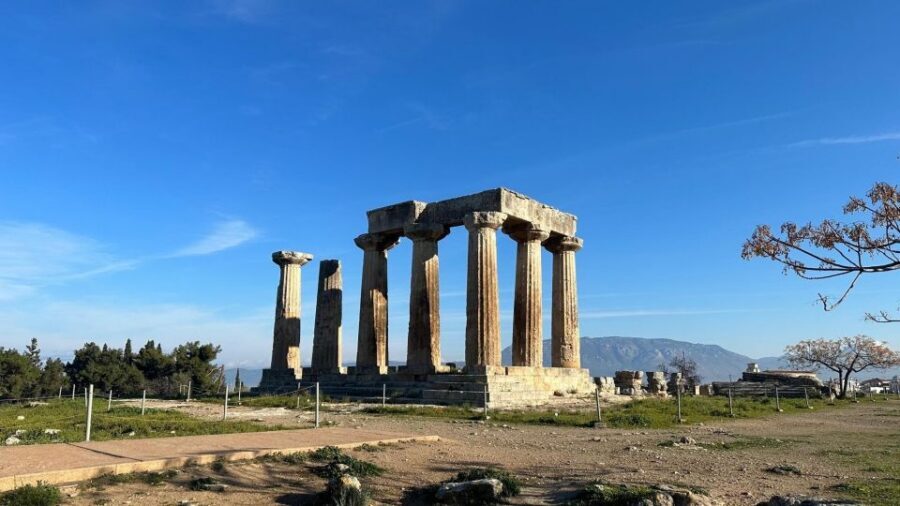
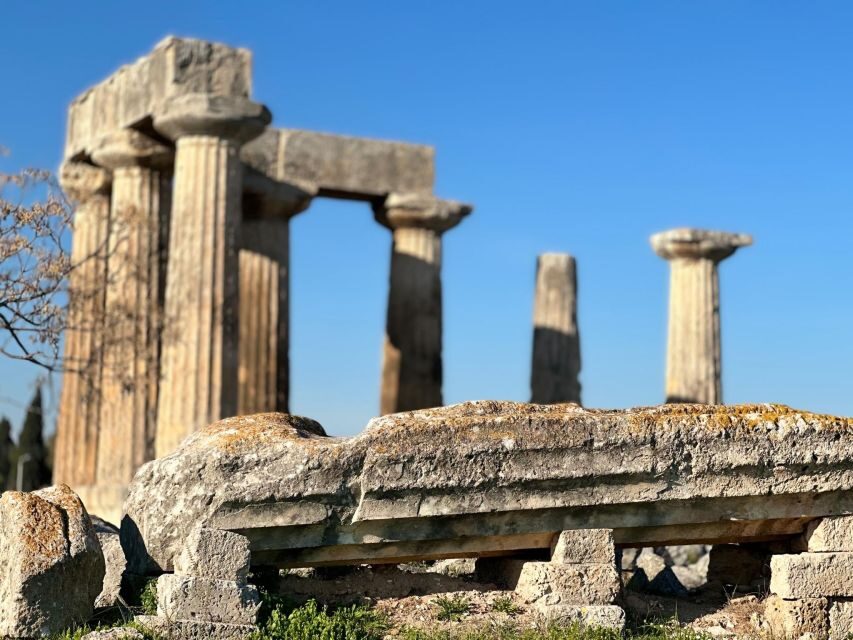
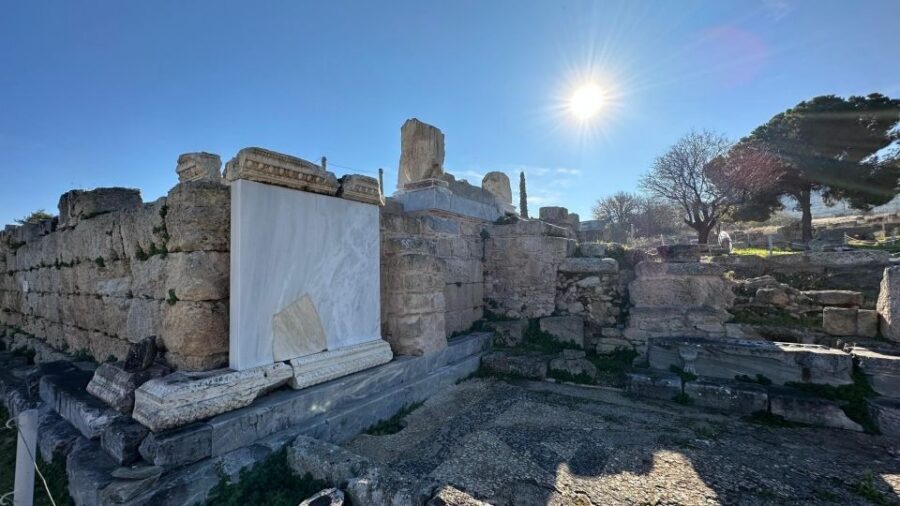
From the canal, you head to Ancient Corinth (Archaia Korinthos) for a longer stretch. This is where the day turns from geography to people. Corinth was a city-state on the isthmus, halfway between Athens and Sparta, and the ruins give you that “hinge point” feeling: a place that mattered because it connected regions.
One of the most interesting angles here is how Corinth shows up in the Christian story. Corinth is well known from Saint Paul’s letters in the New Testament (First and Second Corinthians), and it also appears in the Acts of the Apostles as part of Paul’s missionary travels. Even if you’re not traveling with a Bible-study agenda, it’s a helpful way to understand why Corinth kept pulling attention across centuries.
You’ll also get time that’s split between the ruins area and the museum side of things:
- Ancient Korinthos village time
- Acrocorinth (Upper Corinth) time
- The Archaeological Museum of Corinth time
- A Museum + site rhythm at Mycenae later, too
That mix is smart. Ruins tell you where things stood. Museums help you slow down and make sense of what you’re looking at. If you like context, this pacing helps your eyes do more work.
Acrocorinth: the rock-top fortress view that explains defense
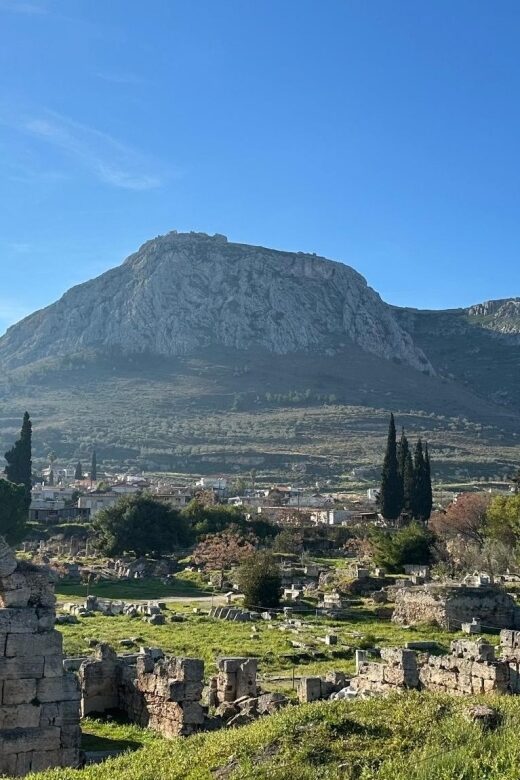
Acrocorinth is “Upper Corinth,” a monolithic rock overlooking the ancient city. You’ll get about 30 minutes here, which doesn’t sound like much until you realize why it’s powerful: Acrocorinth had secure water and was used as a last line of defense. It controlled the isthmus, repelling foes from entering the Peloponnese by land.
That defensive purpose turns the climb and the viewpoints into something practical. Instead of just chasing photos, you’re learning what people would have watched for: movement across the isthmus, approach routes, and the advantage of a fortified height.
One small but important note: plan your footwear. Even when the stops are time-boxed, the ground and steps can be uneven, and you’ll want comfortable shoes and closed-toe protection.
Mycenae’s Lion Gate and citadel: walking through Agamemnon’s seat
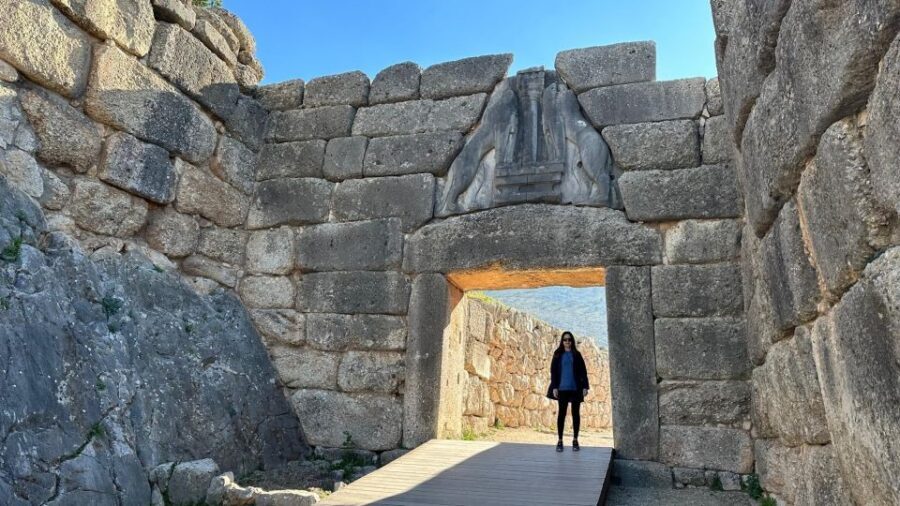
Mycenae takes your day into the fortified-citadel zone. The site is described as a fortified citadel of ancient Mycenae and the seat of the mythical and mighty King Agamemnon. Even if you’re treating the myths as part of the culture rather than literal fact, the structure of the place still hits hard: big walls, a commanding position, and an emphasis on defense and power.
You’ll get around 1 hour for the Mycenae area. Then the plan breaks into key highlights:
- Lion Gate time
- Citadel and Treasury of Atreus time
- Additional museum or site time slots within the complex
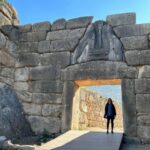
The Lion Gate is one of the big “wow” moments on this kind of route. It’s a recognizable landmark inside a complex that feels like it was built for control. The Treasury of Atreus stop adds another layer, giving you a chance to look closely at a major feature tied to the same royal-citadel story.
If you want to get value out of the Mycenae portion, focus on one thing: how the site is organized. You’ll be bouncing between a gate, a citadel core, and museum viewing. The time slots are shorter than a full-day archaeology tour, but the structure still helps you see the overall system instead of just catching individual monuments.
Nafplio’s Palamidi Castle, Akronafplia Fortress, and Bourtzi harbor
After Mycenae, the day softens into Nafplio. This is a seaport town in the Peloponnese expanded along the hillsides near the north end of the Argolic Gulf. You’ll have about 1 hour 30 minutes total in Nafplio, with multiple short stops and breaks.
The schedule includes:
- Palamidi Castle (about 30 minutes)
- Akronafplia Fortress (about 10 minutes)
- Bourtzi by the harbor area (about 10 minutes)
- Time for shopping and free time
- Time for lunch at a Greek traditional taverna stop (lunch cost not included)
Palamidi is one of the most compelling reasons to end your tour here. It’s described as one of the best-preserved castles in all of Greece, and you’ll also get spectacular views of the city from the loopholes. If Acrocorinth taught you defense by height, Palamidi reinforces it with a “built to watch and withstand” feel.
Then Akronafplia adds another fortress angle. It’s a shorter visit, but you’ll feel like the town’s skyline is basically a set of historical viewpoints. Bourtzi gives you a harbor moment, which helps balance the “stone on stone” day you’ve already had.
This is also where the private-tour format earns its keep. A few drivers connected to this experience have been praised for stopping where you want and for building in time for a coast break. One guide (Chris) is mentioned as adjusting the day schedule to help you see what you care about before closing times, and another (Dimitrios) is praised for flexibility based on family interests and pacing. That kind of flexibility turns Nafplio from a quick photo stop into a real pause.



Private pickup and small-group comfort in a Wi‑Fi vehicle
This is a private group tour, which is the difference between seeing a list and actually enjoying a day. Your personal driver picks you up and returns you to the same place or a point you prefer. If you stay in an Athens hotel or an Airbnb, the driver waits in the lobby or at the building entrance. For ports, they wait at the gate holding a sign with your name.
That sounds like logistics, but it matters when you’re doing a day trip. It saves time, reduces stress, and helps you stay on the sites you planned.
Transport is also set up for comfort:
- Modern, first-class private vehicle
- Wi‑Fi, A/C, and bottled water
- Sedan for 1–3 people, mini van for 4–7 people
- Car seats available if you book them in advance
You can also feel the “small group” advantage in decision-making. Because it’s private, your driver can handle small course changes. One family booking is noted as having a private van for their group so kids could be loud without impacting other people’s experience, which is exactly the kind of practical benefit that only shows up in private tours.
On the guide side, names like Dimitri (Jimmy), Themos, Alex, Panos, Chris, Michael, and Andreas appear in feedback tied to safe driving, clear communication, and history guidance. Some are also praised for recommending places to eat in Nafplio and suggesting souvenirs.
Timing, tickets, and the extra costs you should expect
This tour is designed around multiple major stops, so timing is the quiet hero of the day. The published duration is 6 hours, which means you need to treat each stop as a focused window. That’s a good thing if you like efficiency, but it’s also a reason to manage expectations about how deep you can go.
Here’s what’s included versus not included:
- Included: skip-the-ticket-line, all taxes/fees/handling, private transportation, pickup/drop-off, Wi‑Fi/A/C/water, English-speaking driver/guide support, bottled water, and a driver who can adjust the day timing on request.
- Not included: entrance fees, lunch, and other beverages/meals.
Entrance fees are the one budget item people forget. Since they’re not included, you’ll want to expect extra cost for museum and site access. The skip-the-ticket-line perk helps you avoid long lines, but it doesn’t replace entry fees.
Lunch is scheduled as a Greek traditional taverna option, but it’s still on your own tab. That’s a fair setup: you get the timing and the suggestion, and you choose what to order.
If you want to reduce friction, bring a bit of cash and a card, and keep an eye on the day’s walkways and steps so you’re not trying to rush at the last minute.
Packing list for castle stairs and ancient stone
Even with a comfortable vehicle and short site windows, you’ll still want to dress for real walking. The tour recommends:
- Comfortable shoes
- Sunscreen and a sun hat
- Comfortable clothes
- Closed-toe shoes
I’d add one simple thought: treat this day as a mix of sun exposure and stone steps. You’ll go from canal area conditions into ruins and then into castle viewpoints, which usually means changing light, heat, and uneven ground.
Also, if you’re traveling with kids or anyone needing a little comfort, ask about car seats well in advance if you need them. The tour states they can be booked in advance.
Price value: is $207 per person a good deal?
At $207 per person for a private 6-hour day, the value is really about what you’re buying: convenience plus time saved.
You’re getting:
- Private vehicle with A/C and Wi‑Fi
- Pickup and drop-off from your accommodation or port
- English-speaking driver/guide time across multiple major sites
- Skip-the-ticket-line support
- Bottled water kept in the car
For a small group, private transportation can cost less than you’d think once you factor in how hard it is to piece together separate transfers to Corinth Canal, Ancient Corinth, Mycenae, and Nafplio in one day.
But be honest about the add-ons:
- Entrance fees aren’t included
- Lunch isn’t included
- Car seats may require advance planning
- If you need airport pickup, that’s an additional cost
So, is it worth it? If you want one driver to handle routes, timing, and stop coordination while you focus on seeing and learning, the price is reasonable. If you’re comfortable with public transport and don’t mind managing ticket lines and transfers yourself, you might find cheaper options elsewhere. Still, this one is priced for people who want their day to run smoothly.
Who should book (and who should skip)?
This tour fits best if you:
- Want a single-day route through Corinth Canal, Ancient Corinth, Mycenae, and Nafplio
- Prefer a private format so you can move at your group’s pace
- Like viewpoint stops and fortress context, not just museum-only days
- Appreciate practical driver help, including suggestions for what to do and where to eat
It may be less suitable if:
- Someone in your group needs to avoid stairs and uneven ground (Acrocorinth and Palamidi both involve walking)
- You’re traveling with someone over 95 years, since it’s listed as not suitable for that age group
Should you book this Corinth–Mycenae–Nafplio private tour?
If your goal is to cover the big cultural hits of the Peloponnese with a driver who keeps the day flowing, I’d book it. The strongest reason is the combination of private pickup, comfortable transport (A/C, Wi‑Fi, water), and skip-the-ticket-line help paired with multiple high-impact stops.
If you’re the type who wants to spend hours inside every museum and lose track of the clock, this may feel fast. But if you want a well-paced, good-value day that ends with real time in Nafplio, this route makes a lot of sense.
FAQ
How long is the tour?
The duration is 6 hours.
Is this tour private or shared?
It’s a private group tour, meaning only your group participates.
Where does pickup and drop-off happen?
Pickup and drop-off are included from an Athens hotel, an Airbnb residence, or a port. You can also arrange pickup timing adjustments.
Are entrance fees included?
No. Entrance fees for attractions are not included.
Is lunch included?
Lunch isn’t included. The day includes a stop at a Greek traditional taverna.
Does the tour include skip-the-ticket-line?
Yes, skip-the-ticket-line is included.
Is the tour wheelchair accessible?
Yes, it is listed as wheelchair accessible.
Is airport pickup included?
Airport pick-up and drop-off is not included and would be an additional cost depending on the vehicle type.