REVIEW · SARONIC GULF ISLANDS
Aegina Town Walking Tour – Explore more on this guided tour!
Book on Viator →Operated by Kiki Rebel Tours · Bookable on Viator
Old town walks can teach you fast. This Aegina Town walking tour connects Saint Nectarios and the sea-sailor traditions to Kapodistrias-era power, then hands you a proper local stop for mezze. It’s a simple 2-hour plan that feels surprisingly educational because each corner has a reason it exists, from church details to port-era stories.
I also like the pacing: you get a few short landmark stops, then a longer drift through Aegina Town for craft shops and lesser-known bits of the old streets. The one thing to plan for is the weather and footwear: it runs only about 2 hours, and the route is outdoors, so if conditions are rough you may want to dress for a steady, walking pace.
In This Review
- Key highlights you’ll feel right away
- Starting at Saint Nectarios: where Aegina’s seafaring vibe begins
- The Tower of Markellos, also known as the Pink Tower
- The archaeological stop: nine layers from Neolithic times
- Meandering Aegina Town: craft shops, side streets, and port connections
- Ending in a taverna: drink, Greek coffee, and mezze
- Price and logistics: what $22.88 buys you in real terms
- Who this tour is best for (and who should think twice)
- Should you book the Aegina Town Walking Tour?
- FAQ
- How long is the Aegina Town walking tour?
- How much does the tour cost?
- What language is the tour offered in?
- How many people are in a group?
- What do I visit during the walk?
- Is admission included?
- Is there food or drink included?
- Where does the tour start and end?
- What happens if the weather is bad or the tour needs to be canceled?
Key highlights you’ll feel right away
- Saints and sailors at the start: the tour begins at the Holy Church of Saint Nectarios of Aegina, tied to Saint Nicholas, Greece’s patron of sailors
- The Pink Tower of Markellos story: learn why it’s nicknamed the Pink Tower and how Kapodistrias shaped Aegina
- Neolithic to modern in nine layers: the archaeological stop traces civilization back to Neolithic times across nine layers
- Aegina Town beyond the obvious: craft shops, mixed architectural styles, and not-so-well-known historical sites
- Taverna finish with a drink and mezze: you end with a typical taverna stop that makes the history feel real
- Small group size (max 12): easier conversations and more guide attention
Starting at Saint Nectarios: where Aegina’s seafaring vibe begins
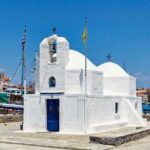
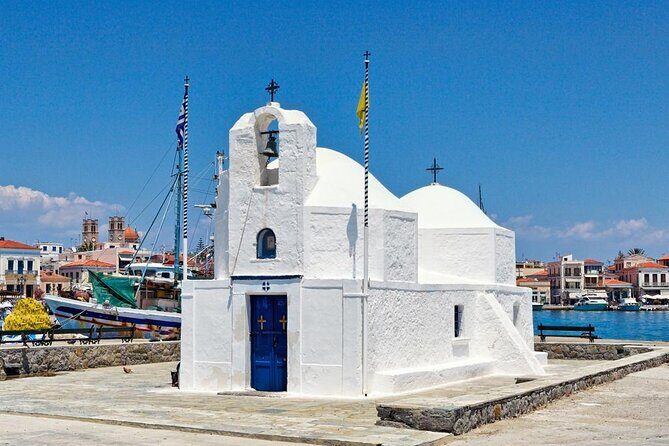
You begin at the Holy Church of Saint Nectarios of Aegina, described as Aegina’s tiny landmark church devoted to Saint Nicholas. That matters because Saint Nicholas isn’t just a religious figure here—he’s tied to sailors, which is a big clue to what you’ll keep noticing later: Aegina’s role as an island connected by the water.
This first stop is short, so don’t expect a long sermon. Think of it as a quick orientation for the symbols and the way faith shows up in everyday town life. Even if you’ve visited other Greek islands, Aegina’s tone feels different once you start with this sailor connection, because it sets up the tour’s later emphasis on port history and how power moved through the island.
One practical tip: the meeting place is listed at the Chapel of Agios Nikolaos, with an address that includes Pireas (Akti Themistokleous 275, Pireas 185 39, Greece). Since the exact spot can be confusing on the ground, I’d plan to arrive early and double-check what your confirmation pin points. A guide once helped adjust the meeting point location for someone who struggled to find the gate area, which is a good sign that the team will try to make it work if you get delayed or turned around.
You can also read our reviews of more walking tours in Saronic Gulf Islands
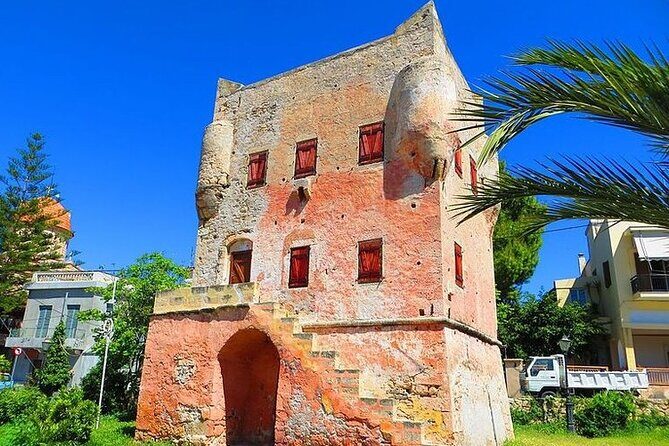
The Tower of Markellos, also known as the Pink Tower
Next comes the Tower of Markellos, built in 1802 and nicknamed the Pink Tower. If you’re the type who likes buildings with a story attached, this is a strong stop. The tour doesn’t just name the tower—it links it to Greece’s early modern era through Kapodistrias, Greece’s first governor of modern Greece.
Here’s the thread you’ll want to keep in your head as you look up at the tower: in 1826, Kapodistrias’ government housed it there. Later, you hear how he lived there until the Governor’s Residence—known as the Palace of Barbayannis—was built. In other words, this isn’t only an isolated monument. It’s part of a timeline of governance and how Aegina figured into national leadership.
It’s also a smart use of time. The tower stop is brief, but the background gives it weight. Without that context, you might treat it as a pretty tower and move on. With it, you’ll recognize it as a marker of how the island’s importance shifted across decades.
The archaeological stop: nine layers from Neolithic times
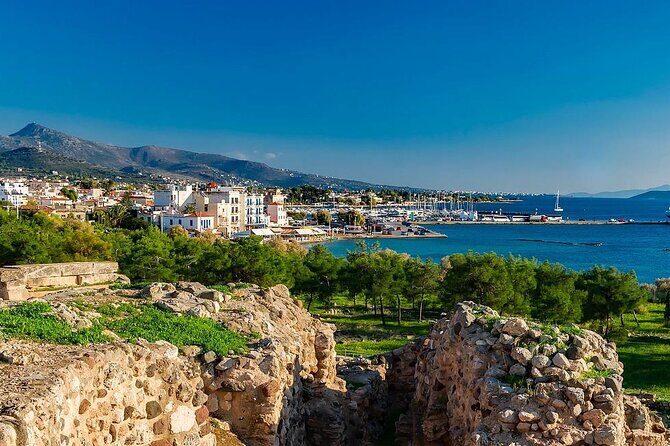
Between the big named landmarks, you hit an archaeological site that reaches back to Neolithic times. The headline detail is why this stop feels like the tour’s brain: you’re told that nine layers of civilization have been found there.
Even without technical terms, the idea is easy to grasp. Nine layers means the same ground kept getting reused, rebuilt, and reinterpreted as people changed. That’s one of the best ways to understand a place like Aegina—you stop thinking of history as one era stacked on top of another. Instead, you see continuity, interruptions, and return.
One caution: this stop is likely outdoors and close to ancient remains, so bring the same common sense you’d use at any archaeological site—comfortable shoes and an eye out for uneven ground. If you’re someone who hates standing still, this segment might still feel more like learning by observation than pure walking. But if you like history that shows physical evidence, it’s worth the attention.
Meandering Aegina Town: craft shops, side streets, and port connections

After the archaeology, the tour shifts into a true town walk. You’ll meander through charming streets past local craft shops, and you’ll get a mix of architectural styles. The guide also takes you to historical sites that aren’t always on the quickest-hit lists, which is where guided walking tours in Greece earn their keep.
This is also where the port angle shows up more clearly. In one account of the experience, the guide tied together port history and even recent discoveries that point to how important the harbor has been over time. That makes a big difference because Aegina isn’t just a pretty island town you stroll through. It’s a working island built around arrivals, departures, trade, and the people who moved with the ships.
If you like local atmosphere, you’ll also enjoy the way guides bring in practical context—shopping tips and where to eat are the kind of small details that make your remaining time on the island easier. One guide even had connections with locals you’d normally never meet just by wandering.
You might also run into extra local color. On at least one occasion, the walk included meeting a local artist specializing in religious paintings. That’s the kind of bonus that happens when a guide knows people, not just facts.
Ending in a taverna: drink, Greek coffee, and mezze

The last section is designed to feel like a payoff instead of a wrap-up. The tour ends in a typical taverna with a drink and mezze, with Opa used as the mood setter. One review notes Greek coffee is included too, which is a nice touch because it keeps the finish feeling very Greek rather than purely tour-structured.
From a value standpoint, this is a big deal. A walking tour that includes an end-of-tour meal component usually saves you from the most annoying part of travel: guessing where to eat after you’ve been on the move all day. You also get a natural moment to chat with your guide while the group settles.
If you’re the kind of person who prefers to eat after you’ve seen the town, this ending works well. You’ll leave with a short list of flavors to search for later—without committing your entire evening to a random first pick.
You can also read our reviews of more guided tours in Saronic Gulf Islands
Price and logistics: what $22.88 buys you in real terms
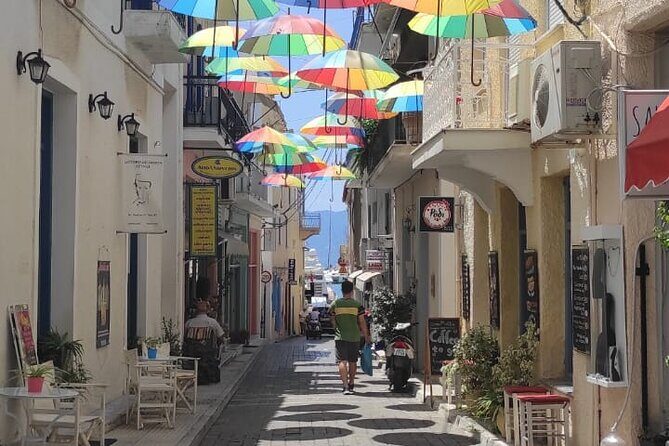
The listed price is $22.88 per person for about 2 hours, with tickets delivered as a mobile ticket and English as the offered language. The tour caps at a maximum of 12 travelers, which usually means less crowding and more chance to ask specific questions instead of listening only in passive mode.
You’re also getting free admission at the key stops that mention it. The church and Tower of Markellos are marked free in the tour details. Then you have that taverna finish with drink and mezze, plus Greek coffee noted in feedback. When you add up those components, the price starts to look less like a pure history lesson fee and more like a packaged way to cover highlights without extra ticket wrangling.
Weather matters here. The experience requires good weather, and if it’s canceled due to poor weather, you’re offered a different date or a full refund. Since you’re outdoors for the walk, it’s smart to check forecasts the day before and wear shoes that can handle old-street texture.
Who this tour is best for (and who should think twice)

This tour is a great fit if you want a high-impact overview of Aegina Town with both landmark focus and street-level wandering. It also works well for people who want history explained in a human way—church traditions tied to sailors, a tower tied to Kapodistrias, and archaeology that shows how layers of settlement accumulated.
It’s also worth it for first-day visitors to Aegina Town. You get bearings fast: where things are, what matters, and what to prioritize later. Guides have been described as friendly and warm, and they often give practical pointers on shopping and dining, which helps you avoid aimless wandering.
The main “think twice” scenario is a mobility limitation or a strong preference against walking on uneven old-town streets. The tour says most travelers can participate, and service animals are allowed, but the route is still a walking route with multiple stops in around two hours. If that’s a tight window for you, consider a slower plan.
Should you book the Aegina Town Walking Tour?
I’d book it if you want a structured, small-group walk that mixes Aegina’s major visual landmarks with the kind of context that makes them click. The Tower of Markellos (Pink Tower) plus Kapodistrias’ story is one of the best “wait, that building has a timeline?” combos you’ll find on a short trip. Add the nine layers of civilization at the archaeological stop, then finish with a taverna stop that includes mezze and Greek coffee, and the value feels real.
I’d skip or reconsider if you hate outdoor walking, or if your schedule can’t handle a potential weather change. Otherwise, it’s an easy, satisfying way to learn what Aegina is about without trying to piece together the island’s story alone.
FAQ
How long is the Aegina Town walking tour?
It lasts about 2 hours.
How much does the tour cost?
The price is $22.88 per person.
What language is the tour offered in?
The tour is offered in English.
How many people are in a group?
The tour has a maximum of 12 travelers.
What do I visit during the walk?
You start at the Holy Church of Saint Nectarios of Aegina, visit the Tower of Markellos (the Pink Tower), see an archaeological site with nine layers of civilization from Neolithic times, and then walk through Aegina Town before ending at a taverna.
Is admission included?
The church and Tower of Markellos are listed as free, and the rest of the experience includes the guided walk and the ending taverna stop.
Is there food or drink included?
Yes. The tour ends in a typical taverna with a drink and mezze, and Greek coffee is noted as included.
Where does the tour start and end?
It starts at the Chapel of Agios Nikolaos (Akti Themistokleous 275, Pireas 185 39, Greece) and ends back at the meeting point.
What happens if the weather is bad or the tour needs to be canceled?
The experience requires good weather. If it’s canceled due to poor weather, you’ll be offered a different date or a full refund.