REVIEW · SARONIC GULF ISLANDS
Aegina Ceramics Class – learn the magic of this art, be inspired & create!
Book on Viator →Operated by Kiki Rebel Tours · Bookable on Viator
Clay time beats a museum day. This Aegina ceramics class is led by Maria, with over 30 years of experience, and it starts with pottery’s story from ancient times to today. You learn pinching to shape a mug or bowl, then decorate with ceramic colours, with an optional chance to try wheel throwing.
I love that it’s beginner-friendly in a real way, with a small group (max 10) and plenty of hands-on time. Another strong point is the “made-by-you” souvenir: you create something you can use, and Maria can mail the finished piece so you do not have to pack delicate ceramics on your trip.
One consideration: it’s a workshop, not a factory demo. If you’re after a perfect, store-bought finish in one go, you may need to reset expectations for handmade results.
In This Review
- Key Things I’d Prioritize Before You Go
- Where the Class Meets in Aegina and What 2 Hours Means
- Meet Maria: Hands-On Teaching That Works for Beginners
- The Workshop Flow: From Ancient Pottery to Your Own Piece
- Pinching a Mug or Bowl: What You’re Really Learning
- Decorating With Ceramic Colours: Making It Yours
- Pottery Wheel Throwing: An Optional Skill Try
- What You Actually Take Away (Besides Memories)
- Price and Group Size: Why This Feels Like a Real Workshop
- Who This Class Fits Best on Aegina
- Logistics That Matter Without the Fuss
- Should You Book This Aegina Ceramics Class?
- FAQ
- Where does the ceramics class start and end?
- How long is the Aegina ceramics class?
- What will I learn and make during the workshop?
- Is the class suitable for beginners?
- Is it offered in English, and how big is the group?
- How does confirmation and cancellation work?
Key Things I’d Prioritize Before You Go
- Maria’s 30+ years of teaching means you get real instruction, not just a casual craft table
- Pinching technique is approachable and turns quickly into a mug or bowl shape
- Ancient-to-modern pottery context gives meaning to what you’re doing with your hands
- Small group size (max 10) keeps the pace calm and the help close
- Optional wheel-throwing try lets you experiment beyond pinching
- Ceramic colours + a usable outcome make it feel like a souvenir, not just an activity
Where the Class Meets in Aegina and What 2 Hours Means
This workshop meets at Aegina CruisesΛιμάνι, Egina 180 10, Greece and you end back at the same spot. That matters because Aegina can be a little confusing to navigate on foot—so having a clear start and finish keeps your day easy.
The session is about 2 hours, so plan it like a focused appointment, not a loose wander-and-see option. You’ll spend that time learning the technique, shaping your piece, and adding decoration. Because it’s a short window, you’ll get the most out of it if you show up ready to work with your hands right away.
Also, the tour uses a mobile ticket, which is handy. It saves fuss and helps you keep your phone ready during check-in.
You can also read our reviews of more tours and experiences in Saronic Gulf Islands

Meet Maria: Hands-On Teaching That Works for Beginners
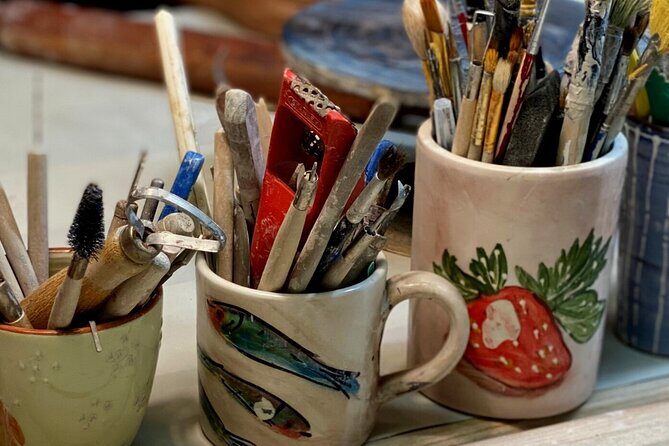
The class is hosted by Maria, and the biggest value here is how experienced the instruction is. You’re not learning from a slide deck or a one-size-fits-all guide. Maria brings decades of practice (over 30 years) and that shows in how the workshop flows: technique first, then creative choice.
In a good pottery class, you want two things at the same time: safety and freedom. You learn how to handle the material without feeling clumsy, and you still get room to make something that looks like you had fun. The small group size (max 10) supports this. You’re close enough to get help when your fingers need it, but not so crowded that the table feels frantic.
If you’re traveling with family, this kind of teaching matters. One of the best parts of the experience is that a child-aged participant (a 12-year-old in one case) could join in and make a bowl. So yes—this can work beyond adult craft-tour mode.
The Workshop Flow: From Ancient Pottery to Your Own Piece
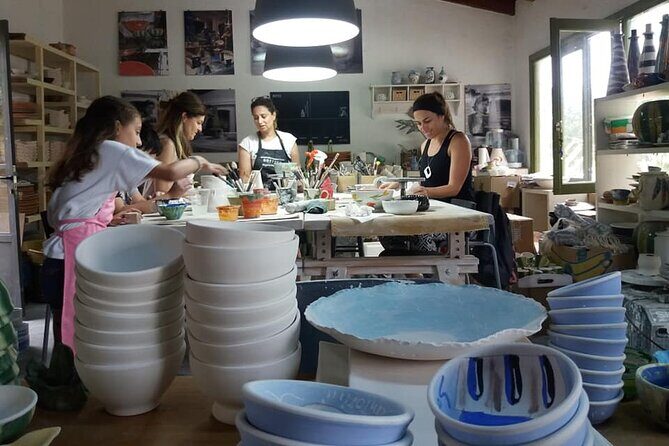
The session starts with a historical review, covering pottery from ancient times to the present day. You might think of ceramics as just a craft hobby, but this quick grounding helps you see pottery as technology and culture, not just decoration. It also gives your brain a reason to pay attention while your hands do the work.
Then comes the main technique: pinching pottery. Pinching is exactly what it sounds like—your hands shape the clay by pinching and compressing it into a form. It’s a great entry point because you do not need heavy equipment to start. You can build a mug or bowl shape using pressure, symmetry, and a bit of trial-and-error.
The workshop aims for something practical: you’ll create an object like a mug or a bowl, not just a flat tile or a vague blob. That means you start imagining how the finished piece might live in your kitchen. You’re learning skills that translate into a usable result.
Pinching a Mug or Bowl: What You’re Really Learning
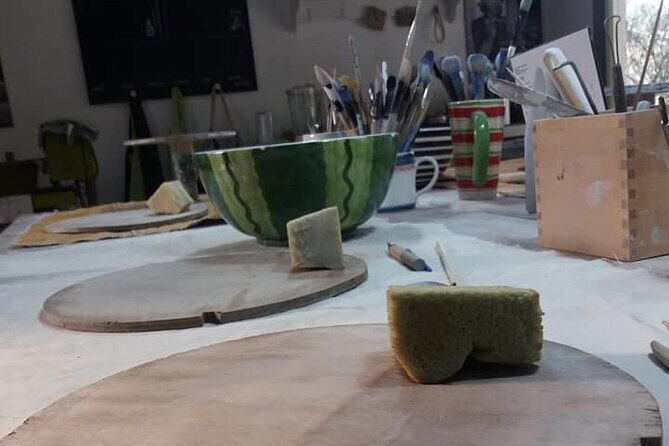
When you’re pinching clay, you’re learning more than how to make a shape. You’re learning control: how thickness changes strength, how your fingertips create walls, and how to keep the rim and opening from warping.
In a short class, the goal is not perfection—it’s competence. You’ll get the basics of shaping and how to form a bowl/mug that holds together. Even if your first attempt looks uneven, the process teaches you what to adjust on the next piece of your own work.
Here’s the practical mindset I recommend: focus on the silhouette first. If the body shape is right, you can usually refine the details later (even with decoration). Pinching is also forgiving because you can correct small changes as you go, especially while the clay is still workable.
Decorating With Ceramic Colours: Making It Yours
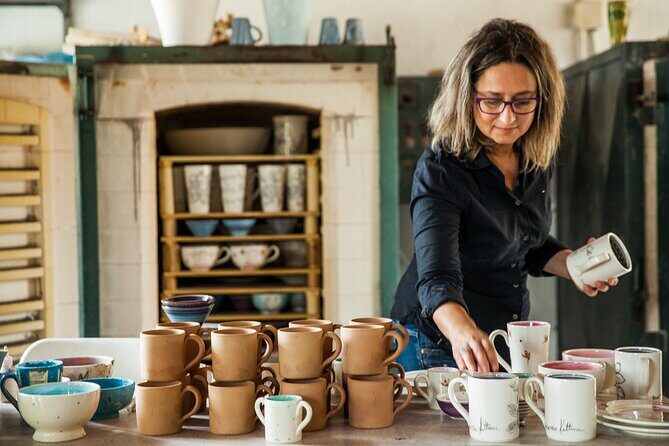
After shaping, you move into decoration. The class uses special ceramic colours, which is what turns your raw form into something personal.
This is the part where you stop thinking like a student and start thinking like a maker. Choose your colour plan based on what you want to live with at home. If you’re making a bowl for fruit or keys, you might lean toward bold contrast. If you’re making a mug, you may prefer calmer bands or patterns that feel cozy in daily use.
The key benefit of decoration in this format: you get guidance without losing your creative voice. The instructor can steer you toward colours and application methods that work, while you still decide the final look.
And because the class is only 2 hours, decoration is not a marathon project. You’ll build a finished, recognizable style during the session, not just sketch ideas for later.





Pottery Wheel Throwing: An Optional Skill Try
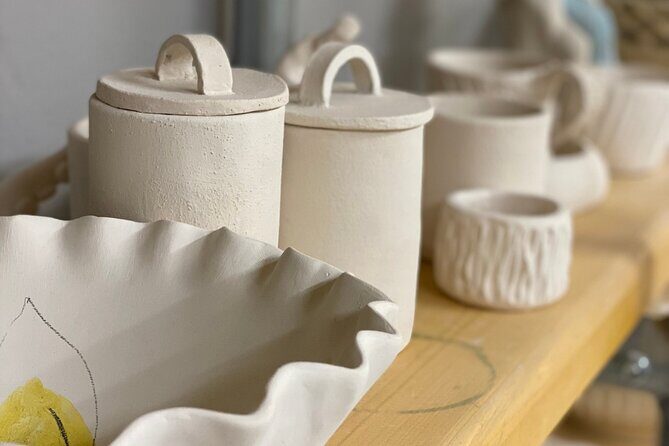
One of the fun extras is that you can try pottery throwing on the potter’s wheel. That’s a big deal because wheel throwing is a different skill set than pinching. With pinching, your hands shape the clay slowly and directly. With wheel throwing, the wheel’s motion helps form symmetry, and your hands guide more than they build.
Your ability to try wheel throwing depends on how the class runs, but the offer is there even for people who start as total beginners. If you’ve been curious about wheel pottery from afar, this is your chance to test it without committing to a long course.
How to approach it: treat it like experimentation. You’re not there to master a perfect cylinder. You’re there to understand how the wheel changes the process—and to leave with a stronger sense of what you like in pottery.
What You Actually Take Away (Besides Memories)
This experience is priced at $58.38 per person, and the value is in the hands-on output. You’re not just watching; you’re shaping and decorating something that can become part of your real life back home.
One detail that really ups the usefulness: Maria can mail the finished pieces. That means you do not have to play fragile-ceramics Tetris while traveling. It also helps if you’re visiting Aegina without a lot of luggage space.
So when you think about whether this class is worth it, ask yourself one question: would I rather spend two hours creating an object I can use later, or spending two hours walking and taking photos? For most people who love making things, pottery wins.
Price and Group Size: Why This Feels Like a Real Workshop
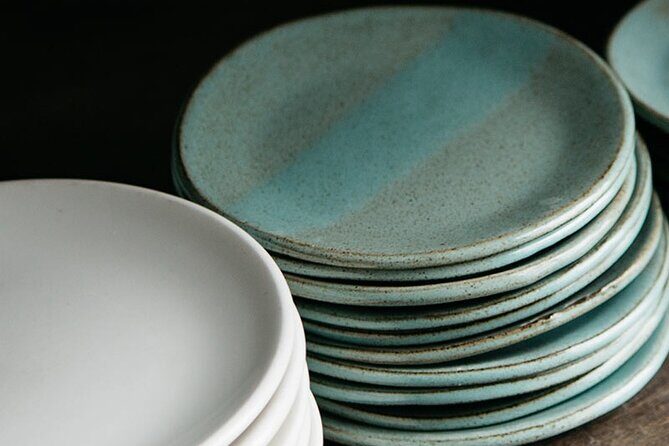
With a maximum group size of 10 travelers, you should expect a calmer class experience than larger craft sessions. In practical terms, it means:
- you can get help while you’re actively working
- you’re less likely to wait for attention
- the pace stays manageable for people with different comfort levels
Also, the class is offered in English, so you can ask questions and follow instructions without translation friction. That matters when you’re learning tactile technique—your questions are usually about how much pressure, how thick to keep walls, or what to do when something starts to slip.
And for planning: the activity is often booked about 110 days in advance on average. That’s a clue to book early if you have fixed travel dates. A small group + limited slots usually leads to fewer last-minute openings.
Who This Class Fits Best on Aegina
This is a smart fit if you want something more personal than a standard sightseeing stop. If you like hands-on travel, creative breaks, or learning a skill you can repeat at home, you’ll feel at ease here.
It’s also a good family option. One review experience included a husband, wife, and a 12-year-old, and the tone was genuinely supportive—Maria helped so the process stayed fun, not stressful. If you’re traveling with kids, this is the type of activity that can turn into a shared memory, not just babysitting-with-crafts.
If you’re traveling solo, the small group format can still feel friendly because everyone is doing the same practical task. You’re around other people, but you’re not in a lecture hall.
For people with limited mobility or strong sensory sensitivities: the data says most travelers can participate, and service animals are allowed. But pottery still involves hands-on work, so you may want to judge whether working with clay textures feels okay for you personally.
Logistics That Matter Without the Fuss
The meeting point is easy to anchor: Aegina Cruises at the port area (Egina 180 10, Greece). The class ends right back there, which makes it simpler to plan what comes next.
It’s also described as being near public transportation, so you’re not forced to rely on taxis or long walks. The workshop is in English, and you get a mobile ticket, so bring your phone and keep it charged.
One more small tip: arrive ready to start work quickly. In a two-hour class, arriving late can throw you off the pace, especially for shaping and decoration stages.
Should You Book This Aegina Ceramics Class?
Yes, if you want a hands-on Aegina experience that’s creative, structured, and small enough to feel personal. The combination of Maria’s long experience, the pinching technique (beginner-friendly), and the option to try the wheel makes this more than a casual craft stop.
You should think twice if you want a super polished, store-ready result or if you hate the idea of learning by doing. Pottery is a process, and the fun comes from working with imperfect materials and improving in real time.
My quick decision rule: book it if you’d feel happy having a homemade mug or bowl as a real souvenir. Skip it if you’d rather spend those two hours walking and saving your creativity for another day.
FAQ
Where does the ceramics class start and end?
It starts at Aegina CruisesΛιμάνι, Egina 180 10, Greece and ends back at the same meeting point.
How long is the Aegina ceramics class?
The experience lasts about 2 hours.
What will I learn and make during the workshop?
You’ll get a historical review of pottery and learn pinching pottery to create an object like a mug or a bowl. Then you’ll decorate it with ceramic colours, and you can even try pottery throwing on the potter’s wheel.
Is the class suitable for beginners?
Yes. It says most travelers can participate, and the workshop is for both complete beginners and people with some experience.
Is it offered in English, and how big is the group?
The class is offered in English, and it has a maximum group size of 10 travelers.
How does confirmation and cancellation work?
You should receive confirmation within 48 hours of booking, subject to availability. There is free cancellation, and you can cancel up to 24 hours in advance for a full refund. If the minimum number of travelers isn’t met, the experience may be canceled and you’ll be offered a different date/experience or a full refund.