REVIEW · ATHENS
5-Day Best of: Nafplio Mycenae Epidaurus Olympia Zakynthos island Delphi Meteora
Book on Viator →Operated by EUDAIMONIA Private Tours · Bookable on Viator
Myth, sea, and monasteries in five days. This private route strings together major Greek icons in a way that feels more like a well-run journey than a checklist: Mycenae, Epidaurus, Nafplio, Olympia, then a ferry hop to Zakynthos for Navagio and Blue Caves, followed by Delphi and Meteora. I especially like the food-and-drink-first approach, plus the fact that Zakynthos is built with flexible options (boat time, quick swims, or even a different coastline plan if conditions change).
I also like that the day pacing has built-in breathing room when it counts. You get proper time to wander places like Mycenae, Nafplio, and Delphi, and you’re not forced into a cookie-cutter sightseeing circuit. One consideration: this is an active itinerary with plenty of walking and steps (Palamidi’s famous climb is 999 steps), and parts of the plan depend on good weather—especially the sea day and how Meteora timing works.
In This Review
- Key highlights worth planning around
- How this route hangs together (and why it’s not random)
- Day 1: Corinth Canal, Mycenae, Nafplio, and Epidaurus’ sound check
- Day 2: Olympia’s ruins, Olympia’s museum, and the ferry into Zakynthos
- Day 3: Navagio and Blue Caves, plus smart ways to handle weather and energy
- Day 4: Delphi beyond the obvious, then Meteora’s early golden hour
- Day 5: Meteora monasteries on the rocks, then Thermopylae back to Athens
- Food, tickets, and the real cost of the experience
- Who this private tour is best for
- Should you book this 5-day myth-and-sea route?
- FAQ
- Is pickup offered on this tour?
- What parts of the trip are included in the price?
- Are the boat tours to Navagio and the Blue Caves included?
- How many monasteries will you visit at Meteora?
- How does the itinerary handle bad weather?
- Will I get a mix of UNESCO sites and towns, or only ruins?
Key highlights worth planning around
- Corinth Canal to Peloponnese UNESCO, with zero wasted time between sites
- Navagio and Blue Caves with optional swims, plus weather-based alternatives
- Delphi includes the Tholos of Athena Pronaia, often missed by other groups
- Meteora visits 2–3 open monasteries, chosen by fitness and timing
- Lunch and drinks are part of the experience, not a fixed tourist menu
- A responsive private team feel, with guide and planning styles like Nikos and Theo praised in past experiences
How this route hangs together (and why it’s not random)
The big advantage of this itinerary is simple: it groups the most meaningful stops without turning your days into constant hotel-hopping chaos. You start on the Peloponnese side of the myth world—Mycenae, Epidaurus, Nafplio, Olympia—then shift to the Ionian Sea for Zakynthos, where the day is planned around water and views instead of ruins. After that, you head inland again for two “big idea” sites: Delphi (the oracle center) and Meteora (monasteries perched on rock formations that look unreal).
That ordering matters. The Peloponnese days are intense and archaeological, so you get your heritage first. Then Zakynthos gives you a strong visual reset: bright water, cliffs, and that famous shipwreck viewpoint at Navagio. Finally, Delphi and Meteora feel like the spiritual end of the story—Apollo’s sanctuary and then Orthodox monasteries built into the skyline.
You can also read our reviews of more tours and experiences in Athens

Day 1: Corinth Canal, Mycenae, Nafplio, and Epidaurus’ sound check
Day 1 is built to get you oriented fast, then hit you with major history.
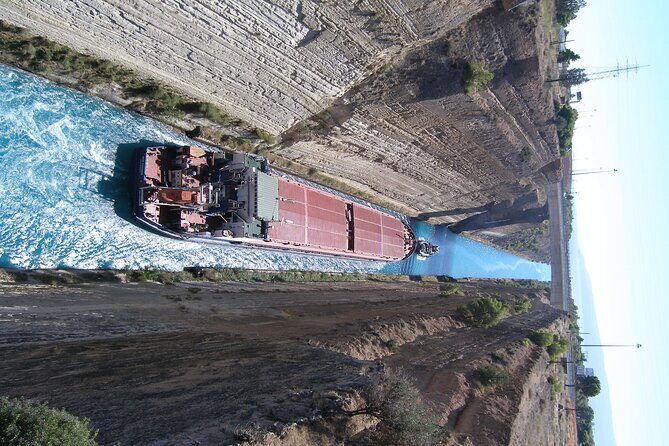
First is the Corinth Canal. It’s short and quick (15 minutes), but it’s a smart start: the canal cuts through the narrow Isthmus of Corinth and separates the Peloponnese from mainland Greece. It’s the kind of stop that helps you understand why the peninsula’s geography matters to travel and to ancient routes.
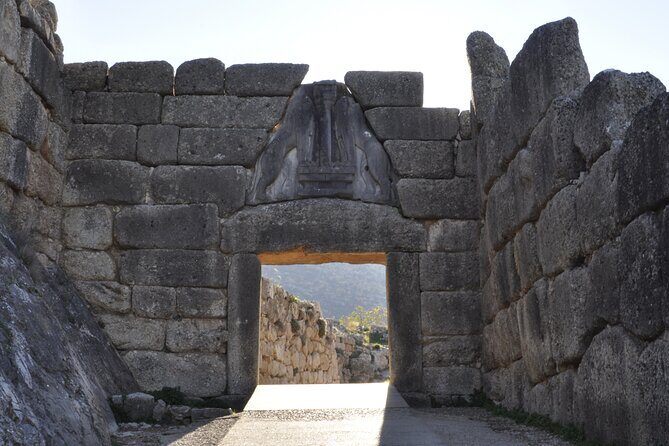
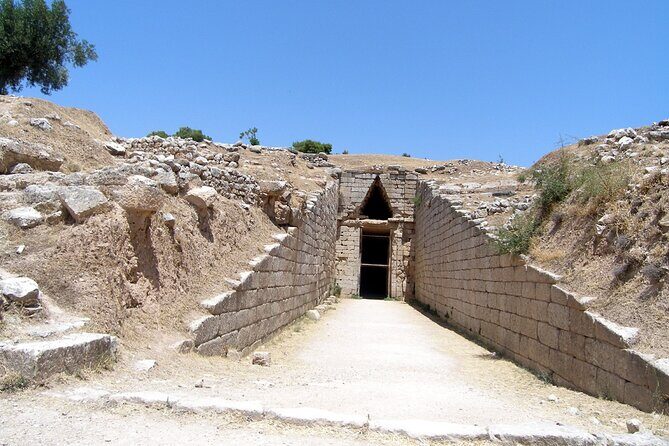
Next comes Mycenae, a UNESCO site tied to the Mycenean civilization and King Agamemnon. You’ll have about two hours to wander the archaeological area and the accompanying museum. The tradeoff here is classic: tickets aren’t included, so you’ll want to budget entry fees. But the payoff is that you’re not just standing near walls—you’re walking the footprint of an entire legendary era.
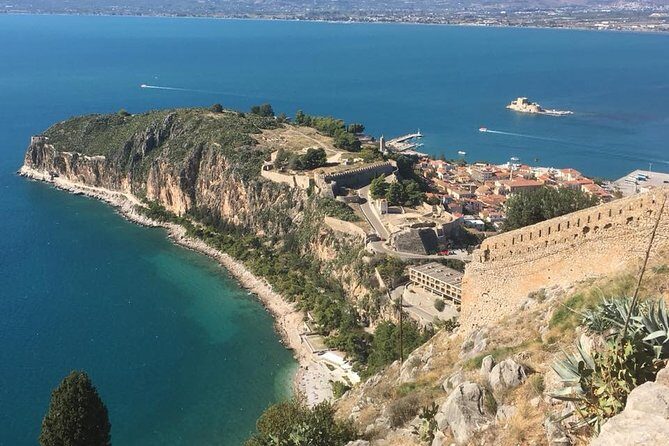
Then you land in Nafplio, one of the most beautiful towns in the Argolis region. Two hours is a good amount of time to stroll without feeling rushed, and you can focus on everyday charm: waterfront atmosphere, small streets, and the sense that you’re in Greece rather than just beside a landmark.
After Nafplio, you climb to Palamidi Castle. The walk includes the famous climb of 999 steps down to old Nafplio. If you’re good with steady uphill effort, this stop turns into a reward: the view is why people do the steps. If you’d rather save energy, you can treat this as the day’s “one big workout moment.”
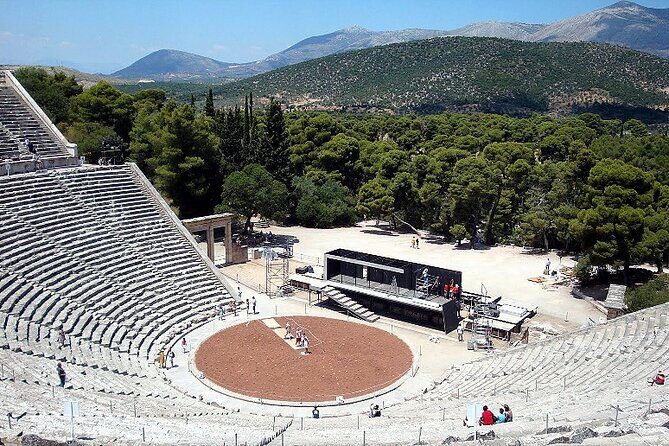
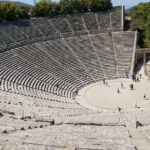
The day closes at the Ancient Theatre of Epidaurus, also UNESCO-listed. You get about two hours here, and this theater is famous for acoustics. Even if you don’t sit through a performance, it’s worth noticing how design and stonework make sound travel in a way that still feels impressive.
Day 2: Olympia’s ruins, Olympia’s museum, and the ferry into Zakynthos
Olympia is where the itinerary shifts from cities and castles into the world of ancient athletics and cult sites. You start with the Archaeological Site of Olympia. It’s dated back to the 8th century B.C., with extensive ruins including training areas and a stadium, plus temples dedicated to Hera and Zeus. You’ll have around two hours, which is enough time to get oriented and still linger.
Then you can add the Olympia Museum (about 40 minutes). This is where the story gets more personal and less “ruin-only.” You may see standout sculptures such as those linked to the marble temple of Zeus and works associated with sculptor Praxiteles, including a famous Hermes.
One practical note: both Olympia site entry and museum entry aren’t included, so fees are part of your reality for this day, like most Greek UNESCO stops.
After Olympia, the plan pivots to the sea. You head to Kyllini Port, take the ferry, and reach Zakynthos after about one hour on the water. After checking into your hotel (and breakfast is included as part of the overall stay), you’re set up for an easy, local-feeling evening. You get about three hours at leisure—time to walk Zakynthos town and choose dinner at a traditional tavern.
This is a good moment in the schedule to do something simple: find a spot near the center, order what looks good on the menu, and don’t overthink it. The tour’s strength is that it gives you time to act like you live there.
Day 3: Navagio and Blue Caves, plus smart ways to handle weather and energy
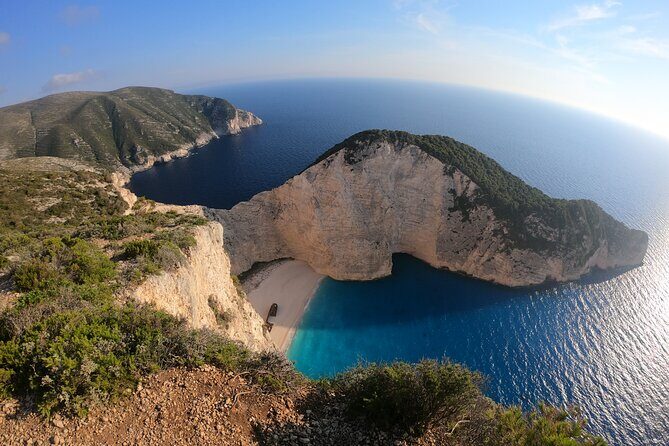
Day 3 is the big icon day in Zakynthos. You’ll board a boat to visit Navagio Beach and the Blue Caves. At Navagio, you’ll have about 45 minutes exploring, and swimming is optional. The Blue Caves stop is shorter, with another optional swim.
You’ll also get flexibility. If weather doesn’t cooperate, the boat portion can be replaced by a tour focusing on the south side of Zakynthos, including Marathonisi and swimming with turtles (weather-dependent). That matters because sea days can get uncomfortable fast. This itinerary isn’t pretending that the Ionian Sea always behaves.
After the boat visit, you do a land-based exploration with the drive toward the boat pickup location plus time to photograph Navagio from above. This is a useful add-on because it lets you catch views from different angles, even if the sea conditions limited swim time.
The day stays flexible with a few ways to structure your exploration:
- You can cruise the island by car, taking in the coastline views comfortably.
- You can pair a coastline boat tour (north or south side) with car time for the rest of the day.
- You can do two boat tours to cover more of the island’s coast, if you want maximum sea time.
Food is built into the day in a very practical way. Lunch and drinks are included at Lithakia (about an hour). This is exactly what I look for in a tour like this: you’re not left searching for food while your schedule runs hot.
If you want something more private, there’s an optional upgrade. The tour can arrange a fully private boat tour for an added 100–500 euros, depending on boat size, or another private-boat option mentioned at roughly 120–250 euros. That’s a wide range, so it’s worth asking what’s included for your exact group size and the time you want on the water.
Day 4: Delphi beyond the obvious, then Meteora’s early golden hour
Delphi is the kind of place where your brain wants to slow down. You start with an optional break in Nafpaktos Old Port—a chance to stretch your legs, grab coffee near the water, and see the Venetian castle area. Then you continue on to Delphi itself.
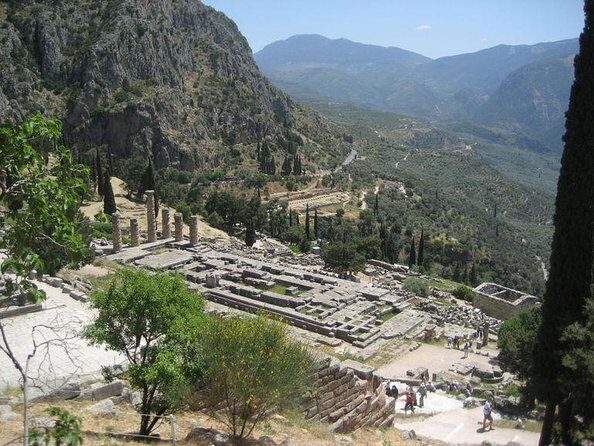
At Delphi, you have about one hour at the sanctuary where the oracle of Apollo spoke. You’ll see the overall setting described as the omphalos, the navel of the world, with ruins that blend into steep terrain. One strength of this plan is that you’re not stuck in a fast look-and-run rhythm. An hour is tight, but it’s enough to understand why Delphi was religious and political meaning rolled together.
Next is the Delphi Archaeological Museum (about 45 minutes). This is where sculpture and artifacts help connect the sanctuary to people, gods, and storytelling. You can see pieces described in the plan like the Charioteer, plus the Sphinx of the Naxians.
Here’s a stop I really appreciate in the itinerary: Tholos of Athena Pronaia. It’s explicitly called out as a place most visitors and agencies skip. You get about 25 minutes, and this site is the one that many people end up recognizing from photos online. Even if you’re not a “ruins collector,” it’s a good photo-and-context stop that keeps your day from feeling like the standard Delphi sweep.
Lunch is in Amfissa, off the beaten track, with authentic choices and lunch as part of the included day structure. Then you move toward Meteora in the late day timing.
At Meteora, the tour includes an optional plan that can happen if there are no unexpected delays: a first look at monasteries’ area around sunset lighting (about one hour, with a possible chance to visit St Stephen’s monastery if timing allows). This is a smart way to set up Day 5. You get the geography in softer light first, then the next morning you return for monastery visits.
- All Day Cruise -3 Islands to Agistri,Moni, Aegina with lunch and drinks included
★ 5.0 · 4,958 reviews



Day 5: Meteora monasteries on the rocks, then Thermopylae back to Athens
Day 5 is the full Meteora payoff. The schedule is built around visiting 2–3 monasteries that are open that day. Which ones you see depends on fitness and time. That’s a practical choice because Meteora involves stairs and uneven terrain, and you don’t want the whole day to hinge on one impossible climb.
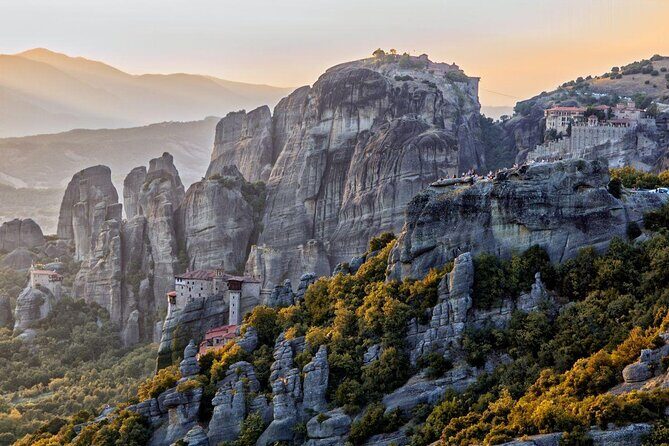
You’ll start at Great Meteoron Monastery, described as the oldest, biggest, and most important preserved monastery on the rocks. It’s built on an imposing rock, and the setting is the whole point: the monastery feels like it’s part of the rock itself. Then you may visit Varlaam Monastery and/or Holy Trinity Monastery (Agia Triada). Varlaam is tied to a daring ascetic named Varlaam, and the itinerary also notes construction details and a long gap when the rock was abandoned before building resumed. Holy Trinity is highlighted as the most photographed, with dates given for its construction.
If your schedule energy is limited, remember that the tour uses your fitness as part of the planning. The monasteries are the star, but the itinerary doesn’t ignore the human factor.
After Meteora, there’s a short break at the Battlefield of Thermopylae with a King Leonidas statue. The battle is framed over three days in 480 BC, involving Greek city-states and the Persian Empire under Xerxes I. It’s a quick stop, not a full museum experience, but it adds context to the phrase you’ve probably heard in history class.
Finally, you return to Athens with a stop at Syntagma, about two hours.
Food, tickets, and the real cost of the experience
The headline here is that food and drink are not an afterthought. Lunch is included multiple times across the trip, and the itinerary points out that you’re not stuck with a fixed, tourist-style menu. That lines up with what makes this tour feel different from the average “park, photo, bus, repeat” formula.
At the same time, it helps to know what you’ll likely pay separately:
- Boat tour tickets for Navagio and the Blue Caves are not included, listed around 15–20 EUR per person.
- Private boat tours are optional upgrades, mentioned in ranges from 100–500 euros depending on boat size (and a separate mention of 120–250 euros for a smaller/faster setup).
- Museum and site entries for places like Mycenae, Olympia, Epidaurus, Delphi museum, and monastery entries aren’t included.
- A professional/licensed guide is optional.
So is it good value at $3,558.28 per person? For the kind of route you’re getting, the value is mostly in what’s packaged: ferry logistics to Zakynthos, top-class accommodation with breakfast, bottled water, and guided time built around multiple major sites without you assembling four different day plans. You’re paying for the work of connecting the dots—plus the fact that meals are part of the schedule, not a scramble.
If your group really cares about UNESCO sites plus an authentic Greek food rhythm, this setup can feel worth it. If you’re only interested in one or two of the big-name stops, you’ll likely feel the price more.
Who this private tour is best for
This works best if you want:
- A myth + sea + inland spirituality mix in one tight plan
- UNESCO sites handled with enough time to actually look, not just pose
- A day-by-day rhythm that includes lunch and drinks as part of the journey
- Some flexibility on Zakynthos so the sea day can match weather and your comfort level
It may not be ideal if:
- You want a slow, restful pace with minimal walking. Palamidi’s steps alone are a commitment.
- You don’t like itineraries that can adjust based on weather.
Also, the tour calls for moderate physical fitness, so you’ll want to be comfortable with stairs and archaeological terrain.
Should you book this 5-day myth-and-sea route?
If you’re excited by Mycenae + Epidaurus + Olympia, and you also want a real change of pace with Zakynthos (Navagio and Blue Caves), then this tour is a strong match. The schedule’s biggest strength is that it keeps the “big moments” connected while still leaving you room for actual meal time and town wandering.
I’d book it if you can handle an active itinerary, and if you’re willing to accept that boat timing and certain viewpoints depend on conditions. I’d skip or think twice if you prefer a purely self-guided trip with zero add-on ticket surprises.
FAQ
Is pickup offered on this tour?
Pickup is offered, and the tour starts at 8:00 am.
What parts of the trip are included in the price?
Your included items include return ferry tickets to and from Zakynthos, top-class accommodation with breakfast, bottled water, an in-car information booklet, plus lunch (5) and breakfast (4).
Are the boat tours to Navagio and the Blue Caves included?
No. Tickets for the boat tour(s) are not included and are listed around 15–20 EUR per person. Private boat tours are available for an additional cost (with ranges provided).
How many monasteries will you visit at Meteora?
You visit 2–3 monasteries, depending on which ones are open that day and on your fitness and timing.
How does the itinerary handle bad weather?
The experience requires good weather, and the Zakynthos boat plan can be replaced depending on conditions. Meteora timing can also shift if there are unexpected delays.
Will I get a mix of UNESCO sites and towns, or only ruins?
You get both. The route includes major sites like Mycenae, Epidaurus, Olympia, Delphi, and Meteora, plus town time in Nafplio and Zakynthos for wandering and dinner.

More 5-Day Experiences in Athens


More Tour Reviews in Athens
- All Day Cruise -3 Islands to Agistri,Moni, Aegina with lunch and drinks included
★ 5.0 · 4,958 reviews