REVIEW · ATHENS
“A Day in Ancient Olympia:The Cradle of the Olympics Games”
Book on Viator →Operated by Greece Athens Taxi GAT · Bookable on Viator
Ancient Olympia in one day is a solid plan. You’ll roll out of Athens with round-trip transfers and end up seeing two of the most important game-related stops in Greece—ancient ruins and the museums that explain them.
What I like most is how much comfort you get while you’re traveling, thanks to an air-conditioned Mercedes-Benz with Wi-Fi, water, and chargers. My second favorite thing is the human side: an English-speaking driver who can share context, plus smooth handling if something goes off-script (including one reported electronics hiccup that didn’t derail the day). One thing to keep in mind: you’ll need to budget for admission tickets on-site (Olympia is €20 per person, and museum tickets aren’t included), and lunch isn’t part of the price.
In This Review
- Key points to know before you go
- Getting to Olympia from Athens without wasting your day
- Your car makes a real difference on a long day
- Isthmus of Corinth: a quick stop with big engineering drama
- Ancient Olympia: where Zeus, athletes, and ritual all intersect
- The stadium: imagining the race without modern noise
- Temple of Zeus and the myth-powered atmosphere of the sanctuary
- Hera’s altar and the symbolic start of the Olympic flame
- Philippieion, palaestra, and the training world around the games
- Museums that connect the dots: Olympia Archaeological Museum and Olympic Games Museum
- Olympia Archaeological Museum
- Museum of the Olympic Games
- Price and ticket math: what you really pay for
- Pickup from Athens or Port Piraeus: choose the easiest start
- How much walking are you signing up for?
- Who this tour suits best (and who should consider alternatives)
- Should you book this day trip to Ancient Olympia?
- FAQ
- What’s the duration of the trip?
- Where does pickup happen?
- Is this a group tour or private?
- What languages are offered?
- Will the driver accompany you inside the museums and sites?
- Are tickets included in the price?
- Is there Wi-Fi and water on board?
- What vehicle is used for transportation?
- How flexible is the pickup time?
- Can I cancel for a refund?
Key points to know before you go
- Time-saving private transport means you can fit Isthmus of Corinth and Ancient Olympia in the same day
- A/C Mercedes-Benz with Wi-Fi, water, and chargers keeps the ride comfortable
- Skip-the-line ticket assistance is included, but you still pay the actual ticket costs
- Big outdoor hits are timed: roughly 1 hour on the Ancient Olympia site plus museum time after
- Olympia’s “why it matters” comes through in two museums focused on archaeology and Olympic history
- Driver professionalism is part of the experience, with on-the-spot problem solving when tech glitches happen
Getting to Olympia from Athens without wasting your day
Olympia is the kind of place that can swallow a day if you’re not careful. This plan is built for people who want the highlights without spending hours figuring out trains, transfers, and timing. You’re doing a long-ish day—about 8 to 10 hours—but the private door-to-door setup helps you actually use that time.
The logic is simple: you travel comfortably, see the most important ancient pieces, then shift to museums where the story becomes clearer. Ancient Olympia isn’t just ruins in a field—it’s a sanctuary tied to Zeus and to the most famous athletic festival in the ancient world. And because those games returned to global attention in 1894, you’re not just viewing history; you’re seeing the roots of a modern idea.
If you’re short on vacation days and hate slow logistics, this route fits nicely. It’s also a good match if you’re traveling with mixed ages, since you can customize pickup timing and keep the group together.
You can also read our reviews of more tours and experiences in Athens.


Your car makes a real difference on a long day
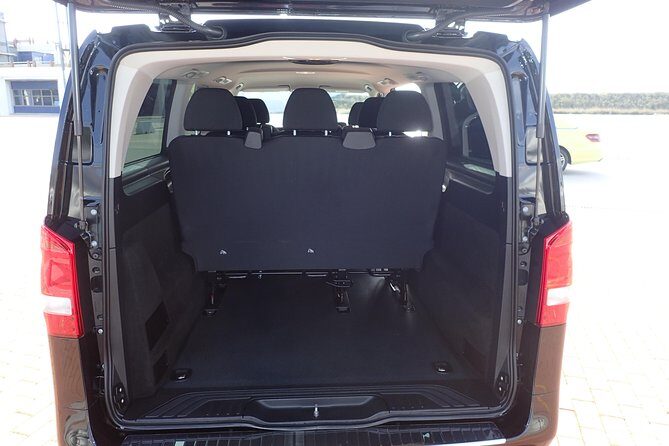
This isn’t a bus tour. You’ll ride in an air-conditioned Mercedes-Benz with Wi-Fi, bottled water, and mobile chargers, plus child seats if needed. That may sound like standard tour stuff, but on a long day it matters: you’re not arriving tired and cranky, you’re arriving ready to walk.
You also get private transportation, meaning only your group is in the vehicle. Even with a history-heavy day, you’re not stuck listening to the same facts over and over while everyone waits at the slowest pace.
One practical note: the driver is English-speaking and has history knowledge, but they’re not a licensed guide inside sites and museums. So you should think of it as a smooth, friendly interpretation from the car and between stops, while the detailed museum explanations will come from the displays. That split can be a benefit—less waiting, more time with the objects.
Isthmus of Corinth: a quick stop with big engineering drama
Your day starts with a scenic drive through the Peloponnese and a first stop at the Isthmus of Corinth. This is a narrow strip that links Central Greece to the Peloponnese. Even better, it’s where the canal connects the Saronic Gulf and the Gulf of Corinth.
The canal itself is modern history compared to the rest of the day, but it sits on a place that has mattered for ages. It’s about 6 kilometers long, and the narrowest point is where the Corinth Canal was built between 1880 and 1893. Before modern engineers arrived, the spot was strategic enough that defenses were built early—there was an older wall dating to the end of the 5th century BC, preserved into Byzantine times as the Hexamilion.
This stop is short—around 15 minutes—so don’t treat it like a full sightseeing block. Treat it like a “setting the stage” moment: you’ll get a sense of why this geography controlled movement and power, and it helps the later Peloponnese story feel more connected.
Ancient Olympia: where Zeus, athletes, and ritual all intersect
Now you hit the main event: Ancient Olympia, in the western Peloponnese valley of the Alpheios River area. This sanctuary was one of the key Panhellenic religious centers of ancient Greece. It’s famous because the Olympic Games were held there every four years through classical antiquity, starting in the 8th century BC and running to the 4th century AD.
A detail I really like here is the global bridge: the games were restored in 1894 around the idea of peaceful international competition for excellence. That’s not just trivia—it shapes why Olympia still feels relevant when you’re standing at the old sports spaces.
You’ll typically spend about 1 hour at the archaeological site. With time limits, prioritize the core anchors: the stadium and the big temples. That’s where your “I get it now” moment usually happens.
The stadium: imagining the race without modern noise
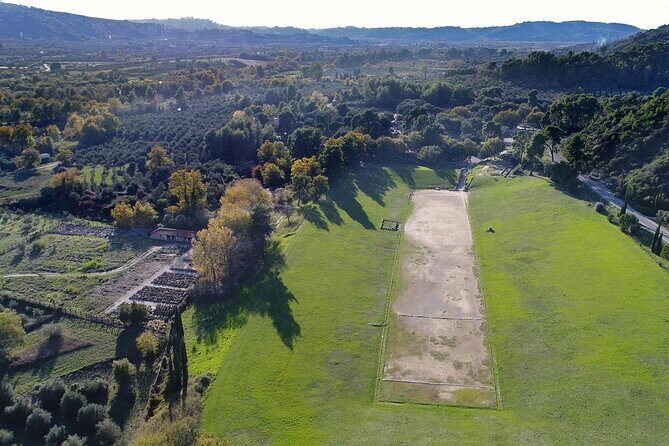
The stadium is one of the most recognizable parts of Olympia. It’s where a lot of the ancient games took place. The racetrack is listed as over 200 meters long and roughly 30 to 34 meters wide.
Even if you’re not a sports person, you’ll feel what this space was designed for: repeated viewing, controlled movement, and a crowd built around athletic performance. Standing near it, you can understand why the sanctuary mattered beyond religion. Athletics here wasn’t casual—it was part of a serious festival tied to Zeus.
Because your time is limited, I suggest you do this in a quick loop. First, look at the full shape of the stadium. Then move in closer to understand the scale. Don’t overthink it. You’re trying to feel the place, not memorize measurements.
- All Day Cruise -3 Islands to Agistri,Moni, Aegina with lunch and drinks included
★ 5.0 · 4,958 reviews



Temple of Zeus and the myth-powered atmosphere of the sanctuary
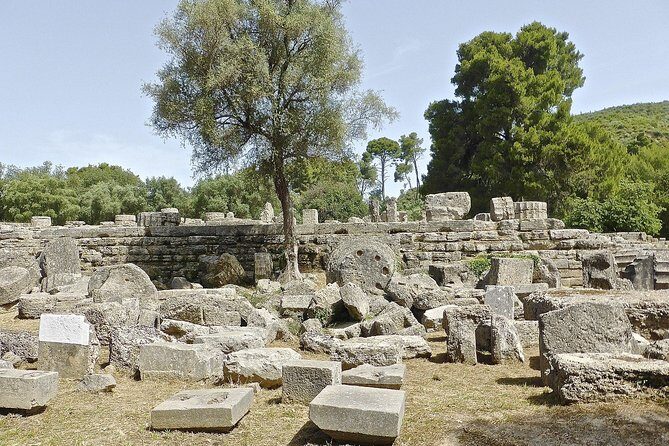
A few key steps from the stadium is the Temple of Zeus, built in the 5th century BC by a local architect. The temple was made of limestone and marble, and ancient records say a giant golden statue of Zeus once stood inside.
This is where Olympia’s “bigger than sport” identity comes through. The games were athletic, yes, but the setting was religious and monumental. In other words, it wasn’t just people competing; it was people participating in a sacred civic moment.
Take a few minutes here even if you’re tempted to rush. You’ll get the clearest sense of the sanctuary’s power: Zeus wasn’t a background theme, he was the centerpiece.
Hera’s altar and the symbolic start of the Olympic flame
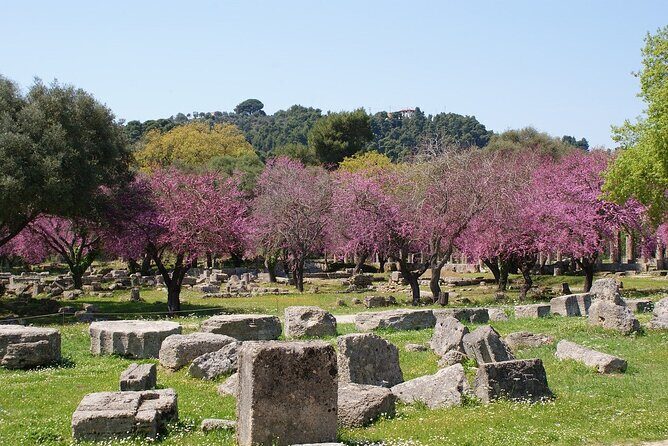
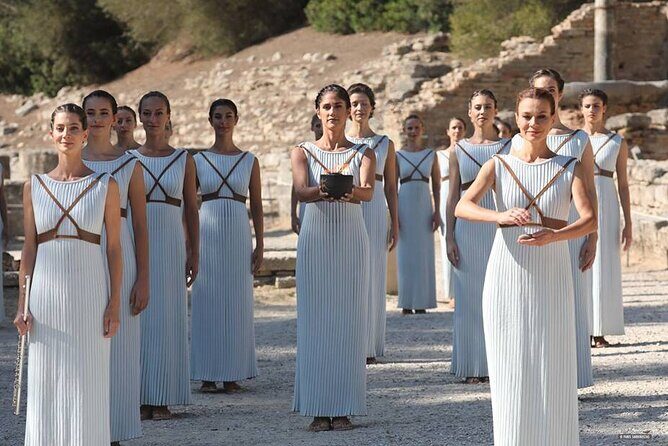
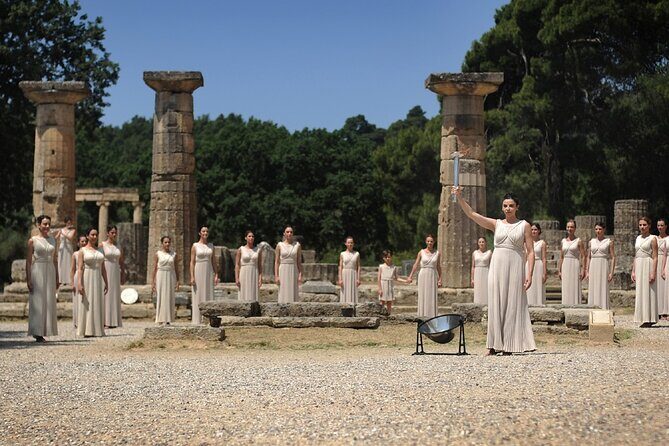
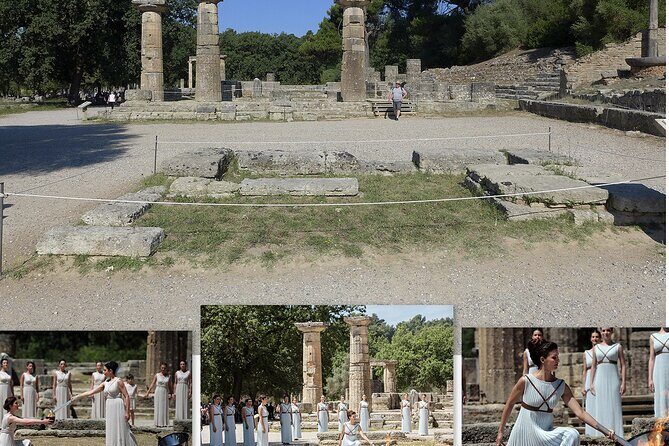
Near the stadium, you’ll also find the Temple of Hera. It’s one of the oldest temples in Greece, constructed in the 7th century BC in Dorian style. Today, the altar there is the place where the Olympic flame is lit before the games.
That’s one of those details you might remember long after you leave. It links the ancient sacred space to modern ceremony. And it makes your visit feel less like sightseeing-only and more like a living symbol—something carried forward.
If you only have a little patience, at least pause at the altar area. Give it 3–5 minutes. It’s small compared to the big temple mass, but the meaning is huge.
Philippieion, palaestra, and the training world around the games
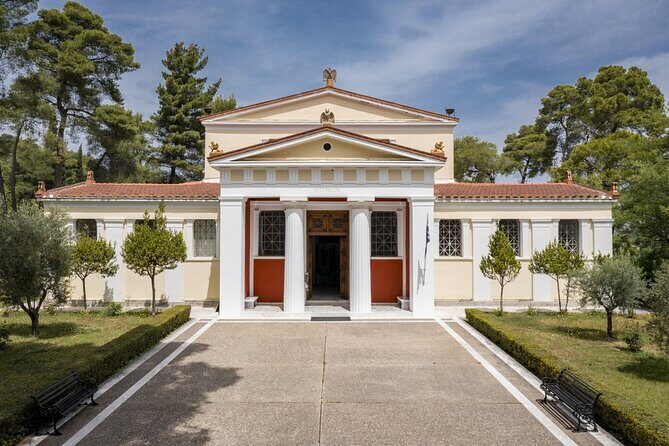
Olympia wasn’t only about temples and the stadium. It also had spaces where training and specialized structures supported the festival.
The Philippieion is a circular building within the Altis enclosure, described as one of the best examples of ancient Greek architecture. It was dedicated to Zeus by Philip II of Macedon. Even if you’re not an architecture nerd, the circular shape helps you understand how designers created distinct “functions” inside the sanctuary.
Then there’s the palaestra, built in the 3rd century BC as part of the gymnasium complex. This is where people practiced boxing, wrestling, and jumping. It’s also one of the best “training zone” places to see—because instead of imagining athletes in the abstract, you see the physical space built for their work.
When your site time is tight, aim for these structures if you enjoy details. If you’re more of a big-picture person, it’s totally fine to focus on stadium plus the temples and accept the rest as highlights you skim.
Museums that connect the dots: Olympia Archaeological Museum and Olympic Games Museum
Once the outdoor walking is done, you move indoors—an underrated part of the day, and honestly the best way to make the ruins click.
Olympia Archaeological Museum
The Archaeological Museum of Olympia is considered one of the best in Greece. You’ll see findings from the ancient site and from other excavations in the area, with well-labeled rooms that help you connect objects to places.
Two exhibits people often remember are the statues of Hermes of Praxiteles and Nike Paionios. Even if you’ve seen famous sculpture photos online, seeing them in a museum setting changes the feel. You get scale, material context, and the sense that you’re looking at objects meant to last.
Plan on about 1 hour here. If you try to speed-run the museum, it turns into a photo session. If you slow down just a bit, you’ll come away with a clearer understanding of what daily and ceremonial life looked like in this sanctuary world.
Museum of the Olympic Games
Next is the Museum of the History of the Olympic Games, housed in the old archaeological museum building in Ancient Olympia. It focuses on findings across the area related to the games.
Your museum time here is around 45 minutes. It’s a good length if you want a focused story rather than a long essay. The goal is to leave with context: how the games worked, how the sanctuary supported the festival, and why those competitions mattered culturally.
If you’re the kind of person who likes timelines, this museum pairing helps because you’ll have both the art and the game-world explained.
Price and ticket math: what you really pay for
At $327.43 per person, this day trip isn’t the cheapest way to get to Olympia. But it’s not priced like a random transfer either. You’re paying for round-trip pickup and drop-off from your Athens accommodation or Port Piraeus, plus a private vehicle with comfort features that make the long day easier.
Here’s the key value point: the transport is included, and you also get help with skip-the-line tickets for places you need to enter. You still pay the ticket costs, but you’re not left struggling at the counter while the day slips away.
Your big extra expense is admission at the Archaeological Site of Olympia (€20 per person), which is not included. Museum admission is also not included, and ticket prices vary depending on season (winter vs summer). Lunch isn’t included either.
So my practical advice is to treat the tour price as the “getting there and managing the day” cost, then budget separately for admissions and food. If you already know you’ll buy tickets anyway, the private transport portion becomes the real bargain.
Pickup from Athens or Port Piraeus: choose the easiest start
This tour works whether you’re starting in Athens or arriving by cruise. You can get picked up from any location you prefer, including hotels and Airbnb (driver waits at reception), and the Port of Piraeus right outside your cruise ship with a sign showing your name.
You can also use metro or bus station pickup if that’s your style. The flexibility is a real plus when you’re trying to line up the day with your schedule.
One day before the trip, you’ll receive the driver’s full contact details. If you can’t find the driver, there’s an emergency number on your voucher. That’s the kind of detail that saves stress at the start of a long day.
How much walking are you signing up for?
This is a “you can participate” style day, but you still need to plan for museum walking and outdoor walking at the archaeological site. The site time is about an hour, and you’ll also spend time at two museums.
If you have mobility limits, I’d plan your pace carefully at the ruins and be ready to use museum seating when available. The tour doesn’t describe special accommodations beyond child seats and service animals being allowed, so you’ll want to judge your stamina based on your own needs.
The upside is control. You’re not waiting on a huge group. A private setup usually makes it easier to manage your breaks.
Who this tour suits best (and who should consider alternatives)
This is a strong fit if you want a single-day Olympia hit with a comfortable ride and minimal hassle. It’s also ideal if you’re traveling with someone who wants the big “wow” moments—the stadium, the temples, the museum art—and you’d rather not spend half your trip on logistics.
It may be less ideal if you want long time at the ruins or a deeply licensed, inside-the-site guide. Since the driver is not licensed to accompany you in museums and sites, you may want to add an official guide for more granular interpretation if that’s what you crave.
Should you book this day trip to Ancient Olympia?
I’d book it if you value time, comfort, and clear highlights. For most people, Olympia is a once-visit destination, and this day plan helps you see the key elements without burning energy on transit problems.
I’d think twice if you hate paying extra on-site for admissions and you’re hoping lunch is included. Also consider whether you want more than an English-speaking driver’s context outside the museums.
If you do book, bring your ticket budget mindset, keep your expectations realistic about site time, and use the museums to connect the dots. That’s where the day turns from monuments into understanding.
FAQ
What’s the duration of the trip?
The trip runs about 8 to 10 hours.
Where does pickup happen?
Pickup is available from your Athens accommodation or from Port Piraeus, as well as metro or bus stations. The driver waits at your hotel reception or meets you outside your cruise ship with your name on a sign.
Is this a group tour or private?
It’s private. Only your group participates.
What languages are offered?
The experience is offered in English, with an English-speaking driver.
Will the driver accompany you inside the museums and sites?
No. The driver is not licensed to accompany you in any site or museum.
Are tickets included in the price?
Skip-the-line assistance is included, but ticket costs are not included. The Archaeological Site of Olympia admission is listed as €20 per person, and museum admissions are also not included.
Is there Wi-Fi and water on board?
Yes. The vehicle includes Wi-Fi, bottled water, and mobile chargers.
What vehicle is used for transportation?
You’ll travel in a Mercedes-Benz with air-conditioning, and child seats are available.
How flexible is the pickup time?
Pickup times are flexible, and you can customize them to fit your schedule.
Can I cancel for a refund?
Yes. You can cancel up to 24 hours in advance for a full refund.
More Tour Reviews in Athens
- All Day Cruise -3 Islands to Agistri,Moni, Aegina with lunch and drinks included
★ 5.0 · 4,958 reviews