REVIEW · ATHENS
Acropolis and Agora Tour: The Rise & Fall of Democracy
Book on Viator →Operated by Alternative Athens · Bookable on Viator
Athens makes more sense when you read it like a thinker. This small-group tour connects the Acropolis to the Ancient Agora through stories about Athena, theatre, and how citizens argued, voted, and judged. I especially like the way the route hits big icons like the Parthenon while still tying them to a democratic lens, and I also like the focused small group feel (up to 15) that makes questions easy.
One thing to plan for: most stops are brief, and the Acropolis has rules (including no big bags), so you’ll want good shoes and a light daypack. If you’re hoping for slow, lingering museum-style time, this tour keeps a brisk pace.
In This Review
- Key things to know before you go
- Why this Acropolis-and-Agora route works for your brain
- Meeting at Dionysiou Areopagitou and keeping the morning smooth
- Stop-by-stop: what each place adds (and what it might miss)
- Acropolis first: monuments, myth, and why Athena is everywhere
- Theatre of Dionysus Eleuthereus: where drama and public life overlap
- Temple of Athena Nike: victory as a civic message
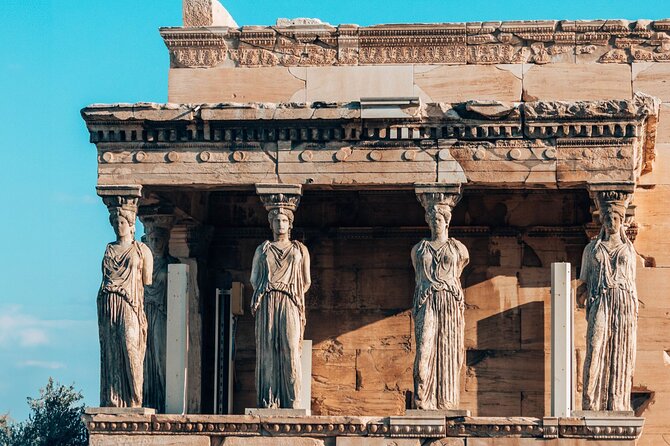
- Erectheion: the temple built on complexity
- Parthenon: the headline, but you’ll get help seeing it
- Ancient Agora: where politics and daily life met
- Temple of Hephaestus area (labeled Temple of Aries here): crafts, trade, and protection
- What’s included for $67.43, and what’s not
- Group size, guide style, and how to get the most out of it
- Practical tips for the day: shoes, bags, and pacing expectations
- Who this tour is best for (and who should pick something else)
- Should you book the Acropolis and Agora: Rise and Fall of Democracy?
- FAQ
- How long is the tour?
- Where does the tour start and end?
- What time does it start?
- Is the entry ticket included in the price?
- What’s included in the tour price?
- How big is the group?
- What should I bring or avoid bringing, especially for the Acropolis?
- What’s the cancellation situation if plans change?
Key things to know before you go
- Athens democracy on foot: you’ll move from the city’s sacred heights to the political and everyday heart of the Agora
- Multiple Acropolis stops: Parthenon, Theatre of Dionysus, Athena Nike, and the Erectheion are all on the route
- Certified guide, small group: up to 15 people, with an expert guide who can adapt to different interests
- A fun take-home map: you get a map designed to help you keep your bearings after the tour
- Entry fees not included: plan on about €50 per person for admissions
- Acropolis restrictions: strollers, backpacks, and big bags aren’t allowed on site
Why this Acropolis-and-Agora route works for your brain

Most Athens tours show you monuments. This one tries to explain why those monuments mattered to the people who lived there—especially the citizens involved in politics, debate, and public life. That democratic framing changes how you look at familiar landmarks. The Parthenon stops being just a photo spot, and the Agora stops being just a place with ruins and shade.
The best value here isn’t only the sites. It’s the connections—mythology, architecture, and civic life tied together so you’re not just memorizing names. You’re also not stuck in a long bus loop. This is a walk-through Athens day, with a clear “from the top to the civic ground” arc.
You can also read our reviews of more tours and experiences in Athens.


Meeting at Dionysiou Areopagitou and keeping the morning smooth
The tour starts at Dionysiou Areopagitou 45 at 9:00 am, and it ends in the Ancient Agora of Athens (near Athens 105 55). The meeting point is close to public transport, which matters because Athens mornings can get busy. I’d treat the first 10 minutes like part of the tour. Arrive a little early, especially if you’re also managing any entry-ticket prep.
This is also a practical setup for a 3-hour experience. You’ll spend most of your time in key zones rather than waiting around. Still, the schedule is tight enough that you’ll want to use the bathroom before you start, not during the middle of the Acropolis climb.
Stop-by-stop: what each place adds (and what it might miss)
Acropolis first: monuments, myth, and why Athena is everywhere
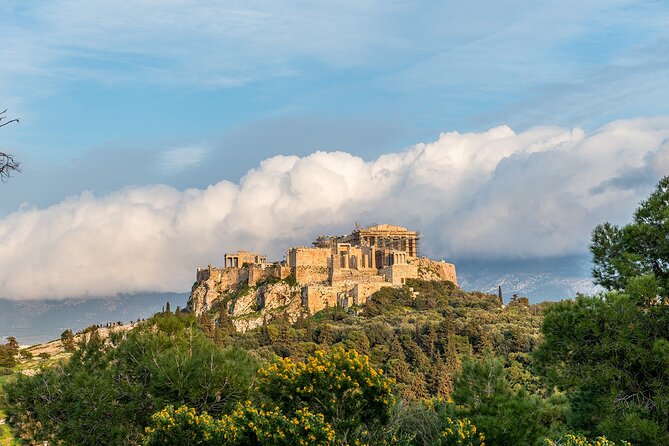
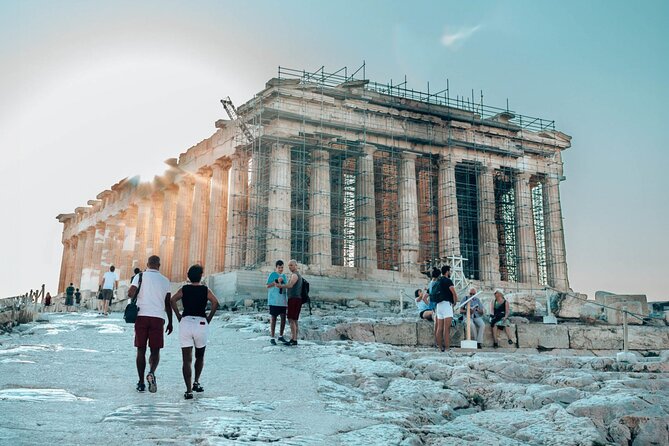
You start at the Acropolis, the big sacred complex that towers over Athens. You’ll see major landmarks including the Parthenon, the Temple of Athena Nike, the Erectheion, the Propylaea, and the Theatre of Dionysus. The guide’s job here is to keep the story from turning into a list.
Why this stop is worth it: the Acropolis monuments were built as statements—about power, identity, and devotion. When the guide frames them through Athens’ civic spirit, you start noticing details you’d otherwise ignore. Even if you’ve seen pictures before, being on the hill gives scale to what these buildings were meant to impress.
What you should watch for: Acropolis time is limited on purpose (about 1 hour), so don’t expect a slow, in-depth look at every corner. Also, the Acropolis has restrictions—no strollers, backpacks, or big bags. Pack light so you don’t end up changing plans at the gate.
Theatre of Dionysus Eleuthereus: where drama and public life overlap
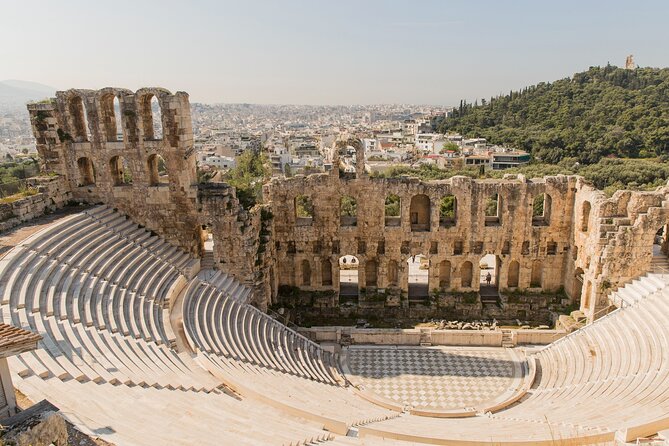
Next comes the Theatre of Dionysus Eleuthereus, dedicated to Dionysus (wine and grape harvest). This theatre is tied to the first performances of works by Aeschylus, Sophocles, Euripides, and Aristophanes—major names in Greek literature.
Why it fits the democracy theme: theatre wasn’t just entertainment. It was a way people wrestled with values, justice, human behavior, and social conflict. When the guide brings out that angle, you realize you’re standing in an early public forum—just with masks and music.
Time here is short (about 15 minutes). If you want the theatre’s seating layout studied carefully, you’ll need separate time. This stop is built for context and orientation.
- All Day Cruise -3 Islands to Agistri,Moni, Aegina with lunch and drinks included
★ 5.0 · 4,958 reviews





Temple of Athena Nike: victory as a civic message
The Temple of Athena Nike focuses on victory in war, with Athena worshipped in that form. It’s linked to the idea that Nike’s cult statue had no wings, so victory would not leave Athens.
This is one of those stops that can feel small if you only look for size. But it’s powerful as symbolism. It’s a reminder that the city’s identity—religion included—was tied to how Athens saw itself in power and conflict.
Again, time is tight (about 15 minutes). The value is in the meaning, not in lingering.
Erectheion: the temple built on complexity
The Erectheion is associated with housing a wooden cult statue of Athena and celebrating the city at its height. This temple is known for its layered significance, partly because it sits where history and myth overlap.
Why you’ll care: a guide can help you see that this isn’t just another temple. It’s a place where Athens chose to honor its claims—religious, cultural, and civic—without simplifying the story.
You get around 15 minutes. If you love architectural analysis, you might wish for longer, but this tour uses the time efficiently to keep the overall narrative moving.
Parthenon: the headline, but you’ll get help seeing it
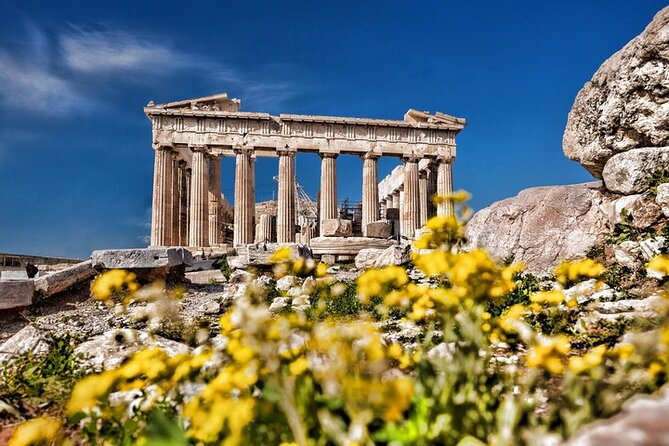
The tour then centers on the Parthenon (about 30 minutes). It was built in the mid-5th century BCE and dedicated to Athena Parthenos, or Athena the Virgin. Architecturally, it’s considered a high point of Doric order development.
Here’s what makes this stop work on this tour: you’re not just looking at a big temple. You’re learning what it was trying to say to the city and to visitors—while your guide connects it back to ideas of identity and public life.
What to manage: this is still a limited chunk of time at a crowded monument. Arrive ready to take in the big picture fast, then decide what you want to revisit later on your own.
Ancient Agora: where politics and daily life met
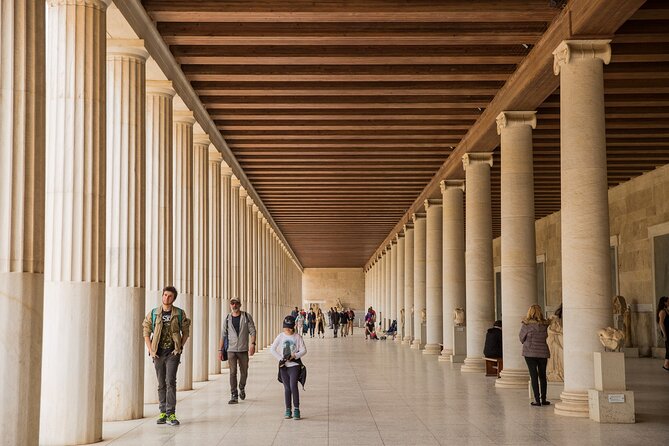
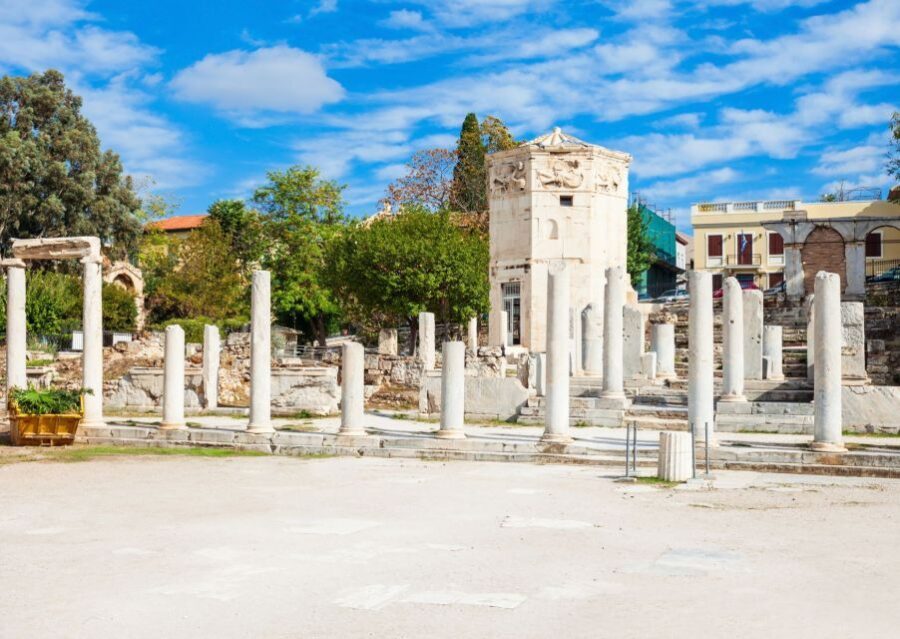
After the Acropolis, you shift to the Ancient Agora, the heart of Athens’ political, commercial, administrative, and social activity. It was also a religious and cultural center and a seat of justice.
This is the civic core of the democracy theme. Up on the hill, you learn who the city worshipped and what it wanted to project. Down here, you learn how people actually lived with those choices—where transactions happened, where arguments happened, where decisions happened.
Time is about 30 minutes. That’s usually enough to get oriented and understand the “why” behind the ruins, but not enough for a full slow wandering session.
Temple of Hephaestus area (labeled Temple of Aries here): crafts, trade, and protection
The final major stop is the well-preserved temple often linked with Hephaestus (a god tied to crafts and metallurgists). In this Agora context, it connects with worship tied to merchants and shop owners, including Athena Ergani, associated with potters and cottage industries.
Why this matters for democracy: Athens wasn’t only assembly speeches. Democracy depended on practical life—craft, trade, jobs, and the everyday economy that kept citizens engaged and communities functioning.
This portion is brief (about 15 minutes). Think of it as a strong closing scene: society in motion.
What’s included for $67.43, and what’s not
The price is $67.43 per person for about 3 hours. You do get an expert certified guide, a small group tour (maximum 15), and a fun ancient Athens map. Those are the “how you experience it” items, not just “you stand somewhere” items.
What’s not included is important for your budget: entry fees to attractions are €50 per person (the operator can pre-purchase for you if you let them know). Meals and transfers aren’t included either.
So the real value question is this: do you want a guide who connects mythology, architecture, and civic life into a story you can carry with you afterward? If yes, this price feels reasonable for the guided time. If you prefer total freedom with no guiding and you’re comfortable reading sites on your own, you could spend less by going independently—but you’d lose the through-line that ties the sites together.
Group size, guide style, and how to get the most out of it
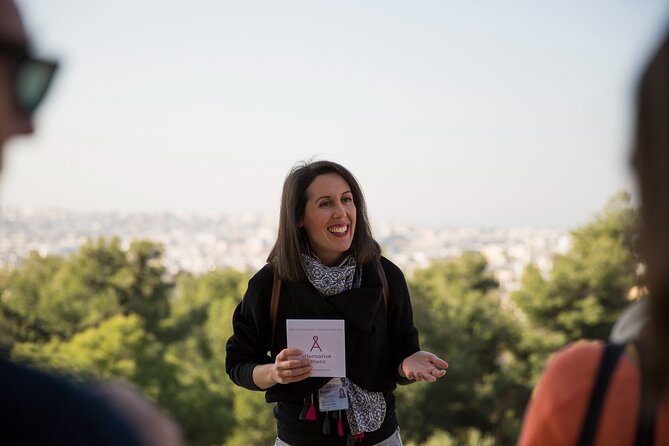
This tour is capped at 15 travelers, and the small-group size changes the vibe. You can ask questions, and the guide can shift explanations to match what people care about.
From the guide lineup you might encounter, the name you may see can vary—some runs list guides such as Athena, Demi, Christina, Kimon, and Vassia/Vassya. The common thread is that the guides are patient and adapt their pace when people have questions.
Still, a fair heads-up from how these tours behave in real life: there can be moments where you’re standing to listen, and the hearing situation depends on the specific setup that day. One group noted the presence of remote headsets; another noted there weren’t earphones. Either way, bring patience for outdoor noise and wear shoes you can stand in for short stretches.
Practical tips for the day: shoes, bags, and pacing expectations
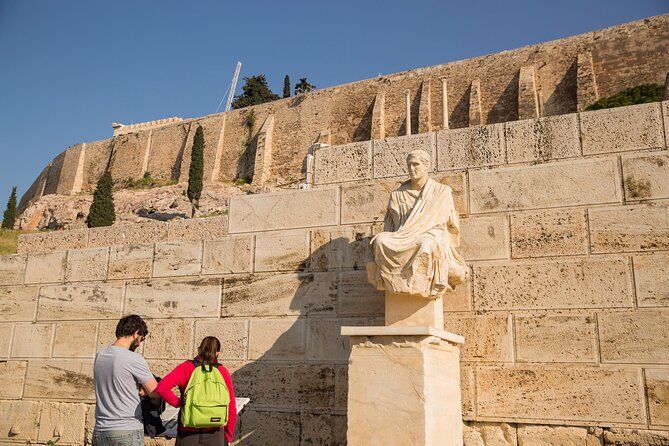
- Wear comfortable walking shoes. The Acropolis plus Agora is lots of uneven stone and sun exposure.
- Pack light for the Acropolis rules. Strollers, backpacks, and big bags aren’t allowed there.
- Use your time wisely. Stops are short by design. If you have a must-see element, note it and plan to revisit later.
- Arrive ready at 9:00 am. Athens mornings can move fast once crowds build.
- Bring ID if you’re under 25. It may be needed for possible discounts.
Who this tour is best for (and who should pick something else)
You’ll probably love this if you:
- like big-name monuments but want the story behind them
- enjoy the idea of democracy as a lived system, not just a textbook term
- want a guided route that helps you connect different parts of Athens quickly
- prefer smaller groups and question-friendly pacing
You might want a different style of tour if you:
- want long, slow “stay here for 2 hours” time at the Acropolis
- hate walking and short stops
- plan to carry a bulky bag (since Acropolis restrictions apply)
Should you book the Acropolis and Agora: Rise and Fall of Democracy?
If you want Athens with meaning, this is a smart booking. The tour’s biggest strength is the way it links sacred monuments to civic life—so the Parthenon and the Agora feel like one story instead of two separate stops. The small group size and certified guide support make it easier to ask questions without getting lost in a crowd.
Book it if your goal is to understand what you’re seeing and walk away with a clearer picture of how Athens shaped public life. Consider booking a separate longer Acropolis visit only if you’re the type who needs extra time to study carvings, inscriptions, and viewpoints at length.
FAQ
How long is the tour?
It runs for about 3 hours.
Where does the tour start and end?
It starts at Dionysiou Areopagitou 45, Athina 117 42, Greece, and ends at the Ancient Agora of Athens (Athens 105 55, Greece).
What time does it start?
The start time is 9:00 am.
Is the entry ticket included in the price?
No. Entry fees are not included, and you should budget €50 per person. The operator can pre-purchase tickets for you if you ask.
What’s included in the tour price?
You get an expert certified guide, a small group tour, and a fun ancient Athens map. You also receive a mobile ticket.
How big is the group?
The tour has a maximum of 15 travelers.
What should I bring or avoid bringing, especially for the Acropolis?
ID or passport may be required for people under 25 for possible discounts. Strollers, backpacks, and big bags are not allowed at the Acropolis, so pack light.
What’s the cancellation situation if plans change?
Free cancellation is offered up to 24 hours in advance for a full refund. If you cancel less than 24 hours before the start time, the amount paid is not refunded. The experience may also be rescheduled or refunded if canceled due to poor weather or if the minimum number of travelers isn’t met.


More Tour Reviews in Athens
- All Day Cruise -3 Islands to Agistri,Moni, Aegina with lunch and drinks included
★ 5.0 · 4,958 reviews