REVIEW · CORINTH
Ancient Corinth Private Tour from Corinth
Book on Viator →Operated by Korinthos Taxi Transfers · Bookable on Viator
Corinth in a half-day, without the hassle. This private tour strings together the big hits in one smooth loop: Corinth Canal, the ancient Diolkos, Ancient Corinth, and Acrocorinth. I like that you start with convenient pickup in Corinth and ride in a comfortable, air-conditioned vehicle with onboard WiFi and an English-speaking driver.
Two things I really like are the pacing and the mix of eras. You get real time on-site at Ancient Corinth and the Archaeological Museum, then you climb up to Acrocorinth for the fortress views over the Corinthian Gulf and the Peloponnese.
One drawback to plan around: you pay entrance fees for the major archaeological stops (listed as €15.00 per person), and your driver is not a tour guide. So if you want someone to formally explain every mosaic and wall, you’ll have to rely on what you read on site and what your driver shares along the way.
In This Review
- Key highlights to look for
- A private Corinth loop that fits real schedules
- Pickup in Corinth: where to meet and what the ride setup means
- Stop 1: Corinth Canal bridge views and a no-rush 30 minutes
- Stop 2: The Diolkos shipping shortcut and the canal entrance details
- Stop 3: Ancient Corinth and the museum time that saves your day
- Stop 4: Acrocorinth’s fortress on a 575-meter hill
- What you actually get for the $75.43 price
- Who this tour is best for (and who might want a different style)
- Should you book this Ancient Corinth private tour?
- FAQ
- How long is the Ancient Corinth private tour from Corinth?
- What’s included in the price?
- Are entrance fees included?
- Who drives during the tour?
- Where does pickup happen?
- Is the tour private?
- What language is the tour offered in?
- Can I cancel for free?
Key highlights to look for
- A full Corinth sweep in about 4 hours: canal, Diolkos, Ancient Corinth, and Acrocorinth
- Photogenic Corinth Canal bridge views with a timed 30-minute stop
- Ancient Diolkos trackway remnants plus a look at the canal entrance area and bridge detail
- One hour each at Ancient Corinth (site and museum) and Acrocorinth (castle area)
- Private, chauffeured comfort with WiFi and a climate-controlled ride
- Entrance fees handled on your side for the archaeological sites (€15.00 per person)
A private Corinth loop that fits real schedules
This is the kind of tour that makes sense if you’re short on time or you just don’t want to wrestle with buses, parking, and crossing town with limited daylight. The route is built like a greatest-hits itinerary, but it still leaves you enough time to actually look and not just sprint between monuments.
You’re also not stuck with a huge group. This is a private experience, so the driver can match the pace to your group and your photo stops. You’ll be dealing with four distinct stops spread through the Corinth area, and each one has a different “why it matters,” from modern engineering to ancient shipping shortcuts to the political heart of a major Greek city-state.
The other quiet win is the vehicle. You get an air-conditioned car and WiFi, which sounds small until you’re doing a hot, dry afternoon of ruins-and-stairs. (And it’s nice for checking your next plan while you’re waiting for pickup timing.)
You can also read our reviews of more private tours in Corinth
Pickup in Corinth: where to meet and what the ride setup means
Your pickup is designed to be easy in the Corinth area, including the Corinth suburban train station (Proastiakos station) and the Corinth bus station. If you’re coming from another town by train, this matters because it keeps you from getting stranded on the wrong side of the city.
The tour runs in English, and you’ll be traveling in a private, chauffeured climate-controlled vehicle. That means you’re not getting dropped at random corners with a vague instruction like go find your way. Instead, you ride with a professional driver who gets you to the stops on time.
Just note the “driver vs guide” distinction. The driver can explain things and help you connect dots, but they can’t provide a full guided tour inside the archaeological site and museum. So bring your reading glasses, or plan to use your phone for background info before you arrive.
Stop 1: Corinth Canal bridge views and a no-rush 30 minutes
The day starts with the Corinth Canal, and it’s a smart opener. Even before you get to ancient ruins, you’re hit with a dramatic engineering scene.
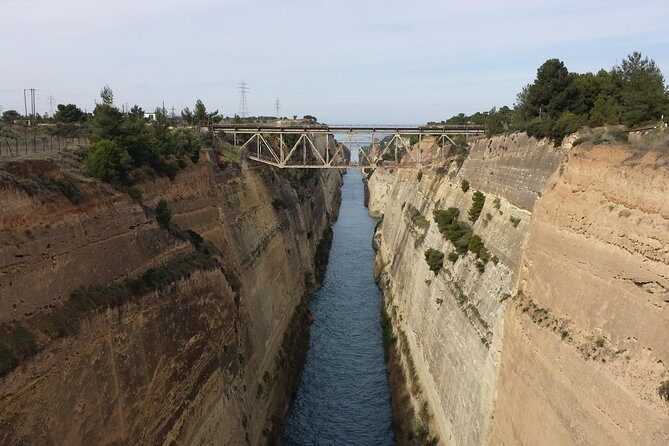
This canal is a narrow, man-made waterway connecting the Gulf of Corinth with the Saronic Gulf in the Aegean. It was completed in 1893 and runs about 6.4 kilometers long. It’s only about 21 meters wide at the base, which is why modern large ships can’t pass through.
What you’ll love here is the viewpoint. You get a 30-minute stop and you can take photos from the bridge over the canal, looking at steep rock walls cutting through the Isthmus of Corinth. It’s one of those places where you instantly understand why the location matters: this is the geographic pinch point between the Peloponnese and mainland Greece.
Practical tip: with only 30 minutes, focus on the bridge views and quick photos first. If you want to linger, it’s better to do it after you’ve gotten your main shots.
Stop 2: The Diolkos shipping shortcut and the canal entrance details
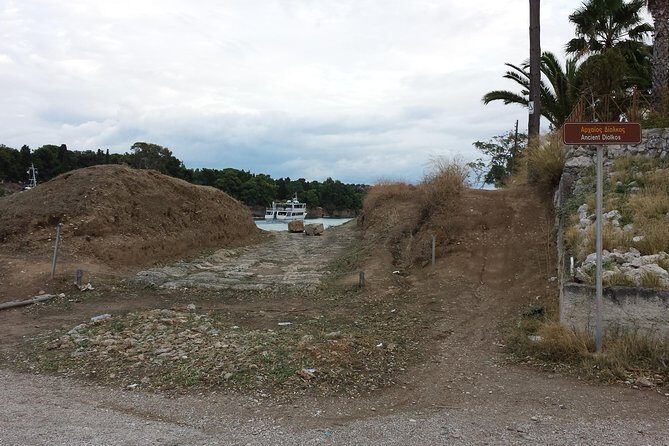
Next up is the ancient Diolkos, an overland route that let ships move across the Isthmus of Corinth instead of traveling around by sea. This is exactly the kind of thing that makes history feel practical.
The Diolkos dates to the 6th century BCE. It was a paved trackway connecting the Saronic Gulf to the Corinthian Gulf, letting goods and vessels pass faster and with less risk. Think of it like an ancient “railway,” where wheeled platforms carried ships over land. It played a key role in both commerce and military strategy, because time and access mattered.
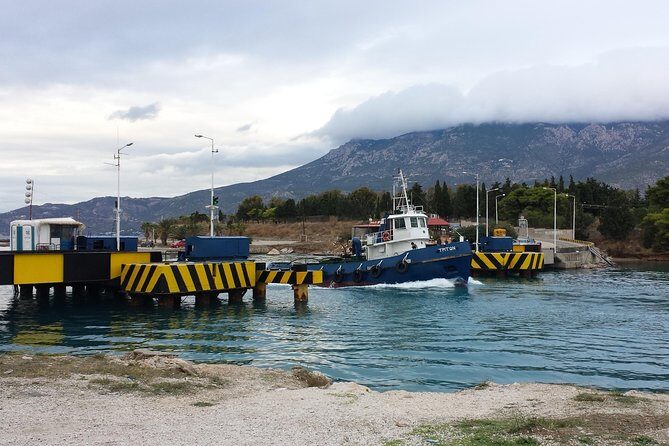
You’ll have about 30 minutes here too. During this stop, you can visit a section of the Diolkos in Corinth. The tour also includes a look at the unique submersible bridge at the entrance of the Corinth Canal, which ties the modern canal story to the older need: moving through this narrow corridor.
What to watch for: even if you’re not a stone-and-stone-rails person, the Diolkos helps you understand why Corinth kept winning. This was a crossroads city, and the infrastructure around it made the advantage real.
Stop 3: Ancient Corinth and the museum time that saves your day
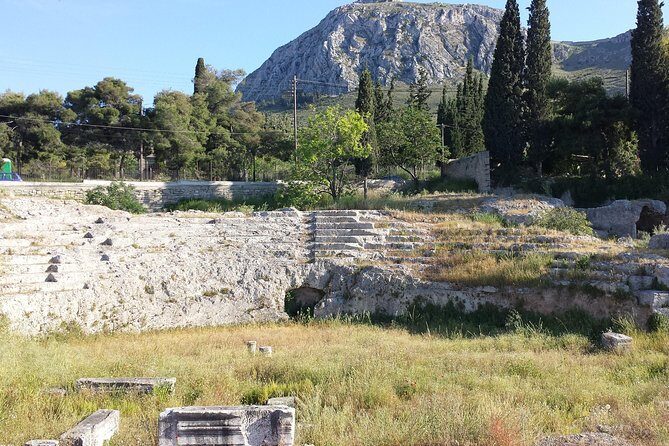
Now you switch from engineering to the political and religious center that made the region famous.
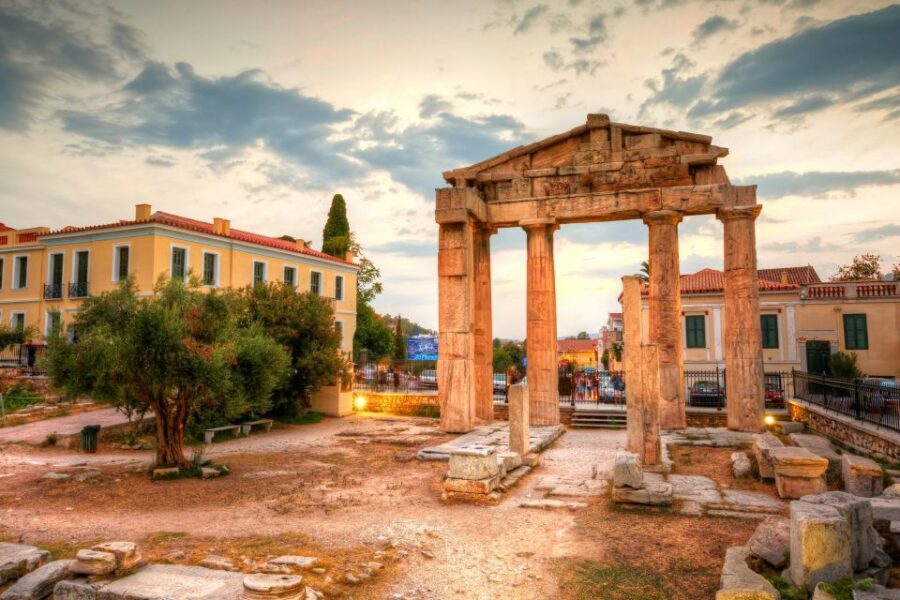
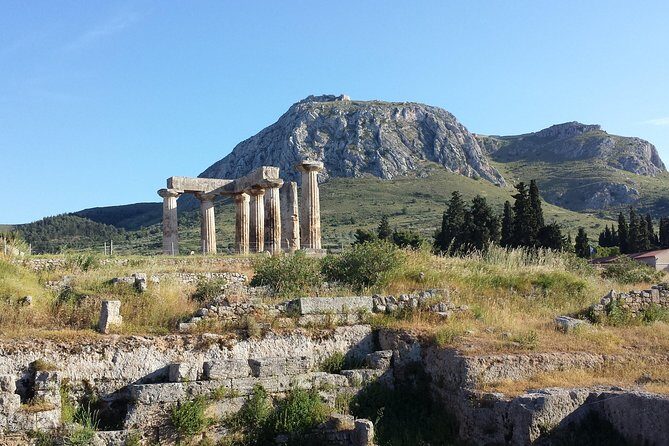
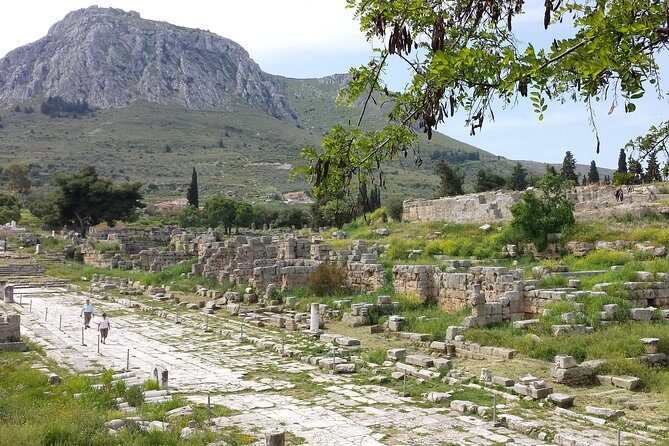
Ancient Corinth (Archaia Korinthos) was a powerful Greek city-state strategically placed between mainland Greece and the Peloponnese. On-site, you’ll find ruins that reflect that layered importance. You can expect to see structures associated with the Temple of Apollo (6th century BC), the Roman Agora, fountains, shops, and public buildings. The site gives you a sense of street-level life—ancient roads, building footprints, and the mix of Greek and Roman elements.
You’ll also have the best “time budget” in the day at this stop. You get one hour to visit the archaeological site and the Archaeological Museum of Ancient Corinth.
The museum is where the story becomes more personal. It houses artifacts uncovered during excavations—statues, pottery, inscriptions, and mosaics. One standout detail is the set of Roman mosaics, plus items connected to the Apostle Paul, who preached in Corinth in the 1st century AD. Even if your main interest is architecture, that Paul connection gives you an anchor for why people kept returning to this place long after the city’s original power structure changed.
A key planning note: the entrance fee for archaeological sites is not included and is listed at €15.00 per person. So when you budget, assume this stop will be one of the places where you’ll pay.
Also remember: your driver can’t guide you inside like a trained museum docent. In practice, that means you’ll get the most out of this stop if you pick a few targets. For example:
- Look for the Apollo area and then trace outward through the Roman Agora feel
- Spend museum time on mosaics and anything that connects to Paul
That way you won’t feel like you rushed, even with one hour.


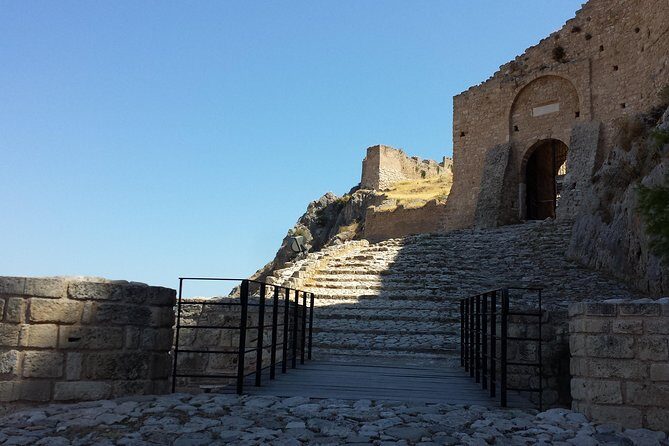
Stop 4: Acrocorinth’s fortress on a 575-meter hill
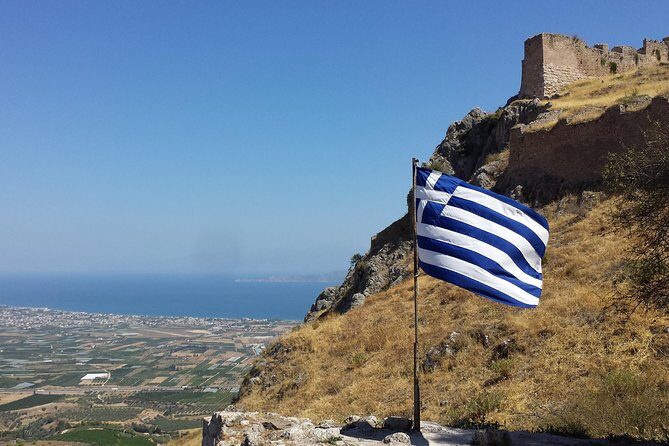
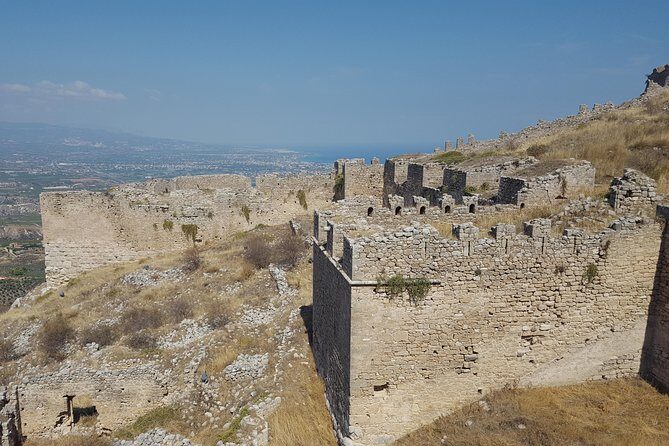
The final stop is Acrocorinth, also called Acrocorinthos. This is the acropolis of ancient Corinth, rising on a steep hill about 575 meters above sea level. If you’ve ever wanted a finish that feels like a reward, this is it.
Acrocorinth was continually fortified from antiquity through the medieval period. The reason is simple: the location is strategic. Over the centuries, it served as a military and administrative center for Greeks, Romans, Byzantines, Franks, Venetians, and Ottomans. That long chain of rulers is why you’ll find a mix of ruins and later religious and military remnants, including the outline of a mosque and defensive walls.
As you explore, you may notice remains of temples and fountains, and at the summit you can connect to the religious significance of antiquity through the remains of the Temple of Aphrodite.
You’ll have one hour here, which is enough time to see the main areas and get your bearings without feeling like you’re sprinting up and down forever.
What makes this stop worth it isn’t just the stones. It’s the view logic. From Acrocorinth, you can understand why this spot was a power hub. The Corinthian Gulf, the Peloponnese, and the Isthmus of Corinth all line up visually in your mind, and the day stops feeling like random sightseeing.
Practical consideration: because Acrocorinth is a steep hill, expect stairs and uneven ground. Wear supportive shoes and keep your pace steady.
What you actually get for the $75.43 price
At $75.43 per person for about 4 hours, the value is mostly about transportation and time efficiency. You’re paying for a private chauffeur, a comfortable vehicle with WiFi, and pickup/drop-off in Corinth. That’s the “product.”
Here’s what you should budget alongside it. Entrance fees in archaeological sites are listed at €15.00 per person and are not included. Food and drinks aren’t included either.
So the true cost is the tour price plus site entry fees, and then whatever you choose for lunch or snacks. That might sound like an extra line item, but it’s also normal for this kind of half-day plan—just don’t forget it when you compare value with other day trips.
One more nuance: the tour is private, but your driver isn’t a guide inside the museum and sites. That doesn’t mean you’re left in the dark. In practice, the driver can still give context during the ride and while you move between stops. Some drivers also point you toward practical breaks; one example from past groups included directions to a cafe near the Acrocorinth base for water and rest.
If you’re the type who likes structured, narrated guiding, you might pair this with a light museum plan (like reading a few key panels in your own order) so you still feel fully informed.
Who this tour is best for (and who might want a different style)
This tour is ideal if you fall into one of these buckets:
- You want a half-day in Corinth that hits the major sites without planning logistics
- You’re traveling with family or friends and you prefer private pacing
- You like engineering details as much as ruins (Corinth Canal + Diolkos does that well)
- You want a comfortable, air-conditioned ride instead of piecing together transit
It may not be the best fit if you need a fully guided interpretation inside museums and across every ruin. Since the driver can’t act as a tour guide, you’ll get more out of this if you’re comfortable reading signs, using your phone, or having a short list of what you want to focus on at each stop.
Should you book this Ancient Corinth private tour?
Yes, you should book it if you want an efficient, comfortable way to see Ancient Corinth plus the canal and Acrocorinth in one go. The price makes sense when you factor in private transportation, the timed stops, and the fact you’re not stuck hunting for how to move between sites.
I’d book it especially if:
- you’re limited on time in Corinth
- you want a calm, chauffeured day rather than a rushed group scramble
- you’re okay paying the listed entrance fee for the archaeological sites
I’d think twice if you need a strict, inside-the-museum guide experience. In that case, you may still take this for the driving and convenience, but you should plan to handle interpretation yourself during the one-hour site and museum blocks.
If you want a straightforward win—Corinth’s major story beats, in a neat order, with comfort—you’ll likely feel satisfied with this one.
FAQ
How long is the Ancient Corinth private tour from Corinth?
It runs about 4 hours.
What’s included in the price?
Pickup and drop-off in Corinth, private transportation, local taxes, onboard WiFi, and an air-conditioned vehicle.
Are entrance fees included?
No. Entrance fees in archaeological sites are listed at €15.00 per person. Admission tickets for the Corinth Canal and the Diolkos stops are listed as free.
Who drives during the tour?
You’ll have a professional driver. The drivers are not tour guides, so they can’t tour the archaeological sites and museums with you.
Where does pickup happen?
Pickup is offered at the Corinth suburban train station (Proastiakos station) and the Corinth bus station.
Is the tour private?
Yes. Only your group participates.
What language is the tour offered in?
The experience is offered in English.
Can I cancel for free?
You can cancel up to 24 hours in advance for a full refund.